The Changing Tide of Luxury Cars: Why Are Mercedes-Benz Sales Slumping?
 08/04 2026
 485
485
Recently, Mercedes-Benz Group unveiled its financial report for the second quarter of 2026. The figures reveal that the group raked in €32.1 billion in revenue during this period, marking a 3.31% year-on-year decline. Nevertheless, its earnings before interest and taxes (EBIT) soared to approximately €1.5 billion, representing a 15.38% year-on-year increase. Despite the revenue dip, Mercedes-Benz's profit surge is noteworthy. Simultaneously, the report highlighted that the Chinese market remains a significant pressure point for Mercedes-Benz. In the second quarter, sales in China plummeted by 30% year-on-year to 98,600 units. As a crucial global market for Mercedes-Benz, the Chinese sales slump directly impacts the group's overall performance.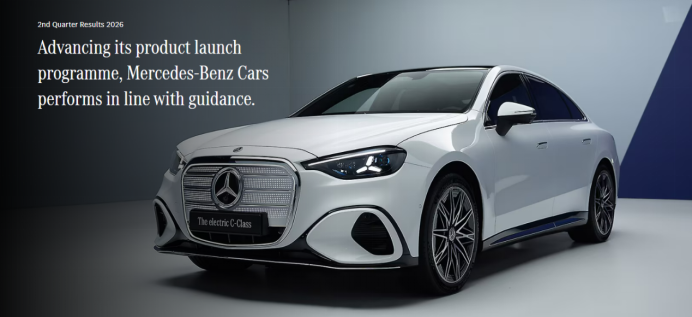
Data indicates that in 2025, Mercedes-Benz sold around 575,000 units in China, a 19% year-on-year decrease, and nearly 200,000 units fewer than the 2020 peak of 774,000 units. This downward trend persisted into 2026, with first-quarter sales dropping to 111,600 units, a 27% year-on-year decrease. The second quarter saw a further decline to 98,600 units, a 30% year-on-year drop, with quarterly sales falling below the 100,000-unit mark. Consequently, the Mercedes-Benz Group delivered a total of 1.0115 million vehicles globally in the first half of 2026, a 6% year-on-year decrease, including 837,200 passenger vehicles, a 7% year-on-year decrease.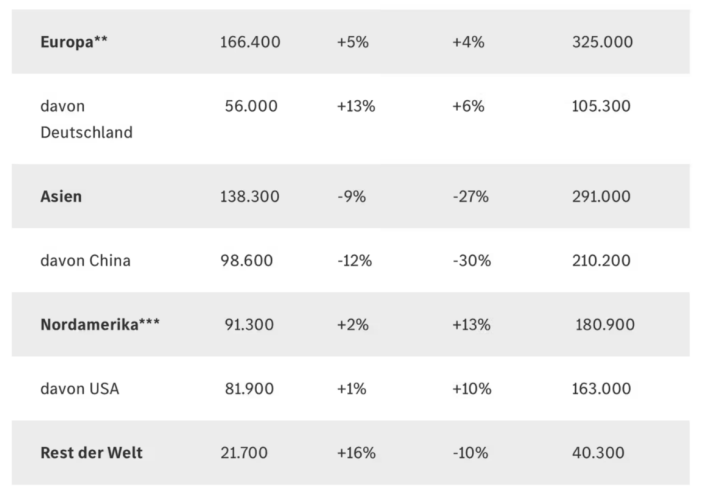
The persistent sales decline is intricately linked to shifts in China's luxury car market landscape. Traditionally, Mercedes-Benz held a dominant position in China's high-end market, thanks to its brand influence, luxury positioning, and prowess in fuel vehicles. However, the rapid rise of new energy vehicles (NEVs) and escalating consumer demand for intelligent and electrified experiences, particularly the impact of NEV brands on the high-end market, are shaking the market dominance of traditional luxury brands like Mercedes-Benz.
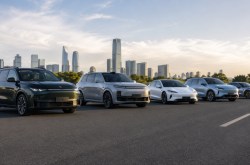
Take local high-end NEV brands such as AITO, NIO, and Zeekr as examples. The AITO M9 sold 26,400 units in the first half of the year, while the AITO M7 racked up a cumulative total of 68,000 units in the same period. The NIO ES8 sold 69,700 units in the first half of the year. The Zeekr 9X delivered 45,700 units in the first half of the year, topping the sales list of large SUVs priced at 500,000 yuan for seven consecutive months. The relentless expansion of local NEV brands in the high-end market is further squeezing the market share of traditional luxury brands. In contrast to the swift updates of local NEV brands, Mercedes-Benz appears hesitant and indecisive in its transition to NEVs.
Like many joint venture brands, Mercedes-Benz initially adopted an "oil-to-electric" strategy to adapt to the NEV transition. For instance, the EQC and EQA were both retrofitted from traditional fuel vehicle platforms, losing their brand premium luster and offering no competitive edge in terms of intelligence or range. This is starkly evident in sales figures. In the first half of 2026, Mercedes-Benz sold a mere 777 units of the EQE SUV, 1,948 units of the EQB, 184 units of the EQE, and only 4 units of the EQA. The cumulative sales of the four EQ series models were less than 3,000 units, a fraction of the monthly sales of popular models from brands like AITO and Li Auto.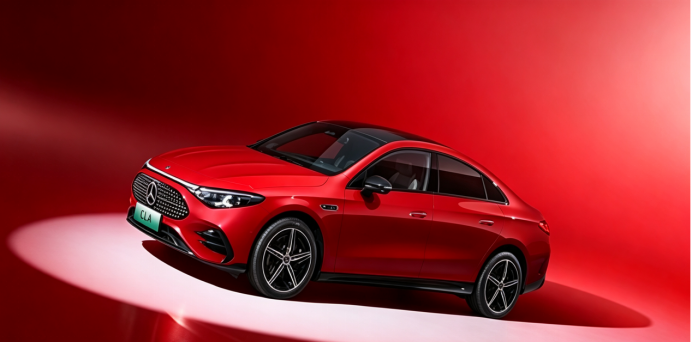
Of course, to align with the NEV development trend in the Chinese automotive market, Mercedes-Benz is actively revamping its product strategy, accelerating NEV product布局 (layout), and successively launching two new models: the all-new electric CLA and the electric GLC SUV. Both models are built on Mercedes-Benz's new-generation electric platform and have undergone localized adjustments in product design and intelligent configurations to cater to Chinese consumers' needs.
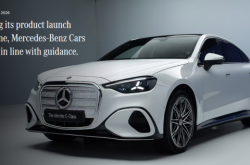
Among them, the all-new Mercedes-Benz electric long-wheelbase CLA (CLA L) launched for the Chinese market is the first domestically produced model built on the Mercedes-Benz MMA platform. The new car boasts Mercedes-Benz's self-developed MB.OS intelligent cockpit system and NVIDIA Orin X chip, featuring a three-screen layout comprising a 10.25-inch instrument panel, a 14-inch central control screen, and a 14-inch front passenger entertainment screen. It integrates the Doubao AI large model, supports high-speed pilot assist driving and L2-level intelligent assist driving, further elevating the intelligent cockpit and intelligent driving experience.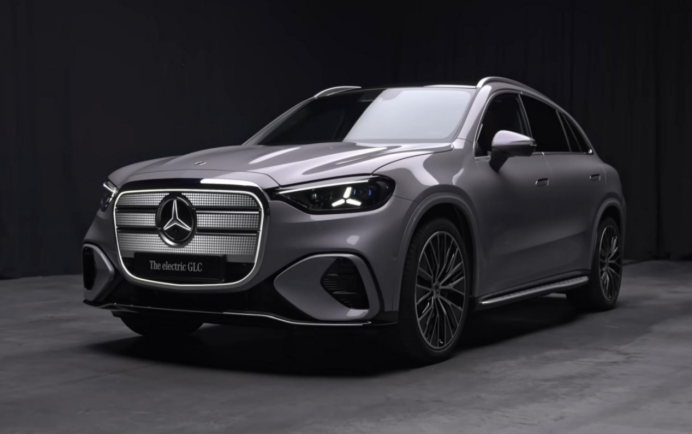
The Mercedes-Benz electric GLC SUV is the first mass-produced model built on the Mercedes-Benz MB.EA electric platform, offering a long-wheelbase version for the Chinese market to further satisfy domestic consumers' demand for spaciousness and comfort. The new car is equipped with an 85.5 kWh battery, achieving a maximum CLTC range of up to 703 km, and supports 800V high-voltage fast charging, further enhancing range and charging efficiency.
In terms of intelligence, the vehicle is outfitted with a 39.1-inch MBUX Hyperscreen, incorporating a Qualcomm Snapdragon 8295 chip, and introduces an AI assistant named "Xiaoben" developed with Chinese team participation, further enriching the intelligent cockpit interaction experience. Simultaneously, the new car collaborates with Momenta to develop an intelligent driving solution, supporting high-speed and urban pilot assist driving functions, and will later achieve "parking lot to parking lot" full-scenario assist driving capabilities through OTA upgrades. It is evident that Mercedes-Benz is striving to align its NEV products with the Chinese market through all-new electric platforms and localized intelligent solutions, thereby bolstering its competitiveness in the domestic NEV market.
However, from a sales perspective, the all-new electric CLA's performance post-launch has fallen short of expectations. The all-new electric long-wheelbase CLA (CLA L) launched for the Chinese market sold only around 627 units in the first half of 2026. Perhaps due to the dismal sales, rumors circulated that the all-new electric CLA L would be discontinued. Although Mercedes-Benz officially refuted these rumors promptly, it cannot mask the electric CLA L's lackluster sales. Moreover, the electric CLA L underscores Mercedes-Benz's predicament in electrification: NEV models cannot command the high premium capability of the Mercedes-Benz brand. If priced too high, consumers are reluctant to buy; if priced too low, it clashes with Mercedes-Benz's brand image.
This incident also underscores that the challenges Mercedes-Benz faces in the Chinese market extend beyond declining sales to improving the market acceptance of its NEV products. Traditionally, Mercedes-Benz dominated China's high-end market with its brand influence, luxury positioning, and fuel vehicle advantages. However, with the advent of the NEV era, consumer demand for electrification and intelligence continues to surge, eroding the traditional competitive edges of luxury brands.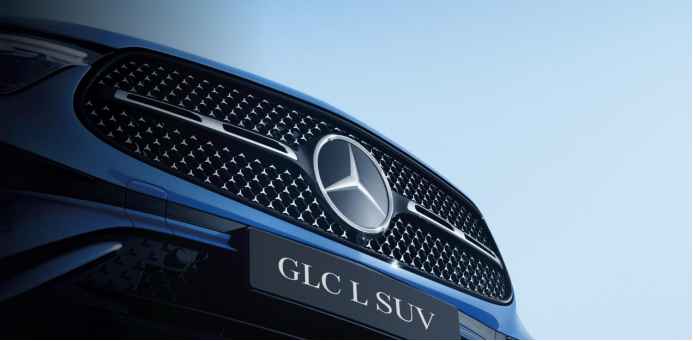 In the future, as NEV brands like AITO, NIO, and Zeekr continue to penetrate the high-end market, competition in China's NEV market will intensify further. For Mercedes-Benz, the transition to NEVs has become increasingly urgent, necessitating further acceleration of the transition pace, increased investment in localized R&D and intelligent technologies, and continuous enhancement of product competitiveness and market acceptance while upholding brand image. (Images sourced from the internet, removed if infringing)
-
![]()
Two Truths About July's Auto Market: Domestic Focus on Technology, Overseas Focus on Speed | Second Half Kickoff ②
-
![]()
Smartphone Chip Shipments Decline by 15%, While Smartphone Shipments Fall by Less Than 7%: Where Is the Discrepancy?
-
![]()
New Forces Start to Profit from Scale
-
Sluggish Sales: New Policies Step In to Revive the Market
-
![]()
The Changing Tide of Luxury Cars: Why Are Mercedes-Benz Sales Slumping?
-
![]()
Can You Still Identify Intelligent Driving When the Small Blue Light is Off?
-
![]()
The Stronger the Model, the More Valuable the Application Becomes
-
Is Alibaba Using QwenWork to Rival WorkBuddy?