ARCFOX's Sales Finally Pick Up, But How Long Can BAIC Afford to Keep Losing Money?
 08/06 2026
 510
510
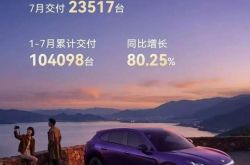
Let me ask you a question: If an auto brand sees several years of soaring sales, selling 160,000 units in 2025 and over 100,000 in the first seven months of 2026—an 80% year-on-year increase—does that count as a successful turnaround?
On the surface, it certainly looks like it.
After all, just a few years ago, ARCFOX was only selling a few thousand units annually, barely recognizable on the roads. Now, monthly sales have surpassed 20,000 units. Since the launch of the ARCFOX T1, dealerships have seen increased foot traffic, and the car's visibility on the streets has risen markedly.
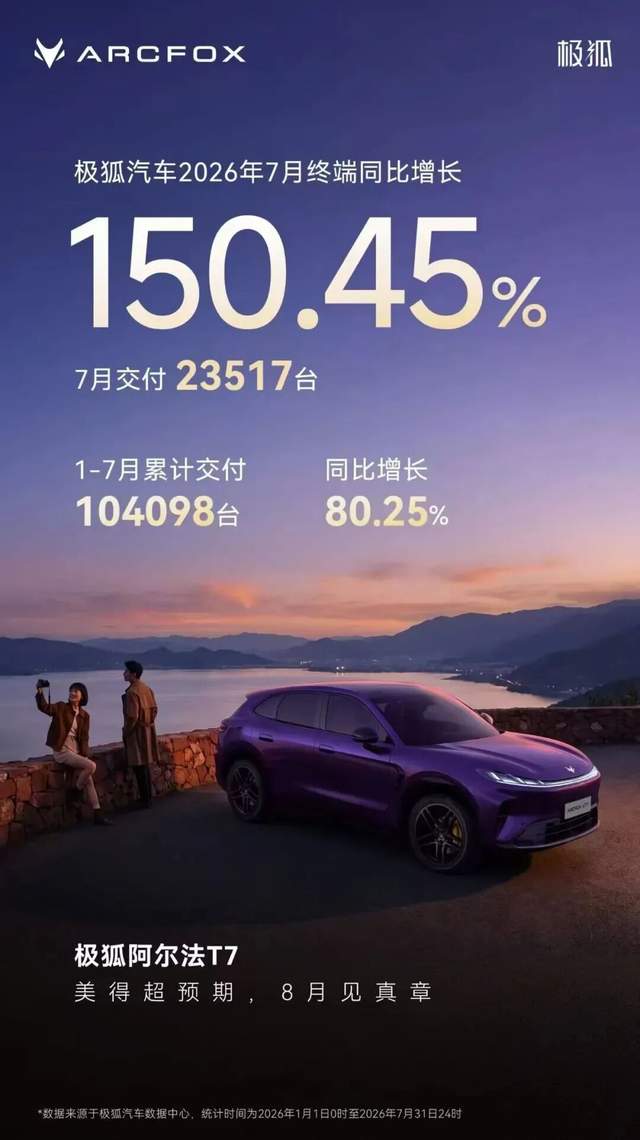
At this rate, hitting 200,000 units for the full year of 2026 doesn’t seem out of reach for ARCFOX.
Yet, on the other side of the equation, BAIC BluePark still reported a loss of RMB 4.563 billion in 2025 and expects to lose another RMB 1.77 billion to RMB 1.97 billion in the first half of 2026.
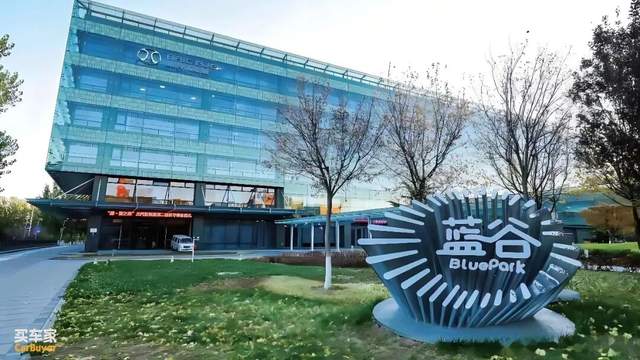
So, the most pressing question for ARCFOX isn’t whether its sales are rising—but whether those sales are bringing it any closer to profitability.
Because selling more doesn’t necessarily mean earning more. Some cars generate profit with every unit sold; others merely reduce losses. Determining which stage ARCFOX is at requires looking beyond sales posters—it demands a closer look at the cost structure.
But before diving into ARCFOX’s costs, let’s address a common controversy.
Observing ARCFOX’s transformation over the years, a prevalent online critique is that the brand, which initially positioned itself as a premium pure-electric player, now relies heavily on the RMB 60,000–70,000 T1 for sales growth. Doesn’t this suggest its premium ambitions have failed, forcing it to resort to affordable compact cars for survival?
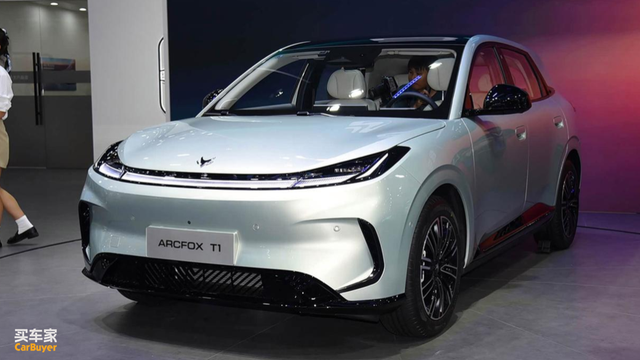
This judgment is somewhat one-sided because shifting from premium to affordable isn’t inherently problematic.
Automakers are in business, not taking a brand integrity exam. If the original positioning fails to drive sales, pivoting to a more suitable market is wiser than clinging to a “born premium” label while selling just a few thousand units annually.
Consumers won’t pay an extra RMB 100,000 just because a brand persists valiantly in the premium segment.
Moreover, after the introduction of Xiangjie, BAIC BluePark’s internal brand division of labor (brand role allocation) has evolved. Under the current plan, Xiangjie targets the RMB 300,000+ market, focusing on brand stature and profit contribution, while ARCFOX covers more mainstream price bands, driving sales volume and market influence.
In the past, ARCFOX was overburdened—attempting to break into the premium segment, sustain sales volume, and prove BAIC’s new energy technology capabilities all at once, effectively trying to fulfill the roles of three brands simultaneously. Now, by offloading premium pressures to Xiangjie and pivoting to cost-effectiveness, ARCFOX is simply making a natural adjustment.
So, the T1’s affordability isn’t the real issue. The question is whether increased sales at lower prices can translate into profitability.
Think of it like a restaurant that initially invested millions in high-end décor, targeting a RMB 100s per person average check, only to struggle with foot traffic. The owner then pivots to selling RMB 9.9 boxed meals, drawing long lines daily. But the new problem? Meager profits mean the business remains lively but may never recoup past losses.
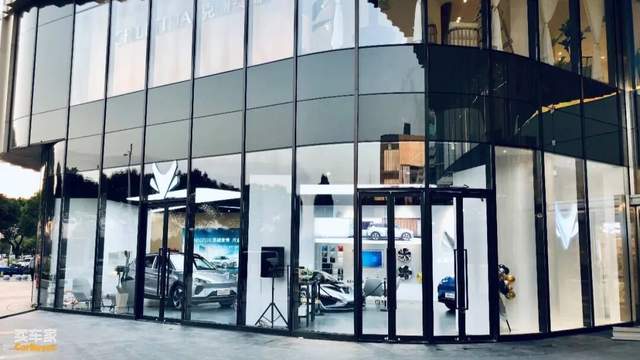
This is essentially the challenge ARCFOX faces now.
The T1’s impact is significant. It drives sales, sustains the dealership network, boosts factory utilization, and increases procurement volume, enabling suppliers to offer better pricing. Previously, with annual sales in the tens of thousands, even the best platforms, factories, and R&D investments couldn’t achieve economies of scale. Now, with over 100,000 units sold annually, scale effects are finally kicking in.
However, the T1’s pricing makes it difficult to generate substantial profits.
In 2025, BAIC BluePark’s procurement of T1 vehicles from Beijing Automobile increased by approximately RMB 4.198 billion year-on-year. That same year, Beijing Automobile’s Zhuzhou plant produced 60,146 units of certain ARCFOX models under contract manufacturing. While these figures don’t align perfectly and can’t be directly equated to the T1’s exact per-unit cost, a simple division suggests a cost close to RMB 70,000 per vehicle.
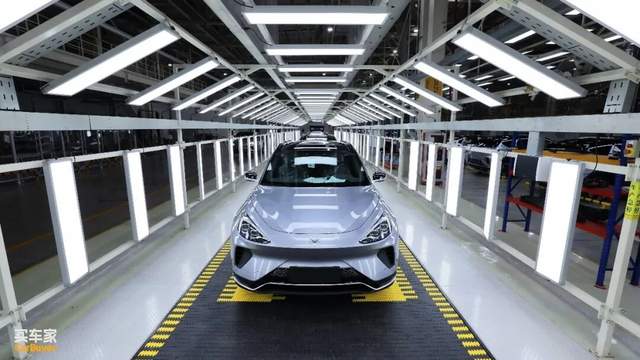
Yet the T1’s sticker price ranges from just RMB 62,800 to RMB 87,800, leaving razor-thin profit margins.
After a vehicle leaves the factory, costs for transportation, warehousing, dealer incentives, terminal discounts, charging benefits, free maintenance, three-electric system warranties, and after-sales service accumulate. Individually, these expenses may seem minor, but collectively, they don’t vanish into thin air.
Thus, while the exact per-unit profit of the T1 is unknowable externally, a reasonable inference is that its gross profit per vehicle in manufacturing and wholesale is low, with some lower-trim models potentially operating at negative margins. After factoring in R&D, channel, marketing, and administrative expenses, short-term profitability remains unlikely.
This inference aligns with BAIC BluePark’s overall financials.
In 2025, BAIC BluePark’s gross profit margin for vehicle sales remained negative at -2.35%. In other words, even before accounting for sales, administrative, and R&D expenses, vehicle sales alone generated no positive gross profit. Based on that year’s sales volume, the average loss per vehicle sold, considering only revenue and cost of goods sold, approached RMB 3,000.
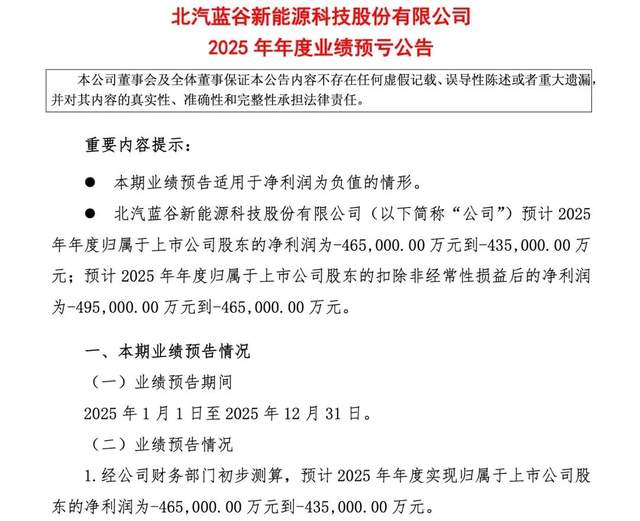
Factoring in the RMB 4.563 billion net loss attributable to the parent company, the average loss per vehicle exceeded RMB 20,000. This figure includes Xiangjie, ARCFOX, R&D investments, factory depreciation, and historical liabilities, so not all losses can be attributed to the T1. However, it underscores that BAIC BluePark is still far from the “sell more, earn more” stage.
Over the past five years, BAIC BluePark’s cumulative net loss attributable to the parent company has reached approximately RMB 27.6 billion.
Extending the timeline further, the return on investment (ROI) issue for ARCFOX becomes even more pronounced. Beijing BluePark ARCFOX Automotive Technology Co., Ltd., the primary entity for ARCFOX’s sales and operations, reported a net loss of RMB 3.982 billion in 2024, with negative net assets of RMB 11.501 billion by year-end. In 2025, while its net profit turned positive at RMB 65.51 million, net assets remained negative at RMB 11.435 billion.
To clarify, negative net assets at the sales company don’t directly equate to ARCFOX’s total cumulative losses. A significant portion of ARCFOX’s R&D, manufacturing, platform, and factory costs remain with other entities like BAIC New Energy. Internal procurement pricing also influences which company ultimately books the profits.
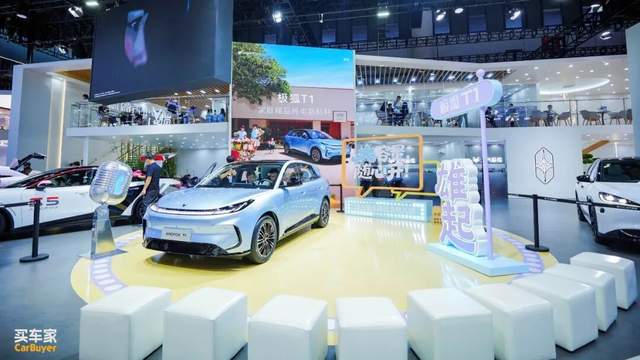
What’s certain is that ARCFOX has invested tens of billions in product development, channel construction, branding, and operations over the years. A substantial portion of BAIC BluePark’s RMB 27.6 billion cumulative losses over the past five years relates to ARCFOX’s buildout and growth.
This is ARCFOX’s fundamental challenge: it’s not that it can’t sell cars or doesn’t know how to build them, but that past investments were too large, and returns came too slowly. When sales were low, R&D, factory, and channel expenses couldn’t be amortized. Now that sales are rising, the best-selling models are low-margin compact cars.
The T1 acts more as a bandage to stop bleeding than a cure to restore health.
So, the question arises: Should BAIC BluePark continue rescuing ARCFOX?
Abandoning it outright would be unwise. ARCFOX now has annual sales exceeding 100,000 units, an established channel network, product platforms, and a supply chain. It has transitioned from “virtually unknown” to a brand consumers might consider. The toughest phase for any new brand is moving from obscurity to store visits—a hurdle ARCFOX has cleared after substantial investment. Cutting it off now would render past investments in channels, branding, and user acquisition as sunk costs, leaving BAIC BluePark with no way to recoup or continue generating returns.
Moreover, BAIC BluePark can’t rely solely on Xiangjie.
While Xiangjie’s premium positioning is valid, it’s a brand co-created with Huawei, with product definition, intelligence capabilities, marketing reach, and channel systems deeply tied to Huawei. If BAIC concentrates all resources on Xiangjie, short-term efficiency may improve, but long-term, its brand presence and user base would weaken.
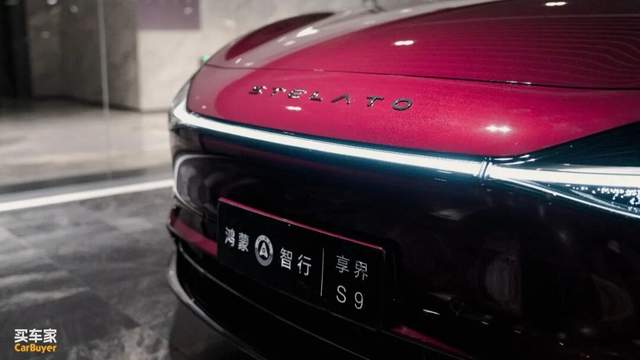
ARCFOX remains BAIC’s independently controllable new energy foundation. It can drive scale, exports, supply chain amortization, and factory utilization, preventing BAIC from betting its new energy future entirely on a partnership project.
However, not abandoning ARCFOX doesn’t mean continuing to rescue it as before.
The most rational approach now is a bounded “contractionary self-help” strategy.
Since Xiangjie handles brand prestige, ARCFOX no longer needs to spend heavily on marketing to prove its luxury credentials. It can openly embrace its current role as a mainstream brand prioritizing safety, space, practicality, and cost-effectiveness.
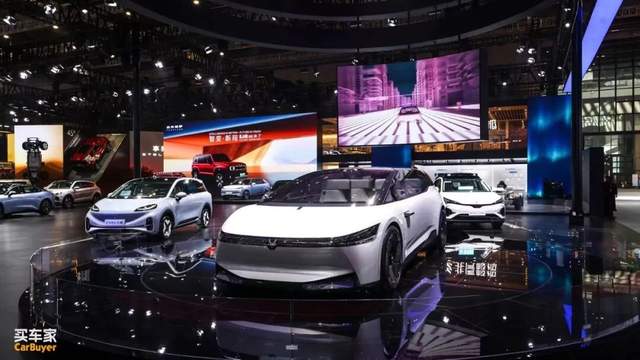
Its product lineup should also become more disciplined. The T1 can dominate the affordable pure-electric commuter segment, while the T5, S5, and future home-use SUVs/MPVs target the RMB 100,000–200,000 market. By delivering two to three stable volume sellers in these mainstream segments, ARCFOX can justify its existence.
Marginal models with low sales but high R&D and marketing costs should be discontinued. There’s no need to maintain a “complete” product matrix for appearances.
Too many brands in China’s auto market today have filled their product tables but underperformed in sales.
ARCFOX also needn’t pursue independent development for every technology. Platforms, three-electric systems, manufacturing, and intelligence capabilities invested in by BAIC BluePark for Xiangjie and other projects should be shared wherever possible. Amortizing costs across multiple models on one platform, serving more products with one supply chain, and maintaining stable factory output are essential to gradually offset past massive investments.
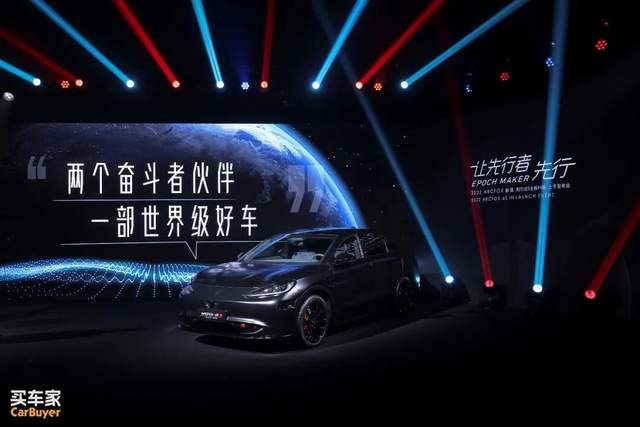
Critically, BAIC BluePark must evaluate ARCFOX beyond sales growth alone.
While doubling sales from 80,000 to 160,000 units looks impressive, if the gross profit margin remains negative, the best outcome is “selling more but losing money less quickly”—far from a viable business model.
The focus should shift to when the vehicle gross profit margin turns positive, whether the sales expense ratio declines, whether RMB 100,000–200,000 models become new sales pillars, and whether per-unit losses continue to narrow.
After all, sales doubling makes for great posters, but a positive gross profit margin proves the business is truly viable.
The next one to two years will be a critical validation period for ARCFOX.
If it can stabilize annual sales above 200,000 units while achieving a positive vehicle gross profit margin, proving that RMB 100,000+ models can also scale, ARCFOX won’t just be a brand surviving on compact cars—it will become BAIC New Energy’s true sales foundation.
But if, after two more years, sales still rely heavily on nearly unprofitable compact cars, and the company continues investing billions annually in R&D, channels, and marketing, BAIC BluePark should more decisively contract ARCFOX’s product lineup. It should transition to a lighter, more pragmatic operation, conserving resources for segments with higher profit potential.
ARCFOX’s shift from premium to cost-effectiveness isn’t wrong, nor is selling the T1 a sign of brand decline. At least it shows a willingness to humble itself and find where consumers truly want to spend their money.
Yet, after reviving the “restaurant” with boxed meals, the next step can’t just be comforting oneself with long lines at the door.
In business, the final test is whether money remains in the accounts after the meals are sold.
-
![]()
ARCFOX's Sales Finally Pick Up, But How Long Can BAIC Afford to Keep Losing Money?
-
![]()
4.6 Billion Yuan! 301382 Clinches Major Computing Power Deal
-
![]()
Ruide Intelligence and Gudong Intelligence Forge Ahead in Strategic Partnership, Eyeing Trial Production at Intelligent Optics Base in Second Half of the Year!
-
![]()
Thriving Beyond Family Succession: An Optical Pioneer Blazes a Trail for Private Firms
-
![]()
Samsung China Takes Another Step Back
-
![]()
Samsung China Takes Another Strategic Retreat
-
![]()
Xpeng Unveils New Large Five-Seater G9L, He Xiaopeng Claims It Outperforms 99% of Vehicles in the 300,000 RMB Price Range
-
Anthropic’s $10 Billion Multi-Year Compute Deal Unveiled