A New 20-Year Deal! SAIC and GM Renew Their 'Joint Venture': Are They Competitors or Allies?
 08/06 2026
 543
543
Initially, the concept of a 'joint venture' faced significant ideological disparities between China and the United States. This led to a setback for Thomas Murphy, the Chairman of General Motors, who first proposed the 'joint venture' model and visited China in 1978 to discuss potential cooperation, ultimately leaving empty-handed. However, 48 years later, the wheel has turned full circle.
On August 5, SAIC Motor and General Motors announced in Shanghai that they would extend their joint venture partnership for another 20 years, until 2047. While their initial joint venture in 1997 was a product of the prevailing trends of the time, the decision to extend the partnership until 2047 seems particularly noteworthy now. The reason is the current landscape of intense industrial competition between the United States and China. As the leading automotive companies in their respective nations, what does the cooperation between GM and SAIC signify?
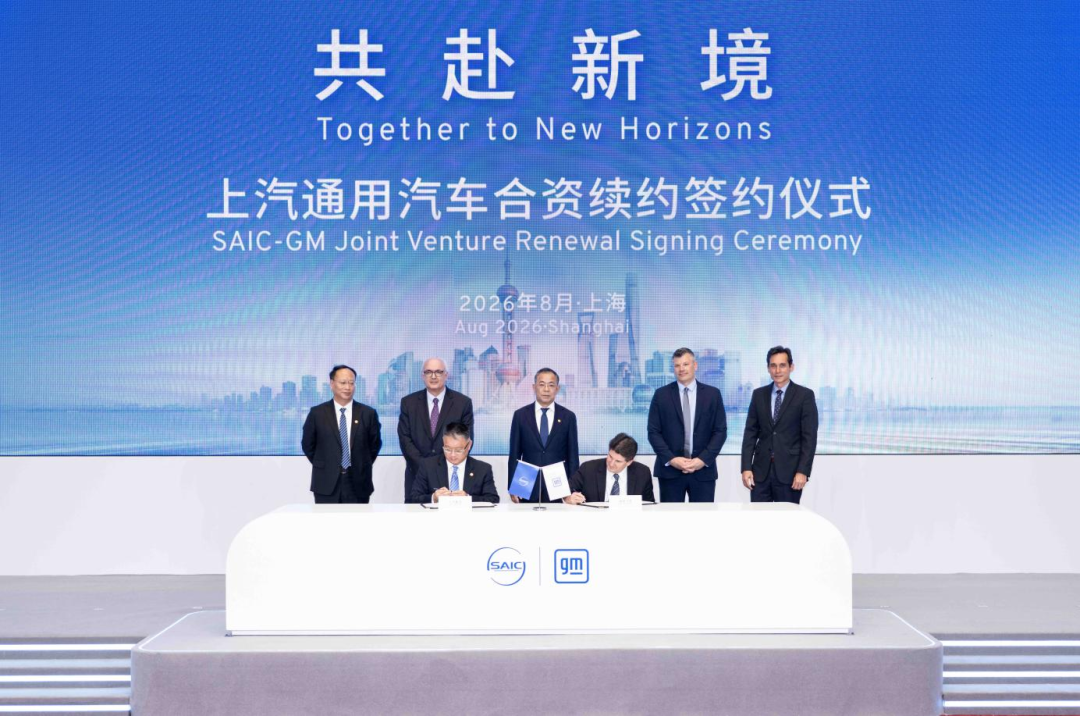
Let's first examine the official statement: Both parties emphasized that this renewal of cooperation is built upon nearly three decades of successful collaboration. Amidst profound transformations in the global automotive industry, SAIC Motor and General Motors are expressing their confidence in the long-term value of the Chinese automotive market, as well as in the transformation capabilities and development prospects of SAIC-GM. The shareholders will deepen their collaboration in technology research and development, supply chain management, and global market resources, providing ongoing support for SAIC-GM's intelligent electric transformation, local innovation, global expansion, and sustained healthy growth.
Breaking down this statement, it primarily conveys two key messages: firstly, to instill confidence; secondly, both parties will collaborate on technological development, emphasize intelligent electric transformation, and focus on the global market.
The first point, confidence, is undoubtedly crucial. Just on August 3, the United States added Chinese products such as Chacha sunflower seeds, Synear dumplings, and Septwolves to its import restriction list, not to mention new energy vehicles.
The second point pertains to technological collaboration between the two parties and SAIC-GM's intelligent electric transformation. In just two sentences, the word 'global' is mentioned twice: global market resources and global expansion. This evokes comparisons with Tesla, another U.S.-based company, which aims to 'become a benchmark factory and major export hub for Tesla globally.' This suggests that SAIC-GM intends to leverage China's supply chain advantages to circumvent various U.S. restrictions and enhance its role in 'exports.'
'Exports' Could Be a Pivotal Development Strategy
Public data indicates that as of September 2024, Tesla's Shanghai factory had exported a cumulative total of 1 million vehicles in less than four years. In 2025, Tesla's Shanghai factory delivered 851,000 new vehicles globally, accounting for half of its global sales, with 626,000 vehicles sold domestically, implying exports of approximately 220,000 units.
Given Tesla's localization rate of over 95%, this means that while Tesla is generating significant profits for its shareholders, it is also contributing substantially to China's foreign exchange earnings. One of the initial core objectives of China's automotive industry in establishing 'joint ventures' was to earn foreign exchange. Not to mention the contributions Tesla has made to establishing a comprehensive new energy vehicle supply chain in China following its growth. Therefore, even for a wholly foreign-owned enterprise like Tesla, its significance to China's automotive industry is undeniable.
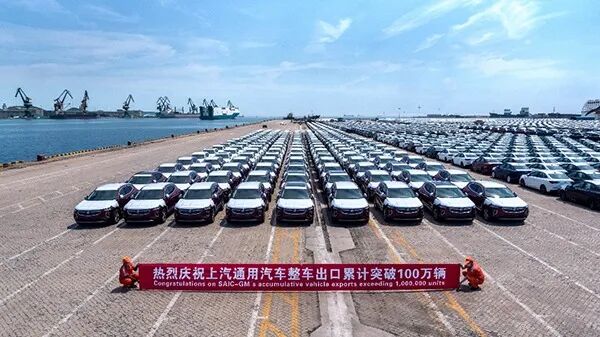
Now, let's shift our focus to SAIC-GM. Since exporting the first 50 Buick GL10 vehicles to the Philippines in 2001, SAIC-GM's cumulative exports surpassed 1 million units by July 2022. By the end of November 2025, this figure had exceeded 1.3 million units. In addition to complete vehicle exports, SAIC-GM's contributions to China's automotive supply chain even surpass those of Tesla.
From a global market perspective, General Motors has been gradually retrenching since 2015, withdrawing from passenger car markets in Western Europe and India, selling its Opel headquarters in Germany and all its complete vehicle factories in Western Europe, as well as its local complete vehicle manufacturing business in Thailand and two complete vehicle factories in India. It has retained only five core profitable markets: the United States, China, South Korea, Mexico, and Brazil.
In contrast, on the Chinese side, companies like SAIC and Great Wall Motors have successively acquired some of General Motors' overseas assets, helping GM mitigate greater losses. Simultaneously, Chinese-made vehicles have witnessed a continuous surge in exports in recent years, achieving technological advancements and becoming sought-after partners and joint venture prospects for overseas brands such as Audi, Volkswagen, and Stellantis. As a longstanding partner of China's automotive industry, it is clearly a prudent move for General Motors to retain the high-quality asset of 'SAIC-GM.'
From the perspective of the 'SAIC-GM' joint venture, if in the past, China and SAIC needed to leverage General Motors' technology and products for their development, and GM relied on the demand and scale of the Chinese market for its growth; today, China and SAIC are not as reliant on General Motors as before. However, General Motors still requires the demand and scale of the Chinese market, as well as SAIC Motor's intelligent electric technology and China's automotive supply chain advantages, to sustain SAIC-GM as a vital bridgehead for GM's continued profitability and expansion in the global market. This shift in the relative strength and status between the two parties has imbued 'SAIC-GM' with a completely different significance today.
'Zhijing Model': Exports May Represent the Short-Term Optimal Solution
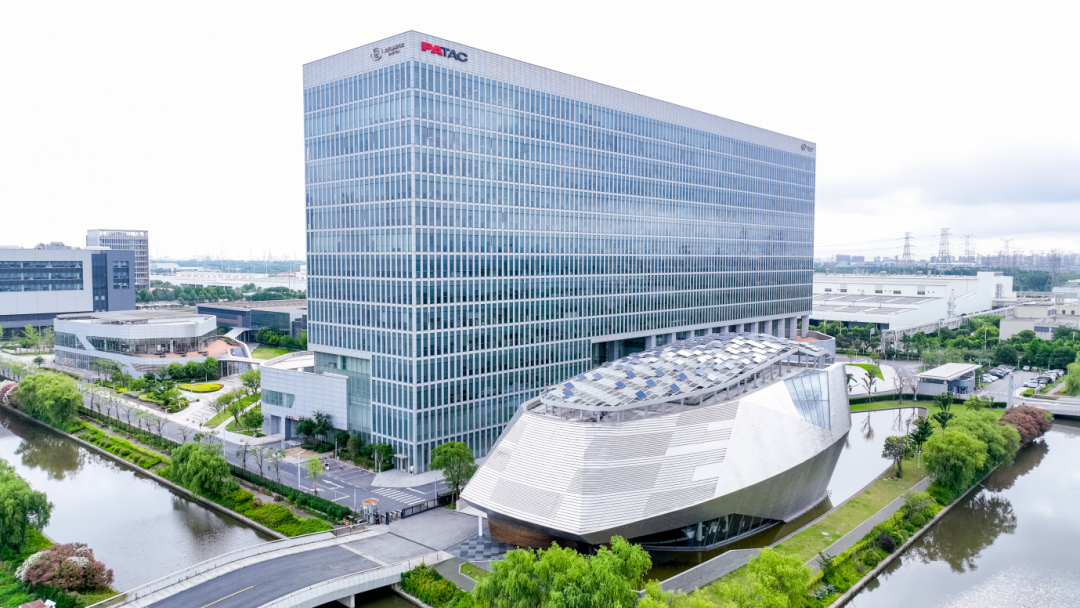
At today's press conference announcing SAIC-GM's renewed joint venture for another 20 years, SAIC-GM clearly stated that in the future, both parties will rely on the local research and development system and mature domestic supply chain established by their jointly founded research and development center in China—Patac, as well as the empowerment of SAIC Motor's leading intelligent electric technology capabilities in recent years. Simultaneously, they will inherit General Motors' century-old technological heritage and global stringent standards to continue providing high-standard products and services to the market.
SAIC-GM also cited an example: the Zhijing Model. As a new sub-brand of SAIC-GM, 'Zhijing' embodies SAIC Motor's intelligent electric technology, combined with Patac's R&D advantages and a mature domestic supply chain, along with GM's global product standards, creating a new entity that amalgamates multiple strengths.
SAIC-GM specifically mentioned that according to the plan, the Buick Zhijing E7 will be officially exported to overseas markets in October this year, becoming the first high-end new energy vehicle model from the Buick brand and SAIC-GM to venture overseas, marking a new chapter in the company's transformation and globalization strategy.
Buick Zhijing will not only set a benchmark for jointly developed and reverse-exported vehicles but also provide multinational automotive companies with a new model for 'local innovation, global sharing' in joint venture global expansion. With the support of both shareholders, SAIC-GM will continue to explore international markets in the Middle East, Africa, South America, Mexico, and the Asia-Pacific region in the future, further enhancing the global influence of China's local innovation achievements.
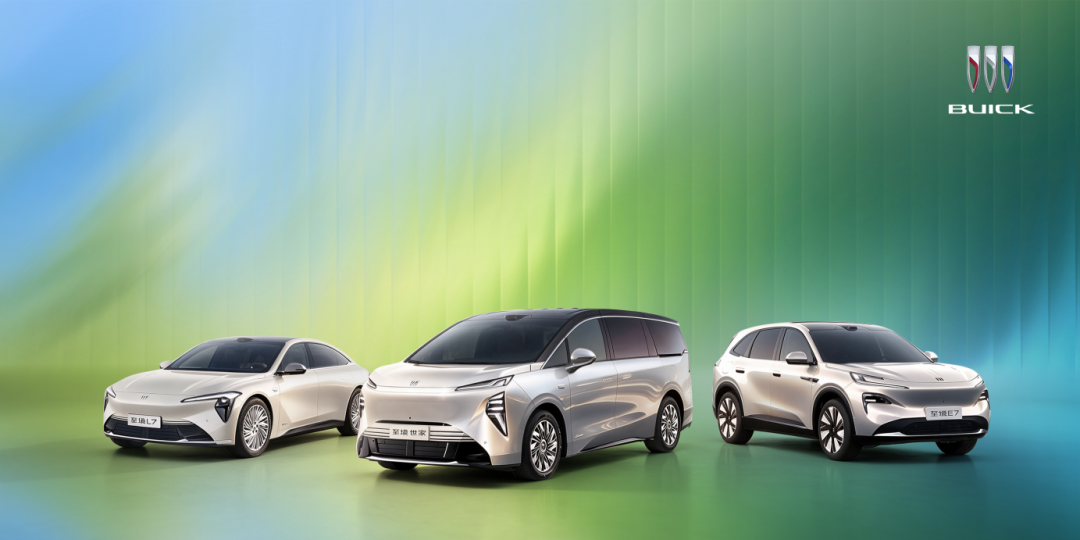
From these descriptions, it appears that SAIC-GM may place greater emphasis on overseas markets in the future. Public information reveals that since its launch in April 2025, the Zhijing brand has introduced three models: Zhijing Shijia, Zhijing L7, and Zhijing E7, all of which are new energy vehicles. As a new brand, Zhijing must confront fierce competition in China's vast new energy vehicle market, which is far more intense than the era when SAIC-GM's early star models, the Buick New Century and Buick Sail, were introduced. It is unrealistic to expect Zhijing's new models to achieve immediate success upon launch, as the Buick New Century and Sail did in their heyday. Therefore, both SAIC and GM need to chart a completely different business path for Zhijing. 'Overseas markets' may currently represent the most realistic solution.
According to forecasts by consulting firm AlixPartners, China's automotive exports are projected to reach 10 million units in 2026, a 41% year-on-year increase, 2.5 times the annual automotive exports of Japan. By brand, taking Chery Group as an example, its cumulative sales from January to July this year were 1.6343 million units, with exports accounting for a staggering 70%.
In the international market, due to sustained optimism about China's new energy vehicles, Stellantis, the world's third-largest automotive group, signed a cooperation agreement with China's Leapmotor. Not only did it directly acquire a stake in Leapmotor, but it also established Leapmotor International, a joint venture exclusively responsible for the sales and production of Leapmotor's products outside the Greater China region.
Additionally, collaborations such as Volkswagen and XPENG Motors, as well as Audi and SAIC's new cooperation, share similarities with SAIC-GM's 'new joint venture.' This indicates that regardless of the barriers between countries, the global automotive industry, which has always been intertwined, is engaging in even more far-reaching cooperation, mutually dependent on each other.
Perhaps, for the industry and capital, while political landscapes may undergo significant changes every four years, joint venture cooperation aimed at mutual benefit remains the true market imperative. Given the current trajectory of China's new energy vehicle industry, the numerous 'joint ventures' in the Chinese market are likely leaving a lasting impression on the global automotive industry. Companies that have already embraced China's growth are undoubtedly rejoicing silently in their hearts. For those who previously completely disregarded 'joint ventures,' they may now be regretting their stance. From this vantage point, SAIC and GM's new cooperation undoubtedly represents the most mainstream industry trend today.
-
![]()
Innovative ‘Large Family Box-Shaped’ Model, Great Wall H10, Officially Launches with Limited-Time Trade-In Price Starting at 201,800 Yuan
-
![]()
Google No Longer Lets Top Scientists 'Call the Shots'
-
![]()
Ctrip Loosens Its Grip on Hotels, While Fliggy Remains Trapped Within Taobao
-
![]()
Four Visits to Lu Fang: The Vision of VOYAH in My Heart | Insight
-
![]()
Hot Stocks to Track | SpaceX: Releases First Quarterly Report After Listing, Revenues Soar by 92%, Capital Expenditure Reaches $18.4 Billion, Trillion-Dollar Target Advanced to 2030
-
![]()
Hot Stocks to Monitor | SpaceX: Releases Inaugural Quarterly Report Post-IPO, Revenue Soars 92%, Capital Expenditure Reaches $18.4 Billion, Trillion-Dollar Revenue Goal Moved Up to 2030
-
![]()
Porsche China Shifts Focus Amid Sales Struggles
-
![]()
Without a Web Celebrity CEO, It Still Achieved Over 100,000 Monthly Sales in Its Debut Month! Who Is Zero Run Motor Proving Wrong?