Over 140,000 Charging Stations Undergo Spot Checks for Charging Accuracy; Non-Compliant Units Face Operational Ban
 08/07 2026
 519
519
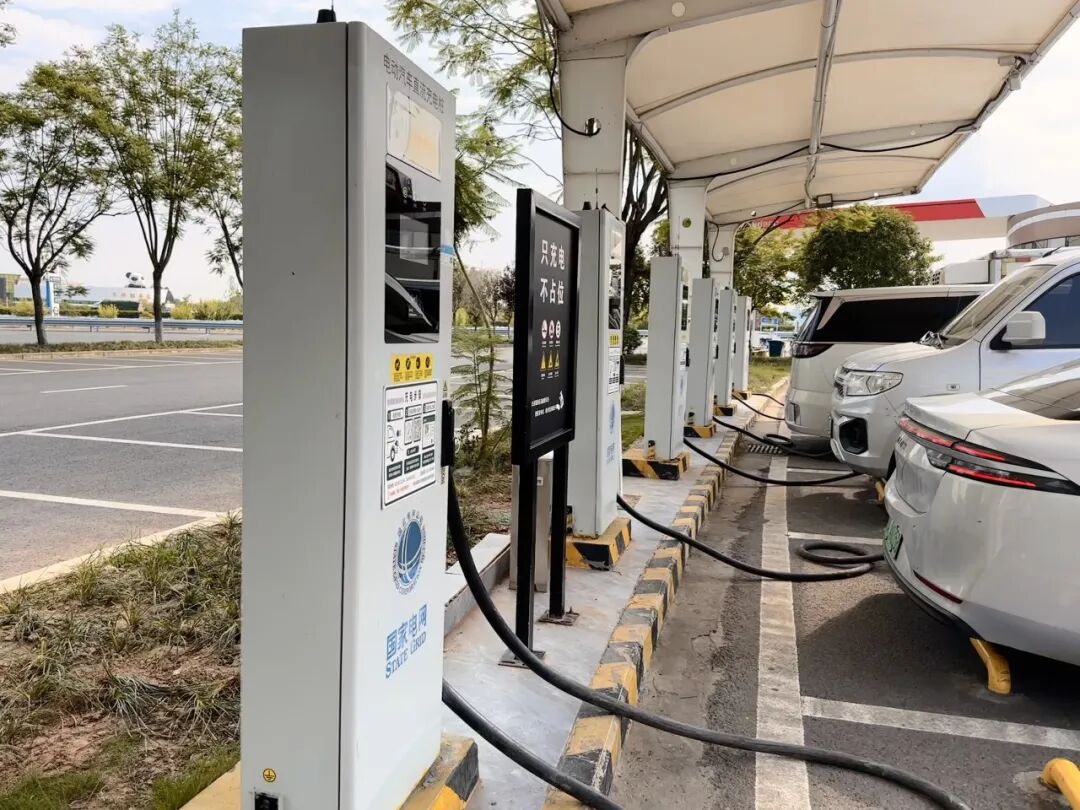
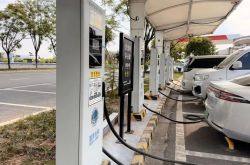
As the number of new energy vehicles (NEVs) nears 49 million and the national charging infrastructure exceeds 23 million units, the accuracy of charging stations—critical trade settlement instruments directly impacting consumers—has emerged as a focal issue affecting millions of vehicle owners. According to the latest official data released by the Ministry of Public Security and the National Energy Administration in July 2026, by the end of June 2026, the national NEV fleet had reached 48.97 million, accounting for 13.19% of all vehicles. Over the same period, the total number of electric vehicle (EV) charging facilities nationwide surged to 23.057 million, marking a 43.2% year-on-year increase. Against this backdrop of rapid industry growth, the State Administration for Market Regulation (SAMR) recently published a report on its measurement regulatory efforts for the first half of 2026, addressing persistent market challenges such as measurement inaccuracies, equipment malfunctions, and fraudulent practices. This report not only revealed extensive inspection data on charging stations but also signaled a paradigm shift in regulatory logic for the NEV charging sector—from basic hardware inspections to a deeper governance approach emphasizing the primary responsibility of operating enterprises and exploring digital precision regulation.
According to the report, from January to June 2026, a total of 11,164 charging station operators were inspected nationwide, with 145,829 operational charging stations undergoing spot checks. Among these, 1,783 units were found non-compliant, and 282 cases of measurement violations were formally addressed. These figures underscore that, despite the industry's rapid expansion, many operators still adhere to an extensive operational model that prioritizes station construction over maintenance. Issues such as equipment aging, delayed mandatory inspections, and irregular maintenance have led to discrepancies between the actual power delivered (electricity charged) and the billed amount (electricity invoiced). This not only infringes on consumers' right to fair trade but also severely disrupts market order in the charging sector. 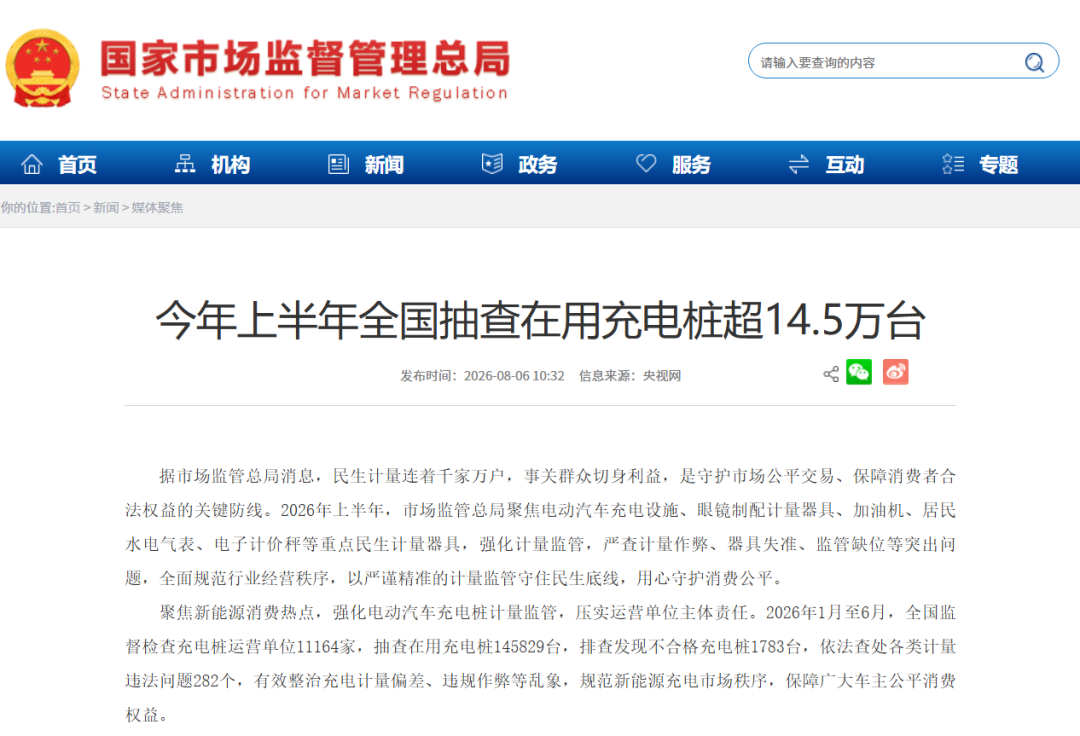
The most significant signal from this regulatory crackdown is the substantive reinforcement of the "primary responsibility of operating enterprises." When charging stations operate on a fee-based basis, the operator bears primary responsibility for ensuring measurement compliance. Regulatory authorities no longer attribute measurement inaccuracies solely to natural hardware degradation but explicitly define regular equipment inspections, fault repairs, and status checks as mandatory legal obligations for enterprises.
Charging stations that have not undergone inspection or have failed inspection are strictly prohibited from providing fee-based services. This shift from "regulating equipment" to "regulating entities" aims to compel operators to abandon blind expansion strategies focused solely on station quantity and instead prioritize the construction of measurement management systems alongside hardware upgrades.
Given the vast national charging network comprising tens of millions of units, traditional on-site inspections for each charging station are no longer feasible. To address this, regulatory authorities are piloting a new mandatory inspection model that integrates "status evaluation + big data real-time monitoring + sampling inspection." This digital regulatory approach leverages operational data from charging platforms for status assessment and, combined with on-site sampling inspections, can precisely identify high-risk equipment and abnormal charging stations, significantly enhancing regulatory efficiency and targeting.
Meanwhile, starting August 1, charging stations without China Compulsory Certification (CCC) certificates or certification marks are prohibited from leaving factories, being sold, or being used in commercial activities. Some regions, such as Tianjin, have also fully implemented unified certification marks for charging station measurement inspections, establishing compliance safeguards at both the production and operational stages.
Compliance with charging measurement standards has become an unavoidable requirement for operators. Amid the rapid deployment of advanced technologies like ultra-fast charging and liquid cooling, enterprises must not only establish regular inspection and certification mechanisms, promptly decommission faulty and non-compliant charging stations, but also maintain detailed data records to enable rapid traceability and verification in the event of billing disputes with vehicle owners.
For the vast majority of NEV owners, when charging daily, they should look for mandatory inspection compliance marks on charging stations. If billing irregularities occur, they can protect their rights by retaining order receipts and payment records and filing complaints with market regulatory authorities. The transition from large-scale station construction to a balanced focus on both construction and management, upholding livelihood standards through rigorous and precise measurement regulation, is the inevitable path to promoting the standardized and high-quality development of the NEV charging industry.
-
![]()
Five Major Players Enter the Arena: The All-Out Battle for the Ultimate AI Office Super Gateway Begins
-
![]()
Why Does Changan Technology Abandon Internal Capital Injection and Embrace Marketization?
-
![]()
Royalties Outstrip Licensing Fees for the First Time: Arm’s Leasing Business Thrives
-
![]()
What changes will happen to the fate of Musk and Tesla?
-
![]()
Google’s Farewell: The Era of Large Models Steps into the ‘Garage Phase’
-
![]()
Blue Light Fades: The Dawn of a New Era for Intelligent Driving Lighting
-
![]()
Over 140,000 Charging Stations Undergo Spot Checks for Charging Accuracy; Non-Compliant Units Face Operational Ban
-
![]()
Tesla is Just the Start: China’s ‘Super Catfish’ is Set to Revolutionize Europe