Li Shufu’s Swansong Financial Report: Two Words Capture the Essence – Global Expansion
 08/19 2026
 328
328

During the Three Kingdoms period, Zhang'an served as a pivotal maritime hub in southeastern China, with warships embarking from its shores into uncharted waters.
In the Tang and Song dynasties, Zhang'an Port flourished as a bustling center for merchant vessels. Traders would register in Mingzhou (modern-day Ningbo) before setting sail, transporting silk and local goods to Japan, Goryeo (Korea), and Southeast Asia. Since ancient times, Zhang'an has been characterized by the adage, "The population outstrips the land, and arable fields are scarce," making seafaring the only viable option.
For over a millennium, merchant ships have frequented Zhang'an Port, which now bears the modern name: Taizhou.
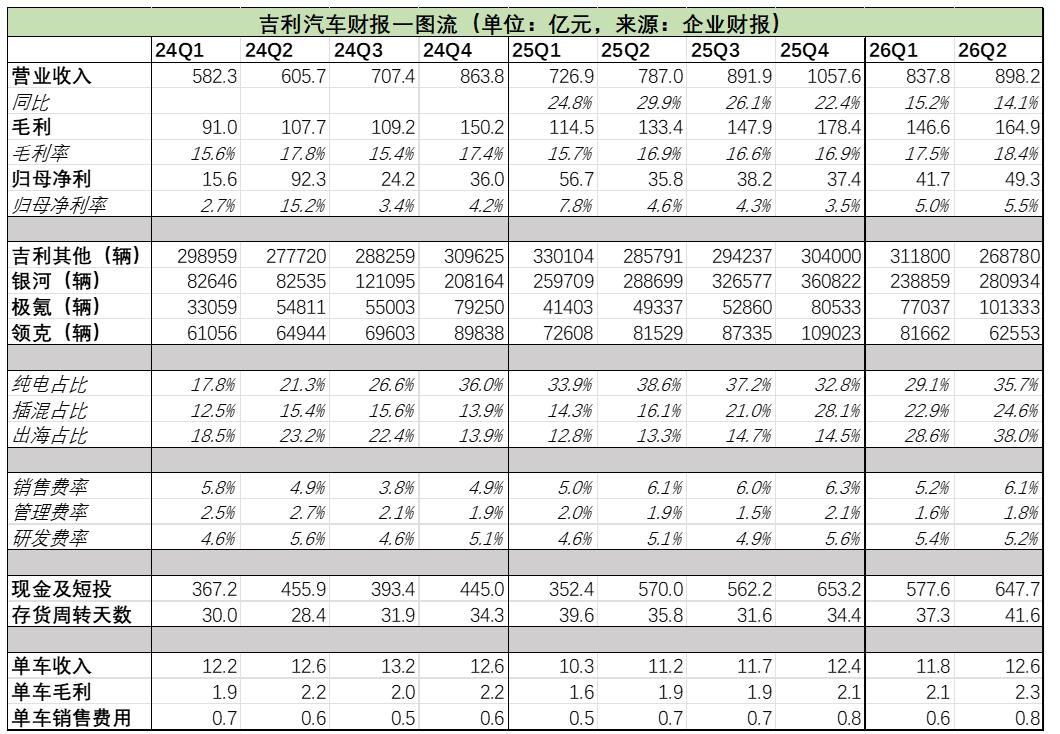
On August 17, during trading hours, Geely Auto unveiled its Q2 2026 financial results, reporting RMB 173.6 billion in revenue for the first half of the year, marking a 15% year-over-year increase. More significantly, in terms of profitability, the net profit attributable to shareholders for the first half was RMB 9.09 billion, experiencing a slight 1.8% year-over-year decline, primarily attributable to exchange rate fluctuations. The core net profit attributable to shareholders, excluding these effects, was RMB 9.68 billion, slightly surpassing expectations.
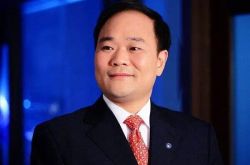
During the earnings call, after CEO Gui Shengyue presented the financial highlights, he reminded attendees to check Geely's latest announcement on their phones—founder Li Shufu had stepped down, and An Conghui, a seasoned executive who has been with Geely Holding since its inception, assumed the role of chairman, heralding a new chapter for Geely.
Theoretically, this Q2 report represents Li Shufu's final financial statement after leading Geely for 30 years. In our view, the core message of this report can be distilled into one theme:
Li Shufu, a native of Taizhou, drawing inspiration from Zhang'an's maritime legacy, utilized this final quarterly report to articulate Geely's core narrative: global expansion.
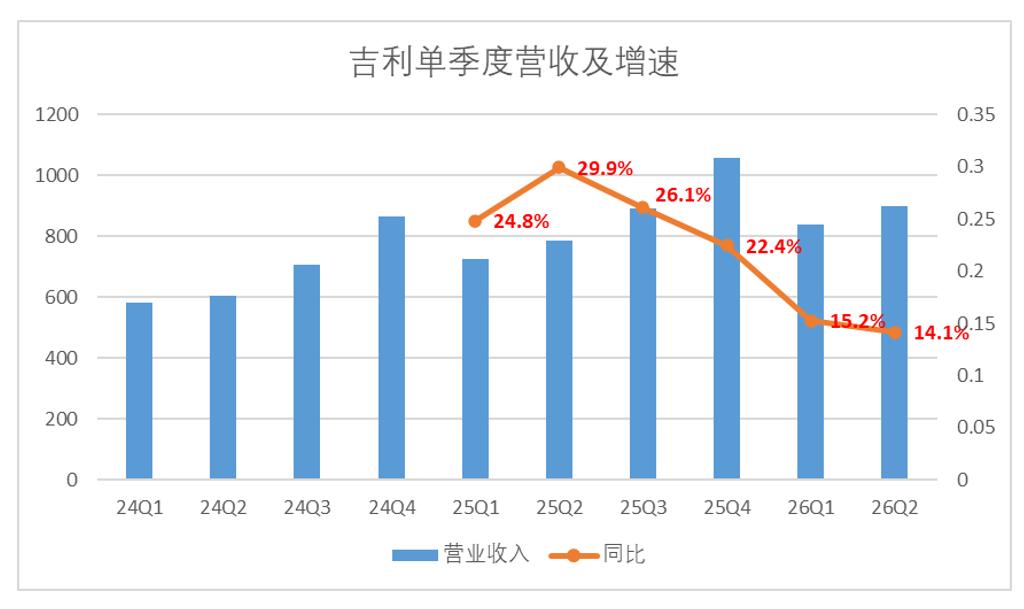
Let's first delve into the revenue performance. In Q2 alone, Geely achieved RMB 89.82 billion in quarterly revenue. Investment institutions had diverse expectations for Geely's revenue, but the actual figure slightly fell short of the average forecast while exceeding the median estimate.
In Q2, Geely sold a cumulative 1.423 million vehicles, ascending one rank to third place, trailing only SAIC and BYD, and solidifying its position as the second-largest private automaker.
From a product mix and energy type perspective, Geely's pure electric vehicle (EV) sales declined for two consecutive quarters in the first half of the year, though the decline in Q2 slowed compared to Q1. Domestically, new energy vehicle (NEV) sales overall fell by 14.1% in the first half, with pure EV sales declining by 6.1%.
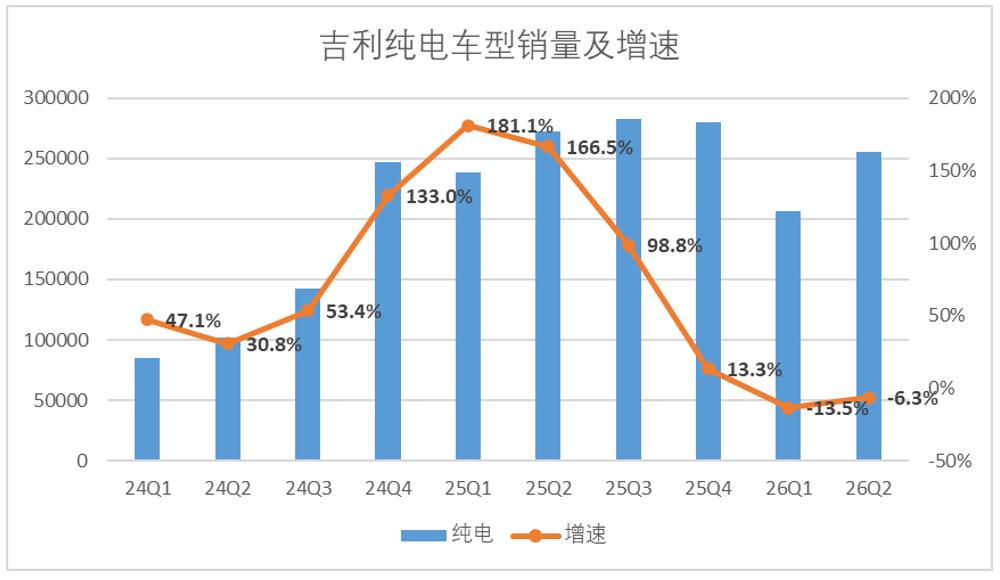
In other words, Geely's decline in pure EV sales outpaced the overall pure EV market. Purely in terms of pure EVs, Geely's performance was lackluster.
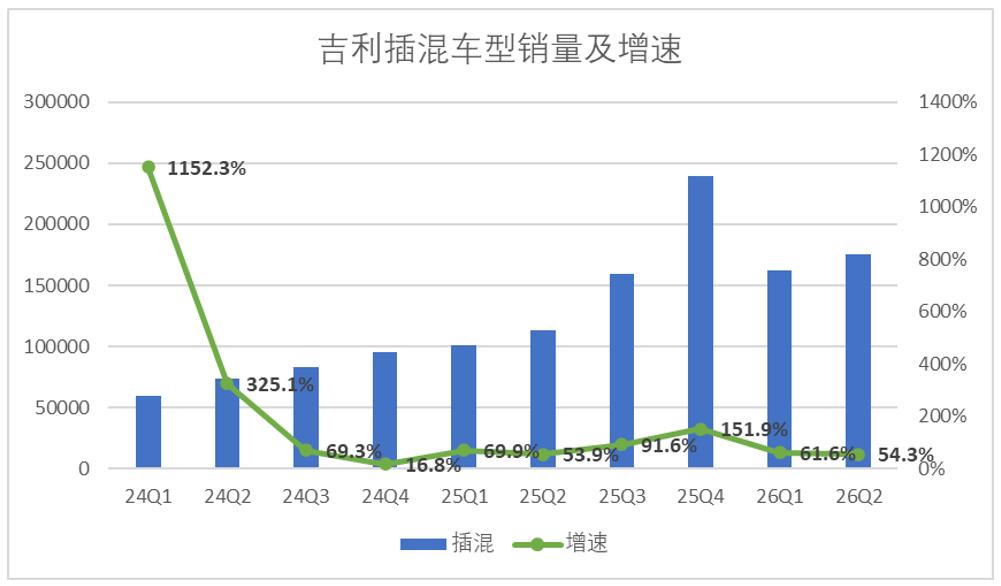
However, domestically, plug-in hybrid (PHEV) sales declined by 25% in the first half, while Geely's PHEV sales maintained robust growth, reaching 54.3% in Q2.
The primary driver behind Geely's counter-trend growth in PHEVs is global expansion.
Now, let's examine the profit performance. According to industry data, the average net profit margin in the vehicle manufacturing sector was a mere 1.5% in the first half of the year. Intense competition, reduced subsidies, and escalating upstream raw material costs have exerted significant operational pressure on automakers.
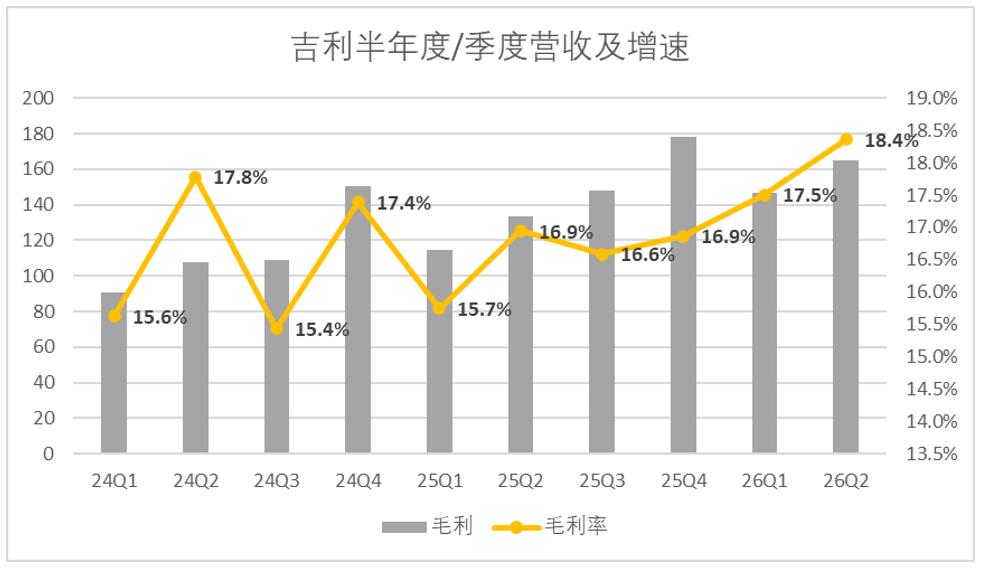
However, Geely's profit performance in the first half was commendable. In Q2, the gross profit margin reached 18.4%, surpassing the Q1 high and setting a new three-year record.
In terms of net profit attributable to shareholders, Geely reported RMB 4.93 billion in Q2, with a net profit margin of 5.5%. The net profit attributable to shareholders for the first half remained largely unchanged year-over-year. The primary reason is that exchange rate gains and losses were higher last year, reaching RMB 3.63 billion, compared to a loss of RMB 673 million in the same period this year, meaning non-operational gains and losses eroded net profits.
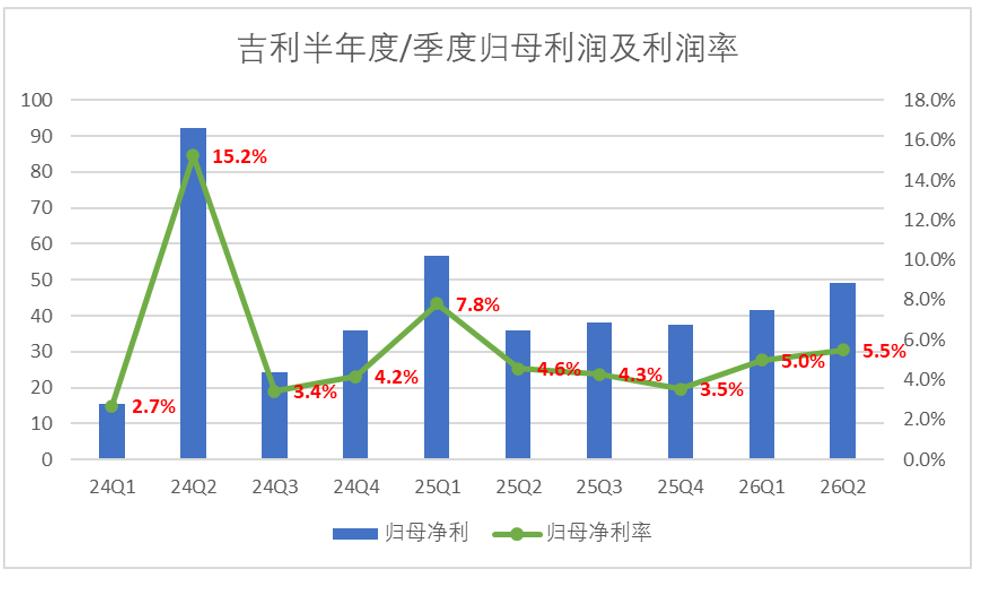
During the reporting period, Geely disclosed its core net profit attributable to shareholders (a non-standard measure), reaching RMB 9.68 billion, significantly surpassing consensus expectations.
There are two primary reasons for the outstanding profit performance:
First, there was a noticeable structural optimization towards high-end models, with Zeekr's sales volume surging as the most typical example. Structurally, Zeekr was the only brand among the four major brands to achieve positive growth in the first half of the year, with growth nearly doubling. Zeekr's relatively higher pricing contributed to the elevated gross profit margin.
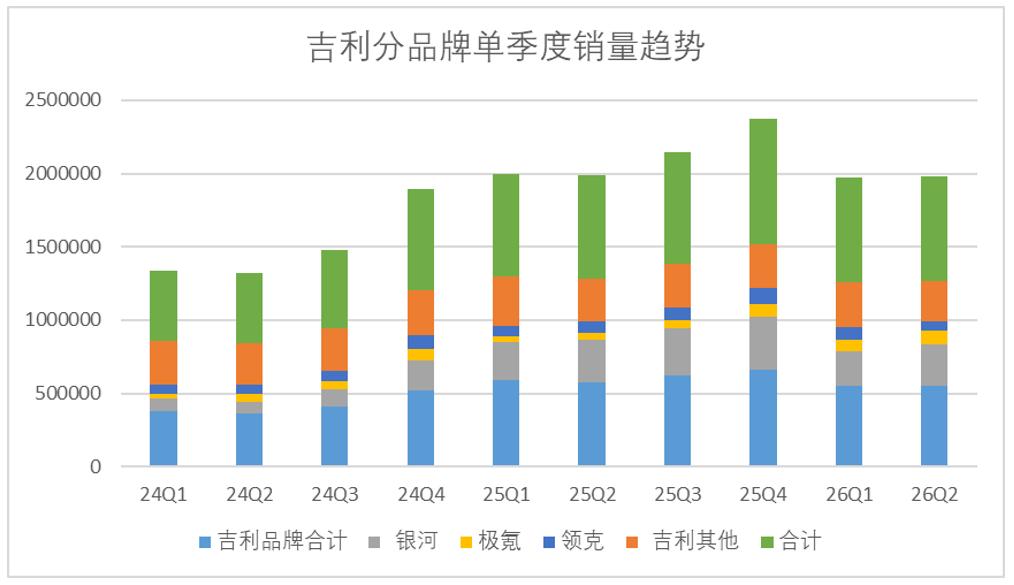
Second, the exceptional performance in global expansion. Since the beginning of the year, Zeekr's overseas sales volume has surged, with Q1 year-over-year growth reaching 125.7% and Q2 climbing to 188%. Previously, JP Morgan estimated that the gross profit margin of Geely's overseas sales could be 5%-7% higher than domestic sales.
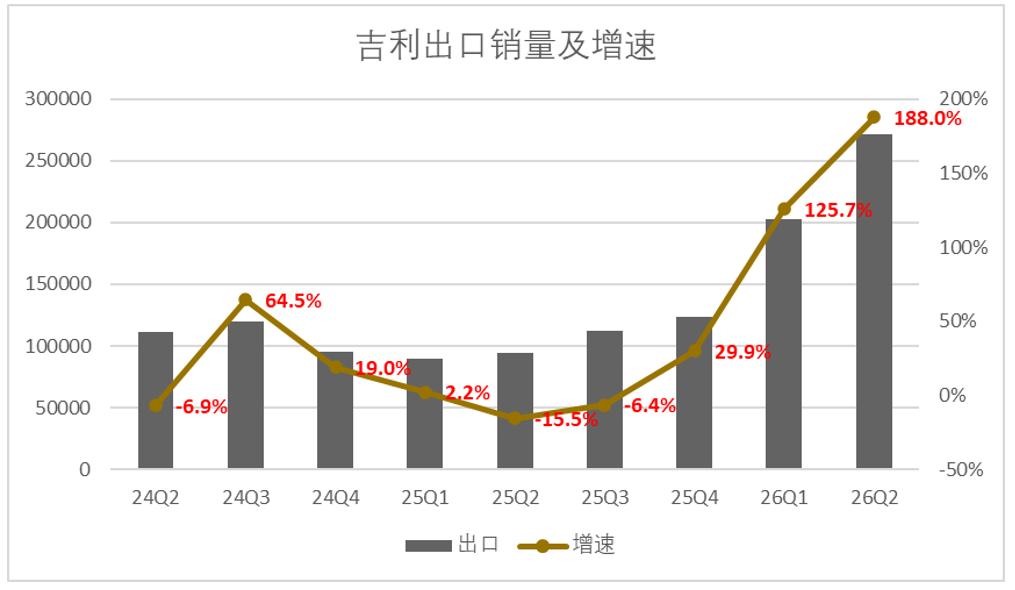
During the earnings call, management explicitly stated that high-endization and global expansion are the core reasons for profit improvement.
Finally, let's assess the cost performance. Since the release of the Taizhou Declaration, Geely's management has emphasized internal integration and the resulting scale advantages in every financial reporting season. In the first half of the year, Geely's overall sales expense ratio and management expense ratio both declined.
However, focusing solely on quarterly performance, in Q2 this year, Geely's overall sales expense ratio rebounded, increasing by 80 basis points from Q1, while the management expense ratio rose by 20 basis points, resulting in an overall expense ratio increase of 70 basis points.
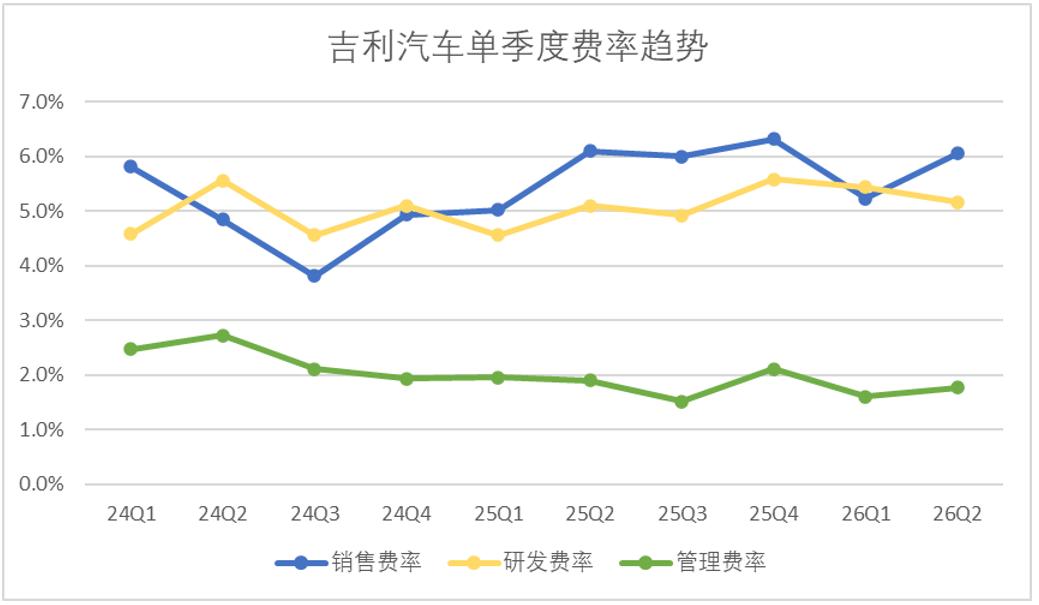
Clearly, from a trend perspective, the cost control optimization brought about by One Geely is not very stable.
In terms of inventory, Geely's inventory balance saw a significant increase in Q2 this year, reaching RMB 33.8 billion, a new three-year high. This drove the inventory turnover days to 41.6, an increase of 4.3 days sequentially and 5.8 days year-over-year, also setting a new three-year high.
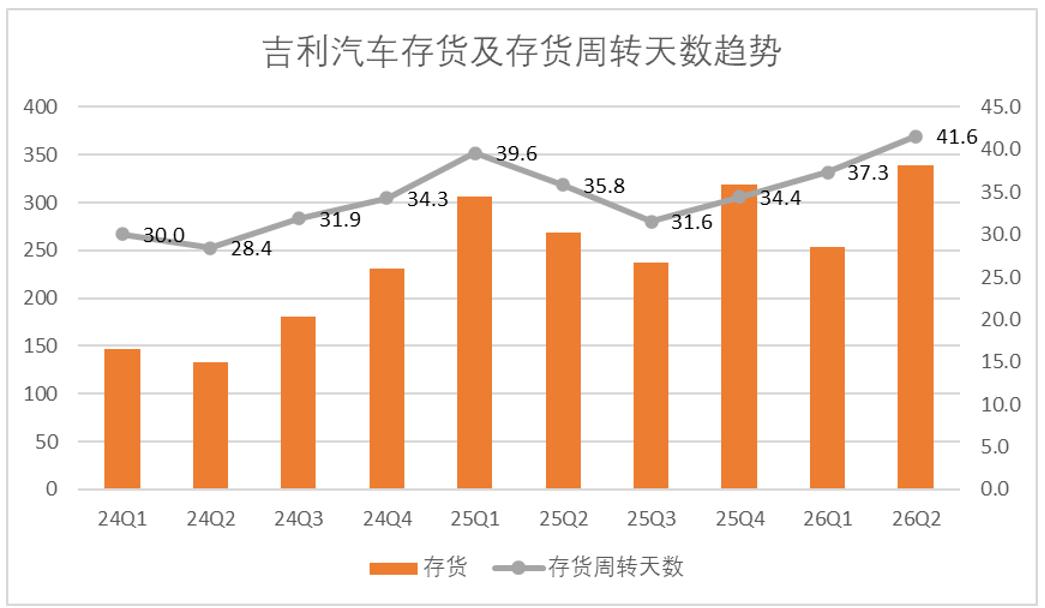
Clearly, this contrasts sharply with sales performance. A closer look at the financial report reveals that finished goods inventory grew by 3.2% year-over-year, while raw materials inventory surged by 23.8%.
As management mentioned in the earnings call, upstream commodity prices have risen significantly this year, while downstream competition remains intense. Therefore, Geely increased its raw material inventory levels. Thus, the inventory growth, in the short term, is not a sign of sluggish sales but rather a proactive measure to stabilize prices, a logic similar to Lenovo's approach.
From an industry perspective, increasing inventory in Q2 and Q3 is an inevitable trend.
In our analysis last quarter on the valuation gap between Geely and BYD, we reached a relatively clear conclusion: apart from accounting policies (BYD has a more conservative accounting strategy that lowers profit margins), Geely's valuation concerns mainly focus on three aspects:
Prolonged indecision in the new energy transition; Slower pace in global expansion; Mediocre performance in optimizing the One Geely strategy.
After Li Shufu's farewell video, the new management explicitly addressed three points, directly corresponding to these three issues:
First, Geely will cease production of fuel-powered vehicles.
Second, they set strategic goals for global expansion, raising this year's overseas sales target from 640,000 to 920,000 vehicles and setting a goal of 2 million overseas sales within 2-3 years. If achieved, this would significantly accelerate Geely's global footprint.
Third, they reiterated their commitment to the One Geely strategy, believing there is still room for cost dilution and that they will integrate and reuse some R&D, sales, and channel resources.
Clearly, Li Shufu understands Geely's challenges and has clarified the company's core strategic direction before stepping down.
Returning to Geely's leadership change, for investors, Li Shufu's resignation was indeed unexpected. An Conghui, his successor, is a Geely veteran who has been with Li Shufu since the company's inception.
In Li Shufu's vision, he has already charted the course for Geely's future, with An Conghui as the ideal successor, akin to 'Cao Can' (a capable successor in Chinese history).
After taking over, An Conghui shared a story from his early days at Geely. Li Shufu's vision since the company's founding was for two-thirds of Geely's sales revenue to come from overseas markets.
Thirty years ago, this goal seemed far-fetched. But looking back in 2026, it aligns perfectly with the inherent mindset of the people of Zhang'an. The dilemma of "the population outstripping the land, and arable fields being scarce" in Taizhou is now expanding from a single city to the entire Chinese automotive industry.
If we only consider the new energy vehicle market, the domestic "arable land" is rapidly shrinking.
In the first half of 2026, China's passenger vehicle retail sales totaled 8.768 million units, down 20.2% year-over-year; new energy vehicle retail sales reached 4.714 million units, down 13.6% year-over-year.
However, production and sales rhythms are mismatched, and no player in the market is willing to concede. In the first half of the year, automobile production reached approximately 14.993 million units, with new energy vehicle production at 7.438 million units, up 6.7% year-over-year. Moreover, most automakers are still adding production lines. If growth continues to decelerate, it will be difficult to quickly clear excess supply-side capacity.
Among the 10 A-share listed passenger vehicle (non-commercial vehicle) enterprises, only BYD and SAIC reported profits exceeding RMB 1 billion in the latest quarterly financial reports, while five companies still reported net losses attributable to shareholders. In the Hong Kong stock market, half of the vehicle manufacturing enterprises have yet to reach the breakeven point.
The automakers with strong profit performance are precisely those with strong overseas performance.
Clearly, in the current environment, Chinese new energy vehicle companies may prematurely enter a state of "aging before becoming wealthy." Meanwhile, since the beginning of the year, the price of lithium carbonate has surged from an average of RMB 75,500 per ton in 2025 to over RMB 170,000 per ton, a roughly 125% increase, while the average selling price of new energy vehicles has declined by about 12%, intensifying pressure.
For all automakers, Li Shufu has actually pointed out a clear path: global expansion.
Geely's management repeatedly mentioned the 123456 strategy during the earnings call, with '1' representing One Geely.
'23456' corresponds to market share targets in different regions: 600,000 vehicles in Europe, 500,000 in ASEAN, 400,000 in Latin America and Africa, 300,000 in Eastern Europe, and 200,000 in Central Asia and the Middle East.
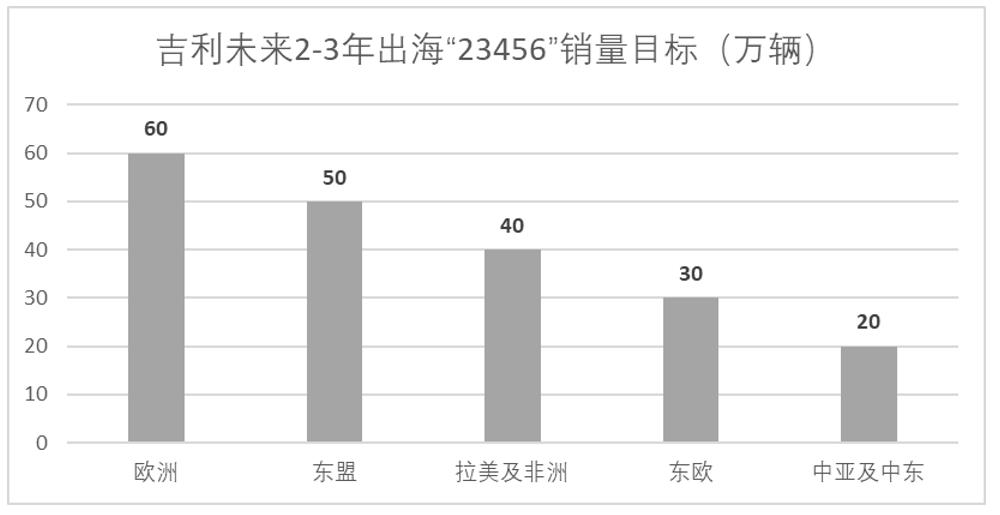
Previously, Geely's global expansion relied heavily on Proton to capture relatively easier markets. To achieve these goals, Geely must compete head-on with formidable rivals like Toyota, Volkswagen, Ford, and Hyundai, rather than solely focusing on domestic new forces and BYD.
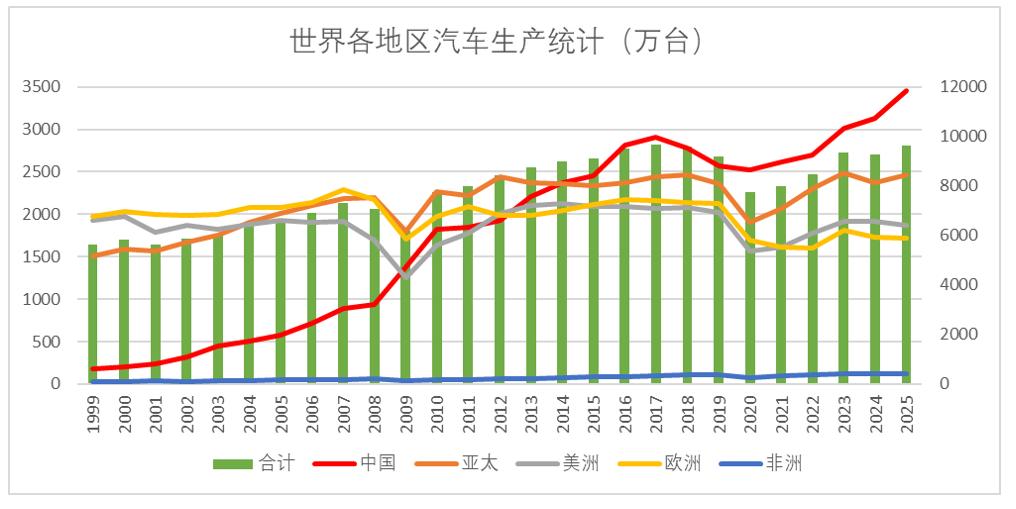
Chinese automakers have all reached this stage. As the saying goes, "New energy will harvest the fuel vehicle market, and Chinese new energy vehicles need to harvest the global market." Now that production has long been the world's highest, the question is whether Chinese brands can load onto cargo ships and set sail for global markets.
-
![]()
Securing 2 Billion Yuan in Financing and Supplying Inno-Light: This Optical Device Company Launches Its IPO!
-
![]()
Farewell to 'Card Stacking': 2026 Marks China's Computing Power Shift to 'Token Value Output' Era
-
![]()
Xiaomi Weathers Storage Price Surge, Q2 2026 Revenue Tops 100 Billion Yuan Again
-
![]()
Geely Bids Farewell to the 'Li Shufu Era': A Historic Power Transition in China's Auto Industry | Auto Circle
-
![]()
Baidu Prepares for Inclusion in Southbound Trading: Wall Street Reassesses the Value of 'AI ETF'
-
![]()
Revenue and Net Profit Dip, GPU Cloud Rockets 283%: Baidu’s AI Strategy Hits Payoff Period
-
![]()
How to Leverage AI Digital Humans for Overseas Live Streaming and Key Precautions
-
![]()
Can L1, the Shargeek AI Glasses That Once Stopped Production Voluntarily, Make a Resurgence? A Firsthand Account