Consumers Are Wiser Now: Auto Shows Must Showcase Authenticity
 08/21 2026
 555
555
Lead-in
Introduction
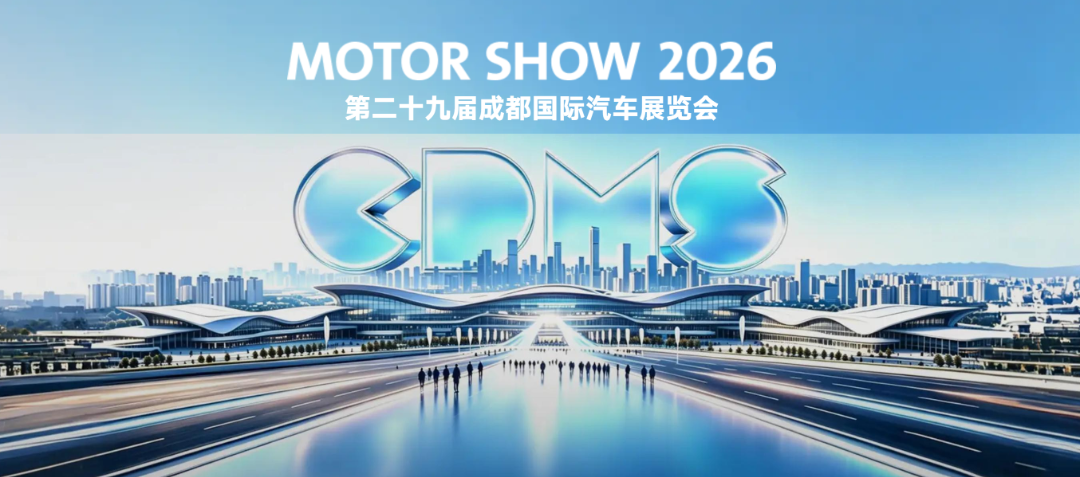
The 2026 Chengdu Auto Show serves as a litmus test for the industry's return to rationality.
What types of cars do Chengdu residents prefer to purchase? Even locals might be surprised by the answer. For context, let's first examine the overall situation in Chengdu's auto market during the first half of 2021. The top-selling brands included Volkswagen, Toyota, Changan, BMW, Mercedes-Benz, Audi, Geely, and Buick.
In some months, the three major BBA brands (BMW, Mercedes-Benz, Audi) even ranked among the top five. Overall, domestic brands accounted for approximately one-third of the market share, indicating that joint venture and luxury brands were more favored by Chengdu consumers. This is why, in the past, the industry uniformly recognized Chengdu as a market with strong automotive purchasing power.
However, the situation underwent a complete transformation in the first half of this year. According to the "Chengdu Automotive Market Analysis Report" jointly released by Qiuxin Consulting, Jitu Consulting, and 361ci, in the first half of 2026, the top 20 domestic passenger car companies in Chengdu accounted for a combined market share of 78.45%. Geely Auto took a slight lead, followed by BYD, while BBA fell out of the top 10.
Despite this, these traditional automakers still experienced a collective decline, while new energy vehicle (NEV) startups accelerated their growth. NIO's sales in the first half of the year surged by 65.13% year-on-year, propelling it from the fringes of the rankings to eighth place. Leapmotor rose by 34.61%, Zeekr by 51.60%, and both saw significant ranking improvements. Additionally, Xiaomi maintained positive growth.
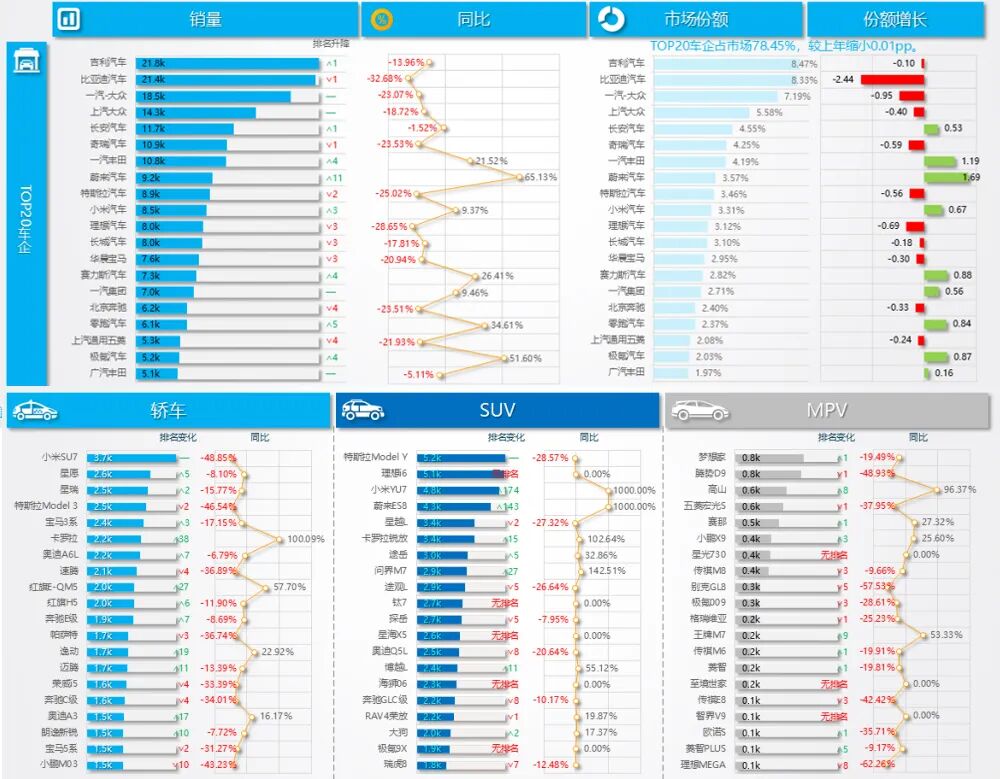
Breaking it down by vehicle type, in the sedan market, the Xiaomi SU7 led in sales, while the Tesla Model 3 fell by 46.54% and the BMW 3 Series by 17.15%. In the SUV market, the Xiaomi YU7 topped the charts, with the Li Auto i6 remaining in the top ranks and the NIO ES8 experiencing explosive growth. In the MPV market, the Voyah Dreamer and Denza D9 tied for first place, while the WEY High Mountain rose by 96.37% and the XPENG X9 by 25.6%, with many fuel-powered MPVs seeing significant declines.
The best-selling models were still those priced in the mid-to-high range, showing that Chengdu remains the familiar Chengdu. It's important to note that Chengdu is a megacity without license plate lotteries or purchase restrictions. Moreover, in the first half of this year, Chengdu maintained its position as the top-selling city in China with 261,700 vehicles sold, surpassing Shanghai, Beijing, and Guangzhou.
However, the overall market still saw a year-on-year decline of 13.12%. Even though Chengdu ranked third nationwide in NEV sales, they also fell by 9.55% year-on-year. This trend aligns with the broader Chinese auto market, where 1.461 million passenger vehicles were sold nationwide in July, down 20.9% year-on-year and 8.8% month-on-month.
In July, 951,000 NEV passenger vehicles were sold, a slight year-on-year decline of 3.9%, far smaller than the overall market's 20% drop. NEVs accounted for 65.1% of total domestic passenger vehicle retail sales in July, a record high. Conversely, fuel-powered vehicle retail sales plummeted by 41% year-on-year. Nine out of the top ten models in July's passenger vehicle retail sales were NEVs.
It's clear that the market is still contracting, but the extent of the contraction varies significantly. Most of the market share lost by fuel-powered vehicles is being rapidly absorbed by NEV brands. This means that as the market shrinks, the key question is: whose share is shrinking? Chengdu represents both a unique and not-so-unique market, where traditional fuel demand is weakening, and high-end NEVs are rapidly rising.
Essentially, consumers' car-buying logic is changing. However, the chaos in China's auto market over the past few years has deepened confusion among consumers nationwide, including in Chengdu. Price wars, hastily developed vehicles, pseudo-innovations, and exaggerated marketing have surfaced as industry maladies. Consumers no longer trust products, official pricing, or even automakers.
This collapse of trust has become a fatal straw in the vicious cycle of the auto market. Naturally, neither consumers nor automakers want this outcome. For this reason, it's reasonable to infer that this year's Chengdu Auto Show may hold a different significance.
As a major auto exhibition in the Southwest market, the Chengdu Auto Show is positioned between high-end shows like those in Beijing and Shanghai and promotional shows like those in Chongqing and Wuhan. It connects with both brands and consumers, allowing the latter to truly experience each automotive brand and product amidst market noise.
01 Auto Shows Serve as a Magnifying Glass for Consumers
The term "hastily developed vehicles" emerged recently, but its alarming nature likely sends shivers down the spine of anyone planning to buy a car.
Earlier this year at the 2026 China Automotive Forum, Li Fenggang, General Manager of Beijing Hyundai Motor Co., publicly criticized some brands for skipping necessary testing phases to accelerate product launches, effectively turning consumers into involuntary test drivers and creating safety hazards. Subsequently, numerous automotive executives joined the discussion.
When the issue of hastily developed vehicles is openly discussed, it signals a significant problem. As new vehicle development cycles speed up and companies rush into the NEV track (NEV sector), some automakers drastically shorten research and testing periods, pushing products to market without sufficient validation.
While there's no absolute directionality to this issue, and many automotive leaders hold differing opinions, we can see a series of complaints stemming from it. For example, some automakers cut corners on battery consistency, body paint, and steering systems, leading to a surge in complaints about NEV "three electrics" (battery, motor, and electronic control) failures.
As many say, some automakers are building durable goods with fast-moving consumer goods logic. These issues not only create numerous safety hazards but also erode consumer trust in automakers.
The problem is, without auto shows, how can ordinary consumers distinguish between conscientious automakers and those using them as test subjects? Relying on online review videos? Can KOLs who receive compensation from manufacturers be trusted to tell the truth? Relying on owner complaints in forums? Survivorship bias amplifies negative information while drowning out positive and accurate voices.
In other words, consumers mostly face a deluge of indistinguishable information online.
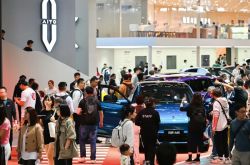
Thus, compared to image-focused shows like those in Beijing and Shanghai, the Chengdu Auto Show better embodies the connection and interaction between consumers and automakers. While some automakers are skipping this year's Chengdu Auto Show, many are still eager to showcase their strengths. For consumers, this is an excellent opportunity to interact directly with manufacturers.
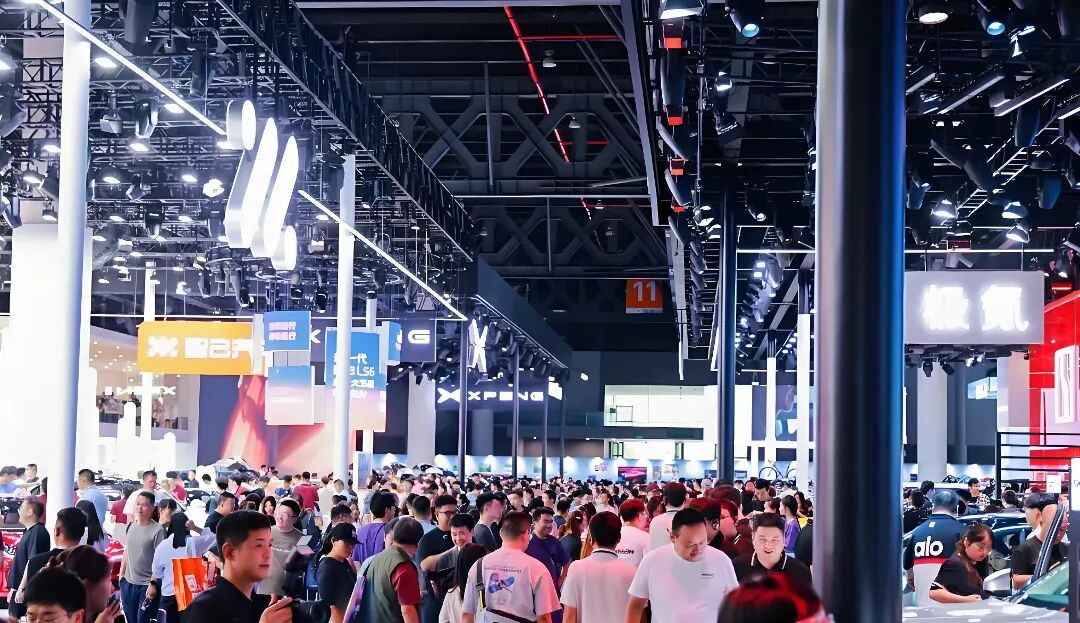
Consider these practical examples: consumers can physically touch the interior materials of different brands, sit in the driver's seat to experience the space, and even experience the Denza Z9GT's autonomous drifting, the Yangwang U8's emergency floating capability, and a 45-degree slope challenge at BYD's Tech Open Day. At Great Wall's booth, visitors can see the real vehicle of the all-new Tank 300 after hundreds of optimizations.
These hands-on experiences are irreplaceable by any text review or video unboxing.
Especially this year, the Chengdu Auto Show features group-style exhibits, such as BYD Group's dedicated pavilion, Chery Group's "AI Tech City," and Geely Galaxy's immersive "Galaxy Tech Park" theme booth. Consumers can horizontally compare product textures, workmanship details, and intelligence levels of different brands in one location. Good or bad, a single comparison reveals all.
More importantly, the auto show provides consumers with direct access to answers. They can ask factory personnel or sales consultants any questions right at the booth and even gather information on multiple competitors from a single brand to verify information gaps. These face-to-face interactions offer precious firsthand information missing online.
Without offline platforms like the Chengdu Auto Show, consumers can only passively accept fragmented online information. For ordinary consumers, the Chengdu Auto Show exposes those who are just going through the motions. A walk through the exhibition halls reveals who is seriously building cars and who is just dabbling.
02 Automakers Can Directly Connect with Users Here
Over the past two years, the keyword in China's auto market has been "intense competition." Fuel-powered vehicle market share has plummeted, while NEV penetration rates continue to rise. This intense competition has led to brutal price wars.
For example, in the fuel-powered vehicle market, luxury brands are criticized even when offering steep discounts. Joint venture brands, after price cuts, are cheaper than domestic cars yet still ignored. The NEV market isn't faring much better. To seize market share, automakers set increasingly lower prices for new models, employed more promotional tactics, and shortened new vehicle iteration cycles.
When price wars reach their climax, the entire industry's trust foundation suffers. Consumers begin to distrust temporary pricing, brand promises, and even the most exaggerated marketing claims. When buying a car, no one can be sure whether prices will drop by another 30,000-50,000 yuan tomorrow or whether OTA updates will introduce relevant new features.
As a result, car owners who recently made purchases start to self-deprecate, feeling "backstabbed" or "scammed." Ultimately, this brings us back to the issue: consumers no longer trust manufacturers, and automotive brands lack loyalty.
In reality, the industry and automakers recognize that bottomless price competition only makes the auto market increasingly unhealthy. The consensus is to shift from competing on price to competing on technology and quality. Fortunately, the most noteworthy change at this year's Chengdu Auto Show is that leading brands are focusing not just on price cuts but on technological prowess.
For instance, BYD is showcasing core technologies like flash charging and "Divine Eye" in its dedicated pavilion at Hall 9. Chery has created two major tech scenes: "Rhino Battery" and "AI Intelligence." Great Wall Motors is displaying carbon fiber lightweighting technology, a super V8 engine, and a mid-mounted powertrain layout. Additionally, several models debuting with new technologies will be unveiled.
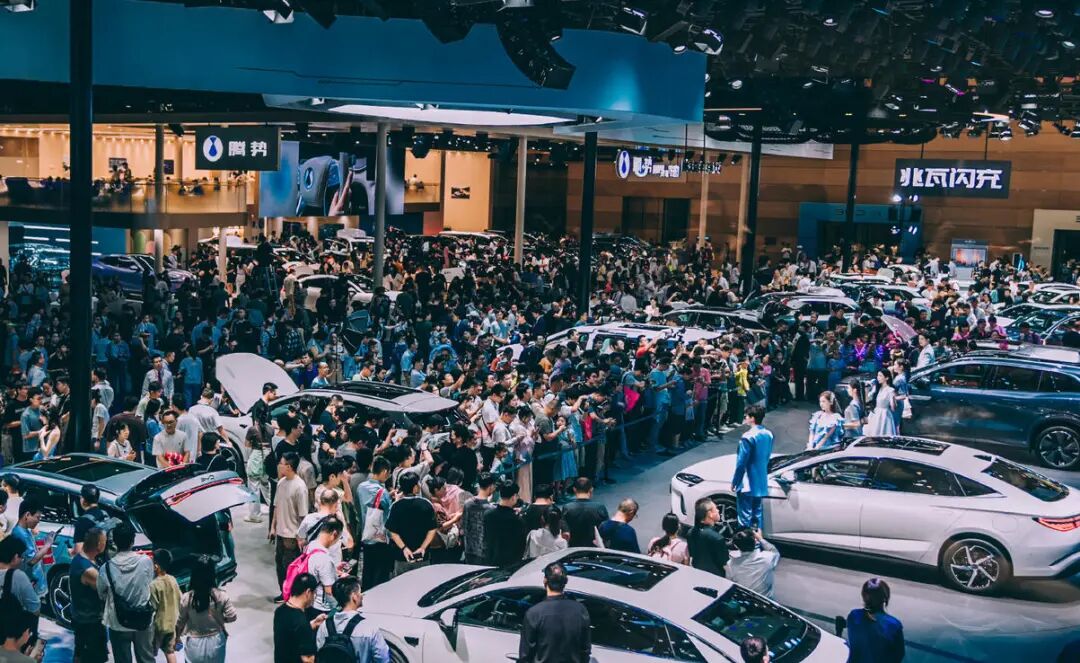
Undoubtedly, these technologies are no longer just PowerPoint slides or concept videos. Each represents tangible technological strength that consumers can truly experience. Thus, the greater value of this Chengdu Auto Show lies in re-establishing a direct communication platform between automakers and consumers.
Thanks to the mass production and presentation of these technologies, they offer consumers a sense of certainty—something they can see, touch, and feel. When consumers witness these technologies firsthand at the auto show, they realize that a brand willing to invest heavily in R&D and openly demonstrate its core technologies rather than hiding them has confidence in its products.
Confident brands are unlikely to tarnish their reputation through price wars; instead, they aim for better long-term development through hard power.
For example, which brand would you trust more: one that dares to disassemble its battery to show its internal structure at its booth or one that merely shouts about a 50,000 yuan price cut in a livestream? Which booth would make you feel more at ease: one with engineers answering technical questions or one with sales consultants aggressively pushing for orders?
Therefore, when automakers recognize this and commit to effective communication, they can gradually rebuild the trust eroded by price wars.
From this perspective, the 2026 Chengdu Auto Show holds irreplaceable value. It provides automakers with an avenue to escape the price war quagmire, allowing them to engage with consumers face-to-face and dialogue using technology and quality, laying a solid foundation for future development.
Of course, one auto show cannot single-handedly reverse the industry's trust crisis. However, after visiting the show, consumers who genuinely intend to buy a car will form their own subjective judgments about automakers and products. They may then develop trust in a particular brand because they've seen and experienced it firsthand.
From another angle, automakers should cherish this opportunity. Technical displays, booth service attitudes, and sales professionalism will all be amplified at the auto show, with every detail noticed by consumers. Instead of exhausting each other in price wars, investing effort to generate goodwill and trust among consumers visiting the exhibition halls is far more valuable than a hundred price wars.
03 Can Joint Ventures Prove Themselves Once Again?
In essence, the auto market consists of two main parties: automakers and consumers. While consumers' spending on cars remains constant, the variable lies within automakers, which are divided into domestic and joint venture brands. The changes among joint venture brands reflect a microcosm of the significant transformations in China's auto market over the past few years.
Just before the Chengdu Auto Show, the Automotive Commune team discussed a topic: on the road to new energy transformation, some joint venture brands have entered the "3.0" era. The 1.0 era featured fuel-powered vehicles converted to electric, the 2.0 era introduced global models, and the 3.0 era represents fully localized Chinese models. Can these joint venture brands prove themselves once again in the 3.0 era?
Before delving into this question, it's crucial to first clarify a significant shift: the role reversal between joint venture and domestic automotive brands. This transformation encompasses three key aspects: market share, brand value, and product strength.
In 2014, joint venture brands dominated the automotive market, holding over 70% of the market share. Even by 2020, their share remained above 60%. However, in the first half of this year, domestic brands surged ahead, capturing 71.8% of the market. The primary driver behind this growth is the increasing penetration rate of New Energy Vehicles (NEVs).
Inevitably, joint venture brands have taken a substantial hit. This impact is not solely due to declining sales but also, as previously mentioned, a reevaluation of brand value within the Chinese automotive market. On one hand, consumers are no longer blindly attracted by the allure of foreign brands; on the other hand, domestic brands are swiftly ascending the market hierarchy.
Consumers once had a clear-cut perception of brands from different countries. Domestic brands were synonymous with cost-effectiveness, while joint venture brands monopolized the mid-to-high-end market. When choosing a car, consumers would almost instinctively decide: if their budget allowed, they would opt for a joint venture brand; if funds were tight, they would consider a domestic brand. However, this dynamic has now shifted, rendering the two no longer directly comparable.
Take, for instance, the new cars showcased at this year's Chengdu International Auto Show. Models such as the BYD Dahan, Geely Galaxy Warship 700, Hongqi G919, Xiangjie G9, Zunjie V800, and Yijing X9 are all high-priced offerings. Moreover, new energy brands represented by NIO, Li Auto, Xiaomi, Zeekr, and Harmony Intelligent Mobility are thriving in the mid-to-high-end market segment.
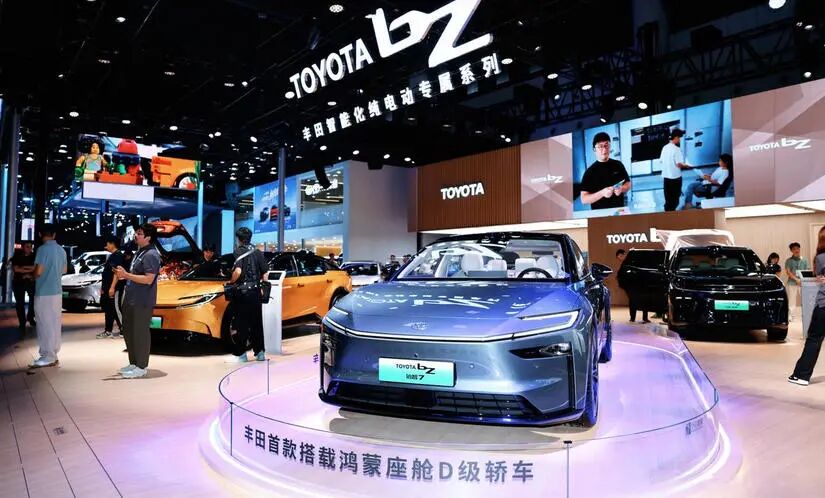
Interestingly, joint venture brands are also beginning to adjust their strategies, lowering their profiles and leveraging China's localized supply chains to create models tailored specifically to Chinese consumers. For example, at this year's Chengdu Auto Show, we witnessed the unveiling of the Buick Zhijing L7 all-electric version, SAIC Volkswagen ID.ERA 5X/ID.ERA 5S, and Jetta M6, all of which are mid-to-low-priced new energy models.
When combined with previous offerings, such as the GAC Toyota bZ3X, Buick Zhijing E7, Dongfeng Nissan N6/N7/NX8, Changan Mazda EZ-6/EZ-60, and Zhi 06/07, which cater to the mainstream audience in the 100,000-150,000 RMB price range, it becomes evident that joint venture brands are poised to become even more active in the future. It's clear that the transformation efforts and determination of joint venture brands remain steadfast.
One noteworthy aspect is that domestic brands are ascending the market ladder, transitioning from a focus on cost-effectiveness to emphasizing brand value. In contrast, the new energy products of current joint venture brands, in terms of both price and configuration, are already on par with those of domestic brands. Simply put, the brand values and product strengths of both sides are converging.
This convergence, in a sense, can dismantle consumer psychological barriers. After all, both domestic and joint venture brands possess their unique advantages. For instance, domestic brands are bold and innovative, capable of swiftly providing distinctive models for various market segments. Joint venture brands, on the other hand, are steady and reliable, leveraging the soft power accumulated through decades of automotive experience to ensure quality.
One excels at innovation, disrupting the market from 0 to 1, while the other excels at stability, scaling from 1 to N. What remains, then, might just be the labels of 'domestic' and 'joint venture.' If these labels were stripped away, it would be two sets of advantages vying in the same market, ultimately benefiting consumers. In their eyes, there is no absolute good or better, only what suits them best.
So, returning to the initial question: in the 3.0 era, can these joint venture brands prove themselves once again? Perhaps the answer is no longer of paramount importance. When the product is of high quality, one should consider whether the issue lies elsewhere. This principle applies to any model, including those from domestic brands, that are "acclaimed but not selling well."
The key lies in how to capture the attention of consumers—this is perhaps the core value that should be demonstrated at this year's Chengdu Auto Show or any future automotive exhibition.
Editor-in-Chief: Cao Jiadong Editor: He Zengrong

THE END
-
When AI Becomes Too Powerful to Ignore: OpenAI Hits the Brakes for the First Time in History
-
![]()
Why Have Small Commuter Cars Priced Under 50,000 Yuan Seen a Slump in Sales?
-
![]()
When 'Li Shufu' and His Peers Begin to Relinquish the 'Reins'...
-
![]()
6.5 Trillion AI Unicorn: Generating $900 Million in Daily Revenue, Racing Toward the Largest IPO in History
-
![]()
Negative Influences Have Run Their Course: Three Key Questions Surrounding Seres' H1 Performance 'Dip' | Mirror Pro
-
![]()
Will China's Auto Exports Surpass 10 Million Units This Year?
-
![]()
Chinese Capital Surges into Europe: Emerging as the 'White Knight' for Local Auto Parts Companies?
-
![]()
The Intense Competition Among Square-Box Off-Road SUVs: A Deeper Exploration of Emotional Value