When Even Boxy SUVs Embrace Smart Driving, What Future Awaits Off-Road Vehicles?
 08/21 2026
 560
560
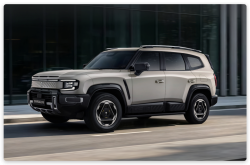
On the eve of the Chengdu Motor Show, teaser information about the Deepal G318 Huawei Qiankun Edition has been gradually unveiled. This boxy SUV, priced around 200,000 yuan, boasts a comprehensive suite of mapless urban NCA (Navigated Cruise Assist) and in-cabin LiDAR—a combination few would have dared to envision just three years ago.
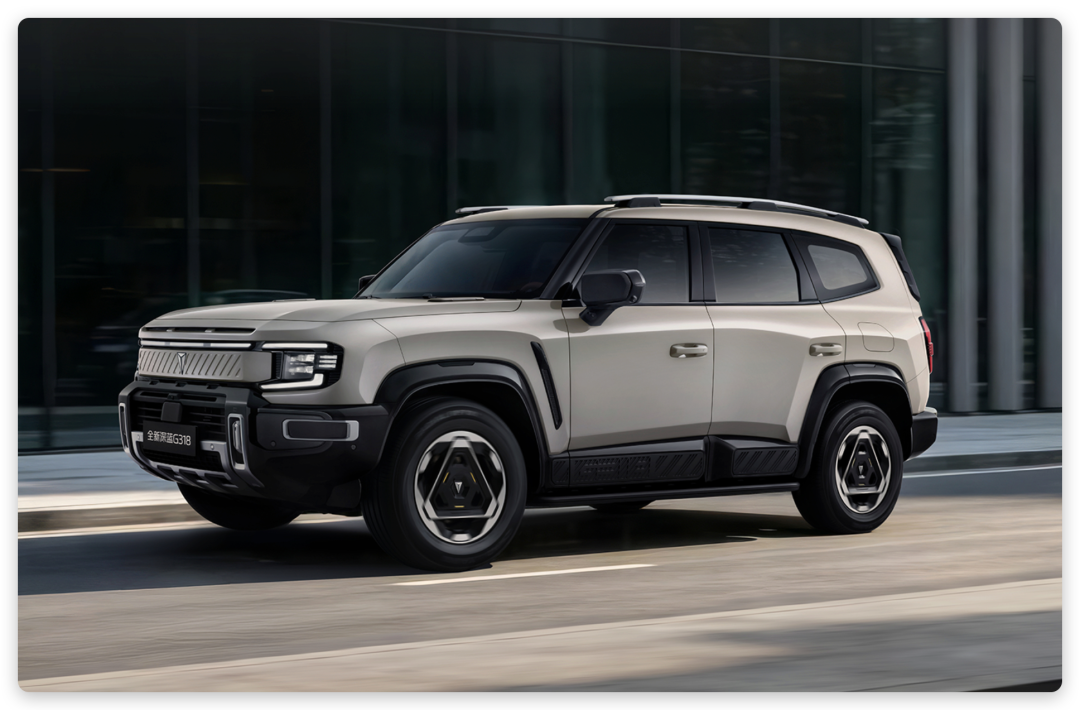
There was a time when the criteria for evaluating off-road vehicles were straightforward and utilitarian: the number of differential locks, body-on-frame construction, and the size of approach and departure angles. Smart driving was rarely discussed, as off-road enthusiasts generally prioritized mechanical reliability and viewed excessive electronic components as potential failure points. However, the tide has now turned. From entry-level boxy SUVs priced around 100,000 yuan to luxury off-road models costing 400,000-500,000 yuan, LiDAR, urban navigation, and end-to-end assistance have become nearly standard features on new models. The off-road vehicle segment, once the most "mechanical" of categories, has quietly been swept into the fiercely competitive arena of smart driving.
Smart Driving Factions Emerge, with Huawei Leading the Charge
A closer look reveals that the smart driving landscape for boxy off-road vehicles can be roughly divided into two main factions: the Huawei Qiankun faction and the self-developed/third-party solution faction. These cover price ranges from just over 100,000 yuan to over 400,000 yuan, with virtually no gaps in coverage.
Huawei is advancing faster than most anticipated. At the entry level, the Jetour Traveler C-DM Huawei Qiankun Smart Driving Edition has pushed the price below 210,000 yuan, offering in-cabin LiDAR vision for highway and urban navigation—making it the most affordable Huawei smart driving boxy SUV to date. The upcoming Deepal G318 Huawei Qiankun Dual Smart Edition, set to launch on August 21, will feature ADS 5 Pro and 27 perception sensors, targeting the 200,000-250,000 yuan price segment and bringing full-scenario smart driving to the mainstream family boxy SUV market.
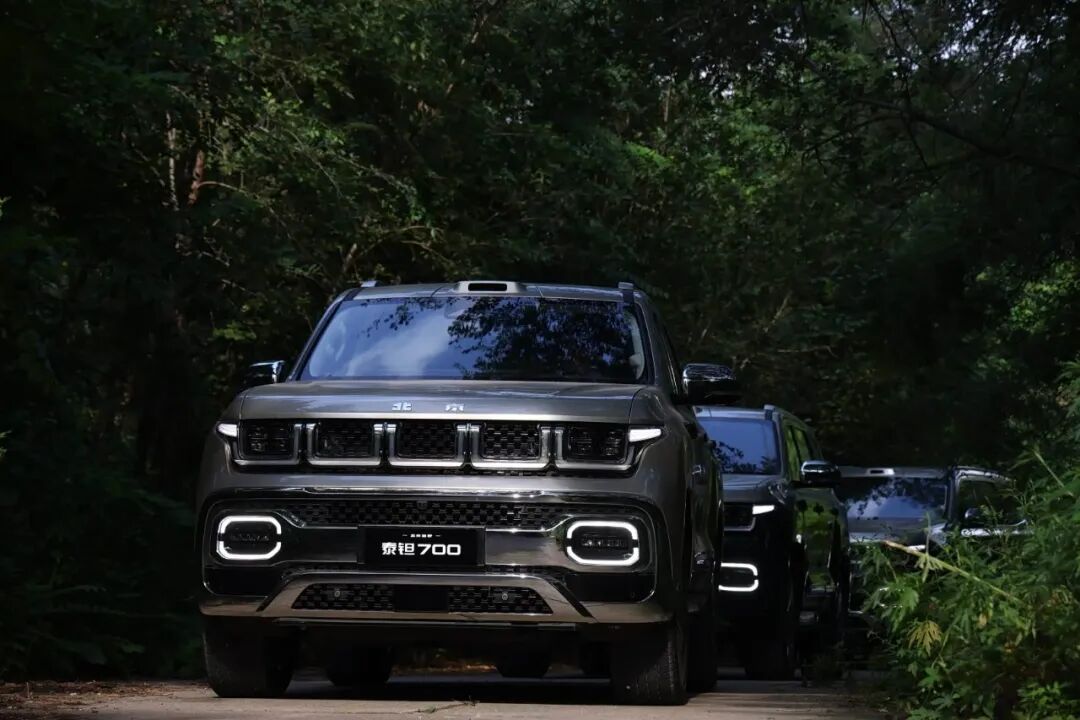
Moving up the price ladder, the Beijing Off-Road Taitan 700 and Mengshi M817, both body-on-frame off-road models, are positioned in the 300,000-yuan range. The former is equipped with an 896-line dual-optical-path image-grade LiDAR, while the latter is a deep collaborative product combining Dongfeng's military-grade chassis with Huawei's full-stack smart driving, priced between 299,900 and 399,900 yuan.
Further up, the Chery Jaguar Land Rover Discovery Sport 8 and Xiangjie G9 reach the luxury segment at 350,000-400,000 yuan. The former is the first joint-venture model to feature Huawei Qiankun, while the latter is built on Huawei's all-terrain platform with top-tier hardware specifications. In just one year, Huawei has established a complete product matrix in the boxy SUV segment, from entry-level to luxury, with all models sharing a unified smart driving architecture for higher iteration efficiency.
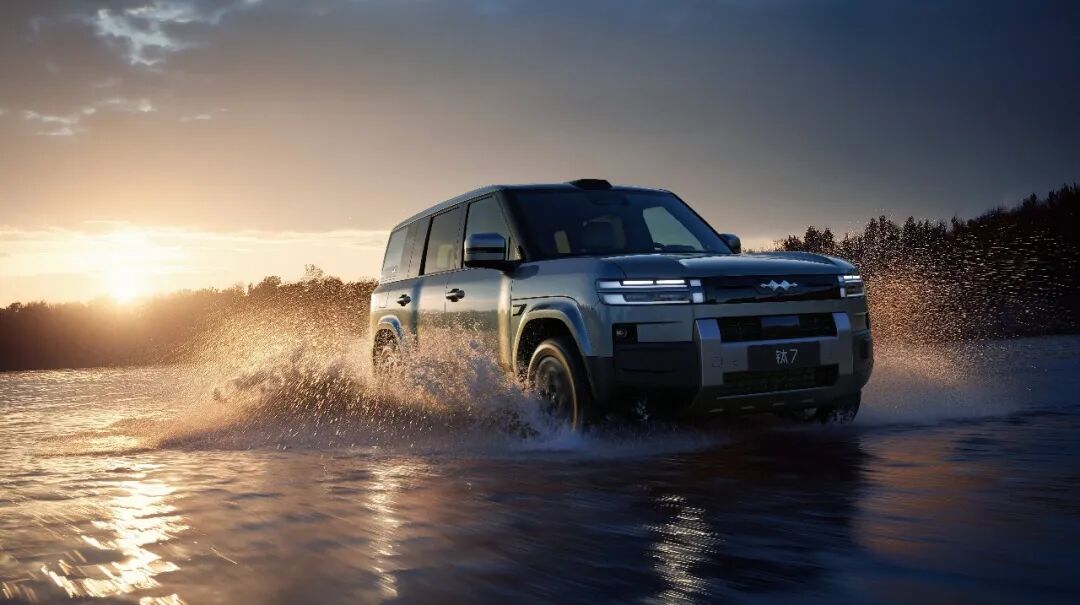
The strategies of non-Huawei players are more fragmented. BYD's Fangchengbao follows a fully self-developed route, with its God's Eye system deployed across models from the Titan 3 and Titan 7 to the Leopard 5 and Leopard 8. Its core advantage lies in deep integration with the DMO super hybrid off-road platform and Yunqian chassis, enabling seamless data linkage between road condition recognition and power adjustment. The Leopard 5 also offers an optional Huawei Qiankun Smart Driving version, making it one of the few models with dual smart driving solutions.
Great Wall's Tank series relies on Momenta's Coffee Smart Driving, with the new Tank 300 high-spec version equipped with LiDAR and 27 perception sensors, supporting full-scenario NOA (Navigate on Autopilot) from parking spot to parking spot—effectively addressing the smart driving shortcomings of classic off-road models, priced between 190,000 and 250,000 yuan.
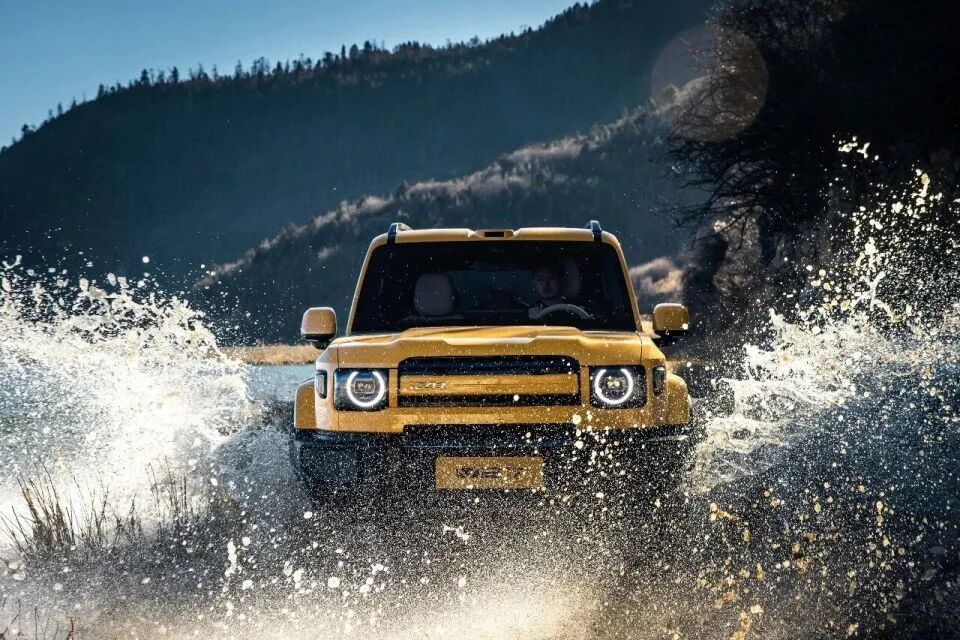
Further down, entry-level models like the Jetour Freeman and iCAR series adopt Horizon Robotics chips with self-developed algorithms, bringing advanced smart driving to the 120,000-yuan level. Geely's Galaxy Warship 700 is also preparing to enter the market with a lookout LiDAR and AI all-terrain recognition, as the number of players in the segment continues to grow.
Interestingly, nearly all newly released boxy models, regardless of whether they are positioned as light off-road or hardcore off-road vehicles, dare not treat smart driving as a high-end optional feature anymore. Even models emphasizing mechanical performance now offer at least a basic version of highway navigation.
Is Off-Road Smart Driving a Gimmick or a Necessity?
When it comes to equipping off-road vehicles with smart driving, many people's first reaction is that it's "useless." After all, if you're truly heading into the wilderness to climb rocks, smart driving can't help you escape predicaments—it would just be a decoration.
This is partially true but overlooks a core reality: the vast majority of boxy SUV buyers use their vehicles 90% of the time in cities and on highways, with very little time spent on serious off-roading. For these users, a boxy SUV represents style and a lifestyle statement, not a specialized off-road tool. Features like urban smart driving and highway navigation address their daily commuting pain points. A vehicle that can handle light off-roading on weekends while offering hassle-free daily driving on weekdays—that's the real demand of most consumers today.
Even within off-road scenarios, smart driving isn't entirely useless. Modern off-road smart driving goes beyond simple ACC (Adaptive Cruise Control) following; it's moving toward scenario-based assistance. For example, narrow-path assistance helps judge distances on mountain trails or village roads, reducing scraping risks; reverse tracing allows the system to retrace the incoming route when encountering a dead end, eliminating the need for tricky manual operations; and terrain recognition systems can automatically identify sand, mud, or gravel surfaces, assisting in switching four-wheel drive and power modes—especially beginner-friendly. Familiar features like transparent chassis and 540-degree panoramic imaging are also part of intelligent assistance but have become so common that users take them for granted.
Of course, we must acknowledge that off-road smart driving is still in the auxiliary stage. In scenarios involving serious climbing or extreme off-roading, final decision-making remains firmly in human hands. It can't replace human driving but can lower entry barriers, reduce operational errors, and enhance safety margins. Rather than calling it an off-road miracle, it's better described as a safety cushion for beginners and a labor-saving tool for veterans.
Where Does Competition Shift After Hardware Homogenization?
A clear trend is emerging: smart driving hardware for boxy SUVs is rapidly homogenizing. LiDAR, high-computing-power chips, and over 20 perception sensors have become standard for advanced versions. If you have an 896-line LiDAR, I can match it; if you support mapless urban NCA, I can cover it through OTA updates. Relying solely on hardware stacking no longer creates essential differentiation. The next phase of competition will likely shift toward deeper experiences.
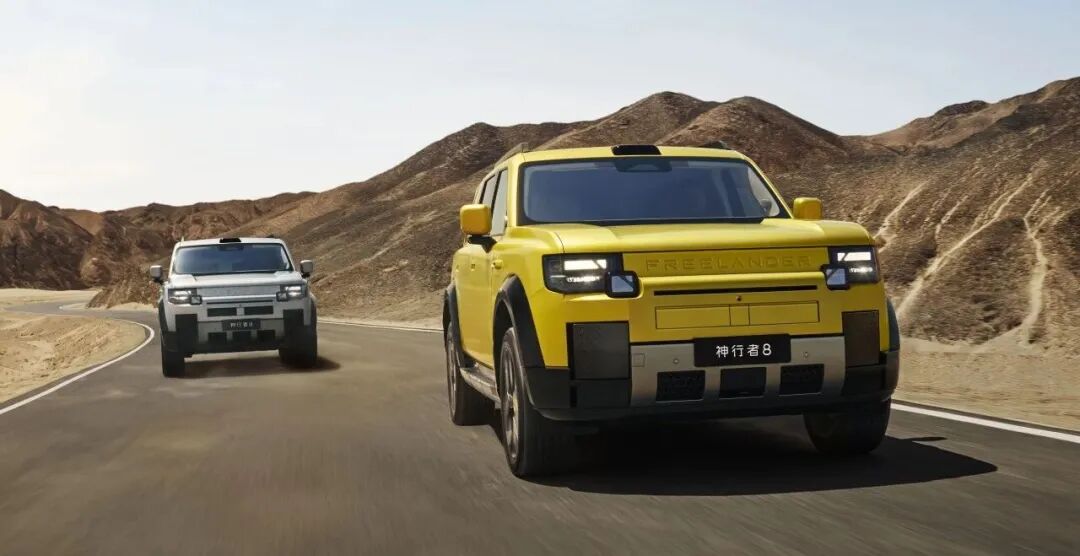
First is the degree of deep integration between smart driving and off-road chassis. The same LiDAR mounted on an urban SUV versus a hardcore off-roader faces entirely different calibration challenges. Off-road vehicles have higher bodies, longer suspension travel, and more frequent bumpy conditions, requiring re-adaptation of the perception system's anti-shake and ranging logic. Whoever can deeply integrate smart driving systems with chassis signals like four-wheel drive, suspension, and differential locks will create truly differentiated experiences.
For example, BYD's God's Eye can link with Yunqian and DMO platforms for terrain adaptation, while Huawei's collaboration with Mengshi allows chassis data to optimize off-road assistance logic—barriers that cannot be overcome through hardware stacking alone.
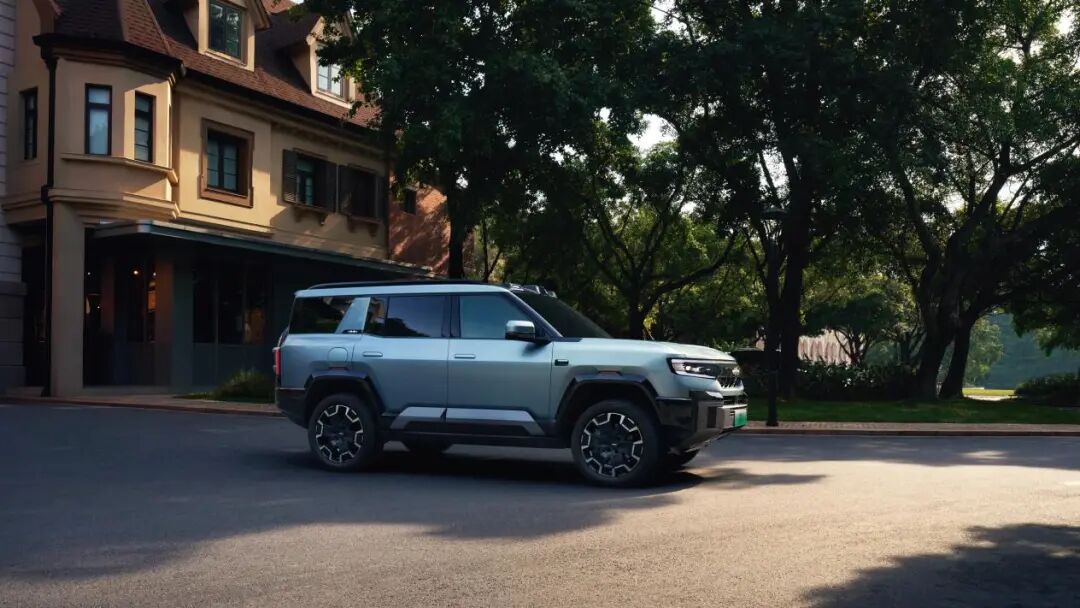
Second is the consistency of experience across urban and off-road scenarios. Many models now perform well on asphalt roads but suffer from inaccurate perception and chaotic logic on unpaved surfaces. The future competitive edge lies in delivering stable smart driving performance across cities, highways, national roads, and unpaved trails, with no obvious disconnect during scenario transitions. After all, boxy SUV buyers expect all-scenario mobility—the vehicle can't work well in cities but fail in the wilderness.
Finally, iteration speed and ecological capabilities matter. Smart driving isn't a one-time purchase; post-sale OTA updates, data iteration, and scenario coverage speed significantly impact long-term usability. Huawei's advantage lies in reusing one solution across multiple models for faster data accumulation and higher iteration efficiency; self-developed brands excel in complete chassis data and greater customization flexibility. Beyond that, soft powers like in-cabin ecosystems, outdoor peripherals, and off-road communities will gradually become part of differentiated competition.
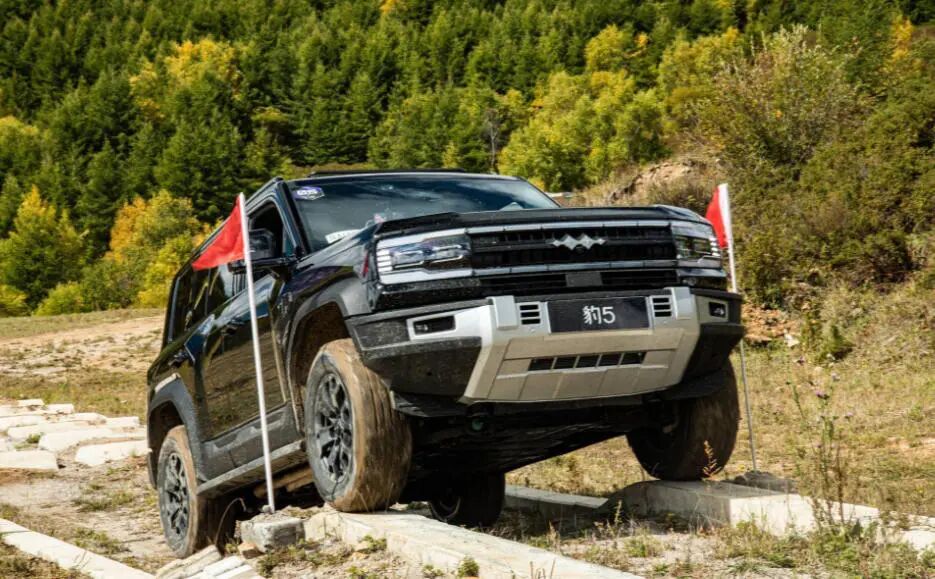
Simply put, when everyone has smart driving, the competition shifts from "having it" to "how well it works" and "how suitable it is for off-road scenarios." Today, the smartification of hardcore off-road vehicles is an inevitable trend. As user demand shifts from "professional off-road tools" to "dual-purpose urban-wilderness lifestyle vehicles," product evaluation criteria will naturally evolve.
In the next phase of the boxy SUV race, mechanical fundamentals will become a baseline requirement. The true differentiators will be understanding users' real-world scenarios and the ability to genuinely integrate intelligence with off-roading. Whoever can escape the ineffective internal competition of "smart driving for smart driving's sake" and deliver tangible experiences will ultimately prevail.
-
![]()
Blockbuster Move: Jensen Huang's Strategic Investment Tied to Elon Musk's Ventures
-
![]()
When Even Boxy SUVs Embrace Smart Driving, What Future Awaits Off-Road Vehicles?
-
![]()
Alibaba's AI Ledger, Calculated So Clearly for the First Time | Earnings Report Insight
-
![]()
HONOR Robot Phone: Telling the Lightest AI Story with the Heaviest Hardware
-
![]()
Yu Chengdong's Harmony Intelligent Travel Achieves 'First in New Force Deliveries', Netizens: Unbeatable Win
-
![]()
Six Entities Invest 8.2 Billion to Launch Shenlong Technology
-
![]()
Give BMW X3 a Chance?
-
![]()
Chengdu: Leading in New Car Sales, Yet Losing the Favor of Rolls-Royce and Its Luxury Peers