Raking in Big Profits Overseas! Chery’s Overseas Revenue Makes Up 70% in H1, with Gross Margin Climbing to 16.1%
 08/23 2026
 551
551
Despite facing a scenario of 'rising revenue but falling profits,' Chery's financial report for the first half of the year reveals several noteworthy highlights. On August 20, Chery unveiled its financial results for the first half of 2026. The report indicates that Chery Automobile's revenue for the period reached RMB 143.28 billion, marking a 1.2% year-on-year increase. Notably, revenue from the new energy sector soared to RMB 59.284 billion, up 63.8% from the same period last year, with its contribution to total revenue jumping from 25.6% to 41.4%. New energy is emerging as a pivotal growth driver for the company.
However, Chery Automobile experienced a decline in profits. In the first half of the year, Chery's profit stood at RMB 9.016 billion, a 9.0% decrease year-on-year; net profit attributable to the parent company was RMB 8.567 billion, down 11.7% from the previous year. During the same period, Geely's net profit was RMB 9.091 billion, a 1.8% decrease year-on-year; Seres shifted from profit to loss, incurring a net loss of RMB 1.717 billion; Great Wall Motor projected a net profit ranging from RMB 2.35 billion to RMB 2.6 billion, representing a year-on-year decline of 58.97% to 62.92%. Among automakers that have already released or forecasted their H1 financial results, nearly all have witnessed varying degrees of profit decline.
Despite the net profit downturn, Chery Automobile's H1 financial report sends a clear message: the company is actively moderating sales growth to pursue higher-quality development.
This strategic shift is evident in two key areas: Firstly, in terms of sales volume, Chery has maintained robust sales growth in recent years, particularly doubling its sales in 2023 and surpassing 2 million units for the first time in 2024, reaching a record high of 2.8 million units last year. Since the beginning of this year, Chery has focused on restoring channel health by actively reducing the burden on dealers and lowering inventory levels, showcasing a more mature and rational business approach. Cumulative sales in the first half of the year reached 1,275,076 units, a 7.8% year-on-year increase. Despite this, Chery outperformed the overall market in H1, achieving growth against the industry trend.
While actively 'managing' sales growth, Chery Automobile is also prioritizing high-quality development at the operational level. In the first half of the year, Chery Automobile's gross profit reached RMB 23.044 billion, a 25.1% year-on-year increase; the gross profit margin rose to 16.1%, up 3.1 percentage points from the previous year.
According to data from the National Bureau of Statistics, the profit margin of revenue in the national automotive manufacturing industry stood at 3.8% in the first half of 2026; data from the China Association of Automobile Manufacturers revealed that the average profit margin in the domestic vehicle manufacturing sector during the same period was around 1.5%. Chery Automobile's net profit margin in H1 reached 6.3%, significantly outpacing the market average and reflecting its superior profitability.
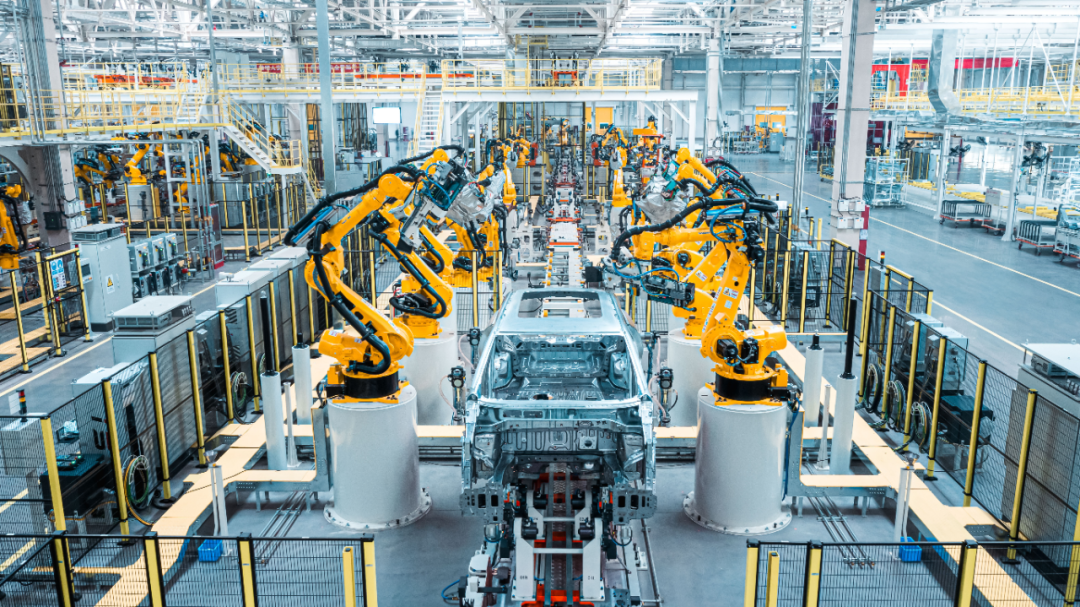
The increase in Chery's gross profit margin can be attributed to two main factors: Firstly, the growing contribution of overseas market sales to total revenue. Leveraging 12 major production bases worldwide (including 3 overseas facilities) and a sales and service network spanning Europe, South America, Africa, the Middle East, and other regions, Chery Automobile exported 943,800 units during the reporting period, a 71.5% year-on-year increase; overseas market revenue reached RMB 98.968 billion, a 51.0% year-on-year increase, with overseas revenue accounting for 69.1% of total revenue, compared to just 46.3% in the same period last year. As Chery accelerates its transition from 'product export' to 'system export,' its local production and operational capabilities in overseas markets continue to strengthen, becoming a key driver for the group's gross profit margin improvement.
Secondly, Chery provided technology development services with higher gross profit margins. In the first half of the year, Chery Automobile's gross profit margin in this area increased from 13.3% last year to 20.2%. This primarily refers to technology exports, such as Chery's collaboration with South Korea's KGM to jointly develop models using the T2X platform. In addition to Chery, automakers like Geely, Leapmotor, and XPENG are also selling technology alongside vehicles. Although technology development services constitute a relatively small portion of overall revenue, their high gross profit margins have positively contributed to boosting the company's comprehensive gross profit margin.
The decline in Chery Automobile's profits this time was primarily influenced by exchange rate fluctuations. During the reporting period, Chery Automobile recorded a net foreign exchange loss of RMB 2.092 billion, compared to a net foreign exchange gain of RMB 3.398 billion in the same period last year. This difference of RMB 5.49 billion directly impacted net profit performance.
Unlike other domestic automakers, Chery's export sales and overseas revenue each account for approximately 70%, making it a true 'export leader' and rendering its profits more susceptible to exchange rate fluctuations. Chery also highlighted in its financial report that the company faces transactional exchange rate risks and stated, 'To ensure that the Group's currency risk exposure remains at an acceptable level and to minimize the mismatch between assets and liabilities denominated in the same currency, the Group enters into foreign currency forward contracts to hedge part of its foreign exchange risk exposure.'
Nevertheless, the impact of exchange rate fluctuations was partially mitigated by improvements in other areas. In the first half of the year, Chery's financial expenses significantly decreased from RMB 1.449 billion in the same period last year to RMB 549 million, resulting in savings of approximately RMB 900 million; impairment of financial assets turned from a loss to a profit, changing from a loss of RMB 133 million to a gain of RMB 186 million, an improvement of approximately RMB 319 million. Under the combined effects of multiple factors, profits for the period ultimately decreased by RMB 890 million year-on-year, with the decline controlled at 9%.
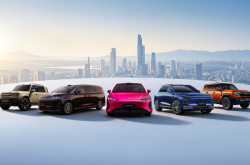
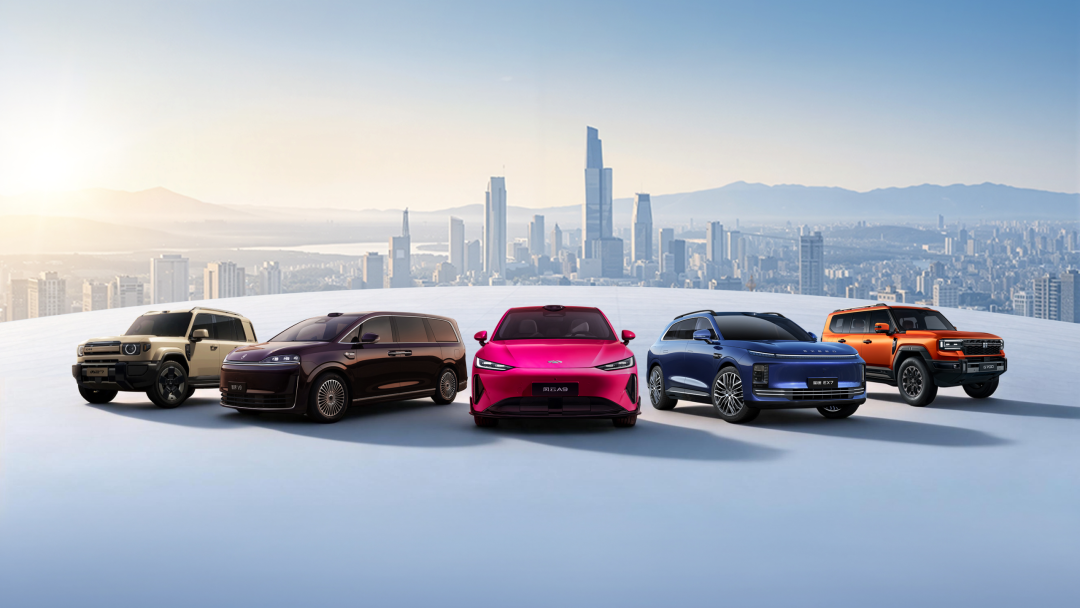
In terms of R&D, Chery continues to maintain high investment levels. In the first half of the year, Chery's R&D expenditure reached RMB 6.672 billion, a 28.3% year-on-year increase, with a focus on core areas such as electrification technology and automotive platform architecture upgrades, advanced driving assistance solutions, and intelligent cockpit solutions. Its five major brands—Chery, Jetour, Exeed, iCAR, and Luxeed—collaborate to cover diverse market segments including the mass market, premium travel, family off-road, tech-savvy Gen Z, and intelligent driving, providing differentiated products for different user groups and further expanding market space.
For the second half of the year, Chery outlined four strategic directions in its financial report: further broadening the product range and refining product positioning to continuously deepen brand upgrading; vigorously investing in new technology R&D; continuously strengthening the electrification and intelligence of passenger vehicles; and continuing to consolidate and expand its export advantages by implementing a globalization strategy.
-
![]()
Raking in Big Profits Overseas! Chery’s Overseas Revenue Makes Up 70% in H1, with Gross Margin Climbing to 16.1%
-
![]()
Alibaba’s New Fiscal Quarter: 45% Revenue Surge in Alibaba Cloud, Enhanced Profitability in AI Cloud, but Widening Losses in the Application Layer
-
![]()
The AI Version of 'PayPal Mafia' Has Arrived: 20 AI Startups Raise Over $4.6 Billion in Funding
-
![]()
Wang Jian's Vision: Paving a Pathway for Alibaba Through AI
-
![]()
Hyundai Motor Workers Strike Today, Fearing Job Losses to Robots
-
![]()
Embracing 'Light': O-film Unveils Its 'Illuminating the Future' Strategy
-
![]()
SenseTime’s SenseNova U1.5 Lite Goes Open Source: Ushering in a New Era of Predictable AI Image Generation
-
![]()
Collaboration Initiated! Tesla Officially Welcomes Doubao Onboard