No Need to Overly Fret About Leapmotor!
 08/26 2026
 564
564

In an automotive market where over 600 new models are introduced every six months, merely remaining profitable is a significant achievement for automakers, with only a handful managing to do so, particularly among new energy vehicle (NEV) startups. Naturally, this also highlights the robust health and promising prospects of this specific startup.
On August 24, Leapmotor unveiled its financial results for the first half of 2026: a revenue of RMB 38.11 billion, marking a 57.2% year-on-year increase; a net profit of RMB 210 million, up approximately 600% year-on-year; and global deliveries totaling 356,487 units, a 60.8% year-on-year surge. In July, it became the first Chinese NEV startup to exceed 100,000 monthly deliveries, reaching 101,267 units.
However, many observers noted that Leapmotor's stock price dipped nearly 4% the day after the earnings announcement, with a market capitalization of just HK$60.8 billion, significantly lower than NIO's HK$88.6 billion, XPeng's HK$91.36 billion, and Li Auto's HK$101.4 billion. Founder Zhu Jiangming openly stated that the company is severely undervalued. With monthly sales surpassing 100,000, leading NEV startups in sales, and maintaining profitability—why hasn't this resonated with capital markets? What are the market's concerns? Is Leapmotor truly undervalued?
Editor|Li Jiaqi
Image Source|Internet
1. What Does a RMB 589 Profit per Vehicle Truly Signify?
Given that Leapmotor's affordable mass-market vehicles dominate its sales, the primary concern regarding its undervaluation centers on the quality of its profits. In the first half of the year, Leapmotor's gross margin declined from 14.1% in the same period last year to 11.7%, a 2.4-percentage-point drop.
Based on net profit and delivery volume, the net profit per vehicle was approximately RMB 589—less than RMB 600 profit per car sold.
What does a RMB 589 profit per vehicle signify in the automotive industry?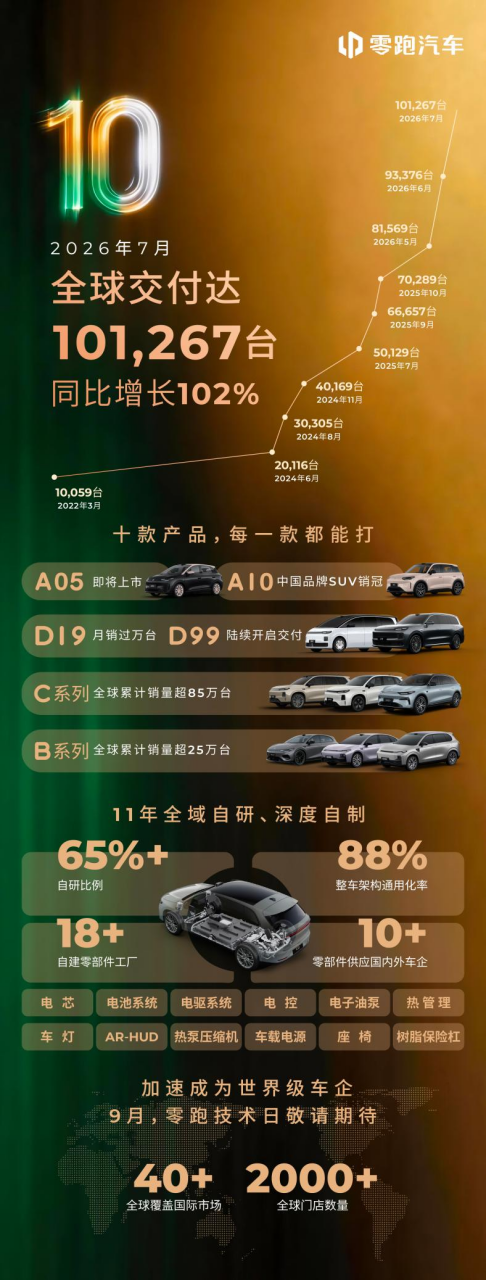
Data from the China Association of Automobile Manufacturers indicates that the average profit margin for domestic vehicle manufacturing fell to 1.5% in the first half of 2026, the lowest in a decade. Based on an average vehicle price of approximately RMB 202,000, the industry's average net profit per vehicle was about RMB 3,000. Leapmotor's RMB 589 is less than one-fifth of the industry average. For comparison, NIO's vehicle gross margin was 18.8% in Q1 2026, and XPeng's vehicle gross margin was 12.1% in the first half of the year—Leapmotor's profit margins are indeed slim.
However, 'slim' does not equate to 'weak.' In Q2, Leapmotor showed clear signs of marginal improvement, with its gross margin rising 3.2 percentage points quarter-on-quarter to 12.6%, and quarterly profit nearing RMB 600 million. The average selling price (ASP) per vehicle in Q2 increased by approximately RMB 12,000 quarter-on-quarter to around RMB 110,000. The key driver of this improvement was product mix optimization—the D19 has averaged over 7,000 monthly deliveries since its April launch, surpassing 10,000 units in July; the A10 reached its 100,000th mass-produced unit just 135 days after launch. The rising share of higher-priced D-series and C-series models directly lifted both ASP and gross margin.
More importantly, consider the broader context: in the first half of 2026, raw material prices like lithium carbonate surged; from January to May, the profit margin for automobile manufacturing was just 3.4%, with total profit down 43% year-on-year. The entire industry is grappling with the challenge of 'growing volume without growing profit.'
Thus, Leapmotor's situation of growing revenue but stagnant profit is not unique—Li Auto's vehicle gross margin plummeted from 19.8% in Q1 2025 to just 6.1% in Q1 2026, with a net loss of about RMB 2.3 billion. Amid industry-wide profit pressure, Leapmotor not only maintained profitability but also achieved 600% profit growth—this itself is a competitive strength.
Li Tengfei explicitly stated on the earnings call that the full-year gross margin is expected to rebound to 13-14%. The RMB 589 profit per vehicle is a static snapshot; the trend of dynamic improvement is what truly matters.
2. Scale is the Vital Lifeline for Leapmotor's Development
If profit quality is the market's 'short-term worry,' then economies of scale represent Leapmotor's 'long-term vision.'
Leapmotor's growth trajectory has been remarkably steep: from 71,387 deliveries in April to over 80,000 in May, 90,000 in June, and 100,000 in July. Its first-half deliveries of 356,000 units ranked first among NEV startups, outpacing the second-place competitor by over 110,000 units. Globally, it ranked fourth among NEV passenger vehicle brands, behind BYD, Tesla, and Geely. Market share is an even more critical metric. By the end of June, Leapmotor's market share in the NEV passenger vehicle segment had risen to 5.71%, up from 4.22% at the end of Q1.
Breaking the 5% market share threshold is a significant industry milestone—it means the brand has transitioned from a 'participant' to a 'major player,' capable of influencing market dynamics.
On the channel front, by the end of June, Leapmotor's sales and service network covered 298 cities, with 1,064 sales outlets and 562 service outlets. Notably, 70% of its outlets are in third- and fourth-tier cities. This reflects a market strategy distinct from 'NIO, XPeng, and Li Auto': instead of competing in first-tier cities' premium segments, Leapmotor focuses on the vast mass market.
By the end of June 2026, Leapmotor's market share in the NEV passenger vehicle segment had risen to 5.71%. In third-tier cities, Leapmotor sold 64,400 units in June alone. The A10 holds a clear advantage in second-tier and lower-tier cities, while the C11 also performs strongly in third-tier and lower-tier cities. Compared to 'NIO, XPeng, and Li Auto,' Leapmotor's strength in the down-market is even more pronounced. In April 2026, Leapmotor sold 70,100 units, with the A10 alone contributing 21,000 units; in contrast, NIO, XPeng, Li Auto, Xiaomi, and HarmonyOS Smart Mobility all sold between 29,000 and 35,000 units. The gap stems not from product strength but from understanding China's vast consumer market.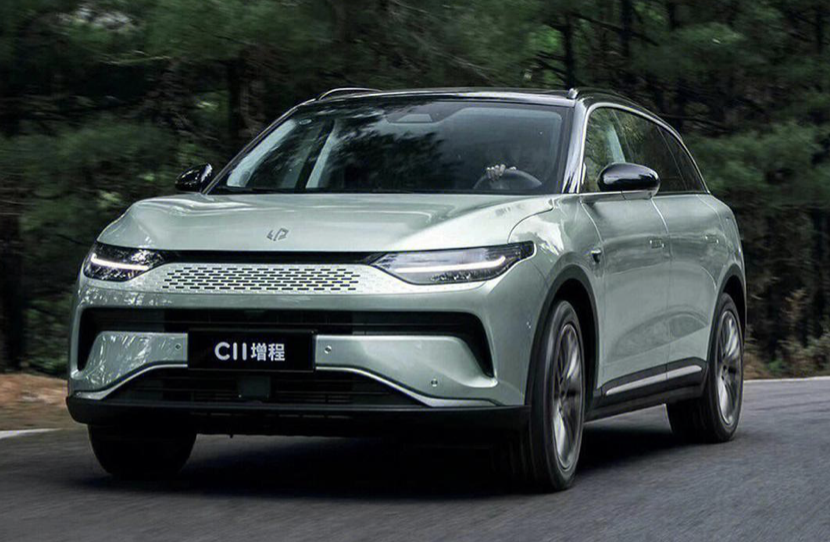
Overseas, Leapmotor exported 96,294 units in the first half, up 372.6% year-on-year, surpassing its total 2025 exports and accounting for 27% of first-half sales. Its overseas sales target has been raised from 100,000-150,000 units to 200,000 units. For local production abroad, it is accelerating plans with Stellantis' factories in Malaysia, Spain, and Brazil. Overseas markets have become a crucial second growth engine.
Economies of scale are materializing. Q2 ASP increased by RMB 12,000 quarter-on-quarter; as production and sales rise, raw material costs and manufacturing expenses are expected to further optimize. Leapmotor's scale-based competitive moat—from sales volume to market share, from domestic to overseas—is transforming from blueprint to reality.
3. Unwavering Commitment to Building 'Good yet Affordable' Vehicles, a Rare Strategic Focus
Amid a trend of NEV startups chasing premium segments, telling stories, and pursuing diversification, Leapmotor has remained steadfast in its mission: building 'good yet affordable' vehicles for the masses.
This positioning has never wavered. From its founding commitment to 'full-domain self-research' to achieving 65% self-research for core components a decade later; from the C-series targeting the RMB 120,000-170,000 price band to bringing 800V high-voltage platforms and LiDAR to the RMB 150,000 segment; from the ABCD product matrix covering RMB 60,000-300,000 price ranges to the explicit strategic declaration of 'building vehicles for the national economy'—Leapmotor's strategic path is remarkably clear and 'stubborn.'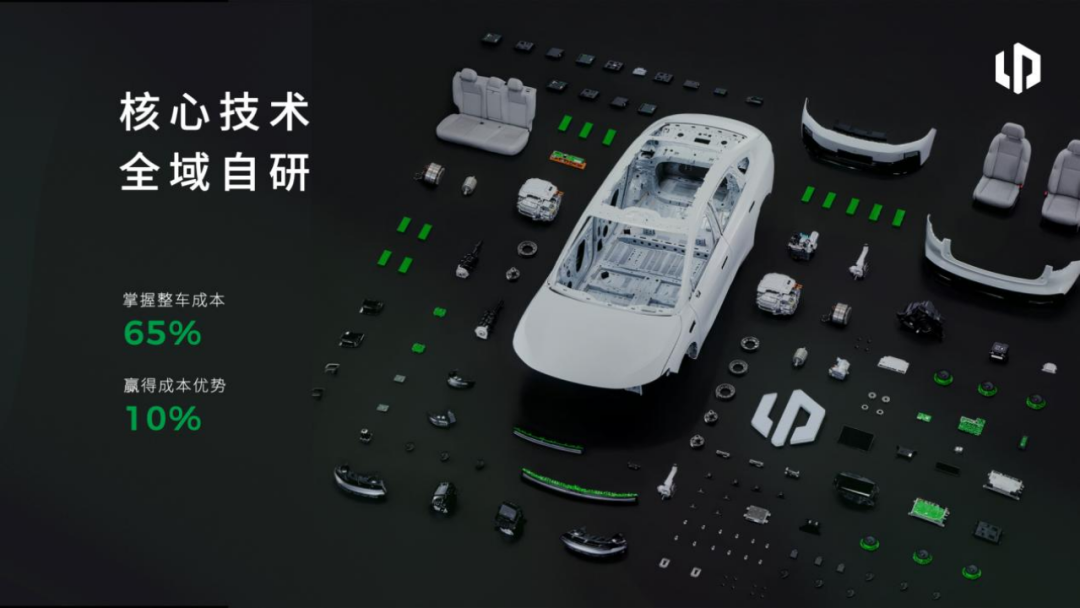
This focus is especially valuable amid today's intense automotive price wars. While others 'compete on price,' Leapmotor 'competes on fundamentals'—leveraging full-domain self-research to deliver cost advantages. Its industrial cluster within a 20-kilometer radius of Jinhua achieves 70% local supply for major components; facelifts adhere to 'more features, same price,' using its 800,000-user base to amortize R&D costs.
In the short term, this does pressure gross margins. Rising raw material costs and product mix changes were the main drivers in the first half. However, management has a clear path forward: boosting new model ramps and cost control to restore the full-year gross margin to 13-14%. While the full-year net profit target was lowered from RMB 5 billion to RMB 3 billion, this remains the most reliable profit outlook among leading NEV startups, given the industry's overall 1.5% profit margin.
More noteworthy is its forward-looking tech reserve. Leapmotor will host its 2026 Tech Day in September, unveiling an intelligent driving world model reaching 'industry-leading' status and a series of latest advancements in three-electric systems. R&D spending reached RMB 2.32 billion in the first half, up 22.8% year-on-year. Meanwhile, Leapmotor has confirmed its entry into the embodied robotics sector. Its full-domain self-research accumulations are evolving from 'cost advantages' to 'technical barriers.'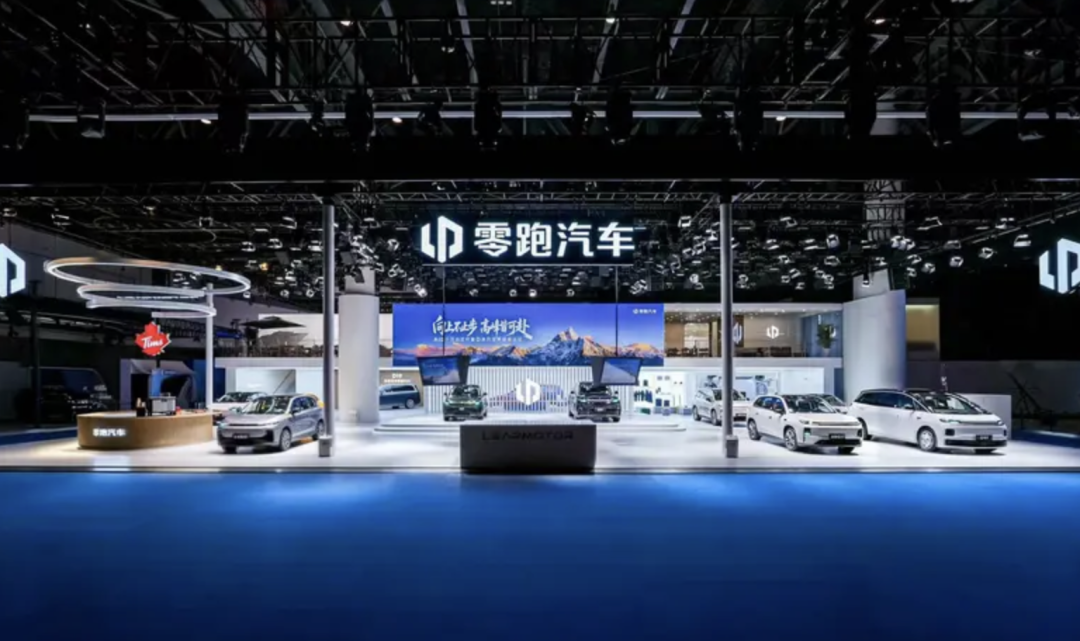
Clearly, Leapmotor is taking a path distinct from 'NIO, XPeng, and Li Auto'—not relying on brand premiums for high margins but building a competitive moat through scale and self-research, enabling the broadest consumer base to enjoy technological progress at reasonable prices.
This path is undoubtedly challenging. The RMB 589 profit per vehicle and HK$60.8 billion market cap are hurdles along the way. But with monthly sales exceeding 100,000 units, market share surpassing 5.7%, overseas exports up 372% year-on-year, and a global NEV ranking of fourth—these numbers reflect an emerging industrial force that cannot be ignored.
Capital markets are accustomed to valuing NEV startups using the 'NIO, XPeng, and Li Auto' model. But Leapmotor has proven one thing: the path of building vehicles for the masses can also go far. When a company adheres to the same strategic direction for a decade, uses full-domain self-research to bring premium features into the RMB 150,000 segment, and builds cost barriers through scale and efficiency that competitors cannot replicate—the market will eventually reevaluate its value.
So really, there's no need to overly fret about Leapmotor. The real question is: in an industry where vehicle manufacturing profit margins are just 1.5%, who can sustain profitability, keep growing, and continuously set new records across every key metric? What China's auto industry needs is not just 'premium' brand stories but 'high-quality' industrial strength. Undoubtedly, Leapmotor is demonstrating the latter with its actions.
End
With Style, With Knowledge, 'Whoosh'—Let's Go...
-
![]()
"Ox Coming" Makes a Splash in the AI Circle! Mysterious Large Model Goes Viral, Who's Behind the Big Move?
-
![]()
Xiaopeng’s New Car is Popular, but Financial Results are Less Impressive
-
![]()
Dialogue with Lv Wenbin from Great Wall Motors: The 30,000+ Orders for Great Wall H10 is Just the Beginning!
-
![]()
Can Xiaomi Pengcheng N90 and N70 Recreate the 'Success Story' of the SU7?
-
![]()
Can Stellantis Revitalize Jeep’s Domestic Production in China via the ‘New Dongfeng Peugeot Citroen Automobile’ Initiative?
-
![]()
Xpeng's Q2 2026: Automotive Losses, Service Gains, and a Narrative Shift Toward Robotics
-
![]()
XPENG Motors Reports H1 Loss of 3.12 Billion Yuan, Accumulated Losses Hit 45.91 Billion Yuan
-
![]()
[In-depth Report] From 'Being Seen' to 'Being Remembered': The Next Big Battle for Chinese Automotive Design