The 'Old Triumvirate' is Making Cars Anew
 08/26 2026
 444
444
Lead-in
Introduction
What can DPCA Tech offer consumers in the new energy era?
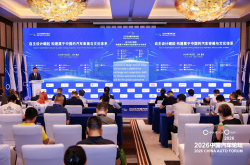
At the recently held Chengdu Auto Show, an interesting phenomenon emerged. First, SAIC Volkswagen launched the ID.ERA 5S, priced between RMB 89,900 and RMB 119,900 after incentives. Then, Beijing Hyundai opened pre-sales for the Ioniq V, priced between RMB 119,900 and RMB 139,900. The former is a plug-in hybrid sedan over 4.8 meters long, while the latter is a 4.9-meter-long pure electric sedan.
The commonality between the two is that they fully adhere to China's automotive market pricing strategy, with prices potentially even lower than those of domestic new energy models of similar size. The difference lies in the fact that one is a localized model exclusively for the Chinese market, while the other is a model defined by China but explicitly intended for reverse export to the global market.
These two models fully illustrate the differentiated development strategies of joint venture brands in China's new energy vehicle market. In essence, whether it's Volkswagen, Buick, Nissan, or others, they are all heading towards a common outcome: like Hyundai, Kia, and Mazda, they will be defined by China and then not only target the Chinese market but also expand globally.
Moreover, an increasing number of joint venture brands are joining this trend, such as Dongfeng Peugeot Citroen Automobile (DPCA), which returned to the Beijing Auto Show and Chengdu Auto Show this year. Just before the Chengdu Auto Show, a new company named DPCA Tech was officially established, also aiming for Chinese innovation and global sharing.
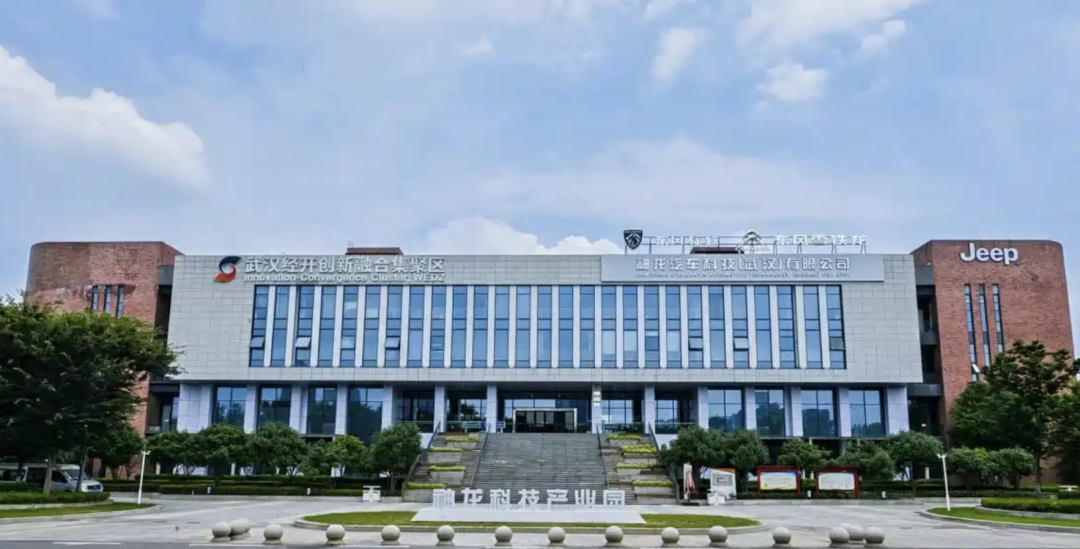
Interestingly, the DPCA Fukang, along with Volkswagen Santana and Jetta, were once known as the 'Old Triumvirate' of China's auto market. Now, Volkswagen has taken the lead in embarking on a transformation journey in the new era, and with the addition of DPCA Tech, it's clear that the 'Old Triumvirate' is reinventing itself in its own way.
In fact, DPCA has been active this year, and it's necessary for the outside world to reacquaint itself with this joint venture.
01 What's New About DPCA Tech?
The 'newness' of DPCA Tech first lies in its investment structure.
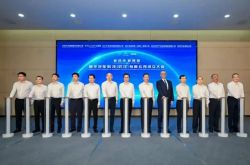
On August 20, 2026, the founding ceremony of DPCA Tech (Wuhan) Co., Ltd., themed 'New Joint Venture, New Leap Forward,' was held in the Wuhan Economic and Technological Development Zone. This new company, with a registered capital of approximately RMB 8.2 billion, is jointly funded by Dongfeng Motor, Stellantis Group, Changjiang Industry Group, Wuhan Finance Holdings Group, Wuhan Economic Development Zone Industrial Investment Group, and DPCA.
In terms of equity structure, DPCA accounts for approximately 24.1%, Dongfeng Motor and Stellantis Group each account for about 13.5%, Wuhan Finance Holdings and Wuhan Economic Development Zone Industrial Investment each account for about 19.5%, and Changjiang Industry Group accounts for about 9.8%. Local state-owned assets at the provincial, municipal, and district levels collectively hold nearly half of the shares.
Cheng Jun, Party Secretary and Deputy General Manager of DPCA, stated in an interview that this is 'truly an investment approach based on market behavior, meaning equal shares, equal rights, and shared risks. It's not a traditional approach that relies entirely on government subsidies.' Yang Qing, Chairman of Dongfeng Motor, commented that DPCA Tech 'breaks through the boundaries of traditional joint venture automakers and establishes a new cooperation model featuring Chinese-foreign collaboration, central-local synergy, and industry-finance collaboration.'
At the operational level, DPCA Tech and DPCA implement an innovative mechanism of 'integrated operations with separate functions.' DPCA is responsible for supply chain coordination, production, and quality assurance, positioning itself as the manufacturing entity and cost control center. DPCA Tech is responsible for R&D, sales, services, and channels, positioning itself as the overall operational entity and profit accounting center. The two entities perform their respective duties while collaborating, avoiding the overlapping responsibilities and decision-making inefficiencies common in traditional joint ventures.
The 'newness' of DPCA Tech also lies in its products.
With the Chinese side holding the core technology dominance and the foreign side providing global brands, channels, and marketing networks, a bidirectional empowerment is formed. Cheng Jun confirmed this change in an interview: 'Dongfeng Motor has taken a significant step forward in the technology industry chain, particularly in new energy intelligence, which provides us with a very solid foundation.'
In DPCA Tech's technology system, Dongfeng's three electric technologies (battery, motor, and electronic control), intelligent driving platform, and electronic and electrical architecture form the underlying support, while Stellantis Group's chassis tuning, styling design, and global standards are overlaid on top. 'At the same time, we integrate the most advanced domestic suppliers and leverage the future advantages of AI.'
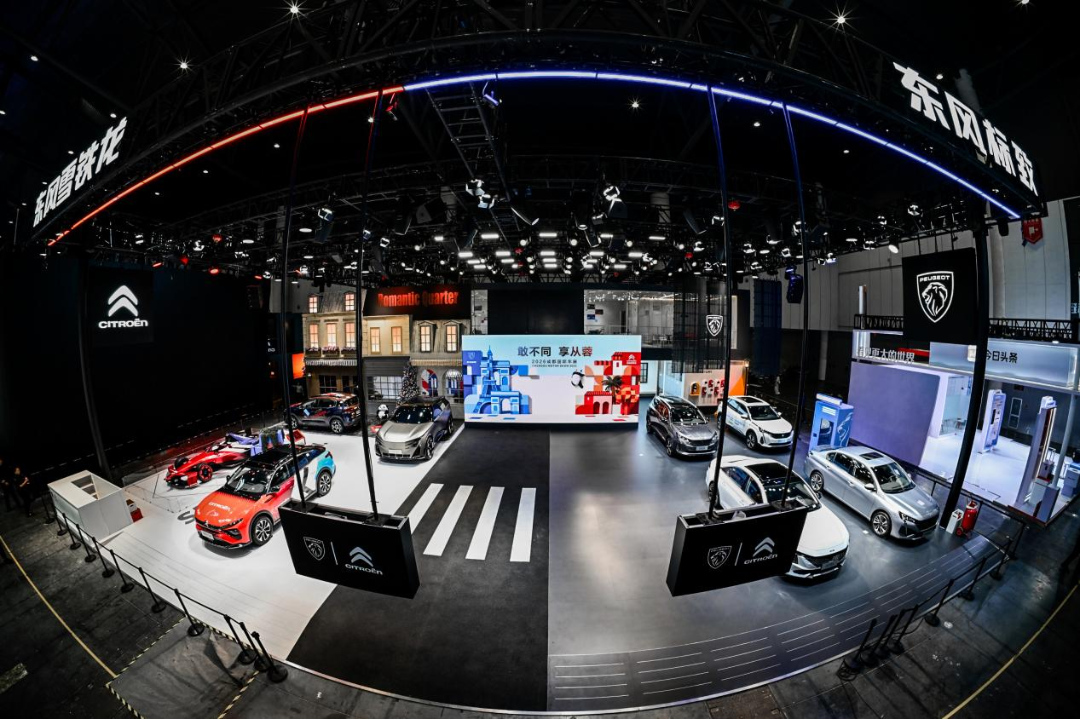
The initial plan includes four new new energy models, covering two Peugeot brands and two Jeep brands, spanning both pure electric and plug-in hybrid technology routes. The differentiated positioning of the three brands is also clearly defined for the first time: Dongfeng Peugeot focuses on driving pleasure and aesthetic style; Dongfeng Citroen inherits the essence of the Magic Carpet chassis technology to create a comfortable travel experience; Jeep targets off-road scenarios.
More importantly, these models are defined as global cars from the outset of R&D. Cheng Jun revealed, 'Stellantis Group has extensive experience in developing global models. If our solution cannot meet global standards, it will not be approved. It's equivalent to having market and planning personnel from various regions around the world come to our company to comprehensively evaluate our proposals.'
The 'newness' of DPCA Tech also extends to its business model and marketing philosophy.
Cheng Jun said, 'In the past, during the era of gasoline vehicles, it was a B2B model where cars were wholesale to dealers, and dealers were responsible for selling them.' DPCA Tech aims to completely change this logic. 'We had a solid user base before, and today DPCA is calling you home. We truly want to connect with these users, understand their needs, and truly face the users.'
Not only that, but DPCA is also driving structural changes internally, recruiting a group of talented individuals with experience in new energy vehicle startups. 'Perhaps by the end of this year and early next year, we can see a company with a completely new business model.'
Cheng Jun positioned 2026 as the 'Year of Consolidation': 'We must truly transform the company's operations into a normal state while laying a solid foundation. I'm talking about user operations, channel transformations, internal capability enhancements, and process reengineering. These must be done well. Otherwise, no one will believe that your new products can capture the market.'
'This year is about laying the foundation; next year, we build the tower.' Overall, changes are occurring in three dimensions: investment structure, product logic, and business model, all converging on one ultimate goal: the user. Therefore, all adjustments made by DPCA Tech ultimately aim to answer the same question: What can consumers gain?
02 What Can Consumers Gain?
The first value DPCA Tech provides to users is emotional value.
Cheng Jun mentioned this term multiple times in interviews: 'Our core indicator [indicators] now are to truly deliver emotional and brand value to users. This includes building a service ecosystem, meaning we're not competing on price but on value.' 'The products I provide to users must not only satisfy functional needs but also emotional needs.' He cited survey data: 'More than 50% of young people today are willing to pay for emotions.'
The relaxed atmosphere of French lifestyle exactly [happens to] meet this demand. Cheng Jun said, 'What is French lifestyle? Beauty, ritual, and relaxation. People don't want to be caught up in intense competition.' 'Emotional value is something more and more young people are pursuing, and this is actually in line with the French lifestyle.' DPCA hopes to convey the idea: 'People should truly appreciate the scenery along the journey, not just pursue the destination.'
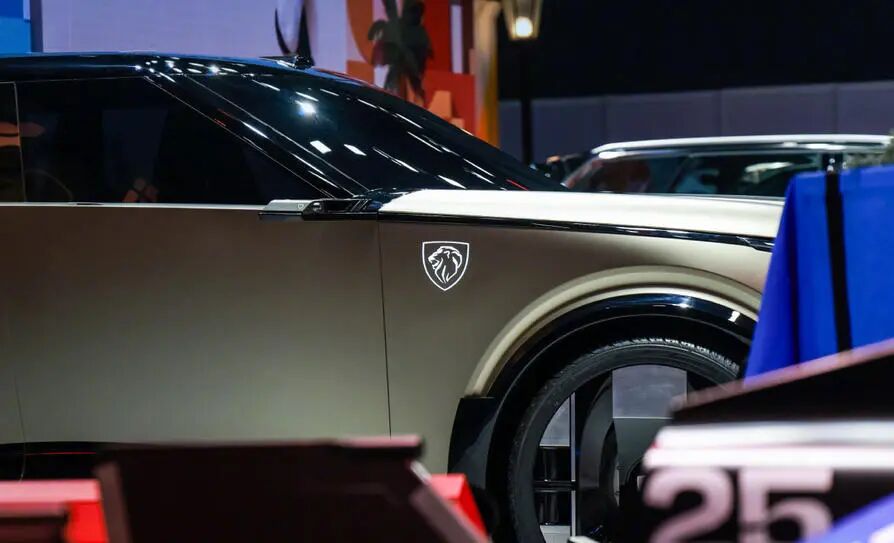
In terms of products, DPCA aims to create differentiated experiences in new energy vehicles. The approach is to create a French atmosphere in the vehicle's interior through lighting, fragrances, and material details, 'allowing everyone to feel French.' In terms of styling, the Peugeot brand adheres to the Lion Soul aesthetic design language, refusing homogenization. The new generation of interior style will serve as the design blueprint for Peugeot's next-generation global products.
The second value DPCA Tech provides to users is a 'new home' for 6.5 million French car enthusiasts.
Over the past three decades, DPCA has sold more than 6.5 million Peugeot and Citroen brand vehicles. Among these users, many are loyal fans who 'remain French car enthusiasts for life.' Cheng Jun said, 'We have continuously voiced our French brands online and accumulated a good reputation, which is an important foundation for enhancing our brand image and visibility in the new energy era.'
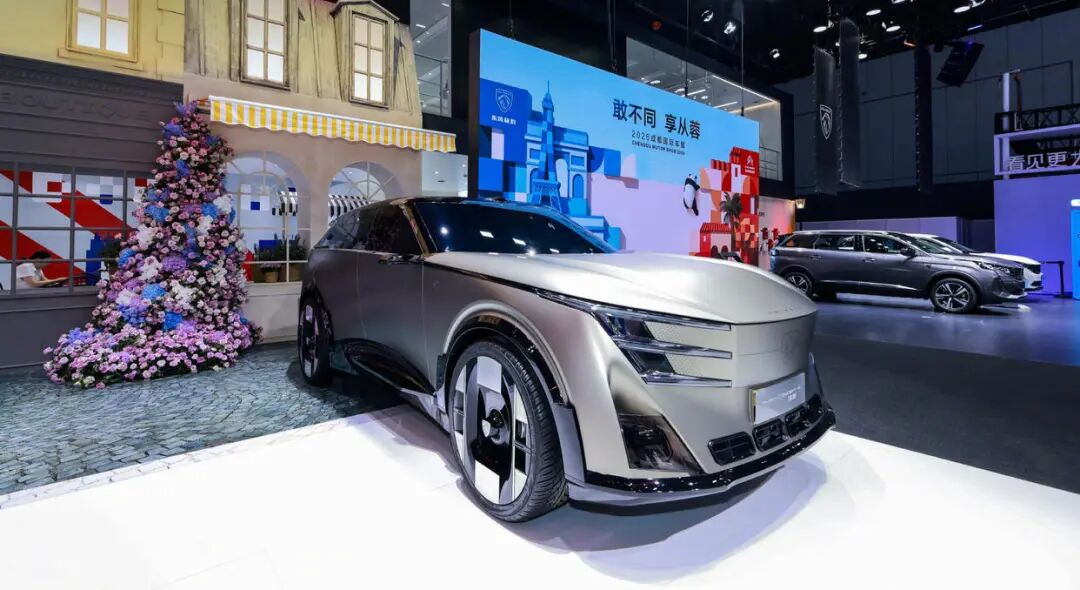
What DPCA Tech aims to do is to rekindle passion among these enthusiasts. 'Both the Peugeot and Jeep brands have had recognized groups for a century, groups for whom the brand brings emotional value. We want to tap into these people.' Cheng Jun clarified the goal: 'We want to sell to those who recognize French culture and the current brand value. This is the foundation for our presence in the Chinese market.'
To reassure existing owners, a series of concrete policies have been introduced. At the Chengdu Auto Show, it was officially announced that to express gratitude to new and existing users, DPCA is launching the '520 Fan Appreciation Gift' for new users and the '1314 Companion Gift' for existing users, providing more comprehensive warranty policies and more thoughtful service benefits through three layers of goodwill: warranty gifts, maintenance gifts, and points gifts.
Additionally, user co-creation has entered a institutionalized orbit [track]. Dongfeng Peugeot launched the 'Zhiyou Co-Creation Plan,' and Dongfeng Citroen simultaneously launched the 'Longyou Co-Creation Plan,' inviting users to participate in brand co-creation across dimensions such as product definition, design aesthetics, and French lifestyle. From warranty commitments to channel expansion to user co-creation, DPCA is using a comprehensive approach to awaken its dormant user base.
The third value DPCA Tech provides to users is the patient laying of a solid foundation for a truly robust product.
Cheng Jun repeatedly emphasizes that 'there's no shortcut to success.' 'From the perspective of a joint venture, basic data will reflect this, including verification cycles, mileage, usage frequency, and scenario coverage. Additionally, there are basic requirements for test mileage in various regions globally. Taking shortcuts is something we cannot accept.'
This commitment is reflected in chassis tuning. Cheng Jun shared a detail: At the Xiangyang Test Track, the team had him drive for 20 laps. 'The team would constantly tell you what to experience in each maneuver, what to focus on, and how it relates to which parameter. We kept doing this until we could say, 'What's the score difference between these two cars? What does a 0.1-point difference represent? What does a 0.2-point difference represent?' We're here to refine, not to take shortcuts.'
In the new energy era, DPCA continues to uphold this philosophy. The chassis tuning for subsequent new products 'will undergo tuning and verification in Europe and the United States.' The initial four new energy models will be developed according to global unified standards, taking into account 'technical white papers, technical quality, user requirements, and road environments' in various regions from the outset of design.
Cheng Jun said that entering the global market is 'not late,' but entering the Chinese market is 'very challenging.' He did not shy away from this reality. 'From the perspective of overall consumer trends and the awareness of young groups, French culture may be pursued by more users.' 'There's no such thing as being too late; there's only the most opportune time.'
As the outside world and DPCA itself have said, the company is undergoing a comprehensive transformation, from joint venture models and product technologies to user relationships.
2026 is the Year of Consolidation, and new models will gradually be launched in 2027. Whether this veteran joint venture, which has been around since the 'Old Triumvirate' era, can reprove itself on the new track of electrification and intelligence remains to be seen until the first new model is delivered next year. But at least, it has presented a transformation plan that is different from the past.
Editor-in-Chief: Shi Jie Editor: He Zengrong

THE END
-
![]()
"Ox Coming" Makes a Splash in the AI Circle! Mysterious Large Model Goes Viral, Who's Behind the Big Move?
-
![]()
Xiaopeng’s New Car is Popular, but Financial Results are Less Impressive
-
![]()
Dialogue with Lv Wenbin from Great Wall Motors: The 30,000+ Orders for Great Wall H10 is Just the Beginning!
-
![]()
Can Xiaomi Pengcheng N90 and N70 Recreate the 'Success Story' of the SU7?
-
![]()
Can Stellantis Revitalize Jeep’s Domestic Production in China via the ‘New Dongfeng Peugeot Citroen Automobile’ Initiative?
-
![]()
Xpeng's Q2 2026: Automotive Losses, Service Gains, and a Narrative Shift Toward Robotics
-
![]()
XPENG Motors Reports H1 Loss of 3.12 Billion Yuan, Accumulated Losses Hit 45.91 Billion Yuan
-
![]()
[In-depth Report] From 'Being Seen' to 'Being Remembered': The Next Big Battle for Chinese Automotive Design