30-Year Symbiosis: Why Detroit’s Auto Industry Can’t Survive Without Canada
 08/28 2026
 413
413
Detroit’s prosperity has never been an isolated phenomenon. For decades, it has maintained a symbiotic relationship with Canada’s auto sector, with both industries thriving—or struggling—in tandem.
Since early 2026, escalating U.S.-Canada trade tensions have plunged Detroit’s automotive industry into unprecedented uncertainty.
Recently, Trump publicly declared, "We don’t need Canada; they need us," repeatedly threatening to impose 50% import tariffs on Canadian-made vehicles and parts. However, this aggressive unilateral stance overlooks a decades-old industrial reality.

Within North America’s automotive ecosystem, Detroit’s reliance on Canada far outweighs Canada’s dependence on Detroit. If 50% tariffs are imposed, the first to suffer catastrophic damage will not be Canadian automakers but Detroit’s Big Three automakers, whose core profit-generating product lines will be hit hardest.
Detroit’s "Profit Lifeline" Tied to Canada
The profitability of Detroit’s Big Three isn’t solely driven by U.S. domestic production.
General Motors’ Q2 2026 earnings report revealed adjusted earnings per share of $3.57, surpassing market expectations of $3.20, with full-year adjusted EBIT guidance raised to $14-16 billion. The primary driver? North America’s pickup truck and full-size SUV segments, which achieved an 8.6% adjusted EBIT margin—up 2.5 percentage points year-on-year.
Market analyses rarely highlight that a significant share of core stamping parts and powertrain modules for these high-margin models originates from Ontario, Canada’s supporting factories.
Ford’s profit structure is even more Canada-dependent.

After abandoning pure EV development in late 2025 and writing down $19.5 billion in related assets, Ford pivoted to hybrid, extended-range, and traditional internal combustion engine vehicles. The F-Series pickups and Bronco off-road SUVs now account for over 70% of the company’s operating profits.
Canada’s Oakville plant exclusively supplies core body components for the Ford F-150 Hybrid, while the Windsor engine plant produces more than half of Ford’s global 3.5T EcoBoost engines. A 50% tariff would add over $3,000 in part costs per F-150, erasing nearly 20% of the model’s per-unit profit.
Stellantis faces a similarly dire scenario. Over 40% of final assembly for its North American profit engines—Jeep Wrangler and Ram pickups—occurs in Canada. After reporting a staggering €19-21 billion net loss in 2025, the company relies on stable Canadian factory output of high-margin off-road models to maintain its North American foothold.
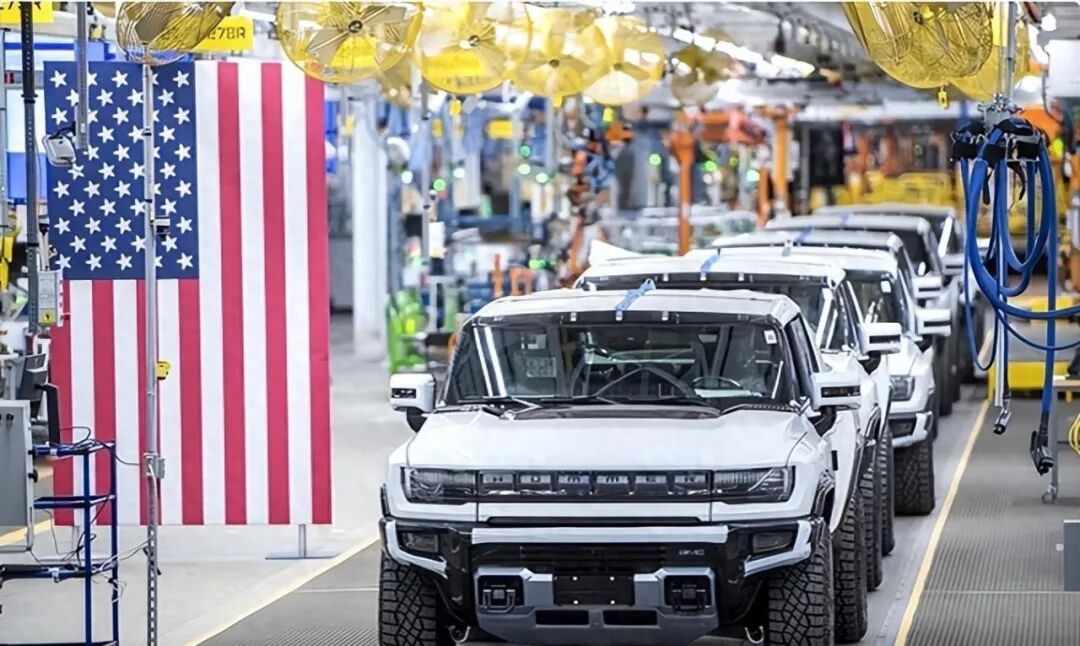
With 50% tariffs, each Canadian-built model exported to the U.S. would incur nearly $10,000 in additional costs, forcing either price hikes that repel customers or transforming profitable models into loss leaders.
The Symbiotic U.S.-Canada Automotive Supply Chain
The deep integration between Detroit and Canada’s auto industries isn’t recent—it’s the result of over 30 years of refinement under the USMCA, creating North America’s most efficient industrial division of labor.
Ontario’s proximity to Detroit has attracted over 300 automotive parts suppliers, forming a complete support cluster within a three-hour drive. This enables Detroit automakers to receive same-day parts deliveries, minimizing inventory costs.
This collaborative model gave Detroit a critical cost advantage, particularly during the recent EV transition.
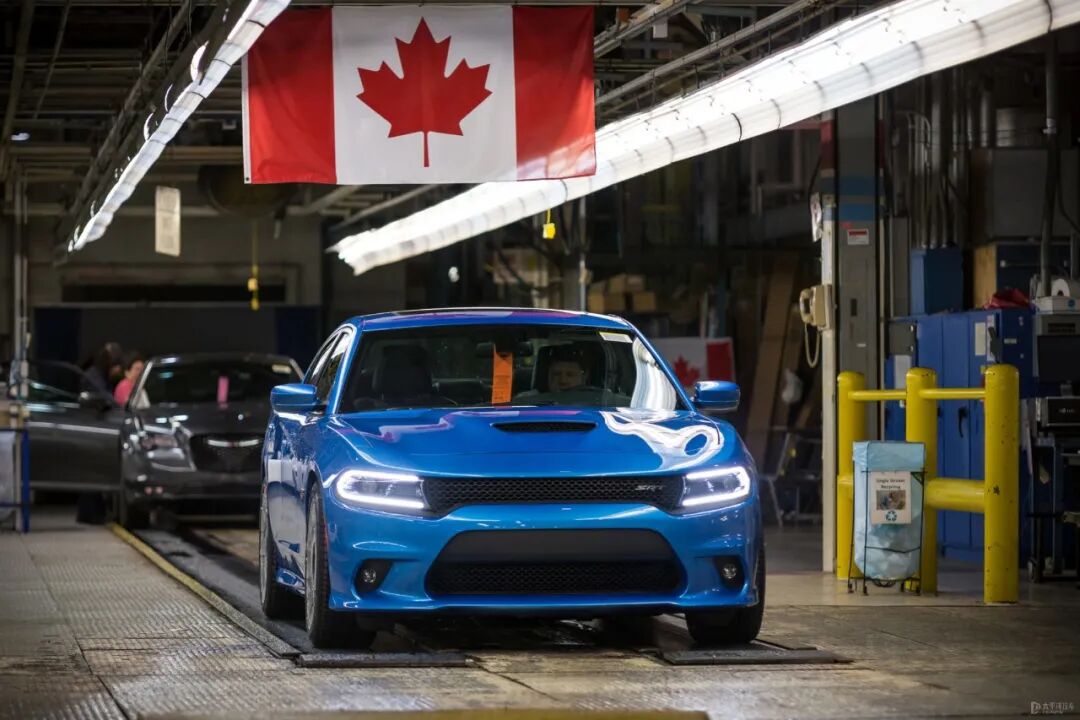
After the 2022 U.S. Inflation Reduction Act, Detroit’s Big Three invested tens of billions in U.S. gigafactories, aiming to sell millions of EVs annually by 2030. But market realities diverged sharply: U.S. EV demand growth slowed dramatically, leaving automakers selling each EV at a loss.
Canada’s industrial value became even more pronounced. Ontario offers not only a skilled automotive workforce but also electricity costs nearly 40% lower than Michigan’s, plus a mature upstream supply chain for EV battery materials.
When Samsung SDI acquired General Motors’ battery joint venture Synergy Cells, it shifted some battery material preprocessing to Canadian factories before exporting semi-finished products to its Indiana plant, helping Detroit automakers meet IRA subsidy requirements while cutting production costs.
No other U.S. manufacturing sector is as deeply intertwined with Canada as automotive.
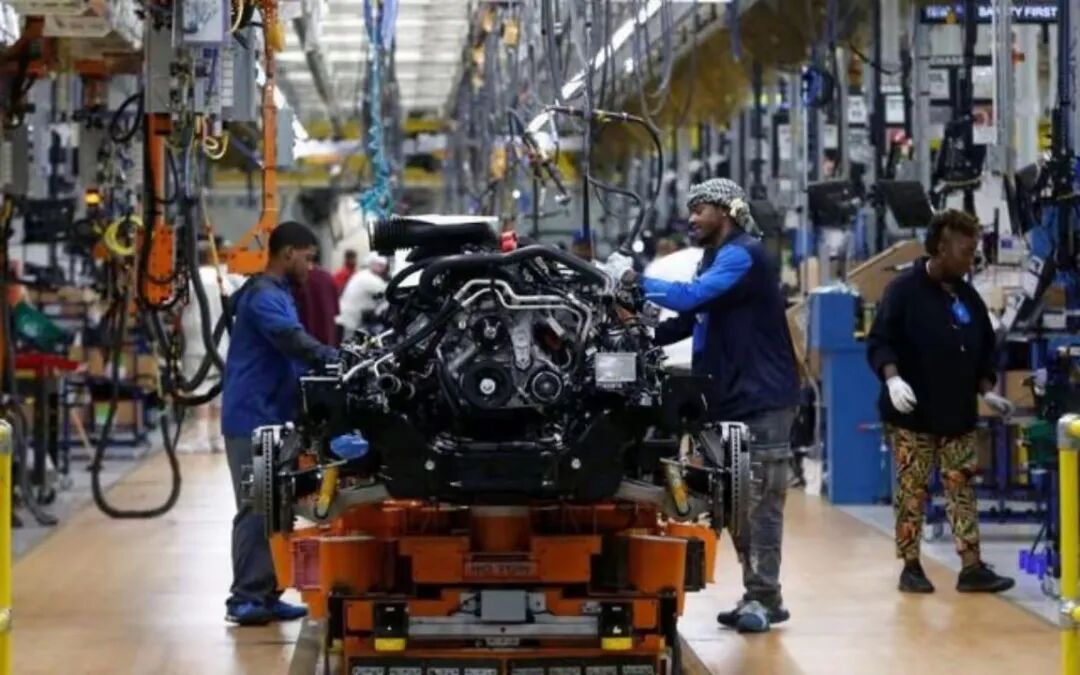
Silicon Valley’s tech supply chains focus on East Asia, while southern U.S. renewable energy factories rely on local suppliers. Even agriculture—another trade-dependent sector—can hedge risks by shifting export markets. Only Detroit’s auto industry, from powertrains to final assembly, is so deeply embedded with Canadian suppliers that no short-term alternatives exist.
Detroit Will Suffer More Than Canada
Trump’s 50% tariff threat aims to pressure Canada into trade concessions, but the reality is counterproductive.
Employment data shows Canada’s auto industry directly supports over 160,000 jobs, while Michigan’s Big Three employ over 110,000 salaried workers alone. Including upstream suppliers, sales, and after-service roles, the total exceeds 800,000 jobs.
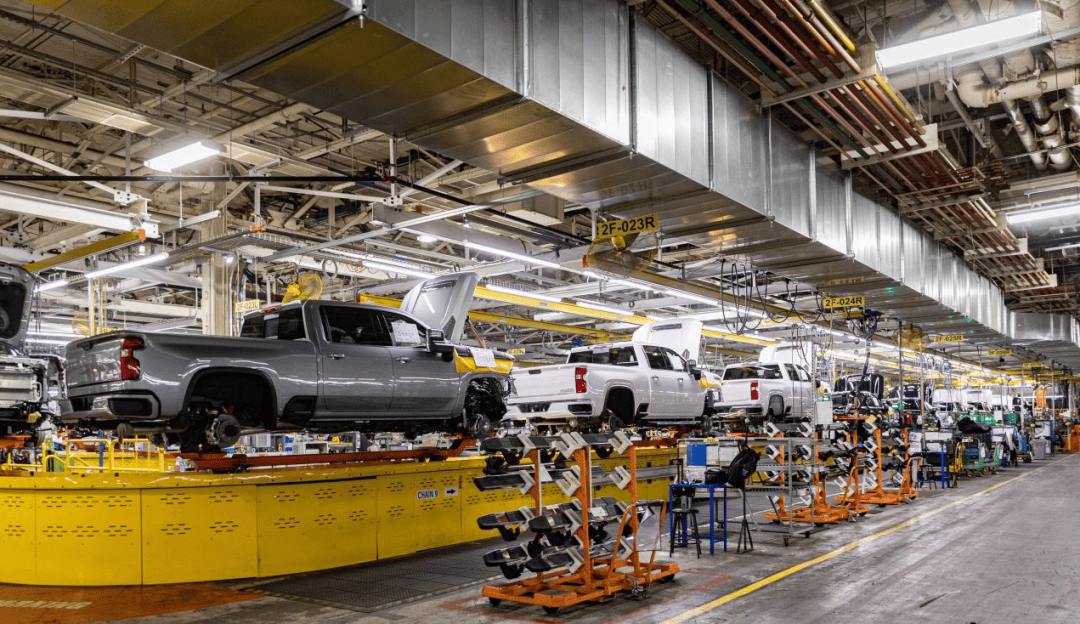
If tariffs are imposed, Detroit automakers will first cut U.S. factory jobs and reduce production to offset costs, ultimately hurting local workers and communities most.
The 2026 U.S. auto market is already fragile, with light-vehicle sales projected at just 15.8-16 million units—flat compared to 2025. Sedan market share continues shrinking, while crossover SUV growth has stalled for the first time in a decade.
Since their 2020s employment peak, Detroit’s Big Three have cut over 20,000 U.S. salaried jobs (a 19% reduction). The industry only recently returned to profitability by slashing EV investments and focusing on high-margin pickups and SUVs. A 50% tariff would derail this fragile recovery.
Ironically, Canada is better positioned to absorb tariff impacts.

In early 2026, Canada struck a preliminary trade deal with China, ending 100% tariffs on Chinese EVs and adopting a tariff-rate quota system allowing up to 49,000 Chinese EVs into Canada annually.
Canada can redirect auto production originally destined for the U.S. market to Europe and East Asia by expanding partnerships. Detroit automakers, however, lack such options—their core capacity and profits are concentrated in North America. If the U.S.-Canada automotive supply chain fractures, no alternative regional market can quickly fill the void.
Thus, Trump’s claim that "the U.S. doesn’t need Canada; they need us" ignores North America’s automotive reality.
Three decades of industrial collaboration prove Detroit’s prosperity has never been isolated. It has long shared a symbiotic relationship with Canada’s auto industry, where both rise or fall together. While other U.S. regions can function economically without Canada, Detroit cannot.
Having just completed over $10.9 billion in EV-related write-downs since mid-2025 and finally returning to profitability, Detroit now faces a 50% tariff threat that could erase all cost-cutting gains of the past two years.
For Detroit, "trade toughness" has never been strength—it’s a double-edged sword.
Note: Images sourced from the internet. For copyright concerns, please contact for removal.
-END-
-
AI Agents: The Paradigm Shift from 'Conversation' to 'Execution'
-
NVIDIA Takes Bold Strides to Lead in Both Hardware and Software Realms
-
![]()
It's Hard to Build Cars, Even Harder to Build Humans, and XPENG is Doing Both
-
![]()
Valuation Soars by $57 Billion: Three Entrepreneurs Born in the 1980s Forge an AI Unicorn Now Suddenly on the Market
-
![]()
How Can We Achieve the Goal of 100,000 Hydrogen Vehicles by 2030?
-
![]()
July Online Market for Consumer-Grade Sports Cameras: Robust Double-Digit Growth in Sales Volume and Value, Mid-Range Products Fuel Market Expansion
-
![]()
A Hundred Billion Dollar Market! When Will the 'Golden Age' of Agentic AI Arrive?
-
![]()
Changzhou’s Wealthiest Woman Faces Unexpected Setback