It's Hard to Build Cars, Even Harder to Build Humans, and XPENG is Doing Both
 08/28 2026
 531
531
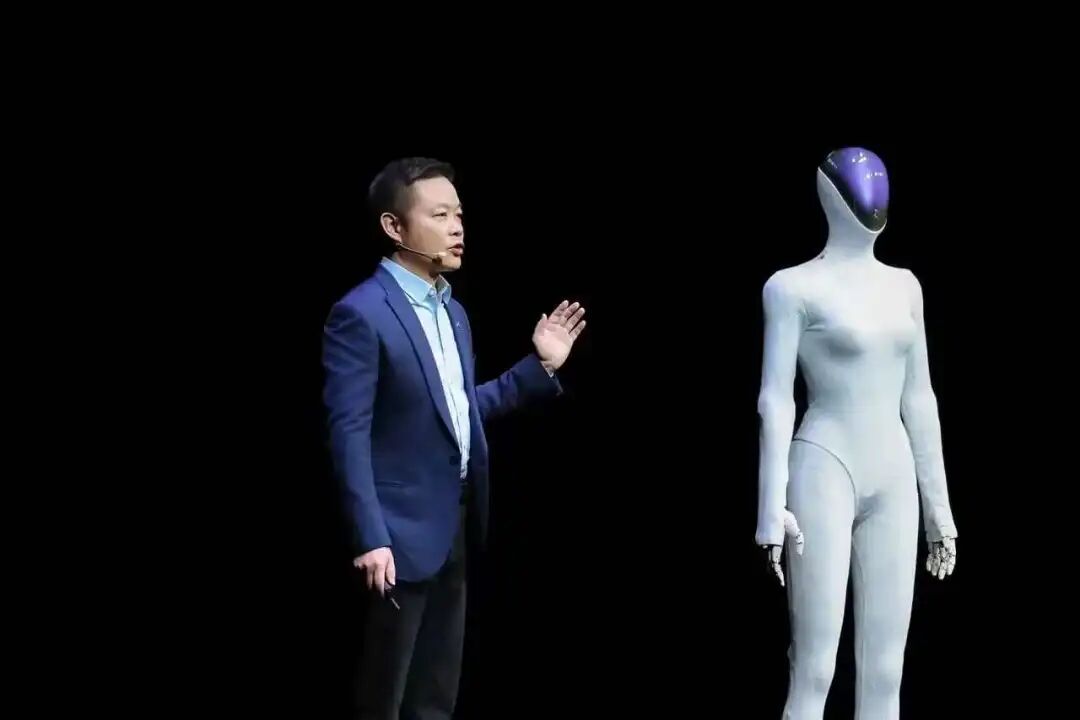
The 'human-building' business is valued at 42.5 billion yuan
”
Author | Wang Lei
Editor | Qin Zhangyong
Within a single day, XPENG showcased an extremely contradictory AB side, presented through two significant pieces of news:
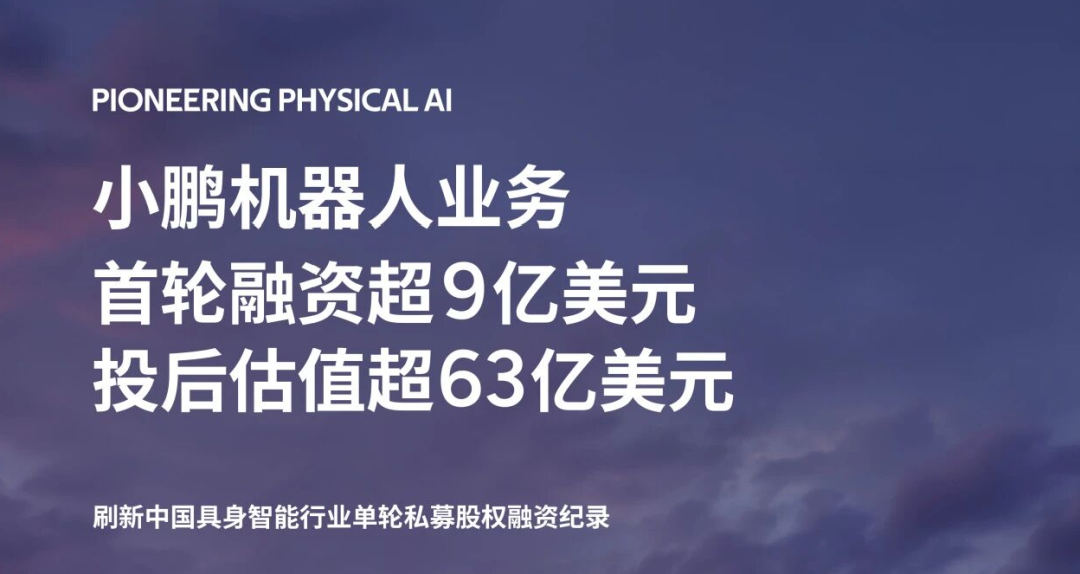
XPENG announced that its robotics business has completed its first round of equity financing agreements, raising over $900 million. The round was led by IDG Capital, with participation from GaoRong Capital, Tencent, and Alibaba as strategic investors.
The post-investment valuation is approximately $6.3 billion, equivalent to 42.5 billion yuan, setting a new record for a single round of private equity financing in China's embodied AI industry.
The other piece of news is its second-quarter financial report, which revealed a net loss of 1.34 billion yuan for Q2 alone. If we take a broader view, XPENG's net loss for the first half of this year has accumulated to 3.12 billion yuan, a year-on-year increase of 179.9%.
On one hand, there's a loss of over 3 billion yuan; on the other, the business valuation has reached 42.5 billion yuan. The same company, different narratives. At the capital level, as of the time of writing, XPENG's Hong Kong stock has fallen by 9.65%.
01 Side Business Supports Gross Margin
In the second quarter of 2026, XPENG's single-quarter deliveries returned to the 100,000-unit range, historically breaking through the 103,300-unit mark, a significant 64.8% increase quarter-on-quarter. Overseas business has also clearly become the second growth driver, with overseas sales exceeding 20,000 units for the first time in Q2, a year-on-year increase of 81%.
Total quarterly revenue also surged accordingly, with total income increasing from 13.034 billion yuan to 19.744 billion yuan, a 51.5% increase. Among this, automotive sales revenue was 17.05 billion yuan, accounting for about 86% of total revenue, a 1% year-on-year increase.
Operating losses narrowed from 1.874 billion yuan to 1.143 billion yuan, and the comprehensive gross profit margin reached 20.7%, higher than 17.3% in the same period last year and 20.6% in the first quarter. Gross profit surged by nearly 29%, reaching 4.08 billion yuan.
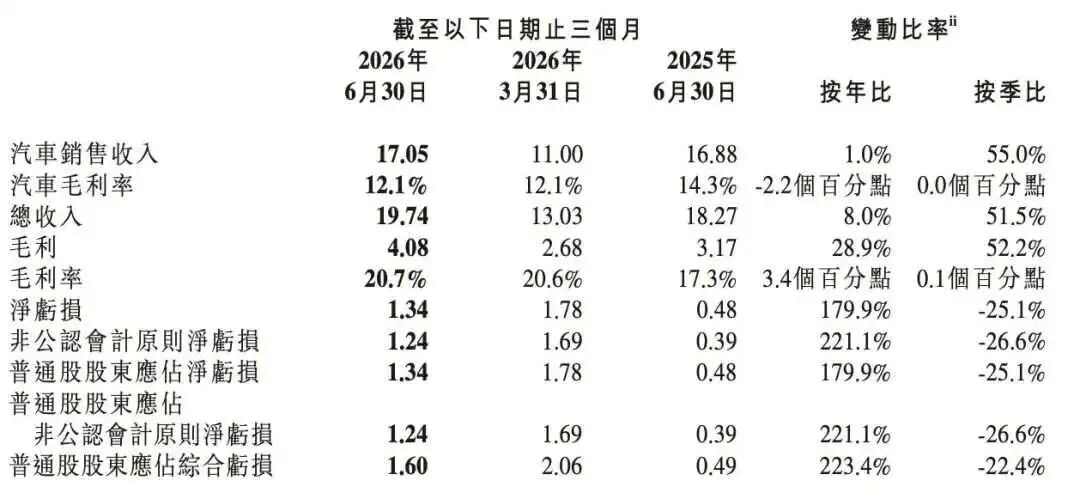
Despite only modest year-on-year growth considering the dismal conditions this quarter, it's no small feat. As a result, He Xiaopeng confidently stated during the earnings call that 'we have achieved year-on-year growth earlier than the industry's recovery.'
The problem precisely lies in 'year-on-year' comparisons. Q2 deliveries only increased by 0.1% year-on-year, and automotive sales revenue only increased by 1%. Why, when almost the same number of cars were sold, did gross profit surge by nearly 29% year-on-year, with nearly a third of the profit coming from where?
The answer lies outside of car sales.
According to the second-quarter financial report, 'services and other businesses' generated revenue of 2.697 billion yuan, accounting for less than 14% of total revenue, a 93.9% year-on-year increase, with a gross profit margin as high as 75.1%.
Calculating based on income and cost of sales in the financial statements, Q2 automotive business revenue was approximately 17.05 billion yuan, corresponding to a gross profit of about 2.06 billion yuan. In contrast, services and other businesses generated only about 2.7 billion yuan in revenue but contributed a gross profit of about 2.03 billion yuan.
The two were nearly equal in profit contribution, meaning that a business accounting for less than 14% of total revenue has contributed nearly half of the gross profit.
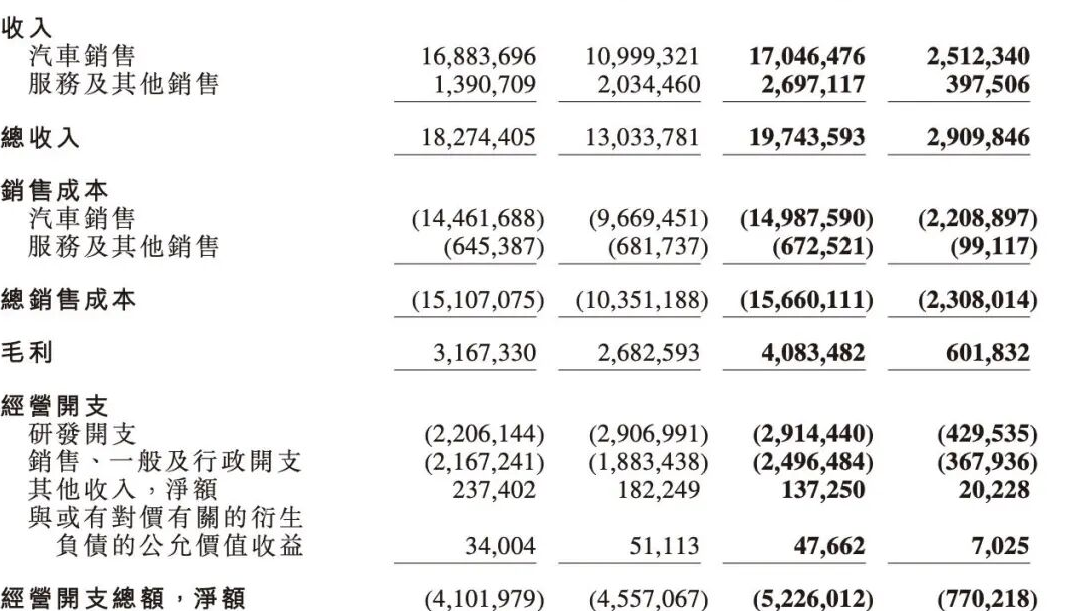
According to XPENG Group's explanation, the growth primarily comes from technology R&D services provided to a certain automaker and increased sales of parts and accessories, especially as some technology projects reached critical milestones this quarter, leading to concentrated revenue recognition.
This mysterious business with a gross profit margin exceeding 75% is not hard to guess.
Most of it comes from the joint R&D technical service fees between XPENG and Germany's Volkswagen Group, with Volkswagen paying XPENG a high price for hardware and software architecture design, allowing XPENG's engineering team to develop a regional electronic and electrical architecture (CEA) for the Chinese market.
It's worth mentioning that during the earnings call, XPENG also emphasized the need for the market to view this high-margin business rationally, stating that technical services are currently primarily project-based, with revenue recognized according to development milestones, so there will be fluctuations between quarters, and it's not a stable subscription income.
XPENG also made it clear that this is not a short-term money-making venture and that it will continue to expand its customer base among domestic and foreign automakers in the future. However, how much revenue can be confirmed in a single quarter still depends on project progress.
But the fact is that XPENG's technology has moved from 'concept validation' to 'revenue contribution.'
It is precisely because of this profitable business that XPENG's comprehensive gross profit margin has reached a high of 20.7%, but it can also easily mask the true gross profit from car sales. XPENG's automotive gross profit margin in Q2 was only 12.1%, lower than 14.3% in the same period last year and flat with the first quarter.
If we simply calculate by dividing automotive sales revenue by same period deliveries, XPENG's average revenue per vehicle sold in Q2 was approximately 165,000 yuan, a Month on month decline of about 6%, compared to approximately 175,000 yuan in Q1. This means that the ability to make money solely from car sales has declined.
But it must be acknowledged that the overall signs of recovery in Q2 performance were not achieved by cutting costs; in fact, they were the root cause of the year-on-year increase in net loss.
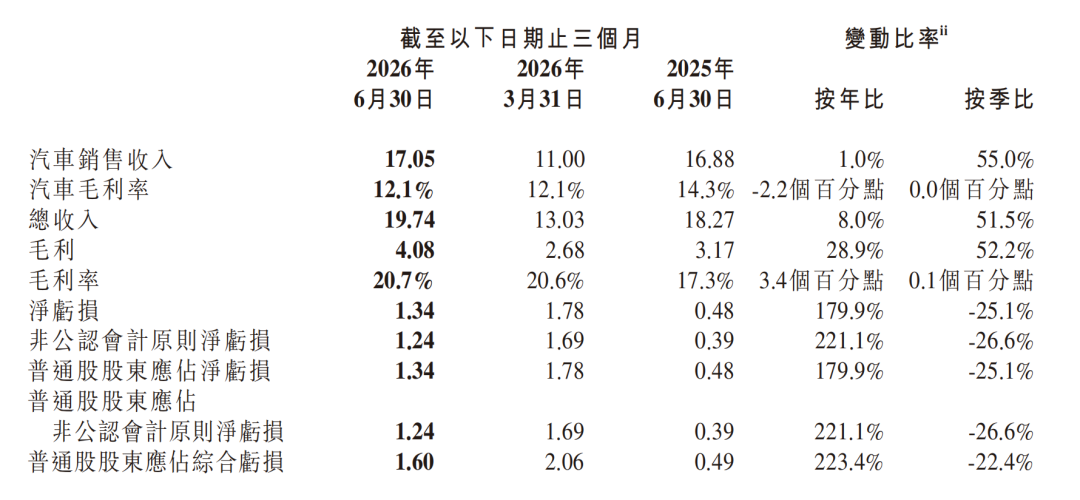
XPENG's net loss in Q2 was 1.34 billion yuan, compared to a net loss of 480 million yuan in the same period last year and 1.78 billion yuan in Q1.
XPENG's R&D expenses for this quarter reached 2.91 billion yuan, a 32.1% year-on-year increase, primarily used for new model and AI-related technology development. At the same time, sales and administrative expenses also reached 2.5 billion yuan, a 15.2% year-on-year increase.
These two expenses totaled 5.4 billion yuan, while the gross profit for the quarter was 4.083 billion yuan. Adding in fixed costs such as depreciation and amortization, a loss was inevitable.
After deducting share-based payment expenses and fair value gains on contingent consideration derivative liabilities, XPENG's non-GAAP net loss for Q2 was 1.24 billion yuan, an amount close to the difference of 1.38 billion yuan between expenses and gross profit.
During the earnings call, He Xiaopeng admitted that the first half of the year was a transition period for XPENG's product generations, which to some extent affected the growth of its sales and revenue. In other words, the second half of the year will be a growth battle.
According to He Xiaopeng's disclosure, XPENG's new non-cancellable orders in Q3 increased by 50% quarter-on-quarter, reaching a historical high.
02 Gross Margin Far Exceeds That of Cars
The increase in gross profit in XPENG's Q2 financial report also sent a clear signal to the market: revenue generation paths are not limited to car sales alone.
On the same day as the financial report was released, XPENG Group first announced another significant piece of news: its robotics business, 'Pengxing,' has signed a first-round equity financing agreement with multiple investors, raising over $900 million.
Led by IDG Capital, with participation from GaoRong Capital, Tencent, and Alibaba, and XPENG Group continuing to hold a controlling stake. This is one of the largest single investments by these four institutions in the embodied AI field and also sets a new record for a single round of private equity financing in China's embodied AI industry.
Among them, the four external investors actually contributed $600 million, XPENG Group itself invested $200 million, and entities associated with He Xiaopeng and Gu Hongdi invested $100 million.
However, He Xiaopeng further disclosed during the earnings call that this round of financing was initiated by the investment institutions, meaning that major capital players are already eager to show their support.
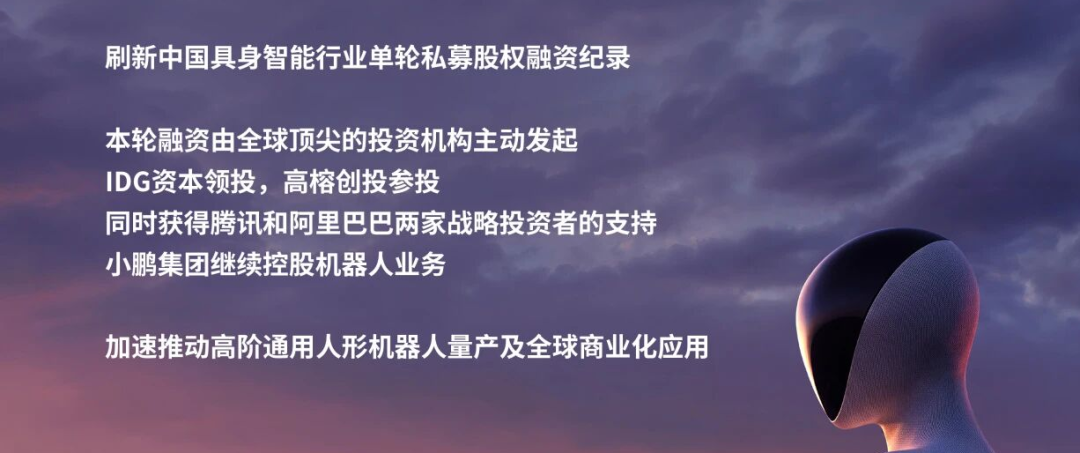
This is also the first time the capital market has independently priced XPENG's robotics business—with a post-investment valuation exceeding $6.3 billion, equivalent to 42.5 billion yuan. Considering that XPENG Group's entire market capitalization is currently only 83 billion yuan,
This also shows that while the automotive business is still bleeding, the robotics business has already taken center stage in the capital market, and XPENG Group's B side lies within it.
The disclosure of such significant news during XPENG Group's Q2 earnings call was not only that He Xiaopeng did not first talk about cars at the beginning but instead started with robots.
Even the analysts present did not ask about why automotive sales gross profit had declined or plans for overseas business; instead, they focused on another narrative: When will IRON be mass-produced? What will the monthly production capacity be? Will the robotics business operate independently?
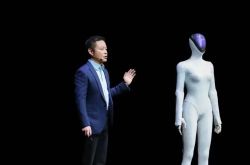
During this earnings call, He Xiaopeng for the first time systematically explained why XPENG is betting on humanoid robots: 'XPENG is the only robot company in China with such comprehensive independent R&D capabilities across the entire technology stack.'
Based on the supply chain, automotive-grade manufacturing capabilities, and globalization system formed by the automotive business, as well as the Turin AI chips, AI infrastructure, and world base models formed by the intelligent driving business, applied to the robotics business, I believe we can accelerate the large-scale mass production and commercialization process of XPENG's humanoid robots, He Xiaopeng said.
This is also why XPENG's robotics business was able to secure this price in its first round of financing—the core support is the transfer of car-building capabilities.
Currently, its complete independent technology stack covers the body, brain, cerebellum, data, and infrastructure of IRON. From a hardware perspective, its ultra-high degree of anthropomorphism is evident, as seen when IRON's debut was questioned as being a real person, leading to requests to cut open its clothes to 'prove its innocence.'
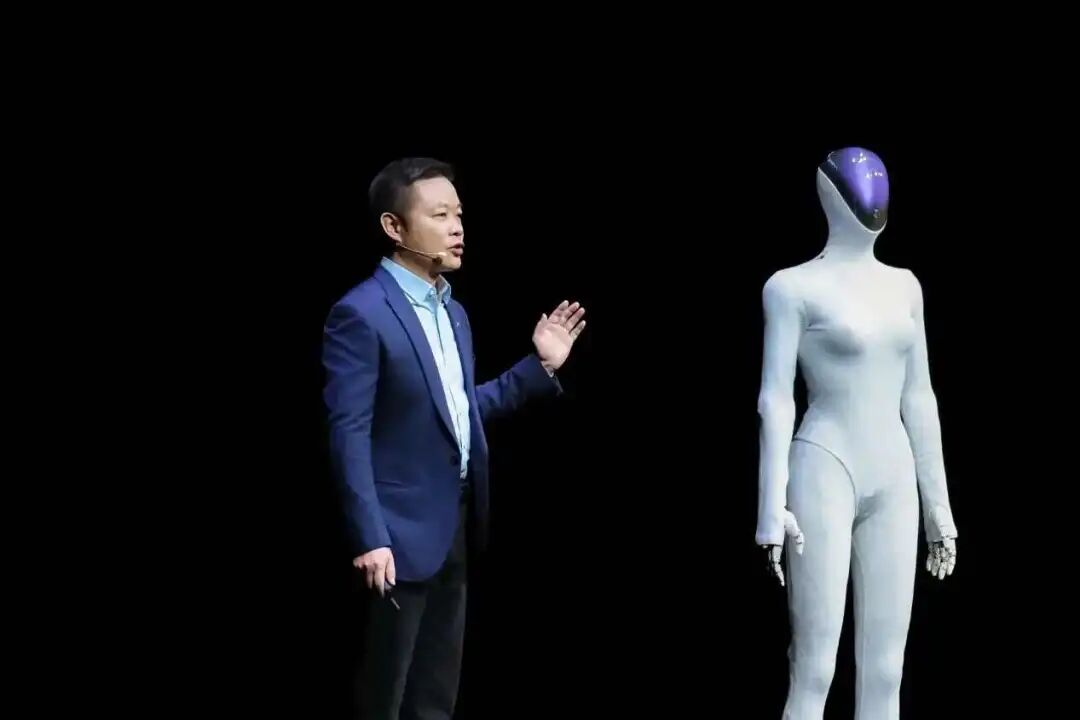
It has 76 degrees of freedom throughout its body, with 21 degrees of freedom in each hand, as well as an industry-first fully enclosed flexible lattice structure. It has independently designed and developed an AI-native hardware platform and all core components, including 3 Turin AI chips, with effective computing power reaching up to 2,250 TOPS, as well as controllers, motion modules, and dexterous hands.
More critically, He Xiaopeng emphasized that XPENG's robots share over 85% of their supply chain resources with the vehicle business. Additionally, with robot pricing on the market generally being 2.5 to 3 times their BOM cost, he admitted, 'The gross profit margin of the hardware itself will be superior to our existing automotive business.'
It could even be higher, such as income from AI model training, model upgrades, and software capabilities. 'Once sales volume ramps up, the robotics business can achieve profitability much faster than the automotive business,' he said.
At the same time, a clearer commercialization timeline was provided: IRON plans to enter large-scale mass production by the end of 2026 and gradually move beyond XPENG's proprietary scenarios to deliver to external customers in 2027.
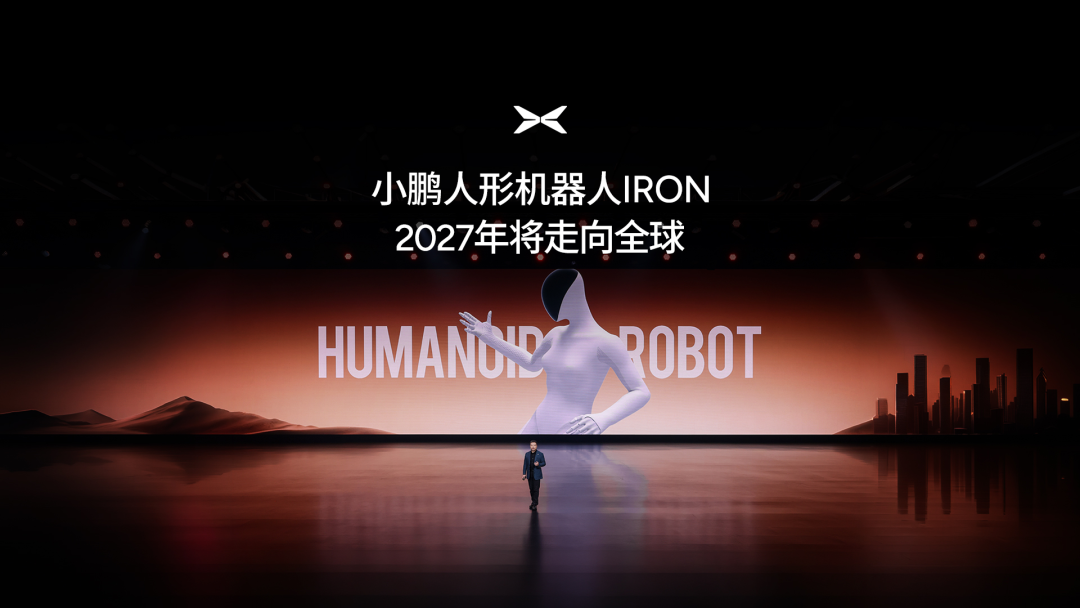
However, XPENG has chosen a different landing route from its competitors. Unlike other peers who primarily enter factories, household usage scenarios, and primarily target To B businesses to enter the market, XPENG's robots focus on large-scale C-end and small to medium-sized B-end markets.
In other words, they will first enter the market through commercial scenarios before moving into industrial and household usage scenarios and launching smaller SKUs in subsequent stages.
In addition to celebrating the $900 million first-round financing, XPENG also announced another significant change—XPENG will gradually separate its robotics business from its automotive business over the next 18 months.
In response, Gu Hongdi, Vice Chairman of XPENG Automotive, stated that during these 18 months, the two businesses will primarily maintain synergy. However, as mass production and commercialization scenarios become clearer, they may consider a more likely separation in the future.
However, he also emphasized that given the ownership structure, even if the robotics business is separated, it will still be 100% consolidated in the financial statements and will not affect XPENG Group's future financial performance.
Now, the question is when the robotics business, valued at $6.3 billion in its first round, can truly contribute revenue and profit.
-
![]()
It's Hard to Build Cars, Even Harder to Build Humans, and XPENG is Doing Both
-
![]()
Valuation Soars by $57 Billion: Three Entrepreneurs Born in the 1980s Forge an AI Unicorn Now Suddenly on the Market
-
![]()
How Can We Achieve the Goal of 100,000 Hydrogen Vehicles by 2030?
-
![]()
July Online Market for Consumer-Grade Sports Cameras: Robust Double-Digit Growth in Sales Volume and Value, Mid-Range Products Fuel Market Expansion
-
![]()
A Hundred Billion Dollar Market! When Will the 'Golden Age' of Agentic AI Arrive?
-
![]()
Changzhou’s Wealthiest Woman Faces Unexpected Setback
-
![]()
FAW Seeks Efficiency Gains, Leapmotor Accelerates Expansion
-
![]()
Dual Leaders in Robot Vacuum Industry Look Overseas for Growth