How to Alleviate Pressure on the Battery Swap Model? NIO Has Finally Figured It Out
 08/28 2026
 472
472
Lead | Introduction
After achieving profitability for two consecutive quarters, NIO is accelerating its exploration of an 'asset-light' transformation. By introducing external capital, such as local state-owned funds, to hold battery swap station assets, NIO is gradually shifting from 'heavy asset construction' to 'light asset operations,' with its battery swap business model also undergoing changes.
This article is produced by Heyan Yueche Studio
Written by | Zhang Chi
Edited by | He Zi
Full text: 2,606 characters
Reading time: 4 minutes
How can the battery swap model achieve profitability? NIO has been continuously contemplating this question.
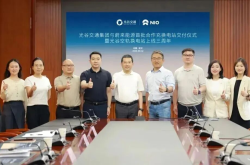
Recently, NIO Energy and Optics Valley Transportation Group held the delivery ceremony for their first batch of cooperative charging and battery swap stations in Wuhan, Hubei. The first 36 jointly built and operated charging and battery swap stations were officially handed over. Following this delivery, all existing battery swap station assets in Wuhan will be held by state-owned capital platforms, while NIO Energy will continue to handle daily operations, thereby separating ownership and operational rights of the charging and battery swap infrastructure assets.
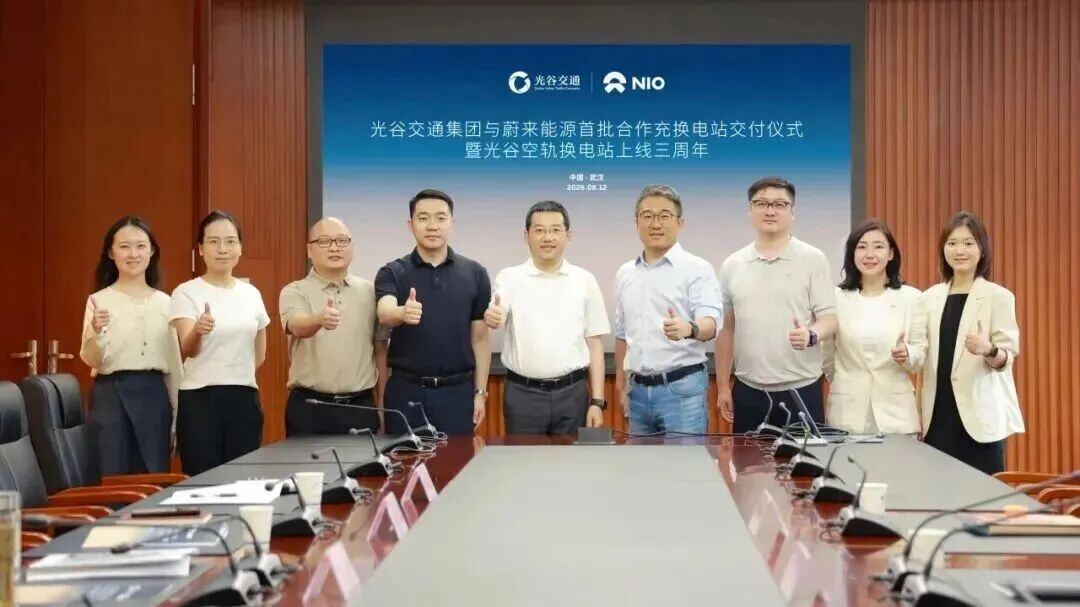
△ NIO's handover of 36 battery swap stations to Optics Valley Transportation Group marks a significant milestone
The battery swap business has been a defining feature and core competitiveness of NIO's brand, serving as a key technological and service moat. However, the continuous capital investment required for the construction and operation of battery swap stations has long placed financial pressure on NIO due to its heavy asset model. Against this backdrop, NIO is exploring a development path that balances brand differentiation with financial efficiency, whereby local state-owned platforms hold the charging and battery swap infrastructure assets, while NIO Energy focuses on subsequent operations. The implementation of the Wuhan model signifies that this approach has entered the practical stage.
In the future, this model is expected to be gradually rolled out to other regions across the country, reducing NIO's capital expenditures and asset burdens while preserving the core competitiveness and operational capabilities of its battery swap business, thereby further improving capital efficiency and overall financial performance.
Traveling Light is the Only Way to Survive
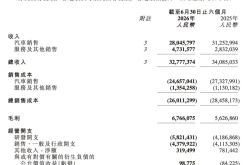
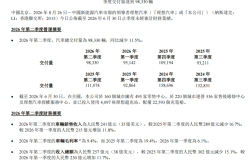
With the success of the all-new ES8, NIO has staged a remarkable turnaround. After achieving its first quarterly profit in the fourth quarter of 2025, the company reported an operating profit of RMB 66.8 million in the first quarter of 2026, marking two consecutive quarters of profitability and a significant improvement in its operating conditions.

△ The success of the all-new ES8 has not fully alleviated pressure on NIO
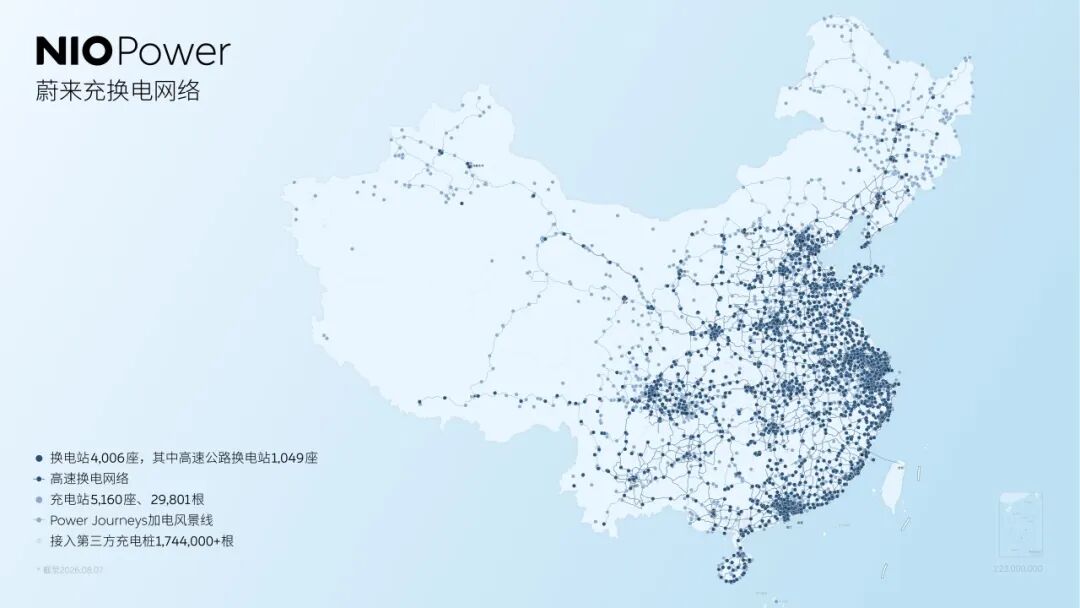
However, NIO's warnings have not been completely lifted. Sustaining profitability and further improving its financial structure remain important challenges for the company. While the battery swap business is a defining feature and core competitiveness of NIO's brand, its characteristics of heavy assets, high investment, and long payback periods have long imposed significant financial and asset pressures on the company. According to public information, NIO's cumulative investment in charging and battery swap technologies and infrastructure has exceeded RMB 20 billion. Against the backdrop of intensifying price competition in the industry, how to reduce the burden of heavy assets while preserving the advantages of battery swapping has become a problem NIO must solve.
NIO has already begun exploring this direction. In March 2025, CATL and NIO reached a strategic cooperation agreement on battery swapping, with plans for CATL to make a strategic investment of up to RMB 2.5 billion in NIO Energy. In January 2026, the two sides further signed a five-year deepen (shen hua, meaning 'deepened') strategic cooperation agreement, extending the scope of cooperation to areas such as battery standards, battery swap networks, and energy services.
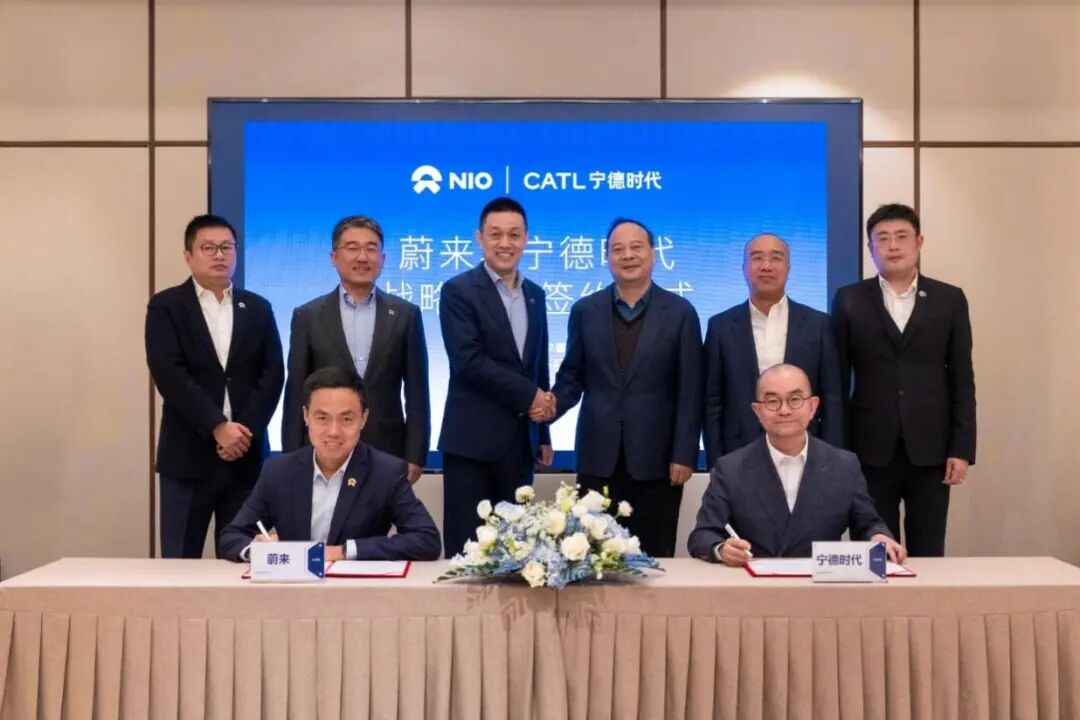
△ NIO is actively cooperating with companies including CATL to reduce the financial pressure caused by battery swapping
At the same time, NIO is promoting an 'asset-light' approach to its battery swap network by introducing external capital from local state-owned funds and financial institutions. According to NIO's official disclosure, NIO Energy has already partnered with over 40 local state-owned platforms and financial institutions across 25 provinces and regions to jointly build and operate more than 800 battery swap stations. Its business model is gradually shifting from 'self-building, self-holding, and self-operating' to 'externally capitalized asset holding with NIO responsible for operations.'
What Are Local Governments Considering?
Local state-owned capital's participation in NIO's battery swap station investments may not be solely driven by short-term financial returns but rather by multiple objectives, including infrastructure layout, long-term cash flow, and industrial development.
First, early layout (bu ju, meaning 'layout') of new energy vehicle infrastructure. By the end of 2025, China's new energy vehicle (NEV) fleet had exceeded 49 million units, accounting for approximately 13.4% of the total vehicle fleet. In the first half of 2026, the penetration rate of new NEV sales approached 50%. As NEVs continue to gain popularity, charging, battery swapping, energy storage, and energy services infrastructure are gradually becoming essential components of urban infrastructure. Local state-owned capital's participation in battery swap station construction essentially represents early configuration (pei zhi, meaning 'allocation') of infrastructure assets for the NEV era, with a logic similar to past investments in public infrastructure such as highways and subways.

△ Local governments need to proactively layout (bu ju, meaning 'layout') infrastructure for new energy vehicles
Second, cultivating long-term cash flow assets for local state-owned capital. Local state-owned capital typically balances economic returns with policy objectives such as industrial development and infrastructure construction. Collaborating with companies like NIO, which possess mature technologies, operational capabilities, and user bases, allows local state-owned capital to hold infrastructure assets like battery swap stations, thereby securing long-term operational revenue while improving local NEV support facilities and creating conditions for related industrial development.
Third, the battery swap business has significant long-term profit potential. NIO is driving the transformation of its battery swap business from a relatively closed proprietary system to an open ecosystem, continuously expanding cooperation with other automakers. Since 2023, NIO has collaborated with Changan, Geely, Chery, JAC, GAC, FAW, Lotus, and other automakers in the battery swap and charging sectors, covering areas such as battery standards, battery swap technologies, network construction, and sharing. As the battery swap network expands, utilization rates at individual stations increase, and more brands and models gain access, the scale effects and profitability of the battery swap business are expected to further improve.
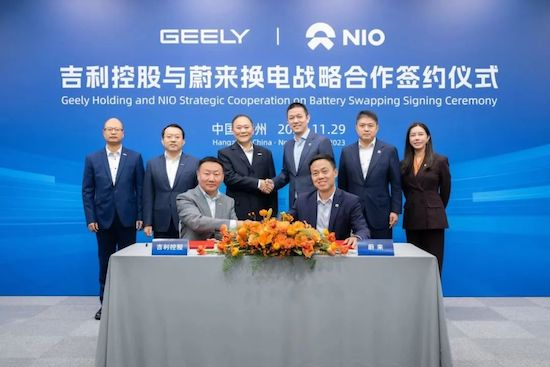
△ NIO has reached strategic cooperation agreements on battery swapping with several domestic automakers
Therefore, for local state-owned capital, investing in NIO's battery swap stations is not merely purchasing a 'battery swap business asset' but rather proactively layout (bu ju, meaning 'layout') a new energy asset that combines public infrastructure attributes with potential long-term cash flow amid the rapid Popularization (pu ji, meaning 'popularization') of NEVs.
Limitations of the New Model?
Under the new cooperation model between NIO and local state-owned capital, ownership of battery swap station assets is gradually transferred from NIO to local state-owned platforms, with NIO continuing to handle network operations. However, this model also entails certain potential trade-offs.
First, as battery swap station assets are gradually divested, NIO's need and scope for independent financing or separate listings based on its battery swap assets may decline. In the short term, selling assets can improve cash flow and financial metrics, but in the long term, the reduction in core battery swap assets means transferring some asset returns and appreciation potential to state-owned platforms.

△ NIO Energy's intrinsic demand for a separate IPO in the short term may weaken
Second, asset sales will reduce NIO's autonomy in expanding its battery swap network and configuring assets. In the past, NIO could decide station layouts based on brand strategy and user experience, even if some stations were not immediately profitable, treating them as long-term network investments. However, with state-owned capital as the asset holder, which focuses more on investment returns, utilization rates, and cash flow, NIO may need to strike a greater balance between network coverage, user experience, and asset returns in the future.
△ Asset sales will reduce NIO's autonomy in expanding its battery swap network and configuring assets
Additionally, after state-owned capital acquires battery swap stations, a clear profit model for these stations must be established, which may introduce new interest balancing issues. Whether NIO will prioritize cost reduction and efficiency improvements in battery swap services, state-owned capital investment returns, or user experience in the future remains to be seen.
Therefore, this model is not simply 'NIO selling battery swap stations to local state-owned capital' but rather a redivision of labor in the battery swap business: state-owned platforms handle assets and capital, while NIO handles technology, networks, and operations. If stable cash flow can be achieved in the future by increasing utilization rates at individual stations, expanding multi-brand access, and standardizing operations, this model could help NIO reduce capital investments while preserving the core competitiveness of its battery swap business.
Commentary
From an industry perspective, the core competition in the battery swap model has gradually shifted from 'who builds more' to 'who achieves higher asset utilization and lower operational costs.' Participation from local state-owned capital, energy enterprises, and financial capital in asset investments can lower the financial barriers for automakers expanding their battery swap networks and accelerate the large-scale deployment of infrastructure. However, whether the battery swap industry can truly develop a mature business model ultimately depends on standardization, cross-brand sharing, utilization rates at individual stations, and profitability. If more automakers join the battery swap ecosystem in the future, transforming battery swap stations from single-brand service networks into open energy infrastructure, their asset attributes and commercial value are expected to further increase.
(This article is original to Heyan Yueche and may not be reproduced without authorization.)
-
![]()
Xiaopeng Faces Two 'Tough Battles'
-
![]()
NVIDIA: Projected to Surge by Another 70% Next Year, the Computing Power 'Central Bank' Ramps Up Production!
-
![]()
How to Alleviate Pressure on the Battery Swap Model? NIO Has Finally Figured It Out
-
![]()
Don’t Use Efficiency as an Excuse to Conceal the Problems of Hastily Launched Cars
-
![]()
Core Indicators Rebound Across the Board in the First Half of the Year! Li Auto Steps Out of the 'Encirclement' During the Industry's Coldest Period | Mingjing Pro
-
Is This the 'Prometheus Moment' for Vertical AI Applications?
-
![]()
NASA Halts Swift Rescue Efforts: 20-Year Gamma-Ray Burst Telescope Slated for Year-End Demise, China’s Tianguan Satellite Steps In for Deep-Space Surveillance
-
![]()
Polestar Strikes Out in US: Volvo Gets the Nod Amid Rising Sino-US EV Regulatory Clash