NVIDIA: Projected to Surge by Another 70% Next Year, the Computing Power 'Central Bank' Ramps Up Production!
 08/28 2026
 479
479
NVIDIA (NVDA.O) released its financial results for the second quarter of fiscal year 2027 (as of July 2026) after the close of the U.S. market on the morning of August 27, 2026, Beijing time. The details are as follows:
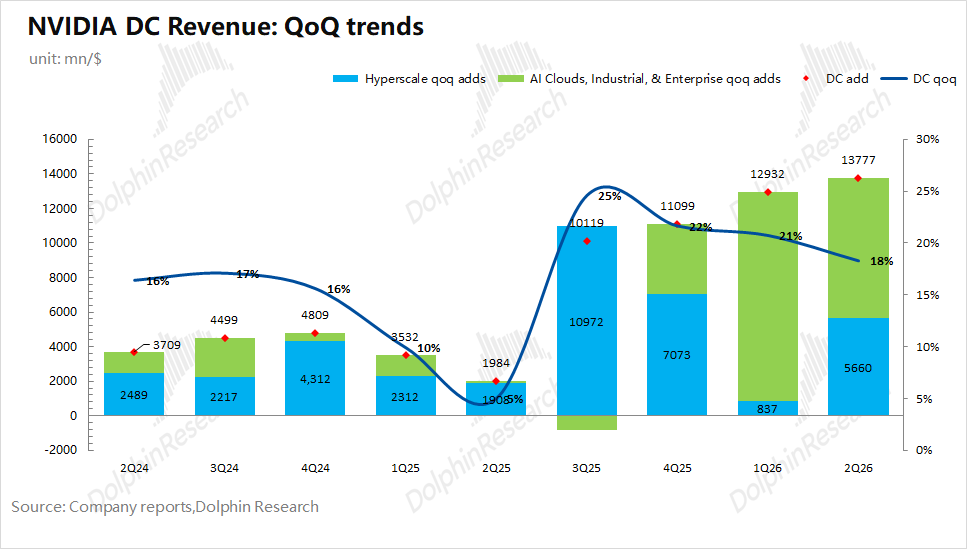
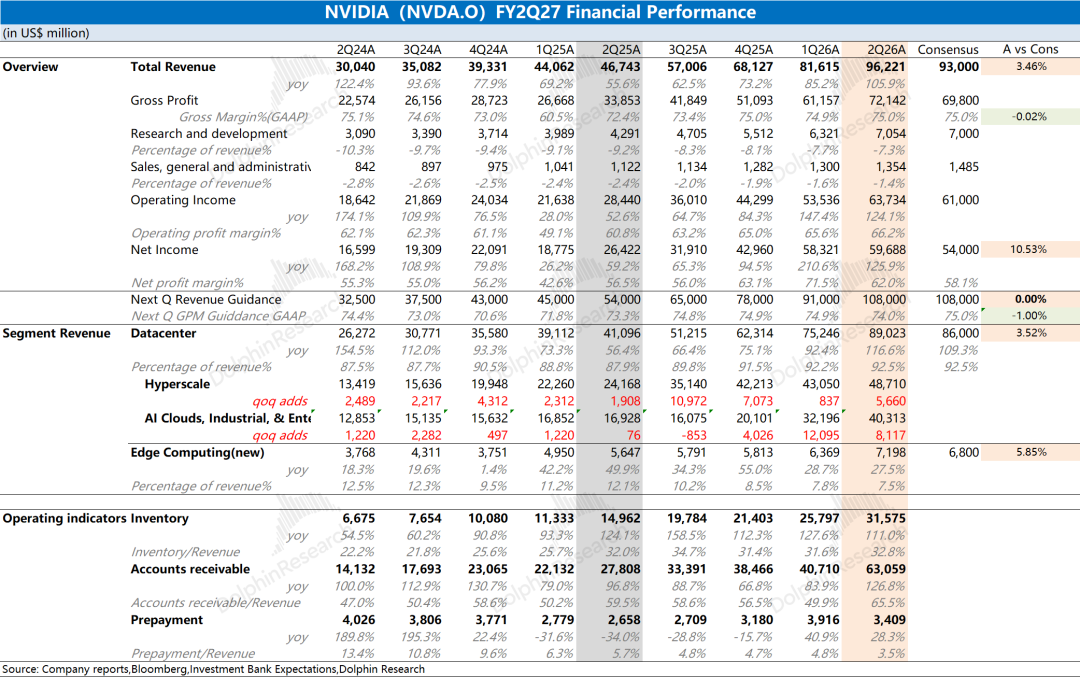
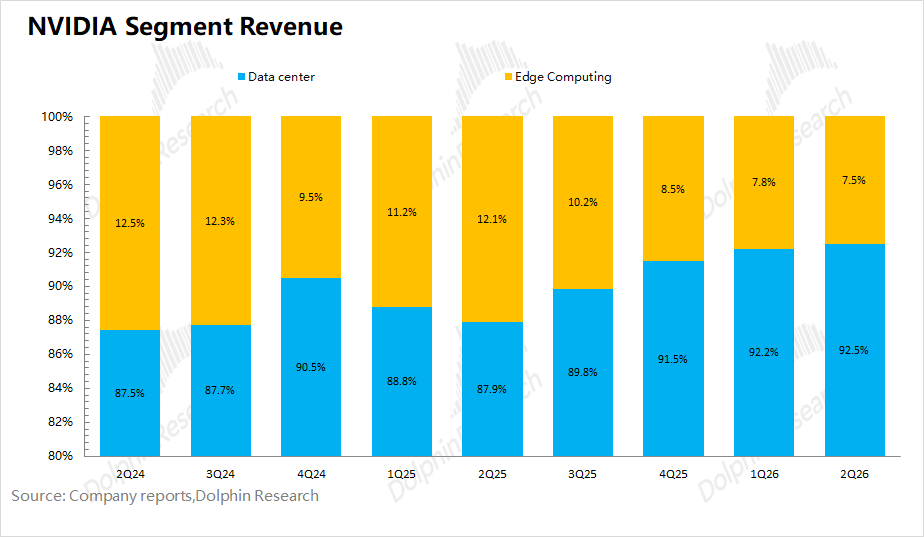
1. Data Center: Revenue for the quarter reached $89 billion, with a sequential increase of $13.8 billion, surpassing market expectations of $86 billion. This growth was primarily driven by shipments of the Blackwell series. The Rubin series is set to begin shipping in the third quarter, gradually replacing the Blackwell series and achieving product iteration and upgrades.
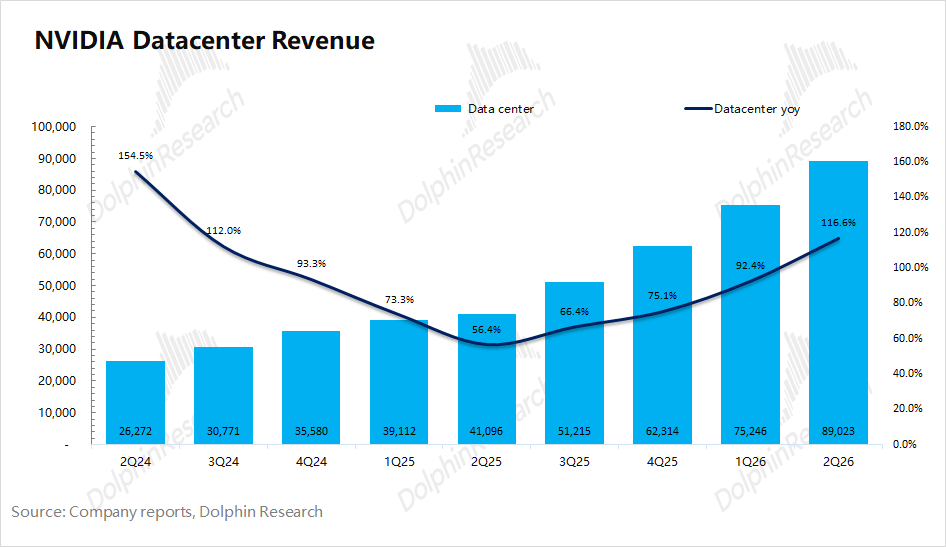
Starting this fiscal year, the company has revised its disclosure metrics, shifting from the previously segmented 'Computing Business and Networking Business' to 'Hyperscale Customers and ACIE (including industrial, enterprise, and sovereign customers).' Specifically, revenue from hyperscale customers reached $48.7 billion this quarter, with a sequential increase of $5.7 billion. Revenue from ACIE customer business amounted to $40.3 billion, showing a quarterly sequential increase of $8.1 billion, representing the largest incremental growth for the company.
Amid efforts by major cloud service provider (CSP) companies to develop their own chips, NVIDIA is focusing on developing and supporting small and medium-sized customers (including government, enterprise, and industrial markets) and has announced a $500 billion computing power financing platform plan.
2. Core Incremental Information: The company highlighted three key metrics in this earnings report: Commitments, Additional Commitments, and Guarantees.
1) Commitments: These refer to signed but unfulfilled procurement/leasing/investment obligations, primarily directed toward upstream suppliers. This figure was mentioned briefly in last quarter's 10-Q report but has now been fully and directly presented.
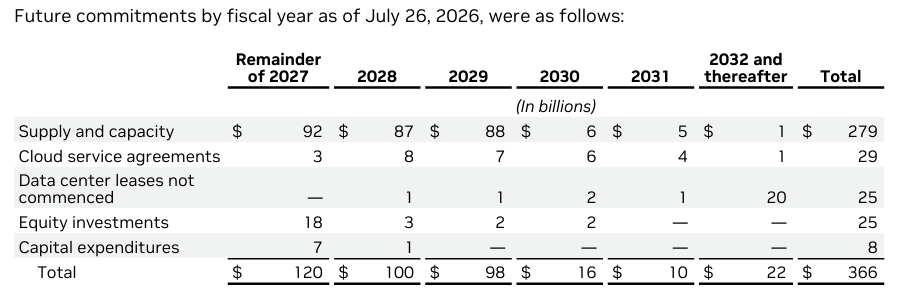
The most notable change is in procurement commitments, which reached $279 billion this quarter. Last quarter, the company disclosed $119 billion, with $95 billion allocated for fiscal year 2027 and only $24 billion in supply commitments for fiscal years 2028-2031.
The significant increase of $160 billion this quarter mainly comes from increased commitments for fiscal years 2028-2029 (corresponding to the calendar years 2027-2028), indicating that the company has pre-locked HBM/DRAM capacity from the spot market. This can be seen as NVIDIA's contractual foundation for the memory supply chain, with a stronger stance than memory manufacturers.
2) Additional Commitments and Guarantees: Both are newly disclosed metrics, directed toward downstream customers.
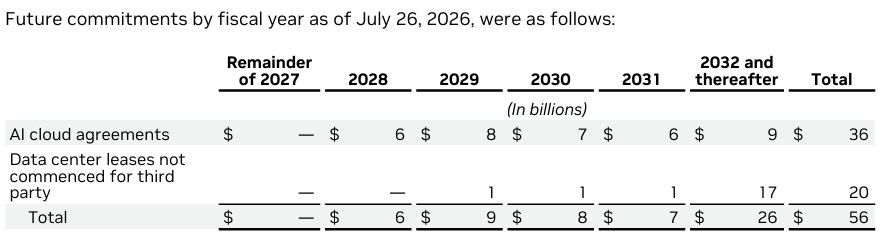
① Additional Commitments: Obligations signed to ensure customers can afford and build infrastructure, divided into two parts: 'AI cloud agreements' and 'leases signed on behalf of third parties not yet commenced.'
a) AI cloud collaboration: NVIDIA sells cabinets to neocloud providers (such as CoreWeave/Nebius) to recognize revenue -> the company commits to buying back/underwriting this computing capacity (corresponding to $36 billion here) -> the company shares in the revenue from neocloud's resale to third-party customers.
b) Leases signed on behalf of third parties not yet commenced: Pure credit intermediation. NVIDIA uses its credit to secure land and electricity, then transfers these to customers unable to obtain sites/power on their own. NVIDIA plans to transfer some data center leases to third parties; if unsuccessful, $20 billion in lease liabilities will revert to NVIDIA's balance sheet upon lease commencement.
② Guarantees: Undertakings to cover risks, currently divided into two areas: AI cloud partner guarantees and SB Energy/PORTS-Pike.
NVIDIA provides land and electricity guarantees for AI cloud partners, with risk exposure around $3.5 billion. For the PORTS-Pike park in Ohio, with a 4.25GW capacity under a 20-year lease exclusively hosting NVIDIA's computing power and leased to OpenAI, there is an additional 3.8GW expansion right.
Options upon triggering rest with NVIDIA: The company can either take over the lease, require SB Energy to re-lease, initiate a sale, allow termination, or delay by up to one year subject to covering specific project costs.
This excludes the over $100 billion in new guarantees added in August. While guarantees were previously limited, note that the recently announced $500 billion new cloud financing pool has not yet been included in the statistics.

3. Company Guidance: The company expects revenue of $108 billion for the third quarter of fiscal year 2027 (Q3 2026), with a sequential increase of $11.8 billion, aligning with raised buyer expectations of $108 billion. Next quarter's gross margin (GAAP) is projected at 74%, a 1 percentage point decline from the previous quarter and below market expectations of 75%.
During subsequent discussions, company management explicitly provided fiscal year 2028 revenue guidance, projecting a growth rate exceeding 70%, significantly surpassing market expectations of around 40%. Post-market stock price surged from -3% to nearly +5%. Correspondingly, under the same timeframe (calendar years 2025-2027) as Blackwell+Rubin, the forecast was raised from $1 trillion to $1.2-1.3 trillion.
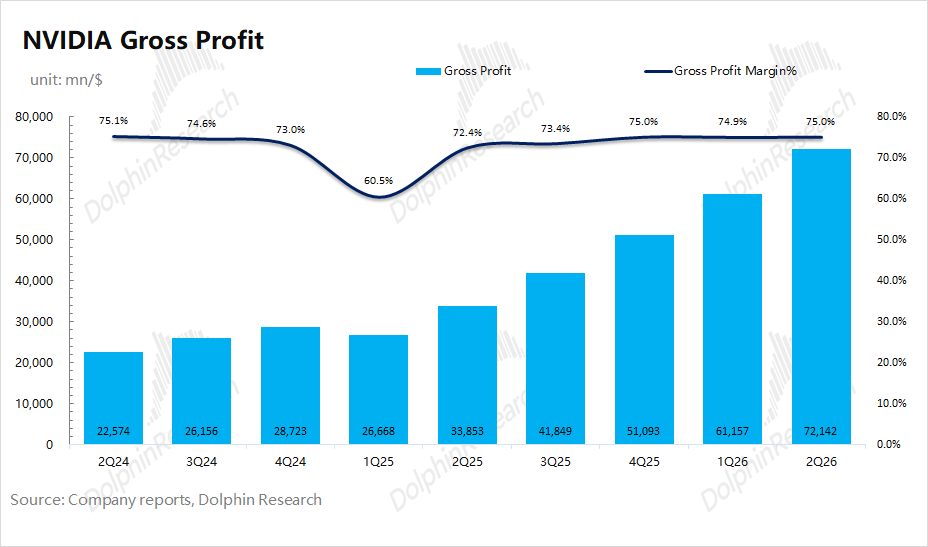
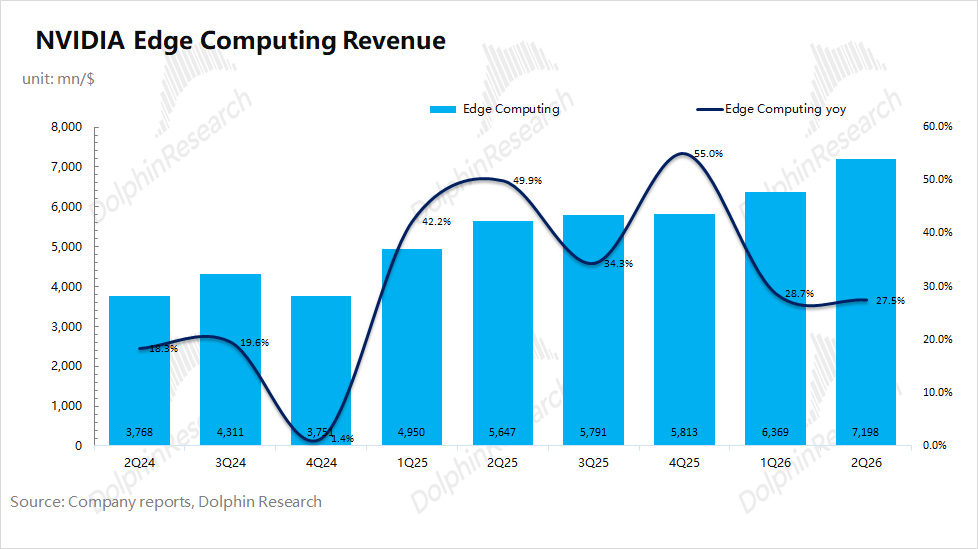
4. Operating Metrics: Total revenue reached $96.2 billion, outperforming raised buyer expectations of $93 billion, with a quarterly sequential increase of $14.6 billion, almost entirely driven by the data center business. The company's gross margin for the quarter was 75%, essentially flat sequentially and in line with market expectations of 75%.
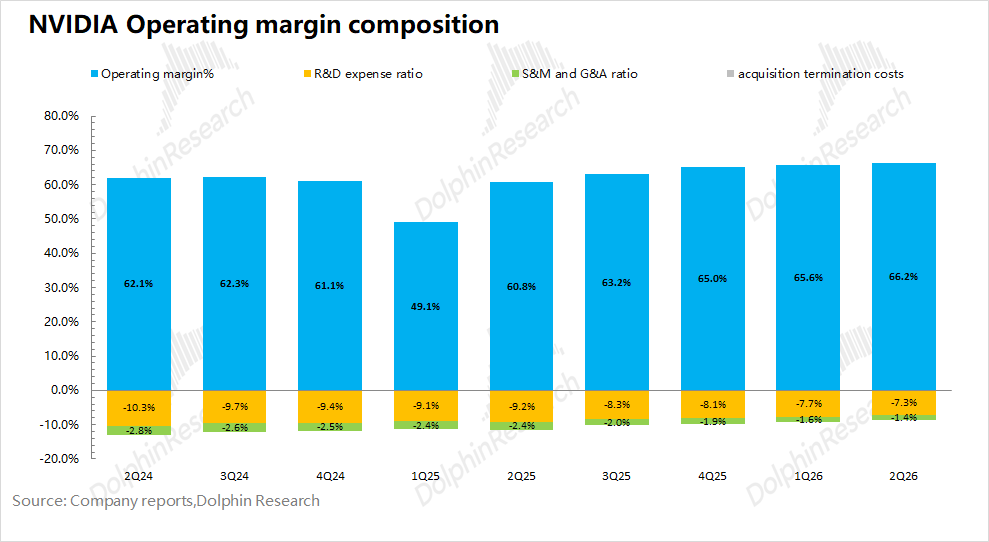
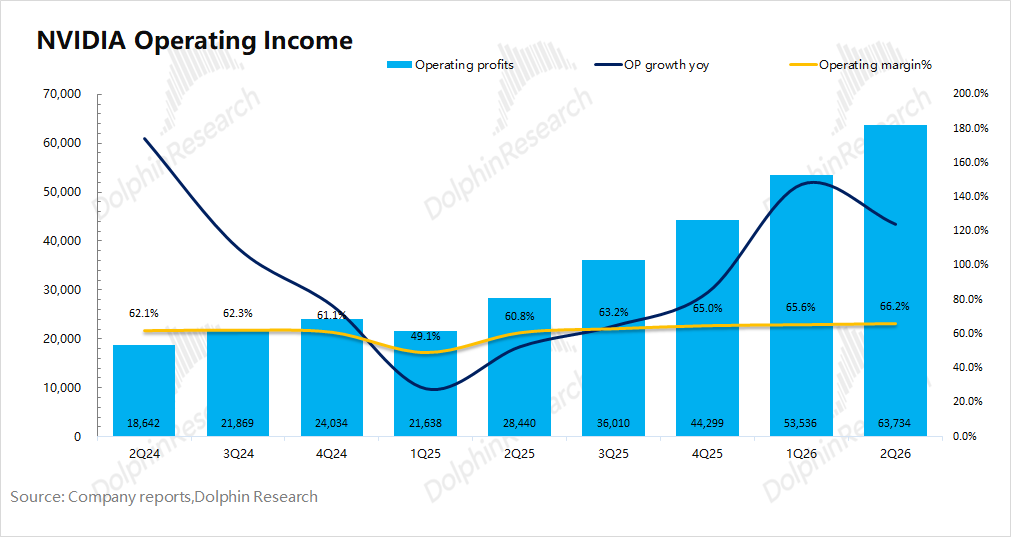
The company's core operating profit for the quarter was $63.7 billion, a 124% year-over-year increase, with a core operating profit margin of 66%, primarily driven by high revenue growth.
Dolphin Research's Overall View: Providing Guarantees, Locking Capacity, and the '70% Guidance' Signal a Strong Comeback
Given that Jensen Huang had previously provided a cumulative Blackwell+Rubin revenue forecast of $1 trillion for calendar years 2025-2027 (now raised to $1.2-1.3 trillion following the fiscal year 2028 70% guidance), even with short-term revenue exceeding expectations, the market is more focused on growth performance in fiscal years 2027/2028.
For the earnings report, the metric of greatest market concern is the gross margin. The company's gross margin for the quarter was 75%, with next-quarter guidance of 74%. Dolphin Research attributes the margin decline to factors such as the ramp-up of the Rubin series and upstream raw materials like memory.
Company management explicitly provided fiscal year 2028 (corresponding to calendar year 2027) revenue growth guidance exceeding 70% during subsequent discussions, representing the most significant positive information in this earnings report and directly driving a sharp post-market stock price increase.
The company also provided core incremental information in this earnings report, including Commitments (to upstream suppliers), Additional Commitments (to downstream customers), and Guarantees. Most notably, the company has clearly locked in upstream supply volumes such as memory for fiscal years 2028-2029 and is actively expanding downstream markets.
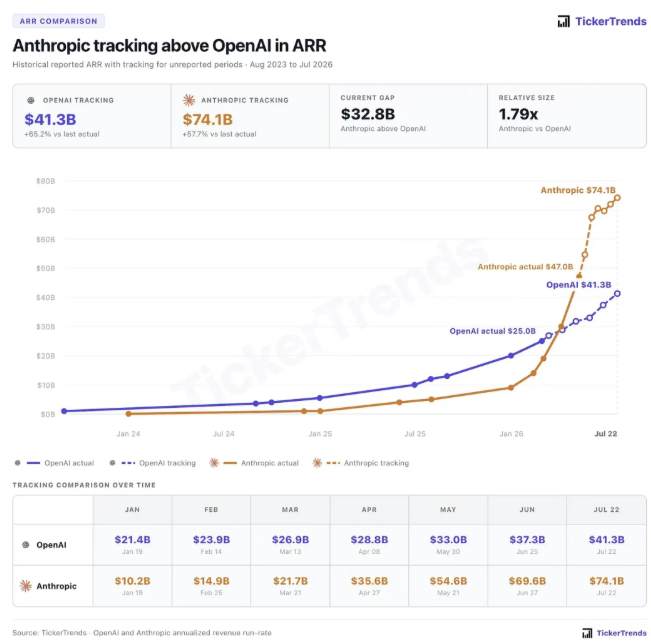
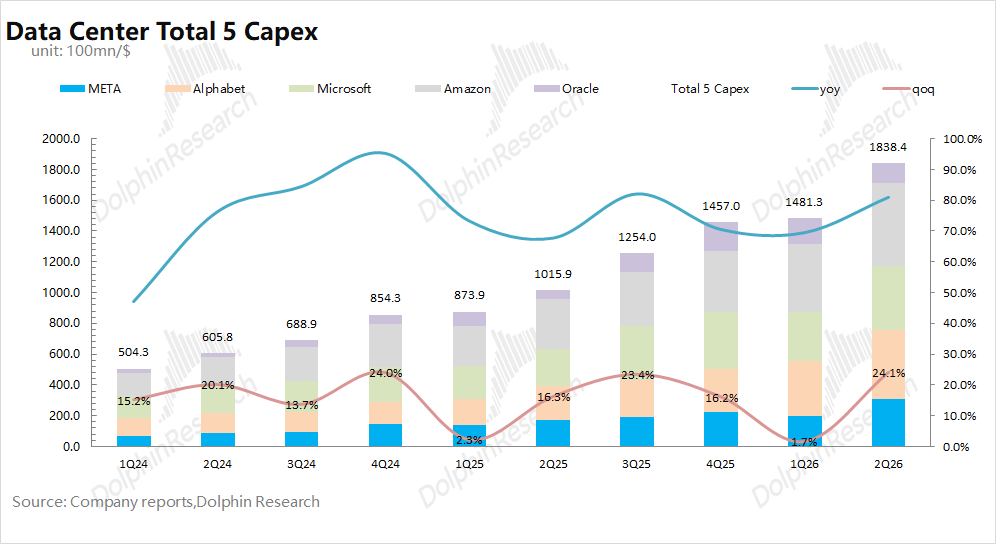
The significant pullback in the company and AI industry previously was primarily influenced by events such as China's open-source models and Anthropic's annual recurring revenue (ARR) trajectory. With major CSP companies announcing their capital expenditure outlooks, Google, Meta, and Amazon have all raised their full-year capital expenditure guidance again, indicating robust demand for AI chips.
According to Ticker Trends data, Anthropic's trajectory has slowed slightly, while OpenAI continues to accelerate. The ARR of these two companies serves as a key tracking metric for closed-source models and also impacts market expectations for future capital expenditures by major CSPs.
Beyond this earnings report, the market is also concerned about the following:
1) The $500 billion computing power financing platform
On August 10, 2026, NVIDIA announced a collaboration with six third-party investment institutions (Apollo, BlackRock, Blackstone, Brookfield, Goldman Sachs, KKR) to launch an AI factory financing platform exceeding $500 billion, supporting AI labs, enterprises, and cloud providers in building infrastructure.

For certain projects, NVIDIA may provide residual value support mechanisms covering up to 25% of individual projects, subject to careful project-by-project evaluation. This represents a structured leasing/project financing platform with a capped residual value guarantee, where NVIDIA shifts the majority of credit risk to the six financial institutions while retaining a 25% 'residual value protection.'
2) Rubin's ramp-up pace
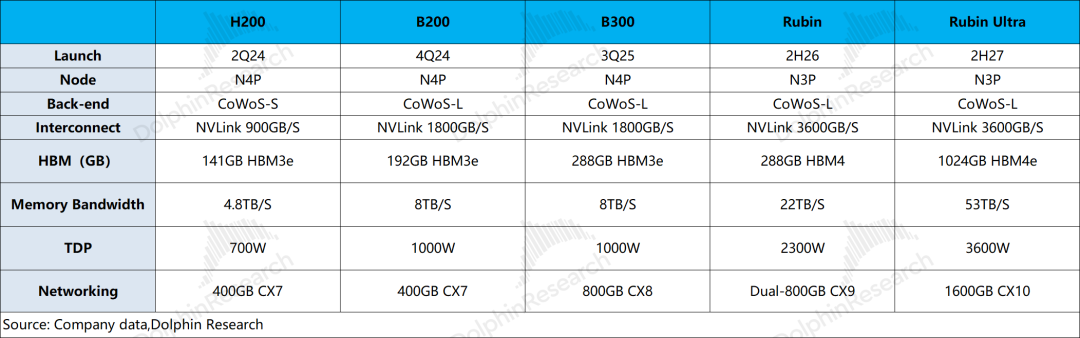
This quarter's revenue primarily came from the Blackwell series, while the Rubin series has now entered full-scale production and remains in the ramp-up phase, with true volume growth expected to begin in the fourth quarter.
The full-rack VR200 NVL72 employs 72 Rubin GPUs (2 dies per GPU) + 36 Vera CPUs, with a total NVLink bandwidth of 260 TB/s, 3.6 EFLOPS for inference/2.5 EFLOPS for training, and 100% liquid cooling.
While market rumors previously suggested a potential delay for the next-generation Rubin Ultra, recent company IR disclosures indicate no delay, with progress remaining on schedule. Pay attention to subsequent management discussions for the latest Rubin updates.
3) Competitive Landscape
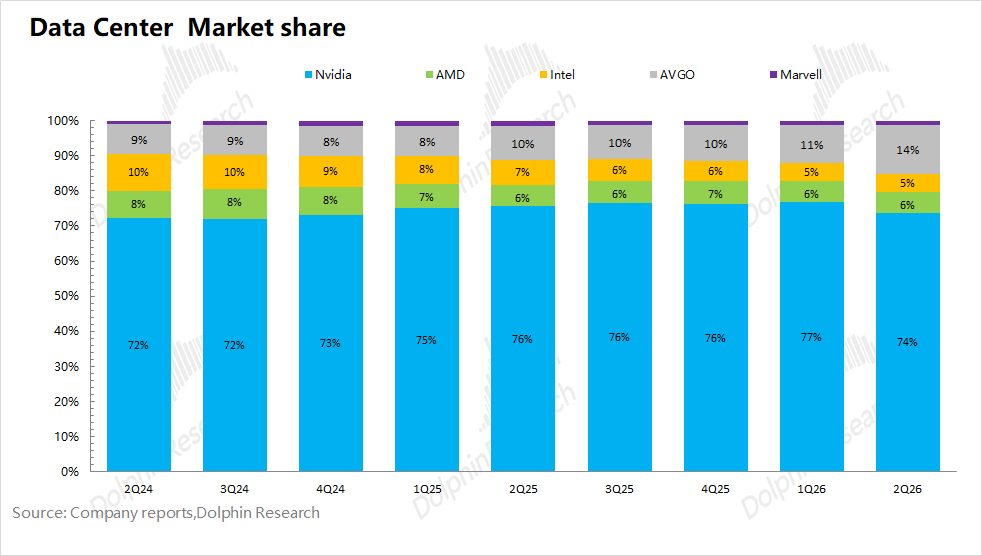
NVIDIA remains the dominant leader in the AI chip market, holding over 70% market share. However, with the focus of large models shifting toward inference, NVIDIA's advantage has weakened somewhat.
As inference requires relatively less computing power, major cloud providers have begun developing custom ASIC chips, and AMD is preparing to launch the MI450X Helios rack-level system, both primarily targeting the inference market.
In fact, the company has already segmented data center revenue into 'hyperscale providers' and 'ACIE' (including industrial, enterprise, and sovereign customers). The primary revenue growth in the past two quarters has not come from major CSPs. While large enterprises have the capability to develop custom ASIC chips, small and medium-sized customers do not. Additional Commitments, Guarantees, and the $500 billion financing platform all provide support for such customers.
Based on NVIDIA's current market capitalization ($5.1 trillion), this corresponds to approximately 13 times the price-to-earnings (PE) ratio for the company's fiscal year 2028 post-tax core operating profit (assuming a 2-year revenue compound annual growth rate (CAGR) of +85%, gross margin of 73%, and tax rate of 16.5%). Jensen Huang had previously provided a data center business outlook, and the company's high growth for fiscal years 2026-2028 is relatively certain, especially with the explicit fiscal year 2028 growth guidance of over 70% provided this time.
The current 13x PE is indeed low, but valuation has not yet risen primarily due to market concerns about the following: potential declines in major CSPs' capital expenditures, ability to maintain market position/gross margins, and whether earnings have peaked or will experience significant growth deceleration.
While clear answers to these questions remain pending—major CSPs' capital expenditures require monitoring ARR and economic viability, while market position/gross margins require tracking AMD and custom ASIC progress—NVIDIA has already begun proactive adjustments. The company has segmented its data center business into major CSPs and ACIE (including industrial, enterprise, and sovereign customers), with ACIE now contributing the most significant growth.
This quarter, the company's disclosed Commitments, Additional Commitments, Guarantees, and the recent $500 billion financing platform clearly indicate that the company is already building a comprehensive structural system: "L1 Supply Commitments (upstream production capacity) -> L2 Additional Commitments (customer's site/power/financable cash flow) -> L3 Guarantees (customer's credit rating) -> L4 Financing Platform (access to global long-term capital)". This represents the role of a computing power supplier and financing central bank.
Overall, the company's biggest highlight this time is the direct provision of revenue outlook for fiscal year 2028 (a year-on-year increase of over 70%). Short-term quarterly performance is not crucial, and Rubin's true market ramp-up will begin in the fourth quarter.
Given market concerns about the company (capital expenditures by major players, market competition, and NVIDIA's role as the "central bank" of computing power in new cloud construction), the company's valuation is not high, which has also provided support during the recent overall industry downturn. In this financial report, the company mainly provided incremental data on commitments and guarantees, indicating its proactive efforts to secure upstream supply and expand downstream customer base.
The company's direct provision of growth guidance for fiscal year 2028 demonstrates its strong confidence. As long as market concerns persist, they will continue to exert pressure on the company's stock price. However, even considering the valuation range previously assigned by the market, there is still room for recovery at current levels.
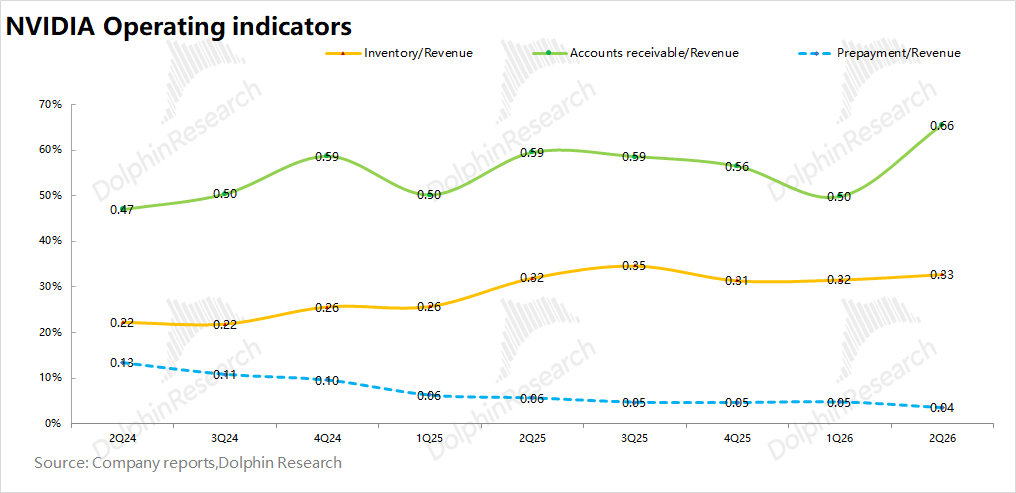
Dolphin Research's financial data and related charts for NVIDIA:
--- Article Conclusion ---
// Reprint Authorization Notice
This article represents an original work authored by Dolphin Research. Any reprinting or reproduction is strictly prohibited without prior written authorization.
// Disclaimer and General Information
This report is compiled for general informational and reference purposes, intended for the use of Dolphin Research users and its affiliated entities. It does not consider the specific investment goals, product preferences, risk tolerance, financial situation, or unique needs of any individual recipient. Investors are advised to consult with independent professional advisors before making any investment decisions based on the information provided in this report. Any individual who uses or refers to the content or information in this report for investment decisions does so at their own risk. Dolphin Research disclaims any direct or indirect liability or losses that may arise from the use of the data contained herein. The information and data in this report are sourced from publicly available information and are provided for reference only. Dolphin Research endeavors to ensure, but does not guarantee, the reliability, accuracy, and completeness of the relevant information and data.
The information or opinions expressed in this report shall not, under any circumstances, be considered or construed as an offer to sell securities, an invitation to buy or sell securities, or as recommendations, solicitations, or endorsements of relevant securities or related financial instruments. The information, tools, and materials contained in this report are not intended for distribution to, or use by, any person in any jurisdiction where such distribution, publication, provision, or use would be contrary to applicable laws or regulations or would subject Dolphin Research and/or its subsidiaries or affiliated companies to any registration or licensing requirements in that jurisdiction.
This report solely reflects the personal views, insights, and analytical approaches of the respective contributors and does not represent the official stance of Dolphin Research and/or its affiliated institutions.
This report is produced by Dolphin Research, and the copyright is exclusively owned by Dolphin Research. Without the prior written consent of Dolphin Research, no institution or individual may (i) create, copy, reproduce, duplicate, forward, or distribute in any form any copies or reproductions, and/or (ii) directly or indirectly redistribute or transfer them to other unauthorized persons. Dolphin Research reserves all related rights.
-
![]()
Claude Finally Integrates a Built-in Browser! Doubao Work Beat It to the Punch—Can Qianwen Catch Up?
-
![]()
Cars Are Expanding: Will Class A Vehicles Be Phased Out as Class B Models Approach the 100,000 Yuan Threshold?
-
![]()
Xiaopeng Faces Two 'Tough Battles'
-
![]()
NVIDIA: Projected to Surge by Another 70% Next Year, the Computing Power 'Central Bank' Ramps Up Production!
-
![]()
How to Alleviate Pressure on the Battery Swap Model? NIO Has Finally Figured It Out
-
![]()
Don’t Use Efficiency as an Excuse to Conceal the Problems of Hastily Launched Cars
-
![]()
Core Indicators Rebound Across the Board in the First Half of the Year! Li Auto Steps Out of the 'Encirclement' During the Industry's Coldest Period | Mingjing Pro
-
Is This the 'Prometheus Moment' for Vertical AI Applications?