Xiaopeng Faces Two 'Tough Battles'
 08/28 2026
 512
512
Automotive business needs to make money; robotics business aims for the future.
Xiaopeng has released its first-half report card.
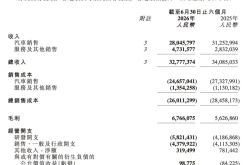
On August 24, Xiaopeng Group (9868.HK) released its financial results for the second quarter and first half of 2026. In the first half of 2026, Xiaopeng achieved revenue of RMB 32.78 billion, down 3.8% year-on-year; net losses reached RMB 3.12 billion, expanding by approximately 173.7% year-on-year, with basic loss per share at RMB 1.63.
Although sales and revenue rebounded sequentially in the second quarter, with the overall gross margin remaining above 20%, the company's third-quarter delivery and revenue guidance still fell short of previous market expectations.
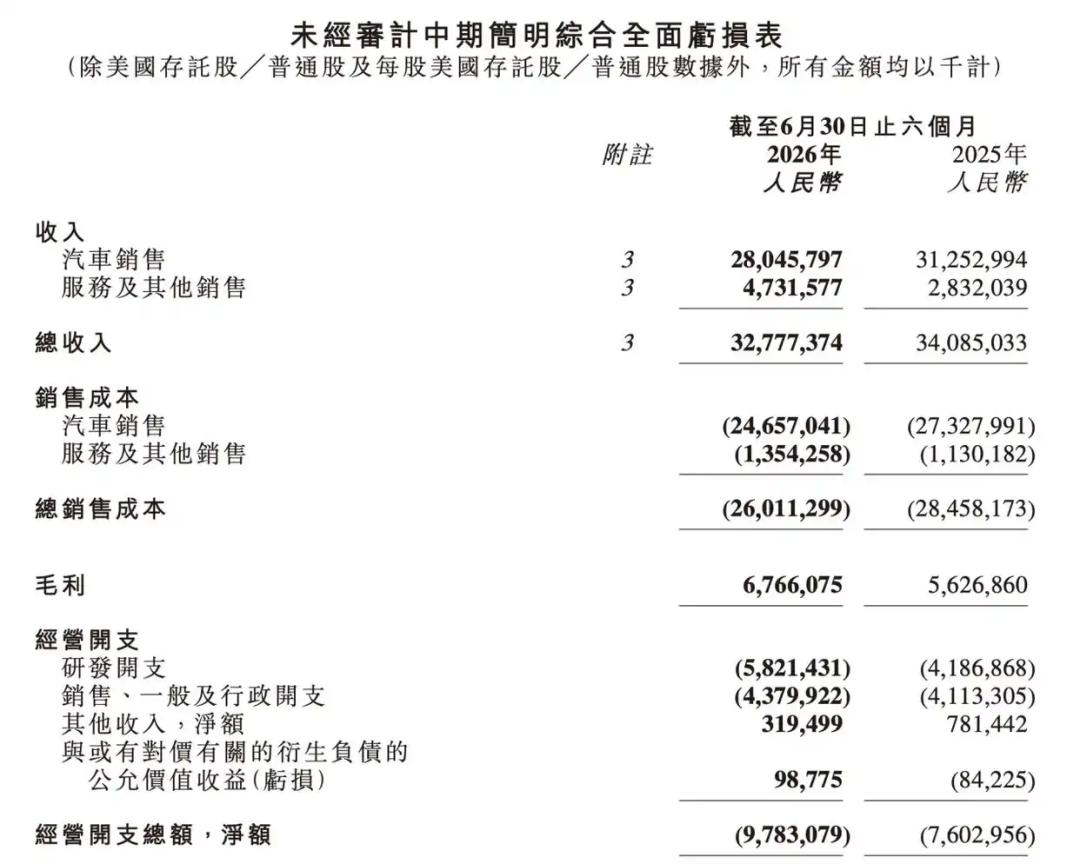
Image source: Financial report screenshot
The capital markets quickly reacted. On the day of the financial report release, Xiaopeng's U.S.-listed shares closed down 8.53%; the next day, its Hong Kong-listed shares plunged another 9.19%, with the stock price falling to around HK$ 43. Compared to the peak of over HK$ 110 in November last year, Xiaopeng's stock price has undergone a significant correction.
However, just as the market was reevaluating Xiaopeng's automotive business, another deal sent a starkly different signal: On the same day as the financial report release, Xiaopeng announced that its robotics business had completed its first round of financing exceeding $900 million, with a post-money valuation exceeding $6.3 billion, approximately RMB 43 billion.
On one hand, the automotive business still faces tests in sales growth, losses, and profitability; on the other, Xiaopeng is integrating robotics, Robotaxi, VLA models, and more into a broader narrative of 'physical AI.'
If we look only at the second quarter, Xiaopeng's report card isn't actually that bad.
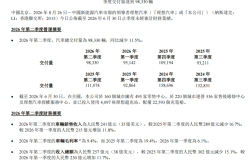
In the second quarter of this year, Xiaopeng achieved revenue of RMB 19.74 billion, up 8% year-on-year and 51.5% sequentially; automotive sales revenue reached RMB 17.05 billion, up 1% year-on-year and 55% sequentially.
Even more impressive was the gross margin. In the second quarter, Xiaopeng's overall gross margin reached 20.7%, maintaining above 20% for the second consecutive quarter, primarily due to Xiaopeng's breakthroughs in premium and global markets.
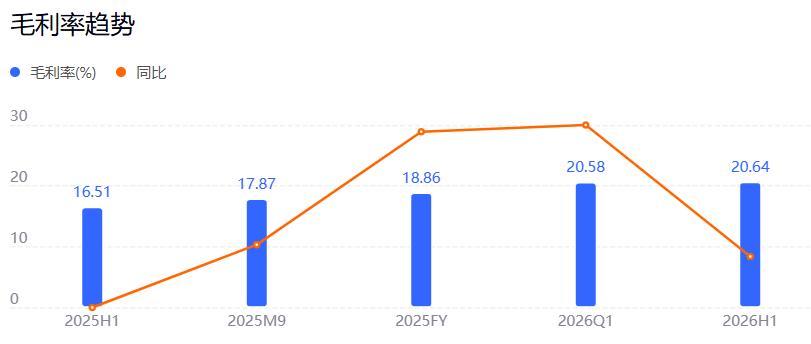
Image source: Baidu Stock Market screenshot
However, a closer look at this 20.7% gross margin reveals that Xiaopeng's current profit structure is changing.
As the foundational revenue generator, the automotive business had a gross margin of only 12.1% in the second quarter, flat with the first quarter but down from 14.3% year-on-year; according to Xiaopeng, this was mainly due to product generation transitions. In contrast, services and other businesses are becoming a significant force in driving up the overall gross margin.
In the second quarter of this year, Xiaopeng's revenue from services and other businesses reached RMB 2.7 billion, up 93.9% year-on-year. Although this is only about one-sixth the scale of automotive revenue, its gross margin was a staggering 75.1%, further improving from 53.6% year-on-year; its growth mainly came from providing technology R&D services to other automakers, as well as parts and accessories sales.
This means that Xiaopeng's technological investments over the years are no longer just a cost item but are beginning to translate into new revenue and profit streams through technology services and other means. However, for a company that still derives the vast majority of its revenue from automotive sales, the market remains more focused on when the cars themselves will become more profitable.
Especially since Xiaopeng is still in a new cycle of high investment. In the second quarter, Xiaopeng's R&D expenses reached RMB 2.91 billion, up 32.1% year-on-year, primarily for new models and AI-related technology development; selling, general, and administrative expenses also reached RMB 2.5 billion, up 15.2% year-on-year. As the product matrix continues to expand and physical AI investments increase, Xiaopeng's spending is also rising.
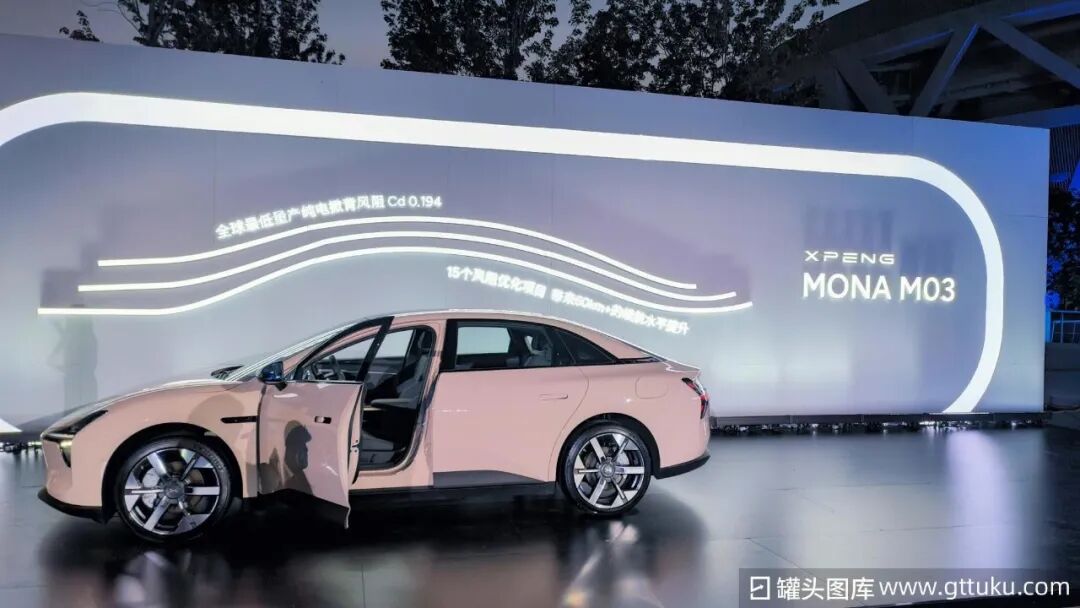
Image source: Canstock photo library
Ultimately reflected on the income statement, Xiaopeng's net loss in the second quarter reached RMB 1.34 billion, significantly wider than the RMB 480 million loss in the same period last year; however, compared to the RMB 1.78 billion net loss in the first quarter of this year, the second quarter's loss narrowed by about 25%.
Therefore, Xiaopeng is not simply facing 'operational deterioration.' On the contrary, it is presenting a more complex state: sales and revenue are recovering from the first-quarter lows, the overall gross margin has surpassed 20%, and technology services are contributing higher profits; however, at the same time, automotive gross margins have not yet significantly improved, and high R&D investments continue to erode profits.
In the first half of this year, Xiaopeng delivered approximately 166,000 vehicles, down 15.8% year-on-year. Of these, 62,682 were delivered in the first quarter, rapidly rebounding to 103,295 in the second quarter, up 64.8% sequentially but only 0.1% year-on-year.
In other words, Xiaopeng did emerge from the early-year lows in the second quarter, but when viewed over a longer timeframe, it has not yet resumed high-speed growth.
This pressure is directly reflected in Xiaopeng's third-quarter guidance, which fell short of market expectations. According to company estimates, automotive deliveries in the third quarter will be between 115,000 and 121,000 units, representing a year-on-year change of approximately -0.87% to 4.30%, with market estimates around 147,000 units; total revenue is expected to be between RMB 21.7 billion and RMB 23.4 billion, up approximately 6.5% to 14.8% year-on-year, with market estimates at RMB 27.26 billion.
Compared to the second quarter, both indicators will continue to grow sequentially, but against the backdrop of the upcoming launch and delivery of new models like MONA L03 and GX, this growth rate is clearly insufficient to fully dispel market concerns.
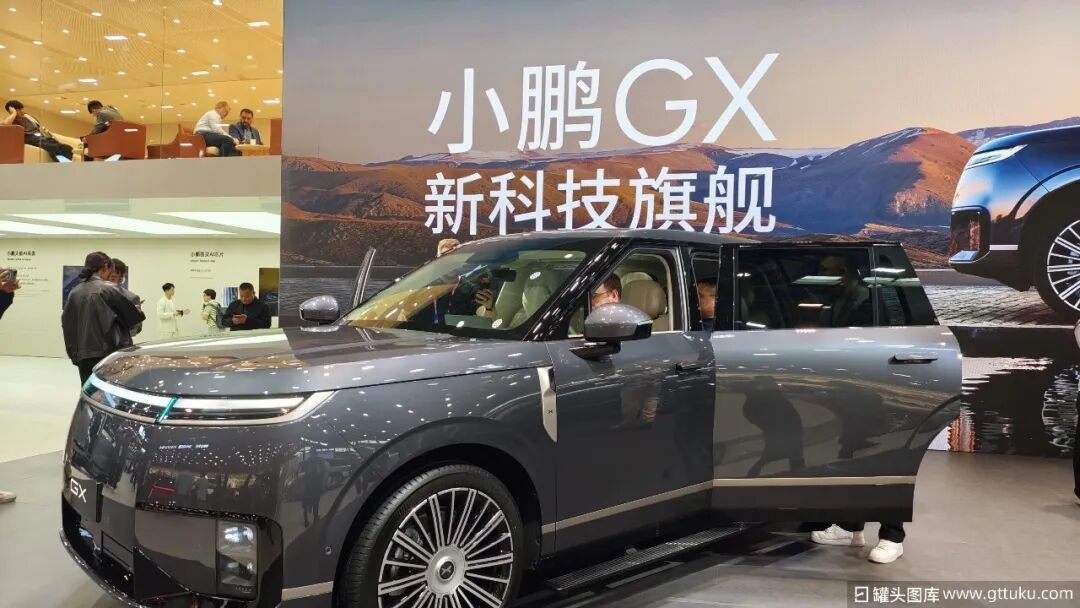
Image source: Canstock photo library
This also represents a significant difference between Xiaopeng today and a few years ago. Nowadays, capital markets demand more from Xiaopeng than just 'whether it can sell cars again'; they want to know if, after a hit model, the next hit can promptly follow; with an increasing number of new models, whether a sustained product cycle can be formed; and with expanding sales volume, whether it can further translate into vehicle gross margins and profits.
Especially in the increasingly competitive domestic new energy vehicle market, relying solely on one model to drive growth is becoming more difficult.
The good news is that Xiaopeng's sales recovery is continuing. In July this year, Xiaopeng delivered 38,027 new vehicles, up approximately 4% year-on-year; as of the end of July, cumulative deliveries for the year reached 204,004 units. Meanwhile, MONA L03 has begun deliveries, and GX is continuing to advance deliveries, leaving room for continued sales growth in the new product cycle.
Over the past few years, the new energy vehicle industry has transitioned from rapid expansion into a more brutal phase of elimination, and investors' criteria for judging new forces have also changed: sales alone are no longer enough; whether revenue can increase, gross margins can improve, and stable profitability can ultimately be achieved after sales growth has become more important.
Therefore, the real concern sparked by the third-quarter delivery guidance of 115,000 to 121,000 units is not just about selling fewer vehicles but rather the market is reassessing how much growth elasticity Xiaopeng's current product cycle can truly deliver.
While the automotive business is still seeking a more stable growth rhythm, Xiaopeng has already begun placing its bets on another, more imaginative market.
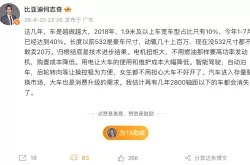
On the same day as the financial report release, Xiaopeng announced that its humanoid robotics business had completed its first round of financing exceeding $900 million, with a post-money valuation exceeding $6.3 billion, approximately RMB 43 billion. This funding round was led by IDG Capital, with participation from GaoRong Capital, and strategic investments from Tencent and Alibaba, with Xiaopeng Group maintaining control.
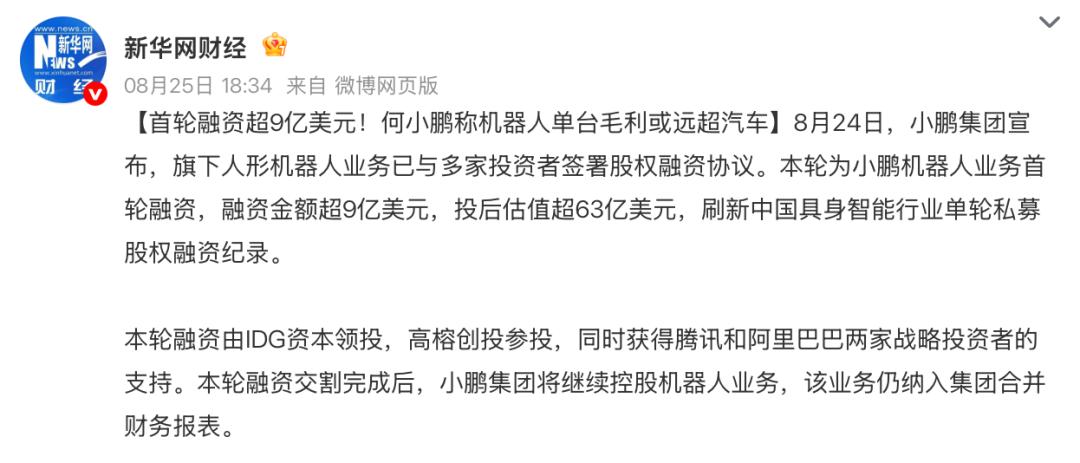
Image source: Weibo screenshot
According to Xiaopeng, this is also the largest single-round private equity financing in China's embodied AI industry to date.
To some extent, the significance of this financing is not just that Xiaopeng has secured another round of funding. For a long time, robotics has only been a cutting-edge business within Xiaopeng's automotive ecosystem, but after this financing, the business has, for the first time, received a relatively independent market valuation. A valuation exceeding $6.3 billion means that, beyond automobiles, capital markets are beginning to separately value Xiaopeng's robotics business and physical AI capabilities.
This is also a new identity that Xiaopeng has been continuously reinforcing over the past year. In 2025, Xiaopeng officially upgraded its positioning to 'an explorer of mobility in the physical AI world, a global embodied AI company'; in the first quarter of this year, the company's Chinese name was changed from 'Xiaopeng Motors' to 'Xiaopeng Group.'
In He Xiaopeng's vision, the future of Xiaopeng's physical AI will not be limited to automobiles but will further extend to Robotaxi, humanoid robots, and even flying cars.
Behind these seemingly different products lies a common technological logic. Currently, Xiaopeng's second-generation VLA has achieved mass-market application in automobiles and can be cross-domain applied to different carriers such as automobiles, Robotaxi, and robots; the Turing AI chip is also designed as a multi-terminal universal chip.
For Xiaopeng, the chip, model, data, supply chain, and large-scale manufacturing capabilities accumulated in the intelligent automotive sector over the past decade all have the potential to be reused in new physical AI products like robotics.
This is Xiaopeng's greatest confidence in betting on physical AI. According to the plan, Xiaopeng IRON will advance toward mass production by the end of this year and will first enter commercial scenarios such as stores, parks, and guidance, shopping, and patrolling services; Robotaxi will also advance toward mass production and trial operations this year.
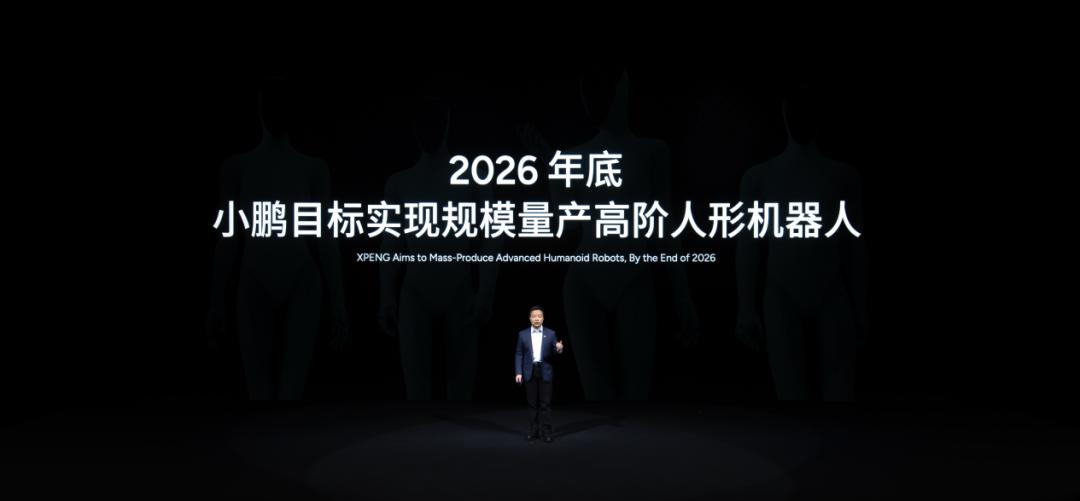
Image source: Xiaopeng
Compared to entering the robotics track (track) from scratch, Xiaopeng hopes to shorten the distance for physical AI to move from technology demos to mass-market products by leveraging the engineering and manufacturing capabilities accumulated through its automotive business.
But on the other hand, this means that Xiaopeng needs to fight two 'tough battles.'
One is happening today: automobiles still contribute the vast majority of Xiaopeng's revenue, and the company needs to continue launching new models, boosting sales, improving automotive gross margins, and ultimately forming stable profitability and cash flow.
The other is happening in the future: robotics and Robotaxi offer greater imaginative space but still require time to truly contribute significant revenue; in the meantime, continuous investment in model training, data collection, hardware R&D, and mass-production system construction is needed.
He Xiaopeng has also clearly stated that he hopes the intelligent electric vehicle business will continue to contribute profits and cash flow to support physical AI R&D investments. If this path succeeds, Xiaopeng's ceiling will clearly no longer depend solely on how many vehicles it can sell in a year; however, before robotics truly enters mass commercialization, automobiles remain Xiaopeng's most critical foundation.
This is perhaps why, after the simultaneous release of the financial report and robotics financing, capital markets are divided: some see a slowdown in growth for an automotive company, while others see a physical AI company just beginning.
In any case, physical AI can open up new imaginative space for Xiaopeng, but it cannot replace the real-world questions that the automotive business needs to answer. Before robotics truly becomes a second growth engine, how to sell more, better, and more profitable cars remains Xiaopeng's most important battle today.
-
![]()
Claude Finally Integrates a Built-in Browser! Doubao Work Beat It to the Punch—Can Qianwen Catch Up?
-
![]()
Cars Are Expanding: Will Class A Vehicles Be Phased Out as Class B Models Approach the 100,000 Yuan Threshold?
-
![]()
Xiaopeng Faces Two 'Tough Battles'
-
![]()
NVIDIA: Projected to Surge by Another 70% Next Year, the Computing Power 'Central Bank' Ramps Up Production!
-
![]()
How to Alleviate Pressure on the Battery Swap Model? NIO Has Finally Figured It Out
-
![]()
Don’t Use Efficiency as an Excuse to Conceal the Problems of Hastily Launched Cars
-
![]()
Core Indicators Rebound Across the Board in the First Half of the Year! Li Auto Steps Out of the 'Encirclement' During the Industry's Coldest Period | Mingjing Pro
-
Is This the 'Prometheus Moment' for Vertical AI Applications?