Rokid Takes the Lead in the "Micron-Level" Battle within the Smart Glasses Market
 12/22 2025
 693
693
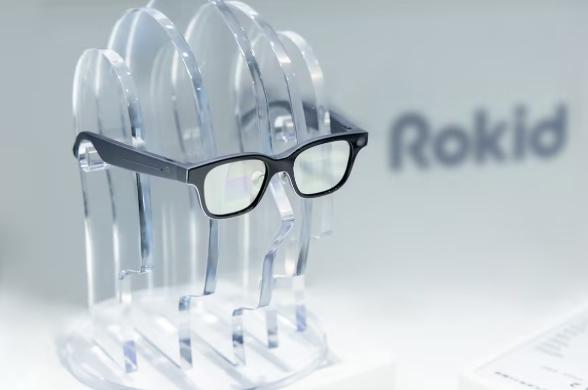
As the smart glasses industry quietly transitions from a phase where the focus was on merely showcasing technological prowess and "existence" to a deep-water zone of experience competition centered on "quality", an invisible war is silently unfolding at the manufacturing end. The benchmark for victory is no longer grand technological jargon but rather the craftsmanship precision measured in millimeters or even microns.
The reason for this shift is that not long ago, smart glasses brand Rokid, in collaboration with its manufacturer Lens Technology, hosted a small-scale media open event for smart glasses products. Through a tour of Lens's production line, it became evident that this was not just about witnessing the manufacturing process of AI glasses but also about observing an ongoing industry transformation.
Manufacturing Secrets of an Industry Leader: The Hardware Race Enters the Micron Era
Chips, batteries, sensors, and optical modules—hundreds of precision components need to be seamlessly integrated into a temple that is less than 5 millimeters thick, all while ensuring the weight and comfort of the smart glasses. These are the real-world challenges faced in the production of smart glasses products.
As Guo Li (a pseudonym), the Engineering Director at Lens Technology, aptly puts it, "This is a war fought over microns." For Rokid, however, this war is omnipresent and unrelenting.
For instance, in terms of structure and materials, to control product weight, Rokid opted for a high-end specialty nylon material. This material undergoes micron-level dimensional changes when exposed to water. Rather than settling for a compromise solution, the R&D team embarked on multiple rounds of "extreme testing." They successively employed five different batches of molds for full-parameter verification, utilizing vast amounts of data comparison to pinpoint the optimal tolerance fits for different components. They even incorporated multiple stop structures at key connection points to ensure long-term stability.
When it comes to appearance craftsmanship, Rokid chose a more challenging path. While most products in the industry opt for matte finishes to conceal minor flaws, Rokid went against the grain by selecting a high-gloss black finish—a process akin to using a "flaw magnifier." Eliminating flaws under these conditions is exponentially more difficult. To achieve this, Lens Technology employed cutting-edge technologies, including millimeter-level spray gun trajectory control and micron-level film thickness control, which far exceed smartphone industry standards. The result was a mirror-like, smooth, and uniform gloss.
In terms of the wearing experience, the pursuit of precision is evident in the fit with the human body. Even the tiny nose pad underwent more than ten iterations, culminating in a hollowed-out design aimed at improving breathability. The team also developed multiple sizes of interchangeable nose pads based on extensive data on the nasal bridges of Asian users. When it comes to weight distribution, engineers fine-tuned the balance like calibrating a scale, placing the heavier battery at the rear to distribute the glasses' weight more evenly through the temples and nose pads, thereby reducing pressure on the wearer.
The significance of this war fought over "microns" extends beyond mere technological breakthroughs. It marks a profound shift in the core competitive focus of the smart glasses industry, evolving from a competition centered on the presence of functions to one focused on the precision of experiences.
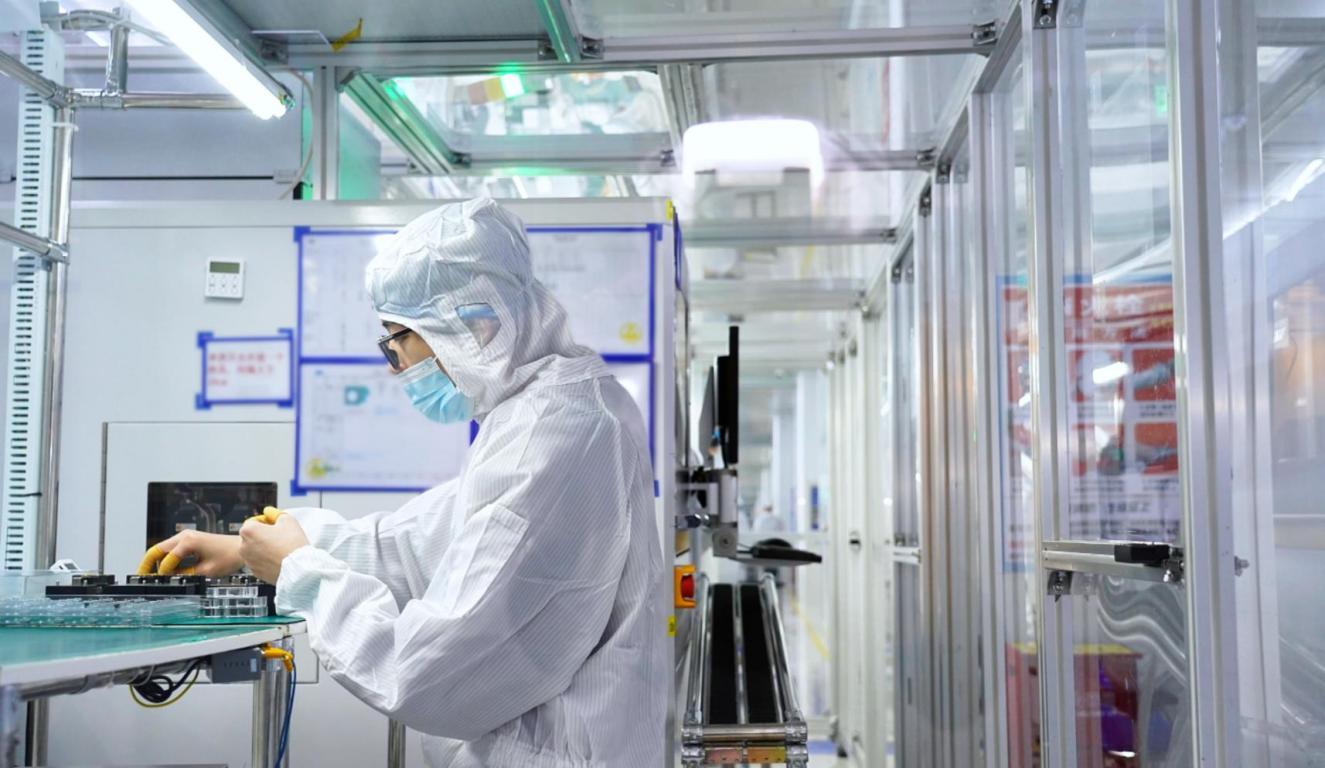
▲ A corner of the production line at Lens Technology's Xiangtan factory
When hundreds of precision components are compressed into a temple less than 5 millimeters thick, and the overall weight is just 49 grams, this is not merely a triumph of engineering but also an externalization of product philosophy. It signifies that Rokid has recognized that the ultimate battleground for wearable devices is the human body's sensory experience, not cold parameter sheets.
Meanwhile, these "micron-level" experiences, which are difficult to quantify but tangibly felt, are also constructing a new generation of competitive barriers for Rokid.
From Feature Stacking to Scene Cultivation: The "Micron-Determined" Battle of a Hundred Glasses
Hardware precision is just the first half of the story in the smart glasses industry. When the physical form of a pair of glasses is optimized to near the limits of ergonomics, the next dimension of competition becomes clear: Can the digital world behind the lenses match the perfection of the hardware in terms of finesse?
If the "micron-level" war in hardware lays the foundation for devices to transition from "usable" to "user-friendly," then the "micron-level" alignment war in ecosystems and experiences will truly determine whether users transition from temporary retention to lasting engagement, ultimately deciding the product's success or failure.
As Misa, the founder of Rokid, aptly puts it, "The intelligence attributes of current smart glasses are already sufficient; the key lies in the content ecosystem." This "key" essentially refers to whether a "micron-level" seamless connection and precise reach can be achieved between the ecosystem and users' real needs. Rokid's ecosystem expansion reflects this precise focus, shifting from macro collaborations to micro experiences.
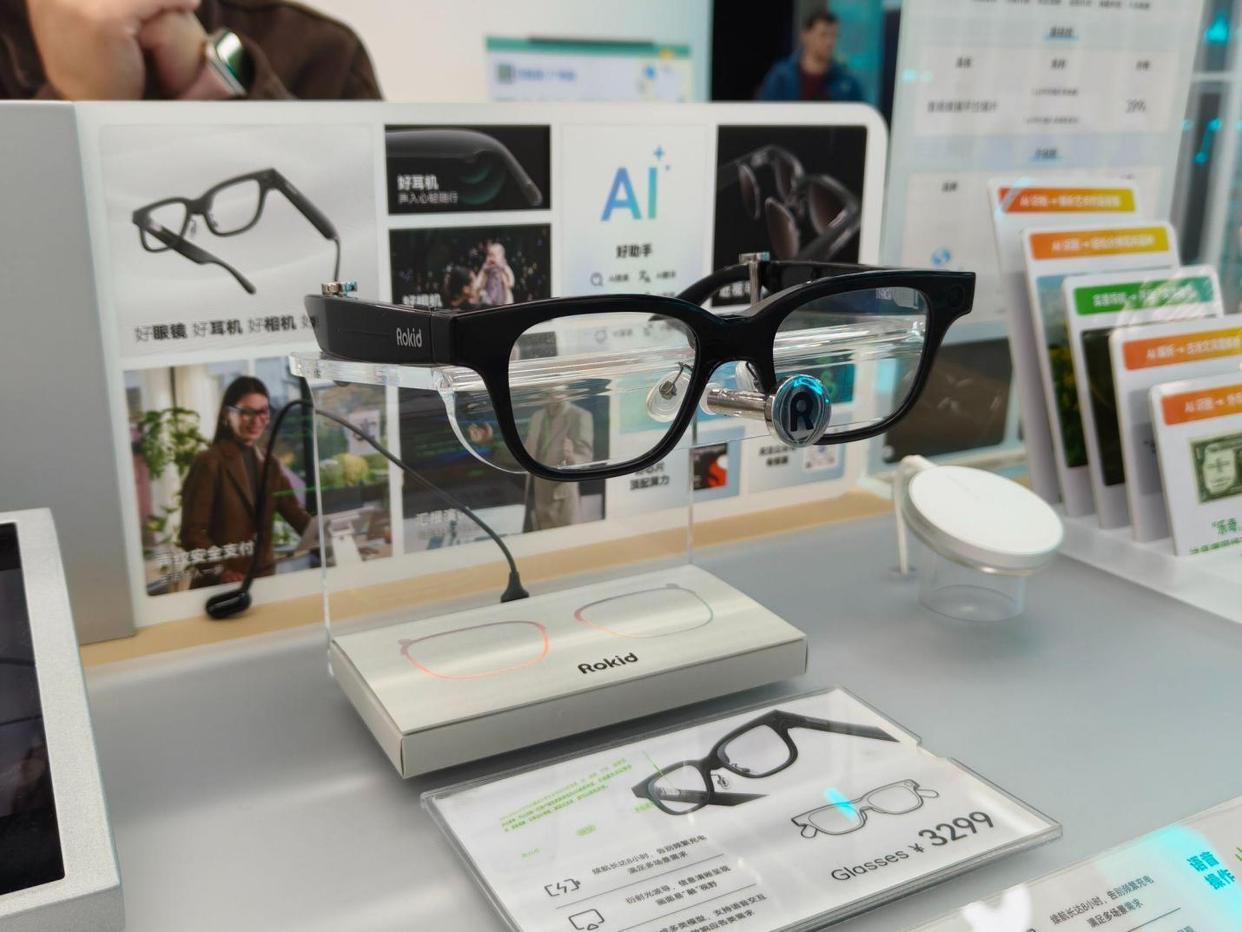
For example, integration with AutoNavi and Alipay is not a simple matter of app access but rather a seamless flow that links navigation, location search, real-time public transit, and quick payments around the core scenario of "travel." Collaboration with QQ Music strives to find the perfect balance between portability and immersion. The real-time translation scenario of the "transnational café" demonstrated at this year's World Artificial Intelligence Conference takes this precision to the extreme—targeting the most specific and minute "pain point moments" in cross-language communication and resolving them with a nearly imperceptible translation experience, allowing technology to fade into the background and communication to flow naturally.
This "micron-level" cultivation of scenarios has directly driven a qualitative change in user demographics. The early situation where over half of users were tech professionals has been broken, with the proportion dropping to 16%. Instead, more ordinary users from diverse fields such as education, business, cultural tourism, and daily recording have emerged. They stay not because of "tech coolness" but because of "genuine usefulness."
User behavior data also confirms this shift: After launching features like integrated photography that better align with actual sharing needs, users' daily sharing volume surged by 3-4 times, jumping from 100-200 shares per day to around 1,000. This marks the transformation of smart glasses from a geek's toy into a productivity and lifestyle tool for the masses.
Especially in the "battle of a hundred glasses" formed by the cross-border entry of tech giants like Xiaomi, Huawei, and Baidu, as well as numerous automakers, hardware parameter competition has gradually converged. The ultimate decisive ground will inevitably lie in the "micron-level" ecosystem battlefield composed of countless subtle scenarios, momentary needs, and imperceptible experiences. This silent war is destined to reshape the future landscape of the smart glasses industry.
Conclusion
Rokid's "competition" with Lens Technology on the production line has become the most authentic microcosm of the current smart glasses war. Products that align with market demand are not just about laboratory parameters but require micron-level refinement. The core of competition has shifted from "technological feasibility" to "experiential acceptability." As the Engineering Director of Lens Technology put it, this "war" is essentially about combating user sensory "discomfort."
Therefore, as the industry descends into the "battle of a hundred glasses," the likely winner will not be the one with the flashiest features but the one that makes the product most comfortable to wear and most natural to use. The "microns" witnessed in the Lens factory ultimately measure a company's depth of understanding of "people."
-
On the Eve of Its IPO, Avatr Finds Itself Embroiled in a 'Farce of Controversy and Belittlement'
-
![]()
Yutong Optics' Japanese Subsidiary Unveiled in Tokyo, Shifting Strategic Focus to Technology-Driven Growth
-
![]()
Half-Year Revenue Outstrips Last Year’s Total! Zhongrun Optics Forecasts 80.2% H1 Revenue Growth
-
![]()
Why Does AI Competition Start with Computing Power?
-
![]()
Apple AI Finally Makes Its Debut in China, Yet iPhone's 'AI Autonomy' Faces Uncertainty
-
![]()
Apple AI and QianWen Make Up Lessons: Alibaba Has Its Own 'Doubao Phone'
-
![]()
QianWen Joins Apple, Signal for Large Models to ‘Fade into the Background’
-
![]()
The ‘Anchor’ Strategy of Google Hidden Behind the Bleeding Financial Report