Over 1,122 Driverless Vehicles in Shenzhen: Achieving an 86% Online Rate and Raking in RMB 16.58 Million in Revenue. In December 2025, Shenzhen's Functional Driverless Vehicles Transition from 'Pilot'
 01/14 2026
 713
713
Introduction
According to the latest "December Operational and Development Report on Functional Driverless Vehicles in Shenzhen":
The operational fleet of functional driverless vehicles in Shenzhen has, for the first time, surpassed 1,000 units, reaching 1,122 units. This represents a month-on-month increase of over 20%, firmly positioning Shenzhen among the top cities nationwide in this regard.
This report not only reflects the performance of Shenzhen's functional driverless vehicles in 2025 but also marks a new starting point for 2026!
(For reference, please click:
"November Operational and Development Report on Functional Driverless Vehicles in Shenzhen: 240,000 Kilometers Traveled, Zero Primary Liability Accidents, Monthly Traffic Accident Numbers Down by 64%! Achieving Dual Turning Points in 'Safety + Scale'")

I. Verification of a Commercial Closed-Loop: Data Reveals the True Value of 'Operations as King'
The core value of the Shenzhen report lies in its use of a set of rigorous commercial data to tackle the fundamental question of whether autonomous driving can be profitable.
With a monthly operational mileage of 245,000 kilometers, 1.87 million deliveries completed, and approximately RMB 16.58 million in direct commercial value generated, these figures collectively paint a picture of a clear and expanding commercial closed-loop.
They demonstrate that in high-frequency, rigid-demand scenarios such as logistics and delivery, driverless vehicles are no longer just cost centers or experimental products. Instead, they have become productivity tools capable of directly generating revenue, reducing costs, and increasing efficiency (saving RMB 1.9 million in costs per month).
(For reference, please click: "Shenzhen's Driverless Vehicles to Reach 2,000 Units Next Year, Leading the Nation in Establishing a Driverless Logistics '4123' Development System, Always Prioritizing Safety in Development")
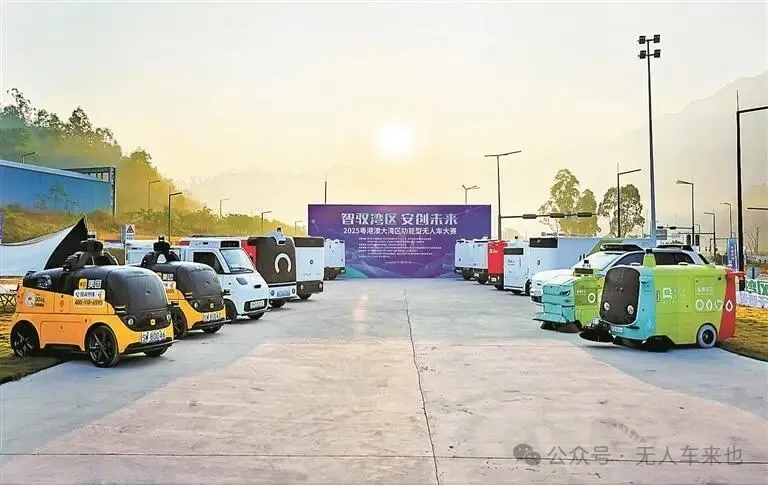
The high average online rate of 86% and operational compliance rate of 93% serve as engineering proof of the fleet's stability and reliability, laying the technological foundation for sustainable operations.
Shenzhen's approach has shifted the industry's focus from 'showcasing technology' back to the commercial essence of 'operational efficiency'.
II. City-Level System Practice: The 'Trinity' Architecture of the Shenzhen Model
The achievement of the 'era of a thousand vehicles' is a testament to Shenzhen's 'trinity' system capabilities, providing a replicable template for other cities.
1. Top-Level Design and Scalable Road Network (Infrastructure):
The 6,393 kilometers of open testing and operational routes constitute the world's largest city-level 'virtual track' for driverless vehicles.
This was not an overnight accomplishment but was gradually built upon forward-looking regulations (such as the nation's first intelligent connected vehicle management regulations) and long-term road network open policies.
It offers enterprises a seamless transition space from technology verification to commercial operations.
2. Scenario-Driven Ecological Aggregation (Industrial Engine):
Shenzhen has not confined itself to a single scenario but has simultaneously promoted the scalability of functional driverless vehicles across multiple scenarios, including logistics, sanitation, and security, through an integrated closed-loop of 'research and development - testing - operations'.
This has attracted a diverse range of enterprises (such as solution providers, operational platforms, and component suppliers) to form clusters in Shenzhen, fostering positive chemical reactions and synergistic effects. Notable companies include 9DVS, Neolix, Baixiniu, Meituan, Minieye, JD.com, and SF Express!
(For reference, please click: "Competition Among Driverless Vehicles from 9DVS, Meituan, SF Express, STO Express, Minieye, Chuanxing Zhiyuan, and Others! The 'Excellent Scenario Competition' of the 2025 Greater Bay Area Functional Driverless Vehicle Competition Kicks Off on December 31")
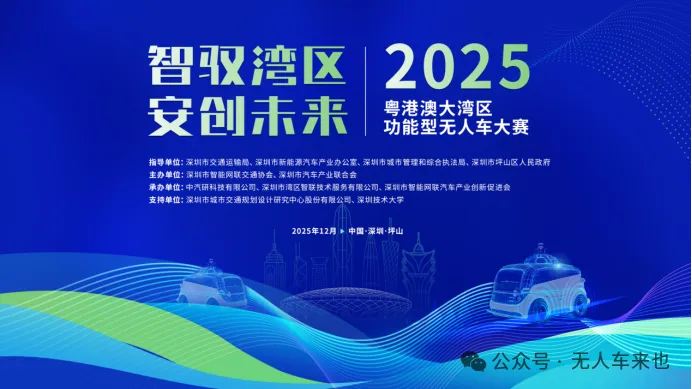
Events like the Greater Bay Area Competition and 'Model Fortune Land' act as 'ecological catalysts', accelerating technological iteration and supply-demand matching.
3. Data-Driven Refined Governance (Management Paradigm):
Refined indicators in the report, such as 'operational compliance rate' and 'vehicle standardization rate', reveal the core of Shenzhen's management approach - data-driven.
Managers do not simply 'issue licenses and observe results' but dynamically regulate and optimize safety, efficiency, and compliance through real-time operational data.
This model makes the risks of large-scale operations knowable, controllable, and manageable.
III. The 'Pioneer' Coordinate in the National Chessboard: Implications and Challenges
Shenzhen's achievements, along with recent practices in Chongqing (L3 policy innovation), Hong Kong (right-hand drive international testing), Longgang ('scenario opportunity list' driving), and other regions, collectively form a diverse and multi-tiered development landscape for China's autonomous driving industry.
(For reference, please click: "48 L3 Licenses + 1.4 Million Kilometers Zero Accidents: Chongqing Turns Autonomous Driving 'Safety Gear' into a 'Moat.' Hong Kong Approves a Pilot License for Autonomous Vehicles: Facilitating 'Guangdong Vehicles Heading South'")
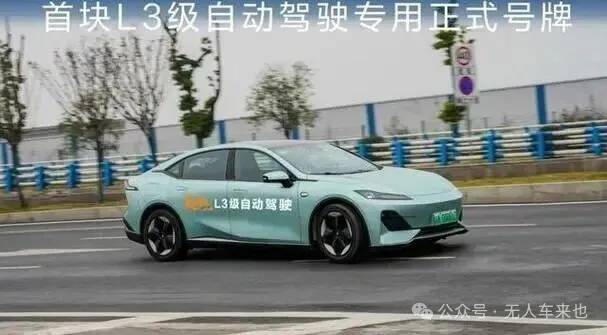
Shenzhen's unique contribution lies in its pioneering response to how intelligent connected vehicles can achieve large-scale, high-frequency, and commercialized operations in the core areas of high-density megacities.
However, the 'era of a thousand vehicles' also marks the beginning of new challenges in autonomous driving.
As the fleet size expands exponentially, ensuring absolute safety in complex traffic flows, handling more frequent interactions with 'human-driven' vehicles, optimizing road rights allocation and traffic efficiency, and establishing a more comprehensive accident liability and data security system will all become critical topics to address in the next stage.
Nevertheless, Shenzhen has blazed a clear path from technology to commerce and from demonstration to in-depth development for China's and even the global intelligent connected vehicle industry with its solid operational data.
In conclusion, "Driverless Vehicles Are Coming" (WeChat Official Account: Driverless Vehicles Are Coming) believes:
The trajectory of Shenzhen's thousand driverless vehicles outlines a clear path for China's intelligent connected vehicle industrialization:
Verifying business models with solid operational data, establishing a safety foundation with strict compliance management, and accelerating value circulation with an open industrial ecosystem.
When technological breakthroughs, commercial benefits, and system ecosystems resonate, scalability becomes a natural outcome rather than a mere goal.
The Shenzhen model proves that the future of China's intelligent connected vehicle industry lies not only in technological leadership but also in building a complete ecosystem that enables technology to continuously create value.
What do you think, dear?
#DriverlessVehiclesAreComing #Driverless #AutonomousDriving #DriverlessCars
-
![]()
Net Profit Surges 13.65% Year-on-Year! Yutong Optics Reports RMB 1.782 Billion in H1 Revenue
-
![]()
Q2 Net Profit Slashes Losses by 80%! Has Costar Emerged from Its Darkest Hour?
-
AI Agents: The Paradigm Shift from 'Conversation' to 'Execution'
-
NVIDIA Takes Bold Strides to Lead in Both Hardware and Software Realms
-
![]()
It's Hard to Build Cars, Even Harder to Build Humans, and XPENG is Doing Both
-
![]()
Valuation Soars by $57 Billion: Three Entrepreneurs Born in the 1980s Forge an AI Unicorn Now Suddenly on the Market
-
![]()
How Can We Achieve the Goal of 100,000 Hydrogen Vehicles by 2030?
-
![]()
July Online Market for Consumer-Grade Sports Cameras: Robust Double-Digit Growth in Sales Volume and Value, Mid-Range Products Fuel Market Expansion