Jiangsu Post's "Autonomous Vehicle Fleet": 214 Rural Delivery Routes, 2,838 Autonomous Vehicles, and 48,000 Packages Per Hour, Transporting "Laba Garlic" via AI-Powered Conveyor Systems
 01/20 2026
 774
774
Introduction
By 2025, Jiangsu Province has achieved remarkable milestones: handling 17.54 billion parcels across the region, averaging 206 parcels per resident.
These impressive figures are the result of a groundbreaking transformation: the complete integration of artificial intelligence (AI) into the postal and express delivery sector.
Across the province, 2,838 autonomous vehicles now navigate both urban and rural landscapes, operating on 2,165 regular routes (including 214 dedicated to rural delivery) and delivering an average of 3.06 million parcels each month.
These self-driving delivery vehicles have evolved far beyond experimental prototypes; they now form the backbone of efficient last-mile delivery services.
Let's delve deeper into this revolution with Autonomous Vehicle Era (WeChat ID: wrcly666)!
(For further reading: "Jiangsu Issues China's Most Comprehensive Autonomous Driving Regulations! Trillion-Dollar Sector Gains New Guidelines: 45 km/h Speed Cap, 3 Million Yuan Insurance Requirement, 90-Second Data Recording - The Business Logic Behind It") 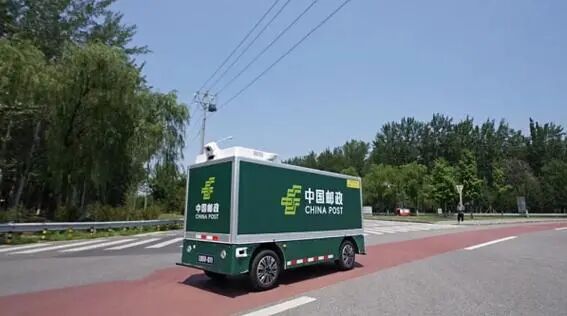
I. When Delivery Transcends "Human Effort": How Machines and Algorithms Redefine Efficiency
Traditional logistics has long relied on human labor as its cornerstone. However, humans are prone to fatigue, require leave, demand higher wages, and often struggle to keep pace during peak periods like Double 11.
Jiangsu's postal industry recognized early on that growth driven solely by manpower had reached its limits. To remain competitive, a new driving force was essential.
Thus, an innovation race ensued. By 2025, Jiangsu's logistics sector had upgraded over 20,000 intelligent devices—sorting robots, smart scanners, auto-weighing machines—not as mere novelties but as precision tools breaking through efficiency bottlenecks.
The primary battleground? Sorting centers.
Once, sorters moved with the agility of martial artists through mountains of parcels, identifying and sorting them with eagle-eyed precision and lightning-fast hands—30,000 steps a day was the norm.
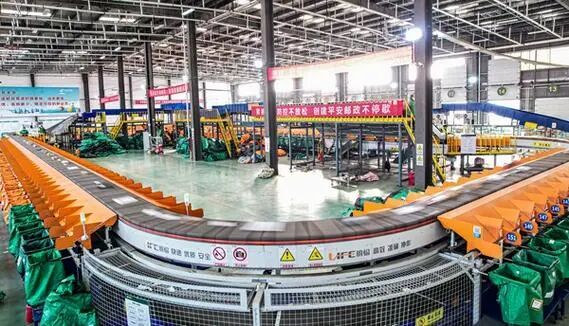
Now? Jiangsu's latest intelligent sorting line aims to process 48,000 parcels per hour.
Behind this feat: visual recognition algorithms that analyze labels in milliseconds, and control systems that orchestrate dense crossbelt sorters in a seamless "parcel waltz."
Human roles have shifted to supervision—monitoring equipment and resolving issues.
This transformation goes beyond labor savings. At SF Express' East China Furniture Hub in Hai'an, efficiency gains have rewritten business strategies.
Previously, a large furniture piece shipped from Hai'an to a northern city might pass through Shanghai or Nanjing, taking days to arrive.
Now, intelligent routing and warehouse management enable direct delivery to 128 cities nationwide.
Government support accelerated this shift. Nearly 200 million yuan in ultra-long-term bonds provided crucial capital for industry-wide AI upgrades.
This wasn't mere subsidization—it was an investment in the future.
The rationale is clear: a sorting center operating 20% faster, a network 30% smarter, translates to greater market share, higher tax revenues, and more jobs.
II. Penetrating the Capillaries: How Autonomous Vehicles and Drones Conquer the "Last Mile"
If urban sorting centers are the industry's "heart," then rural and complex last-mile delivery represent its "capillaries"—geographically challenging, with sparse demand and high costs. Long overlooked during e-commerce booms, this remains a persistent challenge for all couriers.
Jiangsu's solution? A bold embrace of technology: If roads are tough and labor scarce, deploy non-human alternatives.
In Jiangsu's countryside, you might witness this scene: a green, boxy autonomous delivery vehicle cruising at ≤20 km/h along village roads. It deftly avoids stray dogs, makes precise turns at intersections, and stops at a rural service station. Residents receive pickup codes and collect their parcels autonomously.
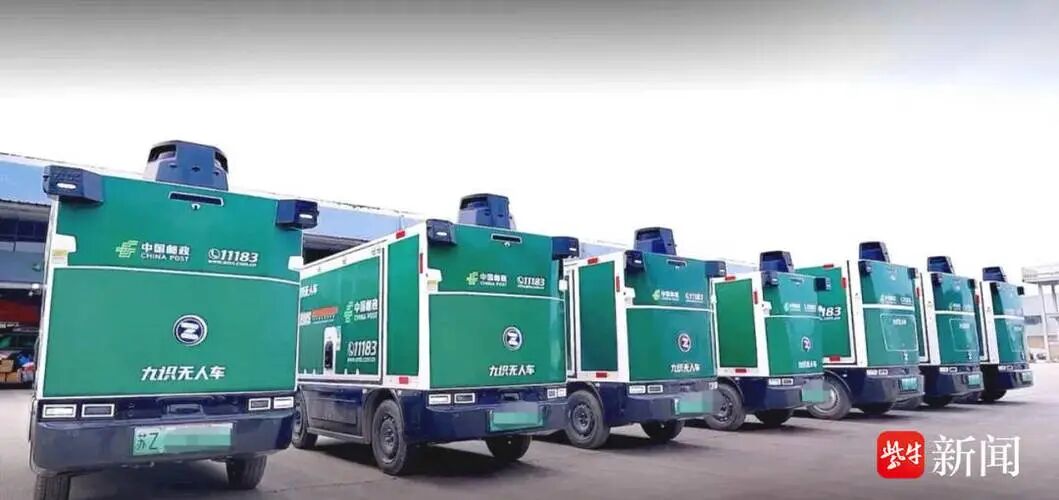
This isn't a trial—it's routine.
By 2025, 214 autonomous vehicle routes served villages across Jiangsu, delivering 3.06 million parcels monthly.
With 2,838 autonomous vehicles operating on 2,165 routes, they systematically dismantle barriers to rural delivery.
Key challenges addressed:
1. Cost: A courier driving miles for a few parcels incurs high fuel costs. Autonomous vehicles cover over 100 km per charge, drastically reducing per-item costs.
2. Reliability: Rain or holidays, autonomous vehicles remain operational.
3. Coverage: Remote villages now join service networks.
Aerial innovations soar even higher. Along Taihu Lake and in northern Jiangsu's industrial parks, 49 drone routes handle time-sensitive deliveries: documents, emergency medicine, precision parts.
Drones bypass terrain obstacles, cutting hour-long drives down to minutes.
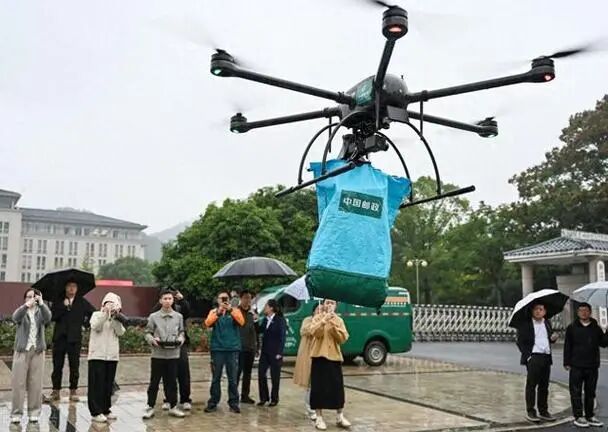
Pizhou's garlic cold-chain enterprises in Xuzhou exemplify this transformation. As Laba Garlic sales peak before the Lunar New Year, ensuring rapid, fresh delivery to supermarkets nationwide was once a logistical nightmare.
Now, postal teams stationed inside cold storages coordinate autonomous and refrigerated vehicles, shortening the farm-to-table journey.
Technology ensures that the "garlic aroma" arrives faster and fresher.
III. From "Parcel Delivery" to "Industrial Lifelines": Autonomous Vehicles Reshape Supply Chains
Jiangsu has set ambitious 2026 goals: deploy over 1,600 low-speed autonomous delivery vehicles, add 20+ regular drone routes, and create 3 low-altitude smart logistics demonstrations.
Meanwhile, intelligent sorting will reach 48,000 parcels per hour.
Xu Huarong, Deputy Director of the State Post Bureau's Policy Department, emphasized:
"Accelerate the adoption of autonomous delivery technologies. Leverage the 24/7 operation, flexibility, cost-efficiency, and environmental benefits of autonomous vehicles for scalable last-mile applications."
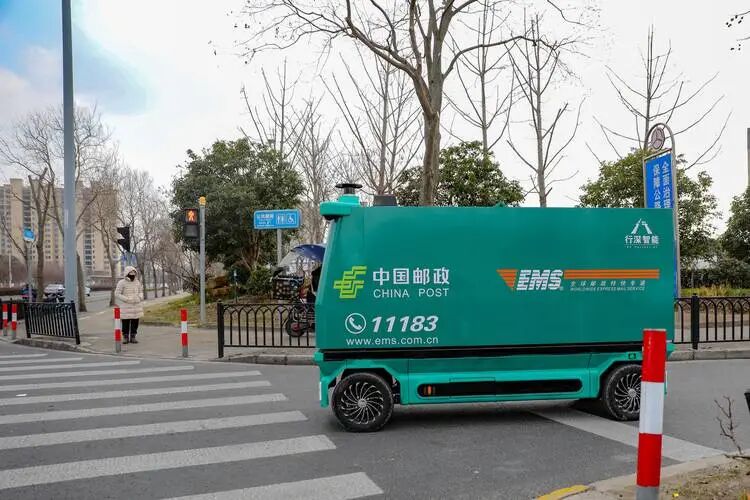
Particularly in remote areas, drone adoption will enhance delivery quality.
Industry experts note:
"AI is bridging the technological gap between eastern and western China."
Autonomous vehicles, drones, smart sorting systems, and lockers hold vast potential in last-mile delivery, overcoming labor and terrain limitations while boosting efficiency.
In essence, Autonomous Vehicle Era argues:
When "Laba Garlic" travels via cold-chain autonomous vehicles, when "village entrances" become micro-hubs, and when drones airlift parcels from mountainous regions, Jiangsu's 2,838 autonomous vehicles, 214 rural routes, and 49 drone lines transform "AI + postal delivery" into China's real-world "AI conveyor belt."
Autonomous vehicles arrive, but warmth remains. Here, parcels aren't just goods—they're trust in motion, the pulse of development, and festive flavors. Jiangsu quietly yet profoundly delivers this warmth to your doorstep. What do you think?
#AutonomousVehicleEra #AutonomousDriving #SelfDriving #AutonomousVehicles
-
![]()
How Can Embodied AI Overcome the Data Challenge of 'Being Able to Work'? Solutions from Five Leading Players
-
![]()
Half-Year Pre-Tax Loss Hits 4.5 Billion, Full-Year Net Cash Outflow Reaches 16.2 Billion! GAC Incurs 8,000 Yuan Loss per Vehicle Sold
-
![]()
In a Bid to Propel Towards a $10 Billion IPO, Jieyue Xingchen Weaves a Hardware Fairy Tale: A 'Chinese Version of Apple + OpenAI'?
-
![]()
REDMI Note 17 Pro First Impressions: Built to Last and Waterproof, Who Cares About Cost-Effectiveness?
-
![]()
MiHoYo’s AI Companion BSide is Here! I Tried It Out—Great Aesthetics, But Needs Work
-
![]()
A Token Cloud Drifting in the Winds of Change
-
![]()
A Token Cloud Looms on the Horizon
-
![]()
Qualcomm, NVIDIA, and Horizon Robotics: Pioneering Similar Paths in Automotive Tech