How Can Embodied AI Overcome the Data Challenge of 'Being Able to Work'? Solutions from Five Leading Players
 07/15 2026
 407
407
 ©Tide AI Editorial Team
In the wave of embodied AI, robots that can walk and run are no longer the challenge; the hurdle lies in 'being able to work' due to data constraints.
The collection, annotation, and management of high-quality data represent a particularly critical and scarce 'bottleneck' in the current industry.
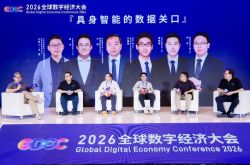
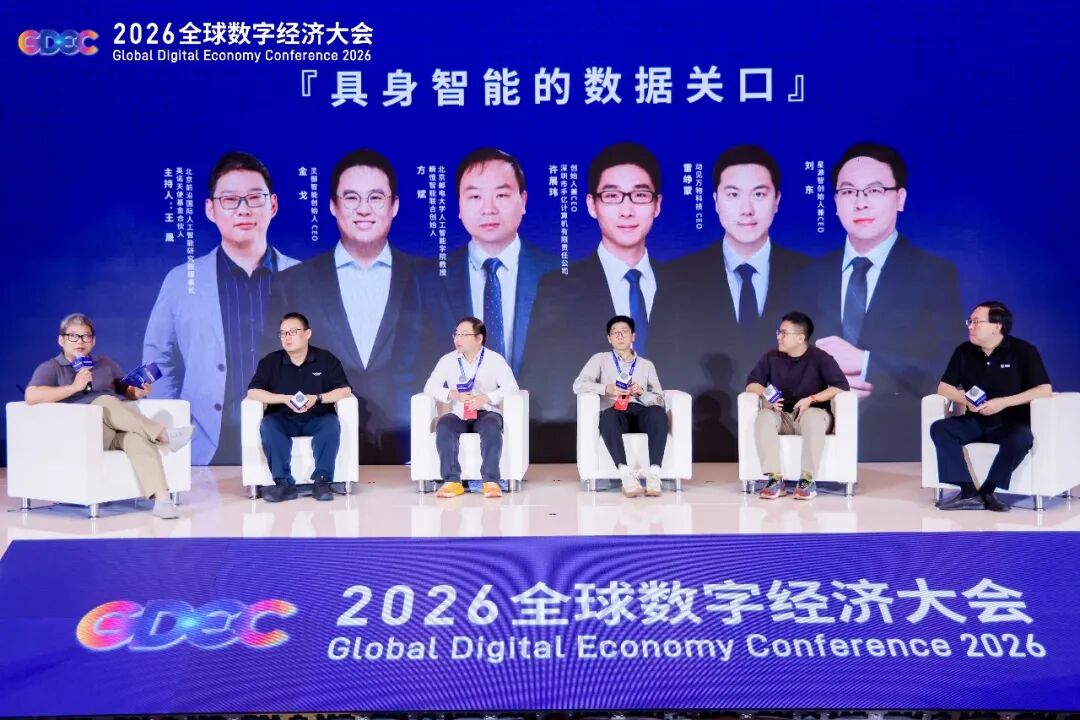
So, where do the challenges lie in embodied data collection? What are the strengths and weaknesses of different data collection methods and their implementation bottlenecks? How should we view the long-standing issues of quality and scalability with real robot data? To address these questions, a special roundtable on embodied AI was set up at the '2026 Global Digital Economy Conference AI Integration and Application Development Forum' held on July 3rd, inviting frontline investors and industry practitioners to engage in in-depth discussions on embodied data—
Host
Wang Sheng: Partner at InnoAngel Fund, Chairman of Beijing Frontier International AI Institute
Guests
Jin Ge: Co-founder and CEO of Lingyu AI
Fang Bin: Chief Scientist at Shunheng AI, Professor at the School of Artificial Intelligence, Beijing University of Posts and Telecommunications
Xu Zhanwei: Founder and CEO of Shenzhen Shouyi Computer Co., Ltd.
Lei Zhengmeng: CEO of Dongjian Wanwu Technology
Liu Dong: Founder and CEO of Xingyuan AI
The following is a transcript of the roundtable, compiled and published by Tide AI—

Five Approaches to Data Collection: From Teleoperation to Unobtrusive Vision, Each Shines in Its Own Way
Wang Sheng: Every challenge is an opportunity; every difficulty is a stepping stone. From the 'cerebellum' to the 'brain,' from VLA to today's world models, embodied AI continuously encounters and resolves issues. Data represents a significant hurdle, which is the focus of our discussion today. First, I'd like to invite each of our five guests to introduce themselves briefly, in order, for about one minute each.

Jin Ge: We are an infrastructure service provider offering high-quality, spatially and temporally consistent real robot data for embodied AI models and world models. Through our self-developed robotic platforms and human teleoperation systems, we can provide model manufacturers with the highest quality real robot data, including multi-modal spatial-temporal alignment.
Fang Bin: Our team has been focusing on visual perception and manipulation, introducing the most cost-effective sensors and models to empower leading 3C industries, completing the entire chain from platforms, scenarios, data to models. We hope to empower more scenarios and industries in the future.
Xu Zhanwei: Our team, primarily from Tsinghua University, focuses on the data infrastructure construction for embodied AI, including hardware, algorithms, data interaction platforms, and a complete closed loop for real robot validation. Currently, we have R&D bases in both Beijing and Shenzhen.
Lei Zhengmeng: We use a pure vision approach, extracting the highest precision data from daily life using cameras. Similar to Tesla's FSD, we perceive and extract surrounding spatial information through 6 to 8 cameras, serving as the raw fuel for robot training data. By building understanding based on vision, we assist in model training and robot perception.
Liu Dong: Our company develops cross-platform embodied brains and recently released an edge-side runnable embodied interaction world model, committed to providing the industry with high-performance embodied models and large-scale computing platforms.
Wang Sheng: Earlier, Mr. Zhu mentioned the data pyramid, noting the vast diversity of data types. Our guests here today exactly cover a wide range—except for simulation, we cover everything else. I've defined a quadrant chart: the x-axis represents the scale of data that can be generated and its match with generalized models; the y-axis represents data quality and its adaptability to robotic platforms. I'd like to hear from the first four guests how they position the data types they work with within these four quadrants?
Jin Ge: Our work leans towards the pinnacle of the data pyramid—irreplaceable real robot data. All tasks completed with real robot data can be replicated on actual robots in the future. Second, the interaction precision in data collection is extremely high, with sensor installation achieving sub-millimeter precision, greatly aiding world model understanding. Of course, real robot data faces scalability issues, as collection relies on low-cost, high-quality real robots, requiring scalable production methods. We see that autonomous driving broke through bottlenecks with real vehicle and human driving data, hoping to achieve a similar breakthrough in robot intelligence.
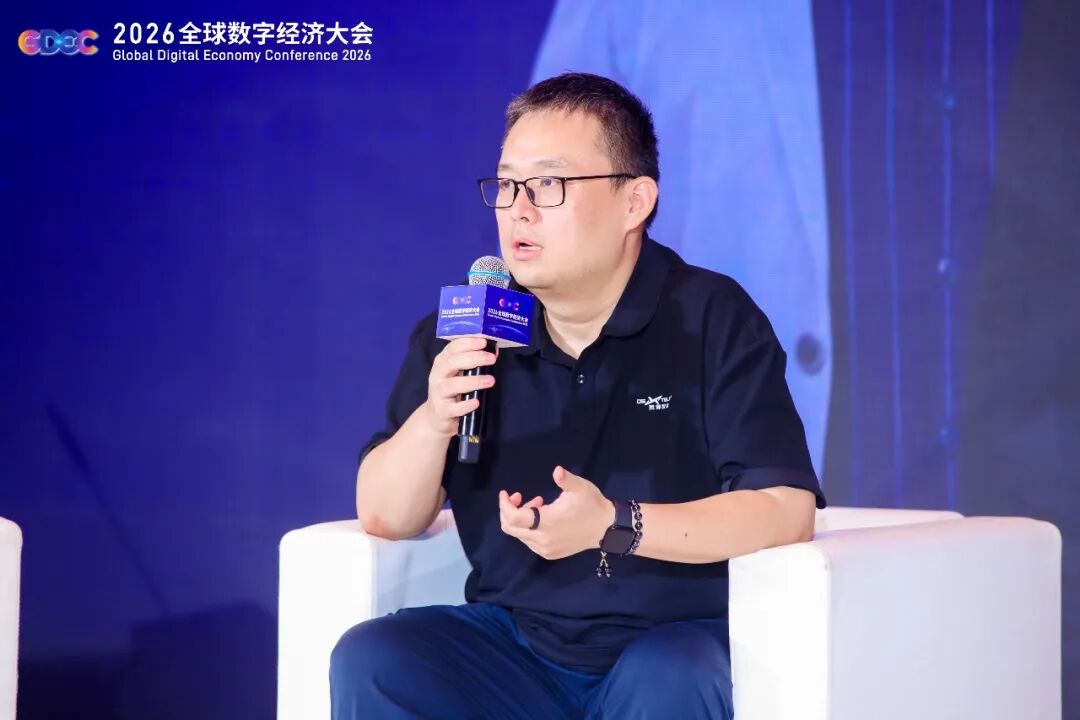
Fang Bin: We focus on high-quality data, especially in operational scenarios. Many focus on vision, but when various models are deployed in real-world scenarios, relying solely on visual modalities leaves many skills superficial. We focus on our visual sensors and how to obtain high-quality data during visual and tactile operations to achieve scenario applications. When solving problems for manufacturers, success rates must be very high. At the Verna ICRA International Embodied AI Challenge, we were the only team among 48 to achieve three perfect scores.
Xu Zhanwei: We adopt a heterogeneous approach, with the greatest advantage being the collection of continuous and complete operational data. Continuity is crucial in physical AI; we should be positioned in the top-right corner of the pyramid quadrant, offering high pre-training value. Thanks to our technical accumulation and academic team capabilities, our data quality reaches industry-leading precision, which is no easy feat. Especially in non-native aspects, we simultaneously record visual, EMG, 21 hand joint points, spatial dimensions, and tactile information, which is crucial for model training. We also excel in occluded interactions.

Lei Zhengmeng: Those focusing on vision always have confidence in precision. We solve full-chain problems through visual methods. The current training paradigm basically follows three stages: the first stage is pure pre-training, using heterogeneous data from human operations, in large quantities, without complex annotations, mainly letting the model 'watch,' tend to training video models; the second stage is intermediate training, mapping from visual models to robotic platforms, requiring a large amount of precisely annotated data; finally, jitter optimization. We hope to record space through multiple cameras, allowing space to be replayed and extracting various modal data. Pre-training can utilize this, and supervised learning can be done in the intermediate stage. Vision can solve all problems except where sensors cannot reach.

The Debate Over Quality and Scale: Real Robot Data is Irreplaceable, but Scalability is a Pain Point
Wang Sheng: Xu Zhanwei and Lei Zhengmeng, you focus on large quantities, while Jin Ge and Fang Bin focus on data related to equipment and sensors, which is very high quality. My next question goes to Mr. Liu: your financing, industry implementation, and orders are quite impressive, and you recently released a new world model at the Zhiyuan Conference. I'm curious: what are the characteristics of your world model? Why have you achieved success in both financing and industry implementation? Additionally, what data do you favor or look forward to using?
Liu Dong: We just released our embodied interaction world model, with its biggest highlights being: first, introducing action interaction into the model to form a closed loop. Before executing actions, the model pre-imagines a set of actions, judges their impact on spatial-temporal states, executes them if positive, and promptly corrects them if they fail, significantly improving success rates in the real physical world. Second, efficient edge-side operation, which is also why our revenue is growing rapidly—many world model foundations operate slowly and cannot run in real-time; our architecture enables rapid edge-side deployment. Third, continuous evolution, learning correct methods from failure cases, improving with use.
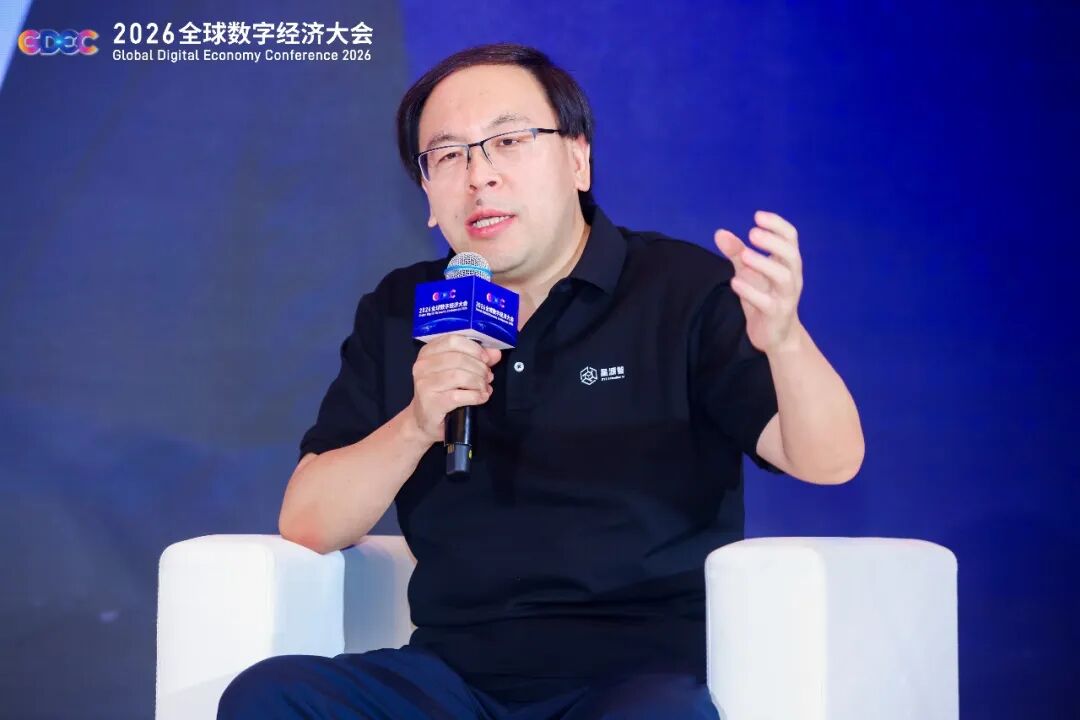
Regarding data, we believe closed-loop information is most crucial, not just visual recordings of the world, but incorporating actions and behaviors, while collecting data on both successful and unsuccessful tasks. Most data collection focuses on successful cases, but after introducing closed loops, our model needs to understand under what conditions actions fail to correct them in the next rehearsal. Therefore, future data collection should extensively cover success and failure, with and without platforms.
Wang Sheng: Mr. Liu highlighted two particularly important points: first, edge-side efficiency is crucial; second, self-evolution is very important. My second question goes to Xu Zhanwei: since the second half of last year, data companies have been springing up like mushrooms. What are your core technical capabilities and barriers in this business?
Xu Zhanwei: Our technical barriers include operational recordings and video stream operational recordings, with industry-leading precision. The key reason is that we don't rely on a single sensor; we include visual, EMG, recording complete hand execution content—21 hand joint points, spatial dimensions, tactile information, which is crucial for model training. Meanwhile, we don't just build data collection hardware; we've constructed a complete solution: processing, desensitization, labeling, reconstruction after data collection, adapting to mainstream training frameworks. Constructing a complete delivery solution is crucial for industry implementation, enabling closed loops. Through fully automated recognition, we distinguish effective and ineffective actions for model training. Information extraction requires both massive crude-level data and rare earth refinement capabilities, which is our closed-loop's core advantage.
Wang Sheng: I've heard you've achieved an order-of-magnitude improvement in precision, such as achieving the industry's highest inference quality in occluded environments.
Xu Zhanwei: We excel in occluded interactions, including hand movements and object recognition.
Wang Sheng: My next question goes to Lei Zhengmeng. Your notable feature is capturing the entire spatial and temporal volume video, enabling high-quality reconstruction of any data from any time and perspective using this video. We rarely see teams doing this; could you explain the challenges and the true industrial value?
Lei Zhengmeng: Objectively, AI has advanced this. Previously, spatial data recording required infrared motion capture, optical motion capture, or inertial motion capture for auxiliary precision identification. Our first approach: stop using surveying methods for this; AI can definitely understand scene information. Second, by locating the same object from multiple angles (similar to trilateration), we can raise precision to a high level. We compete with traditional methods requiring formal attire for collection, hoping to clearly record data when people enter the camera area, with the collection endpoint being unobtrusive collection, with vision as the primary method. Space can convert various perspectives because we've trained a video generation model (Small World Model), using multi-perspective supervision and high-precision data for perspective conversion. Since we can collect large amounts of data, we've accumulated a vast amount when training the perspective conversion model.

Wang Sheng: It sounds like several points are crucial: first, unobtrusive free capture, capturing the most natural human behaviors. Second, transitioning from algorithmic reconstruction to AI generative reconstruction, which is currently rare and crucial for the industry. Additionally, I've heard you're developing your own hardware camera, now called AI Native sensor—similar to adding an AI chip to a regular camera to create a Native facial recognition camera, which is quite distinctive and technically barrier-raising.
My question goes to Mr. Jin. Teleoperation is generally considered a relatively traditional method for embodied data in the industry, but it seems there's a lack of appreciation for teleoperation technology. Do you think there are misunderstandings about the value of teleoperation data and the technology itself?
Jin Ge: Teleoperation is a direction with a high ceiling but also a low floor, somewhat like driving—driving a car, a tractor, or riding a shared bike are all forms of driving, but the performance and capabilities vary greatly. The biggest advantage of teleoperation is its implementability; the biggest pain point for robots is their inability to serve people directly, and a good teleoperation system can enable robots to be deployed at this stage. Currently, hundreds of robots are already serving in Beijing supermarkets, hotels, logistics, and catering industries, with hundreds more expected to be shipped in the next six months. Teleoperation is a very strong comprehensive system solution, encompassing platform structural design, tactile sensing, human-side collection. A good teleoperation system must be a comprehensive systems engineering solution. It's also highly related to communication, requiring low-latency control of robots across thousands or even tens of thousands of kilometers. Teleoperation real robot data can provide full-modal data—not just first-person vision, but also force, speed, position, tactile sensing, and even eye-tracking, allowing us to know what the operator was looking at and where their attention was focused. These multi-modal data are crucial for models to understand causality and sequence. Finally, teleoperation data precision is very high, both temporally and spatially.
Wang Sheng: To summarize briefly, the biggest advantage is the ability to 'lay eggs along the way'—while continuously improving intelligence through data collection, it can indeed land in scenarios, similar to how L2 assistance is valuable even before autonomous driving reaches L4.

Haptics and Edge: The 'Last Centimeter' and 'First Principles' of Embodied Intelligence
Wang Sheng: I'll give the last question to Professor Fang Bin. Currently, there is a growing consensus in both the scientific research community and the industry that the last centimeter of embodied intelligence must be addressed through haptics. Could you analyze this viewpoint? Why is haptics so crucial, yet there is still no standard or widespread adoption of haptic data collection in the industry? Isn't this a contradiction?
Fang Bin: We are among the earliest in China to conduct haptic research, and we have also gained significant attention internationally. When it comes to the actual implementation of technology in products, haptics is indispensable, especially in terms of efficiency. Although visual models can achieve the same success rate as human workers, there is still a gap in efficiency. Haptics can provide excellent support for vision. Why hasn't haptics developed further? There is a lack of cost-effective sensors; the cheap ones don't perform well, and the high-performing ones are too expensive. Shunheng's goal is to introduce the most cost-effective haptic sensors, along with lightweight haptic models and a personalized simulation platform. NVIDIA has installed haptic simulation drivers, but there is a significant gap in real-world effectiveness. Our Shunheng team has developed a fully autonomous and controllable simulator, which is a crucial feature. We hope to provide the most cost-effective hardware on the sensing end, lightweight models on the algorithm end, and a personalized simulation platform on the scenario end, truly providing technical support for the last centimeter of embodied intelligence implementation.

Wang Sheng: To summarize, doing haptics well is a challenging task that requires not only hardware sensors but also simulators (which are extremely difficult to make), as well as training good models. The higher the barriers, the greater the value.
Fang Bin: That's why we have secured a major national science and technology project on brain-inspired haptics as part of the Brain Project. The country places great importance on this direction and hopes to truly bridge industry, academia, and research to support the development of national embodied intelligence.
Moderator: Thank you, Mr. Wang Sheng, and all the guests. Data presents challenges for embodied intelligence today, but it also offers numerous opportunities.
The '2026 Global Digital Economy Conference Artificial Intelligence Integration Application Development Forum' is hosted by the Organizing Committee of the Global Digital Economy Conference, with the Beijing Municipal Economy and Information Technology Bureau and the Chaoyang District People's Government as the organizers. It is co-organized by the Management Committee of Chaoyang Park, Zhongguancun Science Park (Beijing Chaoyang District Science, Technology, and Information Technology Bureau), Beijing Shuzhi Yunke Information Technology Co., Ltd., Beijing Informatization Association, Beijing Artificial Intelligence Industry Alliance, and Beijing Shuzhi Julian Enterprise Management Co., Ltd.
-
![]()
Laying Off Hundreds of Thousands: Can European Automakers Triumph?
-
![]()
Seres: Navigating Beyond the 'Realm'
-
![]()
iFLYTEK Anticipates RMB 200 Million Loss, Embracing 'Subtraction' and 'Addition': Abandoning Low-Margin Businesses and Betting on AI's Future
-
![]()
ByteDance’s ‘Most Loyal’ U.S. Investor Exits, Notching 15,000-Fold Returns
-
![]()
DeepSeek’s Liang Wenfeng Becomes World’s Wealthiest in AI, Net Worth Skyrockets to $36 Billion
-
![]()
How Can Embodied AI Overcome the Data Challenge of 'Being Able to Work'? Solutions from Five Leading Players
-
![]()
Half-Year Pre-Tax Loss Hits 4.5 Billion, Full-Year Net Cash Outflow Reaches 16.2 Billion! GAC Incurs 8,000 Yuan Loss per Vehicle Sold
-
![]()
In a Bid to Propel Towards a $10 Billion IPO, Jieyue Xingchen Weaves a Hardware Fairy Tale: A 'Chinese Version of Apple + OpenAI'?