What If Express Delivery Drivers Take Holidays During the 2026 Spring Festival? Driverless Vehicles Step In for Overtime: Can a Metal Box Solve the Holiday "Labor Shortage"?
 01/23 2026
 652
652
Introduction
As the 2026 Spring Festival draws near, while countless express delivery drivers are boarding trains to return home, a group of "new employees" are quietly taking up the mantle. These workers don’t partake in New Year’s Eve dinners, don’t expect red envelopes, but can work around the clock, delivering sausages, nut gift boxes, Spring Festival couplets, and lucky red envelopes for children straight to your doorstep. Yes, we’re referring to driverless delivery vehicles.
At ZTO Express’s second outlet in Nanchang County, Jiangxi Province, 20 driverless vehicles are ramping up their departure frequency to every half hour. Each vehicle can load up to 1,000 parcels at a time, swiftly "clearing" the outlet’s backlog.
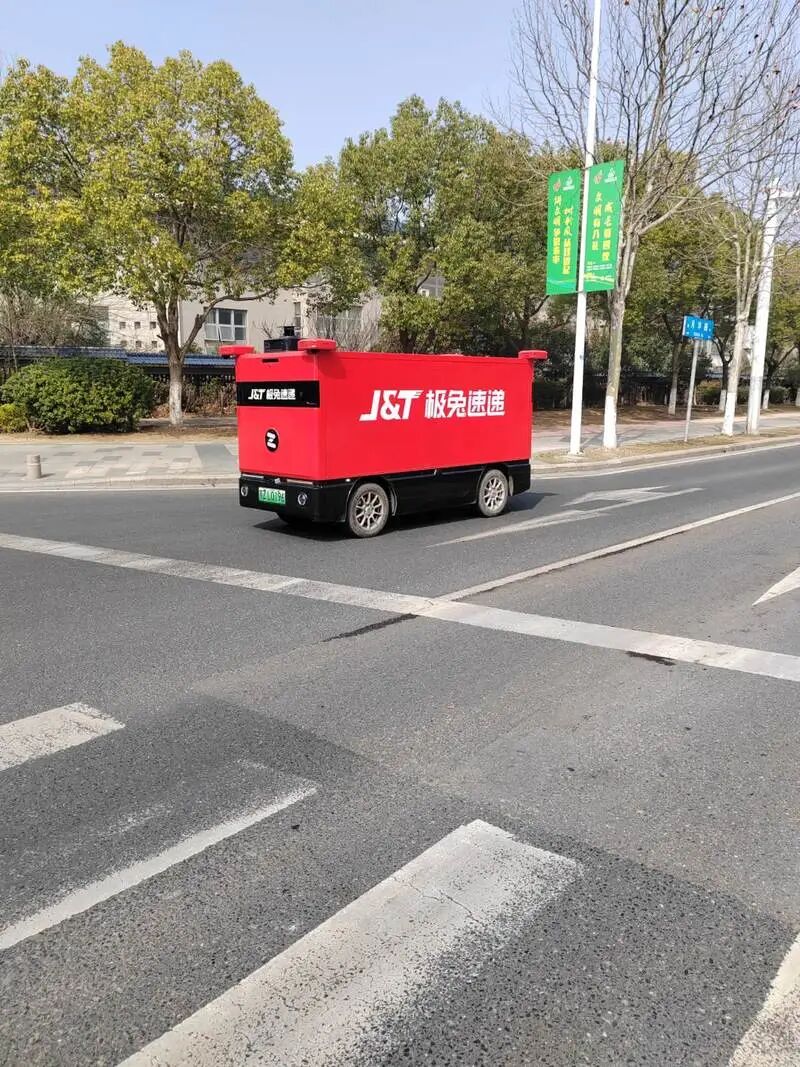
At J&T Express’s leading outlet in Guyuan County, Zhangjiakou, Mr. Li, the manager, reports that his four driverless vehicles save an average of three hours of delivery time per day. This Spring Festival, he plans to invest in one more.
Let’s delve deeper into this topic with Driverless Vehicles Are Here (WeChat Official Account: Driverless Vehicles Are Here)!
(For further reading, please click: "Neolix Accelerates Deployment of Trillion-Dollar Specialized Driverless Vehicles: Transitioning from 'Selling Products' to 'Building an Ecosystem' with Open Platforms and Standard Co-construction")
I. Holiday Logistics Pressure: A Historical Opportunity for Driverless Vehicles
The express delivery industry during the Spring Festival has consistently faced the dual challenges of "plateau-like cargo volume" and "labor shortages."
The manager of an express delivery outlet in Changsha, Hunan Province, notes two key characteristics of this year’s Spring Festival shopping season:
The peak is less pronounced and extends over a longer period, transforming the cargo volume peak from a sharp spike into a plateau.
Product categories are more diverse and bulkier, with a notable increase in fresh produce for the New Year and gift boxes.
The traditional approach involves temporarily increasing personnel and vehicles, but this comes with high costs.
During the holidays, express delivery drivers often work until around 9 p.m., and cold weather further complicates operations.
In stark contrast, Jishi Intelligent and Neolix driverless vehicles performed remarkably during the "Double 11" shopping festival:
They traveled over 10 million kilometers in a single month, operated continuously for over 3 million hours, and handled more than 30% of orders during late-night hours.
This 24/7 uninterrupted service capability precisely addresses the labor gap in holiday logistics.
II. Cost Reduction and Efficiency Enhancement: The "Hardcore" Data of Driverless Vehicles
As express delivery outlets across the country adopt driverless vehicles, their primary concern remains cost-effectiveness. Data reveals that driverless vehicles have exceeded many expectations.
At an express delivery outlet in Guilin, Guangxi, driverless vehicles have helped reduce overall transportation costs by about 50%, with a decrease of approximately 0.1 yuan per parcel in transportation costs.
For outlets handling thousands of parcels daily, this translates to significant savings.
JD Logistics’ application of driverless vehicles has also shown a similar trend, with transportation costs at driverless vehicle sites decreasing by 21% since operation began, and express delivery drivers’ daily delivery time shortened by one hour.
SF Express’s demonstration line from Futian to Bao’an now handles over 30,000 parcels daily, saving nearly 50% of transit time.
(For further reading, please click: "SF Express Deploys 1,800 Driverless Vehicles in 72 Cities Across China, Weaving a Smart Logistics Network in Shenzhen!")
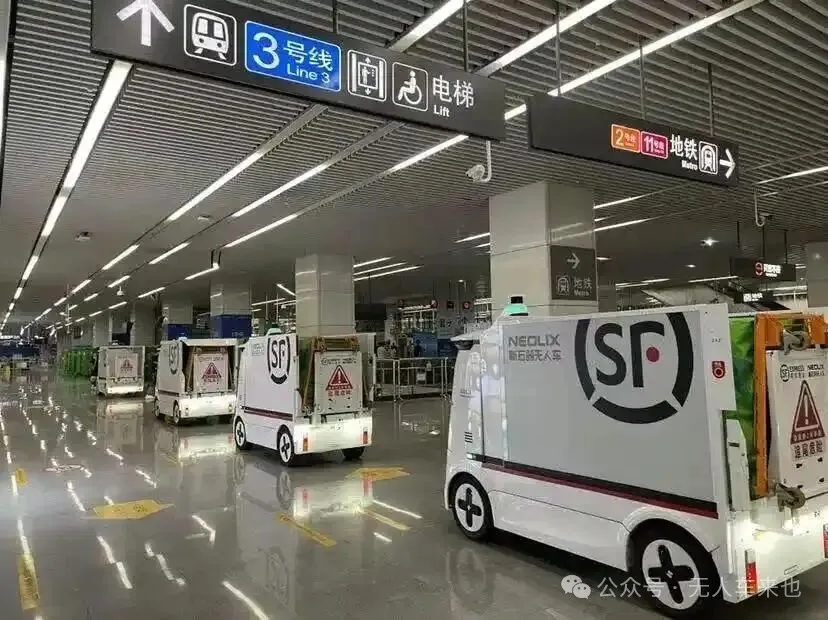
The manager of J&T’s driverless vehicle project revealed that during this year’s Spring Festival shopping season, J&T plans to deploy over 1,000 driverless vehicles across its network, with an average efficiency improvement of about 20% compared to periods without driverless vehicle applications.
Beyond economic benefits, safety and adaptability are also improving.
The first autonomous logistics vehicle in Kashgar, Xinjiang, recently completed snowy weather road tests, successfully navigating complex scenarios such as slippery roads and morning rush hour traffic. It is scheduled for formal operation in February 2026.
III. Express Delivery Drivers' "New Colleagues": Technology Enhances Work Dignity
Industry insiders point out, "Driverless vehicles can replace dedicated drivers and vehicles for short-distance shuttle tasks, freeing up delivery personnel from repetitive work."
This liberation extends beyond physical relief, enhancing work dignity as well.
Driven by policies in Guangdong Province, Nansha, Guangzhou, has become the city’s first pilot area for unmanned commercial operations, attracting numerous leading companies to implement unmanned logistics vehicle applications.
Shenzhen has boosted logistics efficiency in commercial districts by over 30% through the innovative "rail transit + unmanned delivery" model.
The Guangzhou Postal Branch recently deployed 20 unmanned delivery vehicles, expected to enhance express delivery efficiency by over 40% in the future.
Since launching its first batch of driverless vehicles in June 2025, Nanchang, Jiangxi, has been quietly expanding its fleet, with more and more "Iron Men" becoming holiday logistics assistants.
Binzhou, Shandong, has just introduced regulations for low-speed autonomous driving equipment, enabling unmanned logistics vehicles to operate more steadily and quickly!
(For further reading, please click: "Over 20 Provinces and Municipalities Introduce Policies in 2025, Driverless Delivery Vehicles Move from 'Pilot' to 'Competitive Land Grab' in 2026: Whoever Scales First Wins")
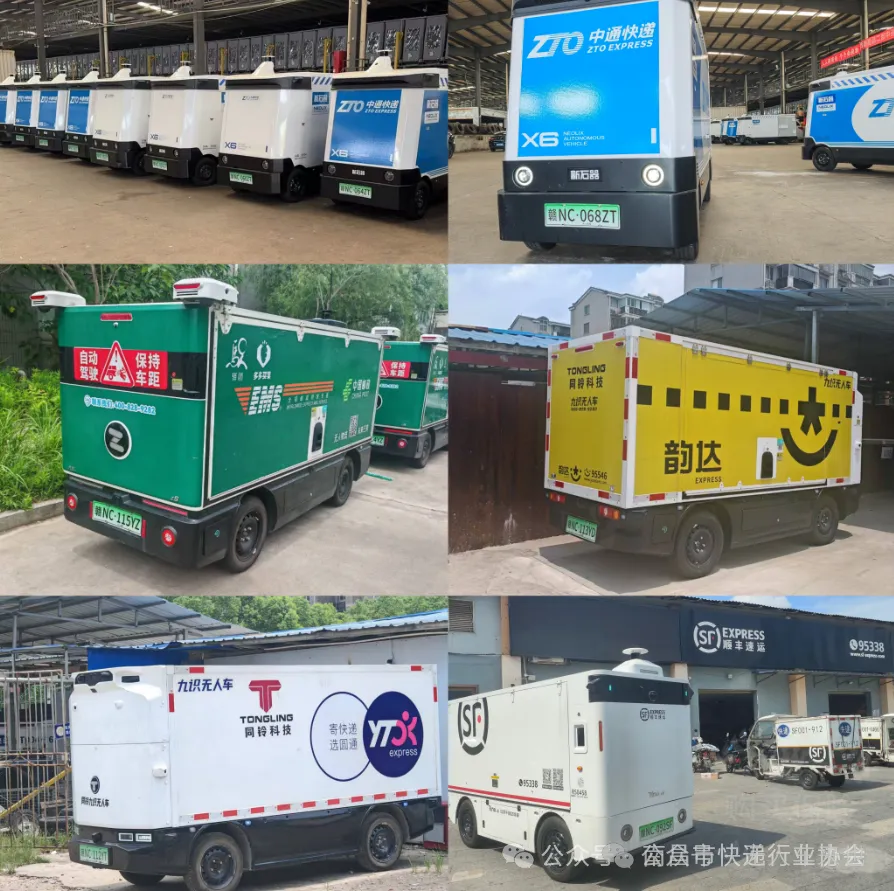
This "human-vehicle collaboration, flexible scheduling" model is gaining traction nationwide.
Driverless vehicles are not set to replace express delivery drivers but have become their most efficient partners.
IV. A New Urban Landscape: Dual Drivers of Policy and Technology
As the scale of driverless vehicles expands, urban managers are actively responding.
Jinan plans to deploy 100 unmanned express delivery vehicles in its starting area by 2026, creating a smart logistics demonstration scenario.
Guangdong Province’s latest policy explicitly proposes promoting coordinated delivery by driverless vehicles, drones, and intelligent parcel lockers, with Guangzhou, Shenzhen, Shantou, and Jieyang as pilot cities to explore testing and operation of unmanned logistics vehicles on open roads.
(For further reading, please click: "A City Fully Opens to Autonomous Driving: The Nansha Model Drives Integrated Development of Autonomous Driving in Guangdong Province, Smart Transportation Trials for the Guangdong-Hong Kong-Macao Greater Bay Area")
In terms of scenario expansion, driverless vehicles have extended from the express delivery sector to multiple scenarios.
Yu Enyuan, the founder of Neolix, revealed plans to expand Shenzhen’s fleet to 1,000 vehicles in 2026, focusing on nighttime delivery and expanding into areas such as fresh produce, hotel linens, and supermarket supply chains.
(For further reading, please click: "Neolix’s Yu Enyuan Attends Shenzhen’s 2026 Intelligent Connected Vehicle New Year Conference: Plans to Increase Driverless Vehicle Deployment in the City from 374 to Over 1,000 This Year")
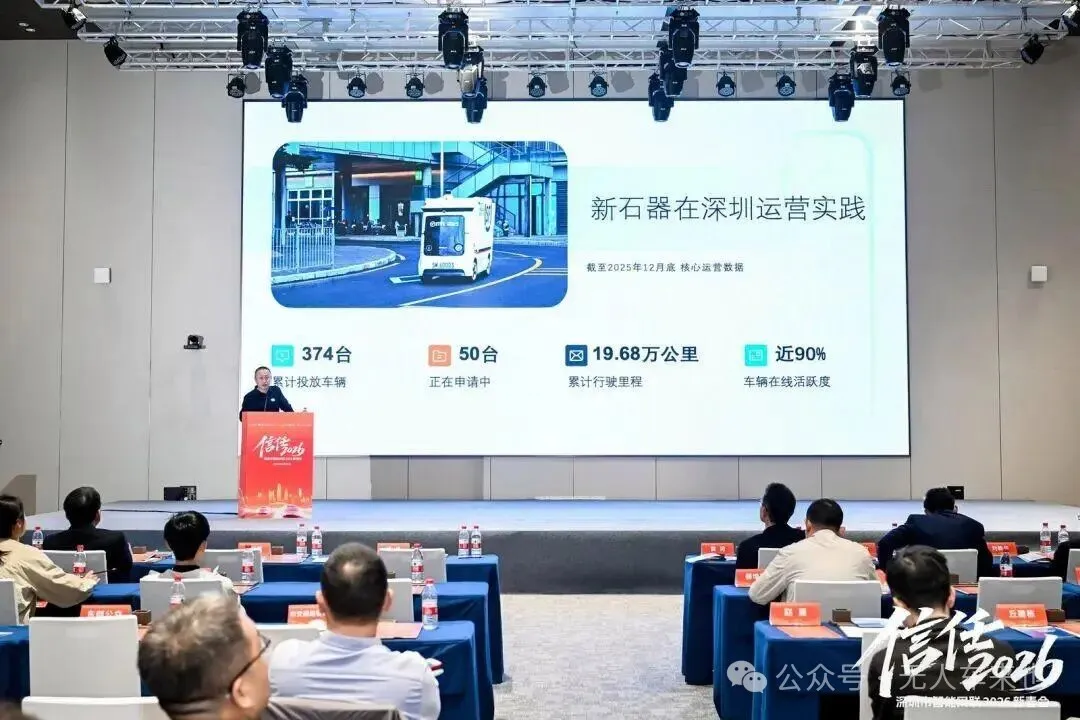
Technological innovation is also advancing.
An e-commerce platform has launched an AI New Year Goods Map system, which analyzes sales data of New Year goods across regions to assist merchants in precise warehousing layout and scientific inventory preparation, placing goods closer to consumers.
This Spring Festival is destined to be even more lively!
V. The Future is Here: Insights from Driverless Vehicles' "Spring Festival Travel Rush"
As the 2026 Spring Festival arrives, the widespread application of driverless vehicles in the express delivery industry is no longer just a technological display but has become an effective solution to address industry pain points.
ZTO Express already has over 3,500 driverless delivery vehicles daily transporting over 8.7 million parcels across 268 cities, with a cumulative operating mileage exceeding 20.8138 billion kilometers.
China Post and SF Express have also deployed nearly 2,500 and 1,800 driverless vehicles, respectively.
Judging by the scale of over 16,000 driverless vehicles deployed by industry leaders Jishi Intelligent and Neolix, this trend is irreversible.
As technology matures and costs decrease, driverless vehicles are transforming from "experimental products" to "productive forces."
Some driverless vehicle companies predict that during the 2026 Spring Festival, over 10,000 driverless vehicles will be active across the country in sectors such as express delivery, supermarkets, and pharmaceuticals.
This means:
The dumplings you order on New Year’s Eve may be delivered by a white vehicle through the snowy night;
The smart blood pressure monitor you send to your hometown is being directly delivered from the county transit station to the village entrance by a driverless vehicle—the warmth of technology lies in these "round-the-clock" wheels.
Conclusion
Driverless Vehicles Are Here (WeChat Official Account: Driverless Vehicles Are Here) believes:
The holiday "labor shortage" is an annual occurrence, but 2026 brings a new variable: driverless vehicles are no longer just "ornaments" at tech exhibitions but have become genuine "fire brigade" assets for express delivery outlets. They don’t need to buy train tickets, go on dates, or complain about triple wages; they only use algorithms and electricity to deliver your New Year goods on time to your building. Maybe this Spring Festival, you’ll receive a new message: "Your parcel has been delivered by a driverless vehicle. Please collect it at the community entrance using your pickup code. It’s waiting for you to say 'Happy New Year.'"
What do you think, dear?
#DriverlessVehiclesAreHere #AutonomousDriving #Self-Driving #DriverlessVehicles
-
![]()
How Can Embodied AI Overcome the Data Challenge of 'Being Able to Work'? Solutions from Five Leading Players
-
![]()
Half-Year Pre-Tax Loss Hits 4.5 Billion, Full-Year Net Cash Outflow Reaches 16.2 Billion! GAC Incurs 8,000 Yuan Loss per Vehicle Sold
-
![]()
In a Bid to Propel Towards a $10 Billion IPO, Jieyue Xingchen Weaves a Hardware Fairy Tale: A 'Chinese Version of Apple + OpenAI'?
-
![]()
REDMI Note 17 Pro First Impressions: Built to Last and Waterproof, Who Cares About Cost-Effectiveness?
-
![]()
MiHoYo’s AI Companion BSide is Here! I Tried It Out—Great Aesthetics, But Needs Work
-
![]()
A Token Cloud Drifting in the Winds of Change
-
![]()
A Token Cloud Looms on the Horizon
-
![]()
Qualcomm, NVIDIA, and Horizon Robotics: Pioneering Similar Paths in Automotive Tech