Hubei’s Pioneering "National Subsidy" Delivery: JD’s "Lone Wolf" Autonomous Vehicle & Courier Deliver a 500-Yuan-Discounted "National Subsidy Smartphone" to Your Door
 01/30 2026
 773
773
Introduction
On the evening of January 27, Mr. Fang, a Wuhan resident, received a new smartphone at his doorstep, benefiting from a 500-yuan discount through national subsidies and JD’s trade-in program.
This seemingly routine delivery marks a historic milestone: it represents the first order fulfilled under Hubei Province’s online "national subsidy" initiative. Instead of arriving on a traditional delivery tricycle, the package was transported to the residential entrance by a JD Logistics L4 autonomous vehicle—the sixth-generation "Lone Wolf."
Hubei is leading the charge, setting a precedent for nationwide adoption as autonomous delivery vehicles evolve from "cutting-edge technology" to "essential infrastructure."
The Autonomous Vehicle Era (WeChat: wurenchelaiye) explores this transformative moment with you!
(For further reading, click: "JD’s Autonomous Vehicles Enter Rural Areas: Liu Qiangdong Delivers New Year Goods to Hometown—From ‘Triumphant Return’ to ‘Technological Homecoming’")
I. The Deeper Meaning of the "First Order": A Commercial Closed-Loop Beyond Tech Demos
The smartphone Mr. Fang received on the evening of January 27, 2026, was far more than a simple purchase.
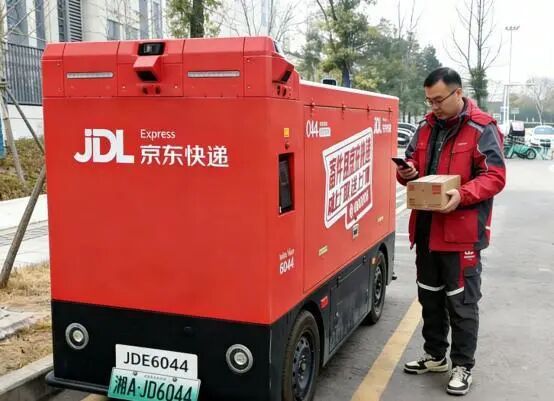
It symbolized the successful fulfillment of the first package under Hubei Province’s online "national subsidy" policy, with its final-mile delivery executed by JD Logistics’ L4 "Lone Wolf" autonomous vehicle.
The significance of this "first order" extends far beyond a successful autonomous driving test.
It served as a "stress test" to determine whether a smart logistics system could operate as reliably as a precision timepiece under real consumer demand, strict time constraints, and complex social environments.
From robotic picking in smart warehouses to automated sorting and seamless autonomous vehicle handoffs, the end-to-end process demonstrated technology’s maturity in serving highly predictable commercial scenarios.
What makes this delivery even more intriguing is its endpoint.
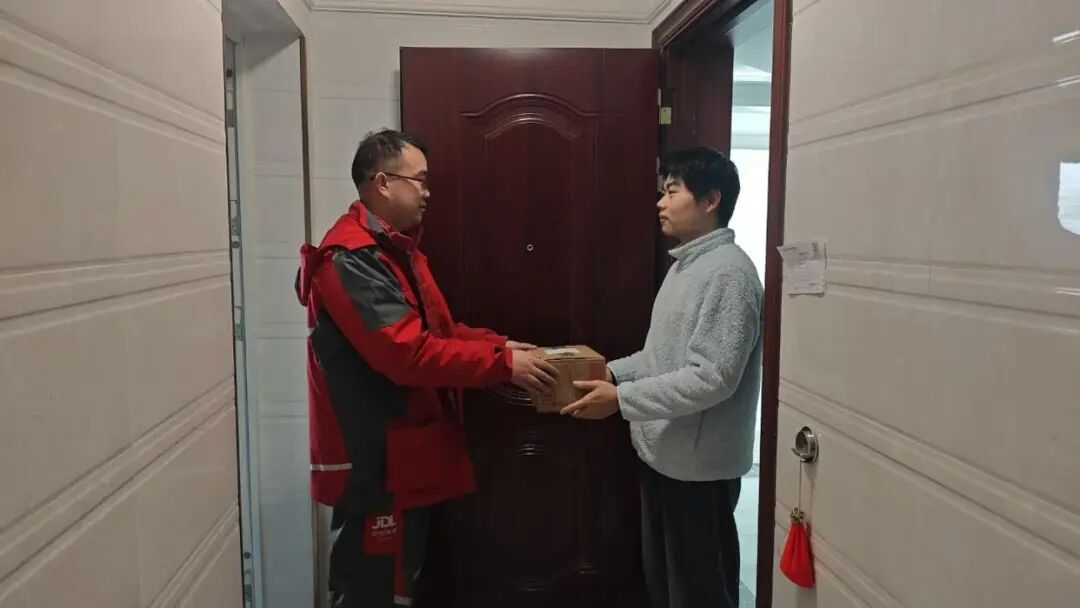
The autonomous vehicle precisely parked at the residential entrance, transferring the package to JD courier Mr. Lai, who completed the final doorstep service, including professional unpacking and device activation.
This exemplifies the optimal human-machine collaboration model for the current stage:
Machines handle repetitive, high-volume "linear" transportation, while humans manage emotionally interactive, flexible "point-of-service" tasks.
II. The "Iron Partnership": Couriers and Their Robotic Colleagues
Mr. Lai’s description of the autonomous vehicle as his "work partner" vividly illustrates a profound occupational transformation.
Previously, his workday was fragmented between traveling to delivery stations, locating buildings, and waiting for customers.
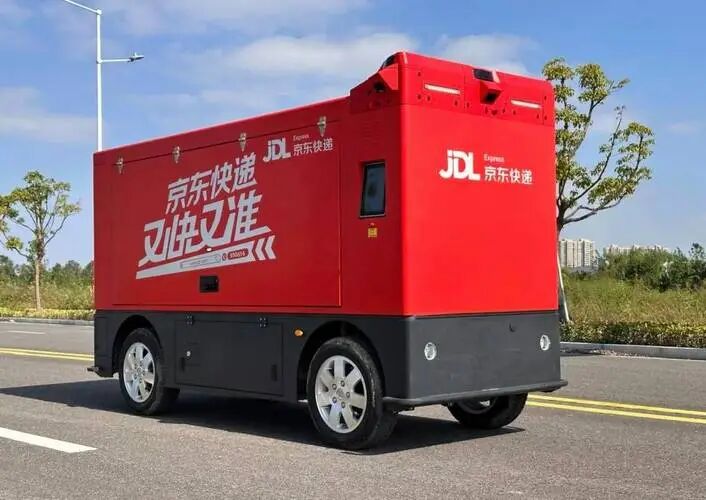
Now, the "Lone Wolf" autonomous vehicle acts as his "dedicated shuttle," managing the fixed, repetitive route from the last-mile station to the residential entrance.
This division of labor yields substantial efficiency gains.
"It reduces travel time between stations and improves pickup efficiency," Mr. Lai admits.
His focus has shifted from "commuting" to "customer service." When consumers praise the courier’s professional unpacking guidance, this value-added service space is created by the time saved through autonomous vehicle operations.
This represents not "machines replacing humans" but "machines empowering humans."
It partially liberates couriers from physically demanding, repetitive tasks, upgrading them into community service experts focused on customer care, problem-solving, and flexible fulfillment. Last-mile logistics competitiveness is evolving from "speed" to "quality" and "efficiency."
III. The "Triad" of Policy, Technology, and Commerce: Why Autonomous Vehicles?
Why did autonomous vehicles become the carriers for this symbolic "national subsidy" first order? The answer lies in the precise alignment of policy objectives, technological capabilities, and commercial logic.
First, national subsidy policies aim to stimulate consumption and green upgrades while ensuring smooth processes and precise fund distribution.
According to Mr. Fang: Starting January 27, Hubei consumers can open the JD APP or WeChat JD Shopping Mini-Program, search for "Hubei Trade-In," enter the event page, and click to access the "Hubei Trade-In Mini-Program" to claim national subsidy eligibility. They can then return to JD to purchase designated refrigerators, washing machines, TVs, air conditioners, computers, and water heaters with subsidies up to 1,500 yuan per item/order.
For designated smartphones, tablets, smartwatches/bands, and smart glasses, subsidies reach up to 500 yuan per item/order.
Individuals can save up to 11,000 yuan cumulatively!
Consumers in other regions can also enjoy this policy!
JD Logistics’ fully digitized fulfillment chain, from order placement to warehousing and last-mile delivery, offers end-to-end data visibility and traceability, providing natural technical safeguards for compliant and efficient subsidy distribution. The autonomous vehicle, as the most "eye-catching" link, enhances public perception of "new quality productivity" serving the people.
Second, from a technological standpoint, autonomous vehicle delivery offers high predictability and reliability.
During the critical launch period of "national subsidies," facing potential order surges, autonomous fleets can operate 24/7 without human fluctuations, ensuring uninterrupted logistics for essential consumer goods—a crucial support for policy implementation.
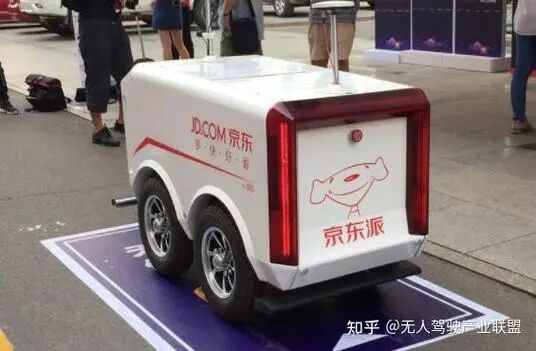
Finally, commercially, this provides a "golden scenario" for large-scale autonomous vehicle adoption.
Policy-driven concentrated consumption generates dense, predictable parcel flows—ideal for optimizing autonomous vehicle scheduling algorithms and achieving scale effects.
A successful nationwide campaign’s data value and brand demonstration effect far exceed daily scattered orders.
IV. Insights and Outlook: A "Chinese Model" of Smart Logistics Takes Shape
That evening in Wuhan, when an autonomous vehicle delivered a smartphone, it outlined several clear paths for smart logistics’ future:
1. "Collaborative evolution" will dominate.
The courier-autonomous vehicle relationship mirrors future human-machine dynamics. The technological optimum lies not in complete replacement but in leveraging human and machine strengths for "1+1>2" efficiency gains.
2. Technology’s value lies in "system service."
The pinnacle stage for autonomous driving may not be crowded urban centers but structured logistics nodes like "warehouse-to-station" or "station-to-community," where reliability is paramount. It can efficiently reinforce socioeconomic operations.
3. Policy and innovation mutually empower.
Major livelihood policies like "national subsidies" require reliable, efficient, and transparent fulfillment networks. Autonomous logistics technologies provide such safeguards while gaining valuable scaling scenarios. This forms a virtuous cycle of "policy driving technology adoption, technology ensuring policy efficacy."
Conclusion
The Autonomous Vehicle Era (WeChat: wurenchelaiye) believes:
As "national subsidy" orders surge, JD may deploy "Lone Wolf" fleets in more cities, forming a "smart warehouse—autonomous vehicle—courier" triad.
When your refrigerator, air conditioner, or new smartphone is AI-transported to your building and delivered by a familiar courier upstairs—this is the correct approach to Chinese-style smart living.
So, don’t say autonomous vehicles are far from daily life. They’ve already arrived at your residential entrance, carrying 500–11,000 yuan in national subsidies.
What do you think, dear readers?
#AutonomousVehicleEra #AutonomousDriving #SelfDriving #AutonomousVehicles
-
![]()
Net Profit Surges 13.65% Year-on-Year! Yutong Optics Reports RMB 1.782 Billion in H1 Revenue
-
![]()
Q2 Net Profit Slashes Losses by 80%! Has Costar Emerged from Its Darkest Hour?
-
AI Agents: The Paradigm Shift from 'Conversation' to 'Execution'
-
NVIDIA Takes Bold Strides to Lead in Both Hardware and Software Realms
-
![]()
It's Hard to Build Cars, Even Harder to Build Humans, and XPENG is Doing Both
-
![]()
Valuation Soars by $57 Billion: Three Entrepreneurs Born in the 1980s Forge an AI Unicorn Now Suddenly on the Market
-
![]()
How Can We Achieve the Goal of 100,000 Hydrogen Vehicles by 2030?
-
![]()
July Online Market for Consumer-Grade Sports Cameras: Robust Double-Digit Growth in Sales Volume and Value, Mid-Range Products Fuel Market Expansion