Guangdong's Kickoff Major Meeting of the Year: Targeting an Influx of 1 Million High-Caliber Talents
 02/28 2026
 668
668
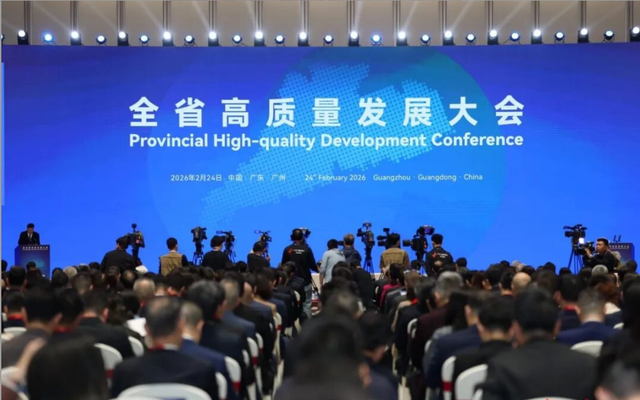
On February 24th, marking the eighth day of the Lunar New Year and the inaugural working day post-holiday, the Guangdong Provincial High-Quality Development Conference convened in Guangzhou.
Guangdong Provincial Party Secretary Huang Kunming delivered the New Year address, emphasizing, "Talent represents a priceless asset for technological and industrial innovation. We must accelerate the establishment of a premier talent hub within the Guangdong-Hong Kong-Macao Greater Bay Area and execute the 'Millions of Talents to South Guangdong' initiative to cultivate a robust and high-caliber workforce. Last year, the 'Millions of Talents to South Guangdong' program drew over 1.1 million college graduates to work and start businesses in Guangdong. Our target for this year remains above 1 million. An annual influx of 1 million high-quality talents, leveraging incremental growth to propel existing resources, will progressively optimize the population, social, and economic structures. It's foreseeable that in a decade or two, Guangdong's development landscape will undergo a dramatic transformation."
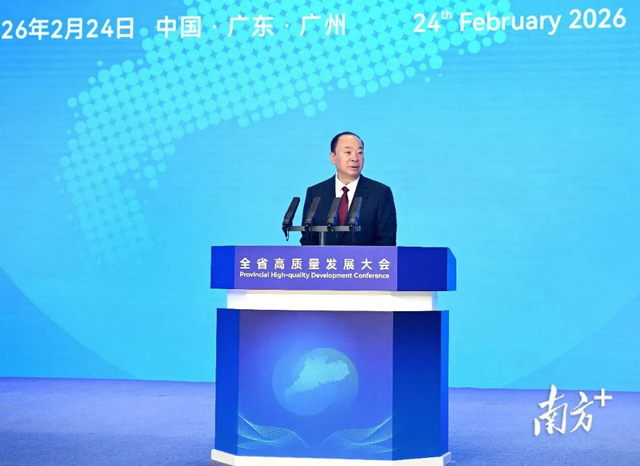
Guangdong Provincial Party Secretary Huang Kunming
The secretary's address underscored the core competitive edge of Guangdong's economy: its sizable youthful demographic. A study by Southern Finance on the population structure of the Greater Bay Area in 2023 revealed a significant surge in the "post-90s" cohort.
Over the past ten years, the "post-90s" population in the Greater Bay Area has nearly doubled. In Guangzhou, it surged from 1.48 million to 3.96 million, marking a 166% increase. Shenzhen witnessed an even more remarkable rise, from 1.05 million to 4.16 million, nearly tripling. When assessing the proportion of the population aged 25-29, Shenzhen (13.8%) and Guangzhou (12.3%) emerge as the two youngest cities in China, undeniably acting as "youth magnets." Other cities in the Greater Bay Area follow suit, boasting a significantly younger demographic compared to first-tier cities like Beijing and Shanghai.
Not resting on its laurels, Guangdong further bolstered its youth advantage by launching the "Millions of Talents to South Guangdong" campaign in 2025. This initiative hosted over 5,000 recruitment events, luring 1.1 million graduates to work in Guangdong. This signifies that out of 12.22 million fresh graduates nationwide, one in every 11 opted for Guangdong. As we step into 2026, Guangdong persists with its goal of attracting over 1 million talents through the "Millions of Talents to South Guangdong" plan.
The influx of young people from the post-90s and post-2000s generations to the Greater Bay Area primarily stems from the abundance of job opportunities and a sophisticated industrial framework.
At this year's conference, Secretary Huang Kunming specifically commended Huawei for spearheading industrial transformation and underscored the necessity to "unleash" technological innovation to propel the low-altitude economy to new heights, enable autonomous driving to hit the mainstream, and bring embodied AI into practical use. Behind the government's encouragement of these new quality productive forces lie a plethora of job opportunities tailored for the youth.
For instance, the low-altitude economy has entered a boom phase, with China's market size projected to reach 1.5 trillion yuan by 2025. As the "vanguard province in the low-altitude economy," Guangdong is home to over 15,000 related enterprises, with consumer drones commanding 70% of the global market share. This sector has given rise to numerous new professions, including drone systems engineers, low-altitude traffic controllers, drone pilots, and operations and maintenance personnel. Nationwide, there's a shortage of over 1 million drone operators alone.
With the advent of autonomous driving, companies like WeRide and Pony.ai have expanded their Robotaxi fleets to over 1,000 vehicles, ushering in the era of large-scale commercialization. Guangzhou leads the nation in open testing road mileage, with L4 vehicles approved for full-area operations. Consequently, job demand has soared in technology R&D, testing and operations, data annotation, and safety regulation. The maturity of the industrial chain has positioned intelligent driving as a frontrunner in physical AI, spawning a multitude of technical positions.
In the realm of embodied AI, Guangdong again emerges as an industry hub, with commercialization accelerating. Domestic shipments are anticipated to reach 18,000 units for the year. Capital is also pouring in, with over 50 billion yuan in financing secured in 2025, directly fueling company expansion and offering a diverse array of positions spanning the entire chain from hardware R&D, software algorithms, system integration, to application training.
Secretary Huang Kunming's speech painted a vivid picture: the government is fostering the growth of cutting-edge industries through top-tier design, and these industries serve as the ideal magnets for attracting young talent. Industry as the driving force: The low-altitude economy, autonomous driving, and embodied AI are technology-intensive and rapidly evolving fields that inherently demand a large pool of high-quality, innovative young talents. Employment as the outcome: These industries not only create R&D "gold-collar" positions but also generate a wealth of "new blue-collar" and "new white-collar" roles in technical application, operations, and maintenance, offering a rich tapestry of employment opportunities. Guangdong in action: The "Millions of Talents to South Guangdong" initiative transforms the "job growth" of industries into the "structural optimization" of talent.
In essence, behind the secretary's "mentions" and "calls" lies a seamless closed-loop logic of "developing industries—creating jobs—attracting talent—feeding back into industries." Guangdong has demonstrated through tangible actions that fostering new quality productive forces and addressing youth employment are mutually reinforcing and resonate harmoniously.
In 2026, Guangdong is poised to once again integrate 1 million graduates, who will infuse the economy with unwavering ambition, boundless vitality, and fresh perspectives, creating new products, establishing new enterprises, and injecting renewed vigor into Guangdong's economic landscape.
-
![]()
Net Profit Surges 13.65% Year-on-Year! Yutong Optics Reports RMB 1.782 Billion in H1 Revenue
-
![]()
Q2 Net Profit Slashes Losses by 80%! Has Costar Emerged from Its Darkest Hour?
-
AI Agents: The Paradigm Shift from 'Conversation' to 'Execution'
-
NVIDIA Takes Bold Strides to Lead in Both Hardware and Software Realms
-
![]()
It's Hard to Build Cars, Even Harder to Build Humans, and XPENG is Doing Both
-
![]()
Valuation Soars by $57 Billion: Three Entrepreneurs Born in the 1980s Forge an AI Unicorn Now Suddenly on the Market
-
![]()
How Can We Achieve the Goal of 100,000 Hydrogen Vehicles by 2030?
-
![]()
July Online Market for Consumer-Grade Sports Cameras: Robust Double-Digit Growth in Sales Volume and Value, Mid-Range Products Fuel Market Expansion