Over 40,000 Autonomous Vehicles in 300 Cities: The First Comprehensive Technical Standard 'General Technical Specifications for Functional Autonomous Vehicles' Marks an Industry Watershed?
 03/04 2026
 572
572
Introduction
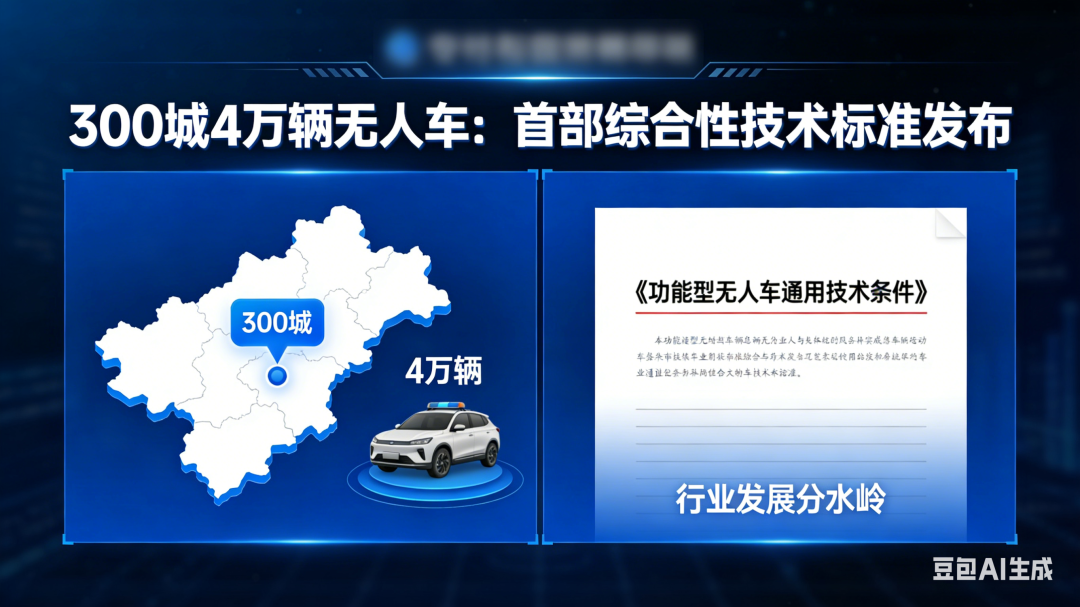
As over 40,000 functional autonomous vehicles navigate the streets of nearly 300 cities across China, a pressing question emerges: What standards should these 'steel couriers' adhere to? Who ensures their safety and reliability?
By the end of February 2026, an answer finally emerged.
Led by the Zhejiang Provincial Innovation Center for Intelligent Connected Vehicles and jointly developed by Zhejiang University, Geely Automobile (Hangzhou), and other institutions, the group standard 'General Technical Specifications for Functional Autonomous Vehicles' was officially approved and released, set to take effect on March 28.
This marks China's first comprehensive technical standard in the functional autonomous vehicle sector, signaling a 'watershed moment' for the industry's transition toward standardized development.
From today onward, autonomous vehicles are no longer rogue street wanderers without 'identification' but have become a 'regular army' with unified technical benchmarks.
Autonomous Vehicles Are Here (WeChat Official Account: Autonomous Vehicles Are Here) discusses this development with everyone!
(For further reading, click: '2025-2026 Blue Book on Unmanned Delivery Vehicle Technology Applications and Trends: Nearly 40,000 Units Shipped in 2025, with Cumulative Shipments Expected to Reach 150,000 by 2026')
I. The 'Time Lag' Between Industry Boom and Lagging Standards
Consider the data: By the end of December 2025, over 40,000 functional autonomous vehicles had been deployed in nearly 300 cities nationwide, with leading enterprises experiencing explosive tenfold growth.
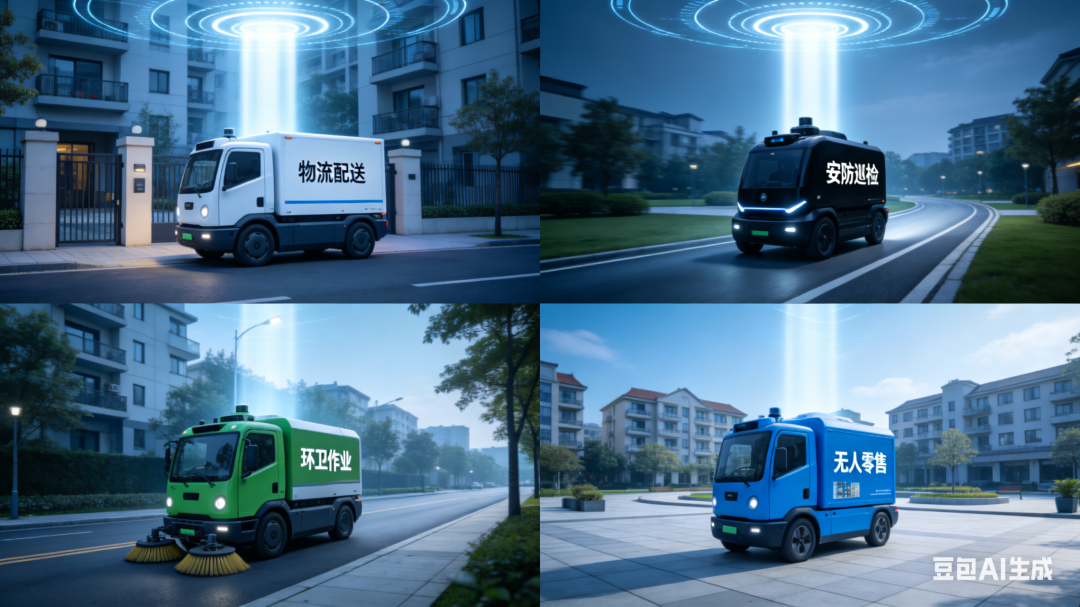
Logistics delivery, security patrols, sanitation operations, unmanned retail—these applications, once confined to demonstration zones, are now rapidly infiltrating everyday life.
But behind this high-speed expansion lie equally alarming risks.
Without unified product technical standards, enterprises' autonomous vehicles operate in isolation:
Some rely on excessive LiDAR, while others cut costs with pure vision systems;
Some cap speeds at 30 km/h, while others dare to reach 50 km/h;
Some meet braking distance standards, while others react sluggishly to emergencies.
More troublingly, local governments lack a unified 'yardstick' to assess these vehicles' safety when considering road access.
Foshan's management rules issued last year explicitly cap autonomous vehicle speeds at 45 km/h, require liability insurance of no less than RMB 3 million, and mandate 'one vehicle, one code.'
(For further reading, click: 'Guangdong Foshan Releases China's First Management Rules for Functional Autonomous Vehicles: Speed Limit of 45 km/h, Minimum Insurance of RMB 3 Million per Vehicle')
Xiamen's Jimei District requires vehicles to connect to regulatory platforms with data storage of at least one year.
The problem? Every city's standards differ, forcing enterprises to reconfigure for each new market.
This fragmented regulatory environment severely hinders industrial scalability.
A unified technical standard has become the industry's most urgent demand.
II. Filling the Void: What Does the First Standard Address?
The newly released group standard 'General Technical Specifications for Functional Autonomous Vehicles' serves as a 'prescription' for this industry pain point.
The standard systematically outlines general technical indicators, testing methods, and other content for functional autonomous vehicles, covering the entire product lifecycle from design, R&D, production, testing, and inspection. Its breakthroughs manifest in several ways:
1. Scientifically Reasonable Technical Indicators.
Based on extensive real-world testing data and industrial development status, the standard establishes a technical indicator system that aligns with current technological capabilities while remaining forward-looking.
This means compliant autonomous vehicles now have quantifiable, verifiable benchmarks for core indicators like perception distance, decision-making speed, and braking performance.
2. Highly Operational Testing Methods.
The testing methods specified in the standard have undergone multi-party validation, ensuring strong operability and repeatability for enterprise implementation and inspection agency execution.
A complete testing process has been formalized, spanning laboratories, test sites, closed roads, and open roads.
3. Comprehensive and Systematic Safety Requirements.
The standard emphasizes safety requirements for functional autonomous vehicles across multiple dimensions, including functional safety, expected functional safety, and cybersecurity.
This means autonomous vehicles must not only 'drive well' but also 'drive safely' and 'resist attacks.'
4. Balancing Compatibility and Extensibility.
While unifying basic technical conditions, the standard reserves space for technological innovation and product differentiation.
It avoids stifling innovation through 'one-size-fits-all' approaches while preventing chaos from 'fragmented standards.'
Behind this standard's release lies deep collaboration among industry, academia, research, and application sectors.
The leading unit, the Zhejiang Provincial Innovation Center for Intelligent Connected Vehicles, united top-tier institutions like Zhejiang University, automotive manufacturing leader Geely Automobile, and authoritative testing body Zhejiang Fangyuan Testing Group, pooling expertise from across the industrial chain.
III. From 'Wild Growth' to 'Orderly Evolution'
The value of standards lies not in their text but in how they transform industries.
In November 2025, the Chinese Society of Automotive Engineers (CSAE) convened the 'Symposium on Functional Autonomous Vehicle Standardization' in Beijing, gathering representatives from over 40 organizations, including Chery, Geely, JD.com, Meituan, Alibaba, Didi, Neolix, and 9D Technologies.
(For further reading, click: 'CSAE Hosts Functional Autonomous Vehicle Standardization Symposium: Attendees Include Chery, Geely, JD.com, Meituan, Alibaba, Didi, Beijing Auto Network, I-CAR Technology, Nanjing Jingweida, 9D Technologies, Neolix, Desay SV, and Others')
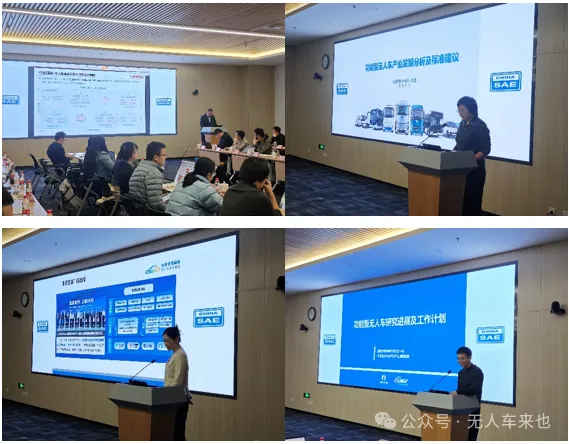
The consensus at that meeting was clear: The industry had moved beyond isolated trial phases into a new era of collaborative development.
Now, with the first standard implemented, multiple positive impacts will emerge:
1. For Enterprises: R&D Gains a 'Roadmap.'
Previously, enterprises groped in the dark, duplicating efforts on similar functions and wasting resources.
Unified standards reduce redundant investment, lower R&D costs, and accelerate product launches.
More importantly, they establish entry thresholds, enabling technically strong enterprises to stand out while exposing 'bare swimmers' relying on low-price, low-quality strategies.
2. For Governments: Regulation Gains a 'Measuring Stick.'
Local transportation authorities' biggest headache was evaluating technical parameters without clear benchmarks.
Now, with national standards (though currently group standards, they serve as benchmarks), regions can formulate implementation rules based on them, enabling more scientific and orderly road access.
Local management rules in Shenzhen, Changsha, Foshan, Xiamen, Bayannao'er, and Zibo are expected to achieve interoperability at higher levels.
3. For the Public: Roads Gain 'Trustworthy Vehicles.'
Safety is the standard's core.
When every autonomous vehicle on the road undergoes unified technical verification and emergency response plans are standardized, public trust in autonomous vehicles will surge.
The hardware store owner in Qingdao using autonomous delivery vehicles and the citizen in Foshan passing unmanned patrol vehicles will both benefit from technological inclusion.
IV. The Road Ahead After Standardization
Of course, releasing one standard is not an endpoint but a starting point.
The CSAE is already advancing follow-up work. In February 2026, it issued notices to include 'Technical Requirements and Testing Methods for Functional Autonomous Vehicles' in its 2026 'Leading Group Standards' initiative, establishing a dedicated task force to focus on technical scheme research and validation for product safety requirements.
Meanwhile, the Internet Society of China is soliciting public opinions on three group standards, including 'General Technical Requirements for Vehicle Identification and Acoustic-Optical Interaction in Low-Speed Functional Autonomous Vehicles.'
A complete standards system is taking shape. From general technical specifications to scenario-specific requirements and testing evaluation methods, the 'standard puzzle' for functional autonomous vehicles is gradually being completed.
The Zhejiang Provincial Automotive Industry Technology Innovation Association stated it will continue promoting related supporting standards, initiate technical condition standards for scenario-specific functional autonomous vehicles, study testing evaluation systems, and expand standard applications across more scenarios and fields.
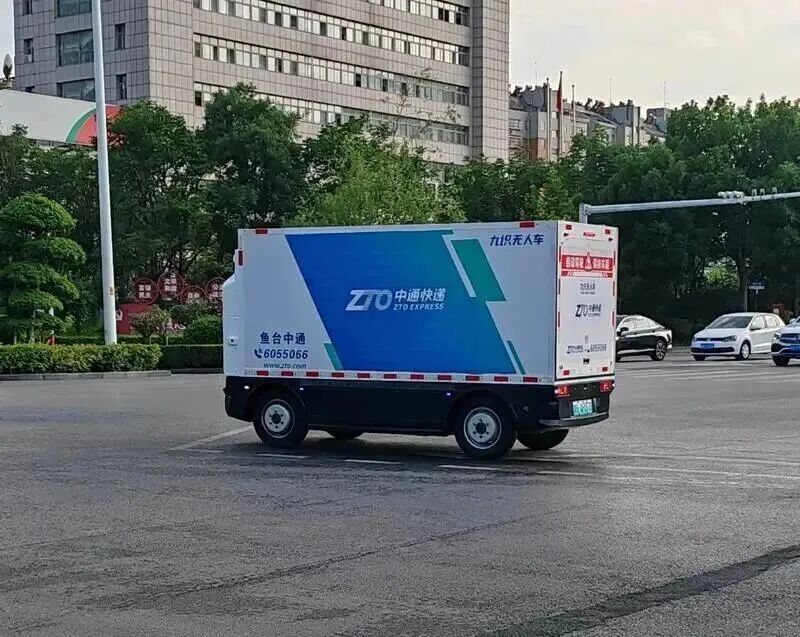
In recent years, we've witnessed countless 'highlight moments' for autonomous vehicles: Dubai's crown prince endorsing Apollo Go, postal autonomous vehicles entering Foshan's Chancheng District, Neolix reaching 100 million kilometers in mileage, and HiDi Technologies setting world records in mining applications. Yet these bright spots remained scattered 'bonsai,' unable to connect into a true 'landscape.'
The lack of standards was the deepest chasm.
Now, the release of 'General Technical Specifications for Functional Autonomous Vehicles' is bridging that gap.
In summary, Autonomous Vehicles Are Here (WeChat Official Account: Autonomous Vehicles Are Here) believes:
March 28, the day the standard takes effect, may mark the moment we truly embrace the 'era of unmanned delivery.'
What do you think, dear reader?
References: WeChat Official Account Article from Yangtze River Delta Automotive Chain Innovation Hub, 'Filling Industry Gaps! The Group Standard 'General Technical Specifications for Functional Autonomous Vehicles' Officially Released'
#AutonomousVehiclesAreHere #AutonomousDriving #SelfDriving #AutonomousVehicles
-
![]()
Net Profit Surges 13.65% Year-on-Year! Yutong Optics Reports RMB 1.782 Billion in H1 Revenue
-
![]()
Q2 Net Profit Slashes Losses by 80%! Has Costar Emerged from Its Darkest Hour?
-
AI Agents: The Paradigm Shift from 'Conversation' to 'Execution'
-
NVIDIA Takes Bold Strides to Lead in Both Hardware and Software Realms
-
![]()
It's Hard to Build Cars, Even Harder to Build Humans, and XPENG is Doing Both
-
![]()
Valuation Soars by $57 Billion: Three Entrepreneurs Born in the 1980s Forge an AI Unicorn Now Suddenly on the Market
-
![]()
How Can We Achieve the Goal of 100,000 Hydrogen Vehicles by 2030?
-
![]()
July Online Market for Consumer-Grade Sports Cameras: Robust Double-Digit Growth in Sales Volume and Value, Mid-Range Products Fuel Market Expansion