Fuzhou's Autonomous Vehicle Surge: Huarong Group Teams Up with Nine Giants Including JiuZhi, China Post, SF Express, STO, YTO, ZTO, Yunda, and JD to Lead Unmanned Delivery
 03/16 2026
 866
866
Introduction
Fuzhou is on a roll lately.
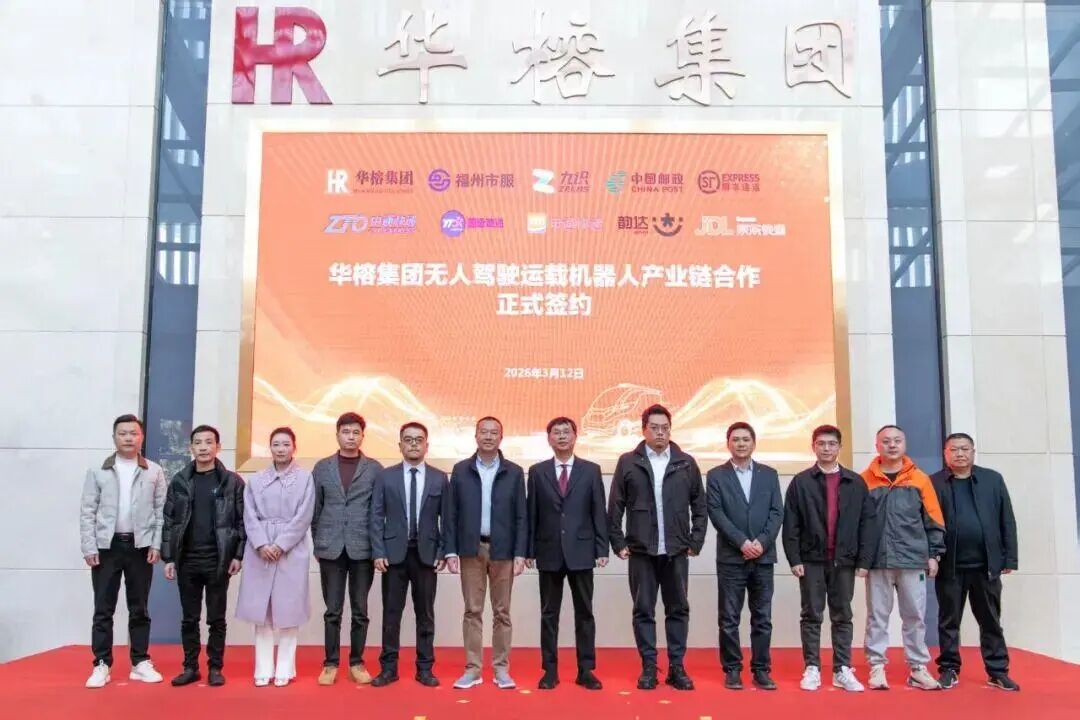
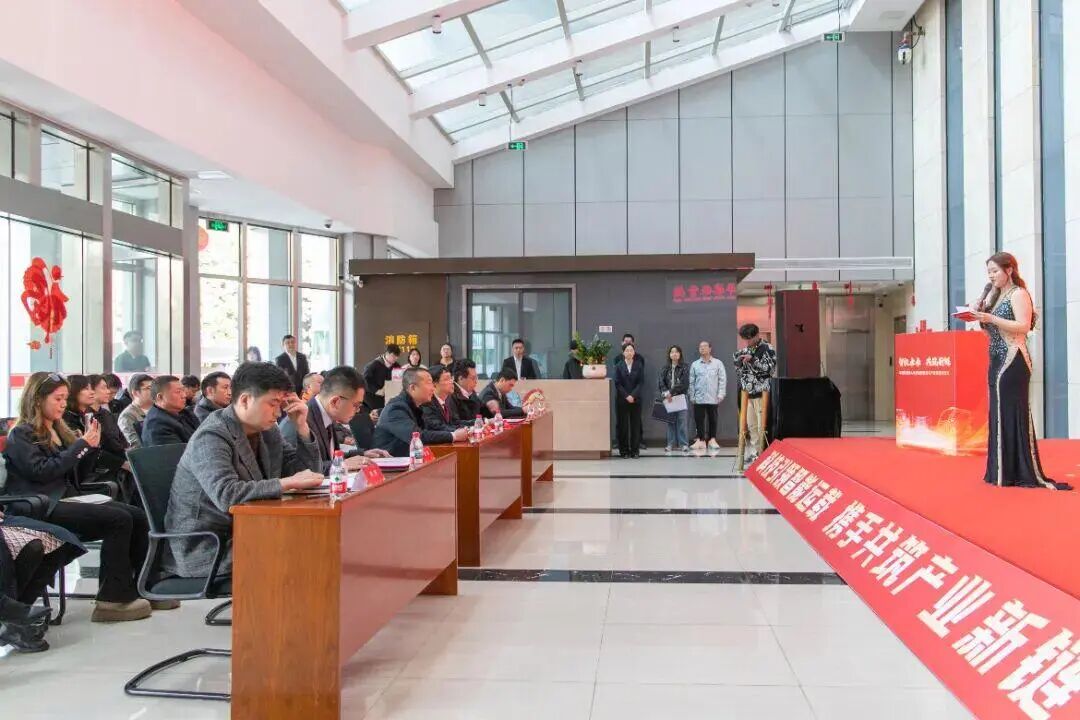
On March 12th, a signing ceremony brought together half of China's express delivery industry under one roof.
JiuZhi, China Post, SF Express, ZTO, YTO, STO, Yunda, JD, and Fuzhou Service Company—fierce competitors in the market—sat at the same table.
Signing with whom? Huarong Group.
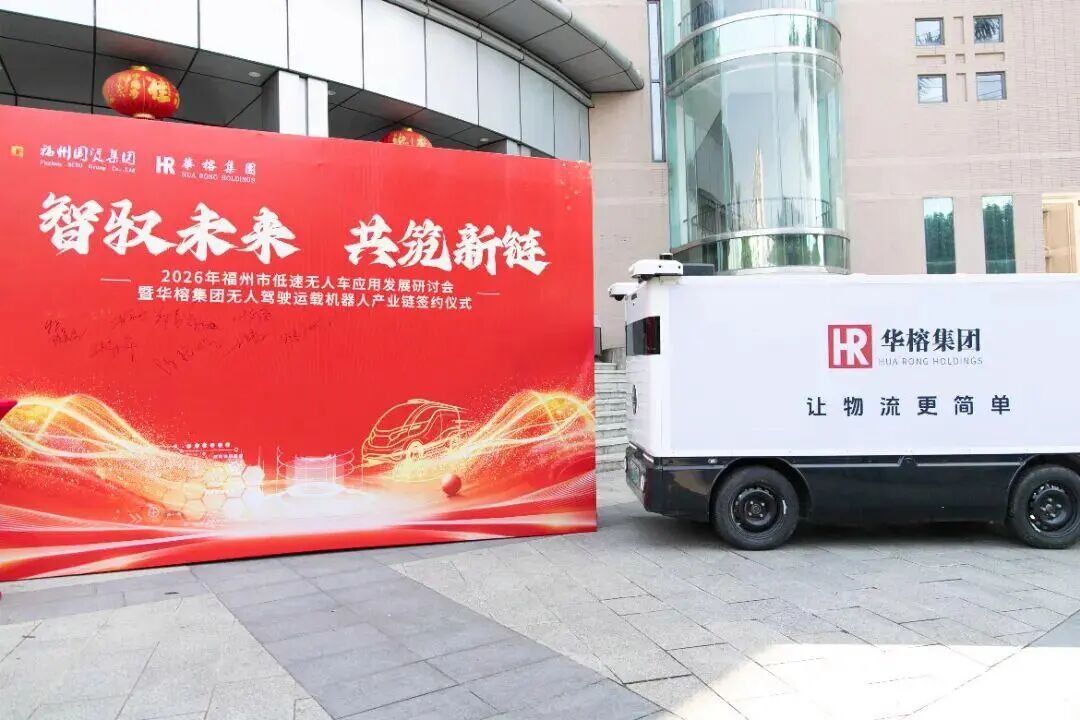
What were they signing? The autonomous driving delivery robot industrial chain.
The scene was surreal. It’s like seeing McDonald’s and KFC partner to open a store, or Meituan and Ele.me sharing a delivery station.
Something’s off—very off.
The only explanation: Someone wants to be the “general contractor.”
Let’s discuss this with Unmanned Vehicle Insights (WeChat: Autonomous vehicles have arrived )!
(For further reading, click: “Fuzhou City: China Post’s First Autonomous Vehicle Launched in Minqing County, L4 Autonomous Driving Solves the ‘Last-Mile’ Logistics Challenge in Rural Areas”)
I. From “Tournament” to “General Contracting”: Fuzhou’s Dimensional Upgrade
To understand Fuzhou’s “ambition,” let’s first examine how other leading cities operate.
Currently, three mainstream models dominate:
1. Shenzhen’s “Data-Driven” Model:
Acts like a strict “science teacher,” releasing monthly autonomous vehicle operation reports with hard data—1,158 vehicles, 2.01 million orders, 96.2% compliance rate.
Clear rules, transparent oversight, letting the market and data naturally select winners.
The logic: I build the most standardized playground; you run freely. The best performers, as shown by data, win.
2. Hefei/Changsha’s “Seed Incubation” Model:
Resembles an “angel investor,” concentrating resources on one or two local or introduced leading enterprise (leading enterprises, e.g., NIO in Hefei, HiDi Intelligent Driving in Changsha), using policies, orders, and capital to create “one city, one enterprise” industrial landmarks.
The logic: I bet you’ll become a star; you make my city famous.
3. Chengdu/Wuhan’s “Scenario Opening” Model:
Acts like an “amusement park owner,” aggressively opening test roads and creating complex scenarios to attract players nationwide for “leveling up.”
The logic: My test site is the most comprehensive and challenging. Those who graduate here can conquer the world.
Fuzhou’s model breaks free from this framework.
Unsatisfied with merely providing venues, funding, or acting as a judge, Fuzhou aims for a more central role—the “general contractor for smart city solutions.”
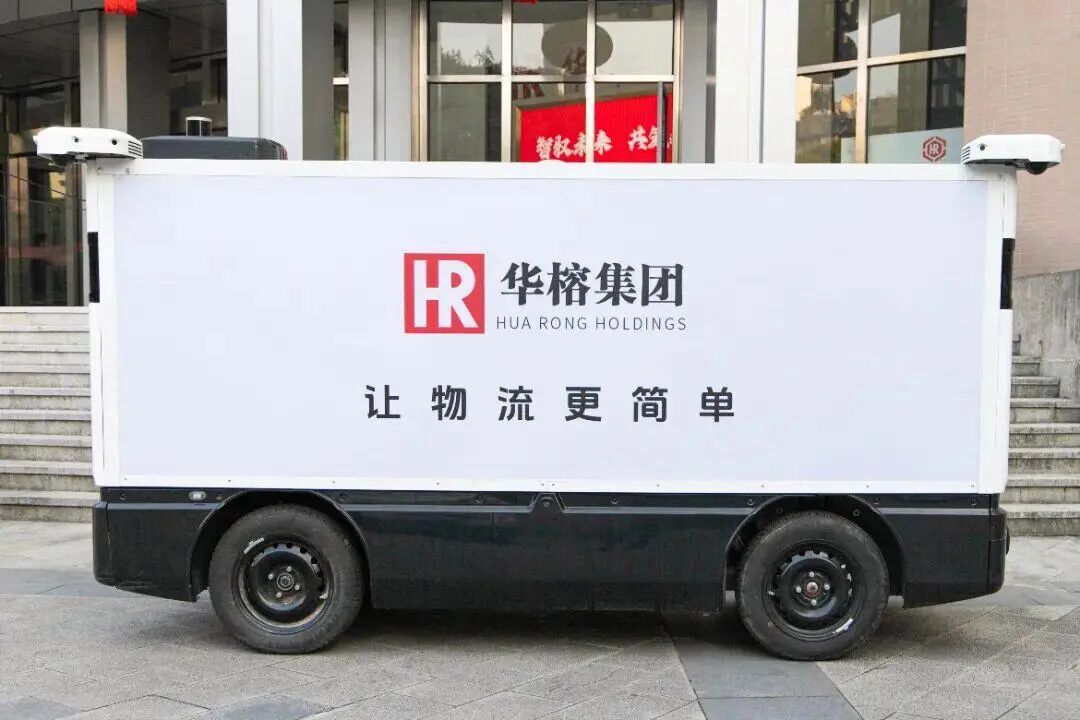
Huarong Group embodies this “general contractor.”
It handles “bidding”: Selecting global leading tech suppliers (JiuZhi Intelligence).
It “integrates client demands”: Gathering the city’s primary logistics players (seven express giants + JD + local services) into a unified interface, packaging them into a “city-level smart logistics upgrade” project.
It “manages project financing and coordination”: Backed by Fuzhou State-Owned Assets Operation Group, it explicitly uses “fund + industry” and “capital + project” models to provide full support from funding to policies.
Its “deliverable”: Not just a few vehicles, but a “Fuzhou-identifiable, replicable, and scalable low-speed autonomous vehicle industry demonstration model.”
In short, while others sell components or host single-event competitions, Fuzhou aims to export integrated “smart logistics model city” solutions.
This shift from “industry participant” to “industry architect” represents a classic dimensional upgrade.
II. Express Giants “Board the Train”: A Tacit “Cost Breakthrough Battle”
The most intriguing question: Why did fierce rivals like STO, YTO, SF Express, JD, China Post, and others peacefully gather at Fuzhou’s signing table?
This wasn’t about pleasing local government—their ledgers reveal a clear, identical “survival calculation.”
1. Labor Cost “Escape Velocity” and Spring Festival “Cardiac Arrest”:
Labor costs in express delivery are rising irreversibly, while shortages during holidays like Spring Festival nearly paralyze national networks.
Shenzhen’s February report confirmed that 1,158 autonomous vehicles handled 2.01 million orders while couriers were home for the holidays, proving machine capacity’s “ballast stone” value during crises.
(For further reading, click: “Shenzhen’s Functional Autonomous Vehicles in February: While Couriers Return Home for Spring Festival, 1,158 Vehicles Deliver 2.01 Million Holiday Packages, Compliance Rate Rises to 96.2%”)
Deploying unmanned delivery has shifted from “tech exploration” to a “strategic necessity” for network resilience.
2. “Last-Mile” Cost Black Hole and Experience Black Box:
The final leg from hubs to users accounts for nearly 30% of total costs and is riddled with uncontrollable factors (traffic, failed deliveries, complaints).
Autonomous vehicles offer a standardized, predictable, 24/7 “digital pipeline.” While current total costs may not yet undercut labor, their economics shine in night deliveries, closed campuses, and bulk transfers.
For giants, this isn’t just about cost—it’s the ultimate pursuit of service standardization and experience control.
3. Data “Oil” and Network “Mapping”:
Autonomous vehicles serve as mobile data collectors, providing real-time feedback on community traffic, delivery heatmaps, and anomalies.
This data is invaluable for optimizing routing algorithms, dynamically positioning hubs, and predicting order peaks—ultimately “reducing costs and boosting efficiency.”
Embracing autonomous vehicles means embracing a full digital and intelligent transformation of logistics networks.
4. Defensive Positioning: A “Normandy Landing” No Giant Can Miss:
In the inevitable revolution of unmanned delivery, no giant dares fall behind.
Participating in Fuzhou’s “city-level experiment” offers a low-cost, low-risk “joint drill” to observe trends, validate tech, and train teams.
It’s a “ticket” to future competitiveness that none can afford to skip.
Thus, Fuzhou’s signing table represents a “ Reaching Out to Each Other/Two-Way Efforts ” (two-way sprint) and “ Group together ” (collective embrace) between supply and demand amid survival pressures and technological dawn.
III. Why JiuZhi? Decoding the “General Contractor’s” Selection Logic
Amid fierce competition in autonomous vehicles, why did Fuzhou’s “general contractor,” Huarong Group, choose JiuZhi Intelligence as its technical advisor?
Behind this lies a shrewd “selection logic.”
1. “National Team” Endorsement:
JiuZhi won China Post’s 7,000-vehicle lease order—the industry’s largest ever.
China Post represents the most traditional, rigorous, and safety-conscious “national team” demands.
Earning its approval means JiuZhi’s product reliability, large-scale operational capability, and cost control passed the strictest “stress test.”
For Fuzhou aiming to build a “city model,” this endorsement is more valuable than any tech demo.
2. “Ecosystem Fusion” Rarity:
JiuZhi’s deep strategic integration with Cainiao (Cainiao’s autonomous vehicle business merged in, Alibaba-backed capital invested) means it’s not just a hardware company.
It’s backed by China’s largest e-commerce logistics ecosystem and data capabilities, giving it the DNA to seamlessly connect with complex commercial systems (orders, warehousing, payments).
Fuzhou wants more than running vehicles—it wants a “system” integrated into the city’s logistics lifeblood. JiuZhi occupies this niche almost uniquely.
3. Full-Scenario Product Matrix and Scale Delivery Capacity:
From small delivery vans to large transfer trucks, JiuZhi covers the entire “warehouse-transfer-delivery” chain.
This aligns perfectly with Fuzhou’s need to serve diverse scenarios for multiple express companies (courier cabinet replenishment, station transfers, large warehouse allocations).
Meanwhile, fulfilling a 7,000-vehicle order proves its supply chain and scale delivery capabilities—key to rapidly expanding from “pilot” to “scale.”
Choosing JiuZhi means Fuzhou selected a “top-tier ally” with “state-owned enterprise trust, giant ecosystem, full-scenario products, and large-scale delivery” attributes at project launch, minimizing technical risks and implementation uncertainties for the “general project.”
IV. From Fuzhou to Nation: An Autonomous Vehicle’s Ambitious Future
Fuzhou’s “ten-party signing” has thundered across China’s autonomous driving commercialization landscape.
It signifies a shift from individual firms’ “tech breakthroughs” and “scenario positioning” to city-level entities’ “ecosystem construction” and “complex system delivery” competitions.
While Shenzhen defines “operational norms” through data reports, Fuzhou seeks to define “industrial paradigms” through ecological contracts.
Its ambition: To output a complete manual titled “How to Build a Smart Logistics Model City from Scratch.”
This manual isn’t just about technical specs—it’s about balancing interests, setting standards, and creating sustainable business models.
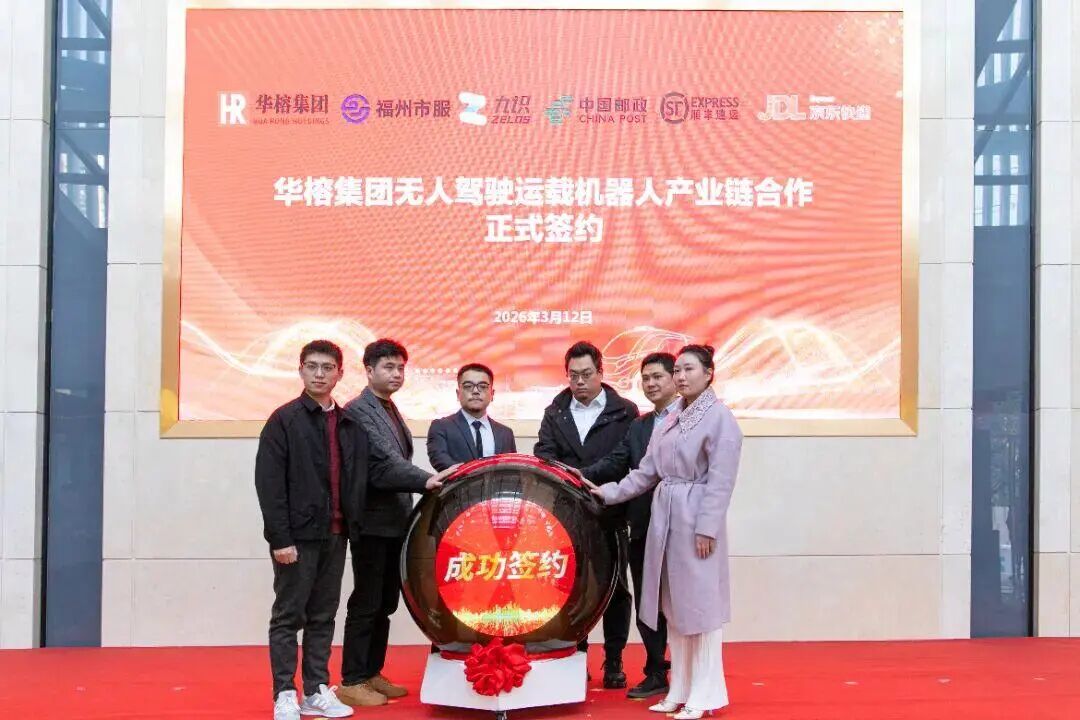
When Huarong Group shook hands with the nine giants, they signed not just a cooperation agreement—but a “ticket to the future.”
Unmanned logistics vehicles may be this era’s most cost-effective “productivity tools”—they need no social security, never resign, operate 24/7, recoup costs in 14 months, and work steadily in rain or darkness.
The endgame of unmanned delivery may not be a single company dominating the world, but several mature “smart logistics operating systems” defined by different cities coexisting.
Fuzhou is betting on becoming the originator and definer of one such “system.”
This “general contractor” experiment, regardless of success, has pushed China’s smart city competition to a deeper, more thrilling new level.
In short, Unmanned Vehicle Insights (WeChat: Autonomous vehicles have arrived ) argues:
In the past decade, autonomous vehicles competed on algorithms, LiDAR, and compute chips;
In the next decade, the race will be about aligning governments, enterprises, communities, and citizens.
Fuzhou’s brilliant move: Not waiting for perfect tech, but building collaboration mechanisms first;
Not aiming for one-step perfection, but rapid iteration.
While other cities debate “whether to allow autonomous vehicles on roads,” Fuzhou has JiuZhi’s vehicles running, JD’s goods delivered, and citizens’ packages arriving on time.
What do you think, dear reader?
Reference: Fujian Daily “Major Signing! Fuzhou’s ‘Autonomous Vehicle’ Progress Aids the ‘Last-Mile’!”
#UnmannedVehicleInsights #AutonomousDriving #SelfDriving #AutonomousVehicles
-
![]()
Net Profit Surges 13.65% Year-on-Year! Yutong Optics Reports RMB 1.782 Billion in H1 Revenue
-
![]()
Q2 Net Profit Slashes Losses by 80%! Has Costar Emerged from Its Darkest Hour?
-
AI Agents: The Paradigm Shift from 'Conversation' to 'Execution'
-
NVIDIA Takes Bold Strides to Lead in Both Hardware and Software Realms
-
![]()
It's Hard to Build Cars, Even Harder to Build Humans, and XPENG is Doing Both
-
![]()
Valuation Soars by $57 Billion: Three Entrepreneurs Born in the 1980s Forge an AI Unicorn Now Suddenly on the Market
-
![]()
How Can We Achieve the Goal of 100,000 Hydrogen Vehicles by 2030?
-
![]()
July Online Market for Consumer-Grade Sports Cameras: Robust Double-Digit Growth in Sales Volume and Value, Mid-Range Products Fuel Market Expansion