No Need to Swipe Cards or Make Reservations: Three QCraft Autonomous Minibuses in Hangzhou Hold the Key to the Future of Travel
 03/17 2026
 772
772
Introduction
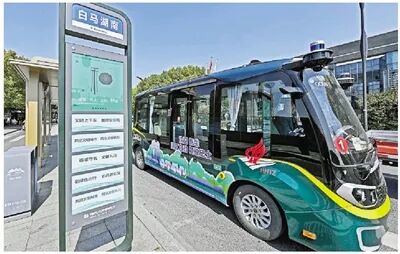
In March, Hangzhou is abloom with spring flowers. Along the shores of Baima Lake in Binjiang, three dark green autonomous minibuses have quietly become a street attraction.
The vehicles are compact, adorned with an icon of the 'Grand Lotus' and the welcoming words 'Welcome aboard the Binjiang Autonomous Bus' prominently displayed on their bodies.
Since opening for manned trial rides on February 10, this intelligent loop on the 'Binjiang Baima Lake Line' has served over 300 passengers, consistently maintaining a record of 'zero accidents, zero violations.'
The WeChat official account 'Autonomous Vehicles Are Here' believes that as the steering wheel turns by itself and the brakes and accelerator operate autonomously, this self-driving minibus is quietly rewriting our vision of public transportation.
(For further reading, please click: 'Caocao Mobility: 100 Autonomous Taxis Arrive in Hangzhou! Driverless Tech Unveils a 'Three-Step' Strategy! Geely's Robotaxi '2.0' and 'Access Island' Ambitions')
I. A Steady 40-Minute Ride Transforms Commuting
At 4 p.m., Exit D of Jucai Road Subway Station.
Passengers board the autonomous minibus, greeted warmly by Safety Officer Gong: 'We haven't been in formal operation for long, but we've already had quite a few riders.'
The 8.6-kilometer route connects four stops: Baima Lake South Station, Baima Lake North Station, Exit D of Jucai Road Subway Station, and Binjiang Road & Changjiang Road Intersection Station.
Operating daily from 8:30 a.m. to 6:30 p.m., three vehicles shuttle back and forth along this loop, taking approximately 40 minutes for a full round trip and completing eight to nine trips per day.
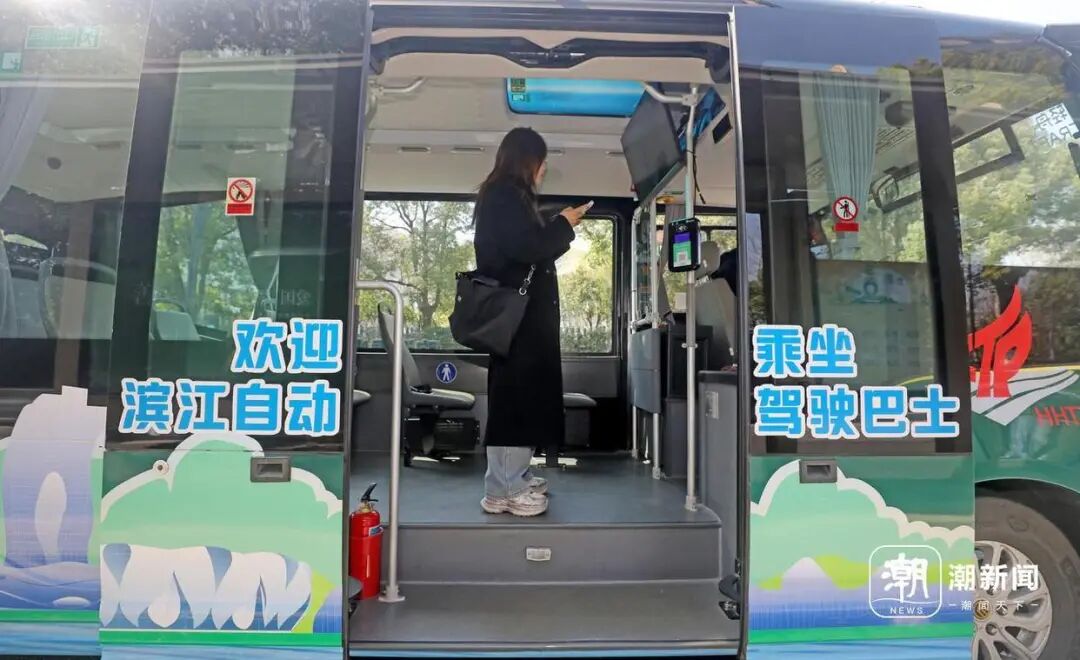
The speed is moderate, typically capped at around 30 km/h—to ensure maximum safety.
Yet this 'slowness' has become a virtue in passengers' eyes.
At 5 p.m., Ms. Li, a regular rider boarding at Baima Lake South Station, shares: 'It follows the same route as Bus 522. I take it to Jucai Road and then transfer to the subway—it's incredibly convenient. While it's not as fast as a regular bus, it's exceptionally smooth and comfortable, especially for the evening commute.'
The most amusing moment involves an elderly couple who traveled specifically from Xiasha. Mr. Quan, watching the steering wheel turn autonomously, gives a thumbs-up: 'My wife saw this new technology and insisted we come experience it. It's truly impressive—I just wonder when it'll reach our neighborhood.'
In just one month, this route has transformed from a 'must-visit attraction' to a 'daily commute.'
II. 8,000 Kilometers of 'Empty Runs' for Peace of Mind
Naturally, many wonder: Is this vehicle safe?
The route operator provides compelling data: 'We began unmanned debugging in October last year, accumulating over 8,000 kilometers and 488 hours of safe operation before officially carrying passengers.'
Since opening for manned trials on February 10, it has maintained a perfect record of 'zero accidents, zero violations.'
The system is described by the operator as 'a versatile professional driver'—capable of fully autonomous driving within its designated operational domain without any human intervention.
Whether a vehicle passes by on the side or a pedestrian walks ahead, the system proactively adjusts speed and smoothly yields.
Safety Officer Gong jokes: 'Better to yield three seconds than rush one.'
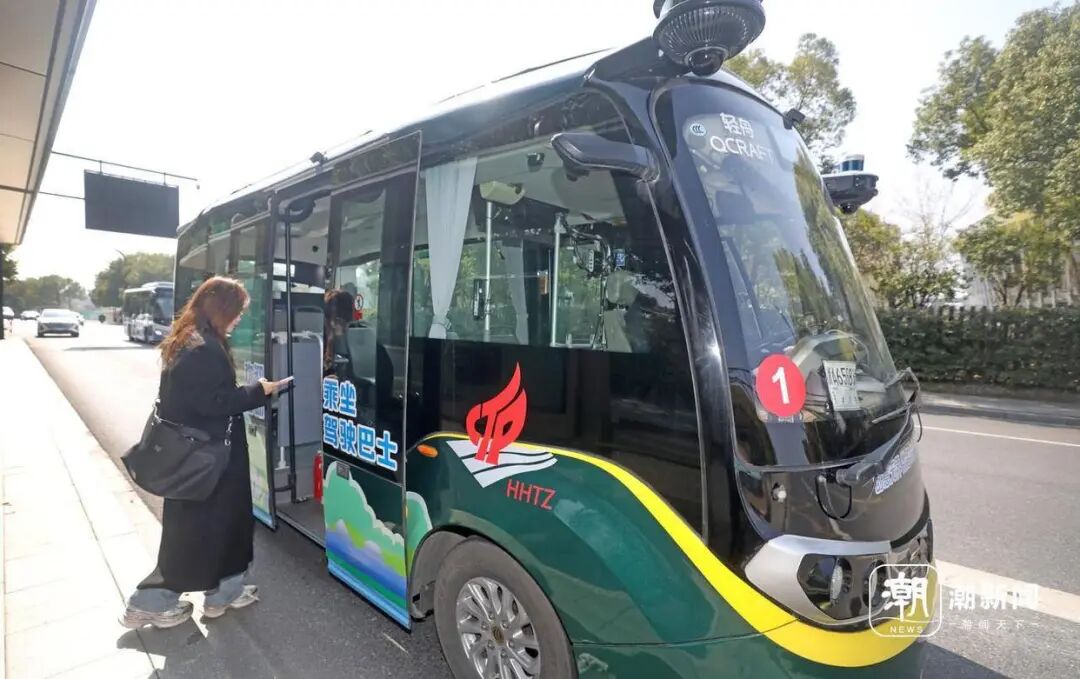
This principle was tested at Baima Lake South Station: as the minibus approached the platform, a series of private vehicles passed by. The minibus remained stationary until all had cleared before proceeding.
Behind this 'steadiness' lies stringent regulatory standards.
In 2025, Hangzhou's draft regulations specified:
For L4-level road testing, vehicles must complete at least 1,000 kilometers and 240 hours of single-vehicle testing with a safety officer on board, without any safety incidents caused by the vehicle.
Binjiang's 488 hours and 8,000 kilometers far exceed these requirements.
III. Safety Officers: From 'Drivers' to 'Guardians'
Inside the cabin, nine seats are neatly arranged, each equipped with a seatbelt.
A safety officer sits at the driver's seat—hands resting on their lap, feet off the pedals, but eyes constantly scanning the road.
Mr. Gong was among the first safety officers for this route.
Recalling his selection process, he smiles and uses four words: 'Fierce competition.'
The requirements were strict: a high-grade driver's license and preference for those with experience operating intelligent vehicles.
Having previously driven intelligent street sweepers, Mr. Gong was lucky to be chosen.
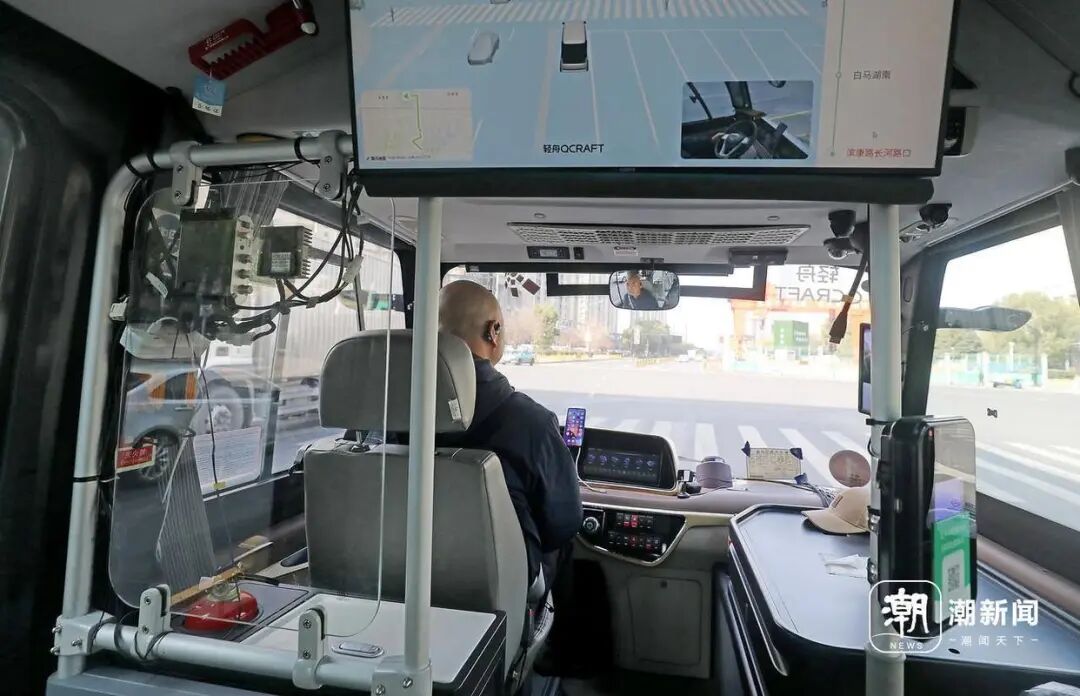
Each autonomous minibus is staffed by a safety officer to handle emergencies.
In Hangzhou, roles like Mr. Gong's are emerging as a new profession.
Job postings show that autonomous road test safety officers earn around 7,200 yuan monthly, requiring a C1 license or higher, at least three years of continuous driving experience, no major accident records, and even specific requirements for vision, blood pressure, and ECG results.
Their role is no longer 'driving' but 'guarding'—intervening promptly in emergencies to ensure safety.
This represents a professional transformation: from 'gripping the steering wheel' to 'observing all directions,' from 'operator' to 'monitor.' Technology liberates humans from repetitive labor, elevating them to a higher vantage point.
IV. From 'Novelty' to 'New Normal'
The launch of the 'Binjiang Baima Lake Line' is not an isolated case.
In May 2025, two autonomous bus routes in Xiasha, Hangzhou, already gained popularity.
At Hangzhou Medical Port Town, resident Mr. He remarked after his ride: 'It's much more comfortable—no sudden braking or acceleration.'
Those vehicles were equipped with four LiDAR sensors, two millimeter-wave radars, and seven high-dynamic-range camera modules, enabling them to detect e-bikes and pedestrians in advance, slowing down smoothly to avoid abrupt stops.
What makes Binjiang's route unique is its accessibility: no reservations or card swiping required—it truly integrates into the city's public transportation network.
As revealed by officials from the Baima Lake Creative City Management Committee, operational scope will gradually expand based on passenger demand, with more vehicles added to further enhance regional bus coverage.
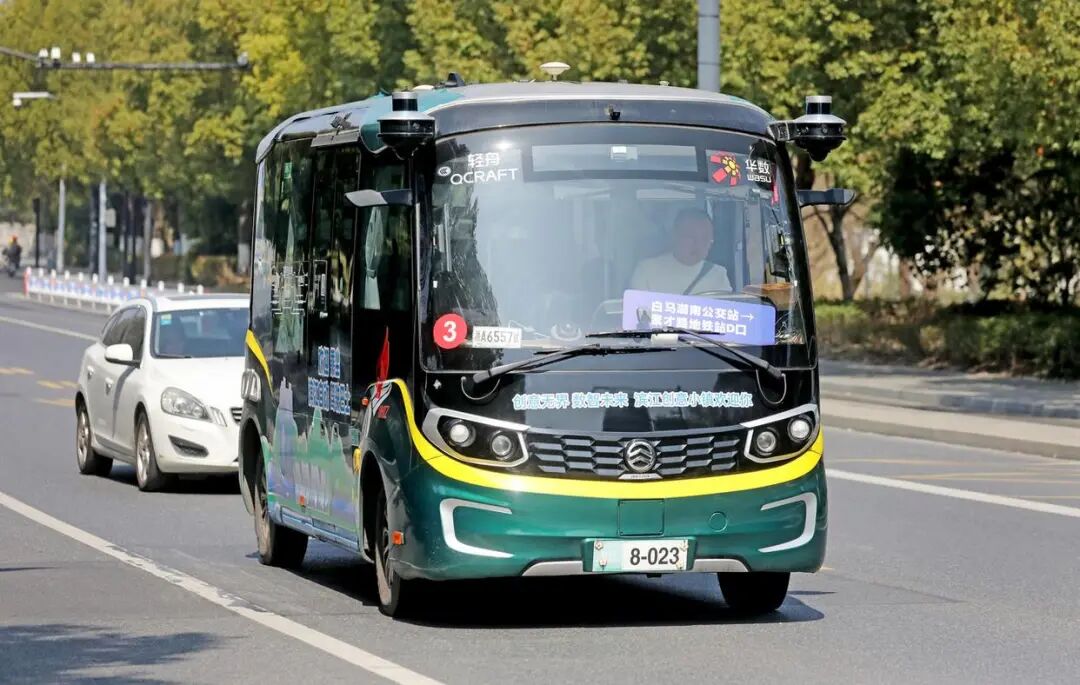
As a digital economy hub, Binjiang is accelerating the development of an autonomous driving ecosystem.
From driverless buses to intelligent passenger vehicles, more 'smart cars' are blending into the urban fabric. Hangzhou's exploration is making technology truly serve people's daily travel needs.
In conclusion, the WeChat official account 'Autonomous Vehicles Are Here' argues:
From Xiasha to Binjiang, from reservation-based trials to spontaneous rides, every step of autonomous bus development in Hangzhou answers the same question: How can technology be seamlessly adopted by ordinary people?
The answer may lie in the trajectory of that dark green minibus—
It doesn't Pursuing flashy skills (seek flashy tricks) but prioritizes stability;
It doesn't attempt to replace humans but elevates them to a higher role;
It doesn't alter passenger habits but quietly integrates into their daily lives.
What do you think?
#AutonomousVehiclesAreHere #DriverlessTech #AutonomousDriving #SelfDrivingCars
-
![]()
Net Profit Surges 13.65% Year-on-Year! Yutong Optics Reports RMB 1.782 Billion in H1 Revenue
-
![]()
Q2 Net Profit Slashes Losses by 80%! Has Costar Emerged from Its Darkest Hour?
-
AI Agents: The Paradigm Shift from 'Conversation' to 'Execution'
-
NVIDIA Takes Bold Strides to Lead in Both Hardware and Software Realms
-
![]()
It's Hard to Build Cars, Even Harder to Build Humans, and XPENG is Doing Both
-
![]()
Valuation Soars by $57 Billion: Three Entrepreneurs Born in the 1980s Forge an AI Unicorn Now Suddenly on the Market
-
![]()
How Can We Achieve the Goal of 100,000 Hydrogen Vehicles by 2030?
-
![]()
July Online Market for Consumer-Grade Sports Cameras: Robust Double-Digit Growth in Sales Volume and Value, Mid-Range Products Fuel Market Expansion