Shenzhen's 'Autonomous Driving Safety Lab' Sets Sail: As Tesla, Huawei, Geely, Baidu, 9A Technologies, and Neolix Lead the Way in Autonomous Driving, the Special Economic Zone Equips Self-Driving Vehi
 03/18 2026
 618
618
Introduction
Recently, Shenzhen quietly accomplished something major: it held a meeting—the inaugural session for the first batch of research projects at the Shenzhen Autonomous Driving Safety Lab.
It sounds a bit official, a bit serious, and perhaps even a bit dry.
But upon closer inspection, this is no ordinary lab project. It's essentially installing an 'airbag system' for the rapidly advancing autonomous driving industry.
In January 2026, Shenzhen established the 'Autonomous Driving Safety Lab.' By March, its members had already identified five core research directions and officially commenced work on the first batch of projects.
Why is this worth highlighting?
Because the autonomous driving industry is currently at a delicate juncture: Tesla's FSD is undergoing domestic testing, while Huawei, Baidu, Didi, 9A Technologies, and Neolix are aggressively expanding their market presence. By February, 1,158 self-driving vehicles were already navigating Shenzhen's streets, delivering 2.01 million packages and fresh goods.
The five research directions unveiled by Shenzhen's 'Autonomous Driving Safety Lab' act like five locks, directly addressing safety concerns.
Let's discuss this further with 'Self-Driving Vehicles Are Here' (WeChat Official Account: Self-Driving Vehicles Are Here)!
(For further reading, please click: 'Shenzhen Autonomous Driving Safety Lab Research Project Launch Meeting Held Successfully: Five Directions to Build an Autonomous Driving Safety System')
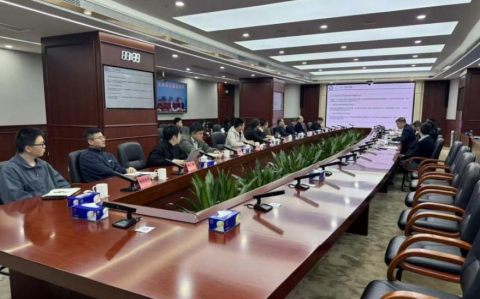
I. Issuing a 'Driver's License' for Autonomous Driving: A Multi-Dimensional Safety Evaluation System Sets Thresholds for On-Road Operation
The first project sounds fundamental but is actually critical: establishing a multi-dimensional safety evaluation system.
Many people assume autonomous driving safety simply means 'avoiding collisions.'
But reality is far more complex—what types of vehicles are allowed on the road? What metrics must they meet before approval? How will they be continuously monitored during operation? How can issues be traced back afterward?
Without clarity on these questions, 'large-scale commercialization' remains a pipe dream.
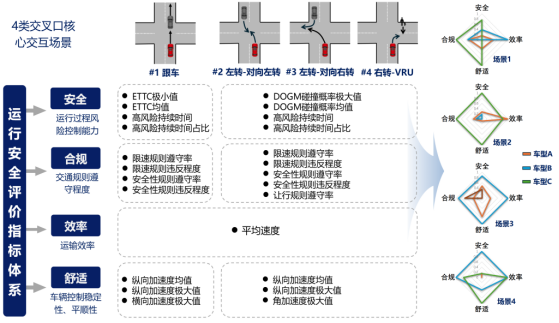
Shenzhen's approach: regulating safety thresholds for vehicle on-road approval from the source.
For different types of carriers, such as intelligent connected vehicles and functional autonomous vehicles, safety operation evaluation standards covering multiple vehicle models will be established.
Simultaneously, specialized safety system research will be conducted on pre-approval access, in-operation monitoring, and post-incident traceability, focusing on the operational characteristics of functional autonomous vehicles.
Think of it like issuing a 'driver's license' for autonomous vehicles. Previously, anyone could try operating on the roads; now, they must pass equivalent of 'written tests,' 'road tests,' and 'practical exams.'
Moreover, this license isn't lifelong—vehicles will be continuously monitored by 'electronic eyes' on the road, with traceability and accountability in case of incidents.
This reflects Shenzhen's clear understanding: the key to integrating autonomous driving into daily life isn't showcasing technology but establishing norms.
Only by setting thresholds and defining standards can truly technologically capable enterprises stand out, while opportunistic players naturally exit the market.
II. No More Blame-Shifting After Accidents: Data Forensics + Insurance Mechanisms Ensure Streamlined Claims Processing
The second project tackles the industry's most sensitive pain point: what happens after an accident?—building an autonomous driving insurance guarantee system.
Autonomous driving accidents present a unique challenge: whoever controls the data holds the power.
Traditional traffic accidents can be investigated through on-site inspections, surveillance footage, and witness testimonies. However, the 'primary scene' of an autonomous driving accident lies in the black box's code.
Since automakers write the code and store the data, how is liability determined? How do insurers process claims?
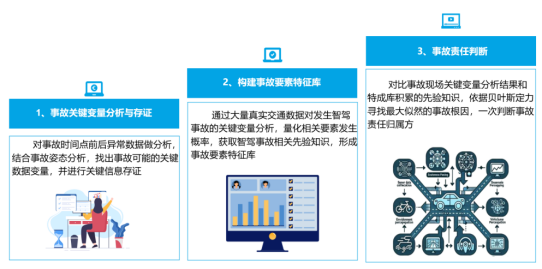
Shenzhen's solution: establishing a dedicated data forensics and accident liability determination system, along with developing insurance products tailored to the autonomous driving industry.
In simpler terms, this creates a 'technology + insurance' safety risk-sharing mechanism.
Data forensics addresses the question of 'where is the evidence?' to ensure liability determination has a basis after accidents.
Insurance products resolve 'how compensation is handled,' enabling timely payouts for victims and preventing companies from being crippled by a single incident.
This draws inspiration from the aviation industry's black box logic—not to prevent accidents but to understand 'why they happened' afterward and avoid repetition.
Shenzhen takes this logic a step further by integrating insurance mechanisms, forming a closed loop.
Imagine a future scenario where a self-driving vehicle is involved in a minor collision:
The vehicle automatically uploads data to the forensics platform, which swiftly analyzes liability. The insurance system triggers automatic claims processing—no arguments, no disputes, no waiting for traffic police.
This is what technology should achieve—not eliminating errors but providing dignified, efficient solutions when they occur.
III. From 'Anxiety' to 'Confident Operation': A Tripartite System Clears Obstacles for Large-Scale Deployment
The third project directly addresses the core concern of transitioning autonomous driving from testing to commercialization: how to ensure operational safety?—building a 'technology + management + collaboration' tripartite safety operations system.
Currently, autonomous vehicles face far more than just 'slow operation' issues in real-world scenarios—they encounter deeper systemic risks:
Inadequate environmental adaptability: System decision stability is questionable in complex road conditions, severe weather, or unexpected scenarios.
Difficulty in defining accident liability: When collisions occur, it's unclear whether the cause lies in algorithms, human factors, or roadside conditions.
Lack of emergency response mechanisms: Who handles vehicle malfunctions, network disruptions, or failed remote takeovers? What procedures are followed? No closed-loop system exists yet.
Without resolving these pain points, large-scale operations will always be hindered by risks.
Shenzhen's solution: moving beyond passive defense to construct a proactive 'technology + management + collaboration' tripartite safety operations system. The core innovations focus on two areas—hierarchical classification management and cross-departmental collaboration mechanisms.
First, hierarchical classification.
Not all faults or risks warrant the same 'emergency brake' response. Shenzhen's approach: based on traditional traffic safety management frameworks, it designs differentiated hierarchical disposal procedures combining autonomous driving system faults and human interference at varying safety levels.
In simpler terms:
Mild anomalies and severe faults require entirely different handling—the former might involve speed reduction and monitoring with reminders for takeover; the latter demands backend intervention, remote vehicle control, and simultaneous alerts. Different levels match different procedures, maintaining safety baselines while avoiding efficiency losses from 'one-size-fits-all' approaches.
Next, cross-departmental collaboration.
Safety operations for autonomous driving cannot be managed by enterprises alone. Shenzhen promotes information sharing and emergency collaboration mechanisms with traffic police departments, transportation bureaus, insurance agencies, and technology suppliers.
In simpler terms: when issues arise on the roads, operational parties no longer 'go it alone.'
Who handles on-site disposal? Who provides data traceability? Who follows up on liability determination and damage assessment? All parties collaborate comprehensively, minimizing 'blame-shifting time' and maximizing emergency response speed.
The ultimate goal of this system is singular: enabling autonomous driving to shift from 'cautious operation' to 'confident operation.'
When safety operations cease being a 'major headache' for enterprises and instead become a hierarchical, orderly institutional arrangement providing support, large-scale deployment gains a solid foundation.
The model Shenzhen pioneers could serve as a 'safety operations showcase,' with standardized processes and interfaces exportable to other cities—eliminating the need for them to start from scratch.
IV. Ending Public Fear of Autonomous Driving: Public Opinion Response and Safety Assurance in Complex Environments
The fourth project might be the most easily overlooked but tests governance wisdom the most: how to enhance public trust in autonomous driving?
Currently, autonomous driving practitioners often remain entrenched in their own circles, celebrating technical breakthroughs and mileage records.
But what about ordinary people?
Seeing a driverless vehicle pass by typically triggers tension, suspicion, or even fear. When a video of an autonomous driving accident surfaces online, comment sections erupt—'Who would dare ride in these things?'
This distrust stems not from technical issues but from communication and psychological factors. Yet its impact on the industry could be more damaging than technical bottlenecks.
Shenzhen's strategy involves a two-pronged approach:
One leg focuses on technology. It addresses safety pain points for intelligent connected vehicles operating in complex mixed environments by constructing a proactive safety assurance system based on real-world testing data. Simply put, it aims to make autonomous vehicles operate more stably and predictably in urban settings, proving 'we can do it' through action.
The other leg focuses on public opinion. It conducts research on online public sentiment toward the autonomous driving industry and establishes mechanisms for rapid information collection and efficient response to address societal concerns promptly. In simpler terms: when issues arise, don't hide—step forward immediately, clarify facts, and explain responsibilities.
This approach demonstrates clarity.
In the information age, vacuums of truth will inevitably be filled by rumors. Rather than fighting fires after public opinion festers, proactively establishing response mechanisms allows the public to gradually build trust through repeated open, transparent communications.
V. Bringing Autonomous Driving to Campuses and Communities: Multi-Scenario Safety Applications Benefit Citizens
The fifth project is the most relatable: expanding multi-scenario safety applications to make intelligent mobility accessible to more citizens.
The previous four projects focus on solidifying safety foundations. However, safety isn't the end goal—it enables more people to enjoy technological conveniences.
Shenzhen explicitly highlights two key scenarios: public transportation and campuses.
For public transportation, research focuses on integrating intelligent connected vehicles with existing traffic systems. Simply put, it explores how self-driving buses, taxis, and regular buses, private cars, and pedestrians can coexist harmoniously without conflicts or congestion.
The campus scenario is even more exciting. Imagine autonomous shuttles operating on university campuses, autonomous patrol vehicles safeguarding primary and secondary school gates—children commuting more safely, parents worrying less. This embodies the warmth technology should offer.
Shenzhen's goal is clear: promoting safe deployment of autonomous driving in more citizen-centric scenarios, transforming intelligent mobility from a novelty for a few into an everyday choice for many.
VI. Conclusion: Safety Isn't a Brake—It's the Accelerator
Reviewing these five directions reveals a common theme: Shenzhen is elevating autonomous driving safety from a 'technical issue' to a 'systemic issue.'
Previously, discussions on autonomous driving safety often focused on algorithm accuracy or sensor sensitivity.
However, Shenzhen's proposed solutions cover access standards, accident traceability, insurance mechanisms, operational management, public opinion response, and scenario deployment—essentially framing nearly every issue a self-driving vehicle might encounter on the road within a systematic framework.
This sends a crucial signal: the true bottleneck for large-scale commercialization of autonomous driving may not lie in the technology itself but in whether the 'social infrastructure' supporting it is adequately developed.
Will consumers feel confident riding in these vehicles? Will insurers dare to provide coverage? Will regulatory bodies feel comfortable granting approvals? Will public opinion accept them? The answers to these questions will ultimately determine how fast and how far autonomous driving can go.
From this perspective, the value of Shenzhen's lab rivals that of any technological breakthrough.
Because what it's doing is installing a 'safety foundation' for the entire industry. With this foundation, autonomous driving can transform from a 'toy' into a 'tool,' from 'pilot projects' into 'daily realities.'
In summary, 'Self-Driving Vehicles Are Here' (WeChat Official Account: Self-Driving Vehicles Are Here) believes:
To paraphrase an old saying: safety isn't the brake on development—it's the accelerator.
Only by prioritizing safety can autonomous driving truly unleash its potential and achieve the speeds of the future.
What do you think?
#SelfDrivingVehiclesAreHere #AutonomousDriving #SelfDrivingCars #AutonomousVehicles
-
![]()
Net Profit Surges 13.65% Year-on-Year! Yutong Optics Reports RMB 1.782 Billion in H1 Revenue
-
![]()
Q2 Net Profit Slashes Losses by 80%! Has Costar Emerged from Its Darkest Hour?
-
AI Agents: The Paradigm Shift from 'Conversation' to 'Execution'
-
NVIDIA Takes Bold Strides to Lead in Both Hardware and Software Realms
-
![]()
It's Hard to Build Cars, Even Harder to Build Humans, and XPENG is Doing Both
-
![]()
Valuation Soars by $57 Billion: Three Entrepreneurs Born in the 1980s Forge an AI Unicorn Now Suddenly on the Market
-
![]()
How Can We Achieve the Goal of 100,000 Hydrogen Vehicles by 2030?
-
![]()
July Online Market for Consumer-Grade Sports Cameras: Robust Double-Digit Growth in Sales Volume and Value, Mid-Range Products Fuel Market Expansion