Self-Driving Vehicles Surge Forward, but Regulatory Frameworks Must Keep Pace: Analyzing Nantong City, Jiangsu Province's Move to 'Establish Rules' for 300 Express Delivery Self-Driving Vehicles
 03/18 2026
 714
714
Introduction
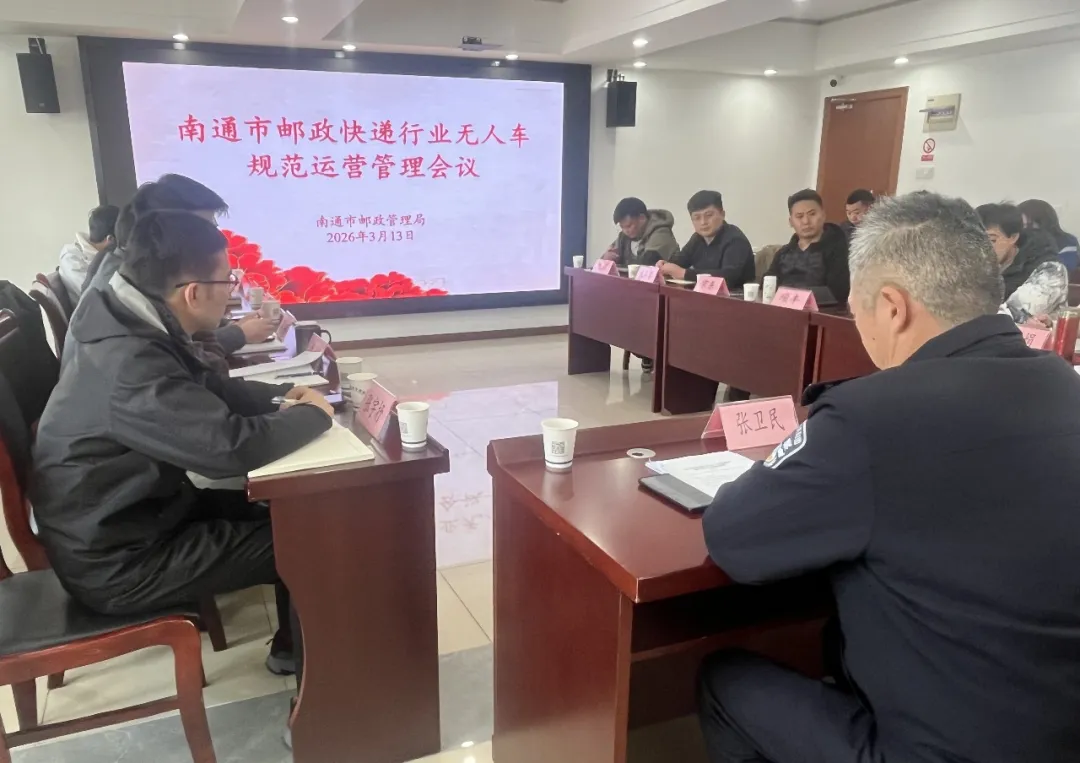
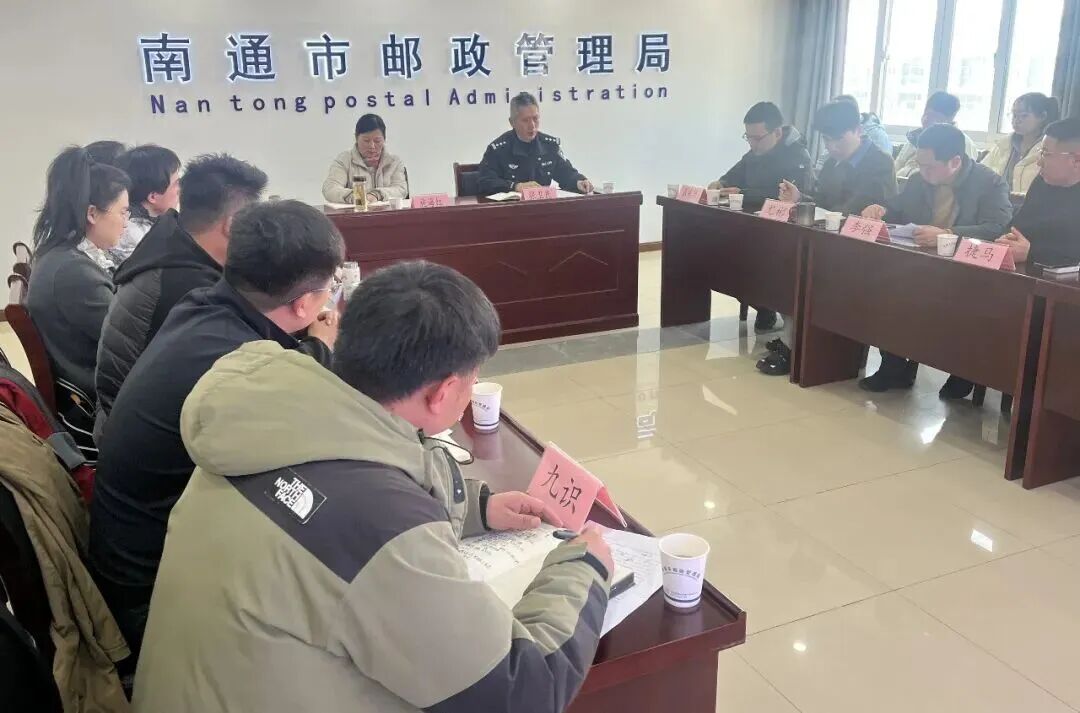
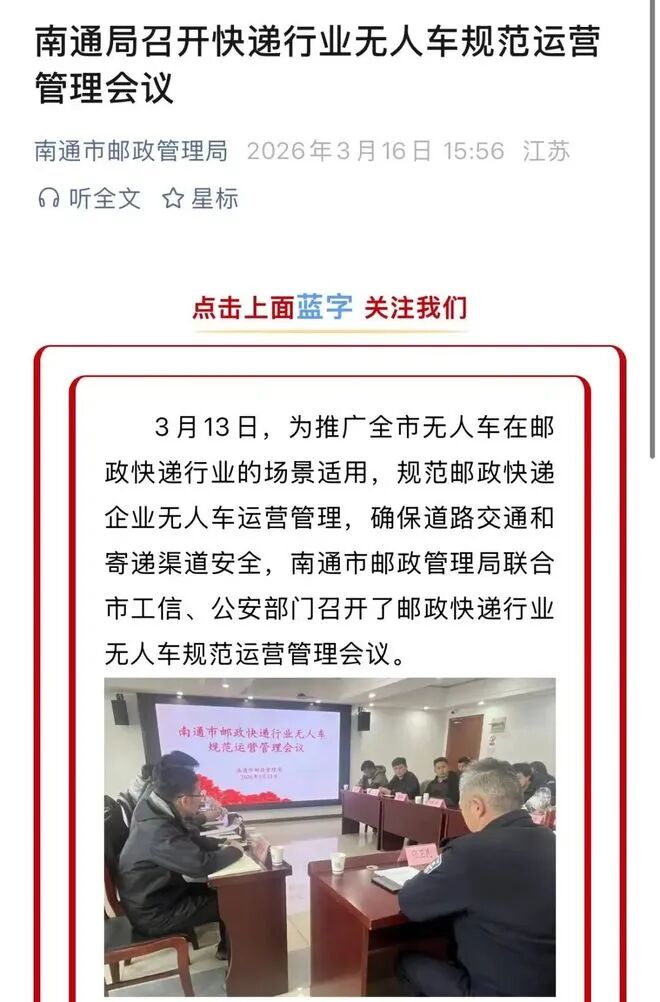
On March 13, Nantong convened a pivotal meeting focused on the standardized operation and management of self-driving vehicles within the postal and express delivery sector.
The statistics unveiled at the meeting were striking: the city's postal and express delivery industry now boasts 300 self-driving vehicles in active service, traversing 103 distinct routes. Monthly delivery volumes have soared past one million parcels, achieving a remarkable comprehensive labor cost savings exceeding 50%.
However, the most significant takeaway from this gathering was the underlying message: while self-driving vehicles are advancing rapidly, regulatory frameworks must evolve in tandem.
Self-Driving Vehicles Are Coming (WeChat Official Account: Self-Driving Vehicles Are Coming) is here to delve into this topic with everyone!
(For further reading, please click: 'Jiangsu Nantong: New Regulations 'Crack Down' on Mishaps Involving Self-Driving Delivery Vehicles, Lawyers Offer Tips for Rights Protection')
I. 'Smart Couriers' on the Streets Bring Both Convenience and Challenges
Self-driving delivery vehicles have become a common sight on Nantong's streets.
In Chuanjiang Town, Tongzhou District, self-driving vehicles equipped with lidar and adorned with 'Find Home Textiles' logos shuttle efficiently between home textile factories and e-commerce warehouses. These 264 L4-level intelligent logistics self-driving vehicles have collectively clocked over one million kilometers safely, with daily mileage surpassing 18,000 kilometers.
These 'smart couriers' have significantly reduced delivery times for home textile products from factories to e-commerce platforms, from 8 hours to under 3 hours, while also slashing damage rates from 5% to below 0.1%.
Yet, technological advancements bring not only convenience but also challenges.
In January of this year, a self-driving delivery vehicle traveling in reverse collided with a normally moving car in a one-way lane in Nantong's urban area, then abruptly 'crashed' and stalled in the middle of the road, causing a lengthy traffic jam. Eventually, the car driver had to reverse to allow the self-driving vehicle to pass.
Some citizens also captured footage of a home textile self-driving delivery vehicle running a red light straight ahead from the leftmost left-turn lane at an intersection.
On January 8, another video depicting a 'self-driving delivery vehicle limping forward with a damaged tire' went viral online.
The comment section became a 'complaint hub' for Nantong citizens, with reports of self-driving delivery vehicles stalling in the middle of the road or moving at a snail's pace on motorways, becoming 'obstacles' to traffic flow.
Netizens' complaints strike at the core issue: when smart devices malfunction, traffic congestion and even accidents are inevitable.
II. As 300 Vehicles Hit the Road, Regulatory Frameworks Must Be Established
Self-driving vehicle operators also have their perspectives to share.
Staff at a self-driving vehicle operation center for a certain brand in Nantong acknowledged that their vehicles utilize a self-developed intelligent driving system capable of automatically avoiding vehicles and pedestrians. Before deployment, routes are meticulously planned manually, and road information is collected to minimize the occurrence of accidents.
However, they also admitted that in rainy weather or poor network signal conditions, the vehicle's autonomous driving capabilities may 'stall,' necessitating immediate manual takeover by backend safety operators.
Each vehicle is insured with public liability and property insurance, and the company assumes full responsibility for all accidents occurring during autonomous driving—this is the enterprise's steadfast commitment.
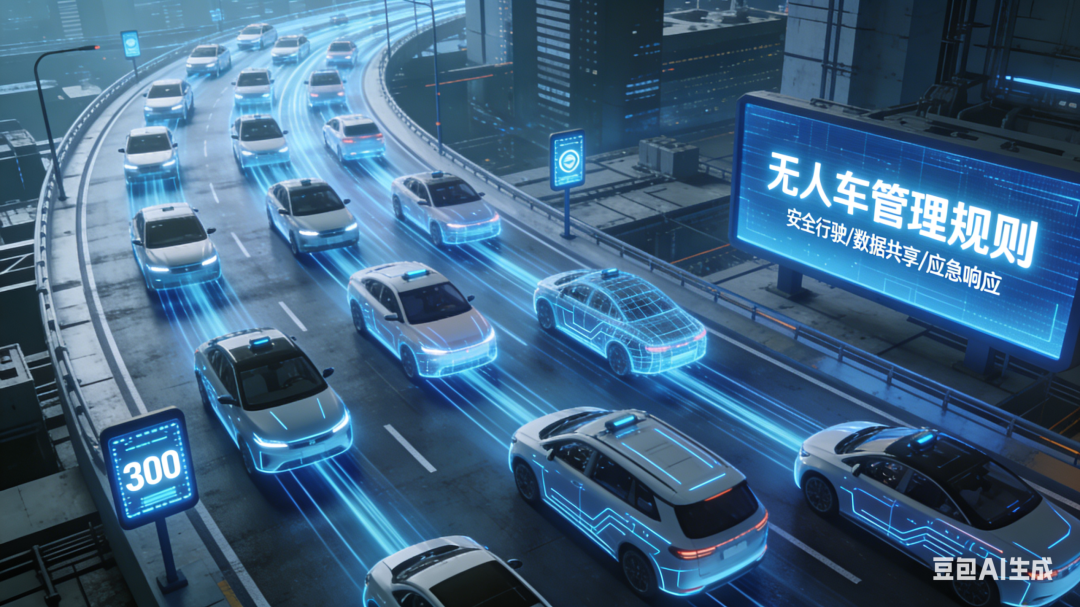
But citizens are more concerned about practical issues: Who should they turn to in case of an accident? How will compensation be handled? Who will oversee the process?
These questions were precisely what the March 13 meeting aimed to address.
The Municipal Postal Administration, in collaboration with multiple departments, established several firm guidelines: strictly adhere to compliance bottom lines to promote standardized and orderly operations; strengthen traffic management to enhance emergency response capabilities; deepen collaborative efforts to form a regulatory synergy.
The meeting underscored the need to scientifically designate traffic routes, clarify operating hours, reasonably avoid peak traffic areas and densely populated regions, and publicly display operating routes, restricted hours, and emergency contact numbers on vehicle bodies for social supervision.
III. Institutional Follow-Up: Addressing the Ambiguous Identity of Self-Driving Vehicles
In fact, Nantong did not suddenly 'take action' against self-driving vehicles.
By the end of 2025, the Nantong Municipal Bureau of Industry and Information Technology, leading multiple departments, formulated the 'Implementation Rules for the Commercial Demonstration Application Management of Self-Driving Equipment in Nantong City (Trial),' which officially took effect on December 1, 2025.
These rules clarify several core requirements:
Self-driving equipment on the road must have remote safety operators on duty, with a ratio of at least one safety operator per five operating vehicles and no fewer than two operators per shift;
Traffic management generally follows non-motor vehicle regulations, with a maximum speed of 40 km/h when borrowing motorway lanes and 20 km/h in non-motorway lanes;
Each self-driving vehicle must be insured with liability coverage of no less than 3 million yuan.
These regulations stem from a fundamental question: What is the 'identity' of self-driving delivery vehicles? They neither meet motor vehicle standards nor comply with non-motor vehicle regulations due to their 'non-human-powered' nature.
This 'identity ambiguity' often leaves self-driving vehicles facing dilemmas of unclear road rights and undefined responsibilities in actual operations.
Zhang Xin, a deputy to the Jiangsu Provincial People's Congress and a courier at Nantong SF Express Co., Ltd., specifically raised suggestions on this issue at this year's provincial two sessions:
Formulate unified technical standards for self-driving delivery equipment, establish a unified technical standard system, and clarify system safety requirements;
Expand the scope of road rights for self-driving delivery, establish provincial-level demonstration zones, and simplify the application process for commercial demonstration projects;
Strengthen safety guarantees for self-driving delivery, establish mandatory insurance systems and emergency response frameworks.
(For further reading, please click: 'Are Self-Driving Delivery Vehicles Motor Vehicles or Non-Motor Vehicles? Zhang Xin, Deputy to the Jiangsu Provincial People's Congress and SF Express Courier in Nantong, Suggests Formulating Technical Standards for Self-Driving Delivery')
IV. From 'Wild Growth' to 'Standardized Growth': The Evolution of Self-Driving Delivery
The explosive growth of self-driving delivery is supported by compelling data.
As of January 2026, Jiangsu Province has deployed 2,838 express delivery self-driving vehicles and 2,165 regularly operating routes.
Nationwide, according to the '2025-2026 Blue Book on the Technological Application and Trends of Self-Driving Delivery Vehicles,' as of the end of November 2025, cumulative shipments of self-driving delivery vehicles in outdoor scenarios in China have exceeded 39,000 units, with expectations to surpass one million units by 2030.
However, the large-scale deployment of any new technology inevitably goes through a painful transition from 'wild growth' to 'standardized growth.'
Self-driving vehicles in Nantong's home textile industrial belt have already achieved 115 tons of carbon reduction and the equivalent of removing 321 three-wheeled vehicles from the roads;
The 'Smart Integration Police Station' and 'Cloud Shield Command Room,' jointly established by enterprises with public security and traffic police departments, have incorporated self-driving vehicles into the regular public security patrol system, using real-time road data transmitted by the vehicles to assist traffic police in predicting congestion and enforcing traffic violations.
These explorations prove that self-driving vehicles are not intruders in cities but can become valuable participants in urban governance.
V. Conclusion: Regulations Are Not Stumbling Blocks but Boosters for Self-Driving Vehicles
Some netizens interpreted Nantong's meeting as 'taking action to govern.' This understanding is somewhat misguided.
From the meeting's content, the three departments emphasized 'promoting the demonstration application of self-driving vehicles under the premise of 'safety, controllability, compliance, and orderliness.''
This is not about hitting the brakes but drawing clear lanes for the technology to advance.
As the Municipal Postal Administration stated, it will actively coordinate to resolve challenges such as compliant licensing, road rights planning, emergency response, and public acceptance for self-driving vehicles. The goal is to ensure they 'drive steadily and run long-term.'
For citizens, the question remains: what matters more: convenience or safety?
The answer is both.
The cost savings and efficiency gains brought by self-driving vehicles are tangible, but traffic safety on the streets is the absolute bottom line.
What Nantong is doing is finding that delicate balance between efficiency and order—letting technology race ahead while ensuring regulatory frameworks keep pace.
In short, Self-Driving Vehicles Are Coming (WeChat Official Account: Self-Driving Vehicles Are Coming) believes:
As courier representative Zhang Xin said, 'The development of self-driving delivery technology is an inevitable trend. Jiangsu has the foundation, conditions, and capability to establish a more comprehensive and robust self-driving delivery system.'
In this system, 300 self-driving vehicles are just the beginning. Only with regulations in place can they go further.
Dear readers, what do you think?
References: Nantong Municipal Postal Administration's 'Nantong Bureau Holds Meeting on Standardized Operation and Management of Self-Driving Vehicles in the Express Delivery Industry'
#Self-DrivingVehiclesAreComing #Self-Driving #AutonomousDriving #Self-DrivingVehicles
-
![]()
Net Profit Surges 13.65% Year-on-Year! Yutong Optics Reports RMB 1.782 Billion in H1 Revenue
-
![]()
Q2 Net Profit Slashes Losses by 80%! Has Costar Emerged from Its Darkest Hour?
-
AI Agents: The Paradigm Shift from 'Conversation' to 'Execution'
-
NVIDIA Takes Bold Strides to Lead in Both Hardware and Software Realms
-
![]()
It's Hard to Build Cars, Even Harder to Build Humans, and XPENG is Doing Both
-
![]()
Valuation Soars by $57 Billion: Three Entrepreneurs Born in the 1980s Forge an AI Unicorn Now Suddenly on the Market
-
![]()
How Can We Achieve the Goal of 100,000 Hydrogen Vehicles by 2030?
-
![]()
July Online Market for Consumer-Grade Sports Cameras: Robust Double-Digit Growth in Sales Volume and Value, Mid-Range Products Fuel Market Expansion