From Miao Wei's 'Productivity Liberation' to Today's Fleet of 10 Driverless Vehicles, Boao Witnesses a Decade of Transformation in China's Autonomous Driving
 03/27 2026
 747
747
Introduction
On March 24, 2026, at the Boao Forum for Asia Annual Conference, 10 driverless vehicles shuttled between hotels and the South China Sea Museum, while 5 intelligent inquiry machines answered questions for guests at the tourist center.
This is one of the service support projects for this year's Boao event, as well as a 'live demonstration' of China's autonomous driving technology.
But if you go back ten years, the picture was completely different.
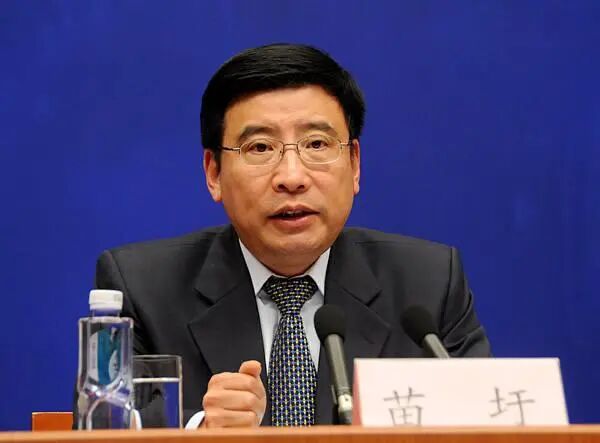
In 2015, also in Boao, Miao Wei, then Minister of the Ministry of Industry and Information Technology, said to the media, 'If we can truly liberate people from the task of driving cars, what a significant role this will play in liberating and promoting overall productivity.'
At that time, driverless technology was still just a 'concept,' and even Miao Wei used the word 'if.'
Today, ten years later, driverless vehicles without steering wheels or brake pedals are already running on the streets of Boao.
From 'if' to 'live demonstration,' Boao has witnessed the complete transformation of China's autonomous driving.
(For further reading, please click: 'Hainan's 'Driverless Delivery Vehicles' Host Investment Promotion: Food Business Owners Shift Focus from Menus to 'Code'! Can Driverless 'Franchise Stores' Bloom Everywhere?')
I. Miao Wei's 'Bold Prediction' in Boao in 2015
In March 2015, the Boao Forum for Asia Annual Conference was held in Hainan. That year, 'Internet Plus' had just been written into the government work report, and 'Made in China 2025' was in the works.
In an interview, Miao Wei publicly discussed driverless technology for the first time.
He said, 'We have studied that the commanding heights of the new round of industrial competition lie in the integration of ICT technology and manufacturing technology.' Then he gave an example—intelligent driverless vehicles.
At the time, this 'example' sounded like science fiction to many.
After all, in 2015, even Level 2 assisted driving had not yet become widespread in China, let alone 'driverless' technology.
But Miao Wei's words contained two key judgments: First, driverless technology represents the liberation of productivity; second, it is worth including in the strategic framework of 'Made in China 2025.'
This judgment, looking back today, is eerily precise.
At the same year's Boao Forum, the sub-forum on 'Future Transportation' became a hot topic for the first time.
Representatives from Nippon Yusen, BlackBerry, XPENG Motors, and CRRC sat together to discuss driverless technology, big data, and new energy.
He Xiaopeng, Chairman of XPENG Motors at the time, made a statement that would later be repeatedly quoted: 'If we accumulate enough data, machines driving will be safer than humans driving.'
At that time, XPENG Motors had been established for less than a year.
II. 2018-2019: First Appearance of Level 4, 'Apolong' Takes Center Stage
Fast forward to April 2018, at the Boao Forum's sub-forum on 'Future Transportation,' Liu Hualong, Chairman of CRRC, revealed some news:
CRRC had achieved full self-management of rail transit trains through technology and had already applied driverless trains in Shanghai and some Asian countries.
But what truly shocked the outside world came in 2019.
On March 27, 2019, China's first intelligent connected vehicle 5G pilot project debuted in Boao.
A row of intelligent connected vehicles lined up in the test ride area: some had a cute appearance, while others had no steering wheel, no brake pedal, and no accelerator pedal, yet were equipped with multi-sensor systems including LiDAR and high-definition cameras.
The most eye-catching among them was the 'Apolong' from Xiamen Golden Dragon Bus—the world's first mass-produced Level 4 autonomous bus.
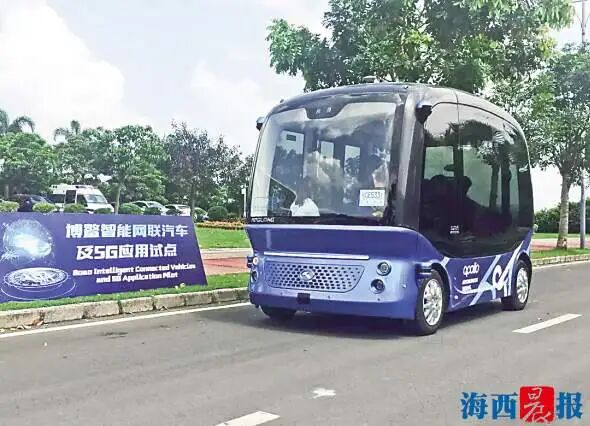
On the 1.2-kilometer test route, the 'Apolong' completed three challenging tests: automatic deceleration and steering at sharp turns, automatic detouring around road construction, and speed guidance at traffic lights.
During the tests, as the 'Apolong' approached a sharp turn, it received a reminder from the roadside unit of the vehicle network in advance. Combining this with road condition information identified by its onboard sensors, it promptly adjusted its speed and direction;
In the construction detour scenario, it avoided obstacles in a similar manner.
That year, the Boao project brought together several leading domestic intelligent connected vehicle brands: FAW Hongqi, Baidu Apolong, Zhengzhou Yutong, Shanghai NIO, and SAIC Roewe.
This was also the nation's first comprehensive demonstration application of intelligent connected vehicles integrating multiple brands, models, and technical routes.
Also that year, WeRide, the only domestically invited Level 4 autonomous driving startup, participated in the Boao Forum's sub-forum on 'Cars in 2050.'
Han Xu, CEO of WeRide, said at the forum, 'Level 4 autonomous driving is already undergoing trial operations in multiple places around the world, including China, and its arrival will be much faster than we imagine.'
Some in the audience thought he was exaggerating at the time. Looking back seven years later, he was conservative.
III. 2022: 'Four Titans' Debut, Green + Smart Become New Labels
In 2022, the keyword for the Boao Forum for Asia Annual Conference was 'green event hosting.' This time, autonomous driving was no longer just for 'showcasing skills' but was practically empowering the annual conference.
The Boao Dongyu Island Vehicle Networking Project was completed and put into trial operation, featuring 4 autonomous taxis, 4 autonomous minibusses, 2 driverless cleaning vehicles, and 2 driverless vending machines—collectively dubbed the 'Four Titans' by the media.
The project completed the construction of a 13-kilometer open-road automatic shuttle line from Boao Airport to Peilan Bridge and a 4-kilometer closed- park (park) shuttle line from Peilan Bridge to Golden Coast Hotel. The entire route achieved full 5G coverage, with 4 smart signboards built, and constructed a '5G + Vehicle-Road Coordination' demonstration scenario by integrating roadside equipment, enabling digital twin control.
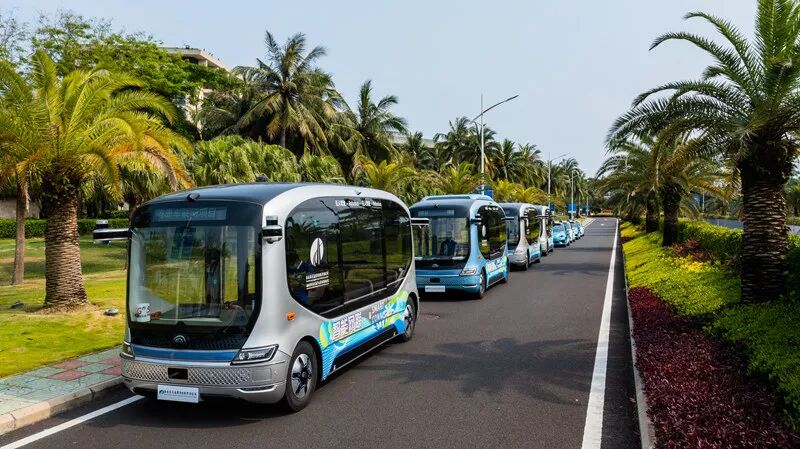
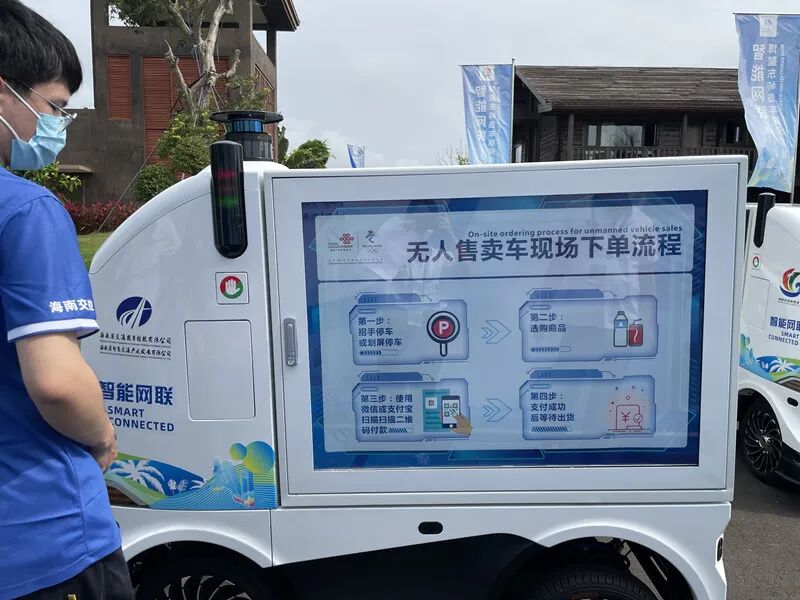
The longest operating distance reached 26 kilometers—from Boao Airport to the Dongyu Island Tourist Reception Center, where tourists could take a driverless taxi directly to the conference venue.
Gan Ke, General Manager of Hainan Smart Transportation Industry Development Co., Ltd., introduced that the project achieved a transformation from 'single-vehicle intelligence' to 'multi-source perception (perception) networking,' with enhanced intelligence of roadside equipment, reduced communication latency, and enabled scenarios such as blind spot warnings for autonomous vehicles and perception of pedestrians and non-motorized vehicles.
From the 1.2-kilometer test route in 2019 to the 26-kilometer open-road shuttle in 2022—Boao's driverless vehicles have moved out of the 'laboratory' and onto 'real roads.'
IV. 2026: From 'Technology Demonstration' to 'Service Support'
At 9 a.m. on March 24, 2026, on Boao Binhai Avenue.
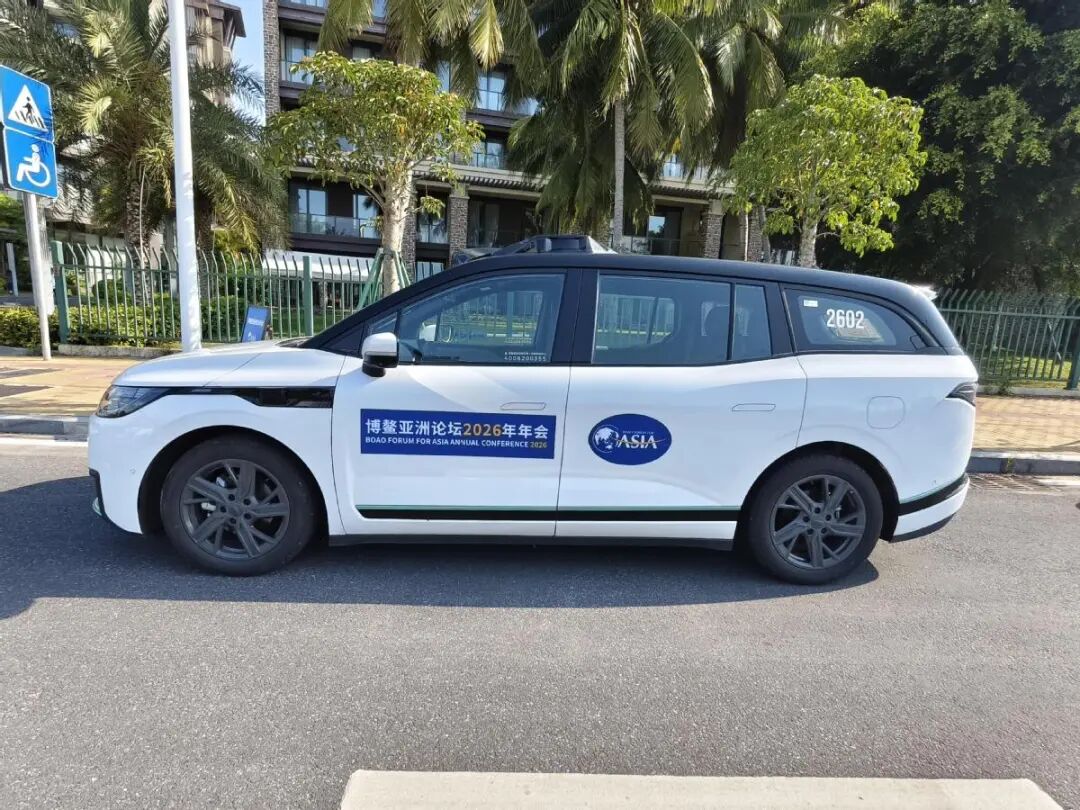
A white car with the words 'Boao Forum for Asia Annual Conference 2026' slowly passed by, with no driver inside. The steering wheel turned on its own, and the car smoothly merged into the traffic flow.
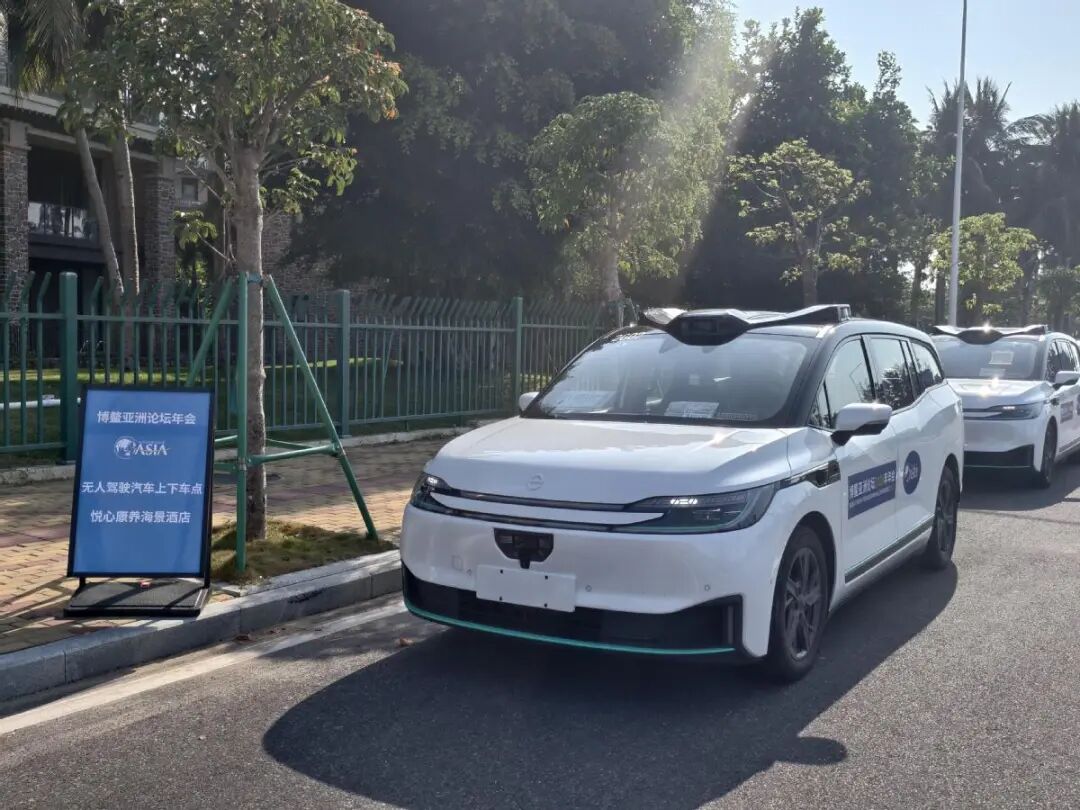
This was one of the 'driverless fleets' equipped by Hainan Tourism Investment for the annual conference, with a total of 10 driverless vehicles providing exclusive shuttle services for guests between four conference reception hotels and the China (Hainan) South China Sea Museum.
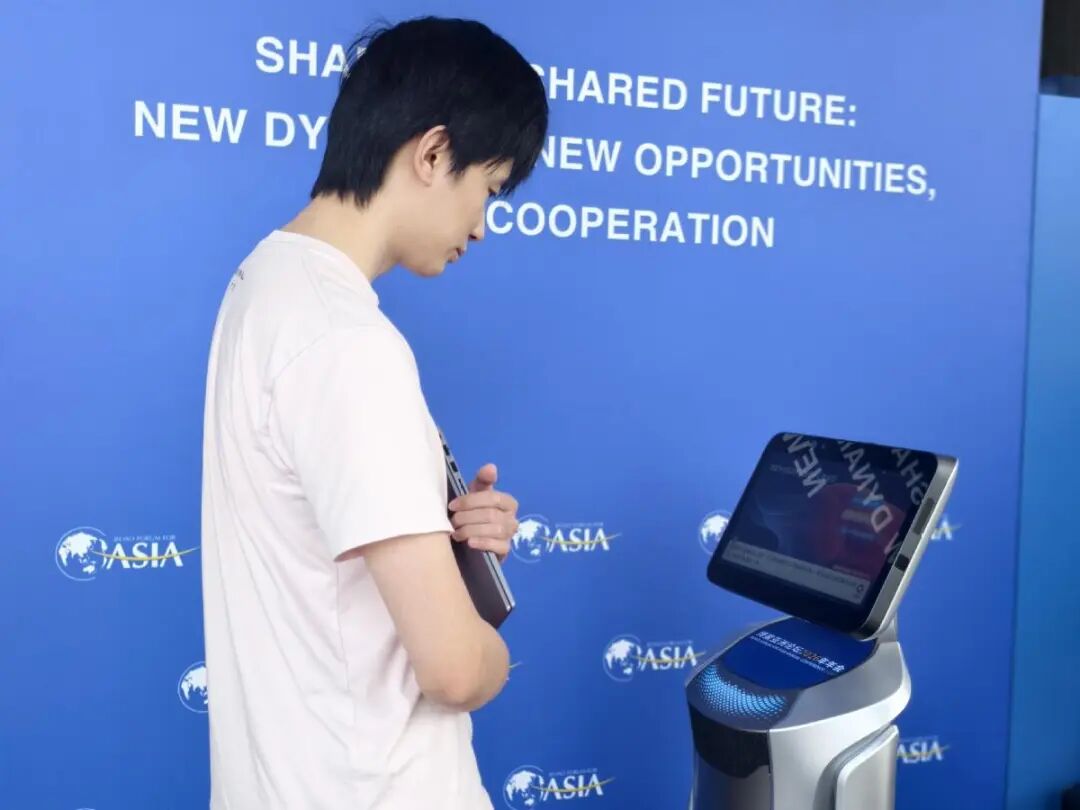
On the same day, at the tourist center of Boao Dongyu Island Resort, a guest said to an intelligent inquiry machine, 'I'm at the tourist center now and want to go to Dongyu Island Hotel. Please check the nearest shuttle bus schedule.'
The intelligent inquiry machine immediately responded, 'Hello, Shuttle Bus Line 1 departs from Peilan Bridge Tourist Center and will arrive at Dongyu Island Hotel in 5 minutes. It is currently waiting for the next departure, which is expected in 2 minutes.'
This was the first time Hainan Tourism Investment had deployed intelligent inquiry machines.
Wu Zhibin, Deputy Head of the Transportation Service Support Group, who has served Boao for many years, said, 'This is the first time working with intelligent inquiry machines this year, and they allow frontline employees to spend more time providing warmer services to guests.'
From 'technology demonstration' in 2019 to 'green event hosting' in 2022, and now to 'service support' in 2026—Boao's driverless vehicles have finally moved from 'showcasing skills' to 'practical use.'
V. Boao: Several Key 'Firsts' in a Decade of Autonomous Driving
Looking back at Boao's decade-long journey in autonomous driving, several key 'firsts' are worth remembering:
In 2015, Miao Wei first proposed in Boao that 'driverless technology represents the liberation of productivity.'
In 2019, China's first intelligent connected vehicle 5G pilot project debuted in Boao, and the world's first mass-produced Level 4 autonomous bus, 'Apolong,' completed three challenging tests.
In 2022, the Boao Dongyu Island Vehicle Networking Project was completed and put into operation, with the 'Four Titans' making a collective debut and achieving a 26-kilometer open-road shuttle.
In 2026, the driverless fleet officially became a service support project for the Boao Annual Conference, working alongside intelligent inquiry machines to practice (practice) the concepts of 'green event hosting and tech-driven event hosting.'
In short, from Miao Wei's 'if' to Han Xu's 'faster than imagined,' and now to the driverless vehicles that conference guests can ride by simply scanning a code with their phones—
Boao has witnessed not only the maturation of a technology but also the complete transformation of an industry from 'concept' to 'service.'
As that white driverless vehicle passed along Boao Binhai Avenue, it was not just traveling a 1.2-kilometer test route but also the long journey of China's autonomous driving over the past decade.
This journey continues.
What do you think?
#DriverlessVehiclesCome #Driverless #AutonomousDriving #DriverlessCars
-
![]()
Net Profit Surges 13.65% Year-on-Year! Yutong Optics Reports RMB 1.782 Billion in H1 Revenue
-
![]()
Q2 Net Profit Slashes Losses by 80%! Has Costar Emerged from Its Darkest Hour?
-
AI Agents: The Paradigm Shift from 'Conversation' to 'Execution'
-
NVIDIA Takes Bold Strides to Lead in Both Hardware and Software Realms
-
![]()
It's Hard to Build Cars, Even Harder to Build Humans, and XPENG is Doing Both
-
![]()
Valuation Soars by $57 Billion: Three Entrepreneurs Born in the 1980s Forge an AI Unicorn Now Suddenly on the Market
-
![]()
How Can We Achieve the Goal of 100,000 Hydrogen Vehicles by 2030?
-
![]()
July Online Market for Consumer-Grade Sports Cameras: Robust Double-Digit Growth in Sales Volume and Value, Mid-Range Products Fuel Market Expansion