Guangzhou’s Autonomous Driving ‘Collective Showcase’: From the ‘Three Pioneers of Smart Driving’—Pony.ai, WeRide, and XPENG Motors—to Didi Autonomous Driving and GAC Group, and Expanding to Self-Drivi
 03/30 2026
 651
651
Introduction
Guangzhou is witnessing an unprecedented ‘collective showcase’ in the field of autonomous driving.
The spotlight is not on a single standout company but on the entire autonomous driving industrial ecosystem. This ecosystem spans from the industry-leading ‘Three Pioneers of Smart Driving’—Pony.ai, WeRide, and XPENG Motors—to mobility giant Didi Autonomous Driving and traditional automotive leader GAC Group. It also extends to self-driving minibuses navigating city streets and Jiushi autonomous vehicles making deep inroads into logistics networks.
As autonomous driving transitions from isolated technological breakthroughs to systemic integration, Guangzhou is leveraging its comprehensive urban strengths to present China’s vision for future mobility to the world.
Here Comes the Autonomous Vehicle (WeChat ID: HereComesTheAV) explores this topic with everyone!
(For further reading, click: ‘Guangzhou Fully Embraces Autonomous Driving: This Southern Powerhouse Can No Longer Hide Its Ambitions! Huawei and GAC Join Forces to Launch Premium Intelligent New Energy Vehicle Brand ‘Qijing’ in June’)
I. The ‘Three Pioneers of Smart Driving’ Lead the Way: Technological and Commercial Breakthroughs
The rise of Guangzhou’s autonomous driving industry is first evident in the comprehensive leadership of the ‘Three Pioneers of Smart Driving’—Pony.ai, WeRide, and XPENG Motors.
These three companies have not only established a solid technological foundation but have also achieved significant milestones in the commercialization of autonomous driving.
1. Pony.ai Achieves Per-Vehicle Profitability in Guangzhou and Shenzhen
At Pony.ai’s operations center, its seventh-generation Robotaxi is equipped with the world’s first L4 Robotaxi automotive-grade domain controller, delivering three times the computational efficiency of its predecessor.
The vehicle’s 34 sensors provide 360-degree blind-spot coverage and can detect objects up to 650 meters away.
More importantly, Guo Yu, Pony.ai’s Marketing and PR Manager, revealed: ‘Last year, we achieved per-vehicle profitability in Guangzhou, with each car now averaging 23 daily orders.’
This profitable model was validated in Shenzhen in February 2026.
2. WeRide’s Performance Shines Brightly
The company’s total revenue reached RMB 690 million in 2025, a 90% year-on-year increase, including RMB 150 million from Robotaxi operations, up 209.6% year-on-year.
Behind this success lies cutting-edge technology—its self-developed universal simulation model, WeRide GENESIS, can construct highly realistic simulated urban environments in minutes, accurately replicating long-tail scenarios under extreme weather conditions such as blizzards and extreme cold.
(For further reading, click: ‘WeRide Autonomous Driving: Europe’s First License, a 1,000-Vehicle Fleet in the Middle East, and Mining ‘Gold’ at $1 Per Kilometer in the Desert?’)
3. XPENG Motors Brings Groundbreaking Smart Driving Technology to the World
The 2026 XPENG X9 pure electric version comes standard with Turing AI chips, delivering a peak effective computing power of 2,250 TOPS.
Its second-generation VLA physical world large model enables more human-like and smoother driving decisions.
He Xiaopeng, XPENG’s founder, stated: ‘Fully autonomous driving will arrive in 1–3 years.’
(For further reading, click: ‘He Xiaopeng’s NPC Proposals: Skip L3 and Head Straight to L4 in Autonomous Driving’)
II. Ecological Synergy: From ‘Lone Wolves’ to ‘Collective Operation’
If the ‘Three Pioneers of Smart Driving’ are the vanguard, then the entry of companies like Didi Autonomous Driving and GAC Group has enabled Guangzhou’s autonomous driving industry to form true ‘collective operation’ capabilities.
1. Hailing an Autonomous Vehicle in Guangzhou’s Huangpu District via the Didi App
Since the fourth quarter of 2025, Didi Autonomous Driving has conducted all-weather, fully driverless passenger tests in Guangzhou, maintaining safe operations for over 2,100 consecutive days.
(For further reading, click: ‘GAC Aion: Collaborating with Didi Autonomous Driving on L4 Robotaxi All-Weather Trial Operations, Organizing ‘User Feedback’ Symposiums with CATL and JD.COM’)
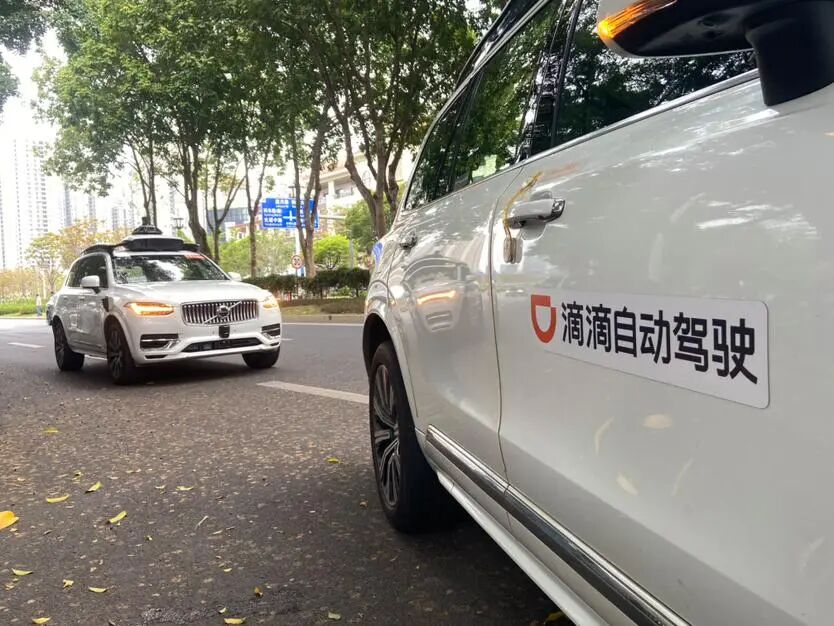
In January 2026, Didi Autonomous Driving and GAC Aion jointly launched a new-generation Robotaxi model, which began regular public road testing.
2. GAC Group’s Remarkable Speed in Intelligent Transformation
Xu Wei, Director of the Intelligent Driving Development Department at GAC’s Intelligent Networked Vehicle R&D Center, revealed that GAC has developed a new L3 conditional autonomous driving system supporting speeds up to 120 km/h, becoming one of the first Chinese automakers to conduct L3 highway testing at 120 km/h.
(For further reading, click: ‘GAC Hyper A800: First License in China for L3 Autonomous Driving Highway Testing at 120 km/h! Is Driverless Technology Really Here?’)
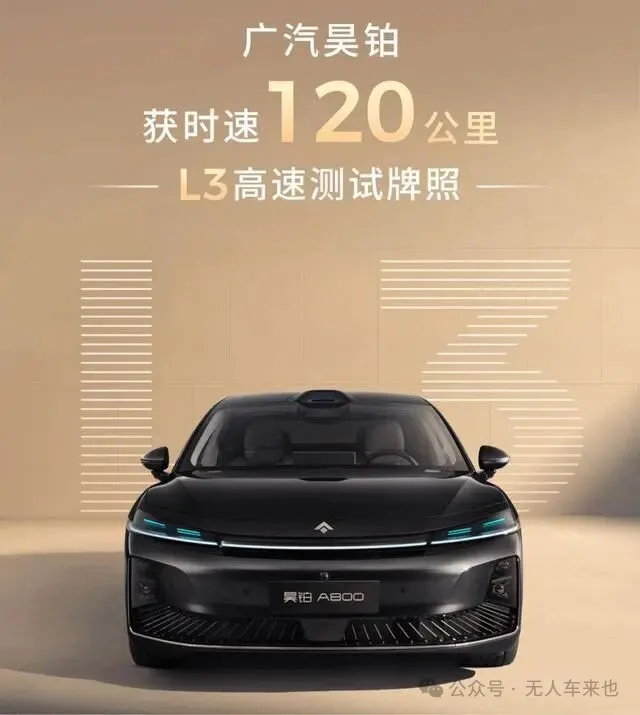
For L4 highly autonomous driving, GAC collaborates with Pony.ai, WeRide, JD.COM, and others to develop L4 autonomous driving platform models tailored for Robotaxi scenarios.
3. Synergistic Effects Extend to Infrastructure Co-Construction
Guangzhou has installed 530 roadside units, 897 perception devices, and 419 computing units, upgraded 205 traffic lights, established a CA (electronic) certification system, and fitted 10,400 vehicles with PC5 communication and Beidou positioning terminals, becoming China’s first city to exceed 10,000 vehicle-mounted telematics terminals.
III. Scenario Implementation: Self-Driving Minibuses and Logistics Vehicles Penetrate the ‘Capillaries’ of Cities
While Robotaxis navigate main roads, self-driving minibuses and logistics vehicles are reaching into the ‘capillaries’ of cities, bringing autonomous driving technology to every corner of citizens’ lives.
1. Self-Driving Minibuses: A New Choice for Citizens
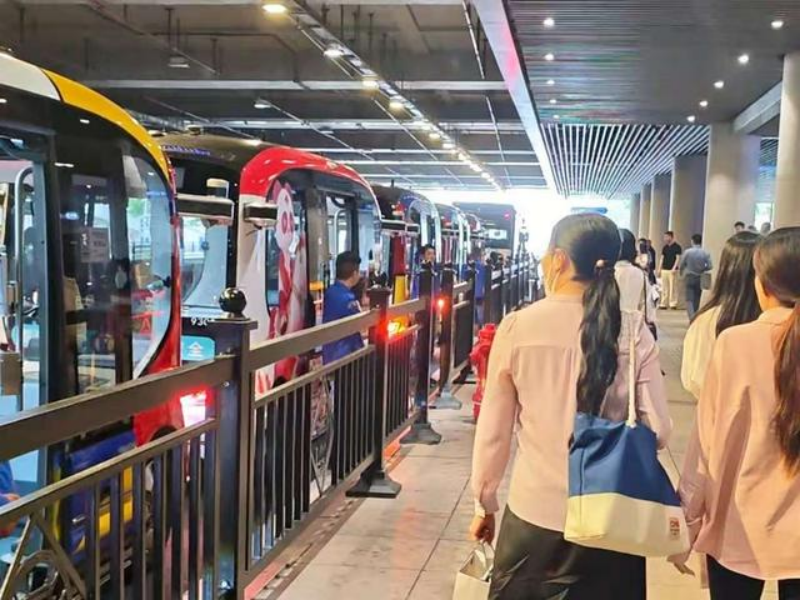
Beneath the Canton Tower, rows of self-driving minibuses stand ready, with citizens queuing orderly to board.
Xu Juxian, Deputy Director of Market Operations at Guangzhou Bus Group’s Autonomous Driving Project Preparation Team, shared that many passengers praise the minibuses for their technological appeal and approachability, making them popular among families and students.
In addition to the 5.5-meter minibuses in daily operation, an 8.5-meter Robobus is undergoing testing.
Luo Yuwen, the project supervisor, introduced: ‘This Robobus has 22 seats and can carry 64 passengers. It is the world’s first released L4 autonomous bus. Future models will be prioritized for deployment in BRT corridors and university towns.’
2. Jiushi Intelligent Rewrites Industry Rules in Logistics
As a pioneer in the RoboVan (autonomous freight vehicle) sector, Jiang Hao, Jiushi Intelligent’s South China Super Partner, revealed:
The company’s autonomous vehicles operate routinely in over 300 cities worldwide, with total mileage exceeding 100 million kilometers. By the end of 2025, delivery volumes surpassed 1.5 billion orders, cutting costs for clients by over half on average.
In 2025, Jiushi Intelligent won China Post’s tender for 7,000 autonomous vehicles, the world’s largest single procurement of autonomous vehicles.
(For further reading, click: ‘Industry Exclusive! Jiushi L5 Autonomous Vehicle: 1.8-Ton Payload + 30-Minute Fast Charging, Solving Two Major Challenges in Urban Freight’)
Why Guangzhou?
Jiang Hao highlighted a key reason: ‘Guangzhou’s first-in-the-nation local regulations for autonomous driving, the ‘Guangzhou Regulations on Innovative Development of Intelligent Networked Vehicles,’ provide legal access and operational rights for autonomous logistics vehicles. This policy ‘certainty’ is the core driver for businesses to establish operations here.’
IV. Global Expansion: From ‘Product Export’ to ‘Model Export’
Guangzhou’s autonomous driving companies are not content with the domestic market; they are accelerating global expansion, transitioning from ‘product export’ to ‘model export.’
WeRide’s autonomous driving services now cover 12 countries and over 40 cities globally, with a fleet of 2,113 autonomous vehicles.
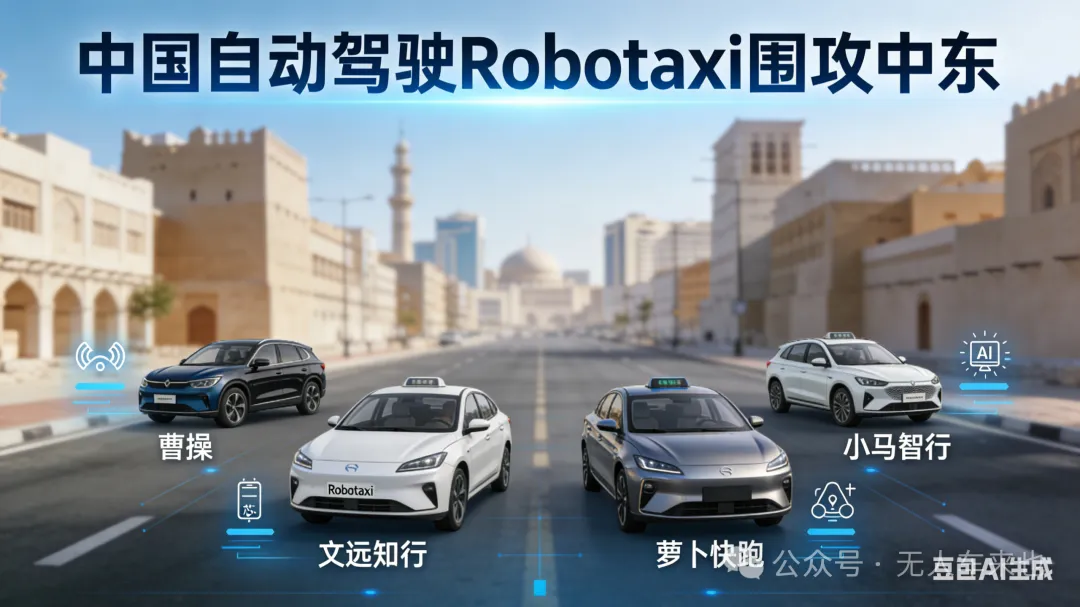
Even in the volatile Middle East, WeRide’s Robotaxi operations remain stable, becoming part of daily life for Dubai residents. Zhang Yuxue, the company’s Marketing and PR Director, revealed: ‘Due to regional conflicts, we suspended operations in Dubai on March 1 but resumed in just five days.’
Pony.ai is China’s first company to achieve fee-based Robotaxi operations in Beijing, Shanghai, Guangzhou, and Shenzhen, covering over 2,000 square kilometers.
Globally, its services span Punggol in Singapore, Dubai in the UAE, Doha in Qatar, Seoul in South Korea, and Renningen in Luxembourg.
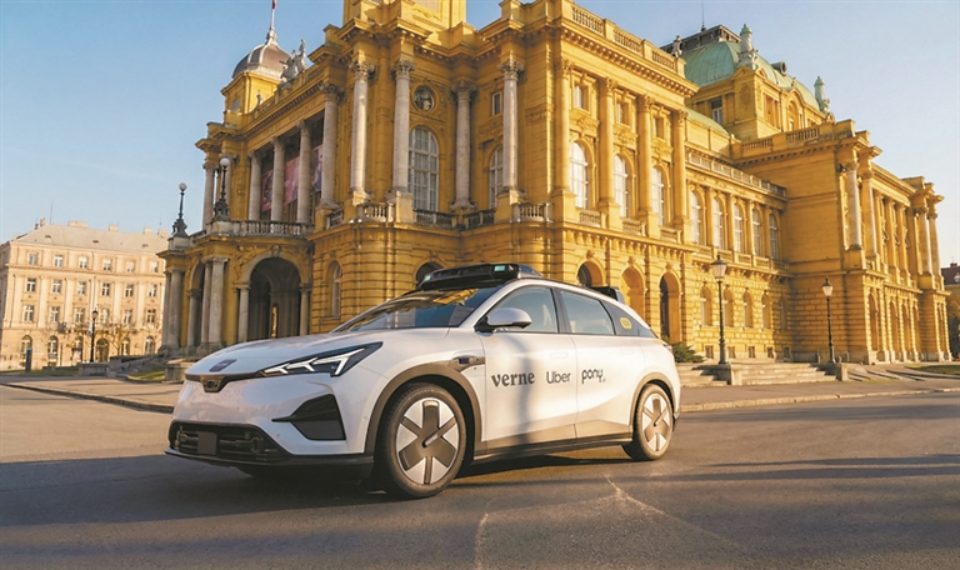
On March 26, 2026, Pony.ai announced a strategic partnership with autonomous mobility provider Verne and global mobility platform Uber to launch Europe’s first commercial Robotaxi service in Zagreb, Croatia.
(For further reading, click: ‘Chinese Autonomous Robotaxis Storm the Middle East [With Poll]: Cao Cao Mobility, WeRide, Pony.ai, and Apollo Go—Who Is the True ‘Desert Fox’?’)
XPENG Motors has established nine R&D centers worldwide. In September 2025, its Munich R&D Center in Germany officially opened, the company’s first in Europe. Leveraging local insights from Munich, XPENG produces vehicles at its Graz factory in Austria, forming a closed-loop European strategy of ‘R&D + production.’
Jiushi Intelligent values Guangzhou’s strategic location at the heart of the Greater Bay Area. Jiang Hao noted that operating here not only serves manufacturing powerhouses like Foshan and Dongguan but also utilizes ports like Nansha to drive autonomous logistics into international markets.
V. The Guangzhou Model: A Mutual Embrace Between City and Technology
The rise of Guangzhou’s autonomous driving industry is no accidental technological breakthrough but the inevitable result of a city cultivating an innovative ecosystem through institutional innovation, industrial accumulation, and an open, inclusive environment.
1. The ‘Pioneer Spirit’ of Institutional Innovation Defines Guangzhou
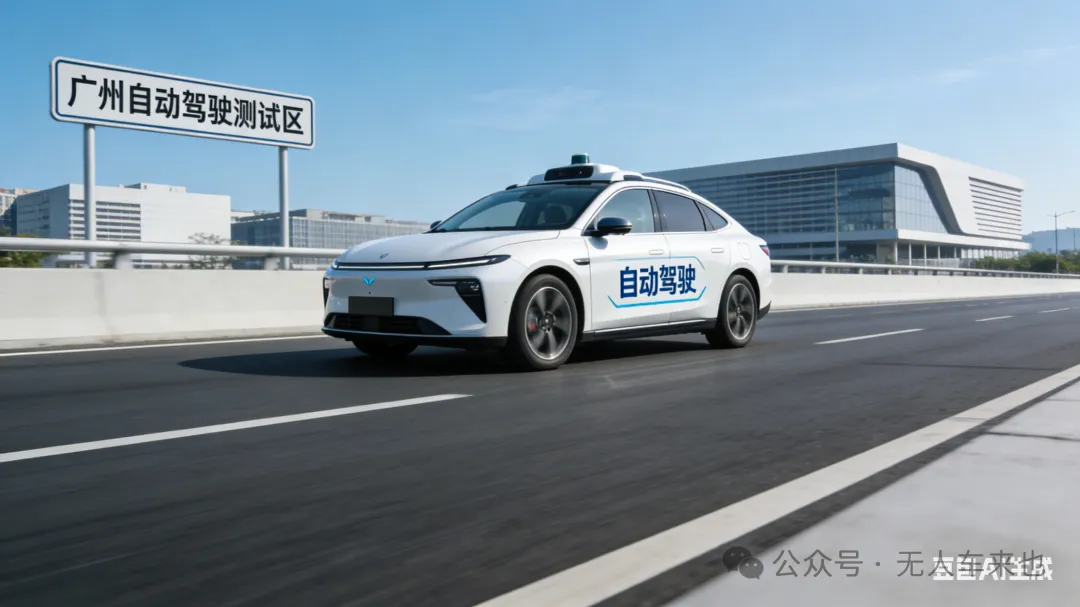
Guangzhou was the first city in China to issue passenger test licenses, conduct road testing on central urban arterials, issue road transport operation licenses, and launch commercial demonstration operations.
This boldness stems from a profound respect for innovation.
(For further reading, click: ‘Guangzhou: Rewriting the Global Autonomous Driving Map with a Series of ‘Firsts,’ Evolving from ‘Autonomous Driving City’ to ‘Future Industry City’’)
2. The ‘Rainforest Effect’ of Deep Industry-Academia-Research Integration Forms Guangzhou’s Irreplaceable Competitive Edge
Institutions like South China University of Technology, Sun Yat-sen University, and the Guangdong Academy of Sciences collaborate closely with the automotive industry, creating a complete innovation chain from basic research to application.
Equally noteworthy is Guangzhou’s ‘mutually embedded, empowering’ industrial ecosystem—OEMs, algorithm firms, sensor suppliers, and roadside equipment providers form a symbiotic innovation community.
3. From ‘Isolated Breakthroughs’ to ‘Model Export,’ Guangzhou is Redefining Future Industry Cultivation
The success story of autonomous driving is being replicated in commercial aerospace, low-altitude economy, and biopharmaceuticals.
The rise of companies like CAS Space, EHang Intelligent, and Akeso Biopharma reflects the same methodology applied across sectors:
Long-term planning for future industries, patient capital to support growth, application scenarios to accelerate technology iteration, and institutional innovation to unleash market vitality.
By March 2026, Guangzhou had opened 1,364 test roads totaling 2,641.575 kilometers in one-way length, with 941 vehicles conducting road testing and demonstration operations, accumulating 15.9047 million demonstration kilometers.
Behind these numbers lies a leap from quantitative to qualitative growth in Guangzhou’s autonomous driving industry.
Conclusion
Here Comes the Autonomous Vehicle (WeChat ID: HereComesTheAV) believes:
Guangzhou’s autonomous driving ‘collective showcase’ showcases not only China’s technological innovation strength but also the ambition and path of a millennium-old trading hub transforming into a ‘future city.’
As autonomous driving moves from concept to daily life, Guangzhou is using the entire city as a stage to orchestrate a grand narrative about future living.
What do you think, dear reader?
#HereComesTheAV #AutonomousDriving #SelfDriving #AutonomousVehicles
-
![]()
Net Profit Surges 13.65% Year-on-Year! Yutong Optics Reports RMB 1.782 Billion in H1 Revenue
-
![]()
Q2 Net Profit Slashes Losses by 80%! Has Costar Emerged from Its Darkest Hour?
-
AI Agents: The Paradigm Shift from 'Conversation' to 'Execution'
-
NVIDIA Takes Bold Strides to Lead in Both Hardware and Software Realms
-
![]()
It's Hard to Build Cars, Even Harder to Build Humans, and XPENG is Doing Both
-
![]()
Valuation Soars by $57 Billion: Three Entrepreneurs Born in the 1980s Forge an AI Unicorn Now Suddenly on the Market
-
![]()
How Can We Achieve the Goal of 100,000 Hydrogen Vehicles by 2030?
-
![]()
July Online Market for Consumer-Grade Sports Cameras: Robust Double-Digit Growth in Sales Volume and Value, Mid-Range Products Fuel Market Expansion