DeepSeek's Liang Wenfeng Sets His Sights on Robotics: Shattering the Limits of Language Models Through Physical Embodiment
 10/13 2026
 529
529
On October 12, ifeng Tech published a news article packed with significant insights. DeepSeek's founder, Liang Wenfeng, has been actively engaging with entrepreneurs in the realm of embodied AI lately. Discussions are underway within the company to determine whether Liang should personally assemble a research and development team or venture into the robotics sector through investment. An insider added a practical note: "Liang Wenfeng isn't a seasoned expert in this field either, so he's also diving deep into learning."
This statement piques curiosity. A figure who founded DeepSeek and is widely regarded as a leading authority in language models openly acknowledges being a novice in robotics. This isn't mere humility; it's a clear signal.
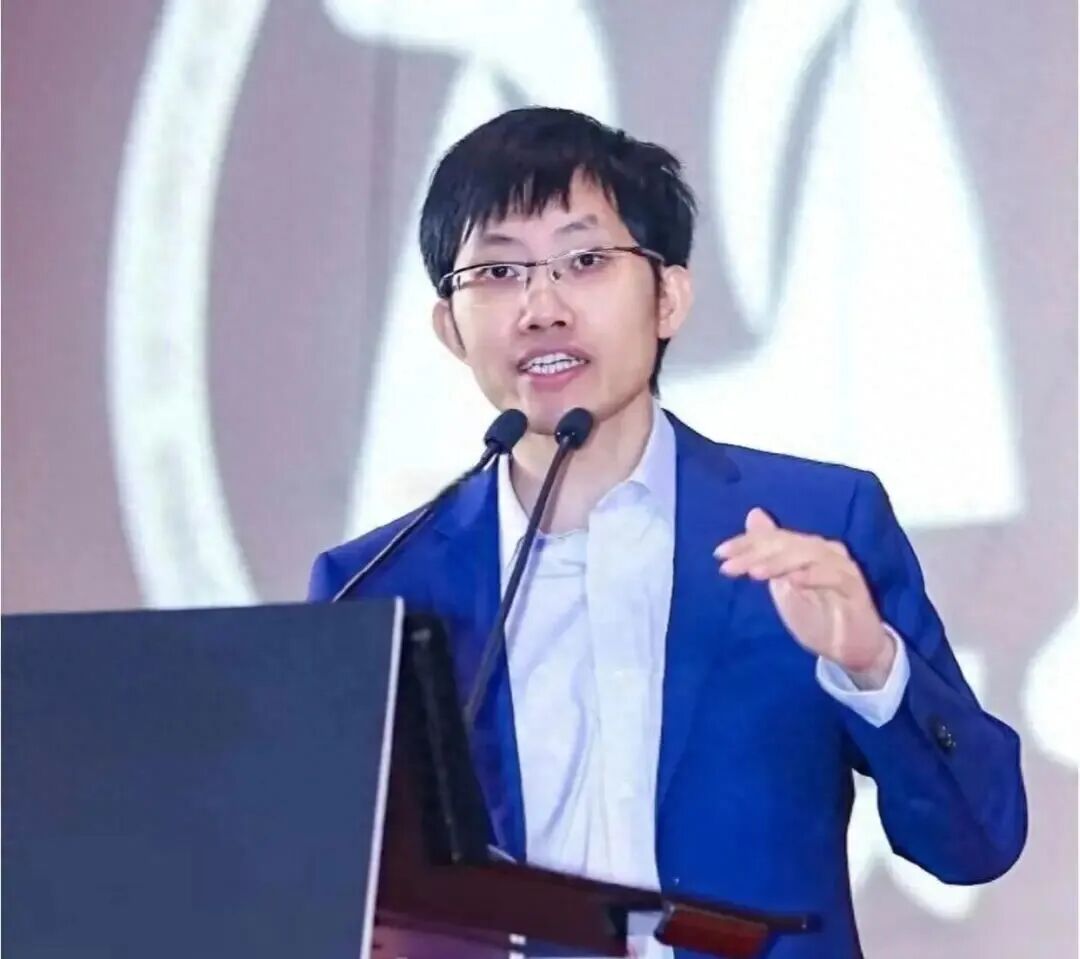
Let's first sketch out the known developments. Liang Wenfeng's strategic布局 (meaning "layout" in English, but kept as is for cultural context) is already in motion and isn't starting from square one.
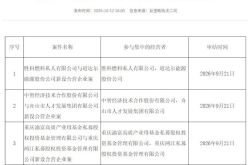
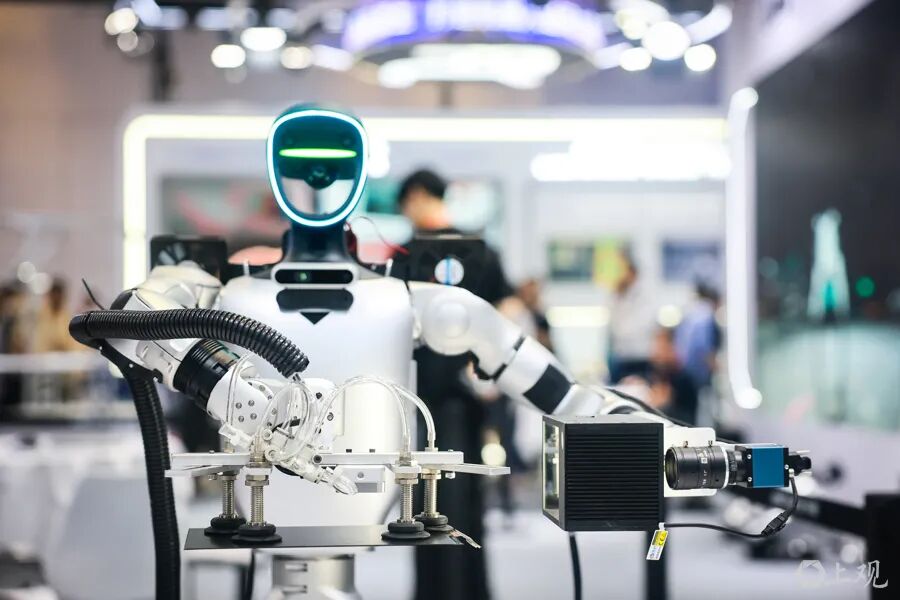
In August, Unitree Robotics' IPO strategic placement list featured DeepSeek's parent company, Hangzhou DeepSearch, which was allocated 933,400 shares valued at 141 million yuan, with a 36-month lock-up period. The two entities signed a 'Strategic Cooperation Memorandum,' binding them closely in three key areas: collaborative R&D in general artificial intelligence, high-performance general-purpose robots, and AI large models. Unitree requires DeepSeek's model prowess for its embodied large models, while DeepSeek prioritizes acquiring Unitree's robot bodies for its exploration into embodied business ventures.
In October, Bloomberg reported that DeepSeek plans to spearhead a seed round investment in Winverse AI, founded by Hu Han, Tencent's former chief scientist, with a post-money valuation hovering around $400 million. However, ifeng Tech learned from industry insiders that Winverse AI leans more towards foundational infrastructure and model acceleration, rather than being a pure-play embodied AI company.
When we weave together Liang Wenfeng's recent intensive interactions with entrepreneurs in the embodied AI space, a clearer picture emerges: he's adopting a multifaceted strategy of 'investment + collaboration + in-house R&D evaluation,' rather than committing to a single path.
DeepSeek isn't 'crossing over'; it's 'catching up'
Many interpret this as 'DeepSeek is venturing into robotics.' I see it differently.
In Liang Wenfeng's public statements over the past few years, a consistent theme has emerged: DeepSeek's ultimate aspiration is AGI (Artificial General Intelligence), with large models serving merely as a stepping stone, not the destination. Related reports have also echoed this sentiment—'In his view, large models are just a segment on the path to AGI, not the endpoint.'
Following this narrative, the logic is quite straightforward. Language models tackle the challenge of 'understanding and generating symbols.' Yet, if AGI remains confined to the digital realm, it will always fall short of 'true intelligence.' Endowing AI with a physical form, enabling it to perceive, decide, and act in the physical world, is an indispensable milestone on the journey to AGI.
Thus, this isn't a case of 'a language model company dabbling in robotics'; it's a 'natural progression along the AGI pathway.' Liang Wenfeng's own admission of 'not being very experienced' precisely underscores his understanding that the true challenge lies not in the models but in the physical world.
However, there's an often-overlooked tension here.
DeepSeek's core strength lies in language models. Its prowess in text comprehension, code generation, and logical reasoning has been solidified over the past two years. Can these strengths be translated into the physical world? GPT-6 Astra's achievement of a 95% success rate in robotic arm grasping tasks does suggest that large models can enhance robot control. Yet, an industry insider interviewed by ifeng Tech offered a sobering viewpoint: 'GPT-6 seems impressive, as if it's on the verge of revolutionizing embodied AI, but it takes 40 minutes to pick up a cup. Expectations for embodied AI are still too low.'
Forty minutes to pick up a cup. In the linguistic realm, such sluggishness is unfathomable. In the physical world, however, this is the real-time cost. The lesson Liang Wenfeng must learn isn't just 'how to build robots' but also that 'the time scales of the physical and digital worlds are vastly different.'
Another variable is the pressure exerted by GPT-6. Sources close to DeepSeek revealed that Liang Wenfeng recently acknowledged DeepSeek still lags behind GPT-6 in certain capability dimensions. This has prompted DeepSeek to reassess: Can AGI competition be sustained solely through the scalable evolution of language models? Embodied AI has thus transitioned from a 'long-term option' to a 'direction that must be evaluated.'
Reevaluation of Companies Focused Solely on 'Physical Alignment' and 'Motion Control'
Over the past year, the embodied AI sector has attracted $93.5 billion in financing, with the number of leading companies valued over 10 billion yuan surging from 3 to 22. However, valuation benchmarks have predominantly centered on 'unit shipments' and 'scenario implementation.' DeepSeek's entry could introduce a new valuation dimension: the efficiency of transferring large model capabilities to the physical world. If DeepSeek can partially transfer the generalization capabilities of language models to robots, the technical barriers of companies focused solely on 'physical alignment' and 'motion control' will undergo reevaluation.
The secondary impact is more direct. Unitree Robotics, a company in which DeepSeek holds a stake, is bound by strategic cooperation. If DeepSeek truly enters the embodied AI arena, Unitree's position as a robot body supplier will become even more entrenched. Conversely, original equipment manufacturers (OEMs) lacking large model capabilities and relying solely on hardware shipments will face increased valuation pressure amid expectations of 'model companies entering the field.'
The most captivating aspect of Liang Wenfeng's focus on robotics isn't whether 'DeepSeek will build robots,' but why someone who has reached the pinnacle in the digital world would humble themselves before the physical realm. The answer may be straightforward: If AGI can only write code, it's still far from being 'general.' To bridge this gap, what's needed isn't faster inference speed but slower, more meticulous engineering patience honed millimeter by millimeter in the real world. Liang Wenfeng's statement that he's 'also engaging in intensive learning' may be the most authentic footnote in this entire narrative.
#DeepSeek #LiangWenfeng #EmbodiedAI #HumanoidRobots #PhysicalAI
Note: This article is based on publicly available sources as of October 13, 2026. Content involving industry forecasts and profitability judgments is subject to uncertainty and does not constitute any investment advice.
Follow 'Zhicaishe' for insights into embodied AI technology iteration and capital trends.
-
![]()
Downward Adjustment of Export Tax Rebate Rate for New Energy Vehicles: Not a Bid to Reap 'Profits' from Overseas Expansion
-
![]()
Who is the Apple in the Era of Embodied AI?
-
![]()
Laughing No More! Brake Pedal Snaps—Is Lei Jun Actually the Biggest Winner? Netizens Say: Genius Move!
-
![]()
Huawei’s ‘Cullinan’ Rival Makes Its Debut: China’s First SUV with a Vertical Emblem—Is It More Prestigious Than Aito or Zunchi?
-
![]()
Blockbuster Move: Geely's Li Shufu Secures Approval to Acquire Stake in Century-Old Ford Motor's Spanish Unit
-
![]()
LiDAR Battle: RoboSense Sells 590,000 Units but Still in the Red, While Hesai Earns 70 Million—What's the Difference?
-
![]()
Vivo's Misstep: The Fallout from Widespread Flash Memory Controversy
-
![]()
Why Did Vivo Stumble Amidst the Flash Memory Mixing Fiasco?