Huawei’s ‘Cullinan’ Rival Makes Its Debut: China’s First SUV with a Vertical Emblem—Is It More Prestigious Than Aito or Zunchi?
 10/13 2026
 548
548
In recent days at the Paris Auto Show, a Chinese-made SUV has caused quite a stir in the domestic automotive community.
The global reveal of the Avita T09 concept car—though a concept model—has been confirmed to closely resemble its production counterpart, signaling that it’s nearly ready for the road.
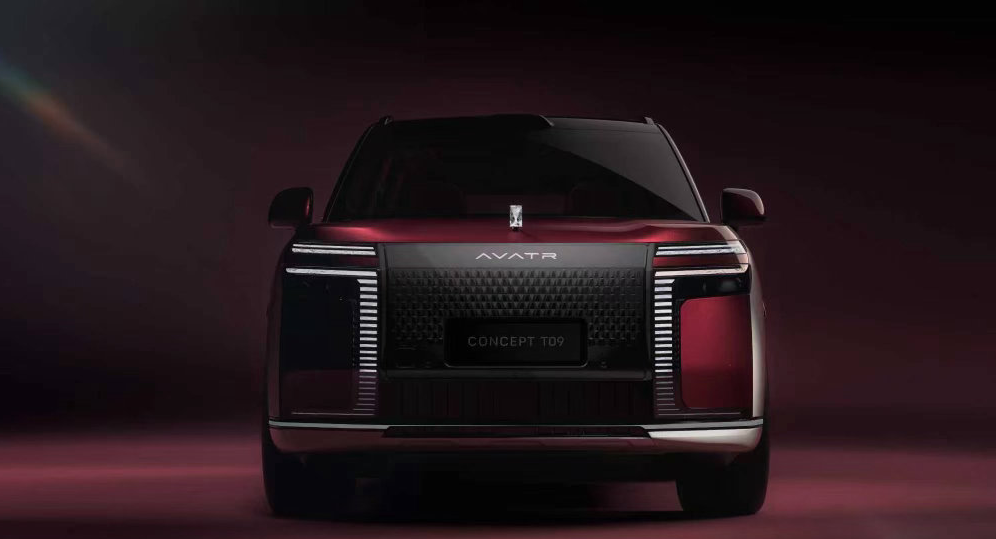 Multiple vertical emblems on the T09 concept version. Source: Weibo
Online, it’s already being dubbed the “Huawei version of the Cullinan.”
The comparison isn’t about copying the design of a million-dollar luxury vehicle. Instead, this marks the first time that the three hallmarks of luxury—vertical emblem, large size, and executive presence—have been fully integrated into a Huawei-powered domestic SUV.
Within Hongmeng Zhixing’s lineup, Aito targets family-oriented buyers, Zunchi pursues a high-end tech focus, while the Avita T09 carves out a new niche, aiming for true “prestige luxury.”
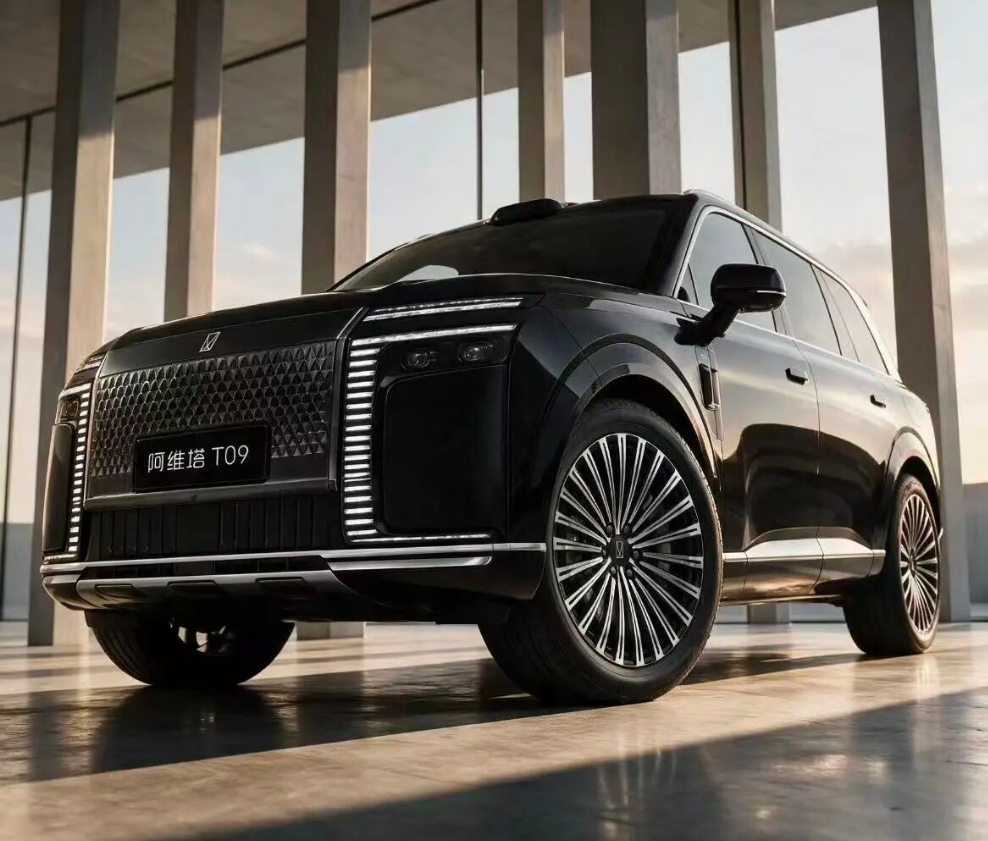
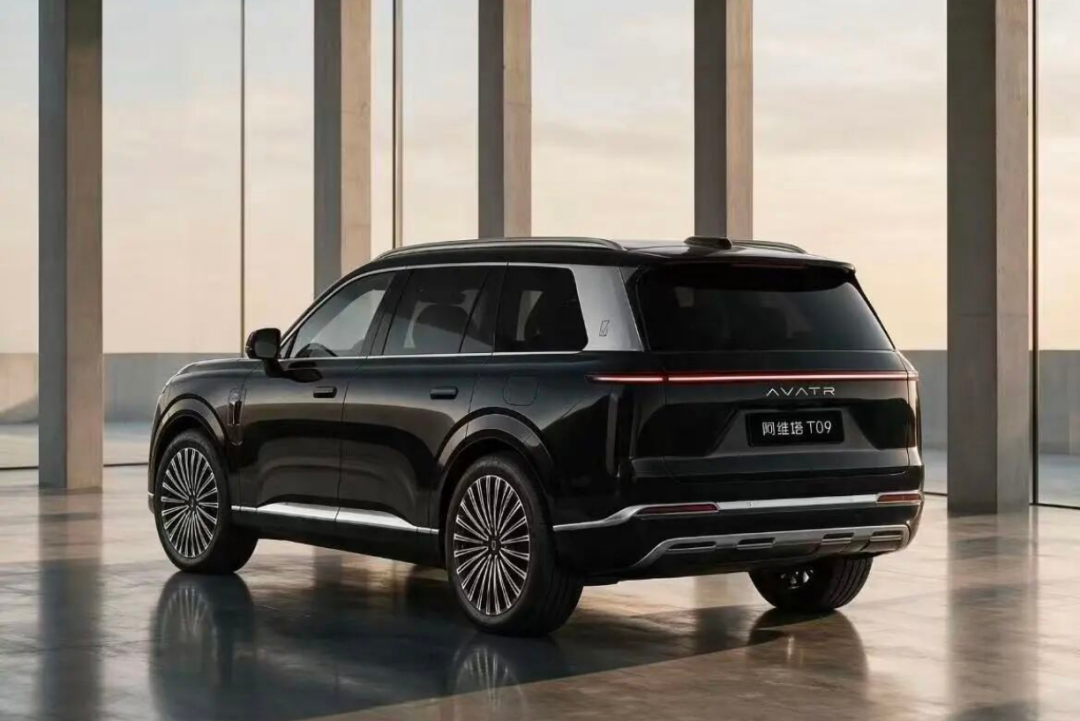
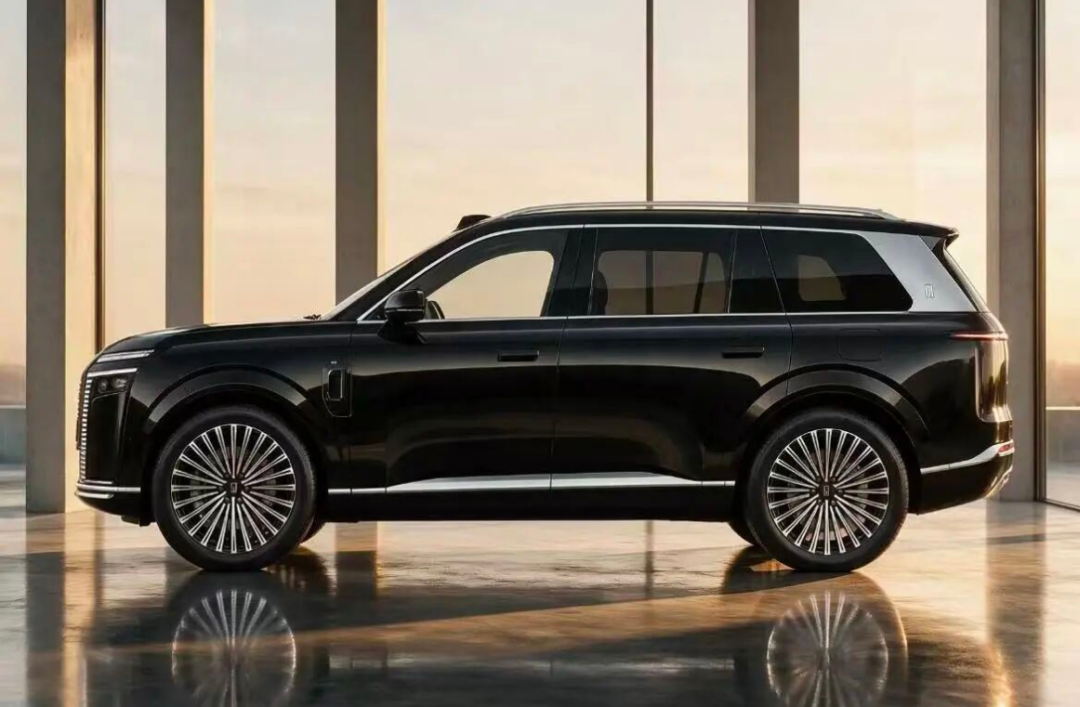 T09 without vertical emblem. Source: Weibo
Finally, a Vertical Emblem! Avita Ditches the Fastback Look for a ‘Big Boss’ Aesthetic
When past Avita models come to mind, the first thing that stands out is the sleek fastback design of the Avita 11 and 12, with sharp lines and a tech-savvy vibe favored by younger buyers—a style the brand calls “casual luxury.”
But the T09 completely flips that script.
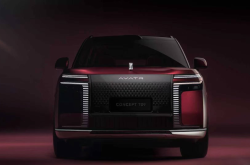
Its front fascia, dubbed “Shangding Longzu,” features a square, substantial look, a large chrome grille, and diamond-cut split headlights, creating an imposing presence on the show floor.
The biggest highlight? The crystal vertical emblem on the front.
This is a first for Avita, officially dubbed the “flagship identity”—essentially a status symbol. Paired with the illuminated emblem on the D-pillar, it’s sure to turn heads when lit up at night.
The introduction of this vertical emblem has sparked intense debate online.
Many netizens are thrilled: “Finally, a domestic car with a vertical emblem—it instantly elevates the sense of occasion and makes business receptions more impressive.”
However, some long-time fans are skeptical: “Isn’t Avita about minimalist tech? Isn’t a vertical emblem a bit too flashy?”
According to current leaks, the vertical emblem will likely be optional, allowing consumers to choose whether they want it—and are willing to pay extra.
Looking at the vehicle’s foundation, it’s a full-size six-seater.
Key dimensions include a length of 5,285mm, a width of 2,025mm, and a wheelbase of 3,150mm. Compared to popular competitors, the Aito M9 has a wheelbase of 3,110mm, and the Li Auto L9 has 3,105mm—meaning the T09 surpasses both. A longer wheelbase translates to more comfort for the second row and less crampedness in the third row.
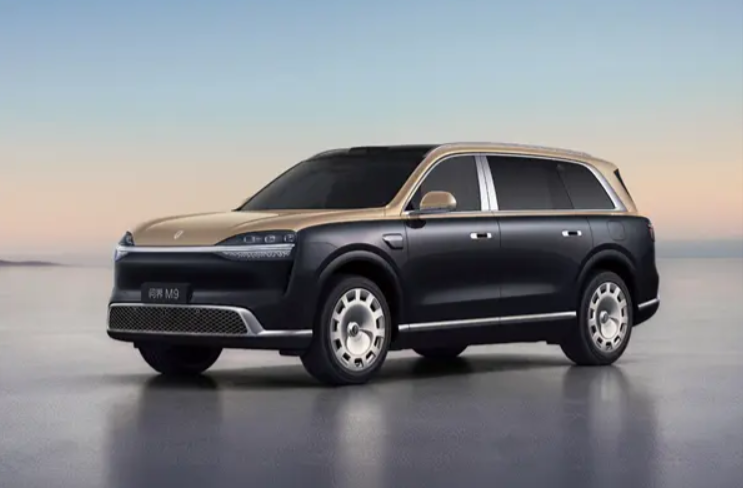
Aito M9. Source: Weibo 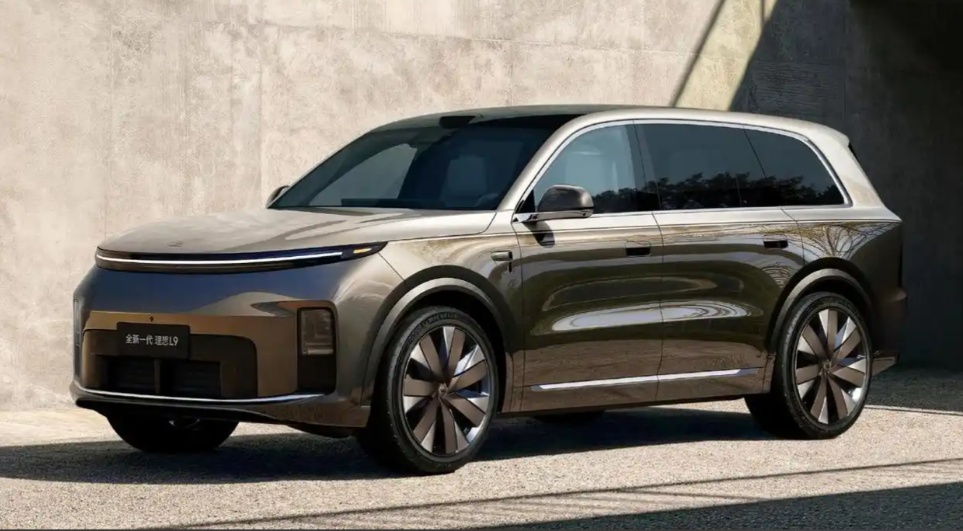 Li Auto L9. Source: Weibo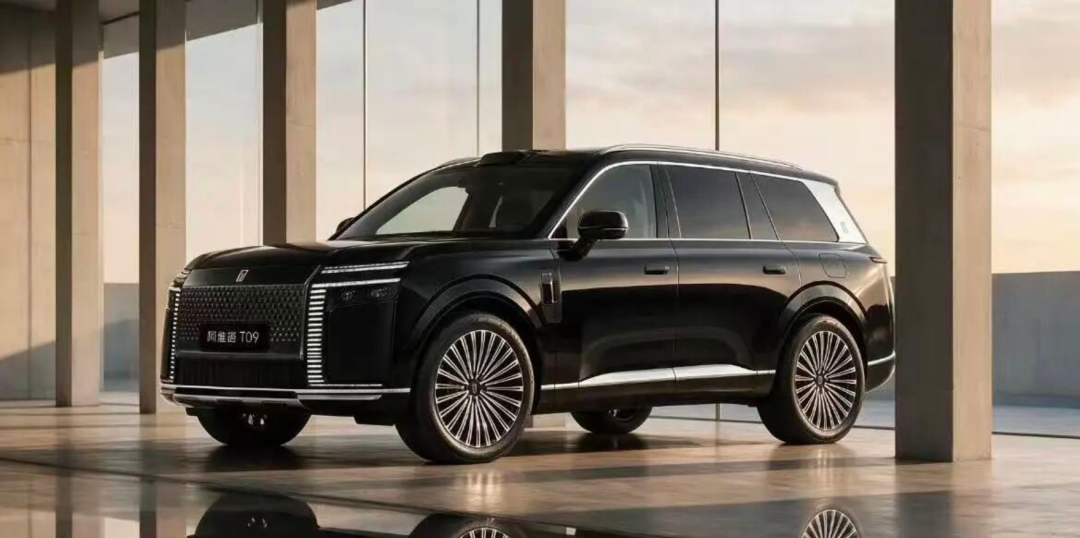
Avita T09. Source: Weibo
The exterior offers two front fascia options: a dot-matrix grille for a luxurious look and a plain version for simplicity, along with a platinum dual-tone paint job to cater to both business and family use.
Avita’s Chairman Chen Zhuo put it bluntly: The T09 directly initiates a new “prestigious luxury” flagship lineup, running parallel to the previous numeric series.
In simpler terms, Avita is no longer just targeting young people seeking individuality—it’s officially entering the market for executives and high-net-worth families.
Of course, such a transformation comes with a cost. Many long-time fans have already complained online: “The familiar fastback is gone, and so is the vibe.”
But the business logic is clear: Those willing to spend 400,000 to 500,000 yuan on a large six-seater SUV may not necessarily pursue flashy sci-fi designs; they’re more drawn to presence, space, and prestige.
The Interior is Fully Revealed, Packed with Huawei’s Entire Arsenal
At this Paris debut, the interior is finally fully revealed, no longer just a teaser in spy photos.
The cabin features a Chinese Red color scheme, creating a strong ambiance. The dashboard boasts a triple-screen setup: a 10.25-inch instrument cluster and two 17.2-inch screens for the center console and passenger side.
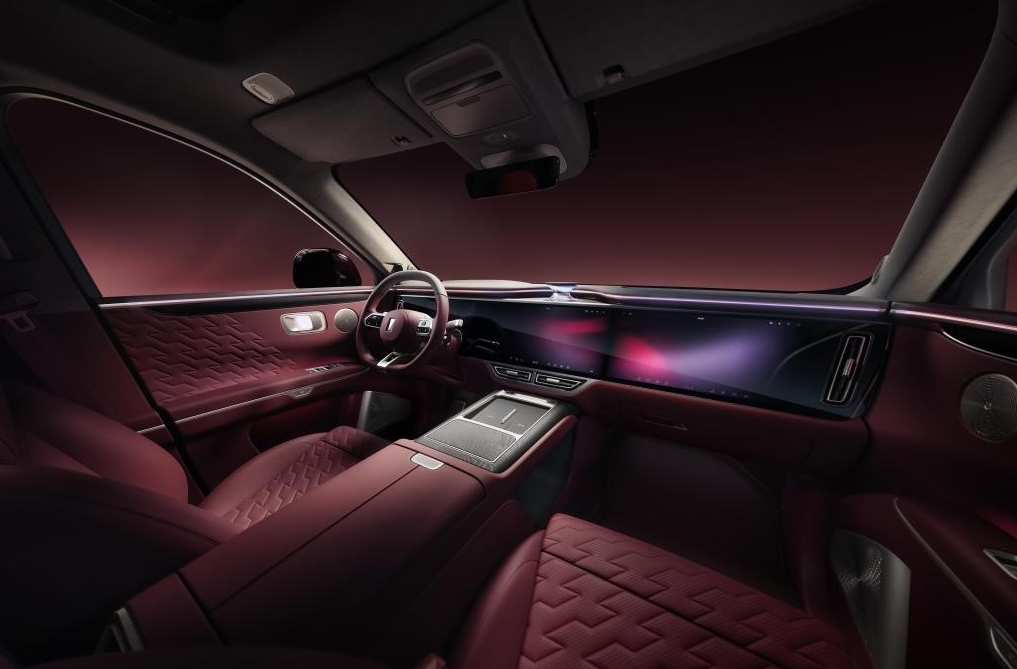
With a 2+2+2 six-seat layout, the second row features two captain’s chairs with heating, ventilation, multi-point massage, and leg rests. Both the second and third rows are fully electrically adjustable and equipped with independent air conditioning, catering well to both business clients and family road trips.
The hardware configuration piles on Huawei’s best offerings.
The intelligent driving system is Huawei’s Qiankun ADS 5, featuring four 896-line LiDAR sensors, a full L3 hardware architecture, and perception hardware scattered across the roof and fenders. The cabin runs on Hongmeng OS 6.0.
The chassis is equipped with Huawei’s Taihang Intelligent Control Chassis, featuring a closed dual-chamber air suspension, CDC, rear-wheel steering, and crab mode.
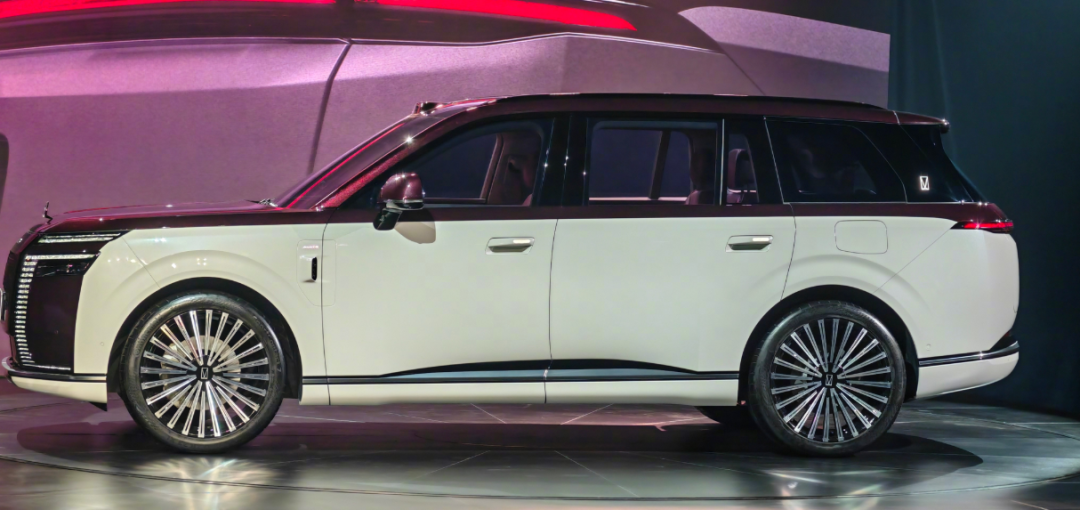
Multiple vertical emblems on the T09 concept version. Source: Weibo 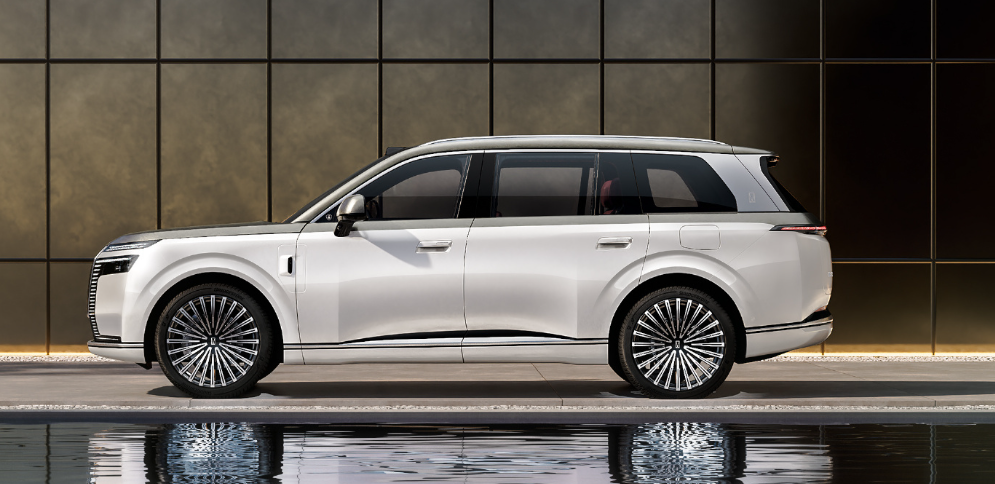
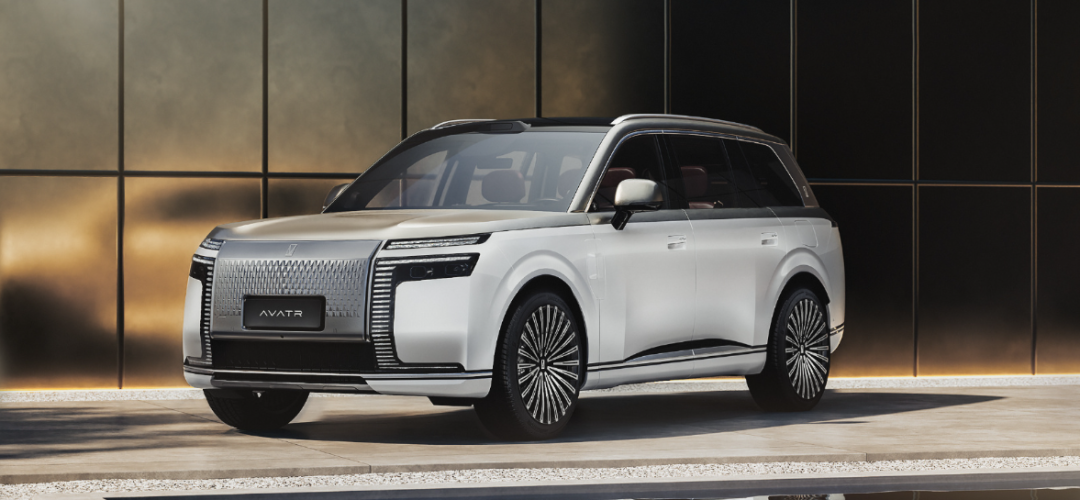
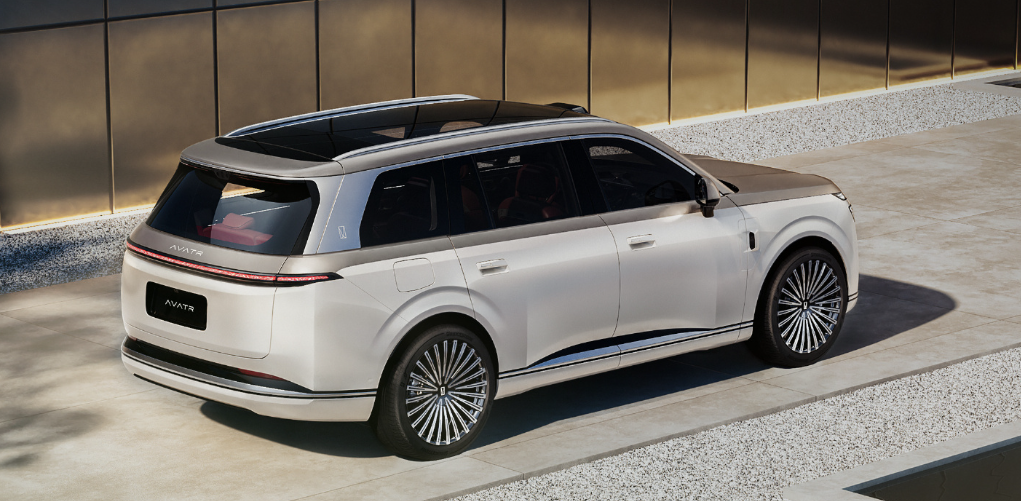 T09 without vertical emblem. Source: Weibo
Here’s the kicker: a nearly 5.3-meter behemoth with a turning radius of just 4 meters.
Anyone who has driven a large SUV knows the struggle in old neighborhoods and narrow alleys, where parking and maneuvering can be a nightmare. With rear-wheel steering, even this colossus can make agile turns.
Power comes in two versions to cater to different budgets.
The base model features a 1.5T engine paired with dual motors, sufficient for daily use; the high-end version boasts a 2.0T triple-motor super hybrid setup, with the entire system exceeding 1,000 horsepower.
All versions use a 71.24-degree CATL Xiaoyao range-extending hybrid battery, offering a pure electric range of over 400 kilometers and a combined range exceeding 1,300 kilometers, supporting pure electric, plug-in hybrid, and range-extending modes.
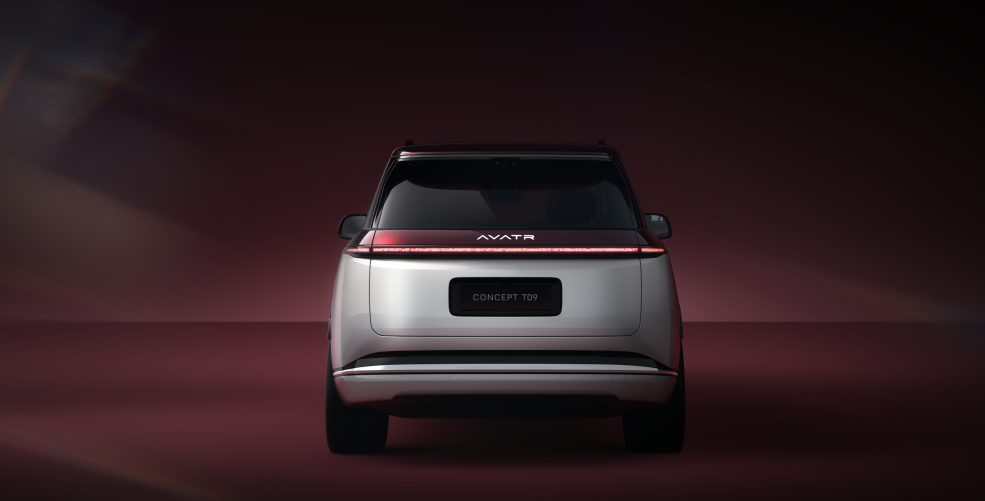 Source: Weibo
For daily commuting, it can function as a pure electric vehicle, with a weekly charge sufficient; for long trips during holidays, there’s no need to hunt for charging stations, eliminating range anxiety.
Market speculation puts the price range between 400,000 and 500,000 yuan.
To be honest, Avita is under significant pressure. In August, it sold 8,082 units, a nearly 20% year-on-year decline. The T09 is a crucial move to boost sales and elevate the brand’s ceiling. The competitors are no pushovers: Aito M9, Li Auto L9, and Zeekr 9X are all seasoned players in the market. This launch must succeed.
Glamorous Debut in Paris, But Real-World Challenges Abound
Launching globally at the Paris Auto Show, the ambition is clear: not just selling to domestic consumers but also showcasing China’s flagship strength in the luxury car heartland.
The vision is grand, but real-world hurdles are unavoidable.
Domestically, relying on Huawei’s intelligent driving and Hongmeng OS, there will undoubtedly be a large customer base willing to pay in the 400,000 to 500,000 yuan range. However, in Europe, the rules of the game change entirely.
Firstly, Huawei’s technological sensitivity overseas may lead to additional scrutiny. European luxury car buyers value brand heritage and history deeply; intelligence and autonomous driving alone won’t sway them. A Chinese brand born just a few years ago trying to snatch market share from BBA is no small feat. It’s also evident that Avita’s initial European offerings aren’t this flagship but the 06T and 07L, indicating significant resistance to large luxury SUVs overseas.
Even focusing solely on the domestic market, the T09 faces an uphill battle.
The Aito M9 has firmly established its market position, while Li Auto has mastered the psychology of family users. The T09’s strengths are clear: a longer wheelbase, Huawei’s full top-tier setup, and a powerful 2.0T triple-motor system. However, its weaknesses are glaring: zero brand recognition for executive luxury. Moreover, with a length of 5.28 meters, if parking spaces at home are narrow and the car is mostly driven solo, daily commuting and parking become a nightmare.
Online opinions are sharply divided:
“With top-tier hardware and a vertical emblem, it caters to both business and family use. If priced reasonably, under 500,000 yuan, it’s very appealing.”
“Abandoning Avita’s original soul and just stacking configurations and prestige won’t work. Ultimately, it depends on the actual build quality and feel of the production model. Overpricing will be a deal-breaker.”
Final Thoughts
For Avita, the T09 is more like a high-stakes gamble.
Abandoning its established niche of individualistic fastbacks to dive into the fiercely competitive 500,000 yuan large six-seater market. Internally, it needs to boost sales; externally, it must establish a global high-end reputation.
It’s not simply copying the playbook of overseas million-dollar luxury cars but attempting to offer a Chinese interpretation of luxury: Chinese-style presence, Huawei’s full intelligent suite, and long-range hybrid power without range anxiety.
Of course, concept cars are impressive on paper. The final verdict depends on the production model’s build quality, the final pricing, and the real-world performance of the intelligent driving and chassis systems.
Interactive Topic: Do you think the Avita T09 deserves to be called the “Chinese Cullinan”? With a 500,000 yuan budget, would you choose the T09 or the Aito M9? Share your thoughts in the comments.
Disclaimer: This article is solely a commentary by Dachang Finance and does not constitute any investment advice. The corporate data and regulatory events mentioned are sourced from public information and are for reference only, subject to official releases. Images are sourced from the internet; if copyrighted, please contact for removal.
-
![]()
Downward Adjustment of Export Tax Rebate Rate for New Energy Vehicles: Not a Bid to Reap 'Profits' from Overseas Expansion
-
![]()
Who is the Apple in the Era of Embodied AI?
-
![]()
Laughing No More! Brake Pedal Snaps—Is Lei Jun Actually the Biggest Winner? Netizens Say: Genius Move!
-
![]()
Huawei’s ‘Cullinan’ Rival Makes Its Debut: China’s First SUV with a Vertical Emblem—Is It More Prestigious Than Aito or Zunchi?
-
![]()
Blockbuster Move: Geely's Li Shufu Secures Approval to Acquire Stake in Century-Old Ford Motor's Spanish Unit
-
![]()
LiDAR Battle: RoboSense Sells 590,000 Units but Still in the Red, While Hesai Earns 70 Million—What's the Difference?
-
![]()
Vivo's Misstep: The Fallout from Widespread Flash Memory Controversy
-
![]()
Why Did Vivo Stumble Amidst the Flash Memory Mixing Fiasco?