LiDAR Battle: RoboSense Sells 590,000 Units but Still in the Red, While Hesai Earns 70 Million—What's the Difference?
 10/13 2026
 395
395
If you only look at RoboSense's Q3 "report card" just released, it appears to be a booming tech star.
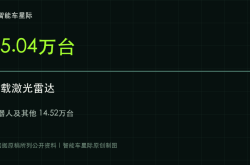
A staggering 595,600 LiDAR units were sold in a single quarter, a massive increase of approximately 206,700 units from the previous quarter! About three-quarters of these were installed in vehicles, with the remainder purchased by various types of robots. The year-over-year growth rate reached an astonishing 220.9%. A sensor company is churning out nearly 600,000 high-precision devices in just one quarter.
But behind this impressive figure lies an extremely odd transaction.
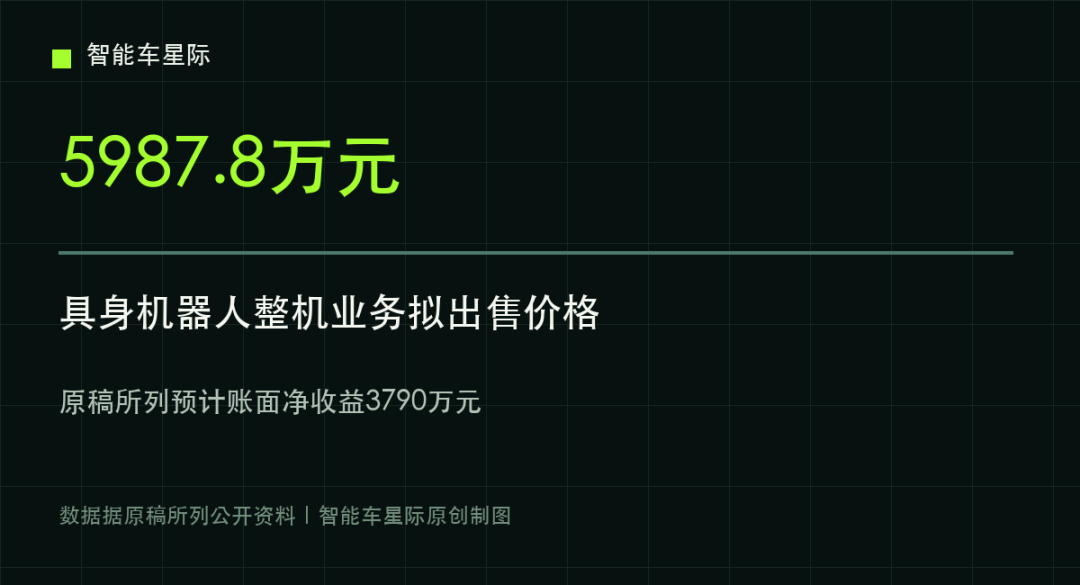
Just one month before announcing these shipment numbers, RoboSense quietly released a statement: It planned to sell its "embodied robotics business" for 59.878 million yuan.
Who is the buyer? A company called "Xiyuan Robotics." Digging deeper into the ownership structure reveals that Xiyuan's actual controller is none other than Qiu Chunxin, the founder, chairman, and chief scientist of RoboSense!
Why would a company riding the wave of robotics and smart vehicle growth sell off its in-house robotics team—representing the most valuable future growth area—at a low price to an external company controlled by its founder, especially when shipments are soaring?
Original chart by Intelligent Vehicle Interstellar | Data from references at the end
A Conflict of Interest
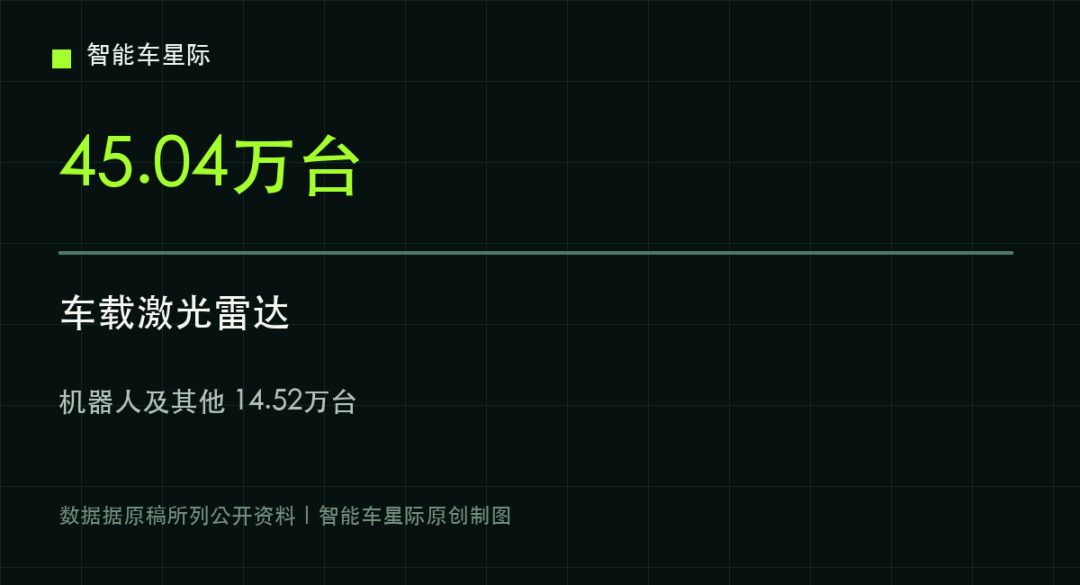
In Q3, 450,400 automotive LiDAR units were sold, 3.1 times the 145,200 units sold in the robotics and other sectors, reclaiming three-quarters of the market. But earlier this year, the script was different: In Q1, the robotics business accounted for more than half of total sales.
This dramatic shift in sales proportion is not due to management's whims but is dictated by passive business realities.
The automotive business depends on automakers' production timelines. As of August this year, RoboSense had secured design wins for 177 vehicle models, with 81 already in mass production (an increase of 12 from Q1). The company claims over 9 million units in orders, but these are merely "supply qualifications." When a few collaborating models suddenly hit the market, orders can surge dramatically in a single quarter.
In contrast, the robotics business is highly fragmented. RoboSense claims to serve over 3,400 robotics clients globally, including lawn mowers, cleaning robots, and quadrupedal robot dogs, which often involve small-batch purchases for validation. Only during seasonal peaks, like for lawn mowers, do orders spike suddenly.
Original chart by Intelligent Vehicle Interstellar | Data from references at the end
Surging Shipments, But Where Are the Profits?
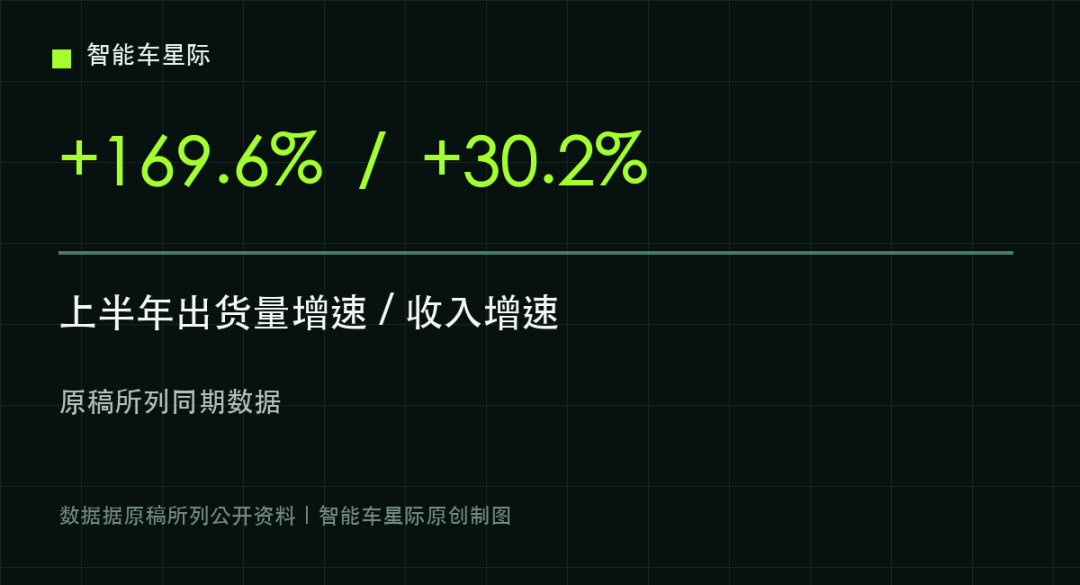
On the surface, RoboSense sold 719,200 LiDAR units in the first half of the year, a staggering 169.6% increase year-over-year. But a closer look at the financials reveals a dangerous crack.
Shipments rose by 169.6%, yet total revenue for the first half (1.02 billion yuan) grew by just 30.2%! The gap between the two growth rates exceeds 100 percentage points.
This suggests RoboSense is sacrificing profit margins with a brutal "price-for-volume" strategy to survive.
Original chart by Intelligent Vehicle Interstellar | Data from references at the end
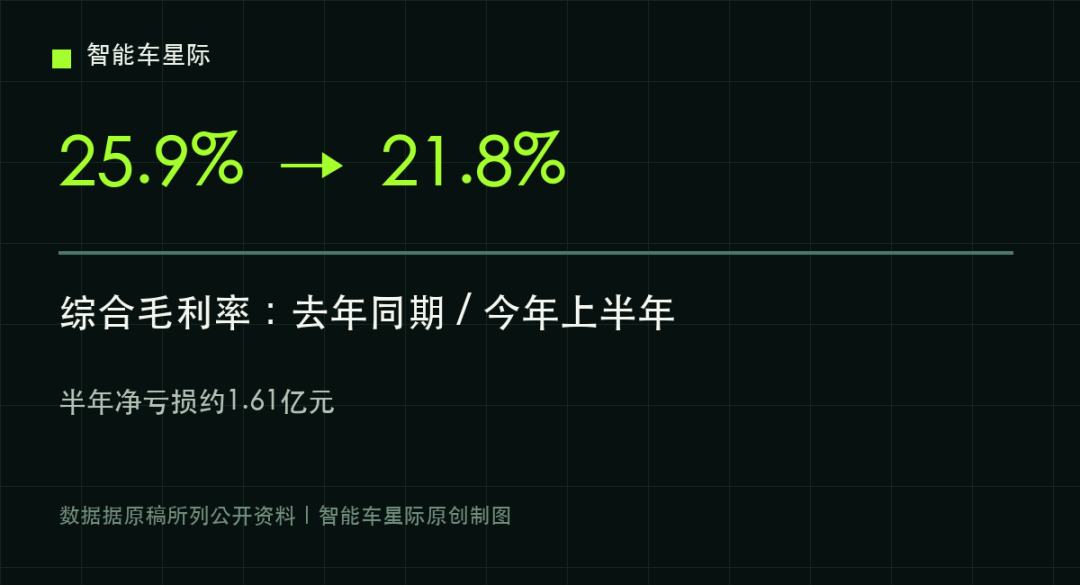
The cost is immediate: The gross margin plummeted from 25.9% year-over-year to 21.8%, with a net loss of approximately 161 million yuan in the first half. Production lines are humming faster than ever, but the increased sales volume can't cover the bleeding from plummeting unit prices and rising costs. The high initial manufacturing costs of the new-generation EMX in Q1 only worsened the situation.
To secure automotive contracts, performance had to be pushed to the limit. But once LiDAR becomes standard in high-volume mainstream models, automakers use their purchasing power to demand steep discounts. When LiDAR shifts from a "showpiece feature" to a "price-comparison staple," competition evolves from "who gets on board first" to "who can survive the price cuts."
In this survival race, the robotics business has become a "lifeline." According to company data cited by Nanfang+, while robotics accounted for just 39% of total shipments (282,600 units) in the first half, its revenue neared half of total product revenue and became the main source of gross profit.
Competitor Hesai has already navigated this challenge: In Q2, Hesai delivered 628,300 units, achieved a 40.1% gross margin, and reported a net profit of 70.6 million yuan. RoboSense's 21.8% gross margin and 161 million yuan loss put immense pressure on the company when compared to a rival already turning a profit.
Original chart by Intelligent Vehicle Interstellar | Data from references at the end
Selling Off the Robotics Business
The thirst for profit, combined with massive capital expenditures on self-developed chips (Phoenix and Kongque SPAD-SoC), led RoboSense to make a decision that caught the capital markets off guard.
On September 10, RoboSense announced it would sell its embodied robotics business for 59.878 million yuan to Xiyuan Robotics, controlled by founder Qiu Chunxin. As of the end of June, the net book value of this asset was approximately 2.384 million yuan, with the transaction expected to generate a one-time net gain of 37.9 million yuan for the listed company.
From a business perspective, the logic is sound.
A LiDAR company venturing into robotics manufacturing not only faces challenges in motors, joints, and after-sales service but also competes directly with its own LiDAR customers (other robotics companies) in the end market. By stepping back, abandoning full robotics manufacturing, and focusing solely on "eyes and skin" (sensors), RoboSense can save on capital expenditures and alleviate customer concerns.
However, from a capital market perspective, this related-party transaction is shrouded in ambiguity. Once the robotics team leaves the listed company, how will core technologies, patents, employees, and even future orders be divided? Can a mere 60 million yuan truly buy out a track representing future trillion-dollar valuations in "embodied intelligence"?
More subtly, if Xiyuan secures massive external financing independently, the appreciation of this highly valuable asset will have nothing to do with the listed company's minority shareholders. If Xiyuan later becomes a major purchaser of RoboSense's LiDAR, how will pricing be determined to convince external investors that no conflict of interest exists?
Original chart by Intelligent Vehicle Interstellar | Data from references at the end
Beyond 600,000 Units
With 595,600 units shipped in Q3, RoboSense's total sales for the first three quarters reached a staggering 1.3148 million units, far surpassing last year's full-year total of 912,000 units.
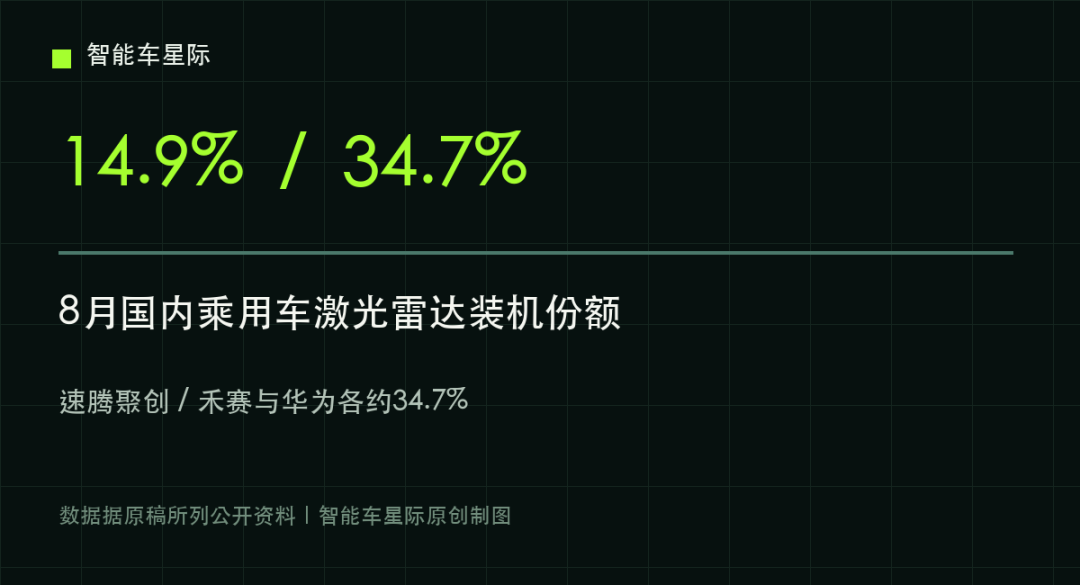
According to NE Times data cited by 21st Century Business Herald, in August, RoboSense held about 14.9% of China's passenger vehicle LiDAR installation market, while Hesai and Huawei each captured roughly 34.7%.
Faced with a 21.8% gross margin and ongoing losses, if you were RoboSense's leader, would you continue to "bleed" for scale in the automotive business or bet everything on the more profitable robotics sector?
References
1. Jiemian News: Q3 2026 operational data
2. 21st Century Business Herald: Q3 sales, design wins, and industry competition
3. RoboSense: 2026 interim results
4. RoboSense: Q1 2026 results and design wins
5. RoboSense: H1 sales announcement
6. Nanfang+: Robotics business revenue and gross profit
7. 21st Century Business Herald: Sale of robotics business and related-party relationships
8. RoboSense and NVIDIA Holoscan Sensor Bridge collaboration
9. Hesai Q2 2026 results
-
![]()
Downward Adjustment of Export Tax Rebate Rate for New Energy Vehicles: Not a Bid to Reap 'Profits' from Overseas Expansion
-
![]()
Who is the Apple in the Era of Embodied AI?
-
![]()
Laughing No More! Brake Pedal Snaps—Is Lei Jun Actually the Biggest Winner? Netizens Say: Genius Move!
-
![]()
Huawei’s ‘Cullinan’ Rival Makes Its Debut: China’s First SUV with a Vertical Emblem—Is It More Prestigious Than Aito or Zunchi?
-
![]()
Blockbuster Move: Geely's Li Shufu Secures Approval to Acquire Stake in Century-Old Ford Motor's Spanish Unit
-
![]()
LiDAR Battle: RoboSense Sells 590,000 Units but Still in the Red, While Hesai Earns 70 Million—What's the Difference?
-
![]()
Vivo's Misstep: The Fallout from Widespread Flash Memory Controversy
-
![]()
Why Did Vivo Stumble Amidst the Flash Memory Mixing Fiasco?