Who is the Apple in the Era of Embodied AI?
 10/13 2026
 549
549
Author|Mao Xinru
In the past two years, the embodied AI industry has always sought to find its own reference point.
Some aspire to be the Android of the embodied AI era, others aim to be the NVIDIA, and some set their sights on becoming the OpenAI or Anthropic of the physical world.
Yet, after numerous comparisons, no one can definitively say where the next ticket for embodied AI lies.
Is it in mastering foundational computing power and toolchains, becoming a model platform, developing an open robot operating system, or controlling the robot body, models, and applications all in-house?
Among these references, Apple may be the most unique.
What truly sets Apple apart is not a single technology but its ability to integrate technology, hardware, software, design, and user experience.
It knows what is worth doing and what is not; it can hide complex underlying capabilities to make the final product simple enough; it has its own product definitions while allowing an ecosystem to grow around its products.
And this is precisely the question that embodied AI needs to answer today.
The motion and operational capabilities of robots are becoming increasingly mature; building a robot is no longer the hardest part. The challenge lies in determining what it should do and what it should look like.
Therefore, the key to finding the Apple of embodied AI lies in identifying who is developing Apple-like product capabilities.
Why Apple?
To determine who possesses this capability, we must first look at Apple. One of Apple's most valuable abilities is how it handles the relationship between technology and products.
Technology companies are usually better at answering whether something can be done, while product companies must answer why users would want to use it after it's made.
Apple's strength lies in its ability to redefine what something should be at times when the technology already exists but the product form has not yet converged.
Before the iPhone, smartphones already existed, and the touchscreen was not invented by Apple. What Apple truly changed was how people understand and use smartphones.
Thus, product definition is one of Apple's most important capabilities.
It does not cram all technologies into a single device but continuously makes trade-offs: some technologies should become functions that users can directly feel, while others are better hidden in the background; some are worth long-term investment, while others, even if technically feasible, can be temporarily set aside.
This is where technological "taste" holds the most value.
Here, "taste" refers to whether a company has its own technological judgment.
This judgment is often reflected in a series of specific choices: which path to take, how far to go with a function, which parameters should give way to user experience, and which designs should be adhered to even if they come at a higher cost.
These choices gradually shape the product's character.
Another key capability of Apple is the deep synergy between hardware and software.
From chips and hardware to operating systems and services, Apple has always emphasized co-design. For smartphones, this means that performance, power consumption, interaction, and system experience can be optimized together; for robots, this approach becomes even more complex.
A robot is not simply a matter of buying a body and installing a model.
How the joints are designed affects what the model can learn; how the sensors are arranged affects what the robot can perceive; the robot's weight, compliance, and control frequency, in turn, limit the tasks the model can accomplish.
Therefore, true hardware-software integration in embodied AI is not just about a company owning both hardware and models but about designing hardware from the outset based on intelligence requirements, while intelligence also understands the physical boundaries from the start.
Finally, Apple has another often-overlooked capability: transforming complex technologies into products that users can understand.
This is where design plays a crucial role.
Design is not just about adding a beautiful shell to a robot but enabling users to understand what it is, what it can do, and why it is worth having without needing to grasp the underlying complex technologies.
Applying this logic to embodied AI, an Apple-like company would roughly need to possess the following: its own technological taste, hardware-software integration capabilities, clear product definitions, and a memorable flagship product and scenario.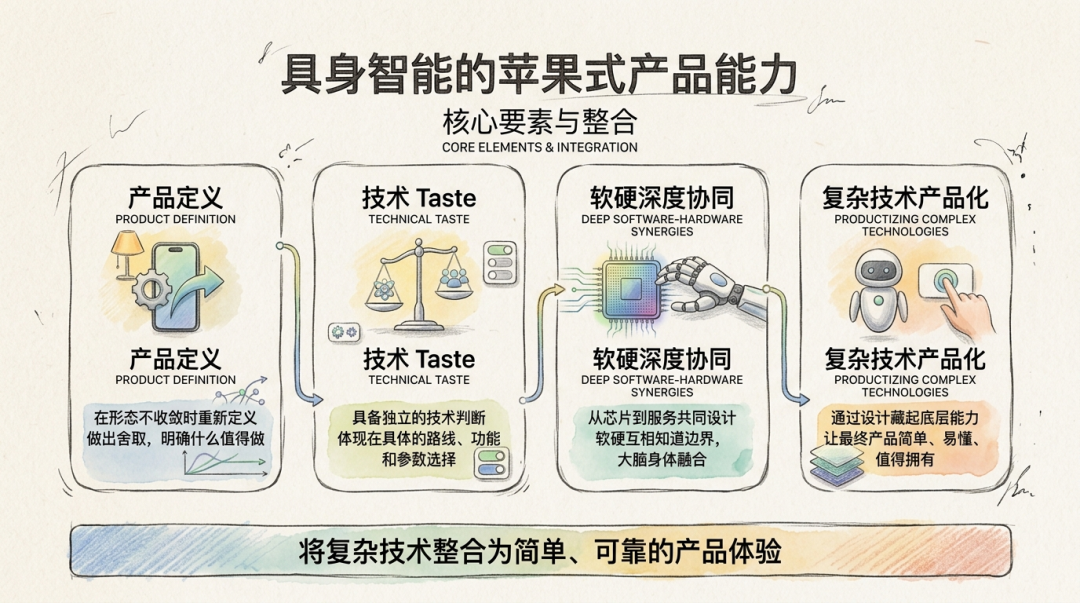
Brand is undoubtedly important, but it is more like the result of long-term accumulation of these capabilities rather than the starting point.
Apple's strong brand influence today stems from decades of product accumulation, which has created stable user expectations around the "Apple" name, rather than starting with a strong brand and then defining products backward.
When we talk about finding the Apple of embodied AI today, what is more worth observing is who is beginning to define what robots should be.
Four Companies, Four Kinds of "Apple-esque" Approaches
Measured by these standards, in today's embodied AI industry, Sharpa, Star Era, Astribot, and SWancor are already showcasing some "Apple-esque" qualities in four different directions.
Sharpa is the most typical example.
It first focused on the most challenging aspect of robots: dexterous hands, and from there, gradually connected hands, tactile sensing, the robot body, teleoperation, and models into a cohesive system.
In the past, the industry tended to view dexterous hands as a parameter problem—degrees of freedom, speed, and force. However, when it comes to actual operation, the difficulty lies in the series of judgments after contact: what was touched, how much force was applied, whether there was slippage, and how to adjust next.
Sharpa refers to these challenges as the "last 1%" of a task.
The implementation project at a DQ store is the most intuitive (zhíguān, intuitive) validation of this approach. The store made no modifications for the robot: paper cups, spoons, metal cup holders, and ice cream machines were all the same as those used by staff.
The robot had to autonomously complete 55 consecutive steps from order-taking to delivery in such an environment and ultimately achieve DQ's iconic "no-spill pour"—not just performing a set of actions on a pre-arranged demonstration table but actually completing real tasks in a genuine store setting.
The difficulties lie entirely in the details: paper cups are thin and often nested together, making them easily ruined with slight misalignment in grip; tactile sensing is involved in 98% of the 55 steps, as cameras can tell you where the cup is but cannot judge whether the grip force is appropriate or if slippage is occurring.
Sharpa's solution places the hand at the center of the system, using CraftNet to fuse visual, tactile, linguistic, and motor data, processing contact feedback at approximately 100Hz.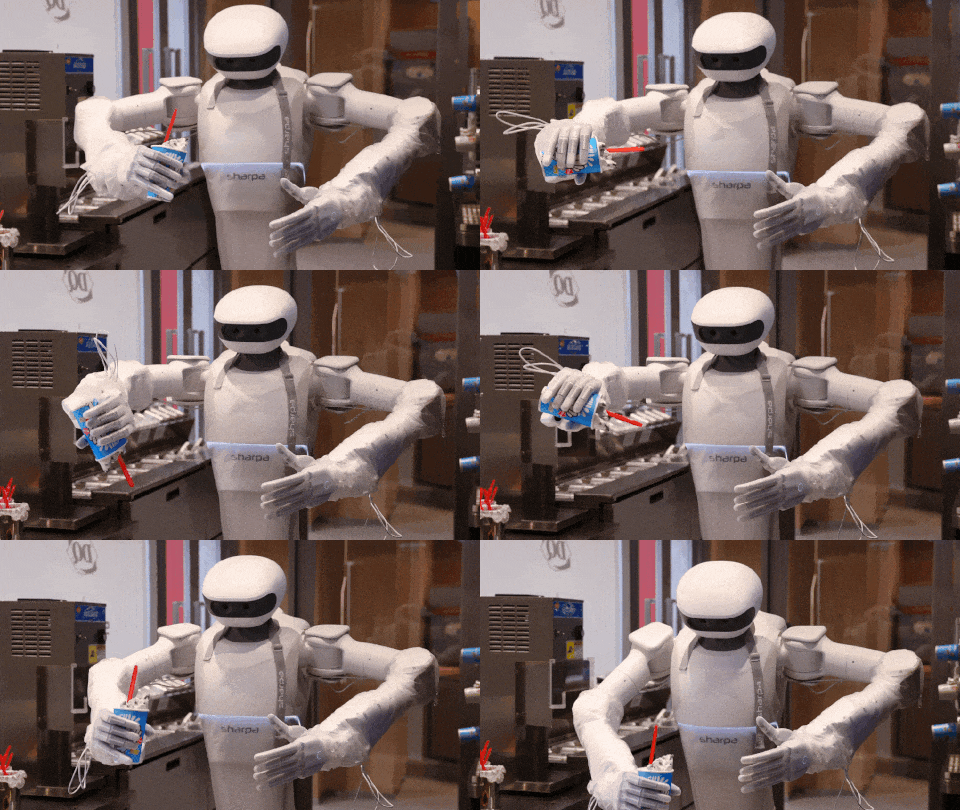
Thus, Sharpa is not just choosing a complex hand but tackling a problem worth solving for a long time. Its product judgment is clear: a robot's usefulness comes not from demonstrating a single action but from completing an entire task.
If Sharpa establishes its product definition through a key technological entry point, then Star Era takes a heavier approach: developing the entire system, from body to brain, in-house.
Its self-developed product line covers the L7 and Q5 robot bodies, the XHAND dexterous hand, and the ERA-42 and VPP model series.
What makes this approach similar to Apple's is not just full-stack self-development of hardware and software but the fact that how the body and brain should cooperate is determined internally.
When robots enter real-world environments, the value of this coupling becomes even more evident: motor capabilities, sensors, and control systems determine what the model can learn, while the model's capability boundaries, in turn, reshape body design, data collection, and task planning.
If these all links (gè huánjié, links) are disconnected from one another, no matter how strong individual technologies are, they may not combine into a truly useful robot.
Star Era's choice of logistics as its commercial entry point makes sense for this reason. In real logistics centers, packages are piled haphazardly, tasks are repetitive, and equipment must operate continuously. Whether a robot is worth its price ultimately depends on stability and delivery.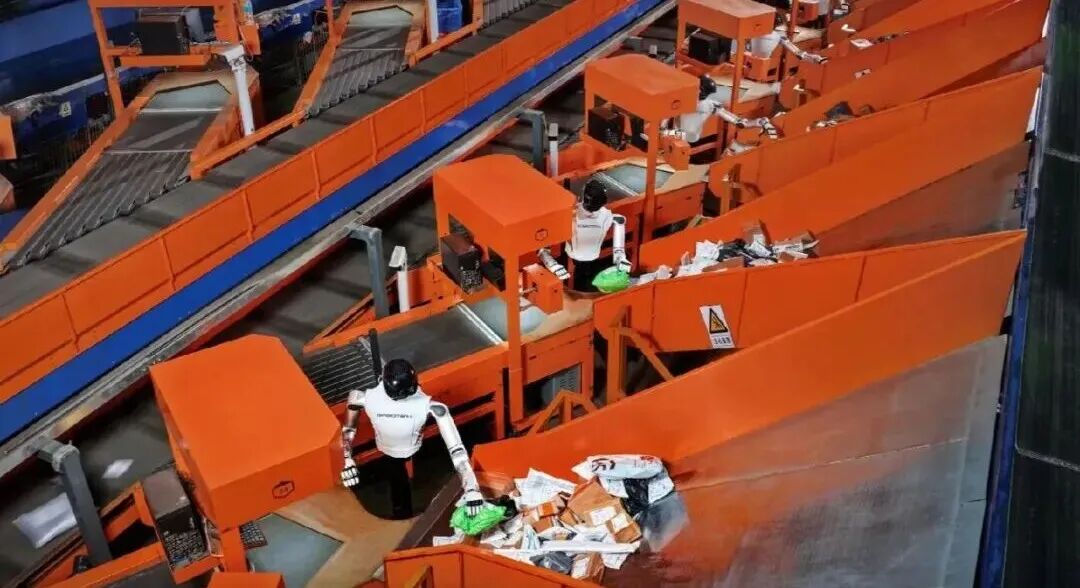
Currently, it has established regular operations in over 10 logistics centers across five provinces and municipalities in China, in collaboration with China Post and SF Express.
Recently, Star Era's world action model, VPP2, topped the RoboDojo leaderboard with an average score of 39.26 and an average success rate of 32.26%, leading in generalization, fine manipulation, and memory metrics, and announced its open-source release.
This adds externally verifiable model progress to its full-stack approach: evaluations provide benchmarks, while open-sourcing gives developers an entry point for further research and use. Full-stack self-development thus becomes more than just a conceptual label.
Star Era is betting on the system itself—not just assembling components but refining the body, brain, motion control, and data in a unified rhythm to ultimately produce a robot capable of long-term, stable operation.
Astribot also insists on full-stack self-development of hardware and software but differentiates itself by focusing on a more practical point: what kind of body a robot should have to integrate into human life.
Cable-driven actuation is the most intuitive (zhíguān, intuitive) manifestation of this choice.
Compared to traditional rigid transmission, cable-driven systems require handling more complex mechanical and control challenges, but Astribot hopes to achieve smoother and more nuanced motion performance through this body structure, making robots more suitable for long-term, close coexistence with humans.
This itself reflects technological taste: not following the most mainstream path but first clarifying what kind of body the product needs and then deciding how to build it.
This year, Astribot introduced the model Lumo-2 and Agent Philia, extending its technological layout into a three-tier system: AI model, embodied OS, and cable-driven body.
Lumo-2 is designed for complex household tasks, while Philia further explores natural language interaction, long-term memory, and robot scheduling, hoping to enable users to communicate with robots through everyday interaction interfaces without needing to learn a new operational paradigm.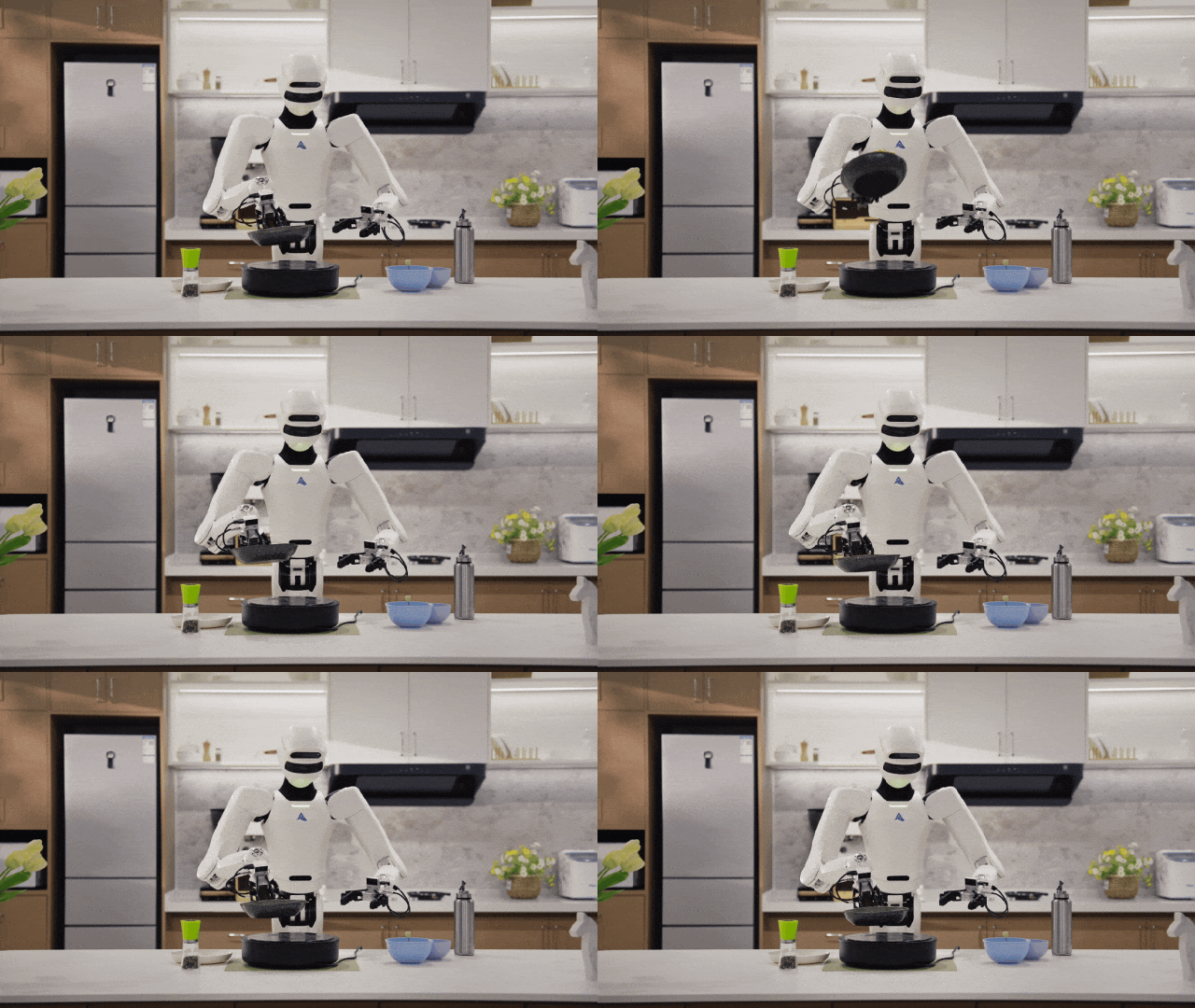
As robots begin to enter households, the ability to perform a certain action is just the first step. What users truly need is a robot that can understand them, remember them, and remain useful over the long term without requiring them to learn a new "robot language."
Household scenarios are far more complex than standardized industrial settings: item locations change, user habits vary, and the same phrase may have different meanings in different contexts.
The robot's core value lies not just in completing actions but in adapting to users, integrating into life, and remaining usable over time.
Astribot's "Apple-esque" quality lies in its consistent organization of technology around the end-user experience rather than letting technologies operate independently.
It seeks to answer: Can a differentiated hardware architecture and AI approach truly translate into a product experience that users can perceive and use long-term?
If the first three companies focus more on operational capabilities, system synergy, and long-term interaction, SWancor pushes the question directly to the consumer product end.
When will robots become something ordinary people are willing to buy and use in their daily lives?
Its Q1 and T1 personal robots target household consumer scenarios.
The Q1 is compact and lightweight, supporting foldable storage for typical household spaces; the T1 supports Morphological switching (xíngtài qiēhuàn, form-switching), covering scenarios like home companionship and outdoor mobility. Priced starting at 19,999 yuan, these robots now have a clear consumer-grade product price.
SWancor does not prioritize parameters but instead examines the entire user experience from purchase to use: whether it looks good at home, how convenient it is to store, how easy it is to start using, whether it allows for secondary development, and whether it can continue to be upgraded afterward.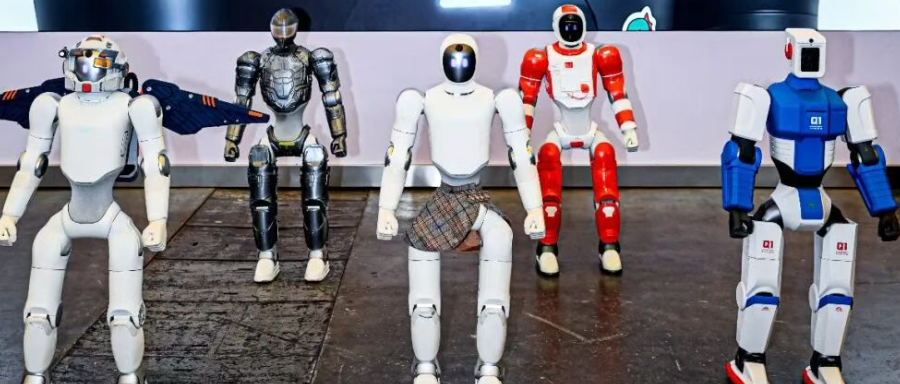
It places why users would want to buy and continue using the product ahead of product definition.
Consumer products cannot simply package technology and sell it; they must first clarify who will use it and where, then make trade-offs in price, size, operation, and functional boundaries accordingly. They don't need to be the best at everything but must make users understand why they should buy them.
Of course, SWancor has also expressed its vision of becoming the Apple of the robotics world. The ultimate test for this goal is whether users are willing to buy and frequently use the product, as well as whether it can provide long-term value worth paying for.
The personal robot market is still in its early stages, but SWancor has already placed consumer pricing and developer ecosystems on the table.
Its stance is clear: when robots begin facing individual consumers directly, competition is no longer just about technological capability. Equally important is the ability to organize technology into products that users can understand, afford, and continue using.
Together, these four companies form four distinct perspectives, each answering the four hardest questions for an Apple-like company in embodied AI:
Sharpa is answering whether the robot's most challenging capability can become a product entry point.
Star Era is answering whether the body and brain can truly form a unified system.
Astribot is answering whether a unique body and AI approach can translate into a holistic user experience.
Shangwei Qiyuan is questioning whether robots can truly enter the consumer market.
Currently, there are no standard answers to these four questions. 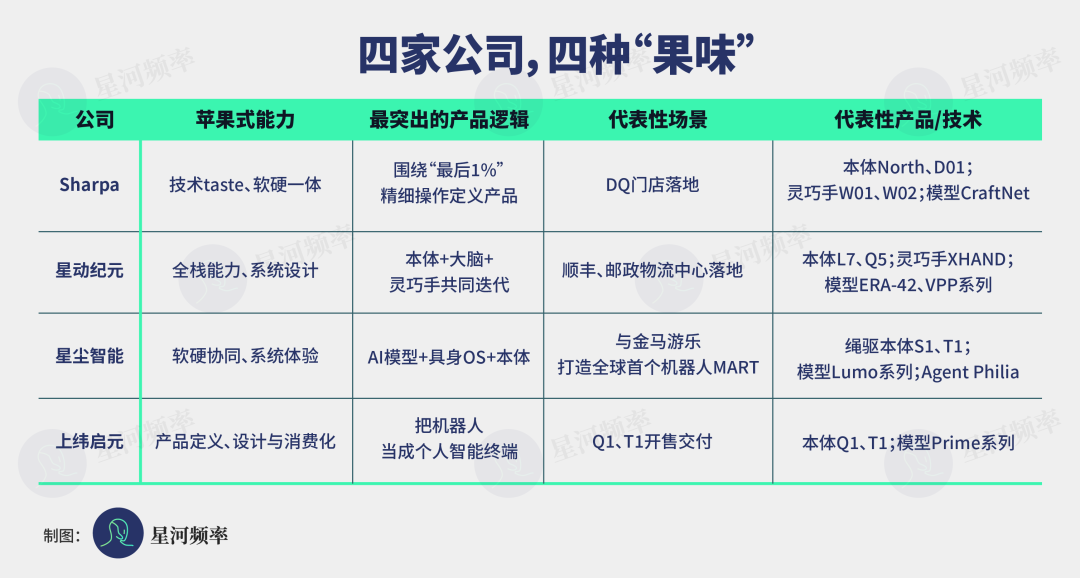

The answer doesn't lie solely with Apple.
Of course, it's still too early to determine who will become the 'Apple' of embodied intelligence.
Looking back at Apple's development, the success of the iPhone wasn't achieved overnight through a single new technology or a celebrity (changed to 'star') product. Its operating system, chips, supply chain, and the developer ecosystem built around its products are all the result of years of accumulation.
What Apple truly did right was integrating these previously scattered capabilities and, through iterative product generations, gradually transforming technology into an experience that users take for granted.
This is also something worth considering for today's embodied intelligence companies.
The robotics industry is still grappling with several fundamental questions: Which scenarios should robots enter first? What capabilities are users willing to pay for? What tasks represent high-frequency demands? And which robotic capabilities can be reused across different scenarios?
The answers vary across different scenarios.
Industrial clients care about operational stability and whether their investment can be recouped; home users are concerned about ease of operation and whether robots can genuinely help; research teams aim to continuously push the boundaries of model and algorithm capabilities.
With such diverse needs, the forms and development paths of products will naturally not be entirely consistent.
Therefore, embodied intelligence may not necessarily follow the same path as smartphones, giving rise to a single, all-purpose robot capable of sweeping across all scenarios.
More likely, a certain type of robot will first gain a foothold in a specific scenario: it can consistently complete tasks, its usage costs are justifiable, customers are willing to repurchase it, and the product can be replicated across different locations.
Only when such products gradually mature will users slowly form a clear understanding: certain tasks can be handed over to robots, and doing so is indeed more appropriate. 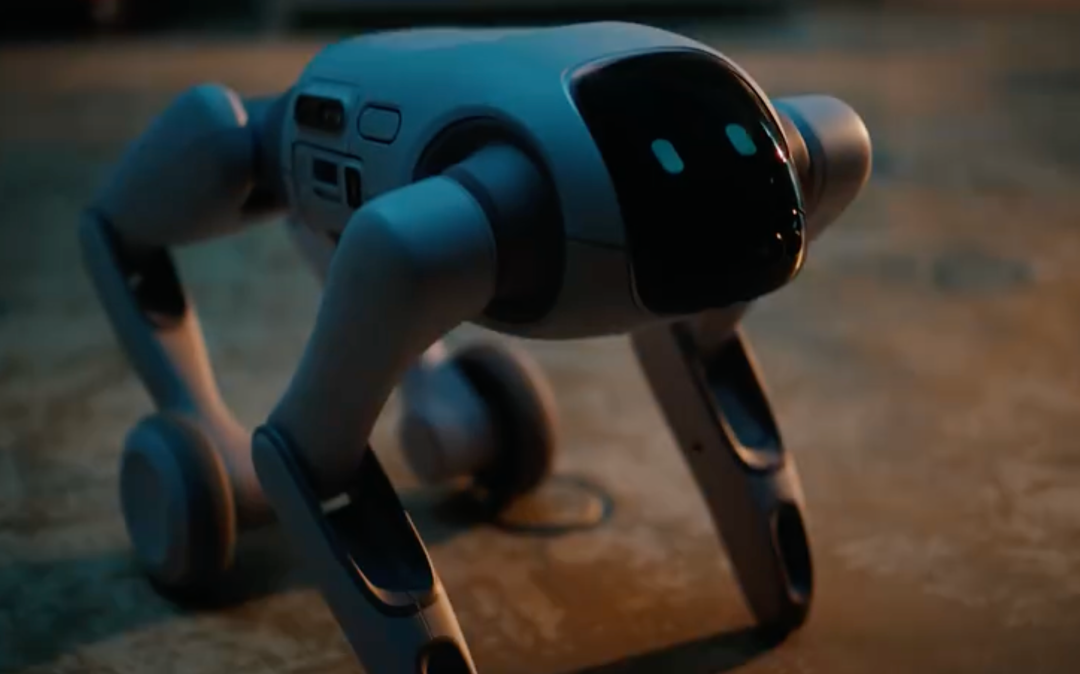
This may be the true product breakthrough for embodied intelligence. It doesn't have to be universally applicable from the start, but it needs to solve one task exceptionally well.
As products expand into more scenarios, supply chains, software tools, and third-party developers will have the opportunity to develop around them, further expanding the product's capability boundaries.
Following this line of thought, when evaluating whether a company has the potential to become the 'Apple' of embodied intelligence, the criteria should not be limited to a few conspicuous labels.
Full-stack self-research is noteworthy but not a sufficient condition; public demonstrations can showcase capabilities, and evaluation scores can provide references, but none can directly indicate that a product is mature.
Ultimately, what truly makes a difference are three things:
Knowing who you're solving problems for and what problems you're solving, and having the courage to make trade-offs accordingly.
Integrating the robot body, models, and control systems into a cohesive whole, turning visions into usable products.
Repeatedly testing in real-world environments and consistently generating value.
These three questions relate to product direction, system capabilities, and implementation results, respectively.
In the end, technology must ultimately manifest in products. Whether a product can be stably delivered, accepted by users, and demonstrate value in real-world use determines how far the technology can go.
The industry is always searching for the 'XXX of embodied intelligence,' hoping to find a reference direction in an uncertain phase.
But experience is not a ready-made answer that can be directly copied.
Full-stack self-research, software-hardware integration, or unique designs are merely means to achieve a product. More importantly, can a company stand in the user's shoes and transform complex technology into a simple, reliable, and worthwhile experience?
When using a phone, we don't need to understand how the chip works or grasp the underlying principles of the operating system.
For future robots, the ideal state should be the same.
The true product value only emerges when people stop being surprised that a robot can do something and instead start habitually entrusting that task to the robot.
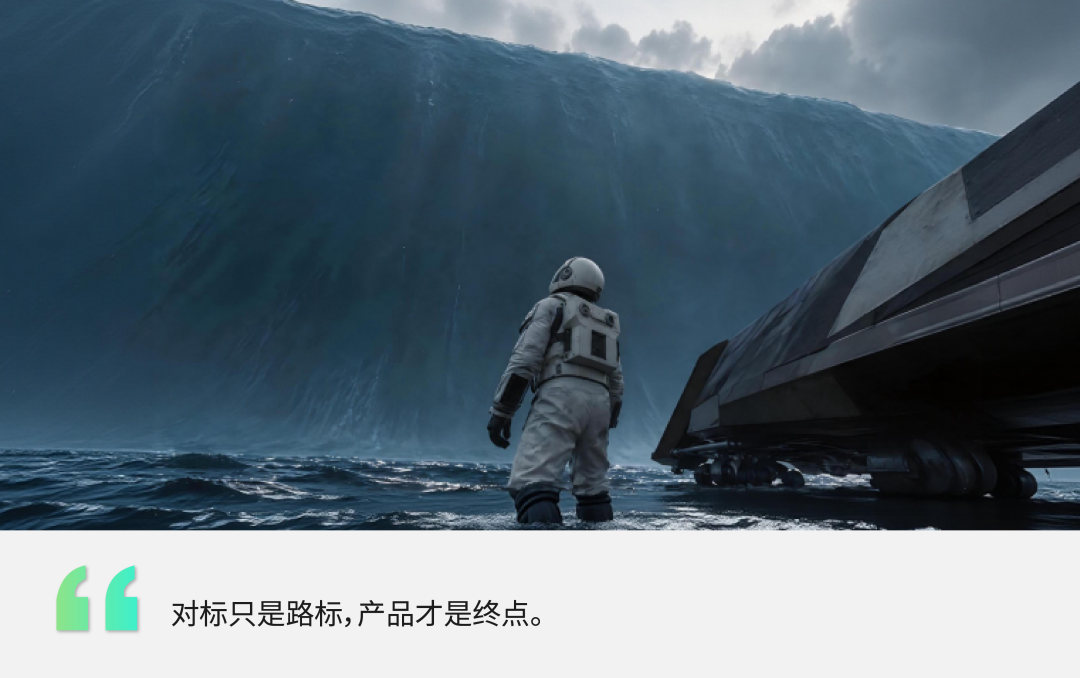
Before that day arrives, all benchmarks are merely signposts.
-
![]()
Downward Adjustment of Export Tax Rebate Rate for New Energy Vehicles: Not a Bid to Reap 'Profits' from Overseas Expansion
-
![]()
Who is the Apple in the Era of Embodied AI?
-
![]()
Laughing No More! Brake Pedal Snaps—Is Lei Jun Actually the Biggest Winner? Netizens Say: Genius Move!
-
![]()
Huawei’s ‘Cullinan’ Rival Makes Its Debut: China’s First SUV with a Vertical Emblem—Is It More Prestigious Than Aito or Zunchi?
-
![]()
Blockbuster Move: Geely's Li Shufu Secures Approval to Acquire Stake in Century-Old Ford Motor's Spanish Unit
-
![]()
LiDAR Battle: RoboSense Sells 590,000 Units but Still in the Red, While Hesai Earns 70 Million—What's the Difference?
-
![]()
Vivo's Misstep: The Fallout from Widespread Flash Memory Controversy
-
![]()
Why Did Vivo Stumble Amidst the Flash Memory Mixing Fiasco?