Blockbuster Move: Geely's Li Shufu Secures Approval to Acquire Stake in Century-Old Ford Motor's Spanish Unit
 10/13 2026
 517
517
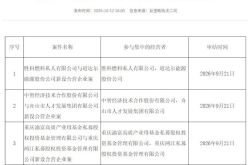
On October 12th, the State Administration for Market Regulation unveiled the latest batch of cases concerning the unconditional approval of business concentration, prominently featuring Geely Holding Group's acquisition of a stake in Ford's Spanish subsidiary. Geely has successfully navigated the domestic approval process.
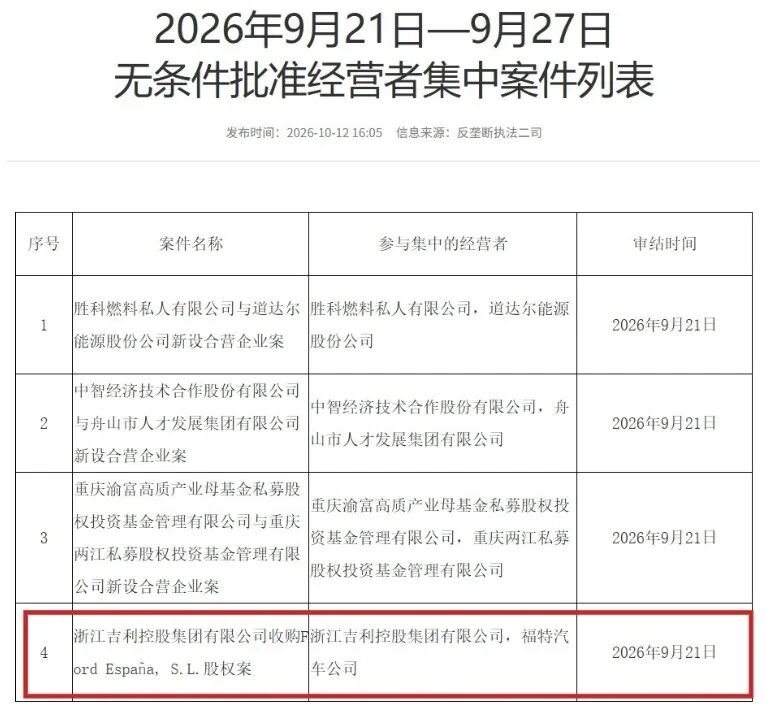
Image source: State Administration for Market Regulation
This landmark deal first made headlines in July of this year when Geely invested RMB 1.653 billion to acquire a 34% stake in Ford España, S.L., which operates a vehicle manufacturing plant in Valencia, Spain. Prior to the transaction, Ford held a 100% stake; post-transaction, Ford retains a 66% stake while Geely acquires 34%, with both parties jointly managing the operation. The joint venture base is slated to commence operations in the first half of 2027, with new vehicle production expected to begin in 2028.
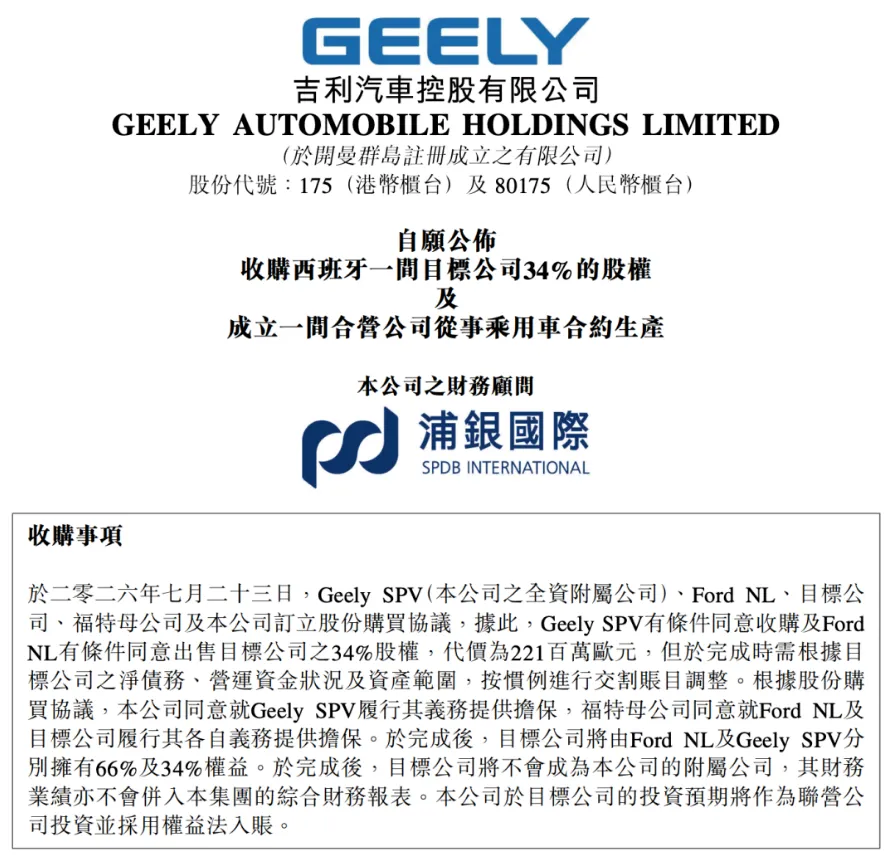
Image source: Geely's announcement
Despite a lack of extensive press releases to generate hype, the deal has nonetheless garnered the personal endorsement of the Spanish Prime Minister. While some may focus on the relatively modest 34% stake, industry insiders recognize the broader implications: this acquisition is not merely about securing a stake in an overseas factory; it's about reshaping the global automotive landscape that has endured for over a century.
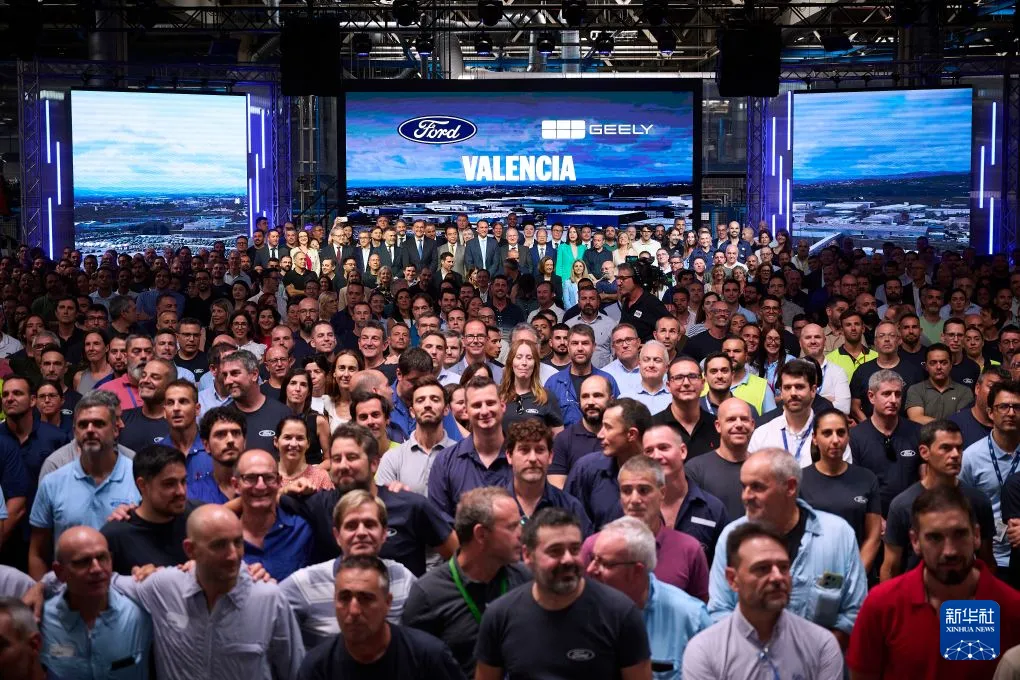
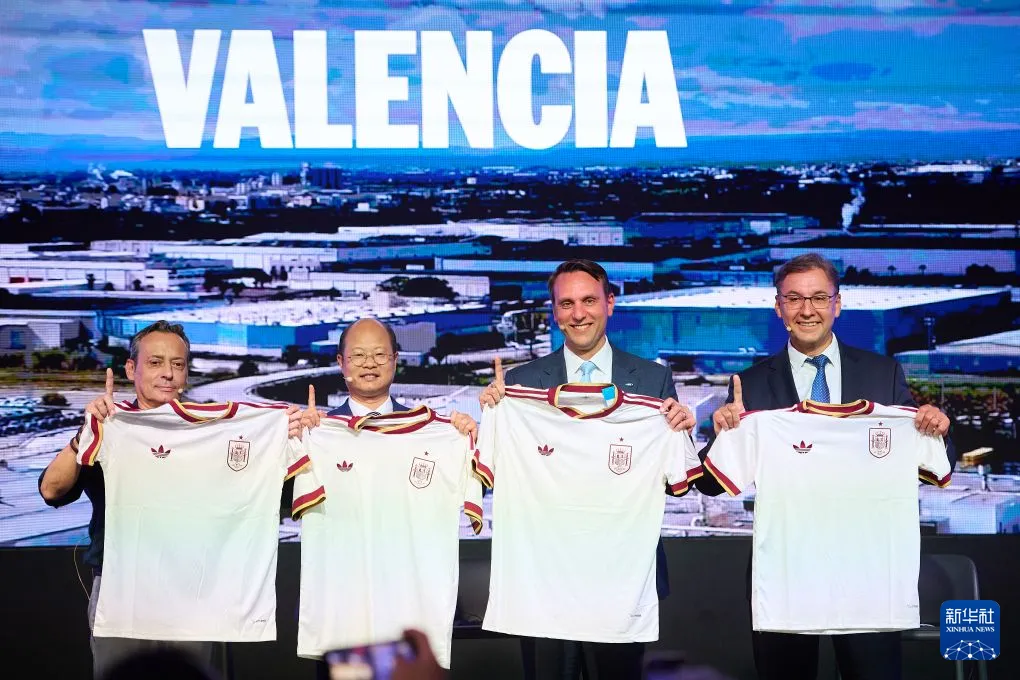
On-site ceremony. Image source: Xinhua Net
Sixteen years ago, Geely made headlines with its bold acquisition of Volvo from Ford, a move that was met with widespread skepticism and dubbed a "snake swallowing an elephant." Fast forward to today, and the tables have turned: the century-old Ford is now retreating in the European electrification race and must rely on Geely's new energy technology to survive. The era where the West exported technology while China handled manufacturing has truly come to an end.
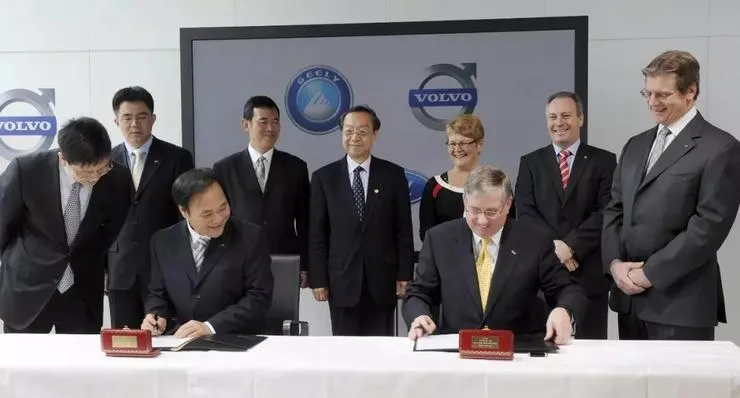
Li Shufu at the Volvo signing ceremony. Image source: Weibo
01 Not Bailing Out a Troubled Asset, But Seizing a Strategic Opportunity
While some online jokes suggest that Geely is spending money to help Ford clean up its mess, a closer look at the facts reveals a different story: Li Shufu is not here to take on a loss-making burden; rather, this is a well-calculated, asset-light move to seize a strategic opportunity.
The Valencia Almussafes plant, which began production in 1976, boasts a 49-year history and has produced over 11 million vehicles. Iconic models like the Mondeo and Fiesta were manufactured here, making it a truly meritorious old factory for Ford in Europe.
However, with the decline of the fuel vehicle boom, Ford has continuously cut its main fuel vehicle models in Europe, resulting in the plant losing most of its orders. Designed for an annual production capacity of 500,000 vehicles, the plant's actual production in 2025 will be less than 100,000, with a capacity utilization rate of less than 25%. Multiple production lines are now idle, and Line 3, which Geely is preparing to take over, has been gathering dust since the discontinuation of the S-Max and Galaxy models.
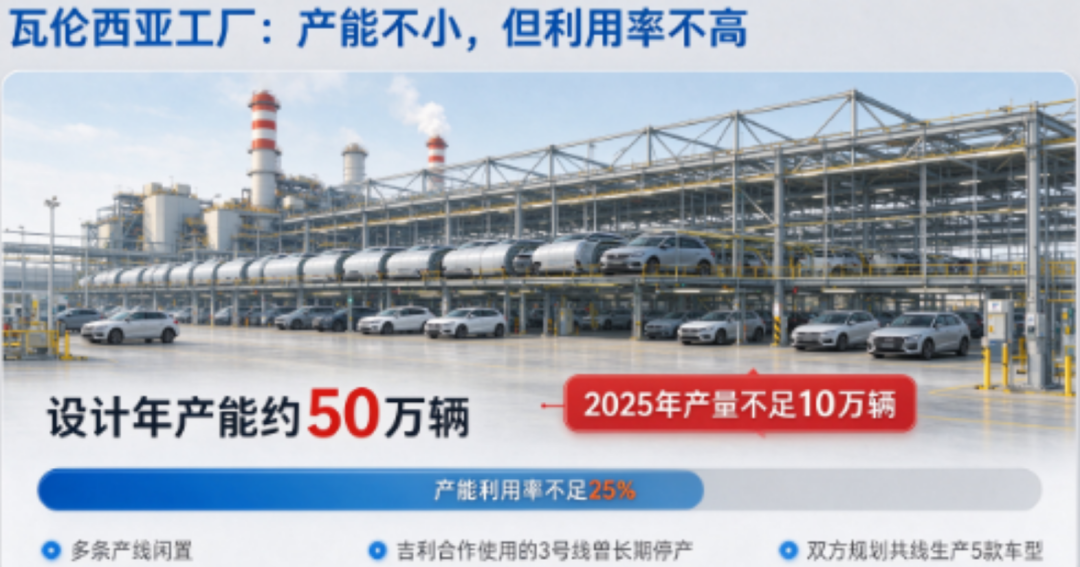
With machines lying idle but depreciation, wages, and maintenance costs remaining unchanged, the plant has become a continuous loss-maker and a hot potato for Ford. Shutting it down would require hefty severance payments and face local employment and public opinion pressure; keeping it open means incurring continuous losses. Ford finds itself in a dilemma, providing an opportunity for Geely to step in.
Compared to other automakers investing hundreds of billions to build new factories overseas and taking three to four years to start production, Geely's move is a masterstroke. With an investment of over a billion yuan, Geely gains access to ready-made factory buildings, a local supply chain, skilled workers, and a full set of EU vehicle manufacturing qualifications, allowing it to quickly establish roots in Europe without starting from scratch.
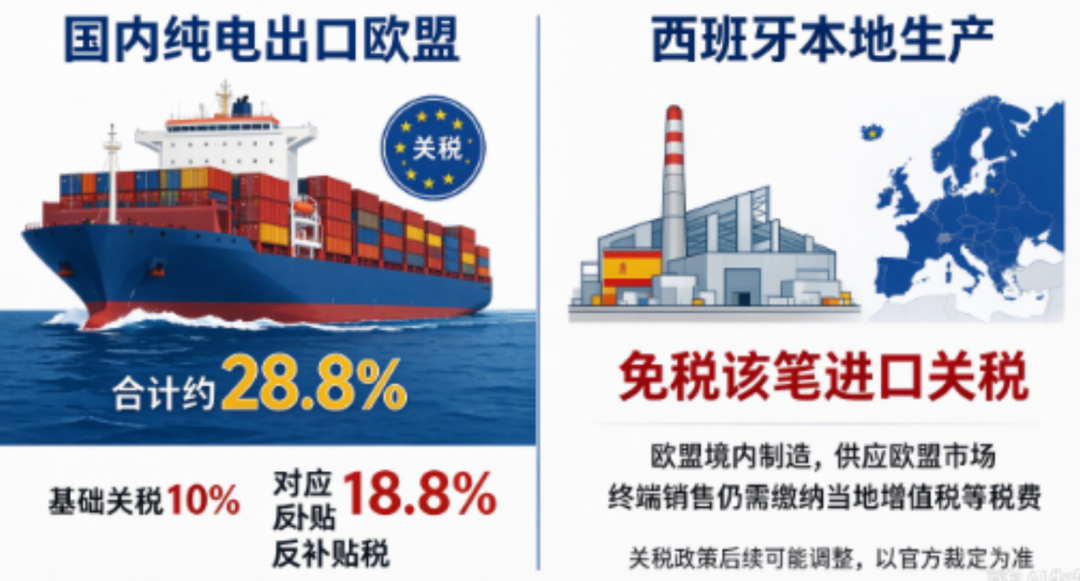
The most practical benefit is bypassing tariffs. Geely electric vehicles exported from China to the EU face a basic tariff of 10% plus an anti-subsidy tariff of 18.8%, totaling a hefty 28.8%. If the vehicles are produced locally in Spain, they are considered EU-made and exempt from this import tariff (though Spain's 21% sales VAT applies regardless of import or local production).
Of course, we shouldn't get ahead of ourselves. Domestic approval has been obtained, but the Spanish local process still needs to be completed. Production schedules, vehicle plans, and EU policies may change, and everything is subject to the official announcements from both companies.
02 A Minority Stake, But Technology Holds the Real Power
Outsiders often look at cooperation and first compare equity: Ford holds 66%, Geely only 34%, so Ford must call the shots. But in the automotive industry, cooperation is never just about paper equity. On the surface, Ford holds the nominal controlling stake, but the real trump card is in Geely's hands.
According to overseas media, from 2027 to 2030, all new pure electric vehicle models from Ford Europe will be developed based on Geely's self-developed GEA pure electric architecture. In layman's terms, the chassis, three electric systems, vehicle R&D, and quality control standards will be led by Geely; Ford will mainly handle exterior design, branding, and local sales. New vehicles bearing the Ford blue logo will essentially run on Chinese technology.
A decade ago, this would have been unthinkable. In the past, domestic automakers introduced foreign platforms to make joint venture vehicles, but now the situation is reversed, with a century-old giant having to use China's electric platform to compete in the market.
According to the plan, five new models will be produced at this factory: three multi-energy models from Ford and two new energy vehicles from Geely, all exclusively for Europe. Geely will produce the EX2 (Starwish European version) in Spain—this affordable commuter car has been sold in over thirty countries, with 87,000 units exported in the first half of 2026. Once produced locally, it will directly compete with the Renault 5, Citroën e-C3, and BYD Dolphin.
Even Ford's upcoming Bronco off-road SUV and crossover models, while bearing the Ford logo, will rely heavily on Geely's system for core R&D and tuning. A Ford Europe executive publicly described Geely as "very special," a statement that reflects the reality that traditional automakers must acknowledge: falling behind in the new energy sector, borrowing China's mature technology is the most pragmatic way to defend their European market.
03 Chinese Automakers Flock to Spain, Launching a Collective Offensive in Europe
Geely's entry into Spain is not a solo act. Currently, the entire Iberian Peninsula has become a must-win battleground for Chinese automakers entering the EU: Chery is reviving the old Nissan plant in Barcelona, SAIC is setting up an electric vehicle base in Galicia, Leapmotor is establishing a production line in Zaragoza, and leading domestic automakers are flocking to Spain.
The calculation is the same for all: bypassing EU tariff barriers. In the past, domestically produced electric vehicles relied on cost-effectiveness to sell directly in Europe, but tariffs and anti-subsidy investigations followed, squeezing profits. The simple export route is becoming increasingly difficult. Gradually, everyone realizes: to truly capture the European market, local production, local compliance, and local profitability are essential to form a complete closed loop.
There are two paths for going global. BYD has chosen to invest heavily in building its own factory in Hungary, a long-term, asset-heavy layout; Li Shufu has opted for a lighter approach: not building new, but reviving idle, mature production capacity in others' hands. Without the burden of huge infrastructure investments and lengthy construction periods, rapid implementation through equity cooperation is more suitable for today's complex and changing overseas environment.
Even better, this factory will not just serve two Geely models. Volvo, Polestar, Lotus, and smart—all Geely-affiliated brands—can share production capacity in the future, directly achieving the goal of "half of European market models produced locally within five years." Multiple brands sharing one factory spreads out R&D and manufacturing costs, maximizing value.
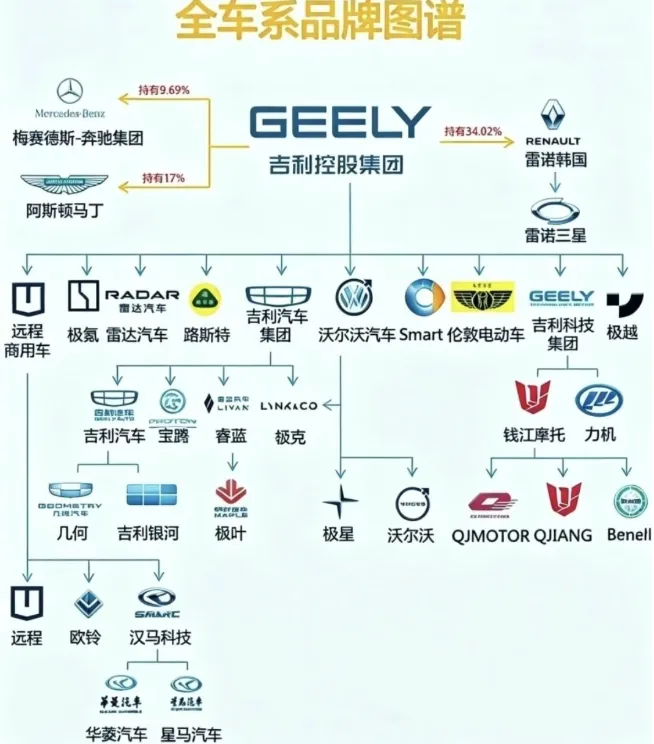
Image source: Weibo
04 Sixteen Years of Seismic Change: The Apprentice Now Stands on the World Stage
What is most striking about this entire event is the stark contrast over the past 16 years.
In 2010, during the financial crisis, Geely spent $1.8 billion to acquire Volvo. At that time, Geely was still a domestic challenger, and the internet was full of skepticism about a "snake swallowing an elephant"; Ford, on the other hand, was a global automotive giant, with Geely just a diligent follower.
Sixteen years later, Geely has not only made Volvo a success and established a foothold in the luxury market but also expanded its global footprint: laying out in Southeast Asia, acquiring supercar brands, collaborating with Mercedes on smart, and accumulating a complete product matrix covering all price points.
The numbers don't lie: in the first half of 2026, Geely's overseas sales surged by 158%, with new energy overseas sales skyrocketing by 585%, already exceeding total exports for the entire year of 2025 in just six months. Overseas business has become Geely's most important growth engine, transforming the automaker once labeled "low-end domestic" into a world-class player with self-developed three electric systems, pure electric architectures, and global distribution channels.
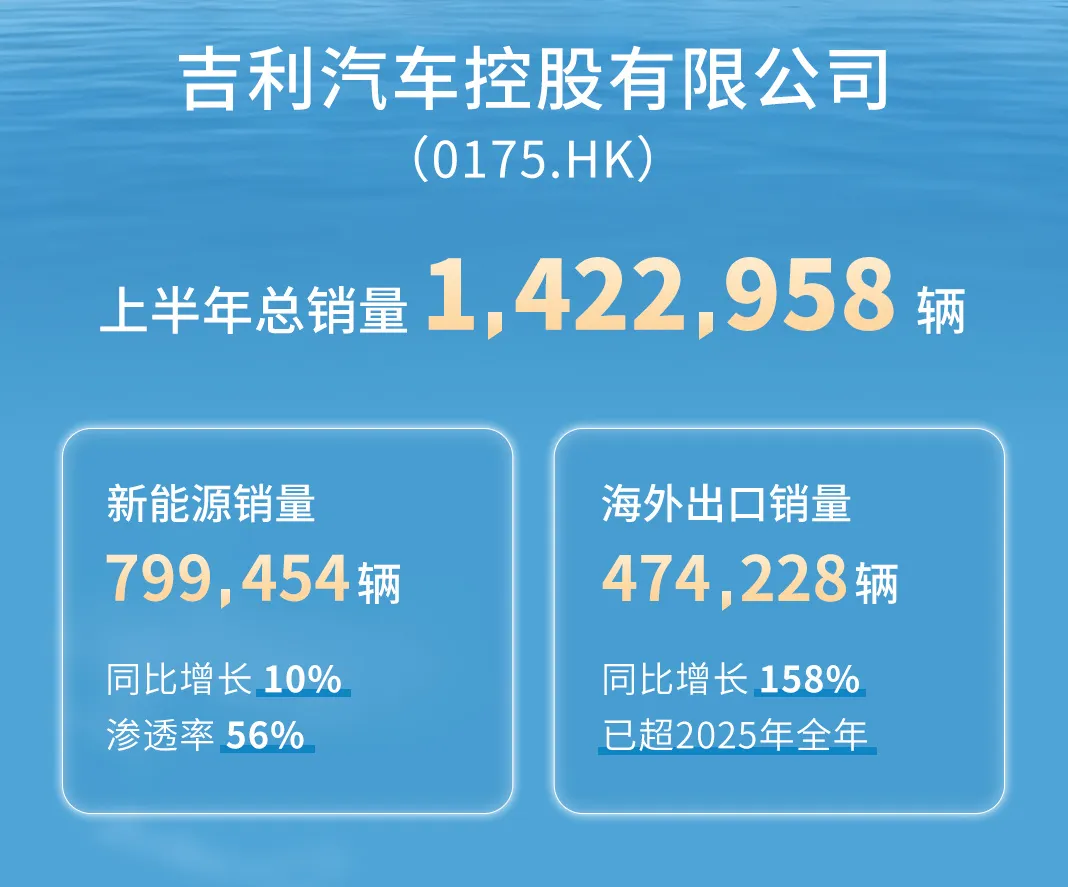
Image source: Geely Auto
On the other side, Ford has stumbled in its electrification transition, retreating in the European market, holding idle factories, and caught in a dilemma, forced to set aside its giant ego and seek a breakthrough from Chinese technology.
In Closing
Geely's acquisition of a stake in Ford's Spanish factory means far more than just an equity transaction. On the surface, it's a low-key entry with a 34% stake, but essentially, it's the formal export of China's new energy technology, complete manufacturing capabilities, and a lightweight globalization strategy.
After 16 years of perseverance, Li Shufu has led Geely through three layers of transformation: from an industry apprentice to a global partner, from product exports to technology exports, and from following others to actively playing on the world stage.
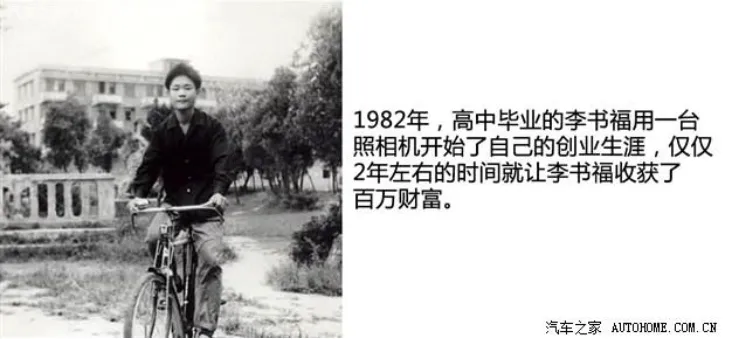
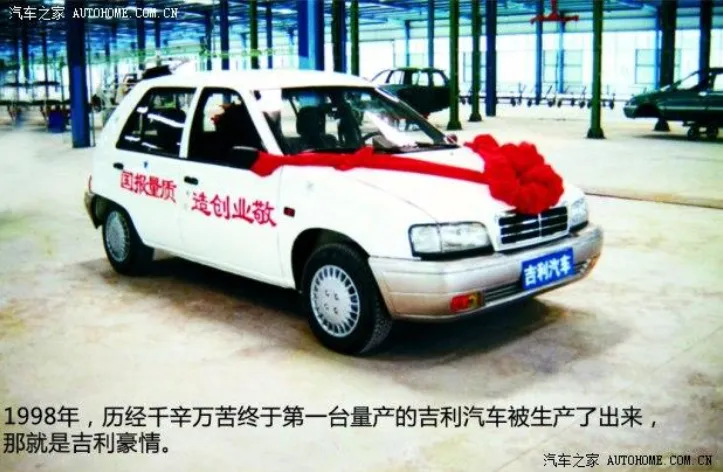 Image source: Autohome
In the future, walking the streets of Europe, many new energy vehicles bearing the Ford logo will, when taken apart, reveal a core of genuine Chinese intellectual property. The era of Western automakers dominating the automotive industry is slowly fading, and the globalization drama of Chinese automakers is just beginning.
Interactive Topic: What do you think about Geely's acquisition of a stake in Ford's Spanish factory? Could this asset-light cooperation model become the mainstream choice for Chinese automakers going global? Welcome to share your thoughts in the comments section.
Disclaimer: This article is solely a commentary on major industry finance and does not constitute any investment advice. The corporate data and regulatory events mentioned herein are sourced from public information and are for reference only, subject to official announcements. Image sources are from the internet; if there are any copyright issues, please contact us for removal.
-
![]()
Downward Adjustment of Export Tax Rebate Rate for New Energy Vehicles: Not a Bid to Reap 'Profits' from Overseas Expansion
-
![]()
Who is the Apple in the Era of Embodied AI?
-
![]()
Laughing No More! Brake Pedal Snaps—Is Lei Jun Actually the Biggest Winner? Netizens Say: Genius Move!
-
![]()
Huawei’s ‘Cullinan’ Rival Makes Its Debut: China’s First SUV with a Vertical Emblem—Is It More Prestigious Than Aito or Zunchi?
-
![]()
Blockbuster Move: Geely's Li Shufu Secures Approval to Acquire Stake in Century-Old Ford Motor's Spanish Unit
-
![]()
LiDAR Battle: RoboSense Sells 590,000 Units but Still in the Red, While Hesai Earns 70 Million—What's the Difference?
-
![]()
Vivo's Misstep: The Fallout from Widespread Flash Memory Controversy
-
![]()
Why Did Vivo Stumble Amidst the Flash Memory Mixing Fiasco?