Real-World Testing Reveals: Flash Models are Transitioning from 'Lite' to Practical Office Tools
 10/20 2026
 465
Author | Gao Xiaoyang
Editor | Hao Xin
On October 15, Ant Group's Bailing made headlines by open-sourcing Ling-3.1-flash, a model touted as a significant upgrade for tackling real-world tasks with enhanced efficiency.
Ling-3.1-flash boasts an impressive total of approximately 560 billion parameters, with around 25 billion parameters activated per token. It supports a context window of up to 1 million tokens, aligning with standard Flash model specifications.
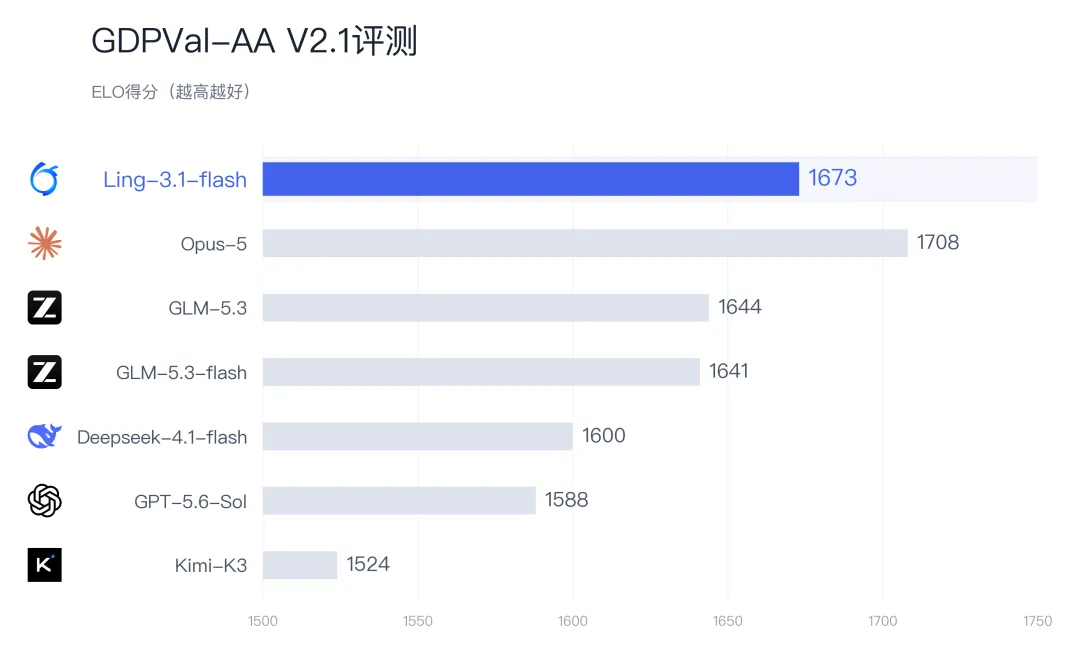
Reflecting on Bailing's release two weeks prior, the highlight wasn't just the model itself but its performance ranking in the GDPVal-AA V2.1 evaluation, which gauges model effectiveness in work-related tasks. Data showed Ling-3.1-flash scoring 1673, securing the second spot, outperforming GLM-5.3-Flash's 1641 and DeepSeek-4.1-flash's 1600, and trailing only Opus-5's 1708.
Office environments are characterized by lengthy workflows, extensive contextual information, and relatively low value per output, making Flash models an economical choice for such settings.
However, not all Flash models are created equal, and evaluation scores alone don't paint the full picture. Today, we'll put three different models to the test using the same office task to determine which Flash model offers the most reliable performance.
Ant Prioritizes Workflow Integration, DeepSeek Focuses on Cost Efficiency, Zhipu Enhances Visual Quality
All three companies emphasize enhancing model performance for office scenarios. In these settings, most tasks don't require the robust reasoning capabilities of flagship models, but lengthy contexts do increase token consumption. To manage costs, most users opt for Flash models.
So, what are the priorities for each company?
Ling-3.1-flash places a strong emphasis on a unified end-to-end workflow. Officially, it addresses the challenge of unclear initial requirements and diverse deliverables in office tasks by seamlessly managing the entire process.
For tasks involving web pages, documents, spreadsheets, and code, the model can conduct research, analyze data, create tables and PPTs, and generate and test code. It integrates requirement clarification, task decomposition, information synthesis, tool utilization, and result verification into a single workflow.
Moreover, Ant has incorporated Ling-3.1-flash's capabilities into a specific product form, connecting it to the desktop collaboration Agent client 'Xiaohu' within Ant Group. This enables the model to operate beyond chat interfaces and complete tasks in a desktop environment.
DeepSeek-4.1-flash reduces costs for office tasks through an asymmetric model structure. Compared to previous DeepSeek models, it features a new architecture with asymmetric input and output activation parameters—8 billion for input and 16 billion for output—to lower task execution costs.
Office tasks often involve summarization and analysis, which typically require long inputs and short outputs. DeepSeek reduces input activation parameters to cut costs while maintaining higher output activation parameters for quality. This 'low-input, high-output' strategy balances intelligence and cost.
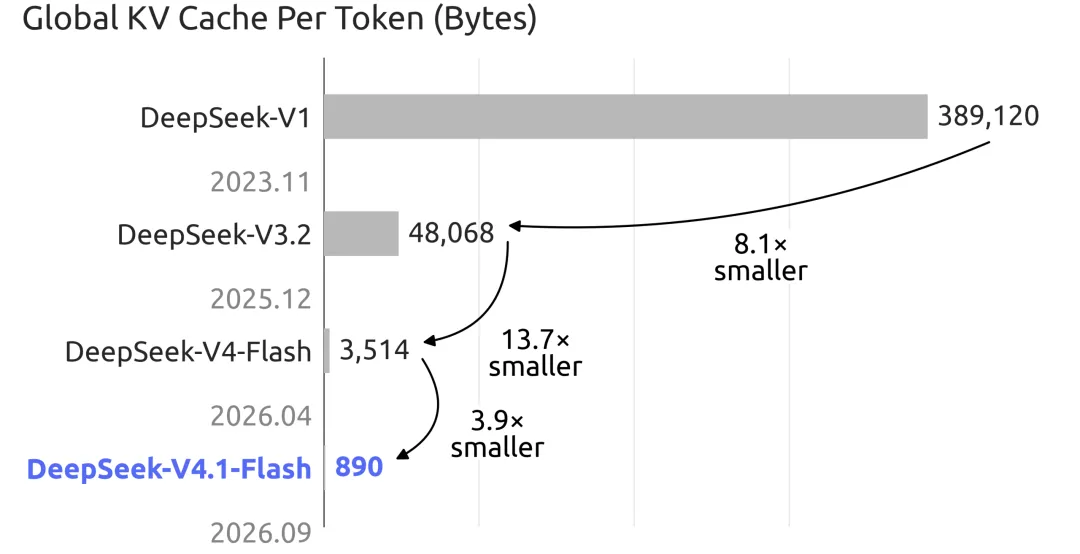
Additionally, DeepSeek-4.1-flash reduces the KV Cache size to lower usage costs for Agent-based tasks in office scenarios.
GLM-5.3-Flash leverages newly added visual understanding capabilities to inspect and optimize its outputs. As the first native multimodal model in the GLM-5 series, it has the lowest total parameter count among the three models, at 320 billion (compared to Ling-3.1-flash's 560 billion and DeepSeek-4.1-flash's 552 billion).
Office deliverables often require visually appealing layouts. With visual understanding, GLM-5.3-Flash can compare its outputs with visual context and expected results, enabling self-verification and optimization, as well as quality assessment and aesthetic judgment.
GLM-5.3-Flash employs a hybrid architecture combining linear and sparse attention to reduce costs. However, compared to its new visual capabilities, this is merely a complementary feature.
In summary, Ant prioritizes a unified workflow to ensure task coherence. DeepSeek focuses on cost efficiency through asymmetric model structures and reduced caching. Zhipu emphasizes aesthetics, leveraging the model's new visual understanding to continuously refine output quality.
Testing with 120,000 Rows of Data: A Formidable Challenge
To evaluate real-world model performance, we followed GDPVal-AA's standard test cases to assess the three models in office scenarios.
We first generated a spreadsheet with 120,000 rows of data using GPT and then fed it to the three models. In a single conversation window, we sequentially asked the models to perform data inspection, scope confirmation, analysis report generation, image creation, and PPT production.
Initially, 120,000 rows of data exceeded any model's context window, requiring the models to write code to read, sample, group, and iterate through the data. This tested not whether the models could read all the data but whether they could independently find methods to analyze it. Additionally, consolidating multi-round dialogues into one window examined the models' context memory, checking for data inconsistencies during PPT creation.
To control variables, we integrated Ling-3.1-flash into WorkBuddy, enabling all three models to be tested within the same Agent.
During initial data cleaning, we first asked the models to 'inspect' the data and identify vulnerabilities in the table. All three models identified the ten pre-designed vulnerabilities and categorized them.
However, after data cleaning, only DeepSeek-4.1-flash proactively generated a data inspection report. Based on subsequent test results, this is a characteristic of DeepSeek-4.1-flash—it often generates reports even when not prompted, facilitating task documentation. Sometimes, a model's proactive behavior enhances user experience.
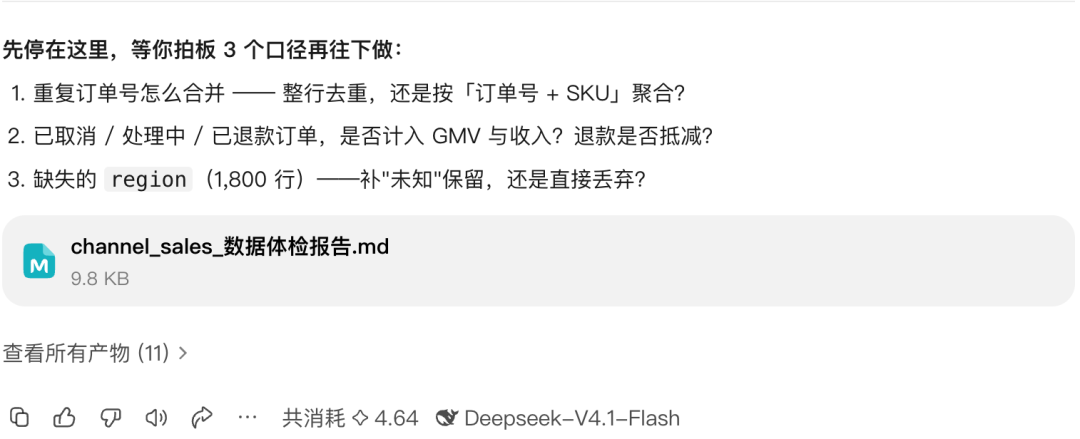
No significant differences emerged among the three models during data processing. Divergence occurred during image and PPT generation.
Examining the most varied set of images, the results were unexpected—all three models produced incorrect outputs. GPT analyzed the errors: Ling-3.1-flash and GLM-5.3-Flash made the same mistake—incomplete data cleaning. DeepSeek-4.1-flash incorporated data with unit issues into calculations and made computational errors, leading to results that still deviated from the true values.
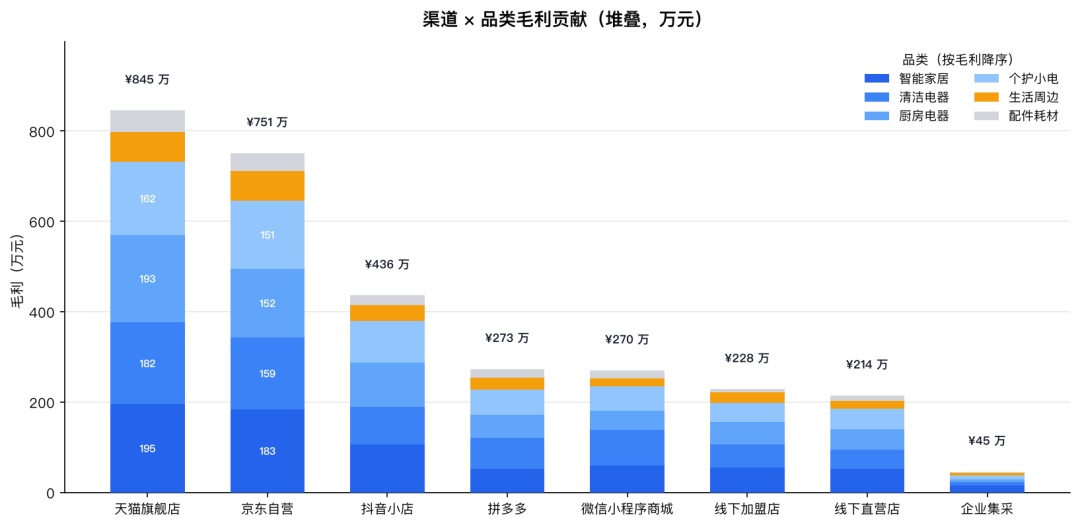
Generated by Ling-3.1-flash
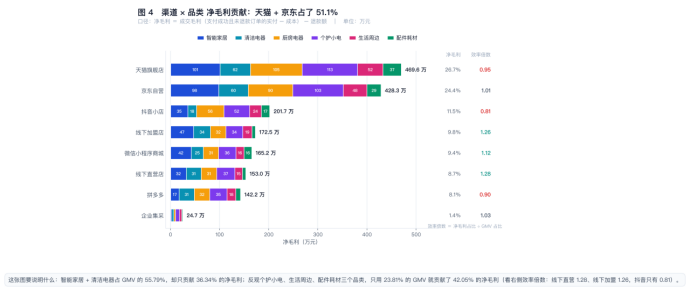
Generated by DeepSeek-4.1-flash
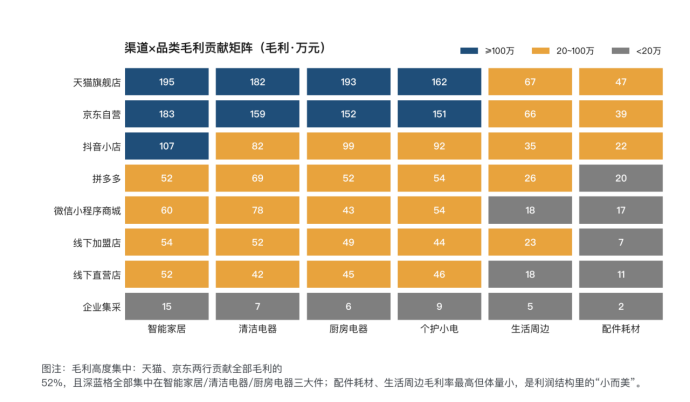
Generated by GLM-5.3-Flash
This outcome was unexpected. It appears that handling large datasets is indeed too challenging for Flash models. This reminds us that for data analysis tasks requiring cross-validation of results using different models, it's advisable not to use models of the same tier. Flagship models should be used for result validation, as cost control is only relevant when correct results can be obtained.
Finally, let's examine the aesthetic quality of the PPTs generated by each model. Ling-3.1-flash excelled in layout aesthetics. DeepSeek-4.1-flash's PPTs were generally acceptable, with mostly charts and no large text blocks, and included captions on each slide. GLM-5.3-Flash occasionally had text overflow issues on some pages, indicating that even with visual capabilities, minor errors can still occur.

Generated by Ling-3.1-flash
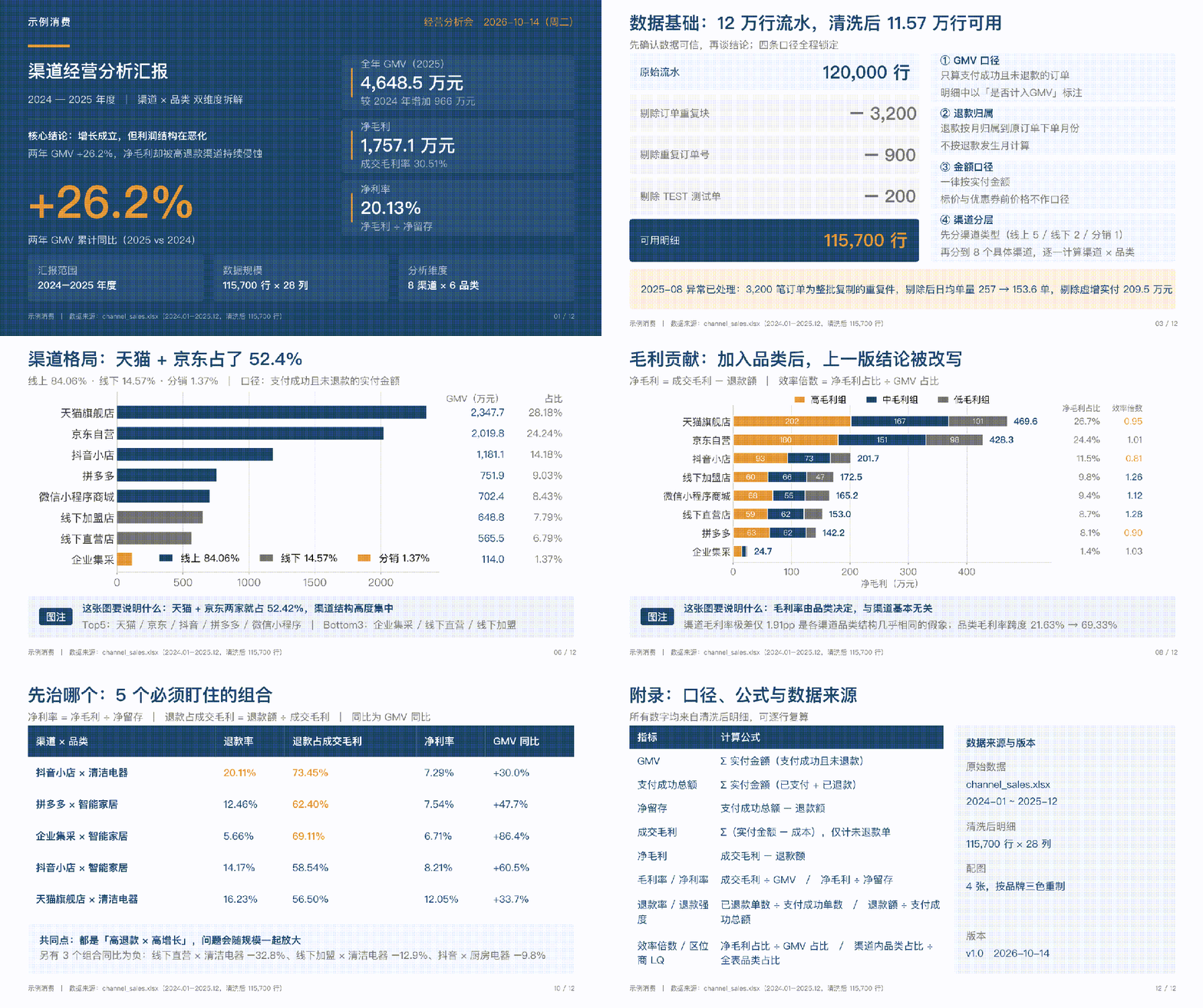
Generated by DeepSeek-4.1-flash
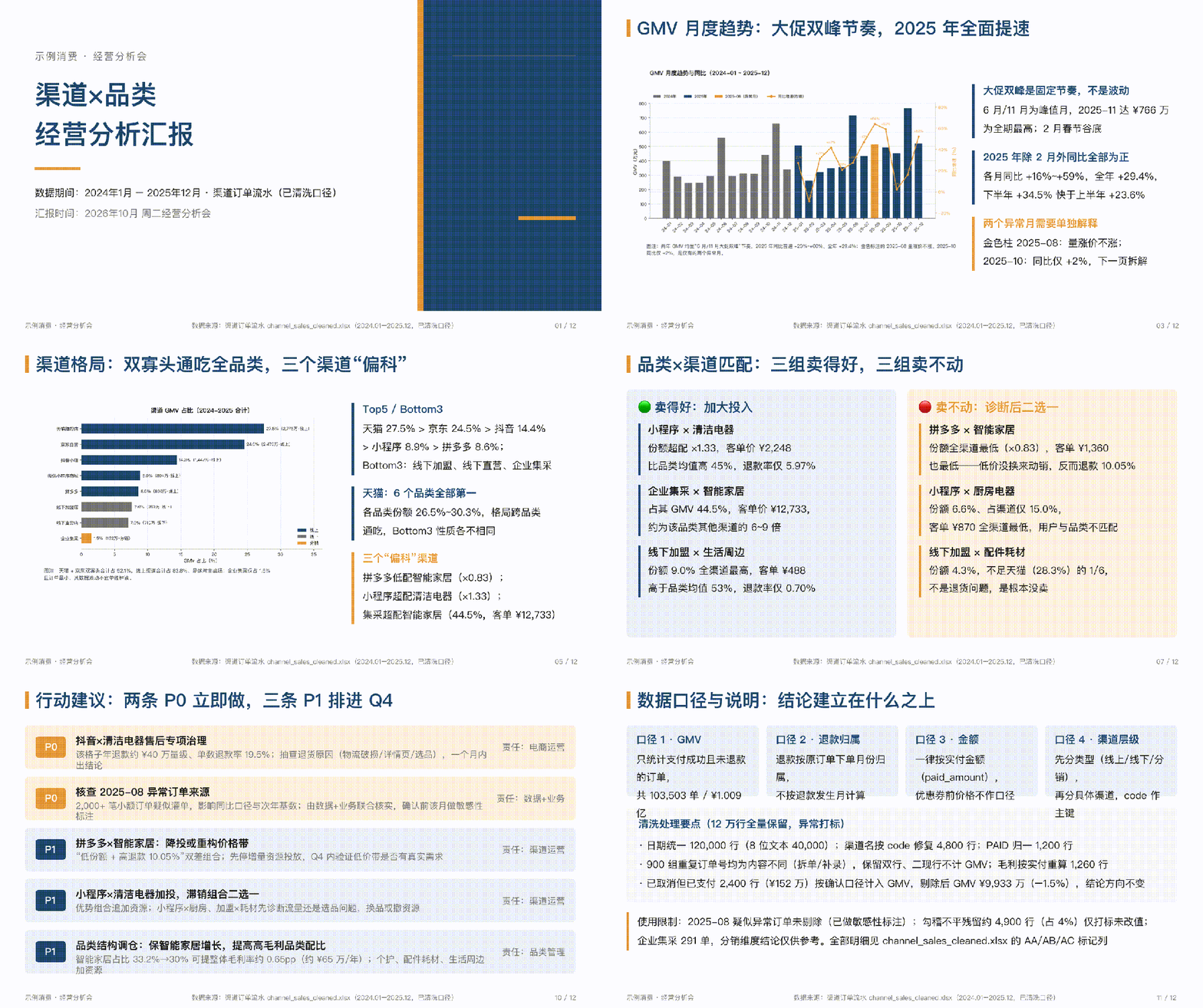
Generated by GLM-5.3-Flash
From Stopgap to Standard: The Evolving Role of Flash Models
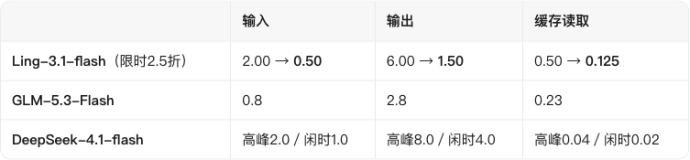
Merely looking at test conclusions is insufficient; we must also consider each model's pricing. Ling-3.1-flash's API price, announced on October 14, falls between DeepSeek-4.1-flash and GLM-5.3-Flash. After discounts, it's about half the price of GLM-5.3-Flash, offering cost-effectiveness for certain complex workflow tasks. However, for office tasks, we should primarily focus on cache reading prices, which determine usage costs.
In terms of cache reading prices, DeepSeek-4.1-flash holds a clear advantage. Even at a 2.5-fold discount, Ling-3.1-flash's price is over six times that of DeepSeek-4.1-flash. This directly reflects DeepSeek-4.1-flash's cost reduction through model structure optimization and cache size reduction, lowering deployment costs for vendors and usage costs for users.
Regarding speed, DeepSeek-4.1-flash and GLM-5.3-Flash have similar execution speeds, while Ling-3.1-flash takes longer due to increased task effectiveness from reinforcement learning, which lengthens its thought chains and interaction rounds. Ant Group acknowledges this issue, stating that subsequent optimizations will focus on the intelligence-efficiency ratio.
We also noted a common optimization point between DeepSeek-4.1-flash and GLM-5.3-Flash—both compress the KV Cache to optimize models. Compressing the KV Cache saves video memory and bandwidth, allowing more requests to be processed simultaneously on the same card, increasing throughput and reducing per-token costs. Ling-3.1-flash hasn't mentioned this optimization, suggesting that Bailing could adopt similar approaches to improve its model's intelligence-efficiency ratio.
The 'Flash' suffix has traditionally carried a negative connotation, as it implied a downgraded version of a flagship model—笨拙 (clumsy) and typically a stopgap solution due to budget constraints.
However, this perception is changing as model capabilities improve. Flash models can now handle more daily tasks, with office scenarios becoming a key battleground for Flash models. For instance, in PPT creation tests, all three models demonstrated acceptable aesthetic standards, even reaching a level where their outputs could be used directly.
Nevertheless, weaknesses must be acknowledged. Flash models still struggle with tasks requiring extensive logical reasoning, where flagship models are needed to step in, followed by Flash models to convert the finalized documents into visual formats.
As flagship model prices rise, the cost-effectiveness of Flash models is gaining recognition, leading more people to incorporate them into their daily workflows. This suggests that in the second half of AI adoption, technological value will no longer be defined solely by peak performance but by its ability to integrate into countless real-world daily scenarios at an affordable cost. From this perspective, Flash models hold the key to making AI truly accessible to the masses.

-
![]()
Bosch Secures Multi-Million-Unit Orders, Horizon Robotics' Chips Go Global: What Will Mobileye's Next Move Be?
-
![]()
Is Douyin Still Reliant on the 'Little Yang Brother' Phenomenon?
-
![]()
NIO’s Workforce Declines by Over 10,000 in a Year, with RMB 930 Million in Stock-Based Compensation in H1: Implications for 35,000 Employees
-
![]()
Real-World Testing Reveals: Flash Models are Transitioning from 'Lite' to Practical Office Tools
-
![]()
China's Brake-by-Wire Systems Start to Compete with Bosch's Market: Who Will Supply the Core Driver Chips?
-
![]()
Li Auto Cuts Workforce by 3,970 in a Year: Insights into Average Monthly Salary and the Dominance of Sales Staff (40%)
-
![]()
Ignite the Tokens! The Capital Efficiency Test for Cloud Providers in the Agentic Cloud Era
-
![]()
The Data Centers of AI Giants Are Hitting a Wall Harder Than Chips