Zhang Yiming Speaks Out: Catching Up with OpenAI and Anthropic Within 4 Years
 11/16 2026
 348
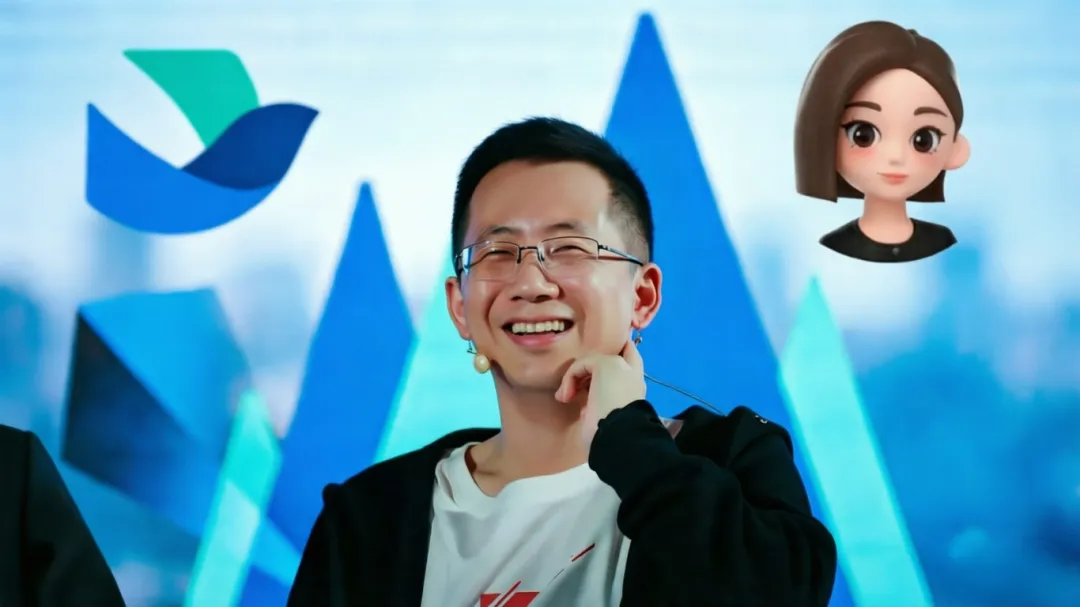
AI-generated image. Source: Weibo
At the global AI table, most of the top players seated are from the same generation.
The Paper has learned from people familiar with the matter that Zhang Yiming discussed large-model competition at an internal meeting of ByteDance's Seed AI team. He said ByteDance has what it takes to go head-to-head with OpenAI and Anthropic, but that truly catching up with them technologically will take until 2029 or 2030 at the earliest.
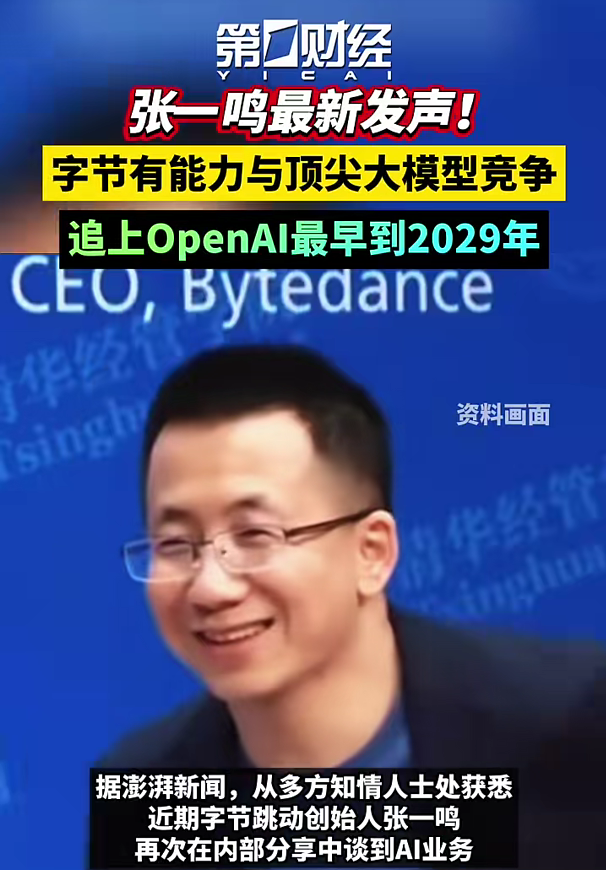
Source: Yicai Video Account
Put the birth years of the three men side by side, and the weight of that statement shifts: Zhang Yiming was born in 1983, Anthropic's Dario Amodei was born in 1983, and OpenAI's Sam Altman was born in 1984. This competition—one that will shape the global AI technology landscape for the next decade—is being steered by several post-80s leaders, and for the first time, Chinese post-80s entrepreneurs are standing at the center of the AI table.

Left: Sam Altman; Right: Dario Amodei
The Same Generation at the Table: China's Post-80s Are No Longer Just Followers
A decade ago, when Chinese tech companies talked about global competition, it was mostly about expanding products overseas and replicating business models; this time, they are competing directly on the most fundamental model capabilities—and their opponents are from the same generation.
Anyone familiar with ByteDance knows that after stepping down as CEO in 2021, Zhang Yiming largely withdrew from public view. When he appeared in Shanghai last year, he talked about nurturing young talent and did not mention large models at all.
But do not assume he has let go of AI. Industry sources say that since the second half of 2024, he has joined the Seed core team's review meetings every month to keep an eye on underlying technical progress.
At this meeting, he pointed out the biggest shortcoming at present: the pre-training data volume of the Seed model lags several orders of magnitude behind top overseas competitors. This is the hardest nut ByteDance AI must crack right now.
He also reiterated a bottom line: do not take the distillation shortcut.
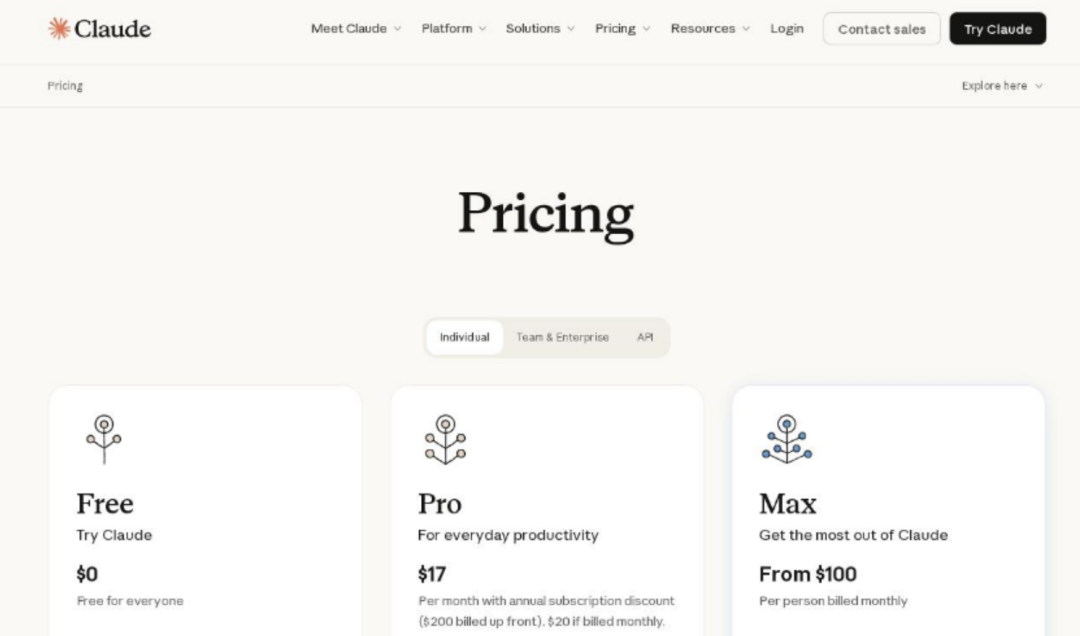
Distillation means feeding answers from other, stronger models into one's own model for training. Short-term benchmark scores climb rapidly, making progress look fast. But Zhang Yiming cited Claude as an example: this path only teaches a model to replicate what others already understand, and relying on it to surpass them is simply unrealistic.
Source: Claude official website
Good benchmark rankings do not equal solid internal strength. He can accept the team being temporarily behind, but what he cannot accept is relying on opportunistic shortcuts to mortgage the long-term foundation. This patience is exactly the common underlying trait of that generation of entrepreneurs—not rushing for a beautiful quarter, but first laying the foundation deep.
Sober Ambition: Daring to Benchmark Against the Best, and Daring to Admit the Gap
After this statement, the most heated question in discussions was: if models can catch up, do chips also have to catch up? What Zhang Yiming meant by catching up refers to the capabilities of large models themselves—not that chips will simultaneously catch up with Nvidia.
Models, chips, and computing clusters are three things that are tied together but not the same thing at all. OpenAI and Anthropic do not make GPUs themselves; their strength is built on Nvidia computing clusters. Theoretically, as long as they can obtain stable and sufficient high-end computing power, combined with high-quality data, algorithms, and engineering scheduling, even if self-developed chips are temporarily inferior to Nvidia's, they can still train large models comparable to GPT and Claude. Conversely, no matter how good the chips are, without data and mature model engineering, top-tier models cannot be produced.
Of course, everyone understands the importance of chips. They determine whether training is expensive, how fast iteration is, and whether inference stutters; they are a hard threshold blocking the advancement of large models. Relying on externally purchased computing power means supply and quotas can change at any time, directly disrupting Seed's rhythm. This is also why major companies all need to develop their own chips.
But the key point is that Zhang Yiming's primary concern this time is data, not chips. The 2029–2030 window is a catch-up cycle set for models, not a promise that self-developed chips will benchmark Nvidia in the same period. The difficulty and cycle of catching up in chips are often even longer than for large models.
From Technology to Business: Another Playbook for This Generation
Unlike the previous generation of entrepreneurs, these post-80s founders talk about both technological ideals and how to make money. The contrast is right here: underlying models still need years of grinding, while ByteDance's AI products have already achieved staggering scale on the consumer side.
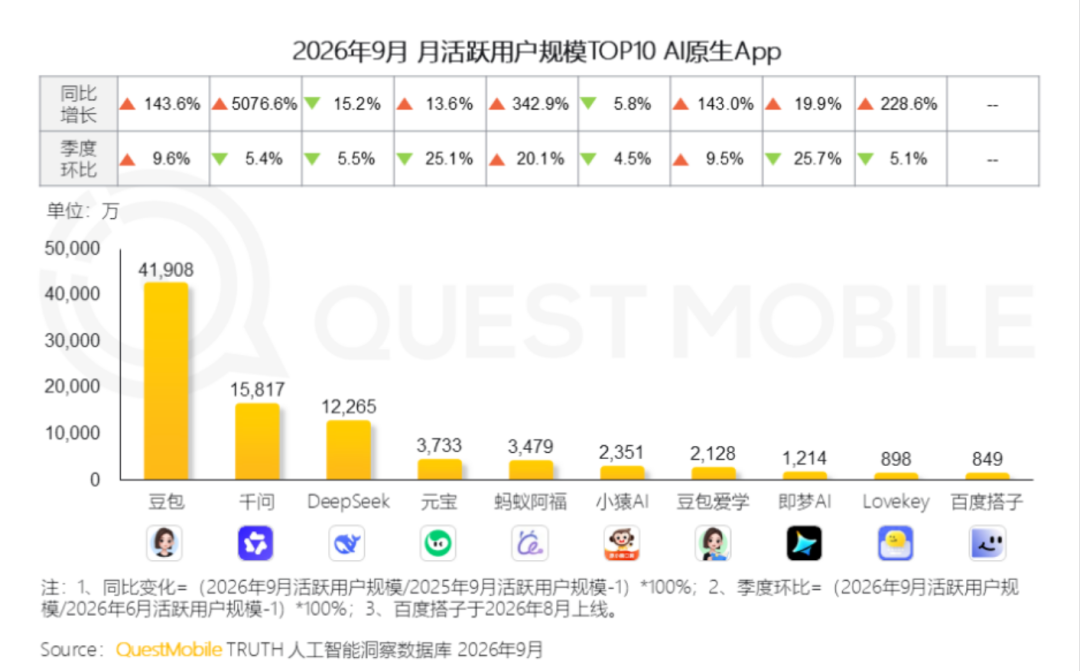
QuestMobile data shows that in September 2026, the Doubao App had 419 million monthly active users, while Qwen and DeepSeek had only 158 million and 123 million in the same period. Looking solely at the user base, Doubao is already far ahead in China's AI track.
Source: QuestMobile
This Double 11, Doubao launched a dedicated venue, packaging products, livestream rooms, and coupons into the AI chat page. Opening it, it looks not much different from a small Douyin mall: coupons at the top, products and livestream rooms as you scroll down, and shopping cart and order entry points at the bottom. Recommendations also combine what you have asked Doubao and browsed on Douyin for precise targeting. Long-pressing a product lets you ask questions directly, with price comparison, parameter checks, and discount inquiries all handled by AI.

Source: Douyin APP
Merchants have also been matched with supporting tools. The Douyin Store backend added a Doubao operations section, allowing merchants to separately view exposure, transactions, and refunds brought by Doubao, and to optimize product details based on questions users frequently ask.

Source: Douyin APP
AI is no longer just a chat tool; it is becoming a new traffic entrance that can directly drive sales.
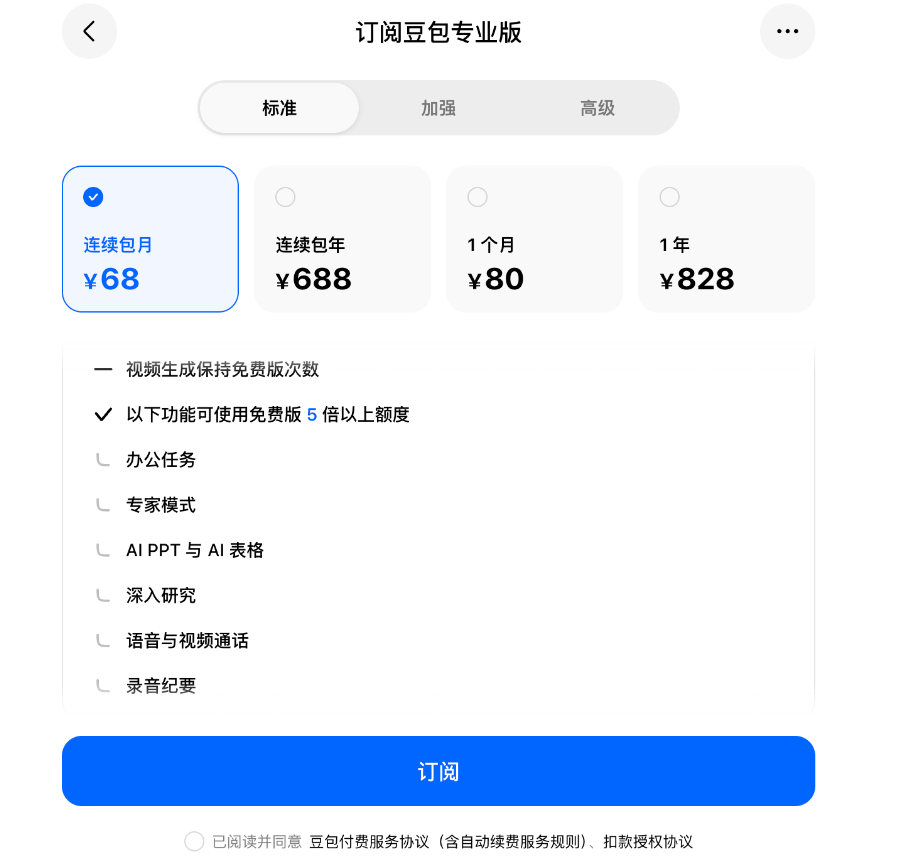
Commercialization is not limited to e-commerce. Volcano Ark sells model invocation capabilities on a usage basis, and Doubao Professional Edition has long been launched as a paid service; Douyin Local Services also settles hotel orders from the Doubao channel separately. ByteDance wants to master one thing: AI itself is a new foundation that can be priced and generate revenue, rather than merely free traffic acquisition.
Source: Doubao App
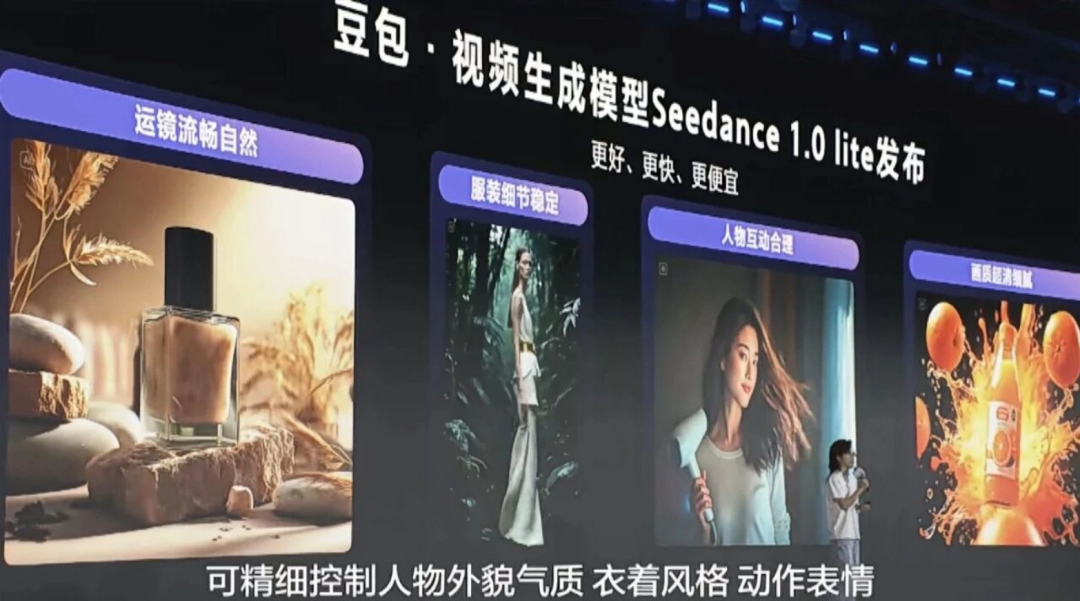
The Seed team has always walked on two legs: on one hand, grinding away at long-term basic research; on the other, turning mature models into products. In 2025, it launched the Seed Edge program, encouraging the team to pursue frontier topics with no short-term returns; in the same year, the Seedance video model was launched, and at the end of the year Seed 1.8 went online, supporting internet access, coding, and operating software interfaces.
Source: Volcano Engine Video Account
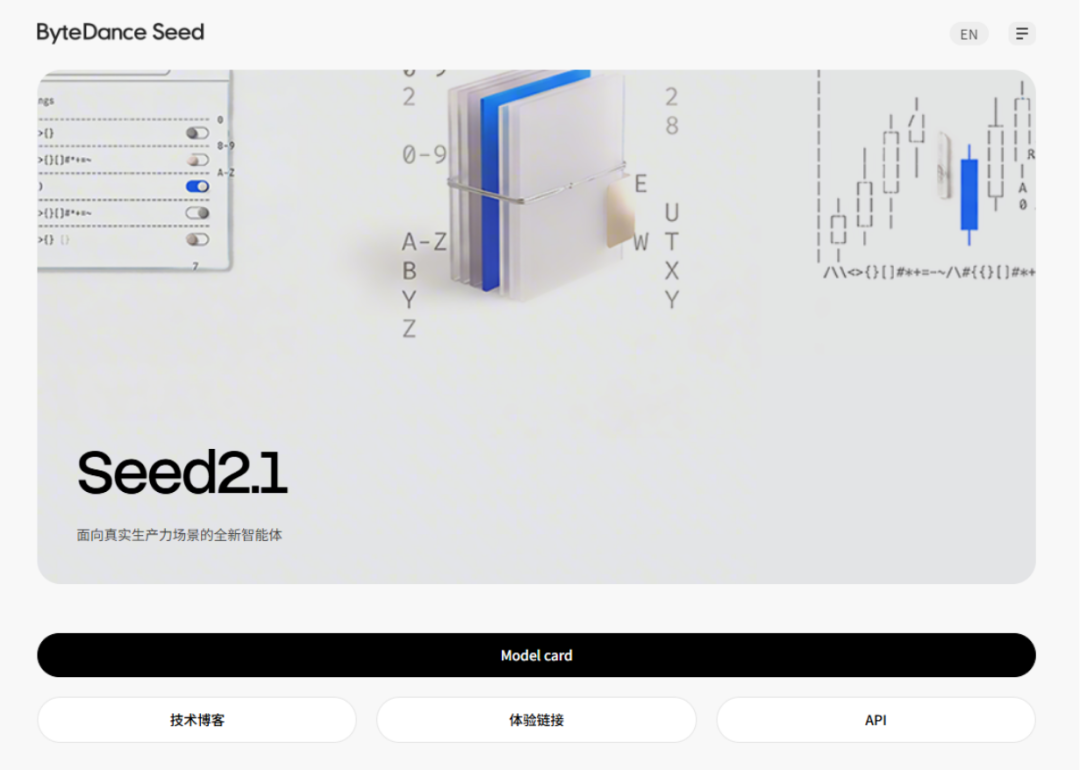
By 2026, Seedance had iterated to 2.5 and was widely used to shoot advertising materials and produce short dramas; Seed 2.1 focused on polishing code and complex task reasoning. Foreign media also reported that ByteDance was training a model with up to 10 trillion parameters, though the results remain unknown.
Source: ByteDance Seed official website
ByteDance CEO Liang Rubo also put it bluntly at the mid-year meeting: Doubao and Seedance have made visible progress, but leading overseas models are still continuously widening the gap. His expectation for Doubao is the same as for Douyin back then—not just to be an App, but to support an ecosystem that drives transactions and services.
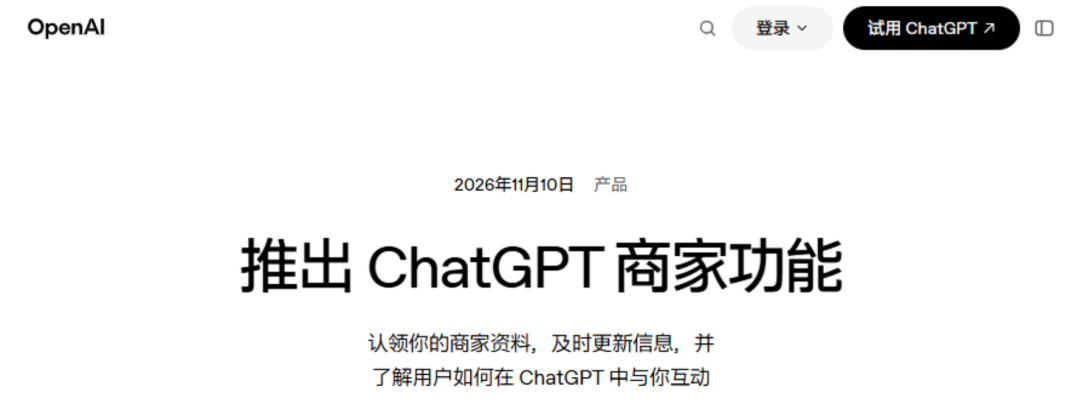
But once the lens is pulled to the global stage, the gap remains clear. Menlo Ventures statistics show that in 2026, among enterprise budgets for purchasing large model APIs, OpenAI and Anthropic together took 86%. Anthropic's third-quarter revenue was $17 billion, with Claude Code deeply embedded in enterprise development processes; OpenAI's ChatGPT has 1.2 billion weekly active users and is still opening AI reception to U.S. merchants; Google has put product and ordering capabilities into Gemini.
Source: OpenAI official website
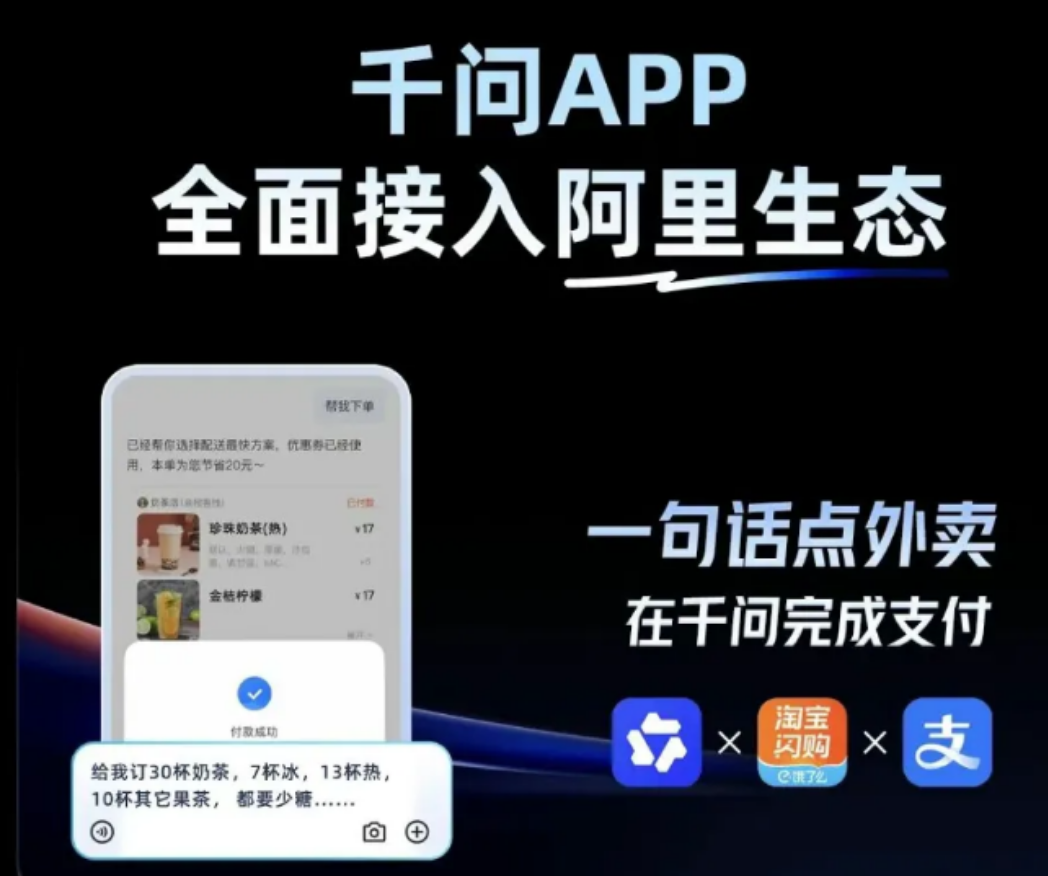
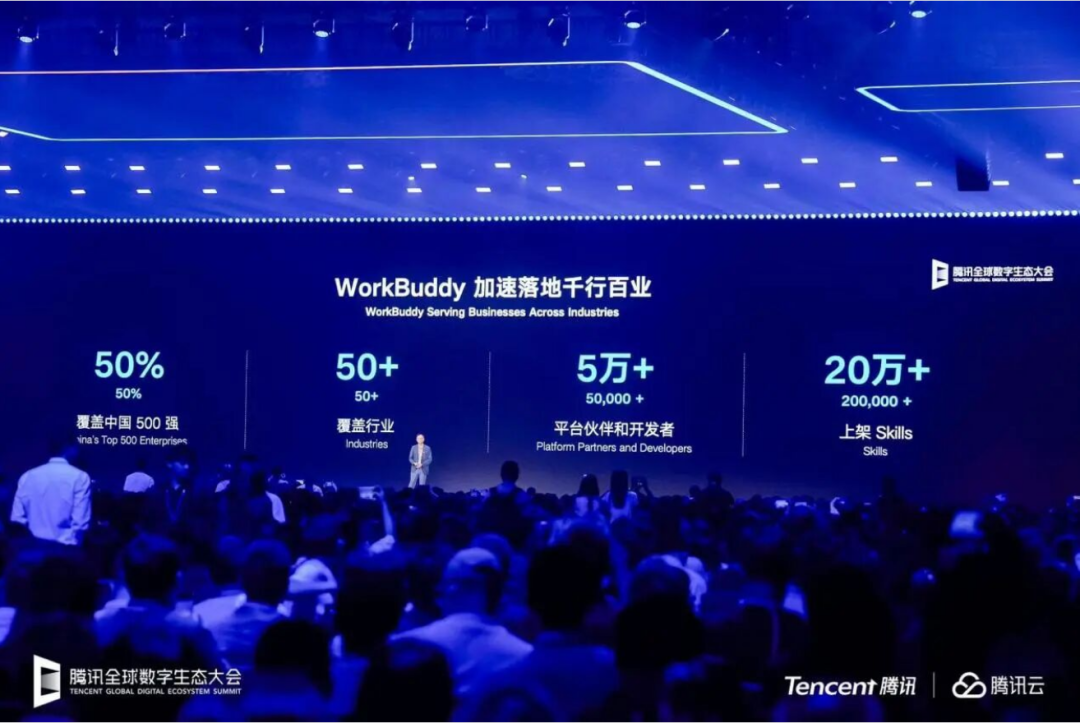
Domestically, Alibaba's Qwen connects with Taobao and Tmall, Tencent packs AI into WeCom and office tools, and Baidu does enterprise business through computing power and model services. Their approaches differ, but none has yet obtained global pricing power.
Source: Qwen
 Source: Tencent Cloud
This is the most realistic situation: China's AI is racing ahead in building applications, attracting users, and pursuing commercialization; but when it comes to underlying pre-training data and basic model capabilities, the road to catching up is still long.
The industry is full of slogans about "surpassing" and "disrupting," with everyone busy climbing rankings and grabbing users. What is most rare about Zhang Yiming's remarks this time is this sobriety: daring to fix his eyes on the global first tier, and daring to openly admit that it will take five or six years of grinding. Setting the 2029–2030 node means ByteDance is prepared to keep spending money and slowly polish the foundation over the next few years.
The contest of large models has never been a 100-meter sprint, but an ultra-long endurance race. User habits and product features can iterate in a few months; high-quality training data and underlying model systems must be accumulated bit by bit. Chips, needless to say, involve layers of barriers in architecture, processes, and software ecosystems, making them even harder to crack than large models.
Doubao holds hundreds of millions of users, and the e-commerce closed loop has taken initial shape; but to truly stand in the global first tier, the root still lies in boring basic skills such as data and algorithms. Even if model capabilities catch up with competitors, if computing costs are higher and supply is unstable, iteration and commercialization will still be strangled.
In the next few years, ByteDance must answer three questions: first, can Doubao make AI e-commerce work and earn money steadily; second, can Seed fill the data shortcoming and catch up with top overseas models within the promised time; third, can self-developed chips iterate steadily and narrow the generational gap with Nvidia. Pushing all three forward at the same time is difficult beyond comparison.
What the post-80s generation has taken over is precisely the hardest nut in Chinese technology. Shouldering the burden of global AI depends not on slogans, but on daring to lay out the timetable, write the gap on paper, and then grind through it year after year.
The ambition is already on the table, and the timetable has been drawn. The rest is left to time.
Disclaimer: This article is merely a commentary on major tech companies' financial matters and does not constitute any investment advice. The company data and regulatory events mentioned are all from public information and are for reference only; specifics should be based on official releases. Images are from the internet; if there is any copyright issue, please contact us for deletion.
-
![]()
The AI Search Wars Begin: What the Giants Are Really Fighting For Goes Beyond Answers
-
![]()
Hardcore Science Popularization | Chinese Smart Cars Going Global in Europe: Nine Types of Data, Seven Rules, Four Misconceptions
-
![]()
Musk and Jensen Huang: A Bromance Worth Shipping
-
![]()
Breaking News! Musk Rushes to Jensen Huang's Rescue, and Asia's Richest Man Zhang Yiming Joins In
-
![]()
Exposed! The Mastermind Behind the "Hunt for Jensen Huang"—All Clues Point to Him
-
![]()
Zhang Yiming Speaks Out: Catching Up with OpenAI and Anthropic Within 4 Years
-
![]()
Does an "Intelligent Organization" Still Need Baidu?
-
![]()
One Car, Two Smart Driving Systems: Are Automakers Developing In-House Technology or Keeping Their Options Open?