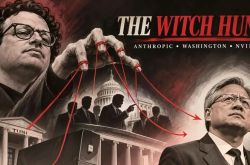
Exposed! The Mastermind Behind the "Hunt for Jensen Huang"—All Clues Point to Him
 11/16 2026
 443
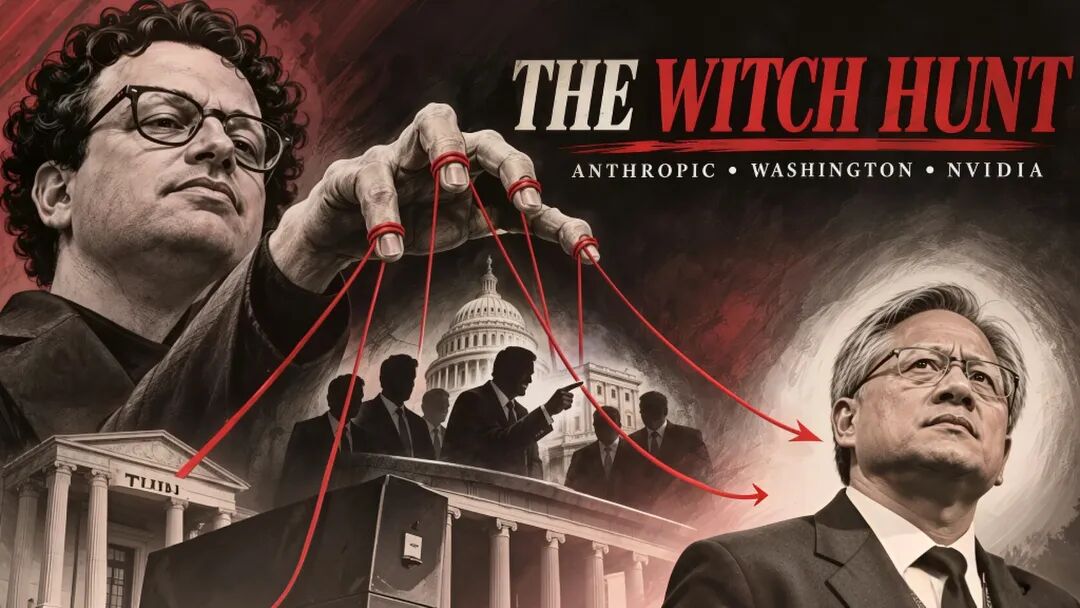
These two Silicon Valley titans have long been at odds.
One is Jensen Huang, who sells computing power cards. The other is Dario Amodei, who builds the Claude large model.
Wherever Jensen Huang goes, he says computing power is a commodity and must be globalized. Dario repeatedly says in one congressional meeting room after another in Washington that high-end computing power is a weapon and must not flow out. At every major summit touching on AI safety, chip export controls, and the Chinese market, the two argue every time they meet. Outsiders see it as a strategic disagreement; insiders know full well that at root it is a business deadlock.
Only this wave of controversy is different.
The public opinion did not emerge scattered out of thin air. It pressed forward in formation, layer by layer. Reporters, think tank researchers, members of Congress—spread out a string of names and you will see a faint line, all connecting to the same company: Anthropic.
An observer in Silicon Valley dug through public materials bit by bit and asked one question: if in a public opinion storm aimed at the industry's top figure, the most energetic critics are all tied to his biggest rival, should this money, these favors, and these circles be put on the table?
I. A Thread from One Report Pulls Out a Political-Media Network
The earliest thread lands on New York Times reporter Anna Swanson. Long covering chip security and the AI geopolitics beat, she relies heavily on the same source in her writing: Jack Clark.
Clark is a co-founder and policy chief of Anthropic. He was previously a tech reporter at Bloomberg and later headed policy at OpenAI; he knows the media and congressional playbook inside out. In May 2025, at a closed-door dinner at the Aspen Institute, he stood on stage speaking about AI safety while the audience was filled with officials who manage chip exports and control policies.
After the first article appeared in print, the spark quickly spread to Capitol Hill.
Democratic Senator Coons was the first to speak out, saying the behind-the-scenes conflicts of interest should be examined. Public records show that Anthropic's political action committee AnthroPAC gave him $2,500, and Jack Clark personally donated $5,000 to this PAC. Clark lives in San Francisco, while Coons's district is in Delaware; the two originally had no overlap.
Clark has another identity: a non-resident fellow at Georgetown's CSET think tank. All the later clues will circle back to this think tank. Within CSET's network is crowded a group of people who publicly call for restricting Nvidia and questioning Jensen Huang. Ryan Fedasiuk put it most bluntly: Jensen Huang should step down.
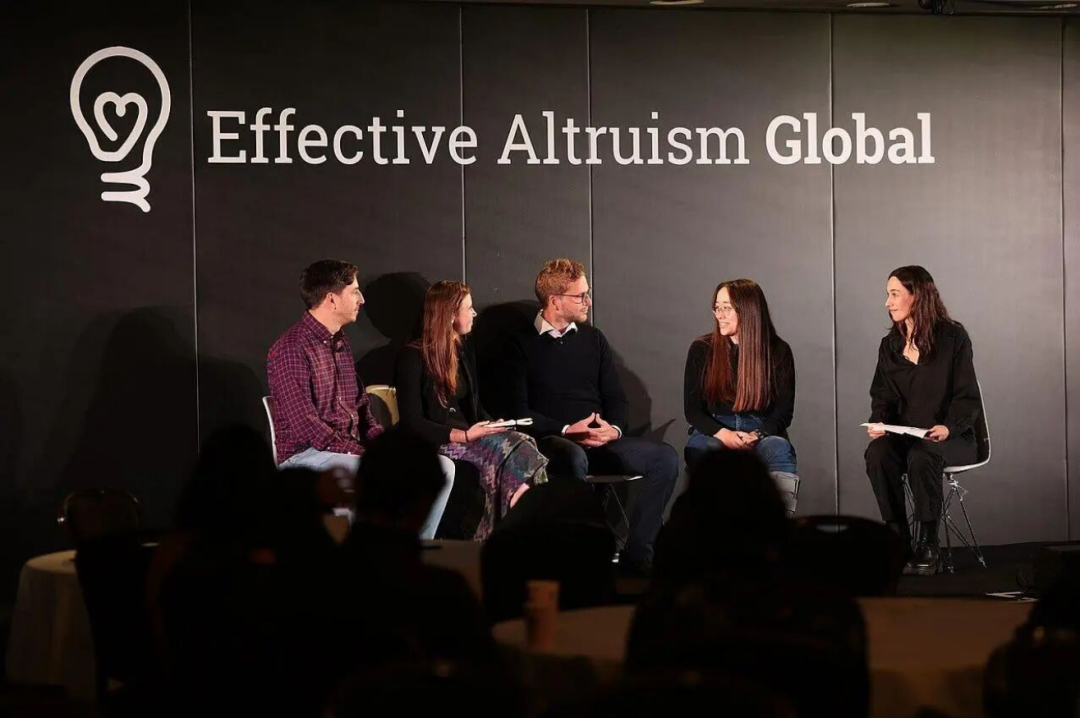
Image: A regular policy event organized by Open Philanthropy
CSET's early funding came from Open Philanthropy. The organization's co-founder, Holden Karnofsky, later joined Anthropic and is also the husband of Dario's sister Daniela Amodei.
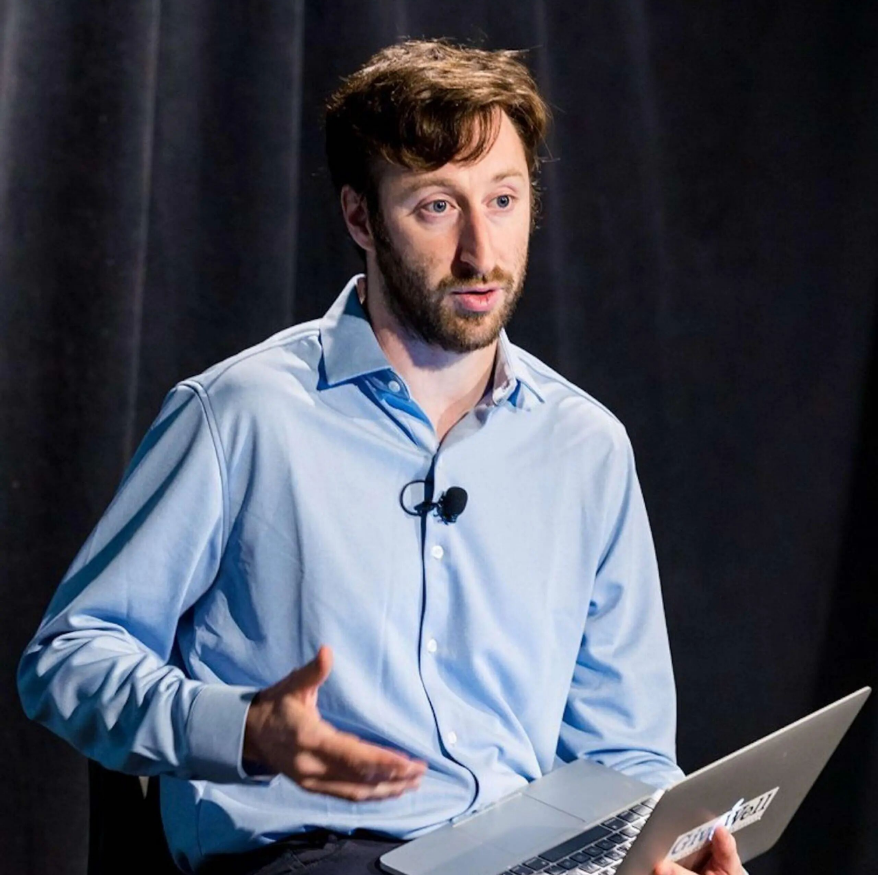
Image: Daniela's husband Holden Karnofsky
One family, one funding line, the same AI safety narrative. Interestingly, in earlier years this same group of people also published articles saying that national security determinations must have boundaries and must not be expanded at will. When the target changed to Jensen Huang, with the same rhetoric, the yardstick seemed to change length.

Image: The Amodei siblings
The news drifted across the ocean to London. Financial Times reporters followed up with coverage of Nvidia's controversy, and this media outlet had just obtained an exclusive in September 2025 about Anthropic restricting Chinese customers from calling its models. Taking exclusives from a rival company while continuously releasing negative news about Nvidia inevitably makes the market think more.
What truly blew the heat up across the entire internet was a post on Platform X. The poster was Council on Foreign Relations researcher Chris McGuire. When he served on the Biden National Security Council, his direct supervisor was Tarun Chhabra; now Tarun is Anthropic's head of national security policy. After the post went out, views surged past nine million, and representatives, former national security advisers, and columnists forwarded it one after another. A not particularly conspicuous account connected the political and media circles overnight and became the motif of the entire controversy.
Looking at one incident alone, it can be called a coincidence. When a pile of coincidences falls in the same direction, the flavor changes.
II. Money, Think Tanks, Lobbying: Three Channels Laid Out in Washington
After public opinion was paved, Washington's bills quickly followed.
In February 2026, Dario himself walked into the Senate Banking Committee office and lobbied lawmakers face to face, demanding tighter chip controls on China. Not long afterward, lawmakers Warren and Banks introduced the AI OVERWATCH Act. Republican committee member Kevin Cramer had received a $1,000 donation from AnthroPAC and later publicly stated that Jensen Huang should resign as CEO. Lobbying, bills, and pressure to step down—the timeline locks together tightly.
Anthropic's layout in Washington goes far beyond these small campaign donations.
One channel is AnthroPAC, which directly donates money to lawmakers' campaigns. Another is Public First Action, a 501(c)(4) organization. Anthropic invested $40 million, and Dario personally added $1 million. This organization is tied to a super PAC, uses money to run ads, and specifically supports lawmakers willing to advance chip control legislation. House Foreign Affairs Committee Chairman Brian Mast is also on the donation list; the November 4 joint letter to Congress demanding that Jensen Huang explain his relationships was signed by him.
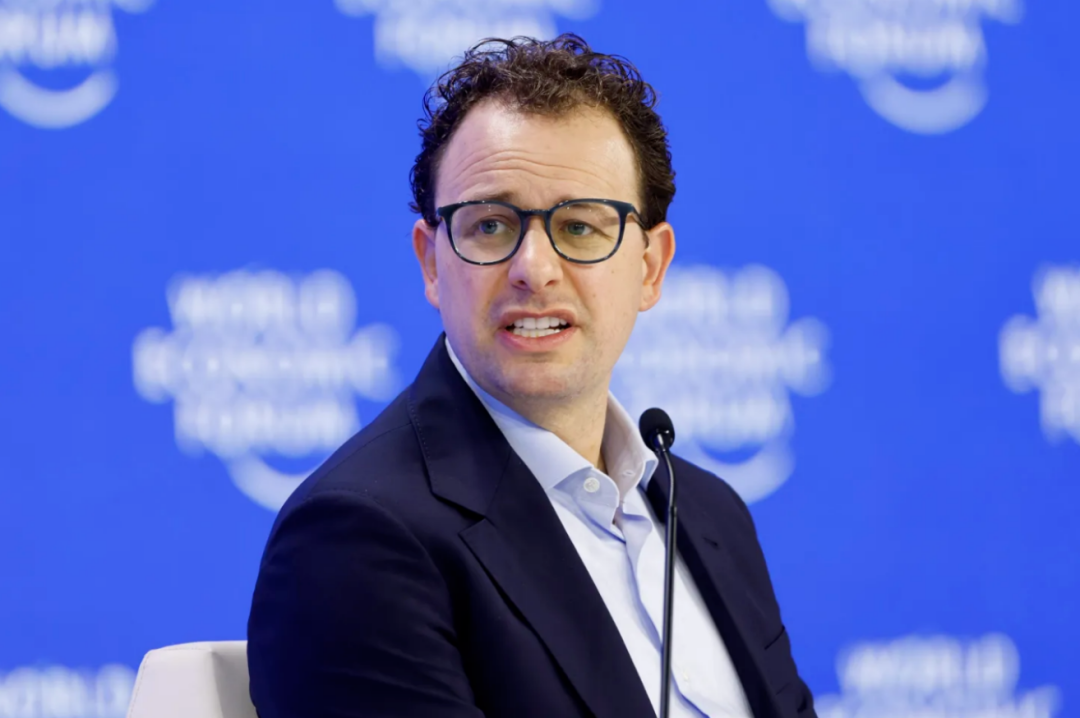
Anthropic CEO Dario Amodei has always been strongly dissatisfied with Jensen Huang
Go deeper into the think tanks. Anthropic's long-term trust holds the power to appoint and remove board members; trust member Richard Fontaine is CEO of the Center for a New American Security (CNAS). CNAS has long studied chip transshipment, smuggling, and export verification—exactly the logic now being used to scrutinize Nvidia.
Over the past two years, Anthropic has gradually gathered veterans from the White House, intelligence circles, and the national security system. From the Biden administration: Tarun Chhabra and Ben Buchanan; from the Trump administration: Chris Liddell and Huang Sihao. It recruits from both camps; what these people manage is precisely export controls, security reviews, and federal procurement rules.
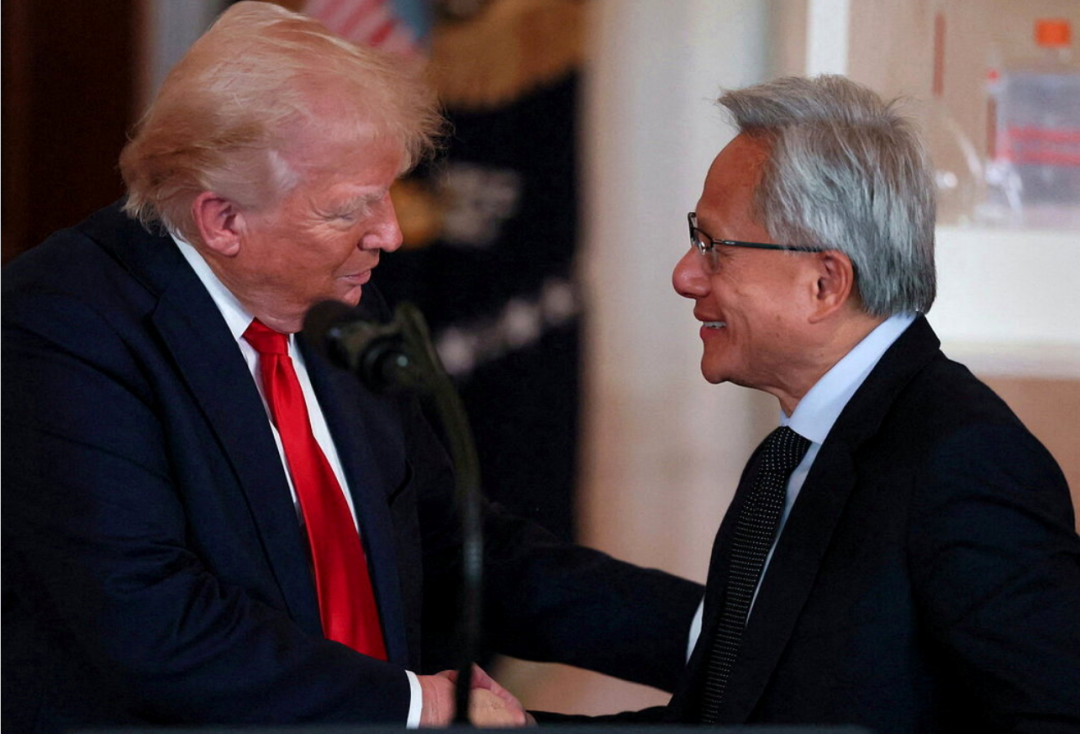
The timing is also very convenient. When Nvidia's market value suffered a major drawdown, Anthropic was pushing forward an IPO at a $61 billion valuation. The computing power leader was hit, and the model company welcomed a listing window; this interest is out in the open.
But one sentence must be made clear. Donations, connections, conflicts of stance, and overlapping timing do not equal collusion. To this day, there is no solid evidence proving that the Amodei siblings or Anthropic paid to arrange leaks or manipulate the media. Clues are clues, conclusions are conclusions; they cannot be mixed together.
III. The Whole Internet Is Spreading Leaks, Few See the Refutation
The shift in public opinion is hidden in a clarification everyone ignored.
The Wall Street Journal once released news saying that Singapore authorities suspected Alice Huang and had launched an investigation. The day after the report came out, Singapore's Ministry of Home Affairs directly issued a written statement: there was no investigation, no such claim, and it even published the reporter's original questions and the official reply together. Breaking! Singapore announces Huang Le investigation: Hong Kong resident, not a spy, no criminal evidence
Only the voice of clarification was too quiet. The overwhelming leaks occupied the screen first, and the refutation sank in an instant. The spy narrative could not obtain evidence, so public opinion immediately changed direction, turning to personal relationships and corporate governance. This smooth transition is the most delicate part of this controversy.
IV. Two AI Routes Collided in the Same November
Peeling away layer after layer of public opinion, underneath are two roads that cannot converge.
Jensen Huang's reasoning is simple: chips are a global business. If the United States wants to maintain technological advantage, it must rely on continuous innovation, not on cutting off the market. Forcibly sealing off supply will only force overseas players to build their own cards, ultimately damaging the foundation of American technology. He has said this many times in public and even stated bluntly that one-size-fits-all controls are not patriotism.
Dario's reasoning is also straightforward: advanced computing power is a strategic asset. Large models can rewrite scientific research, intelligence, and the military. If high-end chips flow out, it is equivalent to overdrawing America's future. Controls must be used to press down the opponent's computing power ceiling.
There is also a layer of business accounting underneath. Anthropic sells closed-source model APIs, and open-source models have been pushing its prices down. Blocking computing power supply means slowing the iteration of open-source models and leaving itself a breathing window. Jensen Huang sells cards; the bigger the market, the more he earns, so he naturally resents blockades. One sells the underlying computing power foundation, the other sells upper-layer models; one wants a global market, the other wants a computing power barrier. This is no longer ordinary business competition; it is a dispute over the direction of America's AI national policy.
Most other companies first build products and then supplement government relations. Anthropic does the opposite. The policy team, security narrative, and think tank funding were top-level design from the first day of its founding. His sister Daniela runs congressional procedures, his brother-in-law Karnofsky holds the philanthropic funding network, and his brother Dario outputs security theory. The three work together to compete not only for market share, but for who defines AI risk and who writes the regulatory rules.
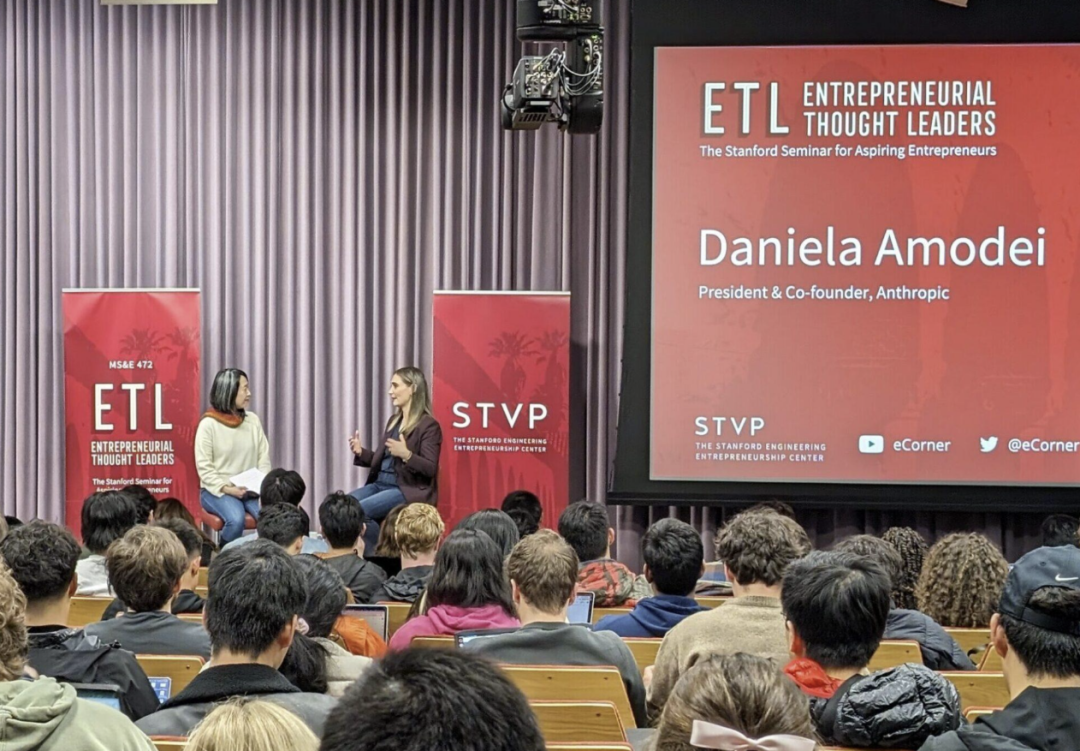
Image: Daniela speaking at a public forum at Stanford University
Why did the controversy detonate precisely in November 2026?
The clues had already flowed into White House intelligence circles as early as August 2025; Trump saw the briefing at the time and suppressed it. By November, two clocks reached their nodes at the same time.
One is Washington's political clock. The midterm elections landed, and congressional power was reshuffled. Jensen Huang is the most active lobbyist for Trump's relaxation of chip sales to China, while Anthropic's policy network has deeper roots in the Democratic regulatory camp; the window for control legislation thus opened. An internal White House memo even called this force the "Anthropic knot."
The other is Wall Street's capital clock. Anthropic wants to IPO, and the market needs to reprice the AI track. Nvidia is the anchor of this round of AI bull market; when it moves, valuation expectations across both the computing power and model tracks sway with it.
In the end, the controversy tore into two narratives: overseas attention on national security, and the Chinese community's attention on personal conduct, with both pressures pressing in together. But this hunt could not have been completed by Anthropic alone. Hardliners on China like Rubio themselves have demands to push controls. Multiple forces collided at the same point in time; it is hard to say who directed it single-handedly.
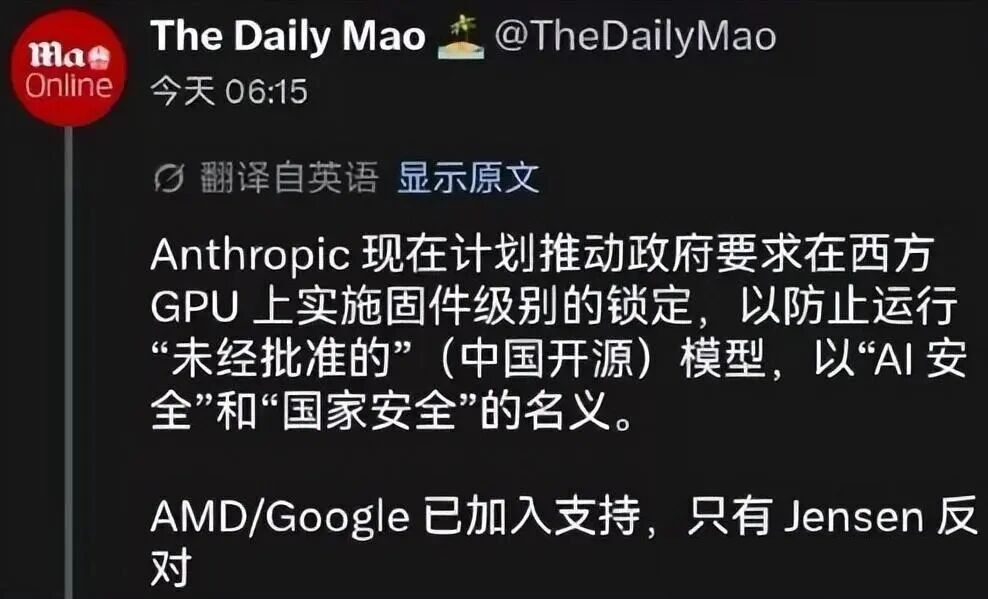 Image source: X social platform
V. In Closing: The Gold Mine Is Still There, Only the Gatekeeper Must Change
Jensen Huang's exit is a major marker for the AI industry. But what is most worth watching in this matter is not identifying a mastermind, but understanding the change that has already occurred: when AI companies fight, it is long no longer only about computing power, code, and products. Whoever can define risk, hold media sources, connect think tanks and Congress, and package commercial demands as national security can occupy a position before the rules take shape.
The globalized computing power route he represents has suffered a heavy blow, but that does not mean Dario's control route will proceed smoothly. If blockade goes too far and the industrial chain tears apart, other players will accelerate self-development of chips, and the cost will ultimately fall back on the American technology ecosystem.
This controversy leaves an old question: when business competition can launch attacks through national security, the public opinion machine, and congressional legislation, where exactly is the boundary of technological competition?
The old gardener at Ginkaku-ji uses bamboo tweezers to pick out withered moss one by one. Jensen Huang likes this story very much; he says that doing the single most important thing well is enough for life. Only this time, what he encountered was not moss.
He stands at the mouth of the computing power gold mine. Those who want a share of the cards, those who want to seize the gate, and those who want to close the gate all stand in a circle around him. Some use security narratives to build walls, some use bills to lock doors, and some wait for him to fall so it is their turn to stand in the spotlight.
The card remains the same, and the gold mine is still there. What has changed is that the power to decide where the cards flow is no longer in the hands of a single person.
Cantillon observed that new money does not spread evenly across everyone; the closer one is to the source, the sooner one reaps the benefits.
Computing power is today's new money. Whoever controls the export of computing power holds the minting right. Jensen Huang once stood closest to the gate; now, that gate is being handed over to a tangle of lawmakers, lawyers, think tanks, licenses, and bills.
The hunt may not have been orchestrated by any one person. But those who want to close this gate have long been standing in place.
Interactive Topic: Do you think Jensen Huang's departure is fundamentally a matter of personal governance, or an inevitable outcome of the U.S. AI roadmap rivalry? Let's discuss in the comments. Disclaimer: This article is solely a big tech financial commentary and does not constitute any investment advice. The corporate data and regulatory events mentioned in the article are all drawn from public information and are for reference only; please refer to official releases for specifics. Image source: internet. If there is any copyright infringement, please contact us for removal.
-
![]()
The AI Search Wars Begin: What the Giants Are Really Fighting For Goes Beyond Answers
-
![]()
Hardcore Science Popularization | Chinese Smart Cars Going Global in Europe: Nine Types of Data, Seven Rules, Four Misconceptions
-
![]()
Musk and Jensen Huang: A Bromance Worth Shipping
-
![]()
Breaking News! Musk Rushes to Jensen Huang's Rescue, and Asia's Richest Man Zhang Yiming Joins In
-
![]()
Exposed! The Mastermind Behind the "Hunt for Jensen Huang"—All Clues Point to Him
-
![]()
Zhang Yiming Speaks Out: Catching Up with OpenAI and Anthropic Within 4 Years
-
![]()
Does an "Intelligent Organization" Still Need Baidu?
-
![]()
One Car, Two Smart Driving Systems: Are Automakers Developing In-House Technology or Keeping Their Options Open?