Breaking News! Musk Rushes to Jensen Huang's Rescue, and Asia's Richest Man Zhang Yiming Joins In
 11/16 2026
 549
Frankly speaking, Musk and Jensen Huang are now in the same boat—quite literally.
These two are cut from the same cloth.
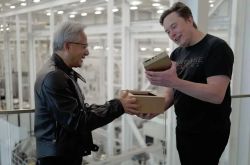
Both are self-made founders; one post online and global stock markets tremble; both hold hard assets that others can't take away—one controls the world's most scarce GPU compute power, the other commands rockets, satellites, and launch pads.
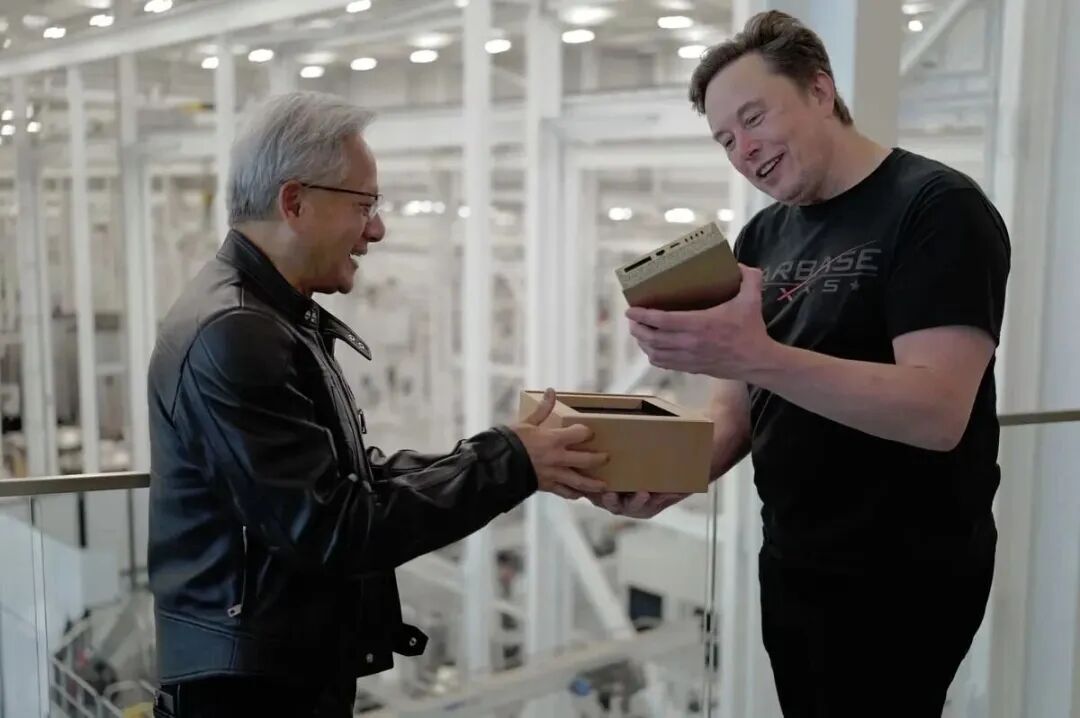 Image source: X (formerly Twitter)
Their backgrounds mirror each other, too. Jensen Huang was born in Tainan and moved to the US with his family at age 9; Musk started out in South Africa, passed through Canada before finally settling down. Both are immigrants—the kind of people who built trillion-dollar companies with their own hands.
They also stand on the same side politically. Musk went off to run the Department of Government Efficiency, spending money to support Republicans; Jensen Huang has voiced his support multiple times as well and is widely regarded in the circle as "one of Trump's own."
They prosper together and suffer together.
So when Jensen Huang was suddenly ousted this time, Musk's first reaction was to feel the chill of "when the rabbit dies, the fox grieves." He knows full well: if the board can casually kick out a founder today, it wouldn't be surprising at all if the same playbook lands on him tomorrow.
Musk's Three Days: Each Step Bolder Than the Last
Musk isn't just shouting a couple of slogans and calling it a day—he's genuinely taking action.
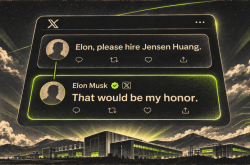
Step one: Netizens egged him on to poach Jensen Huang for his own company, and he replied on the spot in five words: "That would be my honor."

Image source: Weibo
Step two: He reposted the line from Air: "You'll be remembered forever, because some things are eternal," saying nothing more below—just leaving one name: Jensen.
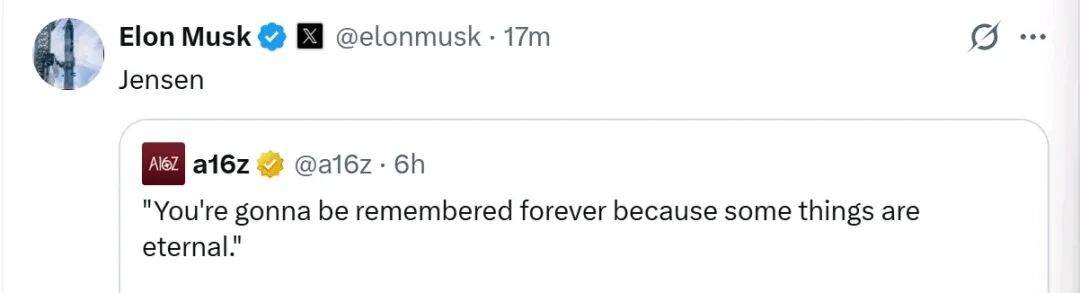
Image source: X (formerly Twitter)
Someone dug up his earlier comment saying "founders can't just be replaced casually," and he added two words: "So true."
Step three: Laying his cards on the table.
"A petition is underway to reinstate Jensen and I'm signing it too."
Translated plainly: someone is launching a petition to bring Jensen Huang back, and I'm signing too.
From "I want to" to "I'm signing"—three days, three leaps. His stance grew more blatant each time, nothing hidden at all.
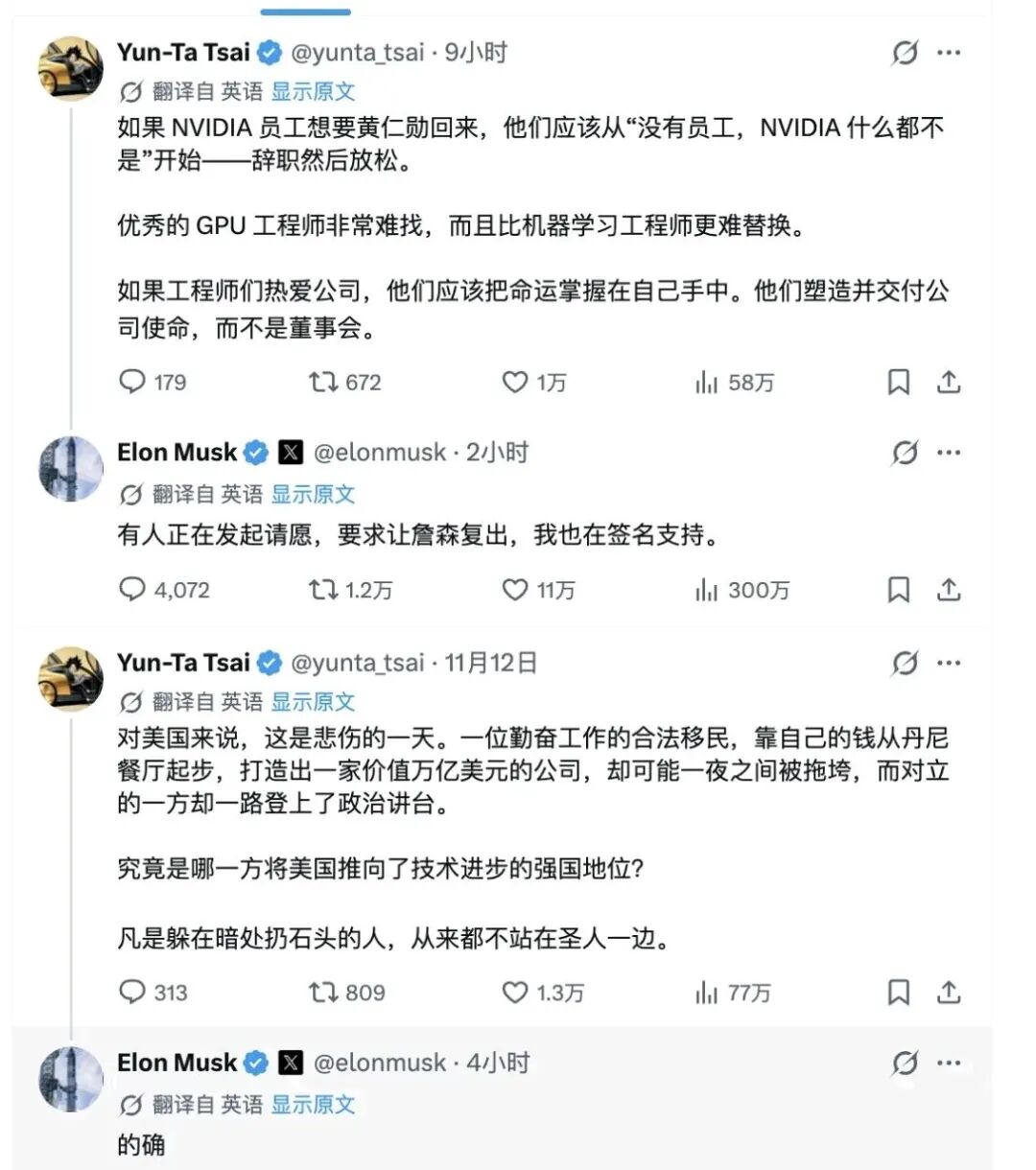 Image source: X (formerly Twitter)
Was he really only protecting old Huang?
He's defending that old Silicon Valley rule: founders can't just be pushed out like this. If this breach opens today with Jensen Huang, tomorrow it could open with him.
And he's not alone.
Asia's richest man, ByteDance's Zhang Yiming, also signed.
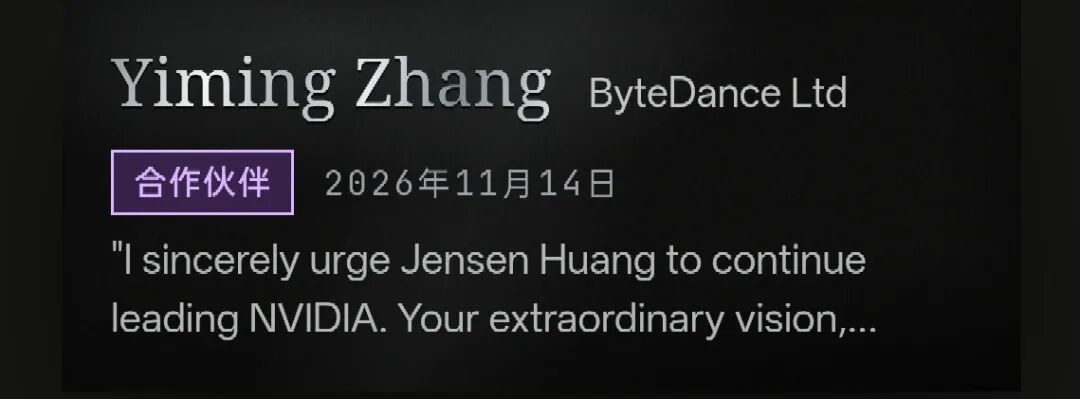 Image source: standwithjensen official website
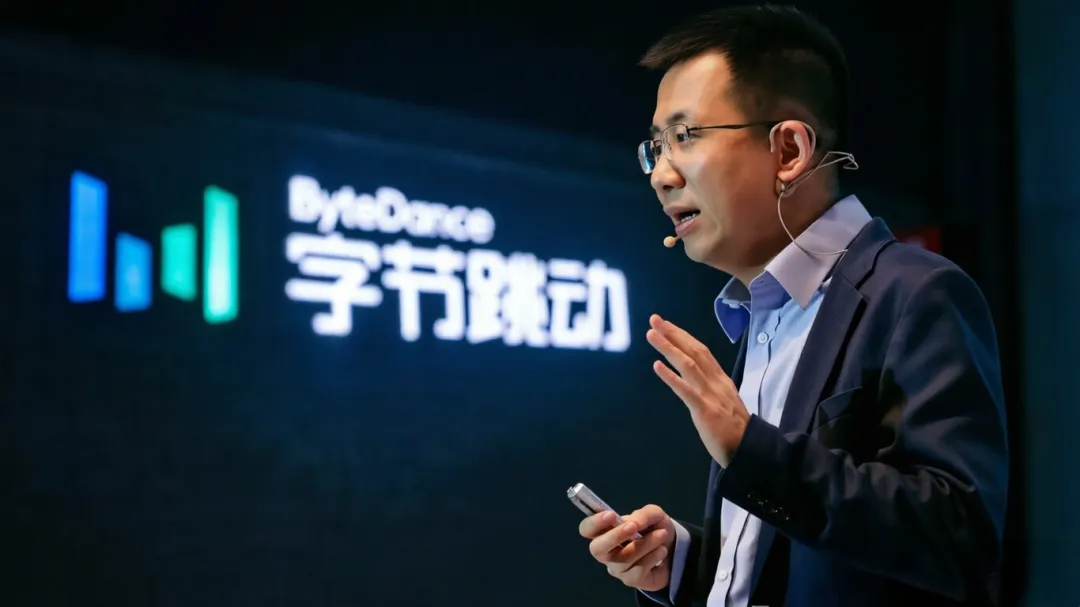 Image source: Douyin
Netscape's Marc Andreessen, Binance's He Yi, YC's Garry Tan—a whole circle of people jumped in.
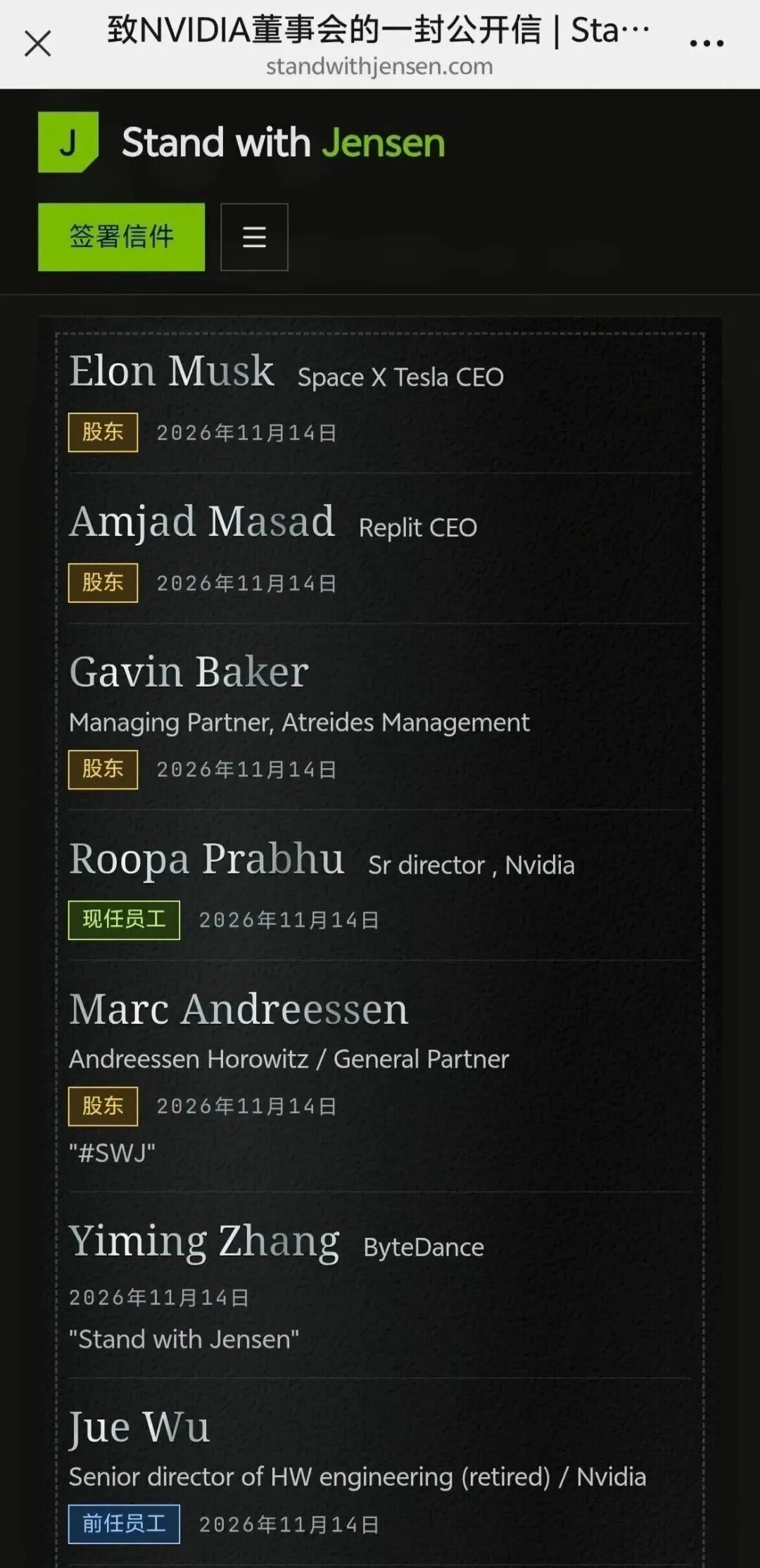 Image source: standwithjensen official website
Shareholders holding Nvidia stock also went to sign the petition—shares bought with money should be put to use when needed. So far, over 45,000 people worldwide have signed the petition, including Nvidia employees, founders, shareholders, partners, former employees, and global tech elites.
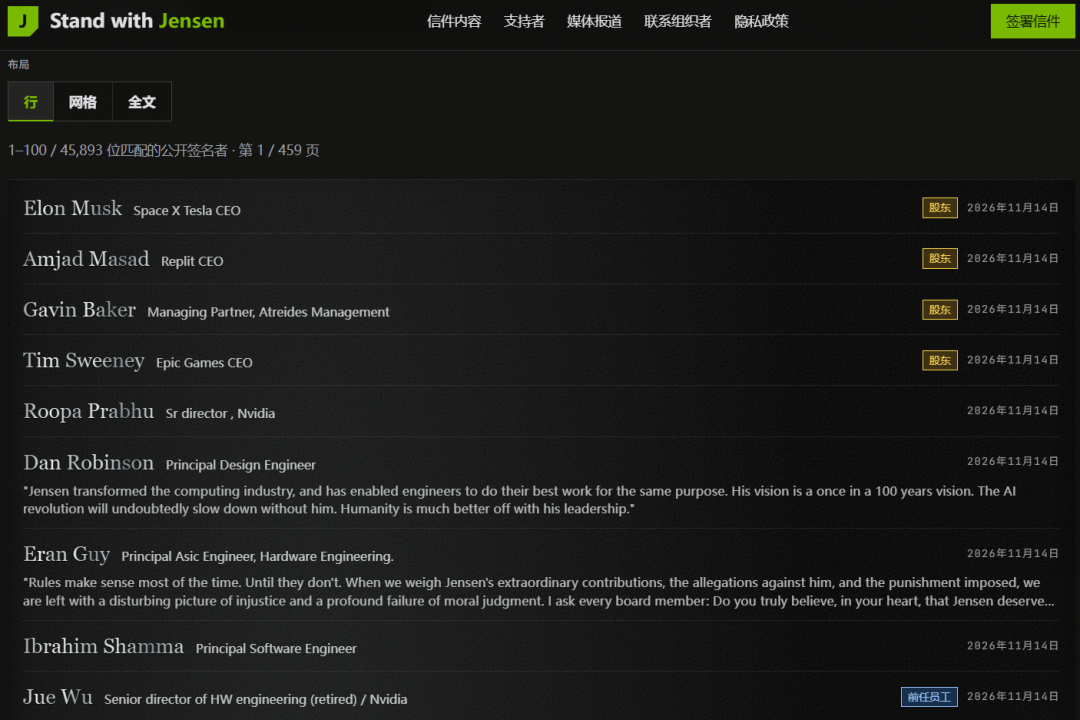
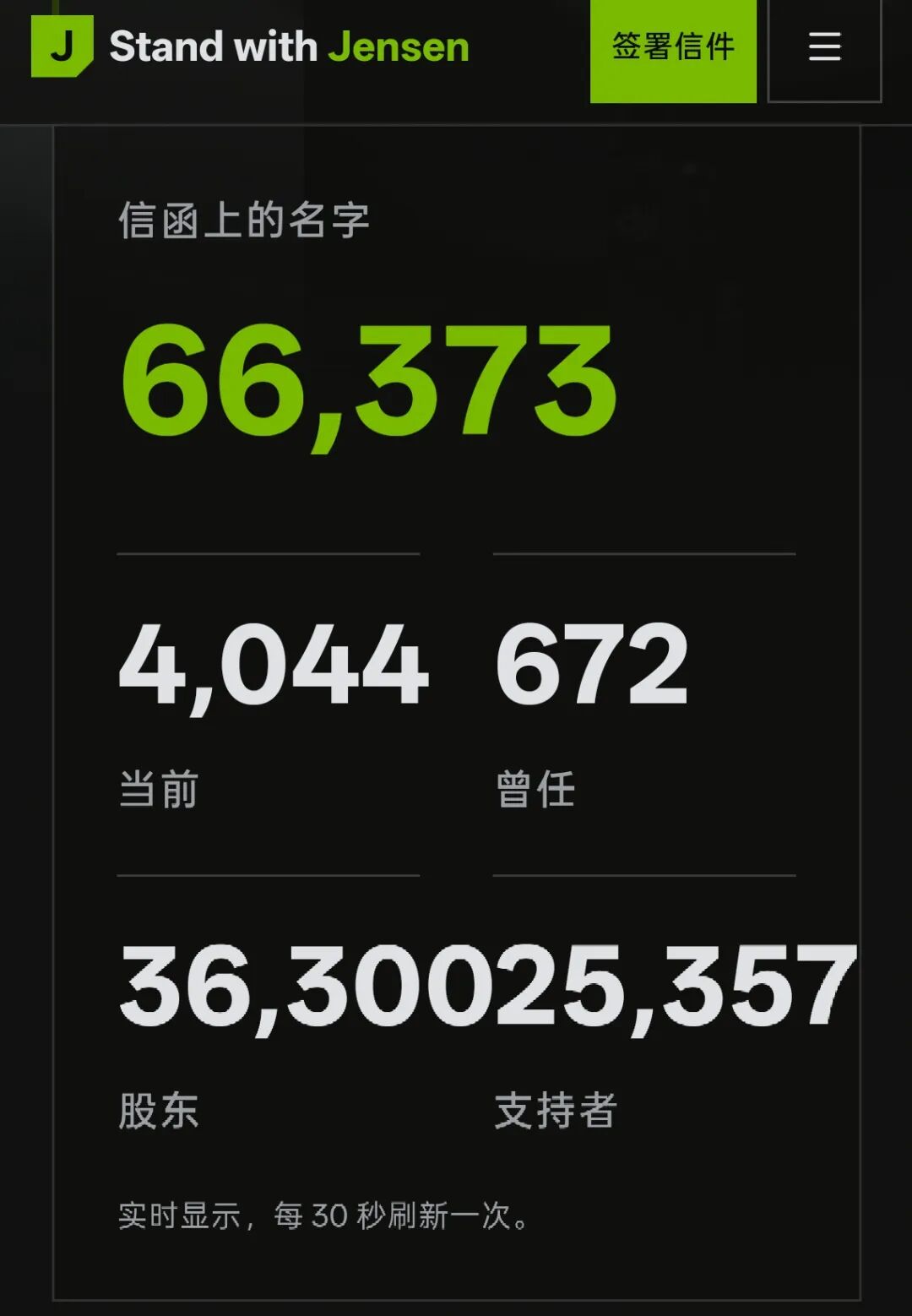 Image source: standwithjensen official website
Inside Nvidia, 97% Want Him Back
Outside, big names are banding together; inside, it's already blown up.
Before Jensen Huang submitted his resignation, a senior engineer at the company first posted in the internal suggestion box, essentially saying one thing: before the board makes a move, at least listen to what employees have to say.
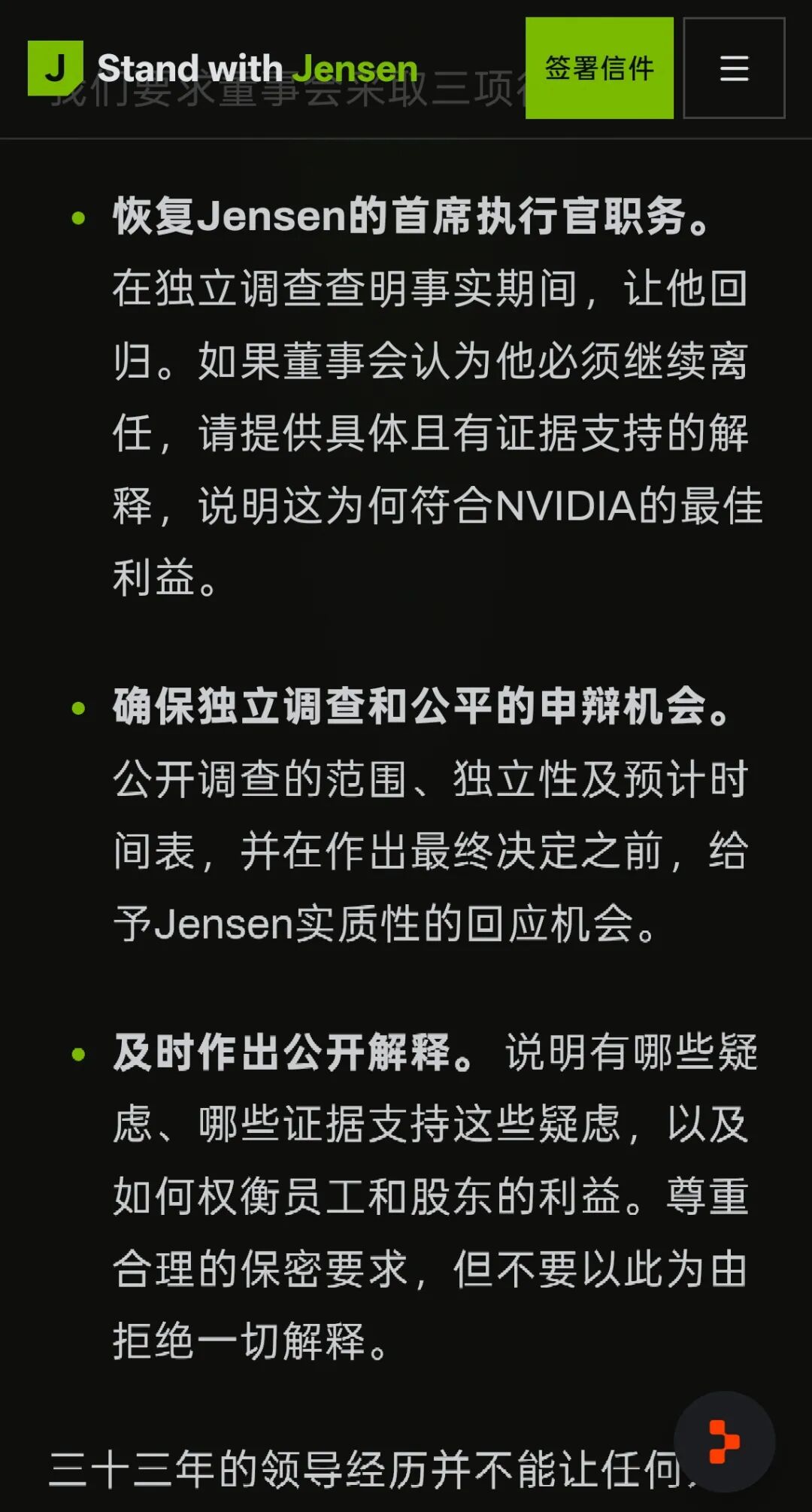 Image source: standwithjensen official website
The post gathered over 1,600 comments. The internal vote results came out: 97% of on-duty employees want him to stay.
What employees said hits harder than any analysis:
"Nvidia is Jensen Huang, and Jensen Huang is Nvidia."
"We're all human, we all make mistakes. He bet on the company three times; he deserves a second chance."
Outside the Santa Clara headquarters in California, someone placed flowers and lit candles, and some were photographed shedding tears at the building entrance. Hundreds of employees signed a letter to the board, with tough words: if Jensen Huang's CEO position isn't restored and independent directors aren't replaced, everyone walks out together.
Musk chimed in from the sidelines: if you really leave, SpaceX and Terafab have positions waiting for you. Musk's "stoking the fire" is indeed quite manly: go ahead and make a fuss—I've got your back.
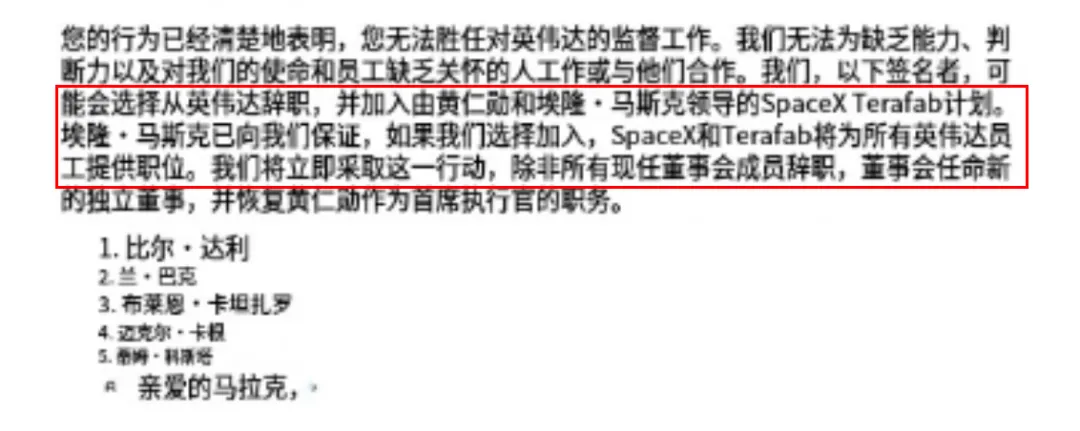
These employees aren't blindly idolizing him; they know the score better than anyone.
Nvidia reaching a trillion-dollar market cap is all thanks to Jensen Huang betting against everyone's opposition three times.
In 2006, he pushed CUDA hard, stuffing general computing units into every gaming graphics card. Costs rose by half, gross margins dropped to 35%, and Wall Street cursed him for a full decade. But it was exactly this move that turned GPUs from gaming cards into the compute foundation of the AI era.
In 2012, when AlexNet came out, he made the call over a weekend and turned the whole company toward AI; in 2016, he personally delivered the first DGX-1 to OpenAI, which was still insignificant at the time.
Later on, he proposed the "AI factory" concept—not selling single chips but packaging entire intelligent machines, turning Nvidia into the infrastructure provider of the AI era.
Three choices, none of which was market consensus—all were his solo decisions made under pressure. In the end, all bets paid off, and those who worked with him truly reaped the rewards.
But then again, no matter how loud Musk shouts or how many tens of thousands sign, it's hard to rewrite the ending of Jensen Huang's gloomy departure.
What Forced Old Huang Out Was Never the Market
On the surface, it was an extramarital affair scandal and an internal investigation. At the root, it wasn't.
What really made the move wasn't the market—it was politics.
An immigrant-born person holding America's AI lifeline in that position was already conspicuous. Republican hawks were watching; Democrats were watching too. Once the logic of "those not of our kind must have different intentions" kicks in, business logic has to step aside.
What's worse, Musk himself is also a clay idol crossing the river right now.
After Jensen Huang, the next one on the liquidation list is very likely him. Two Democratic federal senators have already formally sent letters demanding he fully preserve all records of Starlink and Starshield restrictions on Ukraine's use. When Democrats take over Congress in January next year, he's at the top of the investigation target list, and Warren's hat of "deceiving American families and defrauding investors" is still hanging in midair.
Trump's side has said they're willing to grant him a preventive pardon to protect SpaceX and Tesla assets.
Hillary's reply can be summed up in two words: "Heh heh."
You pardon yours, we investigate ours. There's always a way.
In the end, before the state machine, no matter how strong a company is, it's just an egg facing a rock. Behind the economy is politics; wealth without power backing it is rootless wealth.
People on this side have just left, and who the next CEO will be is already hotly debated.
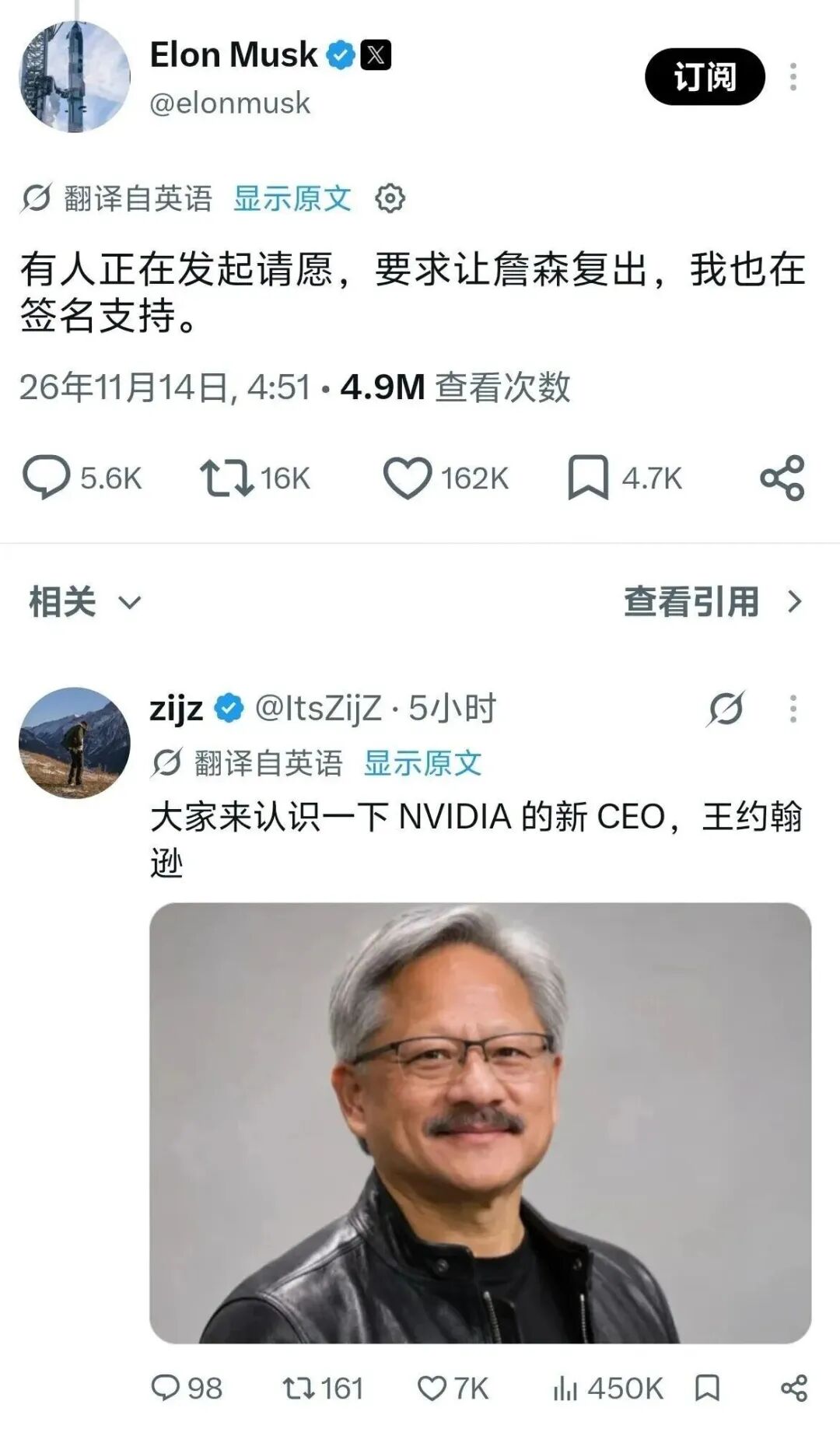 Image source: X (formerly Twitter)
Trump named Cook as successor, and insiders immediately mocked it: Cook is good at cutting costs but can't handle GPU R&D. Word also has it the board has its eye on Arm chief Rene Haas, who spent 7 years at Nvidia. There's also mention of Apple chip head Srouji.
Nvidia's board quickly poured cold water on it: the headhunter hasn't even been finalized, no contact with candidates at all—everything circulating outside is speculation.
Many people's first reaction is to think of the 2023 OpenAI drama. Altman was ousted by the board, over 700 employees signed a petition to force his return, and in the end he came back.
But this time you can't just copy that playbook.
Altman was temporarily removed; Jensen Huang voluntarily submitted his resignation, with an inconclusive independent investigation still hanging over it. Petitions and big-name signatures only carry public opinion weight, no binding force—they can't push the board.
Up to now, the whole thing is essentially a founder defense battle. Musk backing Jensen Huang is a warning bell for himself and all Silicon Valley founders; Zhang Yiming and the others jumping in is because they don't want to see the compute chessboard casually disrupted by politics.
But reality is cold: the voices of capital, employees, and big names, when they hit politics, are as light as a sheet of paper.
The fate of a trillion-dollar AI leader no longer depends only on technology, orders, and profits.
How will the board respond to employees? What will that investigation reveal? Does old Huang still have a chance to come back? The entire AI circle is watching.
Netizens' Sharp Comments, Pro and Con
Pro: Without Jensen Huang there's no CUDA; without CUDA there's no AI explosion we have today. Private life is private life; 30-plus years of contributions can't just be erased—giving him one chance isn't too much to ask.
Con: The board must be accountable to all shareholders; with risks laid on the table, resignation is the inevitable outcome. A company ultimately runs on systems; being tethered to one person is inherently a hidden danger.
Interactive Topic
Do you think Jensen Huang still has a chance to return and helm Nvidia? Chat in the comments.
Disclaimer: This article is merely a commentary on big-company financial matters and does not constitute any investment advice. Corporate data and regulatory events mentioned are from public information, for reference only, and subject to official releases. Images from the internet; if copyrighted, please contact for removal.
-
![]()
The AI Search Wars Begin: What the Giants Are Really Fighting For Goes Beyond Answers
-
![]()
Hardcore Science Popularization | Chinese Smart Cars Going Global in Europe: Nine Types of Data, Seven Rules, Four Misconceptions
-
![]()
Musk and Jensen Huang: A Bromance Worth Shipping
-
![]()
Breaking News! Musk Rushes to Jensen Huang's Rescue, and Asia's Richest Man Zhang Yiming Joins In
-
![]()
Exposed! The Mastermind Behind the "Hunt for Jensen Huang"—All Clues Point to Him
-
![]()
Zhang Yiming Speaks Out: Catching Up with OpenAI and Anthropic Within 4 Years
-
![]()
Does an "Intelligent Organization" Still Need Baidu?
-
![]()
One Car, Two Smart Driving Systems: Are Automakers Developing In-House Technology or Keeping Their Options Open?