$55 Billion! Liang Wenfeng Becomes the World's Richest Large-Model Developer
 11/27 2026
 500
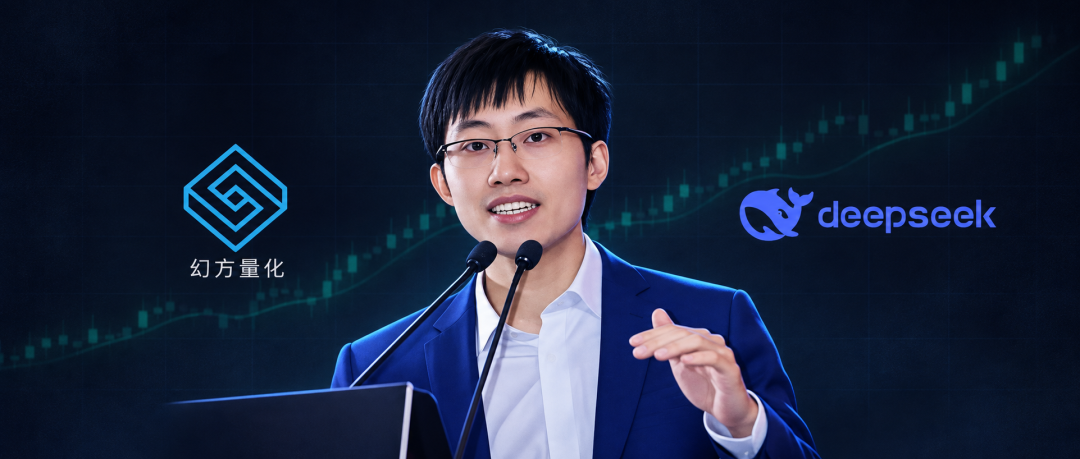
Liang Wenfeng's net worth has hit another new high.
According to Bloomberg's tally, his book wealth stood at about $16.7 billion at the start of the year, climbed to $36 billion by mid-year, and shot past $55 billion by year-end.
A more than threefold increase in a single year is rare in the history of any rich list.
OpenAI co-founder Greg Brockman: $25.5 billion. Anthropic's Dario Amodei: $22 billion.
Liang Wenfeng's book net worth alone exceeds the two of them combined, with room to spare.
By Bloomberg's reckoning, he has become the AI model developer with the highest net worth in the world. At the start of 2025, DeepSeek released the reasoning model R1, and everyone was watching to see what problems it could solve. Today, investors have to wonder: how many customers will be willing to pay for it over the long term?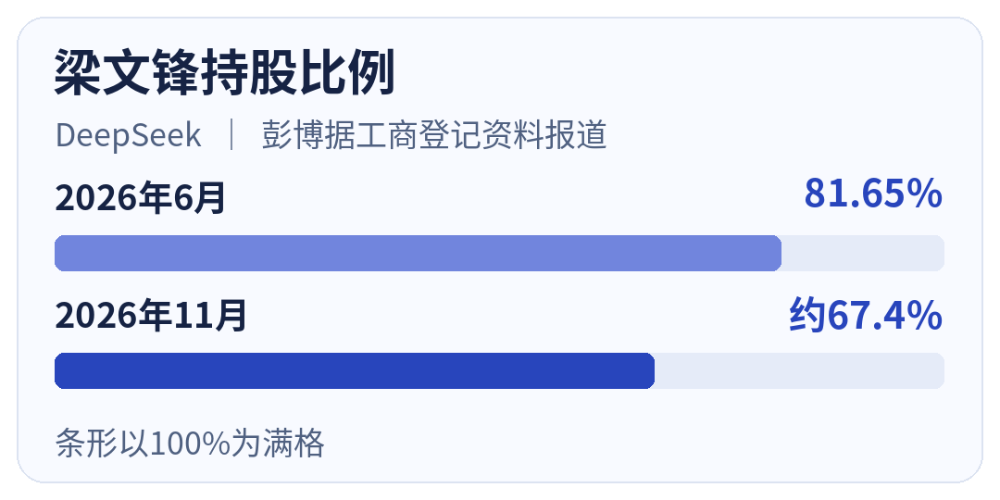

DeepSeek's Valuation Soars
First, look at how the new shareholders came in. On November 17, Hangzhou DeepSeek completed a registration change, adding shareholder Hangzhou Chengyan, which holds about 17.27%.
On the same day, Hangzhou Chengyan added 31 limited partners. External investors first put money into this partnership, which then holds shares in DeepSeek.
Caixin found that DeepSeek's registered capital rose from about 16.4475 million yuan to 19.9187 million yuan. These two figures are business registration records, and they involve three different calculations from how much the company raised this time and what the whole company is worth.
In June, DeepSeek completed its first external funding round. In November, the shareholder change from the second round was finalized. During this period, the verifiable progress is the two funding rounds and the latest equity registration.
The valuation over the past year lacks same-caliber figures disclosed by the company, and the increase in valuation cannot be calculated from registration changes alone.
Among the new shareholders, a Tencent affiliate and a CATL-related fund hold the same registered capital contribution ratio in Hangzhou Chengyan, each about 9.57%. China Mobile Investment Holdings and CITIC Securities Investment each hold about 7.65%. These figures refer to their respective shares in the partnership.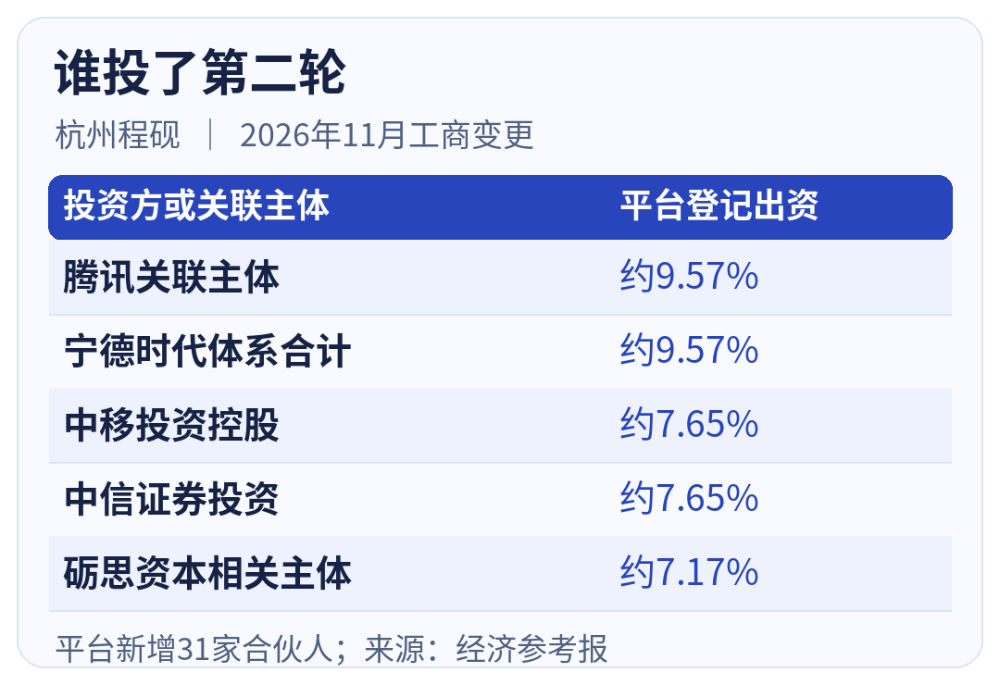
There is also an account on Liang Wenfeng's side. The company managing Hangzhou Chengyan is called Hangzhou Chengce, and Liang Wenfeng holds 99% of Hangzhou Chengce.
Using this structure to bring in a batch of external capital, investors can indirectly hold shares in DeepSeek, while the platform is still managed by a company controlled by the founder.
The list also shows why this money is worth noting. Telecom operators have cloud and enterprise customers, chip companies care about how many kinds of hardware a model can run on, and device makers have devices and users in hand.
For DeepSeek, these are potential sales channels and partners. How far the two sides can go still depends on subsequent products and orders.
How Is His Net Worth Calculated?
In the Hurun list released in October, Liang Wenfeng ranked seventh with 280 billion yuan. Hurun calculated wealth as of September 1. In November, Bloomberg gave $55 billion, using newer funding information.
The dates, currencies and estimation methods all differ, so the gap between the two lists cannot be used to calculate how much he earned.
Liang Wenfeng's net worth increase this time mainly depends on DeepSeek's equity. If a company is worth 100 yuan and you hold 80%, that corresponds to 80 yuan.
Later the company is valued at 150 yuan, and your stake drops to two-thirds, corresponding to 100 yuan. That is why the book number can rise even as the stake falls.
To actually turn equity into cash, someone has to take it over at that price. Especially for a large block of unlisted equity, the price given in a single funding round and the money a major shareholder can get by selling the whole block are often some distance apart. Rich lists estimate the value of held assets.
Holding so much equity also has a practical effect. A model company has to give up some equity in every funding round, and the more it holds early on, the more room it has left in each subsequent negotiation. This time Liang Wenfeng brought in a batch of external shareholders while still managing the holding platform through a company he controls.
Then there is High-Flyer. DeepSeek grew out of High-Flyer's AI research business, and Liang Wenfeng's wealth also includes the quantitative investment side.
Public valuation for High-Flyer-related interests is lacking. How much money the fund managers manage and how much client funds gained cannot be directly filled into Liang Wenfeng's personal asset sheet.
This year's product performance does have public samples. 36Kr, citing data from Simuwang, reported that as of November 20, among three High-Flyer index-enhanced products, two had fallen more than 22% year to date and the other more than 24%. All three products fell nearly 40% in the second half of the year.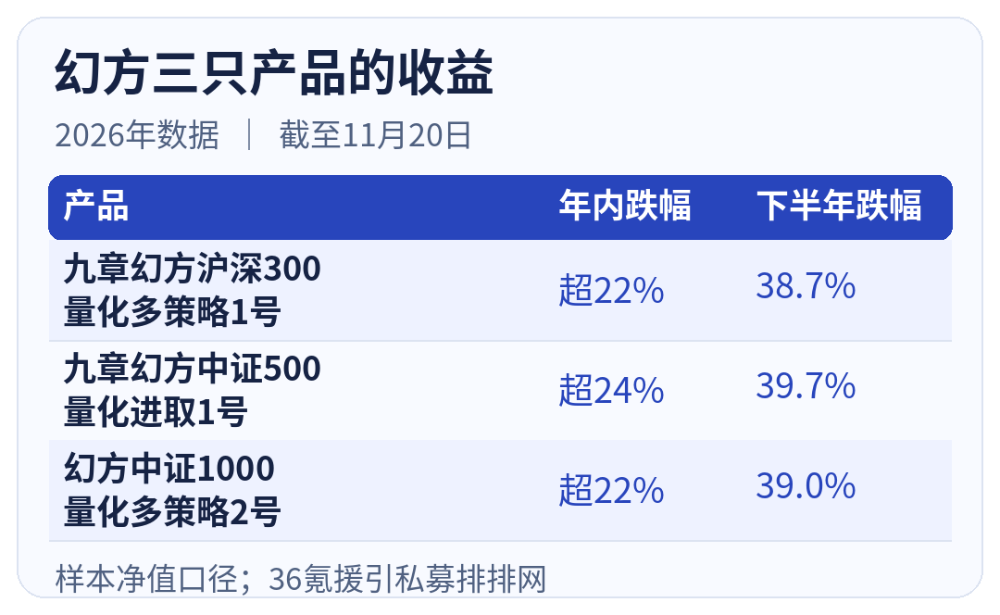
This type of product uses an index as a benchmark and seeks to deliver better returns than the index. To judge whether the strategy achieved that, you have to compare net value over the same period with the tracked index.
The table lists the products' own gains and losses. How much shareholders earned this year still has to go back to management fees, performance fees and the company's own investment books.
How Can the Model Be Commercialized?
This is a problem the whole industry is facing.
Currently, DeepSeek's two main interfaces correspond to the 1017 version of V4.1 Flash and the 0813 version of V4 Pro.
Flash can process images directly. On November 13, the company also opened web search, webpage reading and file input functions to developers.
These features make sense when put into a business. For internal enterprise Q&A, an employee uploads a file, and the system first has to understand the file, find the relevant passages, and then generate an answer. A model service can take over part of the work, so the development team connects fewer interfaces and maintains fewer sets of programs.
In official pricing, during peak hours, for every 1 million tokens output, Flash charges $1.20 and Pro charges $3.96. A token is the unit models use to process text.
When a company uses a model to write a report, it also has to count how much content is input, how many calls are made, and how many times the result has to be revised after it is received.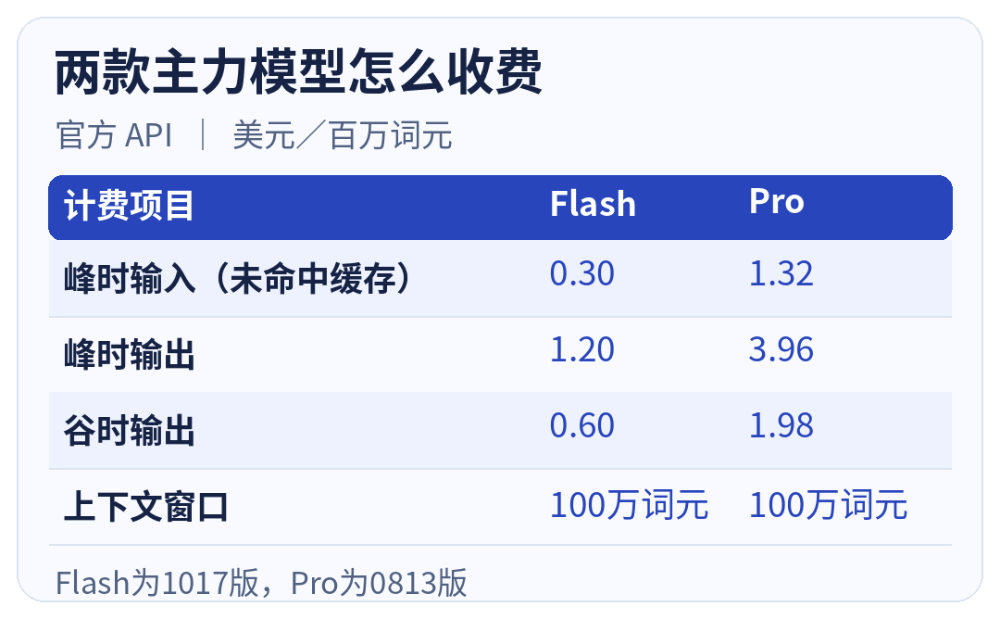
If enterprises really want to compare prices, they can run common tasks once and see how much it costs to get a usable result. If a cheaper model needs to be run several more times, the saved call fees may not offset the time spent on manual proofreading.
DeepSeek has opened the V4 model weights. Enterprises can buy call services from DeepSeek, use them on third-party clouds, or deploy themselves.
The easier a model is to install into other people's products, the more users it can reach. As for who gets paid this service fee, it depends on who handles the operation and delivery.
There is an easily overlooked point here. A cloud service provider can absolutely offer several models at once and let customers choose by task. Use a cheap one for general Q&A and switch to an expensive one only for complex tasks. The easier base models are to replace, the more bargaining power platforms that can manage several sets of services well will have.
Domestically there are Alibaba's Tongyi Qianwen, Volcano Engine's Doubao, Zhipu GLM and MiniMax; overseas there are OpenAI's GPT, Anthropic's Claude and Google's Gemini.
Customers usually already have a cloud service and procurement process in place. Whoever can follow that process and get the project done is more likely to win the budget.
Look at listed peers. Zhipu's revenue in the first half of 2026 was about 954 million yuan, with a loss of about 2.072 billion yuan during the period. MiniMax's revenue in the same period was $116.6 million, with a loss of $358 million during the period.
Both companies are using R&D investment to trade for next-generation products. In MiniMax's interim report, R&D spending for the half year was about $297 million, already higher than revenue in the same period. R&D spending goes into new models, and how much can be recovered still depends on how well new products sell.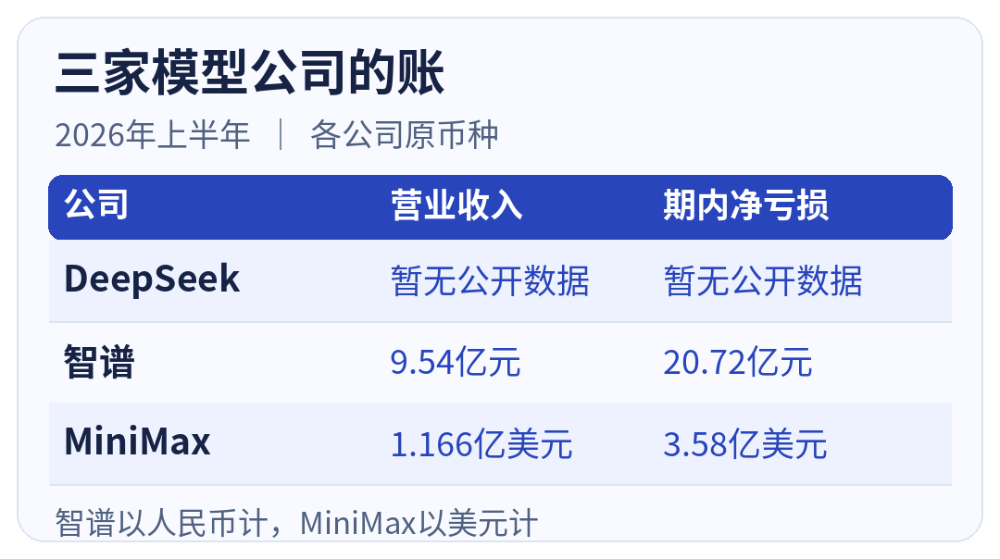
As revenue rises, expenses rise too. Every model reply uses computing power, service peaks require advance capacity, and enterprise customers need people for implementation and maintenance when they go live.
Selling models cheaply can help a company win its first batch of customers. Only after customers use them more does it become clear how much money is left in this business.
Who Will Be the Final Winner?
IDC statistics show that in the first half of 2026, China's model-as-a-service market revenue reached 10.63 billion yuan, up 889.4% year on year.
Selling large models to customers by calls, subscriptions and other means already represents a half-year market in the tens of billions of yuan. This scale grounds the industry's heat in reality: customers really are paying.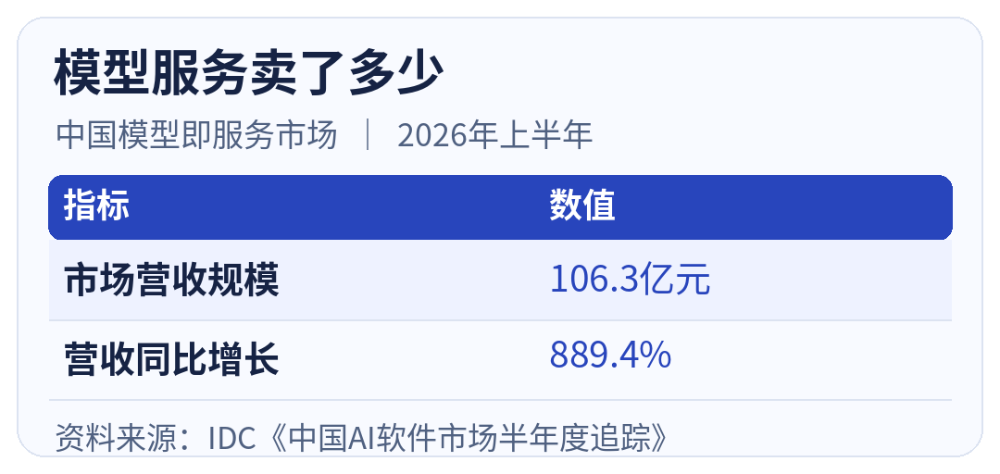
Where the revenue lands depends on each player's opportunities. Model companies can sell call services, and cloud and computing power suppliers can sell a stable operating environment. Software companies are closer to customers; they know which step customers spend time on every day and can more easily apply models to that step.
The same set of models, used on a few documents in one company, may be just a trial. To use it in the daily work of thousands of people, you run into permissions, system interfaces and fault handling. Whoever is willing to do this painstaking work has a chance to turn a small trial order into next year's contract.
According to Bloomberg's estimate, Liang Wenfeng has taken the top wealth spot among large-model developers, both because model services have begun charging at scale and because he still holds about two-thirds of the company after two funding rounds.
Liang Wenfeng becoming the "large-model richest man" does not mean he got everything right.
High-Flyer Quant's 2026 drawdown is real, the eight-month gap between DeepSeek and top US models is real, and the gap between token call volume and spending share is also real.
But the trend pointed to by the $55 billion figure is harder to ignore than any single fact: wealth is migrating from "the people who sell shovels" to "the people who define how shovels are used."
The model layer has produced the first world-class rich person, and people in other positions along the industry chain have no reason to pretend they did not see it.
What do you think of Liang Wenfeng and the hot topic of his $55 billion net worth? We look forward to your civilized and rational comments in the message area.
Disclaimer: This article is only a financial hotspot analysis from a professional perspective. Data and materials are cited from public queries, company announcements and Tonghuashun iFinD. The views are for reference only and do not constitute any investment or consumption advice.
#FinancialHotspots #InDepthInterpretation #BusinessFinance #InvestmentBankingCircle #ListedCompanies #PrimaryMarket #IPO #AI #LiangWenfeng
-
![]()
$55 Billion! Liang Wenfeng Becomes the World's Richest Large-Model Developer
-
![]()
Anthropic IPO Watch: A $1.5 Trillion Valuation and a Pricing Experiment in the AI Capital Era
-
![]()
What Are the Benefits of Becoming a DeepSeek Shareholder? | Juchao
-
![]()
The Wealth-Creation Myth Behind the Largest IPO in History
-
![]()
Chinese Brands Are Starting to Make Their Way into European Shopping Malls
-
![]()
China's Robotaxi Battle Heats Up in Dubai | Juchao
-
![]()
$952 Billion: Nvidia's Repurchase of a Guarantee Letter
-
![]()
A 50,000 Yuan C-Segment Car—Is Battery Swapping the Key to Stimulating Consumption?