A 50,000 Yuan C-Segment Car—Is Battery Swapping the Key to Stimulating Consumption?
 11/27 2026
 375
Introduction
Another reason to buy a car.
Over the past few years, the price war and fierce competition in China's auto market have made "segment-jumping"—buying a larger class of vehicle for the price of a smaller one—commonplace. Not long ago, a budget of just over 100,000 yuan would only get you a standard A-segment car like the Lavida or Corolla. But it soon became apparent that for under 100,000 yuan, more and more B-segment cars were within reach.
The impact of vehicle size is, to some extent, one of the reasons domestic cars have risen so rapidly. But before many people had even caught on to this trend, several domestic brands officially announced their entry into the battery-swapping arena over the past two months—and the "segment-jumping" phenomenon has become even more frenzied.
Take the recently launched ARCFOX Beta S3 battery-swapping version as an example. With a length exceeding 4.9 meters and a wheelbase exceeding 2.8 meters—approaching C-segment dimensions—this car has a bare-body price as low as just over 50,000 yuan under a vehicle-battery separation and battery-rental scheme. Bear in mind that a 50,000-yuan budget used to buy you only an A0-segment compact car.
Although NIO is currently the only well-known battery-swapping automaker, and few battery-swapping models are genuinely available to retail consumers, the writing on the wall is clear: now that one automaker has set this precedent, every automaker that subsequently launches a battery-swapping version will surely push prices even lower. By then, jumping two segments at the same price will become the default starting line on the battery-swapping track.
Looked at from another angle, could this become one of the means to revive the auto market in a new round? After all, Geely Holding recently reached a cooperation agreement with NIO Group, under which Geely will develop consumer-facing battery-swapping models and NIO Energy will provide the services. Later, Huawei Yinwang announced a partnership with CATL to promote the integration of Qiankun smart driving and the Chocolate battery-swapping network.
The former proves the feasibility of battery swapping, while the latter brings the driving force of an industry leader. Battery swapping is very likely to become a new wave—and in this wave, the down-payment threshold for consumers has been lowered.
01 A Disguised Form of Low Down Payment
It should be noted that battery swapping offers clear expenditure advantages: it lowers the car-purchase budget. In the past, automakers used zero down payment and low-interest installments to lower the threshold—also a commonly used promotional tactic. The essence is to let consumers exchange future income for current purchasing power, while the car price itself does not decline.
Low-down-payment promotions have therefore remained effective for a long time because they precisely hit the car-buying pain points of young consumers. This group is generally in the early stage of their careers, with limited cash flow but rigid travel needs. An extremely low down-payment threshold greatly reduces the pressure of the car-purchase decision, allowing them to own a dedicated vehicle in advance without emptying their savings all at once.
Correspondingly, the addition of battery-swapping models is precisely an upgraded version of the low-down-payment car-purchase logic, grounding the low down payment in a real downward shift in car price. It directly lowers the car-purchase budget, rather than merely changing the payment rhythm like financial interest subsidies. Of course, if a low down payment is combined with installment payments, even zero down payment is possible.
It is reported that during the presale of the ARCFOX Beta S3, 76% of orders went to the battery-swapping version, and nearly half a year after launch, this proportion remained stable at around 70%. On a model where the charging version and the battery-swapping version are sold side by side, consumers voted with their orders, and the battery-swapping version won by an overwhelming margin—this explains the issue better than any doubt.
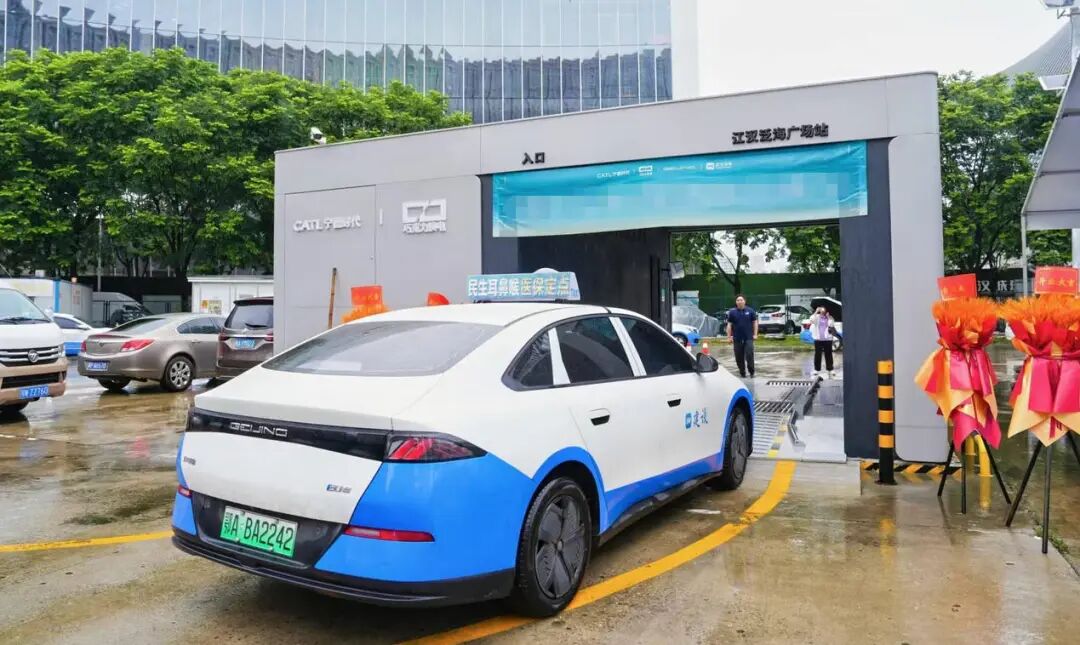
In fact, isn't such an effect also a kind of success for NIO? The NIO ES8 BaaS plan lowers the threshold from 406,800 yuan to 298,800 yuan—a one-time price difference of 108,000 yuan. This car is currently the sales champion in the 400,000-yuan-class large SUV market, and from January to October 2026, its cumulative retail sales ranked first in both the large SUV and 400,000-yuan-class vehicle segments.
In fact, the halved purchase tax policy in 2026 further amplifies the advantage of battery swapping, as battery-swapping models use the body price excluding the battery as the tax base. NIO's models have already tasted the sweetness, and after the cooperative models of Huawei Yinwang are launched in the future, they will all be battery-swapping versions of large cars—which for many people can save another considerable expense.
In addition to the car-purchase budget, theoretically speaking, compared with charging versions, battery-swapping models still have a de facto advantage: energy replenishment efficiency. This has also been a core point in the past debate between battery swapping and supercharging. Even if supercharging is stronger, charging speed will still be constrained by objective conditions—such as peak power, low temperatures, charger-side power, and the number of queued vehicles—all of which will bring fast charging back to reality.
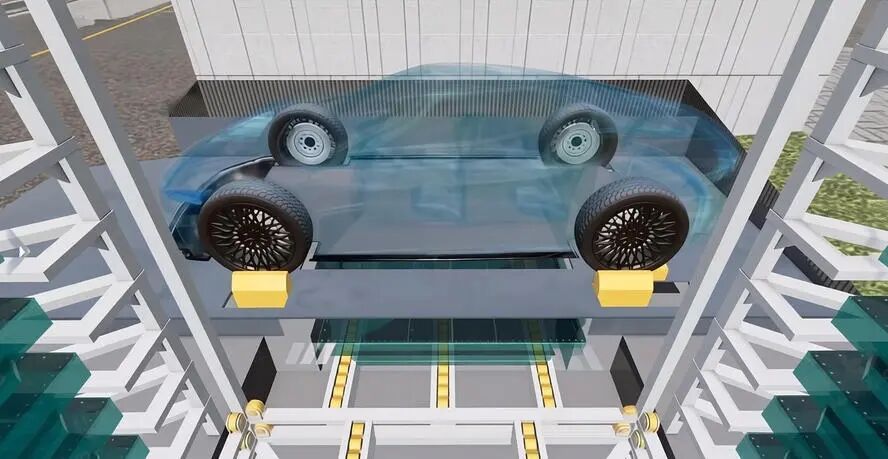
What about the data for battery swapping? The standard battery swap time for the Beta S3 is 99 seconds, with an actual user average of 90 seconds, and 99.9% of orders are swapped upon arrival with zero queuing. NIO's user survey shows that battery-swapping satisfaction is 9.29 points, with a satisfaction rate of 90.9%, and 57.3% of owners say they will definitely buy a swappable car next time.
At a deeper level, battery swapping redistributes the risk ownership of the battery—the most uncertain asset. Buying the battery outright means users themselves bear the fate of degradation, while renting the battery transfers this uncertainty to the operator. Each battery swap includes a battery health check, battery health is centrally managed by the platform, and when selling the car, there is no need to bear depreciation for an aging battery.
Around 2018 was the first year of obvious volume growth for new energy vehicles. According to estimates by the China Passenger Car Association, by the end of 2026, the number of new energy vehicles over 8 years old will be about 2.6 million. By 2032, nearly 20 million new energy vehicles will successively cross the battery warranty line, facing the reality of battery replacement quotes starting at 80,000 yuan while the vehicle's residual value is only 30,000 yuan.
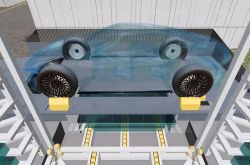
Although there are many advantages, it cannot be denied that the appeal of battery swapping also has obvious boundaries. A total of about 6,862 battery swap stations have been built nationwide, but the total number of electric vehicle charging infrastructure (guns) nationwide has reached 25.391 million—a huge gap in network density. Moreover, battery swap stations are heavy-asset investments, and a single station needs 60–70 swaps per day on average to break even. Currently, only about 20% of stations meet the standard, and most still rely on continuous investment to maintain operations.
02 A Link in Solving Energy Replenishment Anxiety
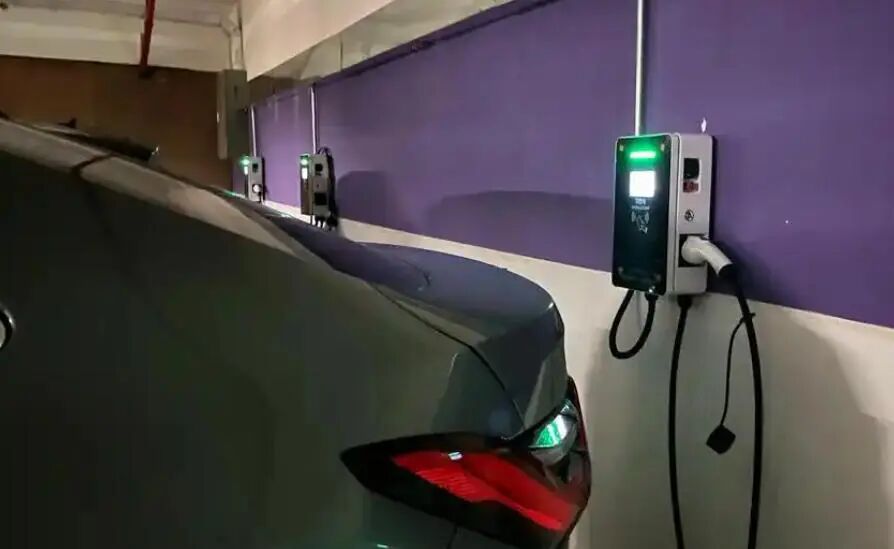
However, there is another issue that cannot be avoided. Today, with new energy penetration exceeding 70%, whether battery swapping or supercharging, the essence is to solve the problem of energy replenishment anxiety. Unlike gasoline cars, many consumers can use home chargers for energy replenishment in daily use, but once traveling long distances, they must rely on more efficient battery swapping and supercharging.
Therefore, the focus of industry discussion has long shifted from whether to buy an electric car to whether an electric car can be used as worry-free as a gasoline car. This is also why, even with such high new energy penetration, queuing for charging at highway service areas is common during holidays. From this perspective, the consumption-stimulating effect of battery swapping lies in this gap.
This is also a basic market reality that many people overlook: the current penetration rate of new energy consumption varies greatly across different usage scenarios. Users with fixed parking spaces who can install home chargers do not touch the public energy replenishment network at all for daily commuting, and their vehicle use cost is less than half that of gasoline cars—so when replacing their cars, they have almost no reason to choose fuel vehicles again.
However, this group of users who have already changed their awareness and consumption concepts is no longer the main incremental force in the market. What truly blocks the next round of sales growth is two groups of people who have never been persuaded. One group is urban young users who do not have fixed parking spaces and rely entirely on public energy replenishment. The other group is operating vehicle owners and high-frequency long-distance users who often travel across cities and have zero tolerance for energy replenishment efficiency.
The pain points of these two groups cannot be covered by home charging, nor can ordinary public slow charging satisfy them. For them, the value of the battery-swapping model is that it fills the experience shortcomings in this gap that even ordinary supercharging can hardly cover.
From the user perception level, the 3-minute energy replenishment process of battery swapping is almost no different from a gasoline car entering a gas station. NIO has a set of data worth referencing: during this year's National Day holiday, battery swapping services totaled 1.192 million times, with a single-day peak of 183,700 orders, averaging one vehicle completing a battery swap every 0.47 seconds, and 203,600 users completed long-distance trips entirely relying on battery swapping.
It is not hard to find that after all this, consumers do not need to queue and wait at chargers, nor do they need to wander around service areas for dozens of minutes to kill time. This energy replenishment experience, completely indistinguishable from gasoline cars, can move the car-buying psychology of many potential users.
More critically, the battery-swapping model has another benefit, as mentioned earlier: in the past, when many consumers bought electric cars, their biggest concern was the risk of battery degradation. A power battery costing tens of thousands of yuan, after five or six years of use, has reduced range, and the vehicle's residual value plunges directly.
After vehicle-battery separation, users can directly rent the battery, which not only lowers the car-purchase threshold by tens of thousands of yuan, but also completely transfers the risks of battery degradation and subsequent upgrades away from consumers. This improvement in consumption security is more effective for those holding money and waiting than a simple price cut.
Of course, for battery swapping to continue to play a role in stimulating consumption, the premise is that network density keeps up. Whether it is CATL's or NIO's plans for battery swap station deployment, if they can be implemented on schedule, the boost of battery swapping to consumption will not just be a selling point, but the improvement of infrastructure.
Therefore, at the current market juncture, the consumption growth of new energy vehicles has long passed the stage of relying on policy subsidies and low-price volume sales. The next growth space depends entirely on thoroughly penetrating scenarios that were previously uncovered. Battery swapping will not replace home charging, nor will it replace supercharging, but it gives the market a brand-new choice.
Editor: Yang Jing Editor: He Zengrong

THE END
-
![]()
$55 Billion! Liang Wenfeng Becomes the World's Richest Large-Model Developer
-
![]()
Anthropic IPO Watch: A $1.5 Trillion Valuation and a Pricing Experiment in the AI Capital Era
-
![]()
What Are the Benefits of Becoming a DeepSeek Shareholder? | Juchao
-
![]()
The Wealth-Creation Myth Behind the Largest IPO in History
-
![]()
Chinese Brands Are Starting to Make Their Way into European Shopping Malls
-
![]()
China's Robotaxi Battle Heats Up in Dubai | Juchao
-
![]()
$952 Billion: Nvidia's Repurchase of a Guarantee Letter
-
![]()
A 50,000 Yuan C-Segment Car—Is Battery Swapping the Key to Stimulating Consumption?