China's Robotaxi Battle Heats Up in Dubai | Juchao
 11/27 2026
 333
Editor | Lao Yuer
Open Uber near Jumeirah Beach in Dubai, and if you happen to select a driverless taxi, the car that pulls up will most likely carry the logo of Baidu's Apollo Go or WeRide.
For now, passengers hailing rides locally cannot choose a brand; they learn who is picking them up only after the trip is confirmed. Which company is dispatched, however, does not affect the fare. Robotaxi companies that each run their own operations in China have squeezed onto the same ride-hailing app page in Dubai, competing head-on for user orders.
These Chinese robotaxis face far more intense competition in Dubai than at home—and the heat has risen faster.
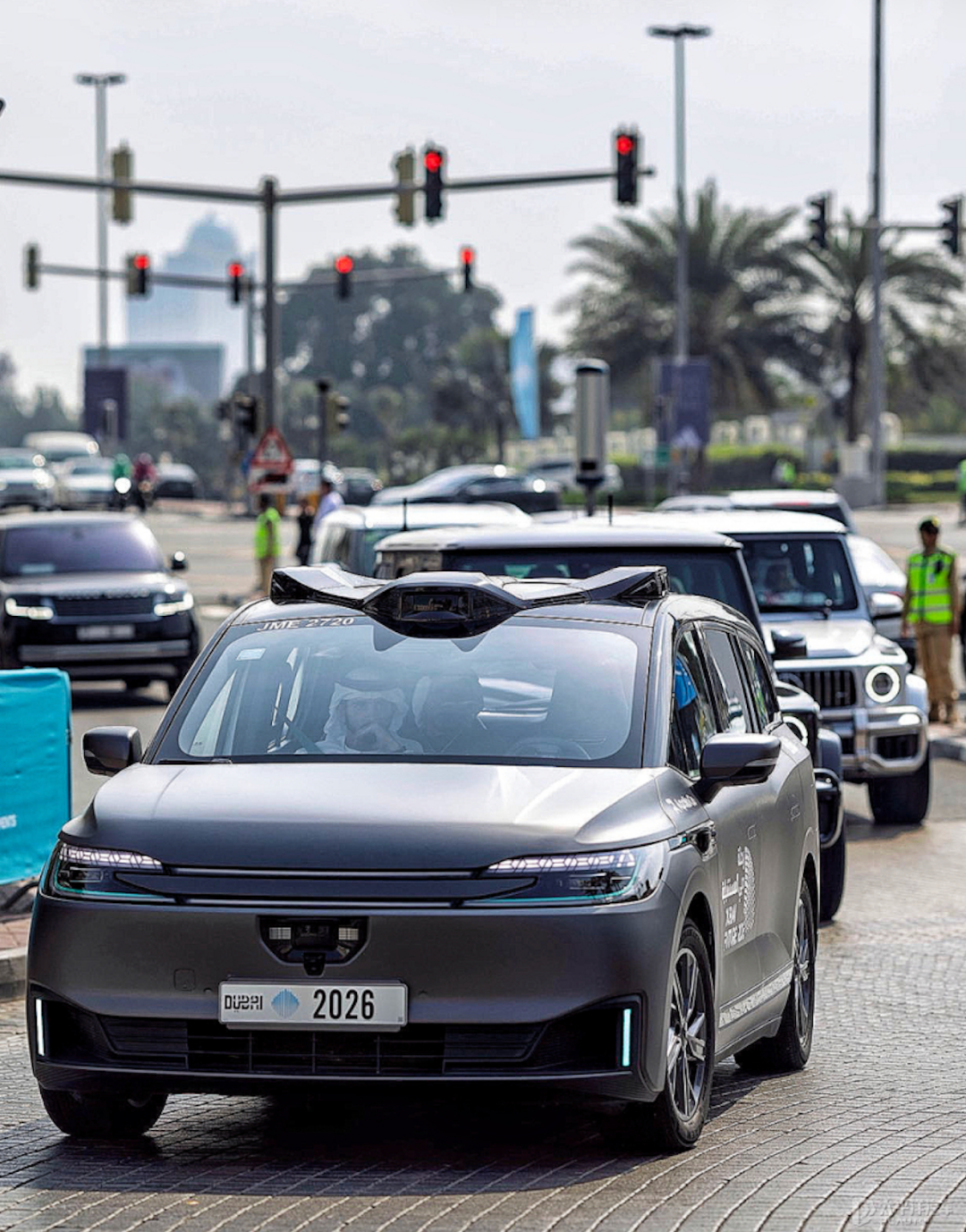
On November 18, Uber disclosed plans to invest approximately $50 million over the next two years to expand local autonomous driving services and operational facilities in Dubai. And the next step is not just adding vehicles—services are also being continuously upgraded.
Users, for example, have requested door-to-door hailing within designated areas so that passengers no longer need to go to fixed pickup points, and service coverage will also extend to core commercial districts such as Downtown Dubai, the Dubai International Financial Centre, and Business Bay.
Almost all mainstream Chinese Robotaxi companies have already entered the Dubai market. With the domestic battle still undecided, these Chinese players have already deployed their formations overseas.
This article is an in-depth value piece from the Juchao WAVE content team. We welcome you to follow us across multiple platforms.

Sowing
The pace at which Chinese companies have landed in Dubai is almost back-to-back, though each has chosen a different entry posture.
Baidu's Apollo Go was the earliest in the industry to make a move in Dubai.
In August 2025, Apollo Go deployed 50 sixth-generation RT6 vehicles in Dubai for testing on designated roads. In January 2026, Baidu opened its first overseas operations control center in Dubai, covering 2,000 square meters and responsible for fleet dispatch, charging, maintenance, and software iteration, along with supporting simulation testing and driver training facilities.
The Dubai Roads and Transport Authority stated at the time that this center was preparing to expand the local fleet to thousands of vehicles in the coming years.
In terms of operating channels, Baidu chose a dual-track approach of "taxi company + Uber": in March, Dubai Taxi Company and Baidu announced a partnership to provide fully driverless commercial passenger services through Apollo Go's own app; in August, Baidu also integrated the fleet operated by New Horizon Luxury Transport onto the Uber platform.
These two approaches appear complementary: the proprietary app can directly reach users but requires bearing customer acquisition and service costs itself; connecting to Uber can leverage an existing traffic pool but cannot directly convert platform users into its own private-domain users.
Baidu wants to walk on two legs. After all, multiple entry points can make order volumes look larger and help spread the fixed investment in the operations center across more volume.
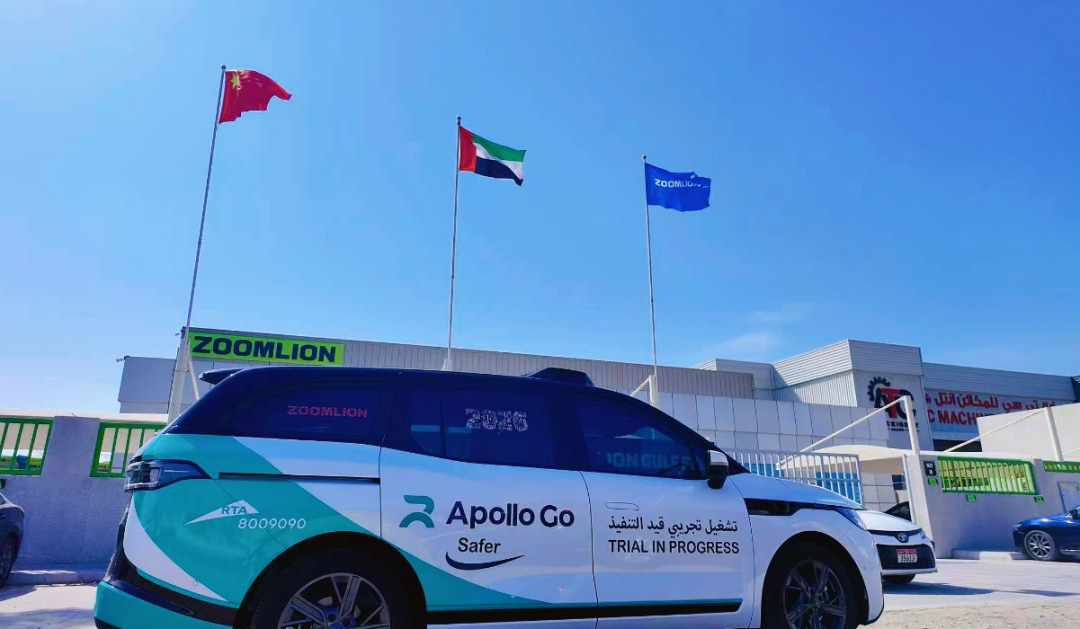
WeRide, by contrast, has taken the asset-light technology output route.
In December 2025, it launched supervised trial operations in Dubai; on March 31, 2026, it launched fully driverless paid services in Jumeirah and Umm Suqeim.
WeRide outputs autonomous driving technology solutions, while fleet management and platform operations are handed to local partner Tawasul, with orders mainly coming from Uber's traffic pool.
At the same time, WeRide is gradually expanding its offline footprint:
In February this year, it announced an upgraded strategic partnership with Uber. The two sides plan to deploy at least 1,200 robotaxis in the Middle East by 2027, covering the three major markets of Abu Dhabi, Dubai, and Riyadh; in March this year, WeRide and Geely Farizon jointly announced that approximately 2,000 Robotaxi GXR units are expected to be delivered in 2026 and deployed in both domestic and overseas markets.
Compared with the previous two Chinese peers, Pony.ai has a different strategy and a slightly slower pace.
In September 2025, Pony.ai obtained a permit for public road testing in Dubai, and in April 2026 it disclosed completion of road testing without in-vehicle safety officers, proposing plans to launch paid public services with several hundred vehicles. As of November, in investor materials disclosed by the company, it still uses the wording "advancing commercialization" for its Dubai business and has not formally confirmed that paid public services have been launched.
The three companies entered at different times, with different models and different progress, but all have begun deep cultivation in the same market.

Sprouting
Some may ask why Chinese robotaxis have chosen Dubai as the place to sow their seeds overseas. There are certainly many reasons, but the core reason is most likely the more open regulatory attitude.
Dubai highly encourages autonomous driving. As early as 2016, it proposed converting 25% of all transportation trips to smart or driverless modes by 2030. In 2025, this target was expanded into the "Dubai Autonomous Transportation Strategy 2025–2040," pushing the 2040 proportion further to 36%.
Although this target covers multiple transportation modes such as metro, buses, and taxis, not just the Robotaxi category alone, there is no doubt that this enthusiasm for driverless driving has ignited the passion of many related companies, especially Chinese ones.
This enthusiasm has driven Chinese Robotaxi companies to collectively take root in Dubai and quickly sprout "new shoots."
On August 19, the Dubai Roads and Transport Authority disclosed a set of citywide figures: at that time the city's Robotaxi fleet totaled 144 vehicles, of which 48 were in active operation, averaging about 50 orders per day, and since launch had completed a cumulative 7,613 passenger trips with a passenger satisfaction rate of 97%.
There are two different ways to interpret such data performance.
From an optimistic perspective: there are still many operational restrictions on Dubai's robotaxis, such as fixed pickup and drop-off points and limited operating areas, with much potential demand blocked by geographic constraints. If flexible pick-up and drop-off are later allowed, order growth could be much faster than fleet growth, vehicles could reduce empty driving distance, and operational efficiency would continue to improve.
There are also many reasons for skepticism: current passengers are mostly beach tourists trying it out for novelty, and it remains unknown whether people would be willing to routinely hail driverless cars for essential scenarios like commuting, catching flights, or picking up children. If several more areas are opened before preparations are sufficient, it may simply mean laying out another set of charging, maintenance, dispatch, and safety systems, and if order volume does not keep up, returns would instead be diluted.
This set of data itself also has certain limitations. For example, it does not break down company-level data, nor does it disclose average operating hours, order volume by company, or the paid ratio. A high satisfaction score only shows that passengers who have already ridden had a decent experience, but it does not mean there is indeed a huge potential population waiting for robotaxis to be fully rolled out.
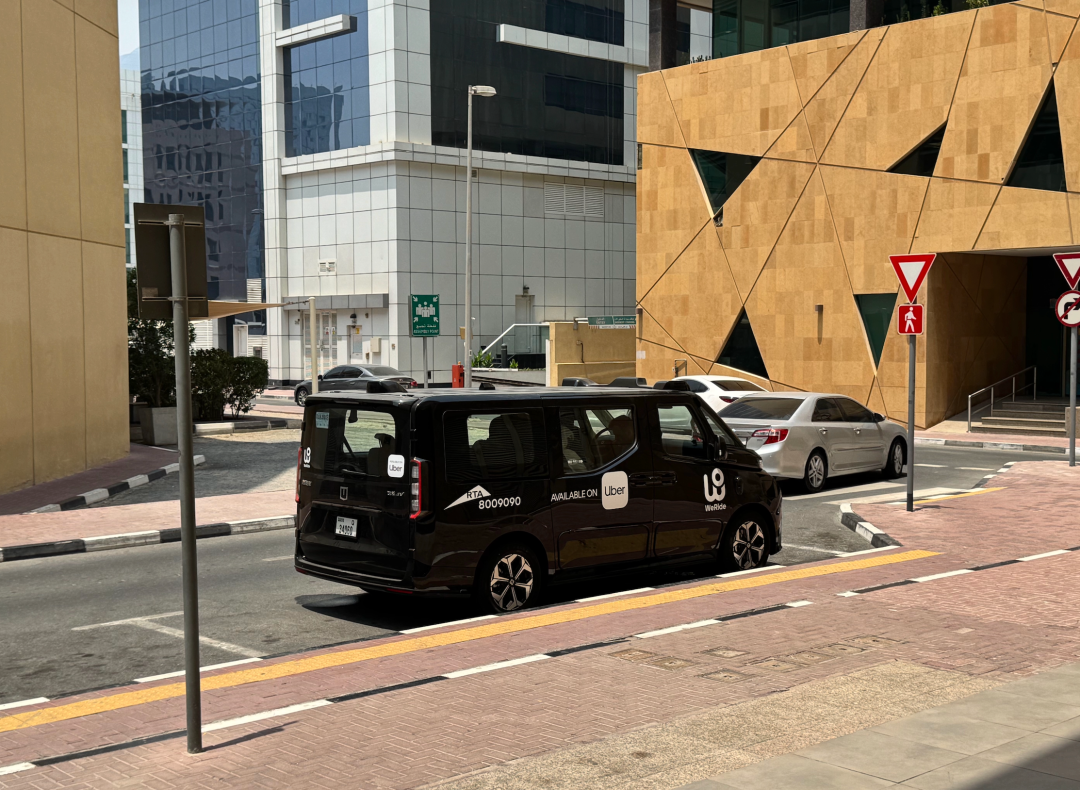
Furthermore, even if Dubai's goal is for more than one-third of transportation trips across the emirate to be automated by 2040, it does not require one-third of people to ride robotaxis—it is merely a requirement on transportation vehicles, and there are high-standard licensing and insurance restrictions on operations. For example, vehicles must be validated by stage, must be equipped with in-vehicle specialists in the early period, and may not operate across regions.
This regulatory rhythm turns Chinese robotaxi vehicle deployment choices into "Schrödinger's cat": whether to pay upfront, buy vehicles, and stockpile them while waiting for permits, or to add vehicles only after demand is clear—only time can provide the answer.
A larger issue at the industry level is that Chinese robotaxis in Dubai currently rely heavily on Uber for orders. While this can improve matching efficiency in the early stage, conversely, with the platform holding dispatch power, robotaxis will inevitably lose much of their initiative, and a "Dubai version" of mobility platform monopoly plus high-intensity capacity competition is very likely to play out overseas.
So in today's Dubai market, robotaxis have already sprouted, but are still far from bearing fruit.

Complexity
As for when Chinese robotaxis will be able to generate sufficiently strong revenue capacity in Dubai, none of the companies has stated a position. Judging from each company's financial reports alone, the small base is still unable to have a sufficiently profound financial impact.
WeRide's third-quarter data disclosed that Robotaxi business revenue exceeded 100 million yuan for the first time, a year-on-year increase of 204%, with more than 90% coming from overseas markets. But the group's net loss for the quarter was 310 million yuan;
In addition, Pony.ai's group operating loss for the same period was $68.7 million.
The loss figures for both include costs from other global markets and other business segments—the goal of these loss costs is global market building, not that so much was spent solely for the Dubai business.
WeRide previously mentioned in its annual report information that the Robotaxi business of its Middle East subsidiary has achieved operational profitability since 2025, but it did not separately disclose Dubai market data.
As of the third quarter of this year, Baidu's financial report only mentioned that the fully driverless commercial operating area in Dubai had expanded and the fleet size had doubled, but did not provide specific vehicle numbers, so outsiders cannot directly infer the current operating scale from the initial 50 test vehicles.
To find the answer, one can only rely on results from other cities as a reference.
WeRide disclosed in its third-quarter report that the Guangzhou market has achieved positive per-vehicle economics, with domestic business averaging 21 orders per vehicle per day during the same period. Pony.ai stated that Guangzhou reached per-vehicle economic break-even in November 2025, and Shenzhen reached the same milestone in February 2026.
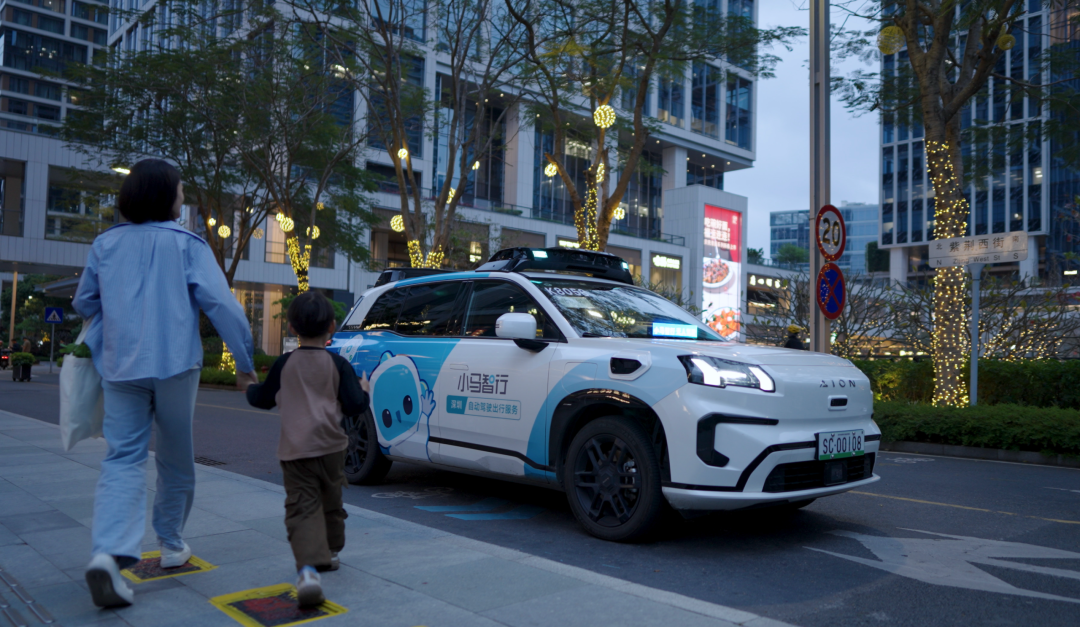
These are all phased data disclosed by companies according to their own standards; they do not equal profitability for the entire company, nor can they be directly applied to the Dubai market. After all, the two places differ in charging rules, service hours, subsidy policies, and labor costs, and are not directly comparable.
However, domestic experience has at least validated one logic: if newly added vehicles can be deployed in areas that have already formed continuous operations and where residents hail rides frequently, there is an opportunity to use robotaxis to capture demand that was originally lost due to long wait times, vehicle operations and maintenance can more easily plug into the existing system, and the return effect will also be better.
There is also a more intuitive reference system: Abu Dhabi, also in the UAE market.
The local transportation authorities announced in November 2025 the launch of fully driverless commercial operations, with the first batch of permits involving two groups of players: the combination of WeRide, Uber, and Tawasul, and the combination of AutoGo–K2 and Baidu.
WeRide mentioned in its annual report that after removing in-vehicle safety officers in Abu Dhabi, the fleet is positioned to achieve per-vehicle break-even. Although this is not Abu Dhabi's complete income statement, it at least shows that overseas markets are not doomed to lose money.
But even within the UAE, the actual conditions in the two cities are quite different, which is precisely a core characteristic of the operation-heavy business model of robotaxis: the actual conditions of each operating country and city are different and require "differentiated treatment."
For example, whether in-vehicle safety officers are required does not mean different labor costs. The specific level of investment in back-office remote assistance, accident response, and on-site maintenance teams, as well as the size of staffing, will all differ.
Dubai's rules even require vehicles to be insured by insurers licensed to operate in the UAE. A single accident involves not only repair costs but may also cause suspension of operations, re-inspection, and increased renewal costs.
For Chinese companies, these differing policies across regions not only mean that deployment in these cities requires more complex calculations, but also directly affect their specific business progress.
It is clearly not enough to only look at "how many hours a day a vehicle can actually take orders," "how much is actually collected per hour," and "what are the net fare, empty-driving loss, electricity cost, depreciation, insurance, and platform share," because running robotaxis on the road does not require just one vehicle.
-
![]()
$55 Billion! Liang Wenfeng Becomes the World's Richest Large-Model Developer
-
![]()
Anthropic IPO Watch: A $1.5 Trillion Valuation and a Pricing Experiment in the AI Capital Era
-
![]()
What Are the Benefits of Becoming a DeepSeek Shareholder? | Juchao
-
![]()
The Wealth-Creation Myth Behind the Largest IPO in History
-
![]()
Chinese Brands Are Starting to Make Their Way into European Shopping Malls
-
![]()
China's Robotaxi Battle Heats Up in Dubai | Juchao
-
![]()
$952 Billion: Nvidia's Repurchase of a Guarantee Letter
-
![]()
A 50,000 Yuan C-Segment Car—Is Battery Swapping the Key to Stimulating Consumption?