Can Yi Jing and Qi Jing Replicate Aito's Triumph and Achieve Blockbuster Status with Major Automakers and Huawei?
 09/29 2026
 456
456
Yi Jing seeks to strike a balance between the Harmony Intelligent Mobility Alliance and traditional suppliers:
Huawei is deeply involved in product development, while Dongfeng handles operations.
However, a more balanced relationship does not necessarily guarantee business success.
Produced by Zhineng Technology
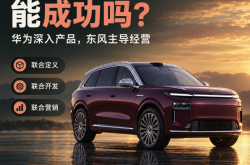
On September 24, the Yi Jing X9, a collaborative effort between Dongfeng and Huawei, made its debut. This spacious six-seater extended-range SUV, stretching over 5.3 meters with a 3,120 mm wheelbase, is priced at a special introductory rate of 279,800 yuan. All trims come standard with Huawei's ADS 5 and HarmonyOS cockpit, with the base model featuring dual-beam image-grade LiDAR. Within the first 24 hours of its launch, it secured 9,157 firm orders.
The Aito M9, comparable in size and also equipped with Huawei's intelligent driving and cockpit technologies, starts at nearly 500,000 yuan, making the Yi Jing X9 approximately 200,000 yuan more affordable.
The Yi Jing project was a joint endeavor by Dongfeng and Huawei, encompassing definition, development, and marketing. Both parties invested over 10 billion yuan cumulatively and assembled a collaborative team of over 5,000 individuals, taking three years to bring the first product to fruition.
Huawei contributed its ADS intelligent driving, HarmonyOS cockpit, vehicle-cloud capabilities, and IPD product development and IPMS marketing methodologies to the project. Meanwhile, Dongfeng provided the vehicle architecture, chassis, safety features, manufacturing, supply chain, and quality systems. Both parties worked closely together from the product definition stage.
Yi Jing is not part of the Harmony Intelligent Mobility Alliance; instead, brand management, channel construction, delivery services, and ultimate operational responsibilities primarily rest with Dongfeng. Dongfeng plans to cover 79 key cities and establish over 300 stores before the X9's launch, adopting a "1+N" system of user centers and lightweight outlets, and introducing Huawei Huitong's premium service system. Yi Jing also aims to launch five products within three years.
Huawei's ADS-equipped models have exceeded 50, and the number of vehicles with intelligent driving capabilities has surpassed 1.9 million. With more cooperative brands on the horizon, Huawei cannot manage every vehicle through the Harmony Intelligent Mobility Alliance approach. Huawei's technology is transitioning from a scarce capability to a widely available offering, covering price ranges from 150,000 yuan to over 1 million yuan.
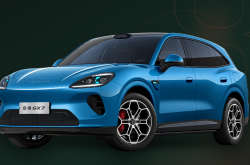
Qi Jing, a model similar to Yi Jing, is jointly developed by GAC and Huawei ADS, emphasizing co-definition, deep integration, and full-process collaboration. Brand and operations are led by GAC, with the first Qi Jing GT7 launching in late June 2026 and announcing over 5,200 firm orders within 24 hours.
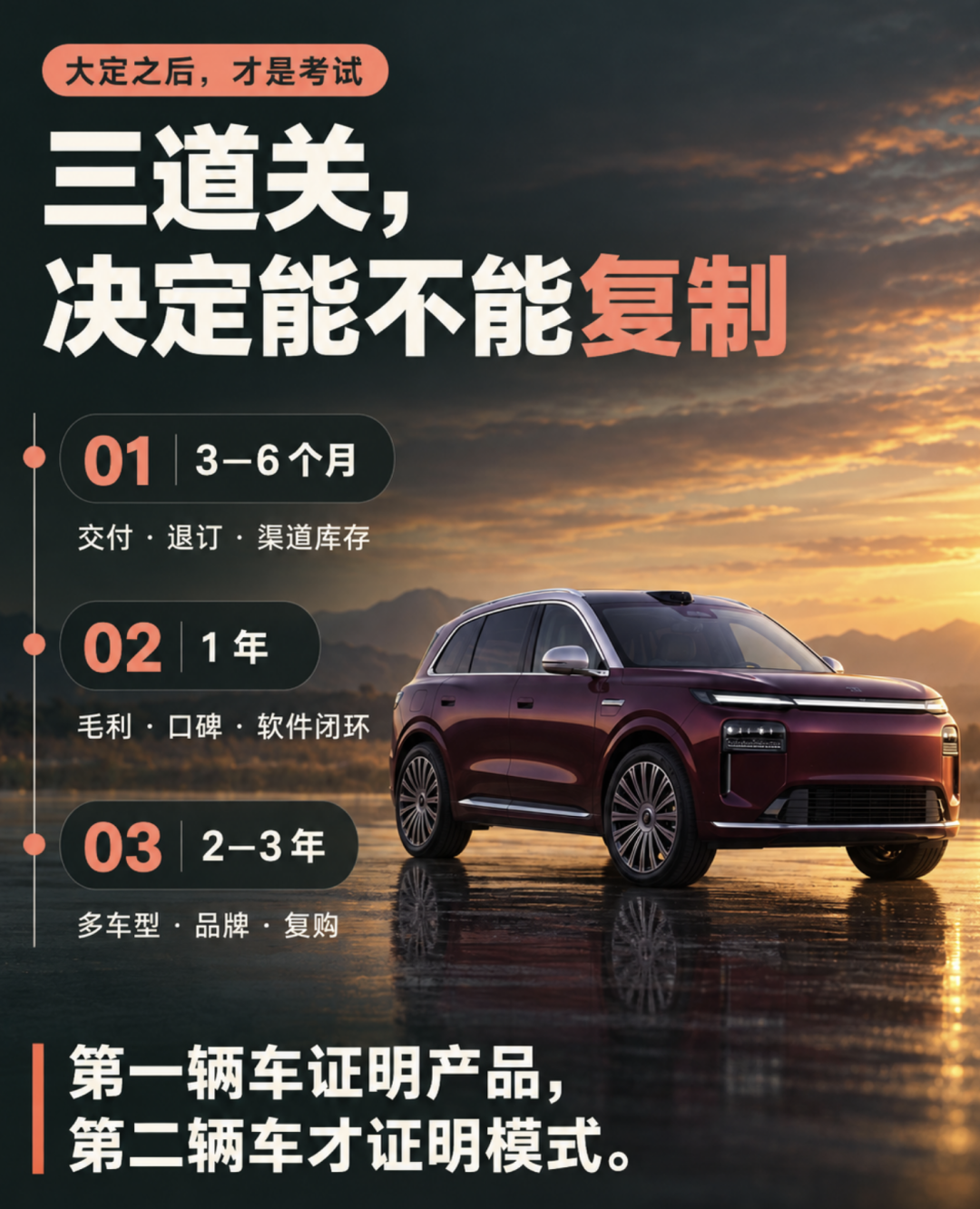
GAC Group's production and sales report reveals that Qi Jing's wholesale sales were 2,658 units in July, dropping to 1,100 units in August, totaling 3,758 units by August. Launch orders did not swiftly translate into sustained sales growth.
1) Challenges of the Intermediate Model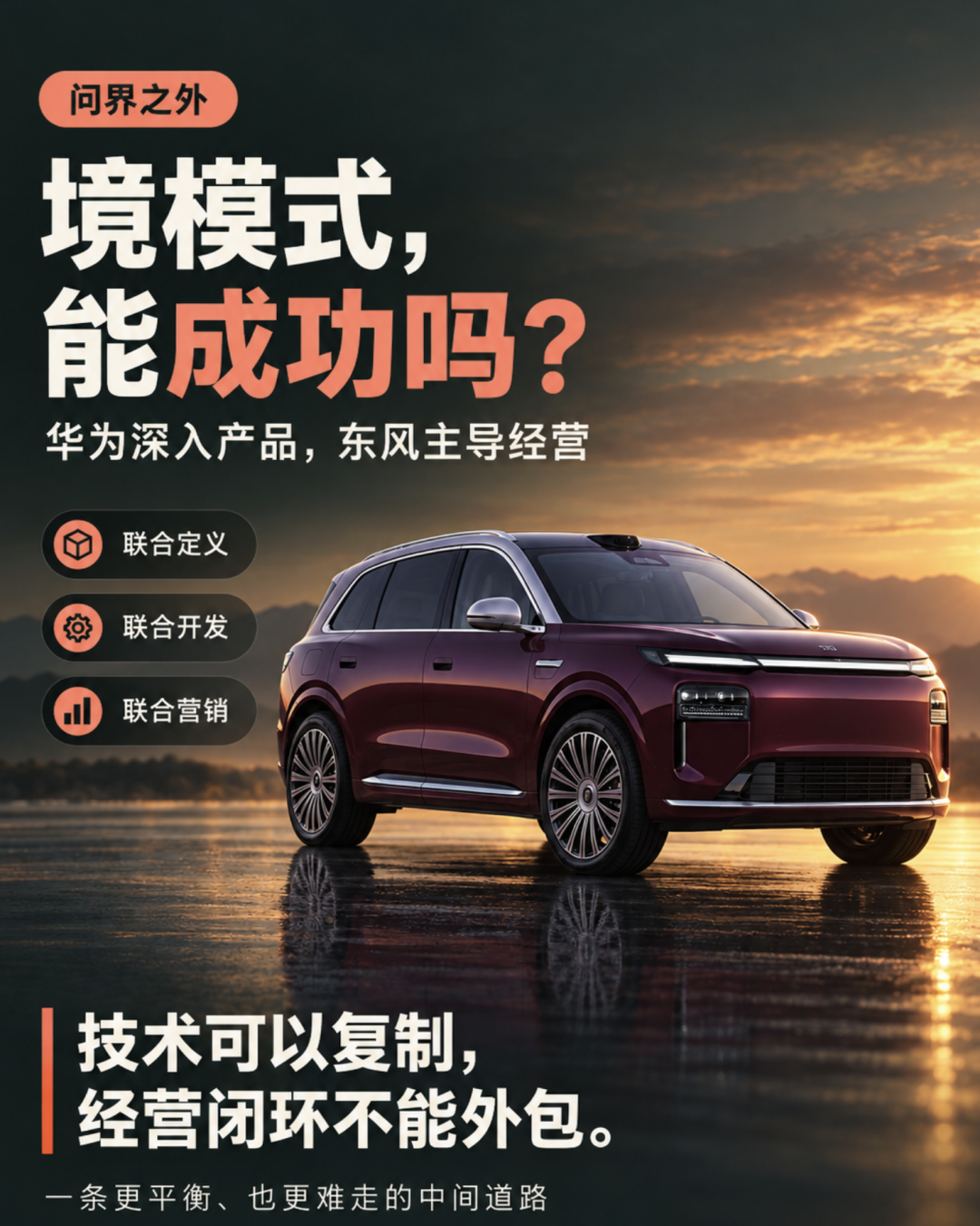
The price difference between the Yi Jing X9 and Aito M9 alone warrants further observation. The mechanical specifications, materials, manufacturing costs, perception redundancy, service systems, and brand premiums of the two models vary.
The pricing of the Yi Jing X9 may also incorporate a low-profit strategy for a new brand's cold start. Yi Jing embodies the challenges in Huawei's long-term cooperation with automakers: how to collaborate deeply enough without the automaker ceding control over the product, brand, and users.
Aito's success was not solely attributable to Huawei's technology. Initially, Huawei's cooperation logic with automakers was straightforward: automakers lacked intelligent driving and cockpit capabilities, so Huawei provided the hardware and software, while automakers integrated the technology into vehicles. The Arcfox Alpha S HI Edition was an early typical product of this approach.
This allowed consumers to witness the potential of Huawei's advanced intelligent driving on a large scale but also exposed the limitations of mere "technology integration": consumers purchase a complete vehicle, and weaknesses in design, space, power, pricing, brand, channels, sales, and after-sales can prevent technological leadership from translating into sales. At that time, Arcfox lacked a sufficiently strong brand and retail network. Huawei was prominent in the vehicle, but no one was ultimately responsible for the business's success.
Aito later addressed this issue. Huawei no longer acted solely as a supplier but became involved in product definition, styling, marketing, retail, and user services, while Seres completed R&D and manufacturing with a high degree of cooperation. Organizationally, Aito formed a de facto decision-making center early on, with Huawei wielding significant influence over product targeting, sizing, configurations, launch timing, and promotion. Traditional supplier coordination was replaced by a clearer command system.
It also capitalized on a unique window of opportunity. After 2023, large extended-range SUVs rapidly expanded, with Li Auto validating the six-seater family market and traditional luxury brands being slow to launch new energy products. The new Aito M7 and M9 entered the market during this period, capitalizing on the brand heat from Huawei's smartphone return and entering a high-value market with limited supply.
Aito's success resulted from a combination of Huawei's technology, brand, and channels; Seres's ceding of control; and the market window for large extended-range SUVs—a perfect storm of timing, location, and partnership!
Replicating only the first aspect makes it difficult to replicate Aito's success.
The Harmony Intelligent Mobility Alliance is Huawei's most efficient cooperation model, with Huawei overseeing everything from product definition to retail, allowing technology, products, and marketing to advance within a single system, rapidly mobilizing R&D, supply chain, retail stores, and communication resources.
For automakers lacking a premium brand or mature new energy retail system, this model can significantly shorten the path from building a vehicle to selling it successfully.
However, this efficiency is built on the automaker ceding significant operational control. Questions about brand definition, user data ownership, store relationships, sales service fee settlement, and profit distribution after product success are less pressing when the brand is weak but become increasingly important as sales rise and the automaker's capabilities grow.
After five years of cooperation, Aito Seres now has product, R&D, marketing, and channel teams, has acquired trademarks, factories, and taken a stake in HiNova, and is no longer satisfied with being a highly cooperative manufacturer. The Harmony Intelligent Mobility Alliance is well-suited for helping automakers go from zero to one but may not naturally suit the journey from one to ten. The efficiency gained from centralized power early on may later transform into conflicts over brand ownership, profit distribution, and organizational independence.
The ordinary supplier model is too shallow, while the Harmony Intelligent Mobility Alliance may be too deep. The "Jing" model represented by Yi Jing and Qi Jing seeks a middle ground between the two.
2) Can the Yi Jing X9 Capture Aito M9 Orders?
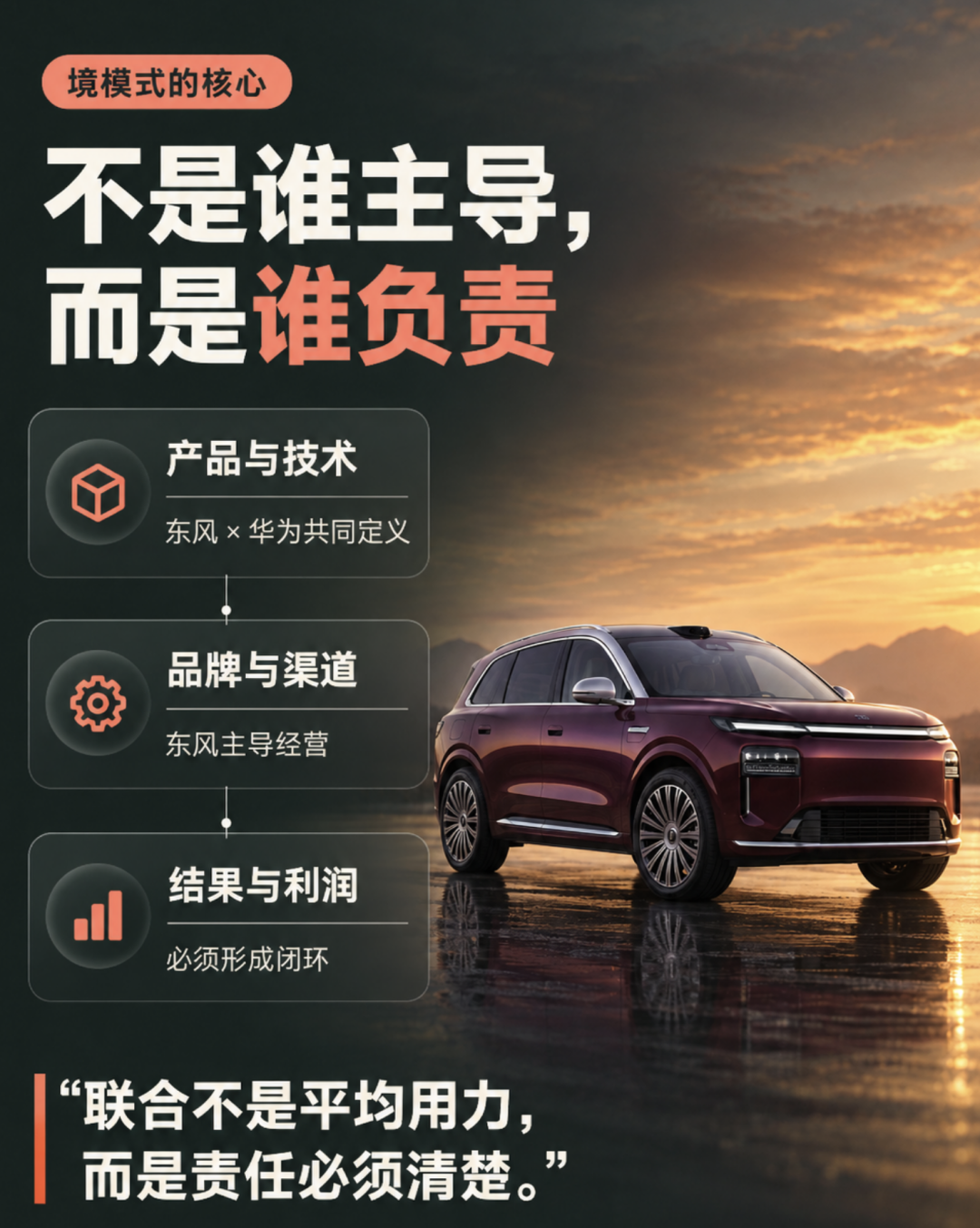
The Harmony Intelligent Mobility Alliance has redrawn boundaries: joint responsibility for product and technology, while brand and operations remain with the automaker.
For Huawei, this expands the customer base for its full-stack capabilities without needing to operate each brand personally.
For automakers, it allows them to receive deeper Huawei support than component procurement while retaining ownership of trademarks, channels, users, and brand value. Compared to Aito's early model, this structure is more acceptable to large automakers.
However, being more acceptable does not equate to being more successful. The Harmony Intelligent Mobility Alliance trades centralized power for efficiency, while the "Jing" model trades power balance for long-term stability. It avoids excessive dominance by one party but reintroduces the costs of joint decision-making between two organizations.
"Joint" is the most valuable aspect of this model. When automotive and technology companies collaborate, the most common issue is not a lack of effort but both parties working hard toward different outcomes: automakers want to control costs, manufacturing rhythm, and brand equity, while Huawei wants to ensure intelligent experience, technical specifications, and product benchmarks. When conflicts arise, who has the final say?
To ensure sensor visibility, Huawei may want to adjust the styling, while the automaker may insist on another approach to control drag and design integrity. To establish a technical benchmark, Huawei may want to add more hardware, while the automaker must cut costs to keep the price mainstream. Similar disagreements may arise over launch timing, software maturity, hardware configurations, and after-sales responsibility.
"Joint definition" sounds more advanced than "client-supplier procurement" at launches, but without a clear decision-making mechanism, it can devolve into dual-headquarters management where no one can make quick decisions.
Yi Jing co-locates personnel from both sides and adopts a unified product development process, reducing communication overhead but not eliminating differing interests. The efficiency of the model depends on who has the final decision-making power and who bears the losses when disputes arise. If Huawei effectively dominates product decisions while Dongfeng only invests in operations, Yi Jing may gradually resemble a "Harmony Intelligent Mobility Alliance without Huawei channels." Conversely, if Dongfeng frequently vetoes Huawei's proposals to control costs, the cooperation may revert to a technical supply relationship. The difficulty of the intermediate model lies in maintaining a dynamic balance over the long term.
Even harder than product co-creation is brand co-creation. During the Yi Jing X9's launch, the brand leader said, "The best of Huawei is in Yi Jing." This helps sell the first vehicle but may hinder Yi Jing's development as an independent brand. If consumers enter stores because of Huawei, will they ultimately remember Yi Jing or just another "Huawei car"?
If the primary purchase reasons remain ADS 5, HarmonyOS cockpit, and LiDAR, consumers can choose Aito, Luxeed, Maextro, Qi Jing, Avatr, or other ADS-equipped vehicles next time. As more cars acquire similar intelligent labels, "Huawei-equipped" only helps a car make the shortlist but cannot alone complete brand differentiation.
Aito could initially treat "deep Huawei involvement" as its brand, but Yi Jing faces a different environment. It must establish its own product identity beyond Huawei: why it is a family flagship, how its safety and space differ from other large six-seaters, what Dongfeng's vehicle capabilities bring to users, and why consumers would choose Yi Jing again.
Without answers to these questions, Yi Jing may sell some products but struggle to build a brand. For Dongfeng, this outcome is undesirable, as it bears the brand, channel, and service investments while the most valuable user perception remains with Huawei.
Channels have not disappeared; the responsible party has just changed. The Yi Jing X9 and Aito M9 have different price gaps and channel structures, but leaving the Harmony Intelligent Mobility Alliance does not eliminate channel costs. Dongfeng's plan for 79 key cities, over 300 stores, and Huitong's premium service system all incur costs. Store construction, rent, demo vehicles, sales staff, marketing, financial subsidies, delivery, and after-sales do not become cheaper just because Dongfeng holds operational control—the difference lies in who decides and settles these expenses and who is ultimately responsible for efficiency.
The Harmony Intelligent Mobility Alliance's greatest channel advantage is the traffic and trust already present in Huawei's consumer electronics stores. Even if a new brand quickly builds 300 outlets, it may not achieve the same foot traffic and conversion efficiency. More complexly, with multiple brands sharing Huawei experience centers, sales resources will compete. Why should sales advisors prioritize Yi Jing over Avatr, Qi Jing, or other Huawei-cooperated models? How should leads, display space, and incentives be allocated among brands? If these mechanisms rely primarily on short-term rebates, channel costs may rise with scale. Thus, "automaker-led channels" only become a true business advantage when per-store sales, customer acquisition costs, and after-sales efficiency outperform the Harmony Intelligent Mobility Alliance; otherwise, it merely shifts Huawei's complex workload back to the automaker.
The Yi Jing X9 has a more favorable starting point than the Qi Jing GT7, entering the validated large six-seater extended-range SUV market led by Li Auto and Aito, rather than the niche pure-electric shooting brake market. Its starting price of 279,800 yuan is also aggressive. However, this market is now extremely crowded, with Leapmotor, Li Auto, Aito, Tengshi, Zeekr, and multiple traditional automakers launching large family SUVs. The X9's competitors are not just the Aito M9, priced 200,000 yuan higher, but all 250,000-350,000 yuan products offering six seats, extended-range, and intelligent driving.
Given the same budget, why wouldn't users choose other vehicles?
Summary
Dongfeng and Huawei have invested over 10 billion yuan, organized over 5,000 people, and spent three years to complete the first Yi Jing vehicle. This investment must be digested through continuous product successes.
For sizable automakers that already boast robust capabilities in research and development, manufacturing, quality control, and channel management, this intermediate approach holds a higher likelihood of success. These enterprises do not seek Huawei's assistance in car construction; rather, they aim for Huawei to integrate intelligent functionalities at an earlier stage of product development. They are open to co-defining products with Huawei but are reluctant to relinquish long-term control over their brand and user base.
For these automakers, the "Jing" model might offer greater sustainability compared to the Harmony Intelligent Mobility Alliance. This is because the "Jing" model clearly delineates responsibility boundaries from the outset, thereby preventing a secondary power shift akin to what occurred with Aito later on. However, this model also poses a greater challenge to automakers than the Harmony Intelligent Mobility Alliance: with Huawei no longer managing front-end operations, automakers must independently undertake brand building, traffic acquisition, channel management, and user services. Moreover, the product advantages introduced by the joint team must be translated into sales and profits by the automaker itself.
-
![]()
Save up to 12,000 RMB in Car Purchase Subsidies: Here's What You Need to Know
-
![]()
NIO and Geely Forge a 'Strategic Alliance'
-
![]()
Shenlong Technology Achieves in Just Over a Month What a 40-Year Joint Venture Couldn't
-
![]()
New Energy Vehicles Face a 'Scale Dilemma': Wan Gang and Zhu Huarong Offer Solutions!
-
![]()
What are the Eight Redundancies for L3 Autonomous Driving in the Qijing GX7?
-
![]()
Can Huawei’s Four ‘Jie’ Brands Maintain AITO’s Momentum? Who Will Lead the Charge?
-
![]()
Can Yi Jing and Qi Jing Replicate Aito's Triumph and Achieve Blockbuster Status with Major Automakers and Huawei?
-
![]()
Sunway Communication Doubles Down on High-End MLCC Amid Net Profit Decline, Despite Target's Losses and Domestic Breakthrough Challenges