NIO and Geely Forge a 'Strategic Alliance'
 09/29 2026
 430
430
Introduction
A Paradigm Shift in China’s Automotive Joint Ventures
The landscape of joint ventures within China’s automotive sector is undergoing a profound transformation. No longer confined to collaborations between domestic and foreign entities, nor limited to brand and product exchanges, the new era is anchored in core technological advancements.
Two automotive giants in Eastern China have rekindled their partnership after a three-year hiatus.
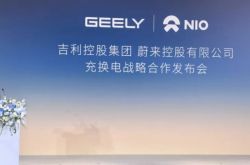
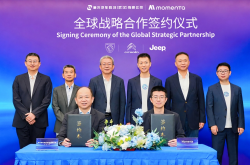
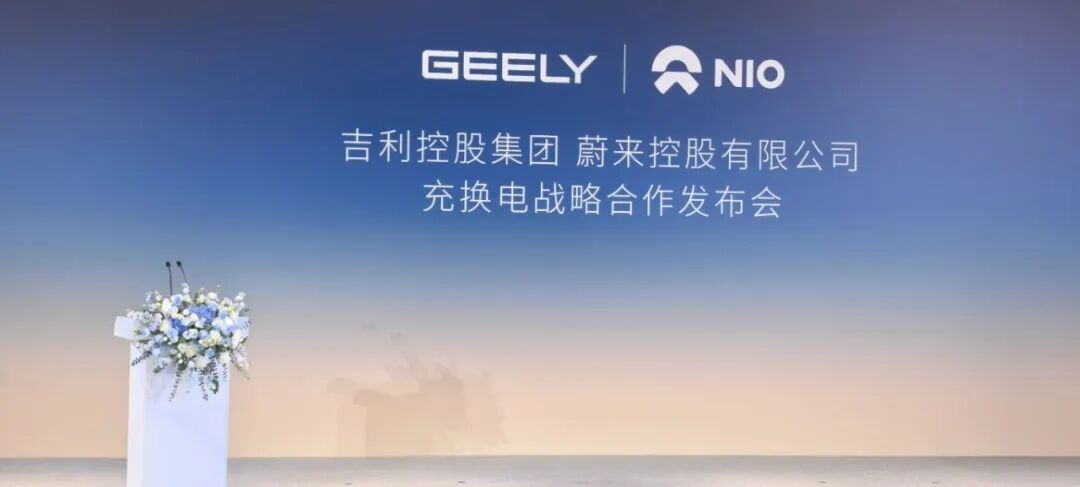
On September 28, 2026, NIO Holding Co., Ltd. and Zhejiang Geely Holding Group simultaneously unveiled a comprehensive strategic alliance in the realms of charging and battery swapping, encompassing technological, operational, and capital dimensions.
This collaboration transcends the mere expansion of a battery-swapping consortium or the sharing of technology and standards. NIO and Geely have embraced cross-shareholding, pooling their core energy replenishment assets to establish a joint venture.
According to the formal agreement, Zhejiang Geely Holding Group will contribute its 100% stake in YiYi Interconnection Technology (Chongqing) Co., Ltd., along with RMB 640 million in cash, to subscribe for newly issued equity in NIO Power Investment (Hubei) Co., Ltd.
Post-transaction, Geely will hold a 30% stake in NIO Power, with NIO retaining a 63.6% controlling interest and Wuhan Guangchuang Fund holding the remaining 6.4%. Conversely, NIO will acquire a 10% stake in Geely's Haohan Energy through a cash investment.
As early as 2023, NIO's battery-swapping initiative had already enlisted Chang'an and Geely, leading to the creation of YiYi Interconnection Technology.
However, the current structure far surpasses its predecessors, with ambitious targets of over 10,000 battery-swapping stations, 100,000 charging guns, and a battery-swapping capacity of 10 billion kWh.
Yet, the significance lies not just in the scale but in the timing—2026 marks a transformative era where the joint venture’s anchor point has shifted.
01 Will the Automotive Circle Witness the Birth of the Largest Energy Replenishment Business?
Beyond the financial implications, the integration of businesses demands attention.
The battery-swapping operations for commercial vehicles managed by YiYi Interconnection will be merged into NIO Power, enhancing the network's operational efficiency and empowering YiYi Interconnection's commercial vehicle business.
Conversely, NIO's subscription to newly issued equity in Zhejiang Haohan Energy Technology Co., Ltd. will fully interconnect the charging resources of both parties, jointly improving network coverage and operational efficiency.
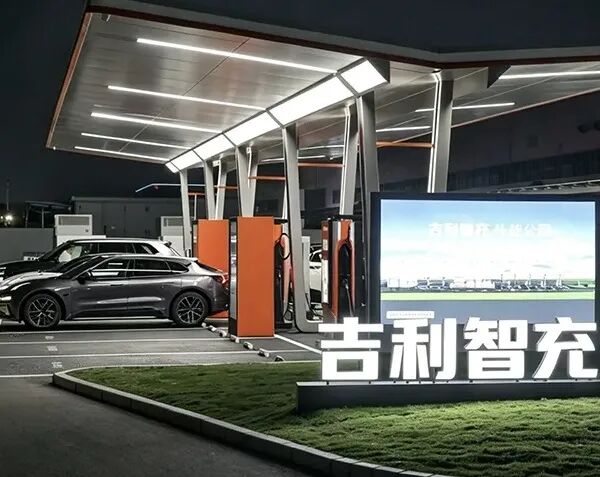
Essentially, this is a synergy of strengths and mutual needs: NIO leads in battery swapping, while Geely holds sway in charging.
Under this division of labor, the automotive community perceives implicit signals: the emergence of the largest energy replenishment business in the sector.
What are the current stature and aspirations of NIO and Geely in energy replenishment?
As of September 26, 2026, NIO has established 9,431 charging and battery-swapping stations nationwide, including 4,125 battery-swapping stations, 5,306 charging stations, and 30,594 charging piles, delivering over 125 million battery-swapping services. William Li, NIO's Chairman, revealed at the Power UP 2026 Charging Day that these 4,125 stations, with approximately 2,000 kWh of battery storage each, form an 8 GWh energy storage network.
On Geely's front, as of November 2025, Haohan Energy has launched 2,028 self-built charging stations, covering 213 cities nationwide, including 1,190 ultra-fast charging stations and 5,349 ultra-fast charging piles. Geely leads the industry in self-built 800V ultra-fast charging piles among automakers.
What are their post-collaboration plans?
By the end of 2027, Geely aims to have over 22,000 charging stations and over 100,000 charging guns, including over 15,000 Geely Smart Charging stations and over 50,000 smart charging guns, pioneering comprehensive coverage of county-level cities nationwide.
NIO Power plans to have built 10,000 battery-swapping stations by 2030, with an estimated annual electricity demand of over 10 billion kWh for its network.
On the charging front, after NIO's acquisition of a 10% stake in Haohan Energy, the charging resources of both parties will be fully interconnected. Considering NIO's access to over 1.73 million third-party charging piles, combined with Haohan Energy's self-built over 2,000 stations, the network effect will manifest rapidly.
Notably, by April 2026, even Tesla, with a robust new energy vehicle business, had a charging scale in mainland China of over 2,500 Supercharger stations, over 12,000 Supercharger piles, over 650 Destination Charging stations, and over 2,500 Destination Charging piles.
In essence, Geely's charging station count will surpass Tesla's current tally by 8.8 times within a year. Combined with battery-swapping energy replenishment, the coverage is remarkable.
02 Why Battery Swapping, Not Chips?
Prior to the official announcement, rumors circulated that NIO and Geely would collaborate on intelligent driving chips, with Geely potentially adopting chips from NIO's Shenji Technology. In March 2026, media reports revealed active contacts between NIO Shenji, AI Chip Startup, and automakers like Leapmotor and Geely following the successful tape-out of the M97 chip.
However, the official announcement focused on battery swapping, not chips.
The rationale is straightforward. Geely's path in intelligent driving chips is clear. In early 2025, Geely unveiled its "Qianli Haohan" intelligent driving system, covering five levels from H1 to H9, with the high-end solution explicitly adopting NVIDIA chips. Geely has heavily invested in R&D in this direction.
Switching chip platforms now would entail overturning the existing technical architecture and R&D investments, requiring adaptation to a new chip solution and toolchain, with high costs and long cycles.
In contrast, cooperation in the battery-swapping field is seamless. Synergy in energy replenishment offers tangible short-term benefits for both parties.
Geely's newly released "Geely Smart Charging" technology, relying on the Starry PowerMind energy macro model jointly developed with Jueyuexingchen, achieves a single-gun peak charging power of 2.2 megawatts.
NIO's battery-swapping system is currently the only large-scale operational network in the Chinese market. Charging and battery swapping, two technical routes, achieve underlying synergy through the joint venture, offering a more realistic vision than chip cooperation.
A sentence in the official press release bears repeating: "The two parties will jointly establish unified C-end battery-swapping technologies and standards. Zhejiang Geely Holding Group will develop battery-swapping models for the C-end, and NIO Power will provide services for these models."
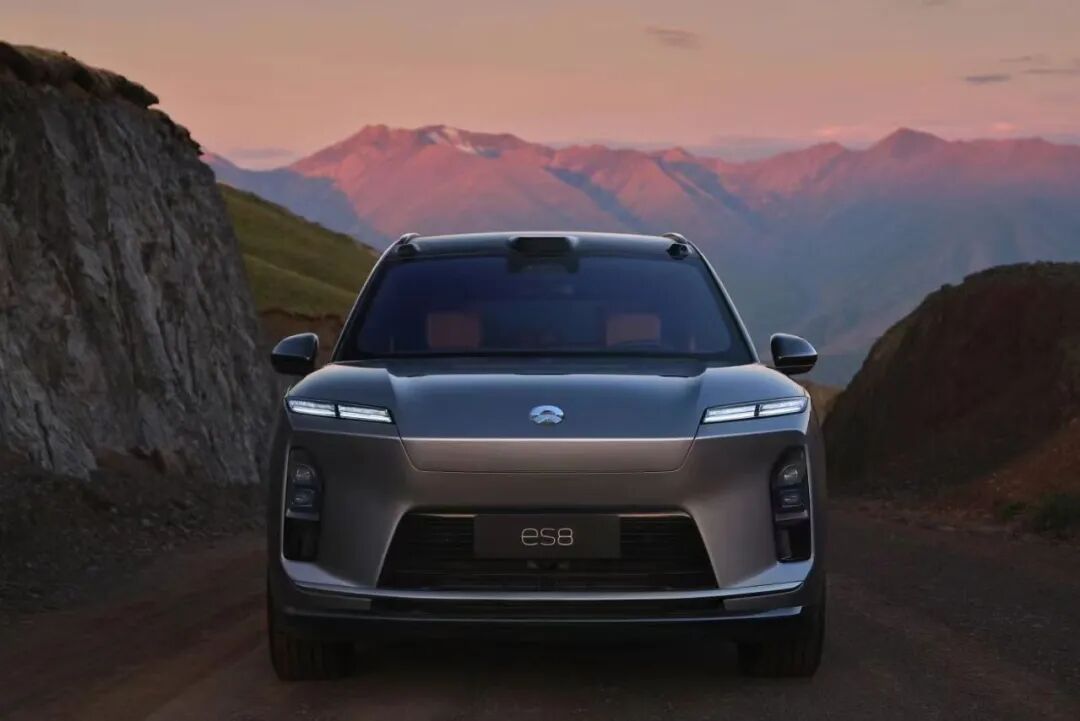
This implies that Geely's subsequent launch of battery-swapping models is inevitable, with only the timing and brand selection remaining uncertain. The battery-swapping standards will likely reference NIO's mature system.
In the words of a person close to the transaction, the essence is simple: "NIO has established a strong standard, and Geely just needs to decide which brand and model to use for producing battery-swapping models."
Yiyi Interconnection, a Geely subsidiary providing battery-swapping services for the commercial vehicle market, is a crucial yet often overlooked piece in this transaction. It has deployed and operated over 460 battery-swapping stations in more than 40 cities nationwide, including Guangzhou, accumulating over 2.5 billion kilometers in battery-swapping mileage, selling over 50,000 battery-swapping vehicles, and having over 30,000 vehicles connected to its network.
After injecting this asset into NIO Power, NIO's battery-swapping business will expand from a C-end-focused model to a full-scenario model covering both B-end and C-end.
03 Generational Upgrade of the Joint Venture Model
Viewing this cooperation as merely a commercial transaction between two automakers underestimates its significance.
The joint venture model in China’s automotive industry is undergoing a profound generational transition—no longer defined by Chinese and foreign parties, nor confined to brands and products, but anchored by core technologies.
Looking back, the first stage, starting in the 1980s, focused on foreign brands and products. Joint ventures like SAIC Volkswagen, FAW-Volkswagen, GAC Honda, and Dongfeng Nissan brought mature foreign models to the Chinese market for production and sales. The foreign party provided the brand and product, while the Chinese party provided the market and production capacity, with technology itself not within the scope of joint ventures.
At that stage, China’s automotive industry played the role of a "market for products" in joint ventures, barely touching the edges of technology.
The second stage began around the late 2010s, with the anchor point shifting towards technology. The most iconic case was the 2023 joint venture between CARIAD, a Volkswagen Group subsidiary, and Horizon Robotics, named Core Cheng (Core Intelligence).
CARIAD held a 60% stake, while Horizon Robotics held 40%, with Core Intelligence having a registered capital of RMB 6.757 billion, focusing on R&D of high-level autonomous driving application software and systems for the Chinese market, primarily serving Volkswagen Group in the short term.
The anchor point of this transaction was clear—intelligence, specifically intelligent driving chips and algorithms. Volkswagen needed China's local intelligence capabilities, while Horizon Robotics needed stable mass production orders, each fulfilling their own needs.
The cooperation between NIO and Geely propels the joint venture model into the third stage. The anchor point is no longer a single technological module but a complete infrastructure—the charging and battery-swapping network. It is not a single chip, software, or platform but an energy replenishment system covering the entire country and open to all brands.
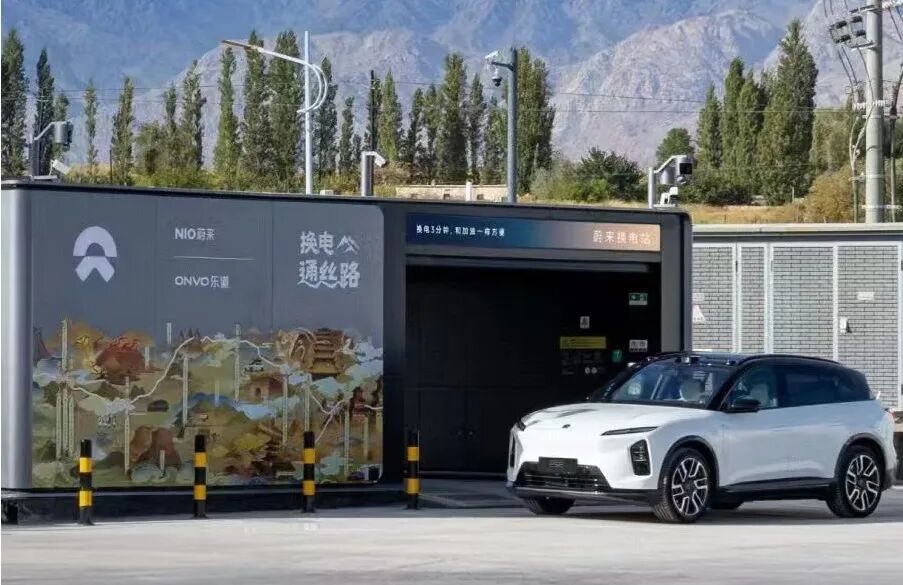
The significance of this change lies in the fact that energy replenishment networks possess the attributes of public infrastructure. Unlike intelligent driving chips, which can be encapsulated in a single model, or platform architectures, which can be internally digested, battery-swapping stations and charging piles are open to all vehicles for energy replenishment. This shared infrastructure attribute makes the joint venture's value extend beyond shareholders to the industry level.
The cooperation between NIO and Geely marks the first time an energy replenishment network has been operated as a core asset of a joint venture. This signifies that the competitive landscape of China’s automotive industry is shifting from "whose product is better" to "whose infrastructure is stronger."
Infrastructure competition will inevitably lead to alliances—the return on investment for a single automaker to build its own energy replenishment network is becoming increasingly unfavorable, with open sharing being the sustainable path.
A notable statement in the official press release reads: "This cooperation is a practical action by the two companies to actively respond to the '14th Five-Year Plan for the Development of the Intelligent Connected New Energy Vehicle Industry,' practice 'anti-involution,' and improve industrial resource allocation efficiency."
Including "anti-involution" in a joint venture press release was almost unimaginable in the past. It sends a clear signal: regulators hope to see resource integration and efficiency improvements rather than redundant construction and vicious competition. Energy replenishment networks, as heavy-asset infrastructure, especially require this open and collaborative approach.
From another perspective, NIO Power's post-investment valuation is approximately RMB 16 billion, with Geely acquiring a 30% stake through Yiyi Interconnection's 100% equity plus RMB 640 million in cash.
This valuation level, for an energy company with 4,125 battery-swapping stations, 300,000 charging piles, and over 125 million battery-swapping service experiences, clearly has significant room for growth. Geely has obtained an entry ticket to China’s most mature battery-swapping network at a relatively reasonable price, while NIO has received much-needed capital injection and an entry point into the B-end battery-swapping market. Each fulfills their own needs, achieving mutual success.
In 2018, NIO launched its first battery-swapping station in Shenzhen. At that time, few believed the battery-swapping model could survive.
Eight years later, not only have the 4,125 battery-swapping stations nationwide survived, but they have also become the strongest bargaining chip in the new wave of joint ventures in China’s automotive industry.
William Li once made a statement that has since been frequently quoted: "Battery swapping is not exclusive to NIO." Nowadays, the significance of this remark carries far more weight than it did when he first uttered it.
As battery-swapping stations emerge as pivotal points for joint ventures, and infrastructure supplants brands as the most potent bargaining chip, the narrative of joint ventures in China's automotive industry truly begins to unfold as a chapter penned by its own hand.
Editor-in-Chief: Shi Jie Editor: Wang Yue

THE END
-
![]()
Save up to 12,000 RMB in Car Purchase Subsidies: Here's What You Need to Know
-
![]()
NIO and Geely Forge a 'Strategic Alliance'
-
![]()
Shenlong Technology Achieves in Just Over a Month What a 40-Year Joint Venture Couldn't
-
![]()
New Energy Vehicles Face a 'Scale Dilemma': Wan Gang and Zhu Huarong Offer Solutions!
-
![]()
What are the Eight Redundancies for L3 Autonomous Driving in the Qijing GX7?
-
![]()
Can Huawei’s Four ‘Jie’ Brands Maintain AITO’s Momentum? Who Will Lead the Charge?
-
![]()
Can Yi Jing and Qi Jing Replicate Aito's Triumph and Achieve Blockbuster Status with Major Automakers and Huawei?
-
![]()
Sunway Communication Doubles Down on High-End MLCC Amid Net Profit Decline, Despite Target's Losses and Domestic Breakthrough Challenges