Shenlong Technology Achieves in Just Over a Month What a 40-Year Joint Venture Couldn't
 09/29 2026
 460
460
Produced by Zhineng Technology
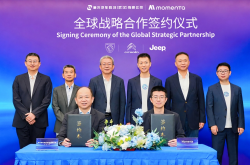
Through a single technical agreement, Shenlong Technology and Momenta have forged a global strategic partnership. This marks a significant transition for China's intelligent driving technology, evolving from localized configurations for joint venture brands to a foundational capability within global product development systems.
The new energy vehicle models planned by Shenlong Technology will be conceptualized and developed in China. They will then be introduced to markets such as Europe through the brands and global network of the Stellantis Group.
Momenta's expansion from Chinese market projects to a global scale necessitates that its products align with brand characteristics, vehicle engineering standards, and global regulations. This fundamentally transforms the nature of their collaboration.
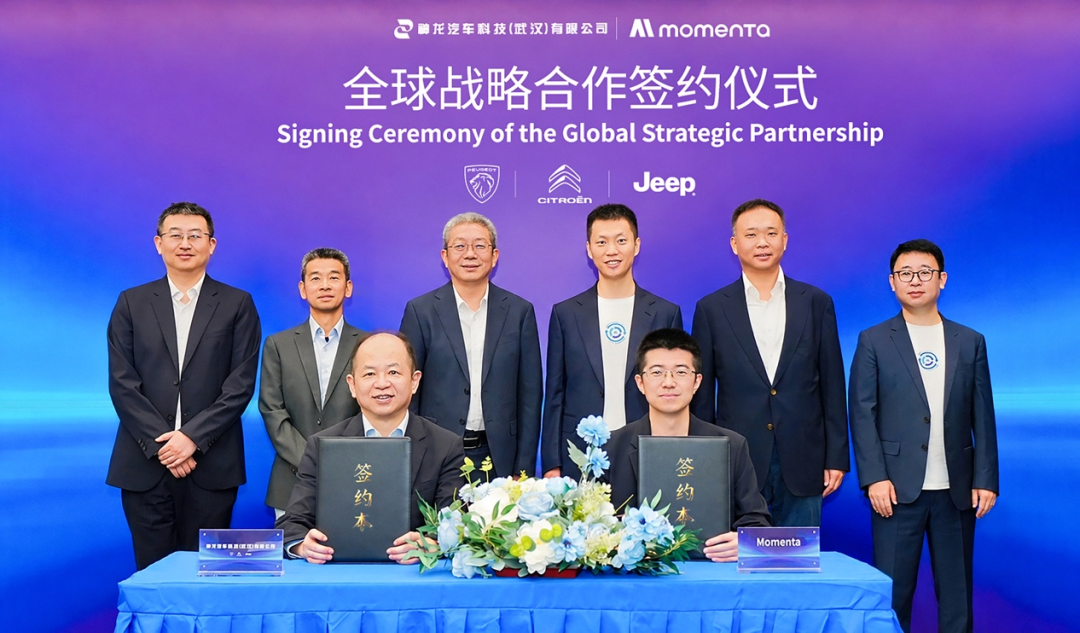
In the past, joint venture automakers primarily introduced local suppliers to enhance intelligent experiences for the Chinese market. Now, however, China's intelligent driving technology is being integrated into the global development of new vehicles.
Shenlong Technology is tasked with product definition, vehicle integration, and engineering implementation, ensuring that the technology serves the entire vehicle. Momenta is deeply involved in requirement definition and algorithm development. Meanwhile, the Stellantis Group contributes its brand equity, expertise in driving control, and access to global markets. Together, they have established a collaborative development mechanism that starts with Chinese R&D and targets global vehicle models.
The first batch of products is slated for launch beginning in 2027. Mass production of high-level assisted driving, overseas adaptation, and L3 R&D still require engineering validation, regulatory approval, and user testing. The question remains: How can global brands translate capabilities developed in China into global product competitiveness?
The challenges faced by joint venture automakers have evolved.
Over the past four decades, the division of labor in China's automotive joint ventures has been relatively clear-cut. Foreign partners provided brands, platforms, and core technologies, while Chinese partners contributed manufacturing capabilities, distribution channels, and market access. However, this division has started to crumble in the era of electrification and intelligence.
Capabilities that determine product appeal increasingly stem from battery systems, electronic electrical architectures, software algorithms, data loops, and rapid iteration—all of which are rapidly maturing in the Chinese market.
In recent years, joint venture brands have generally responded by adding local intelligent cockpits or assisted driving solutions to Chinese models.
While this narrows the functional gap, altering the primary-secondary relationship in the R&D chain is no easy feat. Global platforms are defined first, followed by local adaptations by Chinese teams, with suppliers addressing the question, "Is this sufficient for China?"
When product development cycles are measured in months rather than years, localized patches struggle to keep pace with the market. If algorithms cannot be integrated into the vehicle architecture during product definition, they often end up compromising within fixed hardware, computing power, and chassis interfaces.
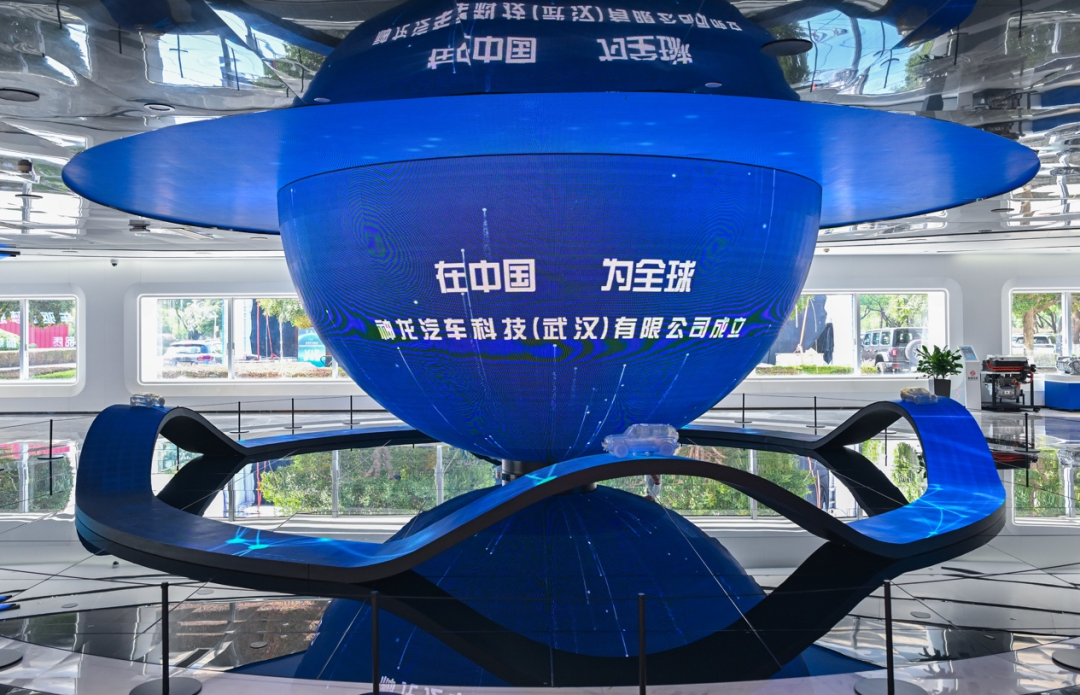
The transformation at Shenlong Technology began at the organizational level with genuine commitment. In May 2026, Dongfeng Motor, Stellantis Group, Shenlong Automobile, and three Hubei-based local industrial capital firms signed a strategic cooperation agreement. By August, Shenlong Technology was established with a registered capital of approximately RMB 8.2 billion.
Under this public arrangement, Shenlong Automobile continues to handle production, quality, and supply chain responsibilities, while Shenlong Technology oversees R&D, sales, services, and channels.
This places product and market decision-making within a business entity that operates more like a tech company while retaining a mature manufacturing system.
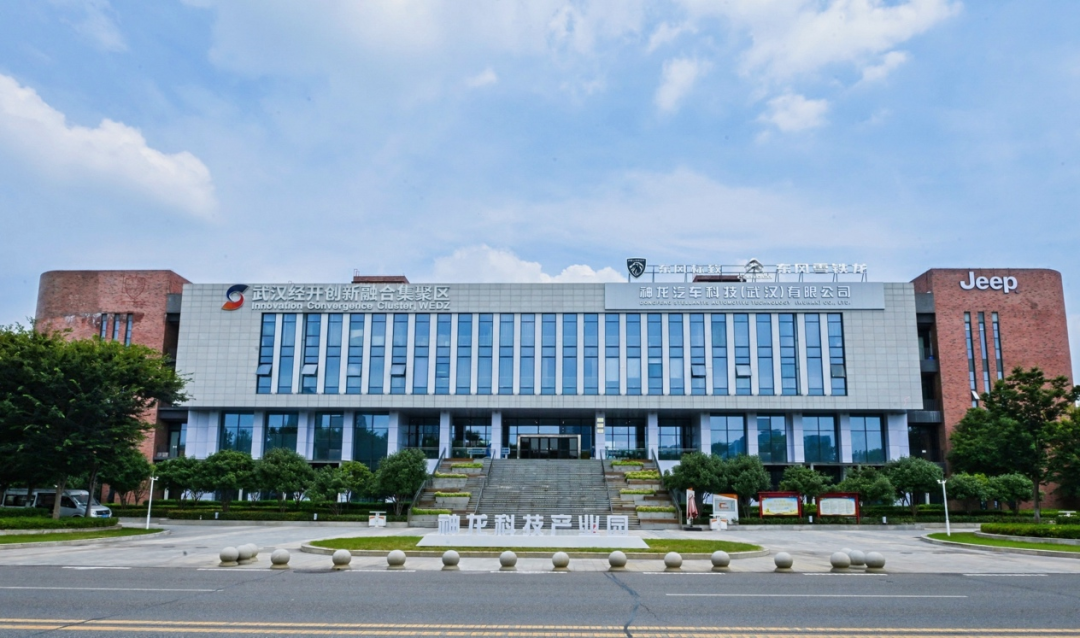
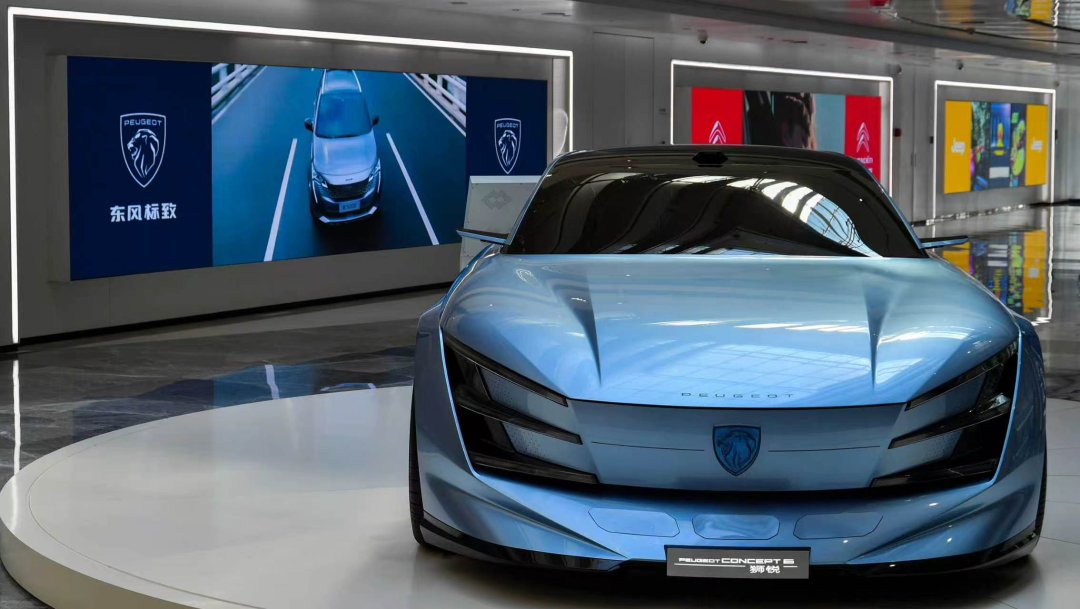
Stellantis Group and Dongfeng Motor have already made it clear that Shenlong Technology plans to produce all-new Peugeot and Jeep new energy vehicle models in Wuhan starting in 2027, catering to both the Chinese market and global sales.
Thus, Momenta's involvement represents the first strategic-level technical collaboration following the implementation of Shenlong Technology's new mechanism, linking organizational, product, and technical restructuring.
From Local Catch-Up to Global Co-Development
Chinese automakers typically engage with suppliers in two modes: "procurement solutions" and "co-development." Procurement modes usually revolve around pre-defined vehicle models: automakers provide functional requirements, suppliers deliver software, and both complete interface adaptations and calibrations.
Co-development, on the other hand, requires algorithm teams to engage earlier in product requirements, sensor configurations, computing platforms, chassis control, and validation systems. The former prioritizes timely functional delivery, while the latter involves shared responsibility for a vehicle's overall experience.
Momenta will participate in the entire product requirement definition and project development process, while Shenlong Technology handles vehicle integration and engineering implementation. The assisted driving experience is not solely determined by algorithms.
Vehicle target recognition and path planning rely on execution through steering, braking, and powertrain systems. The responsiveness, linearity, and boundary control of execution, in turn, affect comfort and driving confidence. If algorithms and chassis are developed separately, functions may launch, but the brand experience risks being diluted.
Shenlong Technology must preserve differentiation. Peugeot emphasizes driving texture, Citroën prioritizes comfort, and Jeep faces off-road and complex terrain challenges.
These three brands have distinct requirements for following distance, brake application, steering rhythm, avoidance amplitude, and even system disengagement methods.
Native development ensures that perception, planning, control, and chassis calibration collectively serve different brand objectives.

The direction of technological flow has shifted from unilateral input to bidirectional integration: the Chinese team provides rapidly iterating intelligent capabilities and complex road data experience, while the Stellantis Group contributes brand engineering standards, vehicle validation systems, and global channels. Shenlong Technology transforms these into mass-producible products.
Roles are no longer fixed in terms of technology export and market provision. Product definition rights are now reallocated based on capabilities.
How the World Model Integrates with French Chassis
In China, Momenta possesses the most advanced world model, end-to-end decision-making, and wheel-end control capabilities.
According to the disclosed plan, the system will use multimodal inputs to understand road participants, road structures, and environmental changes, generating higher-level driving decisions.
Compared to traditional approaches relying on extensive manual rules, this route aims to reduce the limitations of rule-by-rule programming in complex scenarios. It seeks to further understand scenes, anticipate changes, and make dynamic decisions, bringing assisted driving closer to the thought processes of experienced drivers—achieving scene understanding and dynamic decision-making.
For mass-produced systems, the world model's primary value lies in enhancing predictive capabilities: whether a leading vehicle might cut in, whether a pedestrian might cross, or whether the passing space on a narrow road is shrinking.
Only by judging changes earlier can the system convert abrupt braking, hesitation, and repeated corrections into smoother deceleration, yielding, and trajectory selection. Users perceive whether following in rush hour feels natural, whether navigating narrow city roads is effortless, whether highway lane changes are stable, and whether underground parking is seamless.
Shenlong Technology and Momenta also propose joint development of wheel-end precision control, enabling independent adjustment of brake pressure across all four wheels. This capability advances intelligent driving from "calculating a trajectory" to "stably executing that trajectory."
On low-friction surfaces like ice and snow, different wheels can allocate braking force according to adhesion conditions. In tight spaces, single-wheel braking can help tighten turning radii and improve parking trajectory accuracy. For brands emphasizing chassis quality or off-road capability, this creates differentiation.
Globalizing the Chinese Solution for Overseas Vehicle Models
Previously, Chinese assisted driving companies expanded overseas primarily by following Chinese brand exports.
Shenlong Technology enables technology developed in China to enter the brands, engineering, and sales networks of a multinational automaker, shortening the time for Chinese tech companies to establish overseas vehicle customers, service systems, and market recognition. It also spares multinational automakers from repeatedly building intelligent capabilities in each market.
European road signage, traffic regulations, driving habits, and data compliance requirements differ from China's, as do urban structures and highway rules.
Assisted driving systems require retraining and validation. Software updates, cybersecurity, functional safety, and accident liability must align with local regulatory frameworks.
This is where the Stellantis Group's global system adds value, providing not just distribution networks but also model certification, regional regulations, engineering validation, and brand management capabilities. Conversely, Momenta's value extends beyond a specific algorithm version.
According to signing materials, its data system has accumulated over 17 billion kilometers of real-world road data and plans to continue expanding training scale.
Conclusion
The collaboration between Shenlong Technology and Momenta offers a verifiable new division of labor: completing product and technology co-creation in China and then serving overseas users through global brand and engineering systems.
-
![]()
Save up to 12,000 RMB in Car Purchase Subsidies: Here's What You Need to Know
-
![]()
NIO and Geely Forge a 'Strategic Alliance'
-
![]()
Shenlong Technology Achieves in Just Over a Month What a 40-Year Joint Venture Couldn't
-
![]()
New Energy Vehicles Face a 'Scale Dilemma': Wan Gang and Zhu Huarong Offer Solutions!
-
![]()
What are the Eight Redundancies for L3 Autonomous Driving in the Qijing GX7?
-
![]()
Can Huawei’s Four ‘Jie’ Brands Maintain AITO’s Momentum? Who Will Lead the Charge?
-
![]()
Can Yi Jing and Qi Jing Replicate Aito's Triumph and Achieve Blockbuster Status with Major Automakers and Huawei?
-
![]()
Sunway Communication Doubles Down on High-End MLCC Amid Net Profit Decline, Despite Target's Losses and Domestic Breakthrough Challenges