New Energy Vehicles Face a 'Scale Dilemma': Wan Gang and Zhu Huarong Offer Solutions!
 09/29 2026
 569
569
Introduction
The new energy vehicle (NEV) sector is expanding rapidly, yet the incremental value derived from this growth is diminishing. Initially, companies focused heavily on market share, as early-stage sales were crucial for survival. However, the future of China's NEV industry will hinge on 'quantitative change leading to qualitative change'.
Since the beginning of the year, the entire automotive market has faced pressures, with the base of fuel-powered vehicles continuously shrinking. Data indicates that from January to August 2026, cumulative retail sales of passenger vehicles nationwide reached approximately 11.716 million units, marking a year-on-year decrease of 20.8%.
In August, retail sales of conventional fuel-powered passenger vehicles plummeted to only 540,000 units, a 40% year-on-year decrease. In contrast, NEV sales soared to 1.005 million units, nearly doubling those of fuel-powered vehicles. Notably, the structure of the NEV market is also undergoing rapid transformation:
In August, wholesale shipments of NEV passenger vehicles reached 1.51 million units, up 16.4% year-on-year, with battery electric vehicles (BEVs) reaching 1.032 million units, a 25.9% increase. The domestic retail penetration rate of NEVs hit 65.2%, up 9.9 percentage points from the same period last year.
While these figures appear positive, they underscore a 'scale dilemma'—volume growth is not translating into substantial profits.
It is undeniable that China's NEV market continues to grow, with electrification and intelligent technologies making constant breakthroughs. However, issues such as market saturation, price competition, profit pressure, and technological challenges persist.
As NEVs transition from market popularization to systemic competition, merely expanding sales volume is insufficient for sustained corporate growth. The industry must convert scale into technological efficiency, globalization capabilities, and high commercial value.
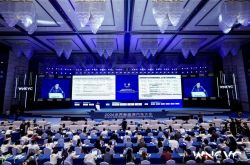
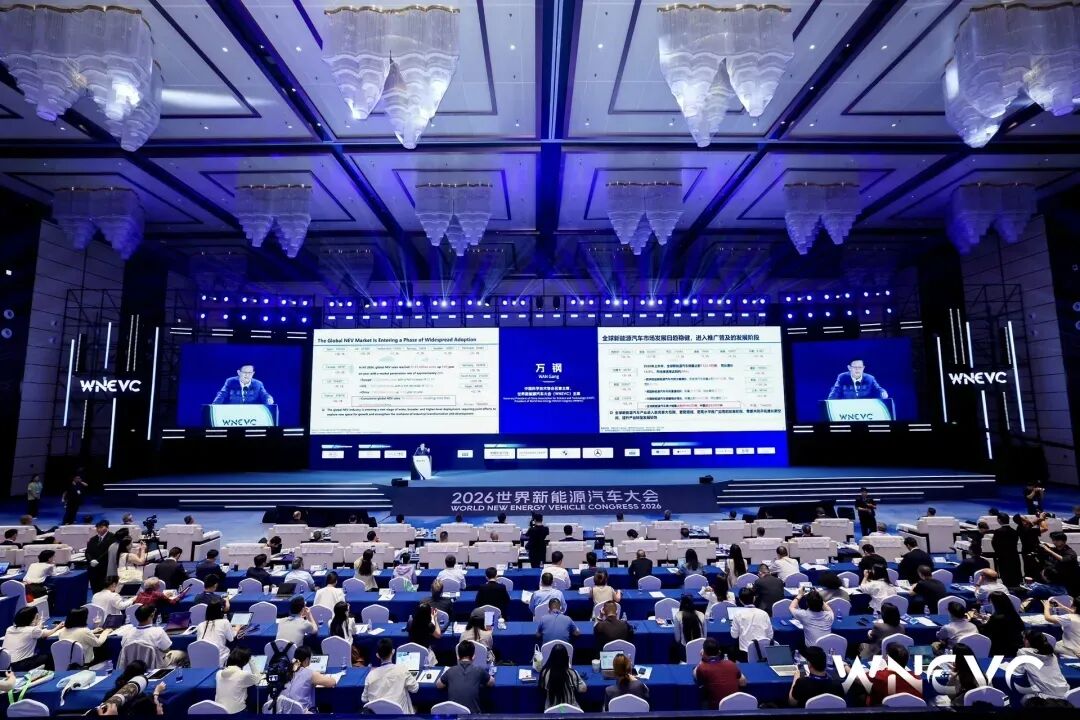
Against this backdrop, the 2026 World New Energy Vehicle Congress convened in Hainan.
01 The Automotive Industry Urgently Needs New Growth Strategies
The scale dilemma in the NEV industry does not imply a loss of growth potential; rather, it signifies that relying solely on sales growth for corporate development is no longer viable. While sales can help amortize costs, without simultaneous improvements in R&D efficiency, supply chain management, and product competitiveness, scale may merely translate into inventory, price, and operational pressures.
Thus, discussions among industry leaders at the Global NEV Congress have shifted from 'how to expand the NEV market' to 'how to transform scale into higher-quality growth'.
In Wan Gang's view, the NEV industry has entered a new development phase. In the first half of 2026, global NEV sales reached 11.234 million units, with a market penetration rate of 24%. China's NEV sales reached 7.446 million units, accounting for nearly 70% of the total. The question remains: where will the industry's growth space come from amid an expanding industrial scale?
Wan Gang suggests 'advancing electrification, expanding hydrogen energy, and escalating intelligence'.
He emphasizes the need to 'promote the application of BEVs, plug-in/extended-range hybrid electric vehicles (PHEVs/REEVs), and fuel cell electric vehicles (FCEVs) in a manner suited to local conditions', while continuously advancing battery technology and exploring new vehicle-to-grid (V2G) integration models. Commercial vehicles have become a key scenario for hydrogen energy expansion.
Intelligence must also evolve further. Wan Gang proposes establishing a three-tier structure consisting of a 'new chassis, a central computing platform, and a cloud computing platform' to enable continuous data feedback loops between vehicles, roads, and the cloud. With the penetration rate of Level 2 (L2) advanced driver-assistance systems (ADAS) in new vehicles surpassing 70%, competition is shifting from individual vehicle technology to systemic capabilities involving vehicle-road-cloud coordination.
Notably, Wan Gang places 'open growth' alongside 'innovative growth' and 'green growth', emphasizing the need to enhance industrial resilience through open cooperation. Going global has become a must for Chinese automakers, with internationalization evolving from merely selling products overseas to a comprehensive global layout encompassing technology, supply chains, data, services, and localized systems.
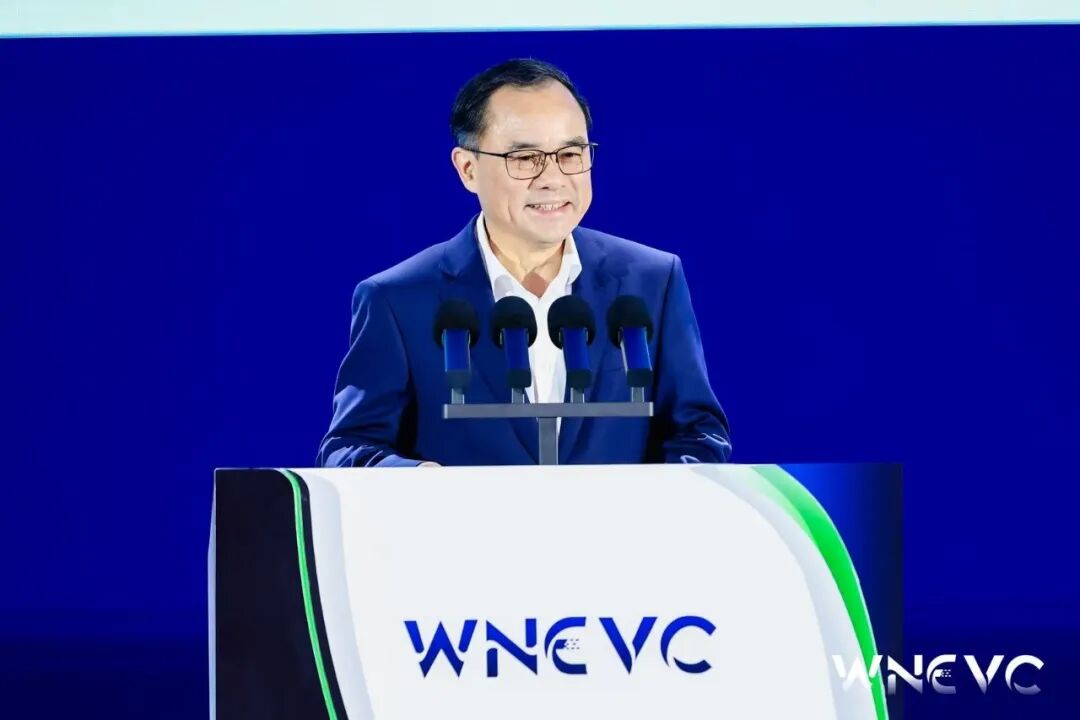
From energy routes to intelligence and globalization, Wan Gang outlines a 'roadmap' for the next stage of the NEV industry. However, for automakers at the forefront, having a clear direction is just the first step.
Zhu Huarong assesses the current automotive industry bluntly: 'The NEV industry has entered a new paradigm where 'failing to accelerate means falling behind'.
In his view, new energy and intelligent technologies are transitioning from 'quantitative change' to 'qualitative change', with competition evolving from product-based to a comprehensive contest involving technology, scale, and ecosystems. Companies must either leap forward with full force or watch helplessly as the market slips away.
Another significant change is occurring in internationalization. 'In the next 10 to 15 years, no single route will dominate globally'.
Zhu Huarong points out that energy structures, consumer habits, and infrastructure vary significantly across markets. Europe focuses on BEVs, Southeast Asia sees parallel development of hybrid electric vehicles (HEVs) and BEVs, the Middle East remains dominated by internal combustion engine (ICE) vehicles, and the Latin American market is rapidly developing across multiple new energy routes.
Thus, for Chinese automakers accelerating globalization, adapting to local conditions and tailoring strategies is crucial.
Furthermore, Zhu Huarong predicts that over the next 3-5 years, the annual sales threshold for global automakers will rise significantly. Selling 3.5 million units may only suffice for 'survival', 5-7 million units would be 'acceptable', and only by selling 8-10 million units can companies 'thrive'. However, while scale remains important, building resilience to navigate cycles after expansion is paramount.
02 Multinational Automakers Reevaluate China
While domestic automakers seek breakthroughs in scale and profitability, multinational automakers are also reassessing their strategies. The wave of NEVs and intelligence is prompting these global giants to reconsider the position of the Chinese market within their global operations.
At the Sino-German Automotive Industry Cooperation and Development Forum, Muezzamuddin Muezzam, Head of R&D and Procurement at Mercedes-Benz China, stated that Sino-German automotive cooperation is expanding beyond joint ventures, market expansion, and supplier network construction to include intelligent cockpits, ADAS, software, batteries, charging ecosystems, and user experience.
With technologies such as intelligent cockpits, ADAS, and large language models rapidly entering mass production, local users' acceptance of new features is accelerating. The previous approach of relying on a globally unified R&D system for product introduction can no longer keep pace with the Chinese market's rhythm.
As a result, Mercedes-Benz's China R&D team's role has begun to change. They are now closer to users and the supply chain, more involved in product decision-making and technical verification, and ultimately bringing the experience gained in the Chinese market into the global product system—'In China, for the Globe' has become Mercedes-Benz's new approach.
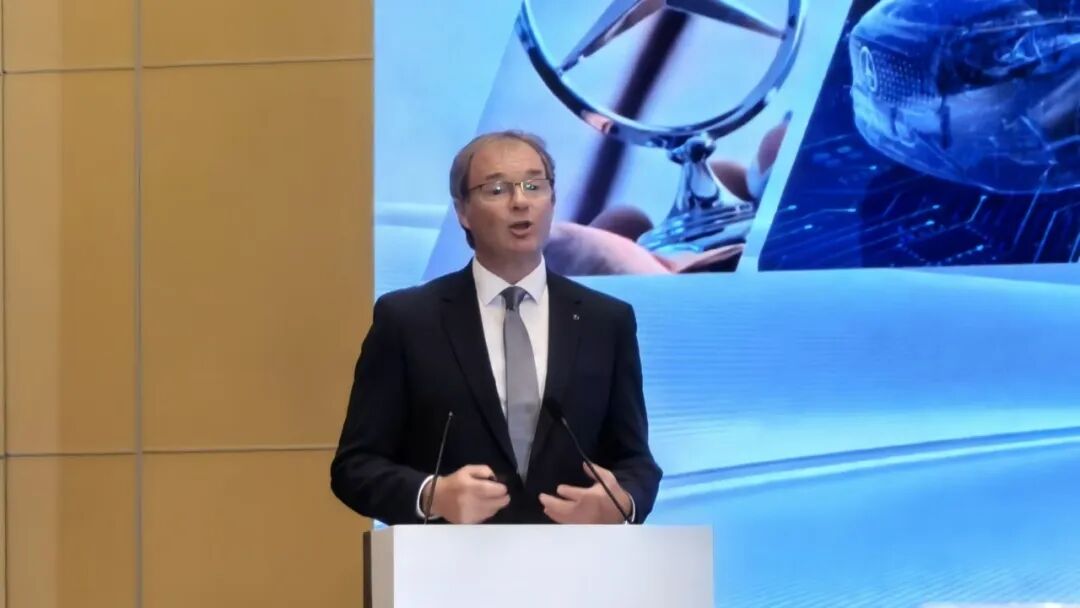
Meanwhile, Volkswagen is also 'pivoting'. Ralf Brandstätter, Member of the Board of Management of Volkswagen Group, stated that the trend of localized R&D and technological collaboration in the automotive industry is strengthening. Core capabilities such as vehicle platforms, electrical/electronic (E/E) architectures, software, and intelligent driving are accelerating their integration, continuously enhancing industrial efficiency through large-scale applications.
However, Brandstätter also points out the drawbacks. With the accelerated popularization of technologies such as NEVs, intelligent driving, and artificial intelligence, the pace of industry innovation is continuously increasing, and companies are facing challenges such as shortened R&D investment recovery cycles and profitability pressures.
Thus, future industrial competition will not simply pursue innovation speed but will require achieving a balance between technological innovation, commercial value, quality, safety, and long-term investment capabilities.
This aligns with the thinking of Jochen Goller, Member of the Board of Management of BMW Group.
Goller points out that changes in the economic environment, intensified market competition, supply chain restructuring, as well as safety, carbon emissions, and data governance, are all testing the long-term capabilities of automotive companies. In the future, it will be necessary to simultaneously consider quality, safety, efficiency, and long-term value while enhancing the stability of industrial and supply chains through open cooperation.
Although the statements of these three multinational automakers have different emphases, they are not contradictory when viewed together. China's market is evolving rapidly, and its industrial chain is highly complete. These conditions have made China an important market for global automotive companies to observe trends, validate products, and seek new capabilities.
However, a new question arises: As Chinese automakers go global, multinational automakers are also accelerating their absorption of Chinese technology and innovation. In future global competition, who will export their capabilities, and who will bring global resources back?
03 The Role of Suppliers Has Also Changed
If automakers focus on achieving scale and profit growth, and multinational automakers leverage China's innovative technologies and supply chain resources, then component suppliers such as Horizon Robotics and NavInfo are witnessing the shifting direction of value in the automotive industry.
In the era of intelligent vehicles, chips, algorithms, maps, data, and software are deeply involved in product definition. As vehicles increasingly resemble intelligent terminals integrating hardware and software, suppliers are no longer merely providing single components as per automakers' requirements. Instead, they are gradually participating in vehicle architecture design, functional development, system verification, and global services.
Chen Liming, Vice Chairman of Horizon Robotics, believes that automotive intelligence is gradually returning to product experience and user value. As intelligent driving transitions from concept to mass production, safety, reliability, and actual user experience will become the true evaluation criteria.
At the same time, intelligent driving is shifting from mere functional competition to systemic competition driven by data, algorithms, and computing power. Automotive E/E architectures are also evolving from distributed to centralized systems. Behind these technological changes lies the reconstruction of automotive intelligence from 'single functions' to whole-vehicle system capabilities.
In the past, adding a single intelligent feature to a vehicle could often become a selling point. However, as intelligent driving gradually becomes a basic capability of new vehicles, chip computing power, algorithmic capabilities, data feedback loops, E/E architectures, and whole-vehicle coordination capabilities must all ultimately translate into real-world user experience.
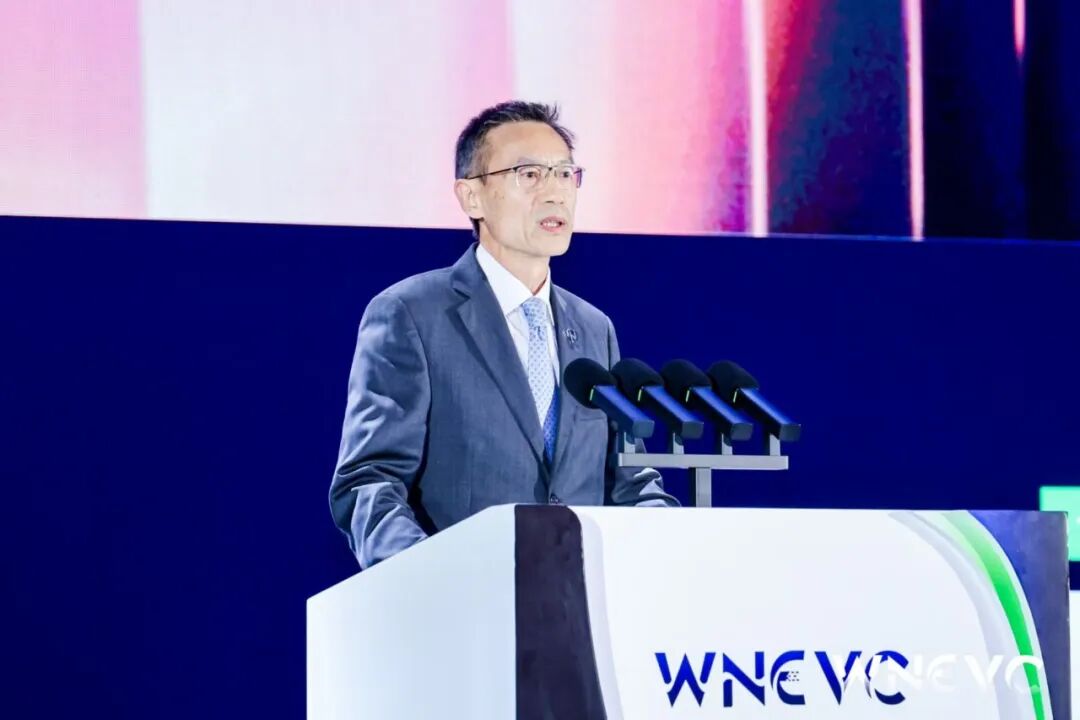
Cheng Peng, CEO of NavInfo, further extends this change to data. He states, 'While China's NEVs won in batteries over the past decade, the next decade will be won or lost based on data', arguing that data is becoming the 'second fuel' for intelligent vehicles.
Especially for the globalizing Chinese automotive industry, vehicle exports have evolved from merely selling cars overseas to the export of data governance, standards, and localized capabilities.
Indeed, from this perspective, the value center of gravity of the automotive industry is shifting from purely hardware capabilities to the integration of hardware and software, as well as data and software capabilities.
In the age of electrification, the fundamental competitiveness of products was shaped by batteries, electric drive systems, and supply chain efficiency. As we transition into the era of intelligence, chips, algorithms, data, and electrical/electronic (E/E) architectures have emerged as the new cornerstones of foundational capabilities. Automakers are now tasked with integrating these capabilities into complete vehicle systems, while suppliers must deepen their involvement in the development of software, data, and system-level competencies.
In the current landscape of the new energy vehicle market, it is undeniable that competition based solely on sales volume has become obsolete. The central challenge for the entire industry is the shift from merely achieving high volumes to attaining superior quality, and from expanding scale to accumulating capabilities.
Looking ahead, the core competitiveness of China's new energy vehicle industry will no longer hinge on its vast market size. Instead, it will be defined by robust technological barriers, a well-established industrial ecosystem, a mature global footprint, and sustainable profitability. The industry is poised to break free from the morass of low-price competition and embark on a new cycle of high-quality, sustainable growth through qualitative enhancements.
Editor-in-Chief: Cao Jiadong Editor: Wang Yue

THE END
-
![]()
Save up to 12,000 RMB in Car Purchase Subsidies: Here's What You Need to Know
-
![]()
NIO and Geely Forge a 'Strategic Alliance'
-
![]()
Shenlong Technology Achieves in Just Over a Month What a 40-Year Joint Venture Couldn't
-
![]()
New Energy Vehicles Face a 'Scale Dilemma': Wan Gang and Zhu Huarong Offer Solutions!
-
![]()
What are the Eight Redundancies for L3 Autonomous Driving in the Qijing GX7?
-
![]()
Can Huawei’s Four ‘Jie’ Brands Maintain AITO’s Momentum? Who Will Lead the Charge?
-
![]()
Can Yi Jing and Qi Jing Replicate Aito's Triumph and Achieve Blockbuster Status with Major Automakers and Huawei?
-
![]()
Sunway Communication Doubles Down on High-End MLCC Amid Net Profit Decline, Despite Target's Losses and Domestic Breakthrough Challenges