Save up to 12,000 RMB in Car Purchase Subsidies: Here's What You Need to Know
 09/29 2026
 458
458
Introduction
Subsidies: A Catalyst, Not the Engine
Subsidies are making a comeback.
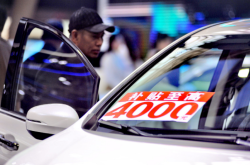
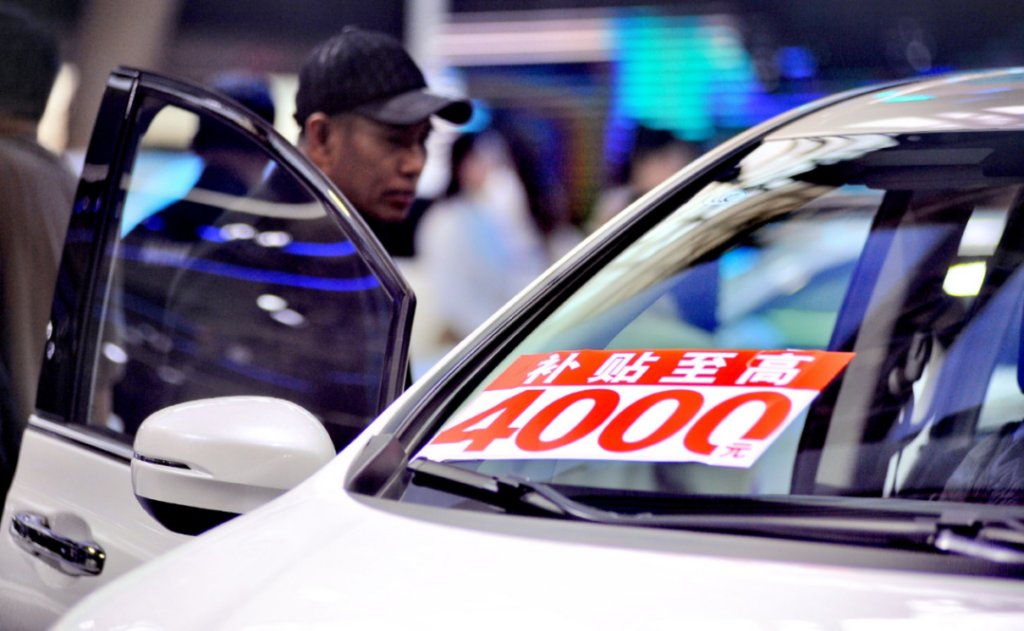
As the auto market enters the peak "golden September and silver October" sales period, local governments are stepping in. Gansu, Qinghai, Nanjing, Lanzhou, and Qingdao—at provincial, municipal, and district levels—are offering subsidies, with the highest per-vehicle subsidy reaching 12,000 RMB. Automakers are also in on the action, with over 30 brands announcing September promotions covering more than 100 models.
Sales teams are abuzz on social media, but consumers may feel overwhelmed. Some wonder if this is the best time to buy, while others fear the market might overheat due to these incentives.
Let's set the record straight: Subsidies act as a catalyst, not the driving force. They can encourage earlier purchases but won't convert non-buyers into buyers. This year's "golden September" is essentially a zero-sum game, with new energy vehicles (NEVs) continuing to gain market share at the expense of fuel vehicles. Local governments and automakers are working together to sustain the market.
This article won't overhype subsidies or criticize the market. Instead, it will clarify local subsidy programs, examine the relationship between the auto market and subsidies, and highlight common pitfalls. Save money, but don't be misled by the term "maximum subsidy."
01 Local Subsidy Landscape: Who's Offering What?
Gansu: Straightforward Incentives
Gansu Province has allocated 6 million RMB in special funds to boost consumption. From September 23 to October 7, car purchase subsidies are available province-wide for individuals buying non-operating new passenger vehicles (both fuel and NEVs) with nine seats or fewer.
Subsidies are tiered: 2,000 RMB per vehicle for invoices with a tax-inclusive price of 100,000 RMB or less; 3,000 RMB for those above 100,000 RMB. These can be combined with municipal or county-level new car purchase subsidies but not with vehicle scrapping or trade-in subsidies. Each individual is limited to one subsidy per year.
Qinghai: Provincial-Level Support
Qinghai offers a provincial new car purchase subsidy covering both fuel and NEVs, with a maximum subsidy of 5,000 RMB. Subsidies are 3,000 RMB for vehicles priced between 50,000 RMB (inclusive) and 100,000 RMB (exclusive); 4,000 RMB for those between 100,000 RMB (inclusive) and 200,000 RMB (exclusive); and 5,000 RMB for those 200,000 RMB (inclusive) or above.
Invoices and registration certificates must be dated July 1, 2026, or later. Each individual is limited to one subsidy in 2026 and cannot combine it with national scrapping or trade-in subsidies.
Nanjing: Percentage-Based Discounts
From September 16 to December 31, 2026, Nanjing is launching its second round of car purchase promotions. Individual consumers buying new passenger vehicles at participating merchants receive subsidies based on the new car's sales price: 3% for NEVs priced at 50,000 RMB (inclusive) or above, with a maximum of 7,000 RMB; 2% for fuel vehicles priced at 50,000 RMB (inclusive) or above, with a maximum of 6,000 RMB.
Nanjing's Yuhuatai District adds a used car promotion with 1 million RMB in funds, available on a first-come, first-served basis. Subsidies for used cars are 1,000 RMB for those with a tax-inclusive invoice price below 200,000 RMB; 3,000 RMB for those between 200,000 RMB (inclusive) and 400,000 RMB (exclusive); 5,000 RMB for those between 400,000 RMB (inclusive) and 1 million RMB (exclusive); and 10,000 RMB for those 1 million RMB (inclusive) or above. The district-level used car subsidy aims to stimulate the trade-in chain.
Lanzhou: Combined Subsidies
Starting September 23, Lanzhou combines provincial and municipal subsidies for Mid-Autumn Festival and National Day car purchases: 3,200 RMB per vehicle for invoices between 100,000 RMB and 150,000 RMB (inclusive); 3,400 RMB for those between 150,000 RMB and 200,000 RMB (inclusive); and 3,600 RMB for those above 200,000 RMB. While not the highest, the criteria are clear.
Qingdao: Highest Local Subsidy Ceiling
Qingdao offers the highest local subsidy ceiling: NEVs receive a 4% subsidy based on the total invoice price (including tax), up to 12,000 RMB; fuel vehicles receive 3%, up to 10,000 RMB. For an NEV priced over 200,000 RMB, this subsidy is substantial.
Automaker Promotions
Over 30 brands have announced September promotions covering more than 100 models. Promotional tactics fall into four categories: cash discounts, trade-in subsidies, financing deals, and configuration packages. While all seem like discounts, their actual value varies greatly.
Cash discounts are straightforward, while trade-in subsidies require paperwork. Financing deals may lock you into loans, and configuration packages depend on whether you need the extras.
In short, local subsidies come from government funds, while automaker promotions are merchant concessions. Combined, they can save you money, but the exact amount depends on your location, vehicle choice, invoicing and registration timing, and application submission.
02 Subsidies Are Strong, but the Market Isn't Hot
Despite the subsidy buzz, the auto market remains lukewarm.
Data from the China Passenger Car Association reveals the trend. From September 1-20, nationwide passenger car wholesale volumes reached 1.001 million units, down 19% year-on-year but up 21% month-on-month. Year-to-date wholesale volumes stood at 18.184 million units, down 6% year-on-year.
Retail sales from September 1-20 reached 878,000 units, down 22% year-on-year but up 8% month-on-month. Year-to-date retail sales totaled 12.593 million units, down 21% year-on-year.
Retail sales fell by 20% year-on-year, while wholesale volumes dropped nearly 20%. This isn't the typical "golden September" performance.
NEV Market Performance
NEVs aren't performing as robustly as expected. From September 1-20, nationwide NEV wholesale volumes reached 740,000 units, up 8% year-on-year and 25% month-on-month. Year-to-date NEV wholesale volumes stood at 10.518 million units, up 9% year-on-year.
NEV retail sales reached 596,000 units, down 9% year-on-year but up 14% month-on-month. Year-to-date NEV retail sales totaled 7.27 million units, down 12% year-on-year.
Note that while NEV wholesale volumes rose, retail sales fell by 9% year-on-year. Some attribute this to inventory buildup, but in recent years, the largest gap between wholesale and retail volumes has come from "exports."
From September 1-20, the NEV retail penetration rate reached 67.9%, while the NEV wholesale penetration rate hit 73.9%. For every three vehicles sold, two are NEVs. The market share of fuel vehicles is visibly shrinking.
Production Side Challenges
The production side faces even harsher realities. From September 1-3, nationwide production of pure fuel light vehicles reached 330,000 units, down 52% year-on-year but up 47% month-on-month. Hybrid and plug-in hybrid production totaled 265,000 units, down 23% year-on-year but up 21% month-on-month. Wholesale volumes of fuel vehicles from manufacturers fell by 52% in the first three weeks.
Why Are Subsidies Increasing While the Market Declines?
First, last year's base was unusually high. In September 2025, a buying spree before subsidy cuts in some regions pushed retail volumes to historic peaks. This September faces an ultra-high base, making year-on-year comparisons unflattering. It's not that this year is weak; last year was exceptionally strong.
Second, fuel prices are suppressing fuel vehicle demand. Since late July, gasoline prices have risen by over 830 RMB per ton year-to-date. With increasingly competitive new electric vehicle models, consumer willingness to buy fuel vehicles remains low.
In previous years, "golden September" saw both first-time and trade-in buyers, with both fuel and NEVs gaining. This year, it's a zero-sum game, with NEVs gaining at fuel vehicles' expense and no new demand for fuel vehicles.
Third, dealer pressure hasn't eased. While upstream raw material prices have fallen and industry consensus against "excessive competition" has deepened, upstream profits have surged. However, price pressures have shifted from upstream to automakers. Low inventory doesn't mean easier times for dealers; operational pressures continue to mount.
Fourth, NEVs face their own competition. Most new NEV models launched in September are large vehicles, intensifying existing competition. Most brands lack best-selling models, yet manufacturers must maintain production schedules and consider sales targets.
Consequently, most manufacturers have shifted from backlog-based sales to target-based sales, achieving volume targets for certain models even without backlogs. This explains the abnormally high NEV wholesale penetration rate in September.
In plain terms: Impressive data doesn't necessarily mean strong demand. Some sales are "manufactured."
Thus, the relationship between local subsidies and the auto market isn't "subsidies bring instant prosperity." Subsidies act as a floor and a catalyst, encouraging those planning to buy to act sooner rather than enticing non-buyers into showrooms.
Subsidies can change timing but not trends. This year's "golden September and silver October" essence is a zero-sum game, with NEVs continuing to squeeze fuel vehicles and local governments and automakers jointly propping up the market.
03 Three "Pitfalls" of Subsidies
The more subsidies, the more you need to stay calm. Car buying math involves more than just "maximum subsidy."
Pitfall 1: Don't Conflate Government Subsidies with Merchant Promotions
Local government subsidies, national trade-in subsidies, and manufacturer/dealer cash discounts, trade-in offers, and financing plans may have entirely different rules.
Some regions explicitly prohibit combining subsidies for vehicle scrapping, trade-ins, or new purchases. When salespeople mention "comprehensive discounts," they must specify: which are direct price reductions, which require applications/approvals, which come with loan conditions, and which are "up to" figures.
Otherwise, you might think you're saving 20,000 RMB but end up saving only 5,000 RMB while taking on three more years of loans.
Pitfall 2: Event Timing and Application Timing Aren't the Same
Purchasing, invoicing, registration, and application submission may all have separate deadlines. Just because an event is ongoing doesn't mean funds will last. Gansu explicitly states that its special subsidies follow a "total budget control, first-come, first-served" principle.
Paying a deposit doesn't guarantee subsidy eligibility. A deposit only means you've ordered a vehicle from a dealer, not that you'll receive government subsidies.
Whether your vehicle model, price range, vehicle type (NEV or fuel), and documentation meet requirements and can be submitted and approved within deadlines all affect subsidy eligibility. Failing any condition means losing the subsidy.
Pitfall 3: "Maximum Subsidies" Usually Come with Specific Conditions
Qingdao offers up to 12,000 RMB for NEVs, Nanjing up to 7,000 RMB, and Qinghai up to 5,000 RMB—all eye-catching figures. But the highest tiers typically correspond to higher vehicle prices, specific models, or invoice amounts.
We recommend calculating total vehicle price, taxes, insurance, optional features, loan interest, and other fees to compare actual expenses after subsidies. Don't buy a model beyond your budget just to reach a higher subsidy tier. That's not "taking advantage" but being taken advantage of.
Consumer Advice
First, confirm your needs and budget. If you were already planning to buy, these subsidies are worth studying. If you're only considering it due to subsidies, don't rush.
Second, verify eligibility. Check official announcements and designated platforms for processes, application statuses, and remaining quotas. Don't rely solely on salespeople.
Third, compare quotes. The same vehicle may have significantly different final prices across dealerships due to varying financing plans and trade-in conditions.
Finally, calculate total costs. Subsidies reduce expenses but aren't the whole picture. Taxes, insurance, optional features, and interest must all be factored in.
If you need a car, go for it. If not, don't force it.
This round of car purchase subsidies is a shot in the arm for the auto market from local governments and automakers. For those with genuine demand, saving money is always good.
But for the overall market, subsidies can only provide support, not reverse trends. A "golden September" may not be golden, and a "silver October" may not be silver. What truly determines the market's direction isn't subsidy amounts but whether consumers have money and confidence in the future.
-
![]()
Save up to 12,000 RMB in Car Purchase Subsidies: Here's What You Need to Know
-
![]()
NIO and Geely Forge a 'Strategic Alliance'
-
![]()
Shenlong Technology Achieves in Just Over a Month What a 40-Year Joint Venture Couldn't
-
![]()
New Energy Vehicles Face a 'Scale Dilemma': Wan Gang and Zhu Huarong Offer Solutions!
-
![]()
What are the Eight Redundancies for L3 Autonomous Driving in the Qijing GX7?
-
![]()
Can Huawei’s Four ‘Jie’ Brands Maintain AITO’s Momentum? Who Will Lead the Charge?
-
![]()
Can Yi Jing and Qi Jing Replicate Aito's Triumph and Achieve Blockbuster Status with Major Automakers and Huawei?
-
![]()
Sunway Communication Doubles Down on High-End MLCC Amid Net Profit Decline, Despite Target's Losses and Domestic Breakthrough Challenges