Surpassing Toyota and Volkswagen to Become the 'World's No.1' in 4 Years: Where Will BYD Find 6.4 Million Incremental Sales? | MIRROR Pro
 10/15 2026
 454
454
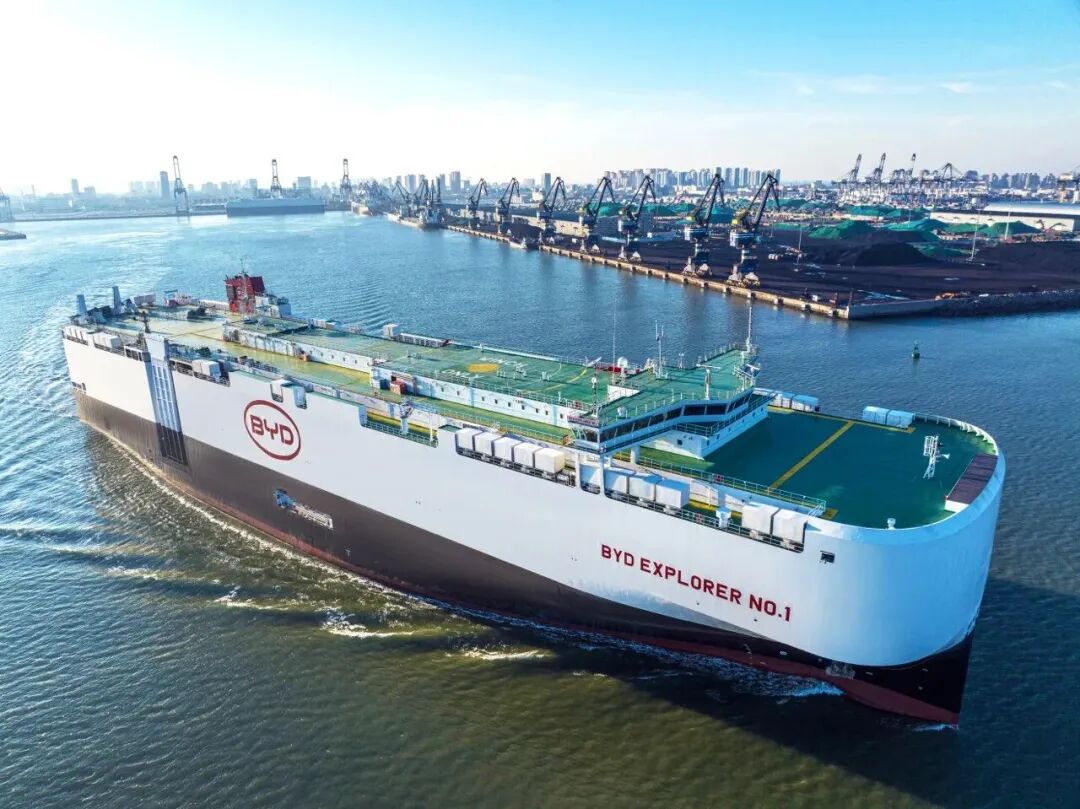
Within three months, BYD has stated its goal of becoming the world's number one four times.
The first announcement came at the global shareholders' meeting in June when BYD Chairman Wang Chuanfu declared the ambition to become the world's largest automaker by scale within five years. Subsequently, in July, BYD Executive Vice President Li Ke stated, 'We have set this ambitious goal based on our own endogenous growth and can achieve it without relying on the U.S. market,' also indicating that there was no need to boost sales through acquiring other automakers. In September, BYD held its first extraordinary general meeting for 2026 in Shenzhen, where Wang Chuanfu reiterated the goal of becoming the truly global number one automaker by scale by 2030. On October 11, Li Ke clarified the company's next-stage global strategic goal at a summit in Singapore, planning to surpass Toyota and Volkswagen within the next five years to become the world's largest automaker.
Such frequent emphasis on the goal of being the 'world's number one' is relatively rare in the industry. On one hand, it demonstrates BYD's determination to achieve this goal, but it also reflects BYD's effort to strengthen confidence in the capital markets by reshaping its objectives. Of course, this was also a goal set by Wang Chuanfu back in 2007.
In reality, in the first half of this year, BYD's revenue was RMB 344.8 billion, down 7.1% year-on-year; net profit attributable to the parent company was RMB 12.3 billion, down 20.5% year-on-year. In the first half of the year, BYD sold approximately 1.81 million new energy vehicles, down 15.7% year-on-year. During the same period, exports were approximately 792,000 units, up 67.8% year-on-year. Sales, revenue, and profit have not yet resumed growth. In terms of stock price, its performance has generally followed the same trend as its financial results. BYD needs to answer: Where will its next growth come from?
In June, BYD explained that its overall sales performance was constrained by the production capacity of the second-generation blade battery and would gradually recover from the second half of the year. Through strategies such as flash charging + second-generation blade battery + intelligent driving support, BYD aims to strengthen sales performance in the domestic market. At the same time, strengthening its international market layout has become a focus for BYD this year.
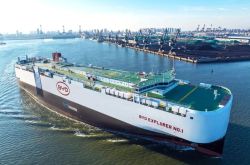
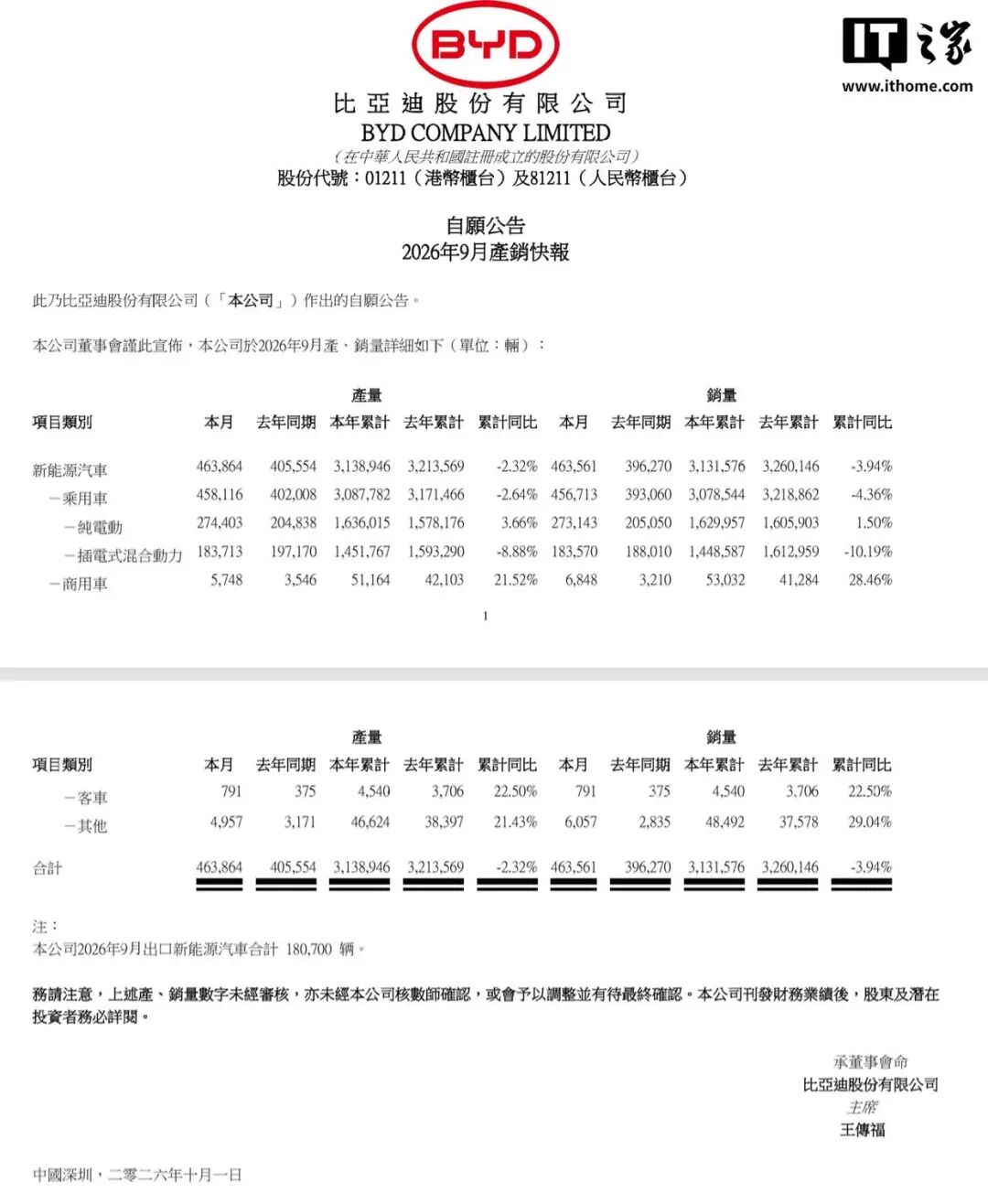
Judging by third-quarter performance, BYD resumed growth starting in August, with sales reaching 463,561 units in September, up 17.0% year-on-year, setting a new sales record. In the first three quarters, BYD's cumulative sales were 3,131,576 units, still down 3.9% year-on-year. Among them, domestic sales were 1,788,616 units, down 30% year-on-year; overseas sales, however, surged from 700,000 units in the same period last year to 1.34 million units, nearly doubling year-on-year. The proportion of overseas sales also increased from 21% last year to 43%.
Based on current sales progress, BYD is on track to achieve 4.5 million or even higher sales this year. If it can break through monthly sales of 500,000 units, it will mark a significant milestone. However, for BYD aiming to become the world's number one, this is still insufficient. In September this year, a leaked supply chain document screenshot mentioned BYD's 'material preparation forecast for 7 million vehicle production next year, with material orders to be placed promptly,' which was interpreted as BYD preparing materials for a scale of about 7 million units by 2027. Although this figure may seem astonishing, considering the goal of achieving annual sales leadership in four years, it aligns with growth demands.
Currently, BYD and Volkswagen are among the top in global sales, both having previously claimed the top spot. In 2025, Toyota Group (including Daihatsu, Hino, and Lexus) had global sales of approximately 11.3 million units, while Volkswagen had 8.98 million units. In terms of development trends, in the first half of 2026, Toyota remained the global sales champion with approximately 5.39 million units sold, down 2%. Volkswagen Group ranked second with about 4.126 million units, down 6.3% year-on-year. Under the impact of new energy vehicles, both automakers have shown a declining trend.
If we assume Toyota's sales decline by 2% annually, its global sales could reach around 10.21 million units by 2030, possibly falling below 10 million units. Alternatively, if Toyota maintains 2% annual growth, its sales could reach 12.4761 million units by 2030. Therefore, for BYD to achieve its goal, its sales must optimistically exceed 10 million units by 2030. Based on BYD's current annual sales of around 4.6 million units, the current gap is at least 6.4 million units.
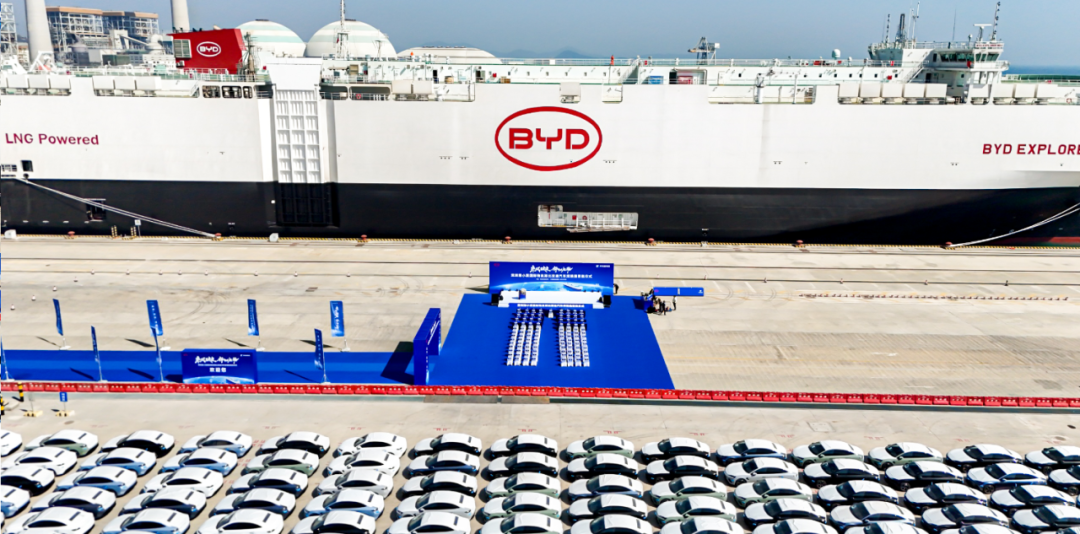
Of course, as China's largest automaker, making such a bold claim is not just empty talk. After surpassing Tesla to become the world's largest new energy vehicle automaker, this Chinese automaker, already ranked among the top ten globally, has sufficient confidence to achieve this goal. The question is, where will these 6.4 million units in sales come from?
From the domestic market perspective, the overall automotive market has entered negative growth. Data released by the China Passenger Car Association (CPCA) on October 12 showed that retail sales of passenger cars in September were 1.618 million units, down 28.0% year-on-year and up 5.0% month-on-month; cumulative retail sales from January to September were 13.334 million units, down 21.7% year-on-year. Against this backdrop, most automakers have experienced negative growth in domestic sales, and BYD is no exception. BYD's sales from January to September were 3.1316 million units, including 1.3378 million units in overseas markets. BYD's domestic market sales from January to September were 1.7938 million units. The change is that domestic sales dropped from about 2.57 million to 1.79 million (30%), while exports surged from about 690,000 to 1.34 million (about +95%). The proportion of exports nearly doubled from 21% to 43%.
Currently, the domestic market is unlikely to provide significant growth momentum for domestic automakers. However, BYD's domestic market performance is not poor. In September, BYD's domestic sales were 276,800 units, and overseas sales were 179,800 units. Maintaining growth, it may stabilize domestic market sales at 300,000 units per month, contributing 3.6 million units annually. This means BYD needs to secure at least 6.4 million units in overseas markets annually. According to previous statements by BYD's management, its key market layouts are in Europe, Central America, South America, Asia, and Oceania, with a clear decision not to enter the U.S. market temporarily. So, how large is the overseas market size left for BYD?
According to OICA (International Organization of Motor Vehicle Manufacturers) data, global new vehicle sales (including passenger cars, commercial vehicles, and all other types) in 2025 were 99.798406 million units, with China accounting for 34.5%, the United States for 16.7%, and the EU27 + EFTA (Iceland, Liechtenstein, Norway, and Switzerland) + the United Kingdom for 15.5%. India, Japan, and other markets together accounted for nearly 80%. Adding Brazil, Canada, Mexico in the Americas, along with Russia, South Korea, Turkey, and Australia, these regions account for about 88% of the global market.
This means that after excluding the Chinese domestic market and the temporarily unentered U.S. market, BYD needs to capture 6.4 million units from the remaining 48.8% of the market (about 48.7 million units in annual sales).
Referring to the sales structures of Toyota and Volkswagen, this presents some challenges. The U.S. market, as one of the top three global markets, has always been a key region for Toyota and Volkswagen. Toyota's sales in the North American market in 2025 were 2.9297 million units, up 7.3% year-on-year. Among them, the U.S. market alone accounted for 86% of North American sales, reaching 2.517 million units. Volkswagen Group has not been well-received in the U.S. market, but even so, it still contributed over 570,000 units in sales in 2025. However, the gap in the U.S. market has led to a 2 million unit difference between Volkswagen and Toyota. Additionally, the Japanese and South Korean markets show a strong preference for local brands, making it difficult to capture these markets.
In the European market, local brands are also dominant. With the new automotive export policies agreed upon between China and Europe, future market changes are hard to predict. According to foreign media reports, it is expected that Chinese hybrid and plug-in hybrid vehicle exports to Europe will decrease by 'several million units' within four years, equivalent to halving the originally expected scale. According to data from the German independent market research institution Dataforce, the top three best-selling plug-in hybrid models in Europe in the first half of 2026 were all Chinese models: BYD Song PLUS DM-i with about 44,700 units, Yuan UP DM-i (ATTO 2 DM-i) with about 31,600 units, and Chery Explore 06 C-DM (JAECOO J7 SHS) with about 29,900 units.
BYD is establishing multiple factories locally to cope with the impact. After production begins, BYD's reliance on exports from China will decrease, but the local procurement ratio will determine whether the factories can maintain their original cost advantages. Previously, Europe has imposed restrictions on Chinese-made electric vehicles, increasing tariffs. However, after tariff reductions, Chinese independent brands have developed rapidly in Europe, with the advantages of China's new energy supply chain and development efficiency being unparalleled. Regions such as Europe, Southeast Asia, the Middle East, Central America, and South America will become the core pillars for BYD. Relying solely on plug-in hybrids and pure electric vehicles without traditional fuel vehicles, BYD's ability to defeat Toyota depends on changes in oil prices, electricity prices, and infrastructure conditions.
From current trends, the outcome does not seem overly pessimistic. For example, in the Southeast Asian market, Chinese automobiles have already overtaken Japanese vehicles in market share. In the Australian market, which was once a key market for Japanese vehicles, BYD's cumulative sales have exceeded 60,000 units this year, surpassing automakers such as Ford, Mazda, and Hyundai, with a market share of 8.5%, second only to Japan's Toyota. To achieve 6.4 million units in sales from a market of 48.7 million units, BYD needs to capture about a 13% share in each market. This means that in whichever market, it may need to rank among the top three or even first in market share.
However, BYD still has four years. With the overseas layout of flash charging and the development of intelligent driving technology, its potential continues to rise. Since 2021, BYD has increased its export volume from less than 20,000 units to 2 million units in just four years, a growth rate approaching 100 times. In the coming years, it needs to triple its sales to achieve its goal. Of course, for BYD, its competitors will not only be Toyota and Volkswagen but also possibly Chery, SAIC, Geely, and other domestic rivals. The fierce competition in the domestic market will further extend to overseas markets.
-
![]()
Are FAW and Leapmotor Forging an Unbreakable Alliance?
-
![]()
Hongyi Secures IPO Registration Approval: How Will Production Scaling Align with OEM Demand?
-
![]()
The Further Chinese Cars Advance, the Greater the Emphasis on Quality Should Be
-
![]()
Surpassing Toyota and Volkswagen to Become the 'World's No.1' in 4 Years: Where Will BYD Find 6.4 Million Incremental Sales? | MIRROR Pro
-
![]()
Milestone Achieved! Apple's Market Cap Surpasses $5 Trillion
-
![]()
Apple Order Cuts or Not, Apple Supply Chain Inventory Demands Attention!
-
![]()
Toyota’s North-South Integration at a Pivotal Moment: Huang Jian Steps In to Steer Key Initiatives
-
![]()
Avatr Steers Away from Pioneering Aesthetics, Embracing a More Mainstream Appeal