Are FAW and Leapmotor Forging an Unbreakable Alliance?
 10/15 2026
 519
519
Lead | Introduction
Leapmotor and FAW Group have inked a reciprocal investment pact, forgoing the establishment of a new joint venture or management interference. The two entities are now deeply intertwined through a blend of 'mutual capital investments + platform-level technology sharing,' spanning pivotal domains like hybrid engines, electric propulsion, batteries, and intelligent chassis systems. When state-owned enterprises opt for equity swaps over technology purchases, and new-age automakers offer holistic systems rather than just vehicles, does this signify a paradigm shift in China's automotive industry cooperation from 'market-for-technology' to 'capital-for-efficiency'?
Produced by | This article is crafted by: Heyan Yueche Studio
Written by | Article composition by: Cai Yan
Edited by | Refinement by: He Zi
Total Characters: 1,834
Estimated Reading Time: 3 minutes
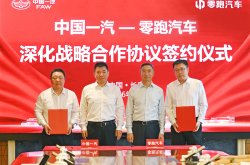
In a recent development, Leapmotor and FAW Group sealed a reciprocal investment deal in Huzhou, Zhejiang Province. FAW is set to invest RMB 3.744 billion to acquire domestic shares in Leapmotor, while Leapmotor, as a strategic investor, will partake in the Series A financing of FAW's Qixin Power. Additionally, a powertrain and solid-state battery technology cooperation agreement was signed. With state-owned enterprises providing capital and new-age automakers contributing systems, the FAW-Leapmotor alliance bypasses the traditional joint venture route, forging a profound connection through mutual equity stakes. FAW's RMB 3.744 billion investment secures a 5% stake in Leapmotor, with Leapmotor reciprocating in FAW's powertrain financing. As 'market-for-technology' gives way to 'capital-for-efficiency,' is this reciprocal bond an anomaly or a harbinger of a new era in China's automotive cooperation?
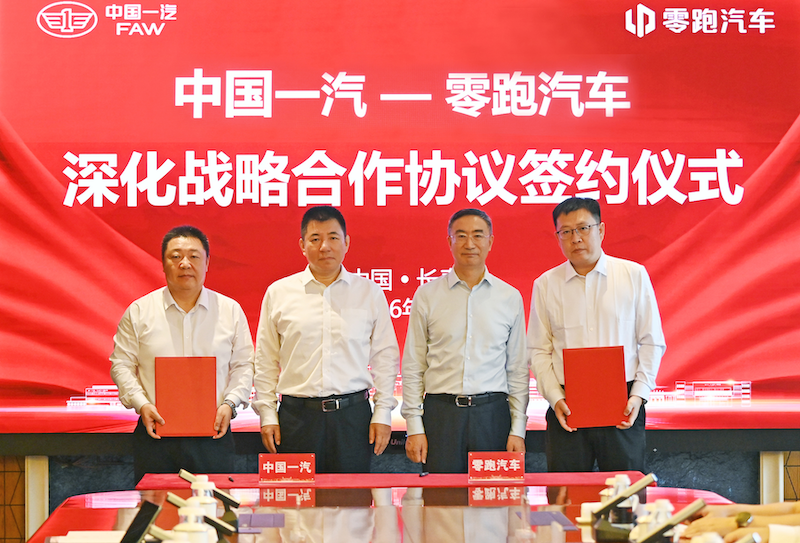
△ The FAW-Leapmotor collaboration is deeply rooted in mutual equity holdings.
From Unidirectional Support to Bidirectional Synergy
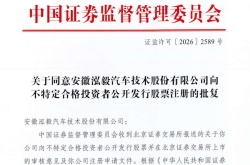
Last month, Leapmotor announced regulatory approval from the China Securities Regulatory Commission to issue new domestic shares to FAW Equity and Jinhua Jinyi High-Tech Zone, raising approximately RMB 6.744 billion. FAW Equity will invest RMB 3.744 billion for 74.8322 million shares, translating to a roughly 5% stake post-subscription. The September 17 signing further solidified the partnership, with Leapmotor planning strategic investment in FAW's Qixin Power Series A financing. The duo will collaborate on technological synergy and resource sharing in powertrain products, including hybrid engines, electric drive systems, and range extenders. On the same day, Leapmotor also inked a technology cooperation pact with FAW's China Automotive New Energy, focusing on joint R&D in cutting-edge areas like solid-state batteries, lithium-rich manganese-based batteries, sodium-ion batteries, and iron-lithium ultra-fast charging.

△ Leapmotor is set to invest in FAW's Qixin Power Series A financing.
This marks not FAW's maiden venture into capital deployment within the new-age automotive sector or intelligent automotive industry chain, but the depth and approach of this collaboration set a new industry standard. Li Tengfei, Leapmotor's Vice President, candidly remarked, 'FAW's stake in Leapmotor is unprecedented—a state-owned enterprise investing in a new-age automaker.' Historically, cooperation between state-owned enterprises and new-age automakers centered on technology procurement and platform licensing. However, FAW and Leapmotor have crafted a five-dimensional cooperation framework encompassing 'capital + industry + products + technology + ecosystem,' spanning ten major areas, including new energy vehicles, intelligent driving, powertrains, power batteries, intelligent chassis, and even embodied intelligent robots. FAW boasts deep expertise in vehicle manufacturing, supply chain management, and powertrain fields, while Leapmotor excels in independent R&D of electrification and intelligent core technologies. The collaboration showcases strong complementarity.
The most striking aspect of this partnership lies not in the transaction volume but in the paradigm shift it embodies. Under the traditional 'market-for-technology' model, the Chinese side provided the market, and the foreign side supplied the technology, with joint ventures as the primary vehicle. Yet, the FAW-Leapmotor model bypasses the joint venture structure, achieving technology sharing through equity bonds. The benefits include shorter decision-making chains, deeper interest alignment, and more direct technology flow. However, challenges persist—whether two enterprises with vastly different systems can truly integrate in R&D rhythm, cost control, and corporate culture will dictate the longevity of this 'bidirectional bond.'
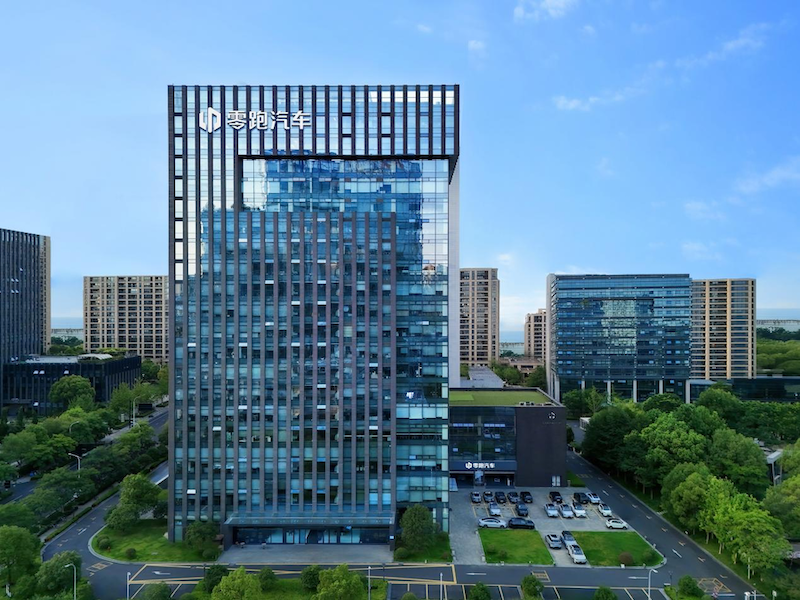
△ A state-owned enterprise's maiden stake in a new-age automaker.
Can This Model Be Duplicated?
In the first half of 2026, Leapmotor's global sales soared to 356,487 units, up 60.8% year-on-year, ranking fourth in global new energy passenger vehicle brand sales, trailing only BYD, Tesla, and Geely. July marked the first month with over 100,000 deliveries, a milestone for a new-age brand. September saw global deliveries reach 105,656 units, up 59% year-on-year, marking the third consecutive month of over 100,000 sales, with cumulative deliveries surpassing 1.8 million units.
Financially, Leapmotor reported RMB 38.11 billion in revenue and RMB 210 million in net profit for the first half of the year, achieving profitability for three consecutive half-year periods. The gross margin improved to 12.6% sequentially in the second quarter, with RMB 38.59 billion in cash on hand. Overseas markets have emerged as a core growth driver—exports in the first half reached 96,294 units, up 372.6% year-on-year, accounting for 27% of total first-half sales. In the Italian pure electric market, Leapmotor's market share exceeded 25% in the first half of 2026, consistently topping pure electric sales. While Leapmotor's growth trajectory is impressive, its comprehensive gross margin in the first half was 11.7%, indicating that its scale effect has not yet fully translated into profit advantages. It remains highly reliant on supply chain cost reductions and technological cost savings, areas where FAW's manufacturing scale and supply chain management capabilities in the powertrain field can provide substantial support.
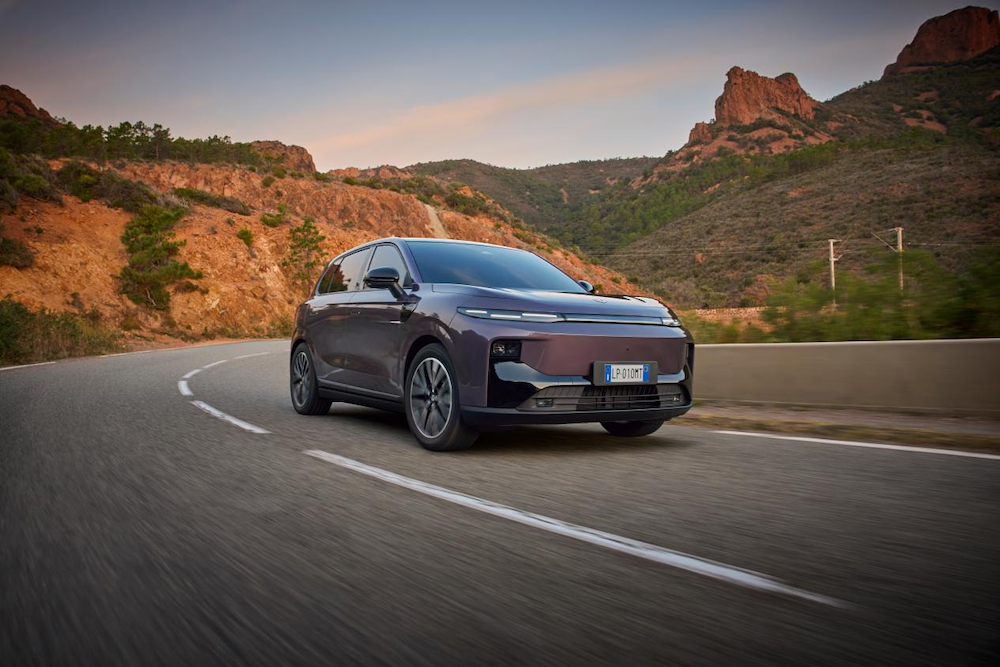
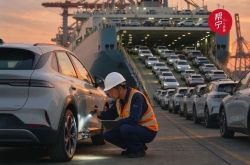
△ Leapmotor's first-half exports surged by 372.6% year-on-year.
Recently, the industry has witnessed a flurry of similar moves. On September 28, Geely Holding and NIO signed a comprehensive strategic cooperation agreement in the charging and battery swap sector. Geely invested in NIO Energy with a 100% stake in Yi Yi Interconnection and RMB 640 million in cash, holding a 30% stake, while NIO acquired a 10% stake in Geely's Haohan Energy. The '15th Five-Year Plan' for the Development of the Intelligent Connected New Energy Vehicle Industry, recently issued by nine departments including the Ministry of Industry and Information Technology, also explicitly proposes to intensify efforts for lawful mergers, reorganizations, and cross-regional integrations among automotive enterprises. From FAW and Leapmotor to Geely and NIO, and then to FAW and GAC advancing equity cooperation, China's automotive industry is undergoing an unprecedented wave of resource restructuring.
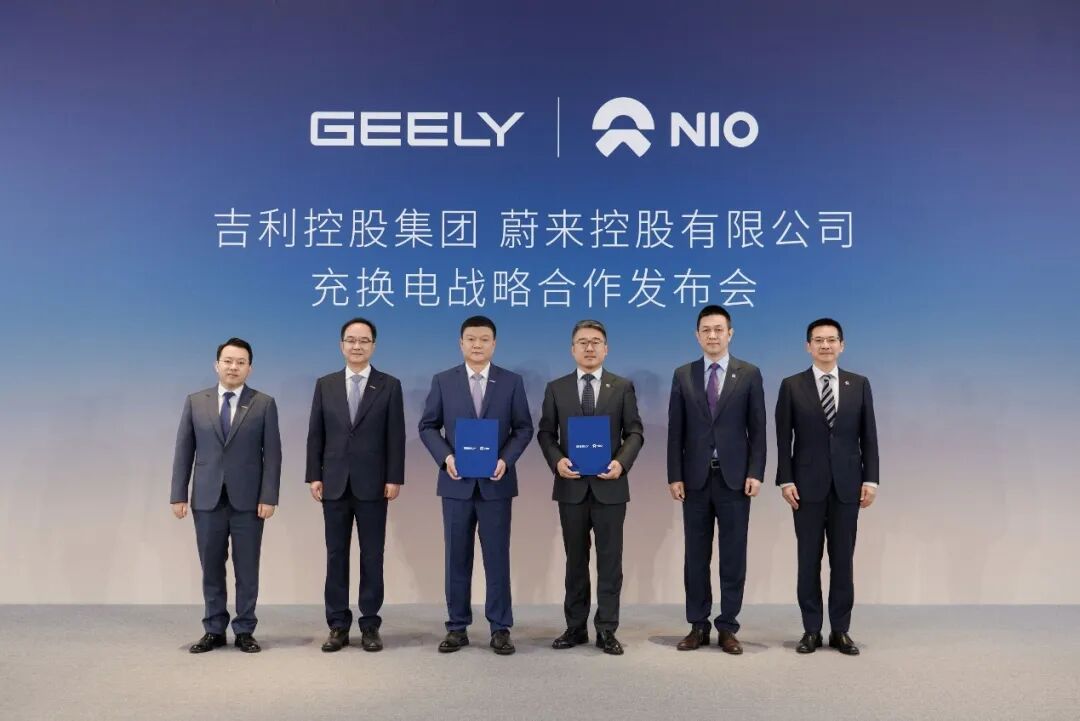
△ Geely Holding and NIO inked a comprehensive strategic cooperation agreement in the charging and battery swap sector.
Commentary
Whether this 'bidirectional bond' will become an industry-standard paradigm remains to be seen, but it has undoubtedly opened up a new avenue—beyond traditional 'joint ventures' and 'technology licensing,' mutual capital investments offer a third path: lighter, deeper, and more flexible. The success of this path will hinge on the broader trend of China's automotive industry shifting from 'scale expansion' to 'efficiency competition.' FAW and Leapmotor have already embarked on answering this question.
(This article is original to Heyan Yueche and may not be reproduced without authorization.)
-
![]()
Are FAW and Leapmotor Forging an Unbreakable Alliance?
-
![]()
Hongyi Secures IPO Registration Approval: How Will Production Scaling Align with OEM Demand?
-
![]()
The Further Chinese Cars Advance, the Greater the Emphasis on Quality Should Be
-
![]()
Surpassing Toyota and Volkswagen to Become the 'World's No.1' in 4 Years: Where Will BYD Find 6.4 Million Incremental Sales? | MIRROR Pro
-
![]()
Milestone Achieved! Apple's Market Cap Surpasses $5 Trillion
-
![]()
Apple Order Cuts or Not, Apple Supply Chain Inventory Demands Attention!
-
![]()
Toyota’s North-South Integration at a Pivotal Moment: Huang Jian Steps In to Steer Key Initiatives
-
![]()
Avatr Steers Away from Pioneering Aesthetics, Embracing a More Mainstream Appeal