When India Takes Over Iveco, a New Roadblock Emerges for Chinese Commercial Vehicles Going Global
 11/05 2026
 476
Introduction
Cross-border mergers and acquisitions that seem to have little to do with Chinese automakers always carry a whiff of uncertainty—especially against the backdrop of an increasingly fierce push by Chinese cars to go global.
A year-long auto-industry acquisition has given India yet another opening into the heart of the European auto market.
Whether Indian automakers will truly become an obstacle in the next round of industrial transformation—seen through the lens of the commercial vehicle market—remains to be seen. But in this new era, the birth of a brand-new commercial vehicle group is not merely a reshuffling of the rankings on the global commercial vehicle landscape; it also brings fresh challenges to every player in the competitive arena.
This is particularly true for Chinese automakers that have been storming overseas markets in recent years. If aggressive passenger-vehicle going-global strategies prompt Europe to adopt iron-fisted restrictive policies, then opening new battlegrounds will no longer be just talk.
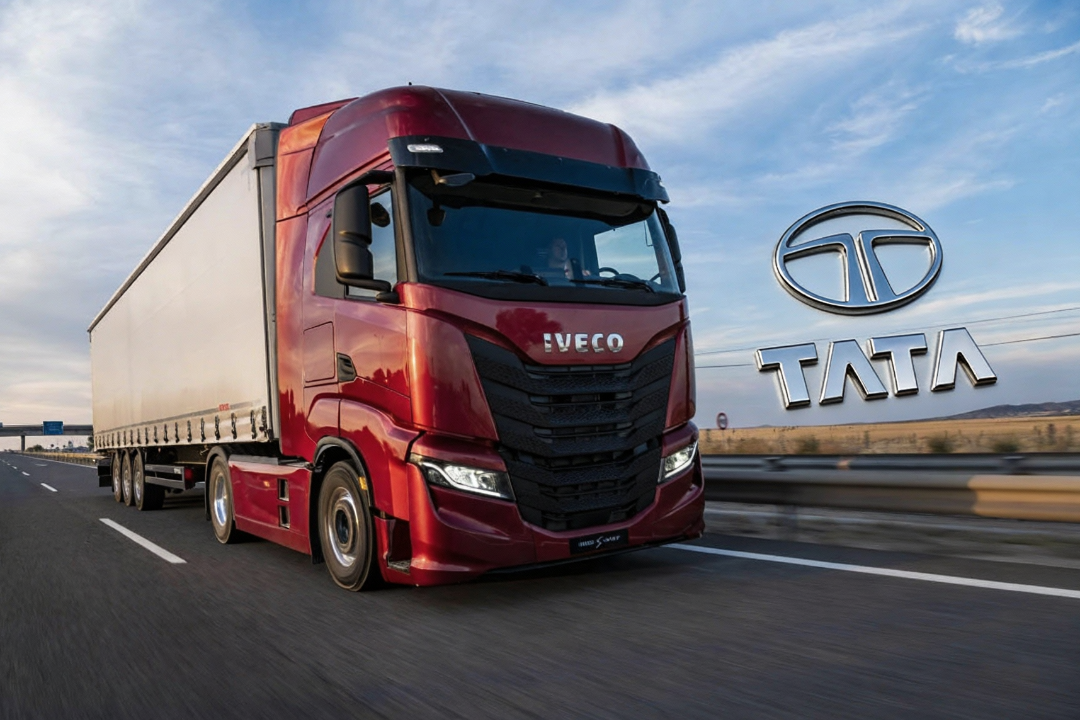
On the 26th of last month, India's Tata Motors officially completed all payments and took over 89.42% of shares in Italian commercial vehicle giant Iveco. Iveco was subsequently delisted from the Milan Stock Exchange—indirectly announcing that this century-old Italian commercial vehicle brand has been completely taken over by the Indians and has truly become a sibling to Jaguar Land Rover (JLR) and Daewoo Commercial Vehicles.
From the perspective of the Chinese market, this acquisition is both a tale of entanglements among overseas automakers and a niche segment—commercial vehicles—that ordinary people rarely come into contact with, so it can simply be enjoyed as entertainment.
However, as the speed and intensity of Chinese automobiles going global continue to accelerate, who can guarantee that Tata, having taken over Iveco, will not pose new threats and obstacles in the global commercial vehicle market?
Normally, Tata's combined commercial vehicle segment would have annual total sales of over 540,000 units and total revenue of about 22 billion euros, firmly ranking it as the world's fourth-largest commercial vehicle group. With such scale, it is not necessarily easy for Chinese commercial vehicle makers accustomed to guerrilla tactics to confront it head-on. This is especially true in the high-end market where Iveco operates, where close-quarters combat would be even more difficult.
At the 2026 Hannover Motor Show, nearly 300 Chinese exhibitors accounted for more than 20% of the total—the highest among all countries, equivalent to "one in every five exhibitors in the exhibition halls coming from China." Leading brands such as FAW Jiefang, Dongfeng Motor, Sinotruk, BYD, and Foton Motor all secured core booth positions, standing alongside international giants such as Daimler Truck, MAN, Volvo, and Scania.
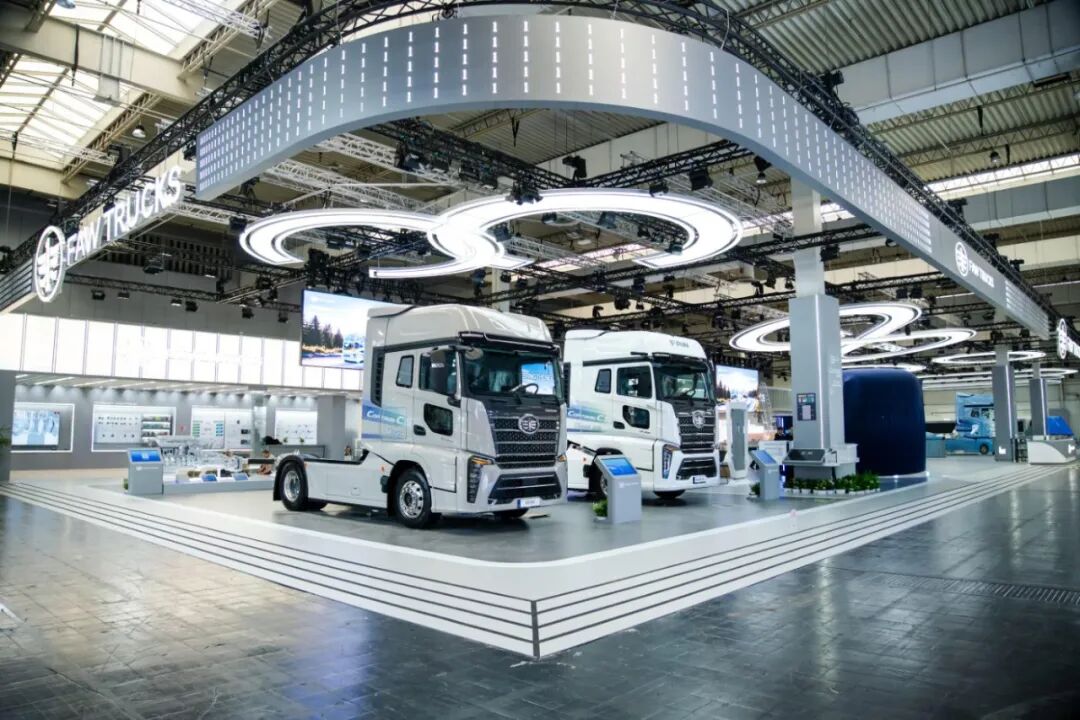
On the surface, China has moved from "participant" to "landscape shaper," with Chinese companies focusing on complete vehicles and three-electric technologies as their showcase, while European companies remain entrenched in invisible details such as chassis, safety components, materials, and software toolchains—the underlying capabilities that still determine the balance of power. In other words, to gain an edge at the pinnacle of commercial vehicles, Chinese automobiles still need a strong springboard.
01 The Aggressive Tata-Iveco
The commercial vehicle market has never occupied the spotlight. But this is not to say that the market's potential is insufficient. According to statistics, the global commercial vehicle market is a super market with annual sales of nearly 29 million units, an output value of 1.2–1.3 trillion US dollars, and a vehicle parc of 160 million units, with the parc still expanding at a rate of more than 3%.
Therefore, when we review Tata's acquisition of Iveco, it no longer seems so simple. This is not like SAIC's acquisition of Nanjing Auto back in the day, aimed at turning MG into an exclusive badge-engineered brand.
Tata's every overseas acquisition looks very crude—from its early acquisition of Daewoo's commercial vehicle business in South Korea to taking over Jaguar Land Rover from Ford—all the same. But this kind of opportunistic, take-over-the-house style of acquisition has genuinely fully inherited the hard capabilities others spent decades building.
In September 2002, Daewoo Commercial Vehicle (DWCV) was separated from the crisis-stricken Daewoo Group of South Korea, becoming the country's second-largest heavy commercial vehicle manufacturer after Hyundai Motor at the time, with a market share of over 25% in South Korea's heavy truck market and an annual production capacity of about 20,000 medium- and heavy-duty commercial vehicles at its Gunsan plant.
By March 2004, Tata Motors seized the opportunity to complete the acquisition for more than 100 million US dollars, obtaining 100% equity in Daewoo Commercial Vehicle and making it a wholly owned subsidiary of the Tata Group.
With this experience, over the past year, Iveco sold its defense subsidiary (IDV) to Italian defense giant Leonardo for 1.7 billion euros, avoiding national defense security concerns and clearing regulatory obstacles for the acquisition;
On the other hand, Tata also promised that Iveco would keep its headquarters in Turin, Italy, and that there would be no major restructuring of its main brands and operating structure within two years, no large-scale factory closures, and no large-scale layoffs. The final acquisition thus reached must have preemptively avoided future obstacles from continued tightening in Europe.
In the European heavy commercial vehicle market, although Iveco cannot gain an advantage compared with Scania, MAN, Volvo, Mercedes-Benz, or even DAF, this will not change the reality that Iveco still holds about a 10% market share. In the Latin American market, Iveco likewise maintains a complete service system spanning new vehicle sales, after-sales repair, and modified vehicle business.
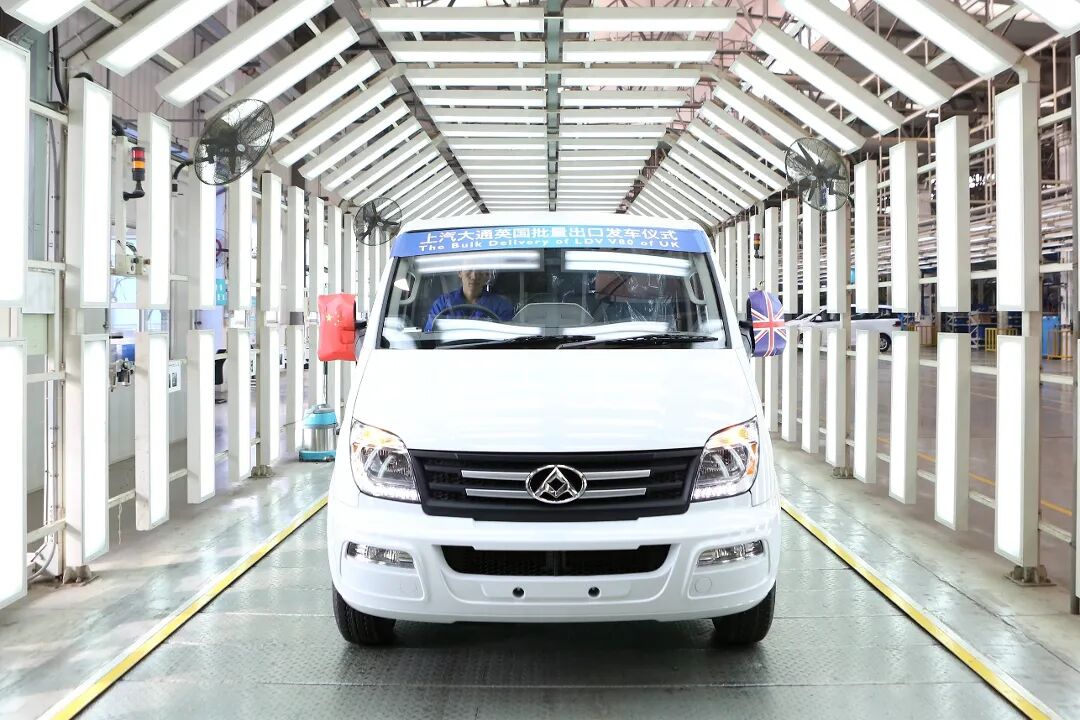
What role can these inherent advantages play? Actually, there is no need for too many examples. Just the sweetness SAIC Passenger Vehicles tasted in Europe and Australia thanks to a down-and-out LDV is plainly visible before us. Not to mention what enormous benefits Iveco, which is already doing well, will bring Tata in the high-end commercial vehicle market in the future.
If integration goes smoothly, Iveco's pricing flexibility in commercial vehicles in Latin America and Europe will improve significantly. This will certainly be a substantive threat to Chinese brands (Foton, Dongfeng, Jiefang, etc.) known for cost-effectiveness. When Chinese automakers confront them head-on in these major commercial markets, the original price gap will be compressed.
In other words, even if the operations of Nanjing Iveco are not affected as a result, as long as Tata dares to make the decision to conduct joint procurement across its commercial vehicle segment and relocate the parts supply chain from Western Europe to low-cost regions, this will send us a new signal: including light commercial vehicles, Chinese commercial vehicle makers will face a new industry troublemaker that combines a high-end brand image with low manufacturing costs in future going-global battles.
02 There Is No Easy Path for Chinese Automobiles Going Global
Of course, commercial vehicles have never been a niche market.
Data shows that in 2025, China's commercial vehicle exports exceeded 1.06 million units for the first time, a year-on-year increase of 17.2%, historically surpassing the one-million mark and becoming the "second engine" driving industry growth.
From January to September 2026, commercial vehicle export volume continued to grow, with cumulative sales of 1.039 million units, a year-on-year increase of 38.8%. The full-year figure is expected to be about 1.373 million units. Multiple institutions judge that Chinese commercial vehicles going global are still in a "scale expansion period." Structurally, trucks are the absolute main force, and heavy trucks are expected to become the representative of China's commercial vehicle "high-end manufacturing."
At the same time, whether it is the feedback from the earlier Hannover Motor Show or a Bain report showing that about one-third of European fleet operators have had contact with Chinese manufacturers, and that Chinese electric trucks are rated better than Western brands in terms of price, TCO, range, and energy efficiency—all strongly demonstrate that Chinese commercial vehicles may complete the historic transition from "selling products" to "building systems" amid the industry transformation.
Especially in the bus market, BYD alone holds a consistently high share of Europe's pure electric bus market. As of September 2026, its cumulative orders in Europe exceeded 8,000 units, covering more than 20 countries and over 100 cities. Among them, its market share was 13.7% in Germany and 17.6% in Spain, both ranking first among Chinese brands. Such data would have been almost unimaginable for us in the past.
However, as Tata builds a commercial vehicle group strong enough to surpass Chinese automobiles, and Europe still maintains a core consensus that Chinese commercial vehicle products and technologies already have the strength to enter Europe, but sales and service networks, brand trust, and used-vehicle residual values remain structural difficulties, this will inevitably lead to direct challenges to the Chinese model.
Simply put, the crude going-global approach of Chinese commercial vehicle makers, which prioritizes cost-effectiveness, may not be able to withstand the price counterattack that established automakers launch once again after "cutting the fat and keeping the lean, reducing costs."
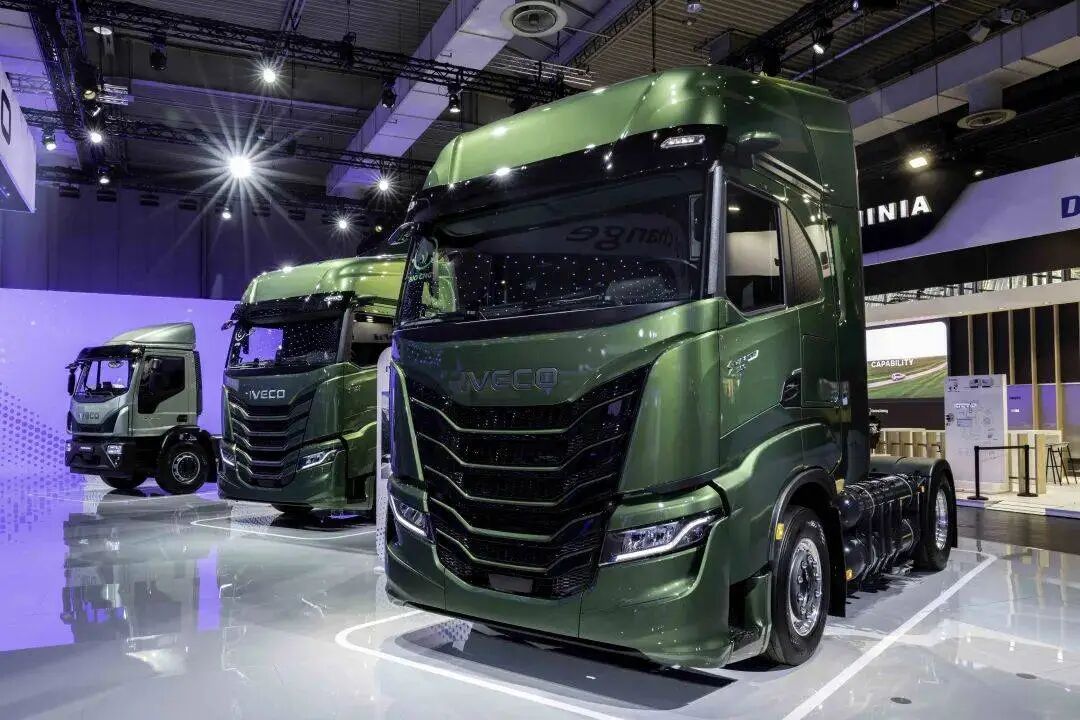
Today, Iveco still retains Daily, heavy trucks, buses, Heuliez electric buses, and FPT powertrains covering diesel/natural gas/pure electric/hydrogen fuel; while Tata in India covers everything from 0.5-ton mini trucks to heavy trucks and buses, with a 55% share of heavy trucks alone.
This means that from mini trucks to heavy trucks, from urban logistics vehicles to long-haul tractors, from buses to hydrogen fuel, this new competitor will emerge in almost every segmented field Chinese companies may encounter overseas. Perhaps Tata cannot use this momentum to break through in every market, but the Indians will certainly try every means to stand directly in the way in those price bands and those countries where Chinese commercial vehicles most want to break through.
And one of the core assets Tata bought is precisely the FPT Industrial powertrain division. Once powertrain calibration and new energy technology resources are prioritized toward the Tata system, its cost advantages may even radiate to the new energy segment, weakening the first-mover advantage of Chinese electric commercial vehicles.
Indeed, against the backdrop of only 2.4%–4.8% penetration of zero-emission heavy trucks in Europe, as long as Europe resolutely implements the goal of reaching a market penetration rate of about 35% for such heavy trucks by 2030, then this huge gap is an opportunity for Chinese brands.
However, given the gap from about 5% to about 35% by 2030 for zero-emission trucks in Europe, this is not simply about selling more vehicles, but about simultaneously expanding charging, fleet scheduling, and financial products. If Chinese commercial vehicles want long-term development in Europe, they must surely, before brands, channels, and localized factories are entrenched by competitors, turn their electrification advantages into systemic advantages and directly export full-lifecycle cost solutions related to charging, operations and maintenance, and fleet management.
In short, competition in the overseas commercial vehicle market is a very large topic with segmentation no less than that of passenger vehicles. Here, we only need to understand that when Tata builds a massive commercial vehicle group through the acquisition of Iveco, its goal must be to rally all companies attempting to sell vehicles in the mid-to-high-end commercial vehicle market to fight a defensive counterattack.
As competition has escalated from "brand versus brand" to a combined collision of cost structures, technology routes, regional channels, and localization capabilities, the real question is not "whether Tata will threaten Chinese automakers," but whether Chinese automakers can complete their identity transformation from exporters to regional operators before competitors finish integrating.
Editor in charge: Cao Jiadong Editor: He Zengrong

THE END
-
![]()
October 2026 EV Startup Sales Roundup: Silver October Surge! These Three Automakers All Hit New Highs
-
![]()
Tmall's Token Sales Go Viral During Double 11: How Far Is AI From Becoming Like "Utilities"?
-
![]()
How Can AI-Generated Interfaces Escape the "AI Feel"?
-
![]()
Like-new phones become hot commodities, why are second-hand phones so popular?
-
![]()
"I Bought an Extended-Range Car — No Regrets Six Months Ago, But Now I Do"
-
![]()
Can Tmall Turn Tokens into a Mass Consumer Product on Double 11?
-
![]()
What Is the Real Reason for Buying a New Energy Vehicle?
-
![]()
When India Takes Over Iveco, a New Roadblock Emerges for Chinese Commercial Vehicles Going Global