What Is the Real Reason for Buying a New Energy Vehicle?
 11/05 2026
 479
In the domestic market, the penetration rate of new energy vehicles has long surpassed 50%. The latest sales data shows that in September, the domestic penetration rate of new energy vehicles reached 67%. This can actually be seen from the sales performance of traditional joint venture automakers in recent years. Under the impact of Chinese automakers' new energy vehicles, not to mention some second-tier joint venture brands, even first-tier joint venture automakers such as Volkswagen and Toyota are currently seeing less than optimistic sales in the country.
Following the principle of "if you can't beat them, join them," Volkswagen and Toyota have also accelerated their pace of new energy transformation over the past two years in the face of the strongly rising Chinese automakers.
Not only in the domestic market—in the first half of this year, the global sales share of fuel vehicles also fell below 50% for the first time, dropping to 49%. This means that, globally, new energy vehicles have officially overtaken traditional fuel vehicles in sales. Among the three major global auto markets of China, the United States, and Europe, only the United States still has a relatively high share of fuel vehicle sales at nearly 70%, while in China and Europe, new energy vehicles are decidedly the mainstream. Based on current development trends, the sales share of fuel vehicles should continue to decline in the coming years.
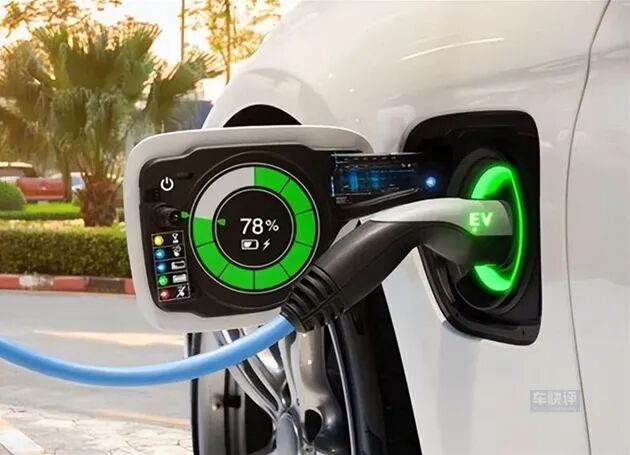
As for why consumers now prefer to choose new energy vehicles when buying cars and no longer buy traditional fuel vehicles, I believe the first answer many people think of is saving money. But the question is: do new energy vehicles really save more money than fuel vehicles?
In fact, this issue has always been controversial. Some argue that new energy vehicles save money but not peace of mind. However, in Che Kuai Ping's view, this statement may not necessarily hold. Let us discuss it further below.
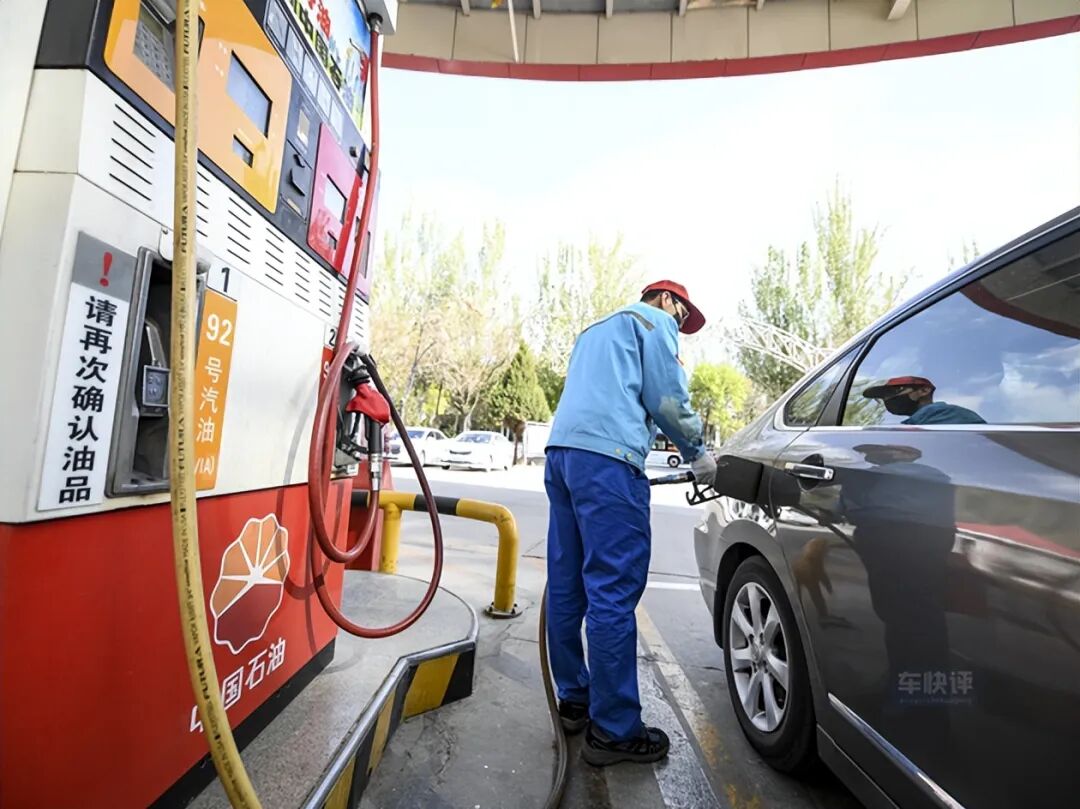
First, regarding the comparison between electricity prices and oil prices, there is actually no controversy at all on this point: new energy vehicles are definitely more economical. Let us still take an annual driving distance of 20,000 kilometers as an example. For a fuel vehicle, the annual fuel cost would basically be around 10,000 yuan. But if it is replaced by a new energy vehicle, still calculated at an annual driving distance of 20,000 kilometers, if there is a home charging pile, the annual electricity cost may be just over 1,000 yuan. Even further, even without a home charging pile, the electricity cost would be at most two to three thousand yuan. This item alone can save about 5,000 yuan per year. The more kilometers driven, the more money saved accordingly.
In addition to the difference between electricity prices and oil prices mentioned above, for most ordinary consumers, the advantages of new energy vehicles compared with fuel vehicles may really not be many, leaving only intelligent assisted driving and power.
Because new energy vehicles have now become the mainstream, traditional fuel vehicles have fallen to bargain prices. Not to mention Mercedes-Benz, BMW, and Audi, even Lexus, which long enjoyed premium pricing and even markups during the fuel vehicle era, now offers discounts of around 100,000 yuan on some models, for example the Lexus ES series. By contrast, for new energy vehicles of the same class, affected by a series of factors such as rising raw material prices, a discount of ten or twenty thousand yuan is already good.
There are also insurance premiums. For fuel vehicles, as long as no claim is made, the annual premium will decline year by year. But new energy vehicles are different. Even without a claim record, it is not uncommon for premiums to rise by two or three thousand yuan for no reason. Is that not a cost?
There is also resale value. You can search online yourself for how much luxury new energy vehicles priced at 300,000 to 400,000 yuan, such as the Li ONE and NIO ES8 around 2020, are selling for now. Then compare that with the prices of fuel vehicles of the same year and same price range, and you will understand.
The last and most important point is the power battery. I looked at a set of data showing that by the end of 2025, the power batteries of the earliest batch of domestic new energy vehicles will have reached the time node when replacement is needed—at least more than 2 million vehicles. The problem these car owners face is that if they replace the power battery, the cost will be far higher than the residual value of the vehicle (and some cars cannot even have their batteries replaced no matter how much money is spent). If they do not replace it, they will have to drive every day a new energy vehicle whose range has severely shrunk—perhaps either charging or on the way to charge. Some new energy vehicles, due to improper battery use, may already have severely reduced range after only two or three years of driving.
Having said so much, I just want to remind consumers that when buying a car, you must carefully consider whether you really need a new energy vehicle. What is the real reason for buying a new energy vehicle?
Copyright statement: This article is original by Che Kuai Ping. Please contact us for authorization before reprinting. Reprinting without permission is strictly prohibited, and any form of plagiarism or misappropriation of text and images is forbidden; otherwise, legal liability will be pursued. Some images in the article are from the Internet, and the copyright belongs to the original authors. If your work is used, please contact us to claim remuneration or request deletion.
-
![]()
October 2026 EV Startup Sales Roundup: Silver October Surge! These Three Automakers All Hit New Highs
-
![]()
Tmall's Token Sales Go Viral During Double 11: How Far Is AI From Becoming Like "Utilities"?
-
![]()
How Can AI-Generated Interfaces Escape the "AI Feel"?
-
![]()
Like-new phones become hot commodities, why are second-hand phones so popular?
-
![]()
"I Bought an Extended-Range Car — No Regrets Six Months Ago, But Now I Do"
-
![]()
Can Tmall Turn Tokens into a Mass Consumer Product on Double 11?
-
![]()
What Is the Real Reason for Buying a New Energy Vehicle?
-
![]()
When India Takes Over Iveco, a New Roadblock Emerges for Chinese Commercial Vehicles Going Global